
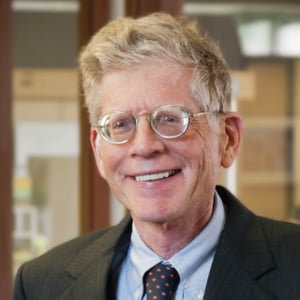
Professor of Law, University of Pittsburgh School of Law
Arthur D. Hellman, a professor of law (emeritus) at the University of Pittsburgh, is a nationally recognized scholar of the federal courts who has also written in the area of the First Amendment. His publications include numerous articles and several books, including casebooks in both areas, Federal Courts: Cases and Materials on Judicial Federalism and the Lawyering Process (5th edition 2022) (with David R. Stras, Ryan W. Scott, F. Andrew Hessick, and Derek T. Muller); and First Amendment Law: Freedom of Speech and Freedom of Religion (5th edition 2022) (with William D. Araiza, Thomas E. Baker, and Ashutosh A. Bhagwat).
In addition to his casebooks and academic writing, Processor Hellman has worked with the Judiciary Committees in the House and Senate in drafting federal courts legislation, including the most recent (2002) revision of the Judicial Conduct and Disability Act (Title 28, Chapter 16). The legislative histories of two major jurisdictional statutes – the Federal Courts Jurisdiction and Venue Clarification Act of 2011 and the “Holmes Group Fix” (enacted as part of the America Invents Act) – acknowledge his contributions.
Professor Hellman has testified as an invited witness at numerous hearings of both Judiciary Committees. His testimony has focused on a wide variety of legislative issues related to the federal courts, including the jurisdiction of the Supreme Court; proposals to divide the Ninth Circuit Court of Appeals; federal judicial discipline; unpublished appellate opinions; and the constitutionality of legislative restrictions on the powers of the federal courts.
In 2005 Professor Hellman was appointed as the inaugural holder of the Sally Ann Semenko Endowed Chair at the University. In 2002 he received the Chancellor’s Distinguished Research Award “as a faculty member who has an outstanding and continuing record of research and scholarly activity.”
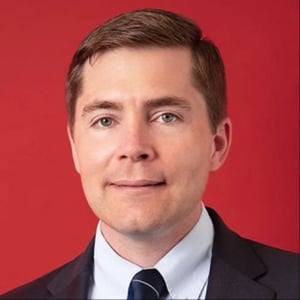
Senior Attorney, Pacific Legal Foundation
Damien Schiff is a senior attorney at Pacific Legal Foundation. He leads its environmental practice group, a unique initiative that draws broadly from PLF’s expertise and success in property rights and separation of powers litigation. Over the years, Damien has represented hundreds of landowners and property rights advocates to defend their liberties against heavy-handed and unwarranted environmental and land-use regulation. His litigation experience includes Sackett v. U.S. Environmental Protection Agency, a groundbreaking decision in which the U.S. Supreme Court upheld the right of landowners to challenge Clean Water Act compliance orders issued by EPA, and Contoski v. Norton, PLF’s successful effort to force the federal government to make good on its promise to delist the bald eagle from the Endangered Species Act.
Besides litigation, Damien has written academic articles on a variety of subjects, including the Endangered Species Act, the Clean Water Act, greenhouse gas torts, the duty to rescue, and international water law. He has appeared on a variety of television and radio programs and has been quoted in The New York Times, The Wall Street Journal, Harper’s Magazine, and The Economist, among other publications.
He obtained his law degree magna cum laude from the University of San Diego School of Law, and his undergraduate degree magna cum laude from Georgetown University. While at USD, he was a research assistant for Professor Bernard Siegan, a leading constitutional theorist and advocate for property rights and economic liberty. Immediately prior to joining PLF, Damien clerked for Judge (and former PLF attorney) Victor Wolski of the United States Court of Federal Claims. Damien credits the mentoring and examples of Professor Siegan and Judge Wolski for his decision to pursue a career in liberty-based public interest litigation.
Damien lives in Sacramento with his wife, two young sons, four chickens, and a cat named Princess. In his off hours he enjoys stamp collecting, Gregorian chant, and martinis—preferably at the same time.
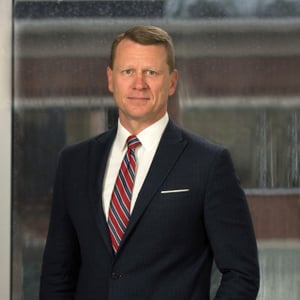
Partner, Phelps Dunbar LLP
Mike Hurst is a partner with Phelps Dunbar LLP where he optimizes his in-depth knowledge of the court system, investigative and prosecutorial agencies, the regulatory arena, and the public policy realm to help clients facing government investigations, enforcement actions, regulatory matters, general litigation and policy issues. Mike currently serves as the General Counsel of the Republican National Committee and as Chairman of the Mississippi Republican Party. He previously served as the U.S. Attorney for the Southern District of Mississippi from 2017-2021, and with over 20 years of experience before judges, juries and policy makers, handling some of the largest and most high-profile cases in Mississippi, he's known for untangling the most complex legal issues.
As U.S. Attorney, Mike was described as a “hard charger,” leading efforts to combat violent crime, human trafficking and public corruption, among many other issues, throughout Mississippi. He almost tripled prosecutions in the U.S. Attorney’s Office over a three-year period, resulting in the most indictments and federal defendants indicted in a one-year period in Mississippi history. He created innovative and national award-winning crime-fighting solutions, like “Project EJECT,” and he established the first statewide, multilevel and multidisciplinary human trafficking body, the Mississippi Human Trafficking Council, to comprehensively and holistically address this criminal scourge.
During his tenure as U.S. Attorney, Mike oversaw some of the biggest cases in Mississippi history: the largest health care fraud scheme (Wade Walters, et. al.), the largest Ponzi scheme (Lamar Adams), the largest False Claims Act health care fraud settlement (Region 8), and the largest nursing home False Claim Act settlement (Hyperion). In addition, as Chief Federal Law Enforcement Officer for the Southern District, Mike coordinated the largest single-state immigration worksite enforcement operation in our nation’s history, involving hundreds of federal law enforcement agents covering seven different locations operated by multiple companies.
Mike’s no show pony – he’s a work horse. Before his tenure as U.S. Attorney, Mike was an Assistant U.S. Attorney for the Southern District of Mississippi for more than eight years. He handled some of the most difficult and complex cases in that office, dealing with white collar crimes, public corruption and financial fraud, including numerous jury trials before almost every federal judge in the Southern District.
He also has experience in the private sector. He has practiced law in Washington, D.C., and has served as a litigator and general counsel for a conservative nonprofit. He also has extensive experience in public policy, having served as the Legislative Director to a U.S. Congressman and as Counsel to the House Judiciary Committee.
Mike has also testified before both the United States Senate and the U.S. House of Representatives on issues ranging from crime to Presidential pardons. He has worked on all sides of the legal, regulatory, investigative, prosecutorial and policy spectrum. The incredible insight gained from this varied experience enables him to find a path forward for clients, no matter how complicated the case.
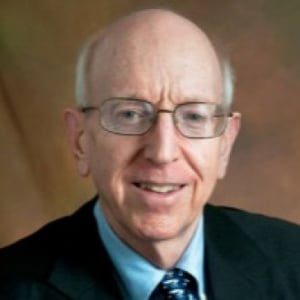
Senior Lecturer in Law, University of Chicago Law School
Following his graduation from Harvard Law School, Judge Posner clerked for Justice William J. Brennan, Jr. From 1963 to 1965, he was assistant to Commissioner Philip Elman of the Federal Trade Commission. For the next two years, he was assistant to the solicitor general of the United States. Prior to going to Stanford Law School in 1968 as Associate Professor, Judge Posner served as general counsel of the President's Task Force on Communications Policy. He first came to the University of Chicago Law School in 1969, and was Lee and Brena Freeman Professor of Law prior to his appointment in 1981 as a judge of the US Court of Appeals for the Seventh Circuit. He was the chief judge of the court from 1993 to 2000.
Judge Posner has written a number of books, including Economic Analysis of Law (9th ed., 2014); The Economics of Justice (1981); Law and Literature (3rd ed. 2009); The Problems of Jurisprudence (1990); Cardozo: A Study in Reputation (1990); The Essential Holmes (1992); Sex and Reason (1992); Overcoming Law (1995); The Federal Courts: Challenge and Reform (1996); Law and Legal Theory in England and America (1996); The Problematics of Moral and Legal Theory (1999); Antitrust Law (2d ed. 2001); Law, Pragmatism, and Democracy (2003); Catastrophe: Risk and Response (2004); Preventing Surprise Attacks: Intelligence Reform in the Wake of 9/11 (2005); How Judges Think (2008); A Failure of Capitalism: The Crisis of '08 and the Descent into Depression (2009); The Crisis of Capitalist Democracy (2010); The Behavior of Federal Judges: A Theoretical and Empirical Study of Rational Choice (coauthored with Lee Epstein and William M. Landes) (2013); and Reflections on Judging (2013). He also wrote books on the Clinton impeachment and Bush v. Gore, many articles in legal and economic journals, and book reviews in the popular press.
He has taught administrative law, antitrust, economic analysis of law, history of legal thought, conflict of laws, regulated industries, law and literature, the legislative process, family law, primitive law, torts, civil procedure, evidence, health law and economics, law and science, and jurisprudence. He was the founding editor of the Journal of Legal Studies and (with Orley Ashenfelter) the American Law and Economics Review. He is an Honorary Bencher of the Inner Temple and a corresponding fellow of the British Academy, and he was the President of the American Law and Economics Association from 1995 to 1996 and the honorary President of the Bentham Club of University College, London, for 1998. He has received honorary degrees from leading American and foreign universities, along with a number of awards, including the Thomas Jefferson Memorial Foundation Award in Law from the University of Virginia in 1994, the Marshall-Wythe Medallion from the College of William and Mary in 1998, the 2003 Research Award from the Fellows of the American Bar Foundation, the 2003 John Sherman Award from the US Department of Justice, the Learned Hand Medal for Excellence in Federal Jurisprudence from the Federal bar Council in 2005, the Thomas C. Schelling Award from the John F. Kennedy School of Government at Harvard University in 2005, and the Ronald H. Coase Medal from the American Law and Economics Association in 2010.

Thomas M. Siebel Senior Fellow, The Hoover Institution, Stanford University; Gary T. Schwartz Distinguished Professor of Law Emeritus, UCLA School of Law
Eugene Volokh is the Thomas M. Siebel Senior Fellow at the Hoover Institution (Stanford), as well as the Gary T. Schwartz Distinguished Professor of Law Emeritus and Distinguished Research Professor at UCLA School of Law. He recently retired from teaching at UCLA, after 30 years there, and is now focusing on research.
Volokh is the author of the textbooks The First Amendment and Related Statutes (8th ed. 2023), and Academic Legal Writing (5th ed. 2016), as well as over 100 academic law journal articles, mostly on First Amendment law. He is a member of The American Law Institute; the editor-in-chief of the Journal of Free Speech Law; and the creator and coauthor of The Volokh Conspiracy, a leading legal blog founded in 2002 (hosted at the Washington Post from 2014 to 2017 and now at Reason Magazine).
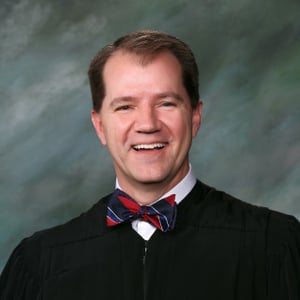
Judge, U.S. Court of Appeals, Fifth Circuit
Don Willett serves on the United States Court of Appeals for the Fifth Circuit. Before joining the federal bench, he served 13 years on the Supreme Court of Texas. His career spans decades of public service, including roles as legal counsel to a Texas Attorney General, a Texas Governor, a U.S. Attorney General, and the President of the United States. Raised by a heroic, widowed mom in a town of 32 people, Judge Willett is his family’s first college graduate. He earned a triple-major B.B.A. from Baylor University (where he serves on the Board of Regents) and three degrees from Duke University (where he served on the Board of Visitors): a J.D. with honors, an M.A. in political science, and an LL.M. in judicial studies. After law school, he clerked on the Fifth Circuit and practiced at Haynes and Boone before entering public service. Judge Willett writes and speaks widely on law, judging, and civic life. He serves on the Advisory Board of the School of Civic Leadership at the University of Texas at Austin, was the longtime editor-in-chief of Judicature: The Scholarly Journal for Judges, teaches at various law schools, and publishes in leading law journals and the popular press. He has received more than a dozen Green Bag honors for “exemplary legal writing,” was named Distinguished Jurist of the Year by the Texas Review of Law & Politics and is a member of the American Law Institute and a Life Fellow of the American, Texas, and Austin Bar Foundations. A former rodeo bull rider and professional drummer, Judge Willett was named “Tweeter Laureate of Texas” in 2015. He is the namesake of Don R. Willett Elementary School—home of mighty Willett Wranglers—located barely a mile from where the Willett family doublewide once stood. He and his radiant wife, Tiffany have three children—Jacob, Shane-David, and Geneviève—plus the family pup, Amicus.

7th Circuit Lets Wisconsin Voter ID Law Stand for 2016 General Election
On August 26, 2016, the 7th Circuit, in a per curiam opinion, denied Wisconsin voter...
Topics
Peruta, Flanagan, and the Right to Bear Arms in the Ninth Circuit
On June 9, 2016, an en banc panel of the Ninth Circuit Court of Appeals...
Judge O'Scannlain's Tribute to Justice Scalia
Following the death of Justice Scalia, there have been numerous tributes – from articles and...
The Fraudulent Joinder Prevention Act of 2016: A New Standard and a New Rationale for an Old Doctrine
Arthur D. Hellman
Note from the Editor: This article discusses the doctrine of fraudulent joinder and an ongoing attempt to...
Topics
Massachusetts Stun Gun Laws at SCOTUS
On Monday, in Caetano v. Massachusetts, the Supreme Court issued a per curiam opinion vacating...
Topics
Obama's Sacrificial Lamb
Few people would likely accuse President Barack Obama of walking in Ronald Reagan’s footsteps, but...
U.S. Army Corps of Engineers v. Hawkes Co., Inc.: Wetlands Jurisdictional Determinations and the Right of Federal Judicial Review
Damien Michael Schiff
Note from the Editor: This article discusses U.S. Army Corps of Engineers v. Hawkes, a...
Georgia State University Law Review Symposium: Invisible Justices - Supreme Court Transparency in the Age of Social Media"
Is the Long Arm of the Law Shrinking? Geographic Boundaries for the Approval of Wiretaps and Bugs and the Shifting Jurisdictional Reach of Federal Judges to Authorize Electronic Surveillance
Mike Hurst
Recent court decisions from around the country are raising serious questions as to the potential...
Topics
SCOTUS Orders: 12/7/2015
The Court's latest Order list is here. There were no new substantive grants of cert.,...