
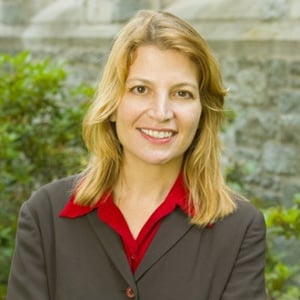
Wallace Stevens Professor of Law, University of Connecticut School of Law
Professor Bethany Berger is a widely read scholar of Property Law and Legal History and one of the leading federal Indian Law scholars in the country. She is a co-author and member of the Editorial Board of Felix S. Cohen's Handbook of Federal Indian Law, the foundational treatise in the field, and co-author of leading casebooks in both Property Law and American Indian Law. Her articles have appeared in the Michigan Law Review, California Law Review, UCLA Law Review, and the Duke Law Journal, among other publications, and have been excerpted and discussed in many casebooks and edited collections as well as in briefs to the Supreme Court and testimony before Congress.
Professor Berger graduated with honors from Wesleyan University, where she was elected to phi beta kappa, and from Yale Law School. After law school, Professor Berger went to the Navajo and Hopi Nations to serve as the Director of the Native American Youth Law Project of DNA-People's Legal Services. There, she conducted litigation challenging discrimination against Indian children, drafted and secured the passage of tribal laws affecting children, and helped to create a Navajo alternative to detention program. She then became Managing Attorney of Advocates for Children of New York, where she worked on impact litigation and policy reform concerning the rights of children in public education.
At the University of Connecticut School of Law, Professor Berger teaches American Indian Law, Property, Tribal Law, and Conflict of Laws. She is also the Wallace Stevens Professor of Law, a chair named for one of America’s greatest poets, a lawyer who lived and worked in Hartford for most of his life. She has served as a judge for the Southwest Intertribal Court of Appeals and as a visiting professor at Harvard Law School and the University of Michigan Law School.
Wallace Stevens Professor of Law, University of Connecticut School of Law
Professor Bethany Berger is a widely read scholar of Property Law and Legal History and one of the leading federal Indian Law scholars in the country. She is a co-author and member of the Editorial Board of Felix S. Cohen's Handbook of Federal Indian Law, the foundational treatise in the field, and co-author of leading casebooks in both Property Law and American Indian Law. Her articles have appeared in the Michigan Law Review, California Law Review, UCLA Law Review, and the Duke Law Journal, among other publications, and have been excerpted and discussed in many casebooks and edited collections as well as in briefs to the Supreme Court and testimony before Congress.
Professor Berger graduated with honors from Wesleyan University, where she was elected to phi beta kappa, and from Yale Law School. After law school, Professor Berger went to the Navajo and Hopi Nations to serve as the Director of the Native American Youth Law Project of DNA-People's Legal Services. There, she conducted litigation challenging discrimination against Indian children, drafted and secured the passage of tribal laws affecting children, and helped to create a Navajo alternative to detention program. She then became Managing Attorney of Advocates for Children of New York, where she worked on impact litigation and policy reform concerning the rights of children in public education.
At the University of Connecticut School of Law, Professor Berger teaches American Indian Law, Property, Tribal Law, and Conflict of Laws. She is also the Wallace Stevens Professor of Law, a chair named for one of America’s greatest poets, a lawyer who lived and worked in Hartford for most of his life. She has served as a judge for the Southwest Intertribal Court of Appeals and as a visiting professor at Harvard Law School and the University of Michigan Law School.
General Counsel and Vice-President of Litigation, Washington Legal Foundation
Cory Andrews is General Counsel and Vice-President of Litigation for the Washington Legal Foundation (WLF). As counsel of record for WLF and other clients, he has authored more than 100 briefs, at petition and merits stages, in the U.S. Supreme Court. He also frequently litigates in state and federal appellate courts. Before joining WLF, Cory practiced trial and appellate law for White & Case LLP, where he litigated in state and federal courts on behalf of clients in the telecommunications, hospitality, and banking industries. He received his J.D. magna cum laude from the University of Florida, where he was Editor-in-Chief of the Florida Law Review and elected to the Order of the Coif. Upon graduation, Cory served as a law clerk to the Honorable Steven D. Merryday of the U.S. District Court for the Middle District of Florida.
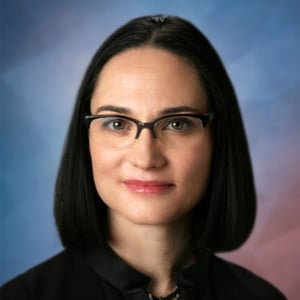
Alida graduated from Duke University with a degree in history and earned her J.D. from the Georgetown University Law Center.
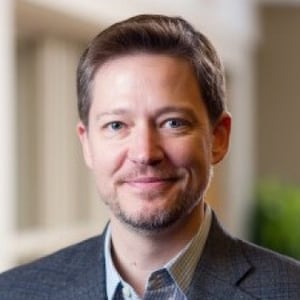
Robins Kaplan Distinguished Professor and John H. Faricy Professor of Empirical Research; Senior Fellow, Dispute Resolution Institute, Mitchell Hamline School of Law
Professor Henry Allen Blair is the Robins Kaplan Distinguished Professor of Litigation Skills and International Dispute Resolution, a John H. Faircy Professor of Empirical Legal Research, and a senior fellow in the Dispute Resolution Institute at Mitchell Hamline. He’s also a Fellow with the Chartered Institute of Arbitrators. He teaches and writes primarily in the areas of arbitration and international dispute resolution, contract law, and commercial law, with a focus on law and economics. In addition to his teaching and writing, he serves as the on-site director for Mitchell Hamline’s Certificate in Global Arbitration Law and Practice program in London and is the faculty advisor and coach for the Willem C. Vis International Commercial Arbitration Moot Court teams.
Professor Blair keeps connections with the world of practice, serving as Of Counsel at Greene Espel, and as an arbitrator or mediator in commercial disputes. He also regularly represents pro bono clients, or consults with other attorneys representing pro bono clients, who are seeking asylum in the United States.
Wallace Stevens Professor of Law, University of Connecticut School of Law
Professor Bethany Berger is a widely read scholar of Property Law and Legal History and one of the leading federal Indian Law scholars in the country. She is a co-author and member of the Editorial Board of Felix S. Cohen's Handbook of Federal Indian Law, the foundational treatise in the field, and co-author of leading casebooks in both Property Law and American Indian Law. Her articles have appeared in the Michigan Law Review, California Law Review, UCLA Law Review, and the Duke Law Journal, among other publications, and have been excerpted and discussed in many casebooks and edited collections as well as in briefs to the Supreme Court and testimony before Congress.
Professor Berger graduated with honors from Wesleyan University, where she was elected to phi beta kappa, and from Yale Law School. After law school, Professor Berger went to the Navajo and Hopi Nations to serve as the Director of the Native American Youth Law Project of DNA-People's Legal Services. There, she conducted litigation challenging discrimination against Indian children, drafted and secured the passage of tribal laws affecting children, and helped to create a Navajo alternative to detention program. She then became Managing Attorney of Advocates for Children of New York, where she worked on impact litigation and policy reform concerning the rights of children in public education.
At the University of Connecticut School of Law, Professor Berger teaches American Indian Law, Property, Tribal Law, and Conflict of Laws. She is also the Wallace Stevens Professor of Law, a chair named for one of America’s greatest poets, a lawyer who lived and worked in Hartford for most of his life. She has served as a judge for the Southwest Intertribal Court of Appeals and as a visiting professor at Harvard Law School and the University of Michigan Law School.
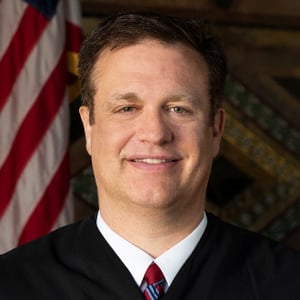
Judge, United States Court of Appeals, Ninth Circuit
Judge Nelson was confirmed to the Ninth Circuit in October 2018, as the youngest Circuit Judge to serve from Idaho and he has chambers in his hometown of Idaho Falls. Prior to his confirmation, Judge Nelson served for nine years as General Counsel of Idaho Falls-based Melaleuca, Inc., a consumer goods company. He previously worked in Washington, DC, where he served in all three branches of the federal government, including as Special Counsel for Supreme Court nominations to the Ranking Member of the Senate Judiciary Committee; Deputy General Counsel to the White House Office of Management and Budget; Deputy Assistant Attorney General in the Environment and Natural Resources Division of the United States Department of Justice; and a law clerk to Judge Henderson of the United States Court of Appeals for the D.C. Circuit. He has argued in most of the federal courts of appeals and worked on dozens of Supreme Court briefs. He started in the Washington, DC office of Sidley Austin as an appellate lawyer, after clerking for Judges Mosk and Brower of the Iran-U.S. Claims Tribunal at The Hague, and for now-Judge Tom Griffith, then-Senate Legal Counsel, during the impeachment trial of President Clinton. Judge Nelson earned his B.A. from Brigham Young University and his J.D., with honors, from BYU Law School. Judge Nelson has been a member of the Federalist Society since 1998.
Robins Kaplan Distinguished Professor and John H. Faricy Professor of Empirical Research; Senior Fellow, Dispute Resolution Institute, Mitchell Hamline School of Law
Professor Henry Allen Blair is the Robins Kaplan Distinguished Professor of Litigation Skills and International Dispute Resolution, a John H. Faircy Professor of Empirical Legal Research, and a senior fellow in the Dispute Resolution Institute at Mitchell Hamline. He’s also a Fellow with the Chartered Institute of Arbitrators. He teaches and writes primarily in the areas of arbitration and international dispute resolution, contract law, and commercial law, with a focus on law and economics. In addition to his teaching and writing, he serves as the on-site director for Mitchell Hamline’s Certificate in Global Arbitration Law and Practice program in London and is the faculty advisor and coach for the Willem C. Vis International Commercial Arbitration Moot Court teams.
Professor Blair keeps connections with the world of practice, serving as Of Counsel at Greene Espel, and as an arbitrator or mediator in commercial disputes. He also regularly represents pro bono clients, or consults with other attorneys representing pro bono clients, who are seeking asylum in the United States.

Deep Dive Episode 59 – Cedar Point Nursery v. Shiroma
Bethany Berger
On May 8, 2019, the Ninth Circuit issued a 2-1 decision in Cedar Point Nursery...
Litigation Update: Cedar Point Nursery v. Shiroma
Bethany Berger
On May 8, 2019, the Ninth Circuit issued a 2-1 decision in Cedar Point Nursery...
Litigation Update: Cedar Point Nursery v. Shiroma
TeleforumEmulex Corp v. Varjabedian - Post-Decision SCOTUScast
Cory L. Andrews
On April 23, 2019, just one week after argument, the Supreme Court decided Emulex Corp....
Henry Schein, Inc v. Archer and White Sales Inc. AND Lamps Plus, Inc. v. Varela - Post-Decision SCOTUScast
Alida Kass
On January 8, 2019, the Supreme Court decided Henry Schein Inc. v. Archer and White...
Topics
Baldwin v. U.S.: Will the Chevron Doctrine Be Refined or Overruled?
In Baldwin v. United States, No. 17-55115 (filed April 16, 2019), the United States...
Art of Dissent
Portland Lawyers Chapter
Portland, ORTopics
A Bargaining Model v. Reality in FTC v. Qualcomm: A Reply to Kattan & Muris
Introduction In a recent article[1] Joe Kattan and Tim Muris (K&M) criticize our article[2] on...
Courthouse Steps Decision Teleforum: Lamps Plus, Inc. v. Varela
Henry Allen Blair
On Wednesday, April 24, the Supreme Court handed down the decision in Lamps Plus, Inc....
Courthouse Steps Decision Teleforum: Lamps Plus, Inc. v. Varela
Teleforum