
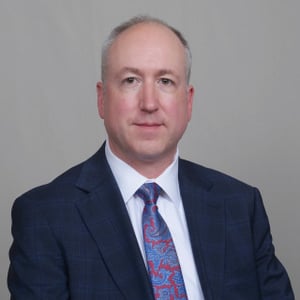
Government Affairs Program Manager, Energy Northwest
Daniel Himebaugh is a lawyer working in government affairs.
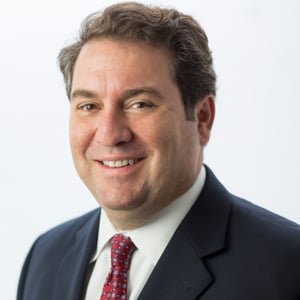
Former Attorney General, State of Arizona
Mark Brnovich served as Arizona's 26th Attorney General from 2015 to 2023. He was first inaugurated in 2015, and again in 2019 after winning re-election. Mark has spent most of his professional life serving as a prosecutor at the local, state, and federal levels. Mark met his wife Susan while they both worked as prosecutors for the Maricopa County Attorney's office. Mark worked in the Gang/Repeat Offender Unit and prosecuted many difficult and high profile cases from 1992 to 1998. He then went on to work as an Assistant Attorney General with the Arizona Attorney General's Office from 1998 to 2003, where he developed an expertise in gambling law. Brnovich later went on to serve as an Assistant United States Attorney for the District of Arizona where he prosecuted public integrity crimes, as well as crimes occurring in Indian Country.
Brnovich has also been a Judge Pro Tem of Maricopa County Superior Court, a Command Staff Judge Advocate in the U.S. Army National Guard, the Director for Constitutional Government at the Goldwater Institute, and the Director of the Arizona Department of Gaming, a law enforcement agency that investigates illegal gambling activity, as well as working with tribal regulators to ensure the integrity of tribal gaming.
Brnovich is known for restoring public confidence in the office of "Arizona's Top Cop" and for assembling some of the nation's most talented public servants for his administration. Mark argued at the United States Supreme Court in defense of the "one-person, one-vote" principle, was featured on 60 Minutes in defense of capital punishment, and has initiated national public education efforts to combat human sex trafficking.
Brnovich has been recognized by the National Federation of Independent Business as a "Champion of Small Business." and was elected by his bi-partisan colleagues to serve as the Chairman of the Conference of Western Attorneys General.
Mark's wife Susan was recently appointed by the United States Senate to serve as a U.S. District Judge for the District of Arizona. He has two teenage daughters and lives in Phoenix.

Professor of Law, Antonin Scalia Law School, George Mason University
ILYA SOMIN is Professor of Law at George Mason University and the B. Kenneth Simon Chair in Constitutional Studies at the Cato Institute. His research focuses on constitutional law, property law, democratic theory, federalism, and migration rights. He is the author of Free to Move: Foot Voting, Migration, and Political Freedom (Oxford University Press, revised and expanded edition, 2022), Democracy and Political Ignorance: Why Smaller Government is Smarter (Stanford University Press, revised and expanded second edition, 2016), and The Grasping Hand: Kelo v. City of New London and the Limits of Eminent Domain (University of Chicago Press, 2015, rev. paperback ed., 2016), coauthor of A Conspiracy Against Obamacare: The Volokh Conspiracy and the Health Care Case (Palgrave Macmillan, 2013), and co-editor of Eminent Domain: A Comparative Perspective (Cambridge University Press, 2017). Democracy and Political Ignorance has been translated into Italian and Japanese.
Somin’s work has appeared in numerous scholarly journals, including the Yale Law Journal, Stanford Law Review, Northwestern University Law Review, Georgetown Law Journal, Critical Review, and others. Somin has also published articles in a variety of popular press outlets, including the New York Times, Washington Post, Wall Street Journal, Los Angeles Times, CNN, NBC, The Atlantic, USA Today, Boston Globe, US News and World Report, South China Morning Post, National Law Journal and Reason. He has been quoted or interviewed by the New York Times, Washington Post, Wall Street Journal, Time, Newsweek, The Economist, the Christian Science Monitor, the Financial Times, The Guardian, the Associated Press, CBS, MSNBC, NPR, BBC, Reuters, the Canadian Broadcasting Corporation, the Australian Broadcasting Corporation, Radio Free Europe/Radio Liberty, Al Jazeera, and the Voice of America, among other media.
Somin’s writings have been cited in decisions by the United States Supreme Court, multiple state supreme courts and lower federal courts, and the Supreme Court of Israel. He is co-counsel for the plaintiffs in VOS Selections, Inc. v. Trump, a case challenging the constitutionality of President Trump’s “Liberation Day” tariffs. Somin has testified on the use of drones for targeted killing in the War on Terror before the US Senate Judiciary Subcommittee on the Constitution, Civil Rights, and Human Rights. In 2009, he testified on property rights issues at the United States Senate Judiciary Committee confirmation hearings for Supreme Court Justice Sonia Sotomayor. Somin writes regularly for the popular Volokh Conspiracy law and politics blog, now affiliated with Reason magazine (previously affiliated with the Washington Post from 2014 to 2017). From 2006 to 2013, he served as Co-Editor of the Supreme Court Economic Review, one of the country’s top-rated law and economics journals.
Somin has served as a visiting professor at the University of Pennsylvania Law School. He has also been a visiting professor or scholar at the Georgetown University Law Center, the University of Hamburg, Germany, the University of Torcuato Di Tella in Buenos Aires, Argentina, Uriel Reichman University in Israel, and Zhengzhou University in China. He is a University Affiliate of the Schar School of Policy and Government at George Mason University, and an affiliated faculty member of the George Mason University Institute for Immigration Research. Before joining the faculty at George Mason, Somin was the John M. Olin Fellow in Law at Northwestern University Law School in 2002-2003. In 2001-2002, he clerked for the Hon. Judge Jerry E. Smith of the U.S. Court of Appeals for the Fifth Circuit. Professor Somin earned his B.A., Summa Cum Laude, at Amherst College, M.A. in Political Science from Harvard University, and J.D. from Yale Law School.
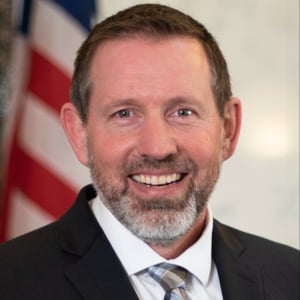
Judge, United States Court of Appeals, Ninth Circuit
Lawrence VanDyke serves as a circuit judge on the U.S. Court of Appeals for the Ninth Circuit. Prior to that appointment in January 2020, he served as a Deputy Assistant Attorney General in the Environment and Natural Resources Division of the United States Department of Justice. Before that, he served consecutively as the Solicitor General of two western states – Nevada and Montana. At the beginning of his legal career, he worked as an attorney in the Appellate and Constitutional Issues practice group at Gibson Dunn & Crutcher, LLP.
Judge VanDyke received his law degree magna cum laude from Harvard Law School, where he was an editor on the Harvard Law Review. He has engineering and theology undergraduate degrees and a masters degree in engineering management. He served as a law clerk to the Honorable Janice Rogers Brown of the United States Court of Appeals for the District of Columbia Circuit. Judge VanDyke and his wife Cheryl live in Reno, Nevada, and they have three children.

Tazewell Taylor Professor of Law and William H. Cabell Research Professor, William & Mary Law School
Jonathan H. Adler joined the William & Mary law faculty as the Tazwell Taylor Professor of Law and William H. Cabell Research Professor in 2025. Prior to joining the faculty, he was the inaugural Johan Verheij Memorial Professor of Law and the founding Director of the Coleman P. Burke Center for Environmental Law at the Case Western Reserve University School of Law.
Professor Adler is the author or editor of seven books, including Climate Liberalism: Perspectives on Liberty, Property and Pollution (Palgrave, 2023), Marijuana Federalism: Uncle Sam and Mary Jane (Brookings Institution Press, 2020), Business and the Roberts Court (Oxford University Press, 2016) and Rebuilding the Ark: New Perspectives on Endangered Species Act Reform (AEI Press, 2011).
His articles have appeared in publications ranging from the Harvard Environmental Law Review and Yale Journal on Regulation to the Wall Street Journal, New York Times, and Washington Post. He has testified before Congress a dozen times, and his work has been cited in the U.S. Supreme Court. A 2024 study identified Professor Adler as the seventh most cited legal academic in administrative and environmental law from 2019 to 2023.
Professor Adler is a contributing editor to Civitas Outlook and a regular contributor to the popular legal blog, The Volokh Conspiracy. A regular commentator on constitutional and regulatory issues, he has appeared on numerous radio and television programs, ranging from the PBS Newshour and National Public Radio to the Fox News Channel and Entertainment Tonight.
Professor Adler is a senior fellow at the Property & Environment Research Center in Bozeman, Montana. In 2018, Professor Adler was elected to membership in the American Law Institute and helped co-found the organization Checks and Balances. In 2024, Professor Adler was appointed a public member of the Administrative Conference of the United States.
Professor Adler clerked for the Honorable David B. Sentelle on the U.S. Court of Appeals for the District of Columbia Circuit.
Robert A. Schroeder Distinguished Professor of Law, University of Kansas School of Law
Robin Kundis Craig joined the KU Law faculty in July 2024 and serves as the Robert A. Schroeder Distinguished Professor of Law.
Craig specializes in all things water, including the relationships between climate change and water; the water-energy-food nexus; the Clean Water Act; the intersection of water issues and land issues; ocean and coastal law; marine biodiversity and marine protected areas; water law; ecological resilience and the law; climate change adaptation, and the relationships between environmental law and public health. She is the author, co-author, or editor of 12 books, including Re-Envisioning the Anthropocene Ocean (University of Utah Press, 2024, co-edited with Jeffrey M. McCarthy); The End of Sustainability (Kansas University Press 2017, with Melinda Harm Benson); Contemporary Issues in Climate Change Law and Policy (Environmental Law Institute 2016, with Stephen Miller); Comparative Ocean Governance: Place- Based Protections in an Era of Climate Change (Edward Elgar 2012); and The Clean Water Act and the Constitution (Environmental Law Institute 2nd Ed. 2009), as well as textbooks for Environmental Law, Water Law and Toxic Torts. She has also written more than100 law review articles and book chapters in both legal and scientific publications.
In recognition of her work on these topics, Craig was elected to membership in the American Law Institute (2015) and the American College of Environmental Lawyers (2019) and has been appointed to the International Union for the Conservation of Nature’s World Commission on Environmental Law and to the Center for Progressive Reform. She has served on six National Academy of Sciences committees that evaluated Florida Everglades restoration, implementation of the Edwards Aquifer Habitat Conservation Plan and application of the Clean Water Act to the Mississippi River. She has consulted on water quality issues with the government of Victoria, Australia, and the Council on Environmental Cooperation in Montreal, Quebec, Canada, and she was one of 12 marine educators chosen to participate in a 2010 program in the Papahanamokuakea Marine National Monument, spending a week on Midway Atoll. She was also a principal researcher in a four-year grant project on Adaptive Water Governance sponsored by the National Social-Ecological Synthesis Center with money from the National Science Foundation. In 2018, Craig was named a William Evans Visiting Research Fellow at the University of Otago, Dunedin, New Zealand. In 2017, the Rockefeller Foundation awarded her a Bellagio Center Writing Residency fellowship, allowing her to spend four weeks on Lake Como, Italy, working on a new book project on Re-Envisioning the Anthropocene Oceans, and in 2016 she was a Research Fellow at the University of Tasmania, Hobart, Australia.
Craig is an active participant in several national organizations, including the American Bar Association Section on Environment, Energy and Resources (ABA SEER), where she currently serves on the editorial board of Natural Resources & Environment; the Foundation for Natural Resources and Environmental Law, where she co-chairs the Natural Resources Law Teachers Committee; and the Association of American Law Schools (AALS), where she has chaired the Maritime Law Section, the Natural Resources Law Section and the Environmental Law Section. She has also served as a consultant to the Environmental Defense Fund and the River Network’s Nutrient Task Force. Craig serves on the Editorial Boards of Coastal and Ocean Management and Ecology & Society, as a Specialty Chief Editor of Frontiers Climate: Climate Law and Policy and as a Guest Associate Editor for Frontiers Climate: Risk Management on the topic of “Climate Change Adaptation as Risk Management.”
Craig earned her J.D. summa cum laude in 1996 from the Lewis & Clark School of Law in Portland, Oregon, with a Certificate in Environmental Law; her Ph.D. in English/Literature and Science in 1993 from the University of California, Santa Barbara; her M.A. in Writing About Science in 1986 from the Johns Hopkins University; and her B.A. cum laude in English/Writing in 1985 from Pomona College in Claremont, California. While in law school, she worked for the Oregon Department of Justice in its General Counsel Division, Natural Resources Section, representing the state’s environmental and natural resources agencies. After law school, she clerked for Judge Robert E. Jones at the U.S. District Court for the District of Oregon before starting her law teaching career as a Visiting Assistant Professor at the Lewis & Clark School of Law. Before arriving at KU in 2024, Craig held tenure-track positions at the Western New England College School of Law, Indiana University—Indianapolis School of Law (where she first received tenure), the Florida State University School of Law, the University of Utah S.J. Quinney School of Law and USC’s Gould School of Law. She has visited at the Lewis & Clark School of Law, Vermont Law School, the University of Hawaii School of Law and the University of Tasmania Faculty of Law. At Kansas, Craig teaches Environmental Law, Water Law, Ocean & Coastal Law, Toxic Torts and Civil Procedure.
Managing Partner, Best Best & Krieger LLP
Andre Monette works with both public and private clients in matters involving water quality issues. He is a member of the Environmental & Natural Resources practice group in Best Best & Krieger LLP’s Washington, D.C. office. Andre works extensively with water districts, cities, counties and agricultural interests, and other private entities on matters involving the Federal Clean Water Act and its state law analogues.
Andre works with public agencies and farmers on matters involving water rights, water supply and water quality. Andre also works with investors interested in water projects, helping funds assess the viability of potential water related investments.
A major area of focus for Andre’s practice is the intersection of the water quality and water supply regulation. Federal and state laws across the nation divide water quality and water supply regulations into separate categories that often do not intersect and can preclude efficient use of the supply. Andre’s practice focuses on areas of overlap where acute knowledge of multiple regulatory schemes is required, including; streambed restoration, groundwater recharge projects, indirect potable reuse projects, large scale recycled water projects, and effluent limitation compliance.
Andre is the managing partner of BBK's Washington, D.C. office.
Tazewell Taylor Professor of Law and William H. Cabell Research Professor, William & Mary Law School
Jonathan H. Adler joined the William & Mary law faculty as the Tazwell Taylor Professor of Law and William H. Cabell Research Professor in 2025. Prior to joining the faculty, he was the inaugural Johan Verheij Memorial Professor of Law and the founding Director of the Coleman P. Burke Center for Environmental Law at the Case Western Reserve University School of Law.
Professor Adler is the author or editor of seven books, including Climate Liberalism: Perspectives on Liberty, Property and Pollution (Palgrave, 2023), Marijuana Federalism: Uncle Sam and Mary Jane (Brookings Institution Press, 2020), Business and the Roberts Court (Oxford University Press, 2016) and Rebuilding the Ark: New Perspectives on Endangered Species Act Reform (AEI Press, 2011).
His articles have appeared in publications ranging from the Harvard Environmental Law Review and Yale Journal on Regulation to the Wall Street Journal, New York Times, and Washington Post. He has testified before Congress a dozen times, and his work has been cited in the U.S. Supreme Court. A 2024 study identified Professor Adler as the seventh most cited legal academic in administrative and environmental law from 2019 to 2023.
Professor Adler is a contributing editor to Civitas Outlook and a regular contributor to the popular legal blog, The Volokh Conspiracy. A regular commentator on constitutional and regulatory issues, he has appeared on numerous radio and television programs, ranging from the PBS Newshour and National Public Radio to the Fox News Channel and Entertainment Tonight.
Professor Adler is a senior fellow at the Property & Environment Research Center in Bozeman, Montana. In 2018, Professor Adler was elected to membership in the American Law Institute and helped co-found the organization Checks and Balances. In 2024, Professor Adler was appointed a public member of the Administrative Conference of the United States.
Professor Adler clerked for the Honorable David B. Sentelle on the U.S. Court of Appeals for the District of Columbia Circuit.
Robert A. Schroeder Distinguished Professor of Law, University of Kansas School of Law
Robin Kundis Craig joined the KU Law faculty in July 2024 and serves as the Robert A. Schroeder Distinguished Professor of Law.
Craig specializes in all things water, including the relationships between climate change and water; the water-energy-food nexus; the Clean Water Act; the intersection of water issues and land issues; ocean and coastal law; marine biodiversity and marine protected areas; water law; ecological resilience and the law; climate change adaptation, and the relationships between environmental law and public health. She is the author, co-author, or editor of 12 books, including Re-Envisioning the Anthropocene Ocean (University of Utah Press, 2024, co-edited with Jeffrey M. McCarthy); The End of Sustainability (Kansas University Press 2017, with Melinda Harm Benson); Contemporary Issues in Climate Change Law and Policy (Environmental Law Institute 2016, with Stephen Miller); Comparative Ocean Governance: Place- Based Protections in an Era of Climate Change (Edward Elgar 2012); and The Clean Water Act and the Constitution (Environmental Law Institute 2nd Ed. 2009), as well as textbooks for Environmental Law, Water Law and Toxic Torts. She has also written more than100 law review articles and book chapters in both legal and scientific publications.
In recognition of her work on these topics, Craig was elected to membership in the American Law Institute (2015) and the American College of Environmental Lawyers (2019) and has been appointed to the International Union for the Conservation of Nature’s World Commission on Environmental Law and to the Center for Progressive Reform. She has served on six National Academy of Sciences committees that evaluated Florida Everglades restoration, implementation of the Edwards Aquifer Habitat Conservation Plan and application of the Clean Water Act to the Mississippi River. She has consulted on water quality issues with the government of Victoria, Australia, and the Council on Environmental Cooperation in Montreal, Quebec, Canada, and she was one of 12 marine educators chosen to participate in a 2010 program in the Papahanamokuakea Marine National Monument, spending a week on Midway Atoll. She was also a principal researcher in a four-year grant project on Adaptive Water Governance sponsored by the National Social-Ecological Synthesis Center with money from the National Science Foundation. In 2018, Craig was named a William Evans Visiting Research Fellow at the University of Otago, Dunedin, New Zealand. In 2017, the Rockefeller Foundation awarded her a Bellagio Center Writing Residency fellowship, allowing her to spend four weeks on Lake Como, Italy, working on a new book project on Re-Envisioning the Anthropocene Oceans, and in 2016 she was a Research Fellow at the University of Tasmania, Hobart, Australia.
Craig is an active participant in several national organizations, including the American Bar Association Section on Environment, Energy and Resources (ABA SEER), where she currently serves on the editorial board of Natural Resources & Environment; the Foundation for Natural Resources and Environmental Law, where she co-chairs the Natural Resources Law Teachers Committee; and the Association of American Law Schools (AALS), where she has chaired the Maritime Law Section, the Natural Resources Law Section and the Environmental Law Section. She has also served as a consultant to the Environmental Defense Fund and the River Network’s Nutrient Task Force. Craig serves on the Editorial Boards of Coastal and Ocean Management and Ecology & Society, as a Specialty Chief Editor of Frontiers Climate: Climate Law and Policy and as a Guest Associate Editor for Frontiers Climate: Risk Management on the topic of “Climate Change Adaptation as Risk Management.”
Craig earned her J.D. summa cum laude in 1996 from the Lewis & Clark School of Law in Portland, Oregon, with a Certificate in Environmental Law; her Ph.D. in English/Literature and Science in 1993 from the University of California, Santa Barbara; her M.A. in Writing About Science in 1986 from the Johns Hopkins University; and her B.A. cum laude in English/Writing in 1985 from Pomona College in Claremont, California. While in law school, she worked for the Oregon Department of Justice in its General Counsel Division, Natural Resources Section, representing the state’s environmental and natural resources agencies. After law school, she clerked for Judge Robert E. Jones at the U.S. District Court for the District of Oregon before starting her law teaching career as a Visiting Assistant Professor at the Lewis & Clark School of Law. Before arriving at KU in 2024, Craig held tenure-track positions at the Western New England College School of Law, Indiana University—Indianapolis School of Law (where she first received tenure), the Florida State University School of Law, the University of Utah S.J. Quinney School of Law and USC’s Gould School of Law. She has visited at the Lewis & Clark School of Law, Vermont Law School, the University of Hawaii School of Law and the University of Tasmania Faculty of Law. At Kansas, Craig teaches Environmental Law, Water Law, Ocean & Coastal Law, Toxic Torts and Civil Procedure.
Managing Partner, Best Best & Krieger LLP
Andre Monette works with both public and private clients in matters involving water quality issues. He is a member of the Environmental & Natural Resources practice group in Best Best & Krieger LLP’s Washington, D.C. office. Andre works extensively with water districts, cities, counties and agricultural interests, and other private entities on matters involving the Federal Clean Water Act and its state law analogues.
Andre works with public agencies and farmers on matters involving water rights, water supply and water quality. Andre also works with investors interested in water projects, helping funds assess the viability of potential water related investments.
A major area of focus for Andre’s practice is the intersection of the water quality and water supply regulation. Federal and state laws across the nation divide water quality and water supply regulations into separate categories that often do not intersect and can preclude efficient use of the supply. Andre’s practice focuses on areas of overlap where acute knowledge of multiple regulatory schemes is required, including; streambed restoration, groundwater recharge projects, indirect potable reuse projects, large scale recycled water projects, and effluent limitation compliance.
Andre is the managing partner of BBK's Washington, D.C. office.
Shareholder & Co-Chair of the Workplace Policy Institute, Littler Mendelson P.C.
Alexander T. MacDonald advises employers on all aspects of the employment and labor landscape, focusing on emerging legislation and regulation. He has extensive experience advising businesses on worker classification, arbitration, the administrative and regulatory process, and the future of work. He frequently writes, publishes, and speaks on these subjects. His work has been cited by scholars and appellate courts. He is a recognized voice for the management perspective.
Alexander is a co-chair of the Workplace Policy Institute (WPI) team. With WPI, he advises employers on legislative, administrative, and regulatory developments at the state and federal level. He advocates for employers in the regulatory and administrative process. He also helps employers protect their businesses by understanding and anticipating cutting-edge legal developments.
Alexander also has extensive experience in traditional labor law. He represents management in all aspects of labor-management relations, including unfair labor practice charges, grievance arbitrations, representation elections, contract negotiations, and related litigation, including litigation in the U.S. courts of appeals.
Before joining Littler, Alexander served as the director, future of work, for a major technology company. He also worked in a national labor and employment law firm and a major public-sector general counsel’s office. He was a law clerk to the senior judges in the District of Columbia Court of Appeals.
He is also a veteran of the U.S. Air Force. He served in Operations Enduring Freedom and Iraqi Freedom. In law school, he graduated first in his class
Judge, United States Court of Appeals, Ninth Circuit
Lawrence VanDyke serves as a circuit judge on the U.S. Court of Appeals for the Ninth Circuit. Prior to that appointment in January 2020, he served as a Deputy Assistant Attorney General in the Environment and Natural Resources Division of the United States Department of Justice. Before that, he served consecutively as the Solicitor General of two western states – Nevada and Montana. At the beginning of his legal career, he worked as an attorney in the Appellate and Constitutional Issues practice group at Gibson Dunn & Crutcher, LLP.
Judge VanDyke received his law degree magna cum laude from Harvard Law School, where he was an editor on the Harvard Law Review. He has engineering and theology undergraduate degrees and a masters degree in engineering management. He served as a law clerk to the Honorable Janice Rogers Brown of the United States Court of Appeals for the District of Columbia Circuit. Judge VanDyke and his wife Cheryl live in Reno, Nevada, and they have three children.
Former Attorney General, State of Arizona
Mark Brnovich served as Arizona's 26th Attorney General from 2015 to 2023. He was first inaugurated in 2015, and again in 2019 after winning re-election. Mark has spent most of his professional life serving as a prosecutor at the local, state, and federal levels. Mark met his wife Susan while they both worked as prosecutors for the Maricopa County Attorney's office. Mark worked in the Gang/Repeat Offender Unit and prosecuted many difficult and high profile cases from 1992 to 1998. He then went on to work as an Assistant Attorney General with the Arizona Attorney General's Office from 1998 to 2003, where he developed an expertise in gambling law. Brnovich later went on to serve as an Assistant United States Attorney for the District of Arizona where he prosecuted public integrity crimes, as well as crimes occurring in Indian Country.
Brnovich has also been a Judge Pro Tem of Maricopa County Superior Court, a Command Staff Judge Advocate in the U.S. Army National Guard, the Director for Constitutional Government at the Goldwater Institute, and the Director of the Arizona Department of Gaming, a law enforcement agency that investigates illegal gambling activity, as well as working with tribal regulators to ensure the integrity of tribal gaming.
Brnovich is known for restoring public confidence in the office of "Arizona's Top Cop" and for assembling some of the nation's most talented public servants for his administration. Mark argued at the United States Supreme Court in defense of the "one-person, one-vote" principle, was featured on 60 Minutes in defense of capital punishment, and has initiated national public education efforts to combat human sex trafficking.
Brnovich has been recognized by the National Federation of Independent Business as a "Champion of Small Business." and was elected by his bi-partisan colleagues to serve as the Chairman of the Conference of Western Attorneys General.
Mark's wife Susan was recently appointed by the United States Senate to serve as a U.S. District Judge for the District of Arizona. He has two teenage daughters and lives in Phoenix.
Professor of Law, Antonin Scalia Law School, George Mason University
ILYA SOMIN is Professor of Law at George Mason University and the B. Kenneth Simon Chair in Constitutional Studies at the Cato Institute. His research focuses on constitutional law, property law, democratic theory, federalism, and migration rights. He is the author of Free to Move: Foot Voting, Migration, and Political Freedom (Oxford University Press, revised and expanded edition, 2022), Democracy and Political Ignorance: Why Smaller Government is Smarter (Stanford University Press, revised and expanded second edition, 2016), and The Grasping Hand: Kelo v. City of New London and the Limits of Eminent Domain (University of Chicago Press, 2015, rev. paperback ed., 2016), coauthor of A Conspiracy Against Obamacare: The Volokh Conspiracy and the Health Care Case (Palgrave Macmillan, 2013), and co-editor of Eminent Domain: A Comparative Perspective (Cambridge University Press, 2017). Democracy and Political Ignorance has been translated into Italian and Japanese.
Somin’s work has appeared in numerous scholarly journals, including the Yale Law Journal, Stanford Law Review, Northwestern University Law Review, Georgetown Law Journal, Critical Review, and others. Somin has also published articles in a variety of popular press outlets, including the New York Times, Washington Post, Wall Street Journal, Los Angeles Times, CNN, NBC, The Atlantic, USA Today, Boston Globe, US News and World Report, South China Morning Post, National Law Journal and Reason. He has been quoted or interviewed by the New York Times, Washington Post, Wall Street Journal, Time, Newsweek, The Economist, the Christian Science Monitor, the Financial Times, The Guardian, the Associated Press, CBS, MSNBC, NPR, BBC, Reuters, the Canadian Broadcasting Corporation, the Australian Broadcasting Corporation, Radio Free Europe/Radio Liberty, Al Jazeera, and the Voice of America, among other media.
Somin’s writings have been cited in decisions by the United States Supreme Court, multiple state supreme courts and lower federal courts, and the Supreme Court of Israel. He is co-counsel for the plaintiffs in VOS Selections, Inc. v. Trump, a case challenging the constitutionality of President Trump’s “Liberation Day” tariffs. Somin has testified on the use of drones for targeted killing in the War on Terror before the US Senate Judiciary Subcommittee on the Constitution, Civil Rights, and Human Rights. In 2009, he testified on property rights issues at the United States Senate Judiciary Committee confirmation hearings for Supreme Court Justice Sonia Sotomayor. Somin writes regularly for the popular Volokh Conspiracy law and politics blog, now affiliated with Reason magazine (previously affiliated with the Washington Post from 2014 to 2017). From 2006 to 2013, he served as Co-Editor of the Supreme Court Economic Review, one of the country’s top-rated law and economics journals.
Somin has served as a visiting professor at the University of Pennsylvania Law School. He has also been a visiting professor or scholar at the Georgetown University Law Center, the University of Hamburg, Germany, the University of Torcuato Di Tella in Buenos Aires, Argentina, Uriel Reichman University in Israel, and Zhengzhou University in China. He is a University Affiliate of the Schar School of Policy and Government at George Mason University, and an affiliated faculty member of the George Mason University Institute for Immigration Research. Before joining the faculty at George Mason, Somin was the John M. Olin Fellow in Law at Northwestern University Law School in 2002-2003. In 2001-2002, he clerked for the Hon. Judge Jerry E. Smith of the U.S. Court of Appeals for the Fifth Circuit. Professor Somin earned his B.A., Summa Cum Laude, at Amherst College, M.A. in Political Science from Harvard University, and J.D. from Yale Law School.
Judge, United States Court of Appeals, Ninth Circuit
Lawrence VanDyke serves as a circuit judge on the U.S. Court of Appeals for the Ninth Circuit. Prior to that appointment in January 2020, he served as a Deputy Assistant Attorney General in the Environment and Natural Resources Division of the United States Department of Justice. Before that, he served consecutively as the Solicitor General of two western states – Nevada and Montana. At the beginning of his legal career, he worked as an attorney in the Appellate and Constitutional Issues practice group at Gibson Dunn & Crutcher, LLP.
Judge VanDyke received his law degree magna cum laude from Harvard Law School, where he was an editor on the Harvard Law Review. He has engineering and theology undergraduate degrees and a masters degree in engineering management. He served as a law clerk to the Honorable Janice Rogers Brown of the United States Court of Appeals for the District of Columbia Circuit. Judge VanDyke and his wife Cheryl live in Reno, Nevada, and they have three children.
Tazewell Taylor Professor of Law and William H. Cabell Research Professor, William & Mary Law School
Jonathan H. Adler joined the William & Mary law faculty as the Tazwell Taylor Professor of Law and William H. Cabell Research Professor in 2025. Prior to joining the faculty, he was the inaugural Johan Verheij Memorial Professor of Law and the founding Director of the Coleman P. Burke Center for Environmental Law at the Case Western Reserve University School of Law.
Professor Adler is the author or editor of seven books, including Climate Liberalism: Perspectives on Liberty, Property and Pollution (Palgrave, 2023), Marijuana Federalism: Uncle Sam and Mary Jane (Brookings Institution Press, 2020), Business and the Roberts Court (Oxford University Press, 2016) and Rebuilding the Ark: New Perspectives on Endangered Species Act Reform (AEI Press, 2011).
His articles have appeared in publications ranging from the Harvard Environmental Law Review and Yale Journal on Regulation to the Wall Street Journal, New York Times, and Washington Post. He has testified before Congress a dozen times, and his work has been cited in the U.S. Supreme Court. A 2024 study identified Professor Adler as the seventh most cited legal academic in administrative and environmental law from 2019 to 2023.
Professor Adler is a contributing editor to Civitas Outlook and a regular contributor to the popular legal blog, The Volokh Conspiracy. A regular commentator on constitutional and regulatory issues, he has appeared on numerous radio and television programs, ranging from the PBS Newshour and National Public Radio to the Fox News Channel and Entertainment Tonight.
Professor Adler is a senior fellow at the Property & Environment Research Center in Bozeman, Montana. In 2018, Professor Adler was elected to membership in the American Law Institute and helped co-found the organization Checks and Balances. In 2024, Professor Adler was appointed a public member of the Administrative Conference of the United States.
Professor Adler clerked for the Honorable David B. Sentelle on the U.S. Court of Appeals for the District of Columbia Circuit.
Robert A. Schroeder Distinguished Professor of Law, University of Kansas School of Law
Robin Kundis Craig joined the KU Law faculty in July 2024 and serves as the Robert A. Schroeder Distinguished Professor of Law.
Craig specializes in all things water, including the relationships between climate change and water; the water-energy-food nexus; the Clean Water Act; the intersection of water issues and land issues; ocean and coastal law; marine biodiversity and marine protected areas; water law; ecological resilience and the law; climate change adaptation, and the relationships between environmental law and public health. She is the author, co-author, or editor of 12 books, including Re-Envisioning the Anthropocene Ocean (University of Utah Press, 2024, co-edited with Jeffrey M. McCarthy); The End of Sustainability (Kansas University Press 2017, with Melinda Harm Benson); Contemporary Issues in Climate Change Law and Policy (Environmental Law Institute 2016, with Stephen Miller); Comparative Ocean Governance: Place- Based Protections in an Era of Climate Change (Edward Elgar 2012); and The Clean Water Act and the Constitution (Environmental Law Institute 2nd Ed. 2009), as well as textbooks for Environmental Law, Water Law and Toxic Torts. She has also written more than100 law review articles and book chapters in both legal and scientific publications.
In recognition of her work on these topics, Craig was elected to membership in the American Law Institute (2015) and the American College of Environmental Lawyers (2019) and has been appointed to the International Union for the Conservation of Nature’s World Commission on Environmental Law and to the Center for Progressive Reform. She has served on six National Academy of Sciences committees that evaluated Florida Everglades restoration, implementation of the Edwards Aquifer Habitat Conservation Plan and application of the Clean Water Act to the Mississippi River. She has consulted on water quality issues with the government of Victoria, Australia, and the Council on Environmental Cooperation in Montreal, Quebec, Canada, and she was one of 12 marine educators chosen to participate in a 2010 program in the Papahanamokuakea Marine National Monument, spending a week on Midway Atoll. She was also a principal researcher in a four-year grant project on Adaptive Water Governance sponsored by the National Social-Ecological Synthesis Center with money from the National Science Foundation. In 2018, Craig was named a William Evans Visiting Research Fellow at the University of Otago, Dunedin, New Zealand. In 2017, the Rockefeller Foundation awarded her a Bellagio Center Writing Residency fellowship, allowing her to spend four weeks on Lake Como, Italy, working on a new book project on Re-Envisioning the Anthropocene Oceans, and in 2016 she was a Research Fellow at the University of Tasmania, Hobart, Australia.
Craig is an active participant in several national organizations, including the American Bar Association Section on Environment, Energy and Resources (ABA SEER), where she currently serves on the editorial board of Natural Resources & Environment; the Foundation for Natural Resources and Environmental Law, where she co-chairs the Natural Resources Law Teachers Committee; and the Association of American Law Schools (AALS), where she has chaired the Maritime Law Section, the Natural Resources Law Section and the Environmental Law Section. She has also served as a consultant to the Environmental Defense Fund and the River Network’s Nutrient Task Force. Craig serves on the Editorial Boards of Coastal and Ocean Management and Ecology & Society, as a Specialty Chief Editor of Frontiers Climate: Climate Law and Policy and as a Guest Associate Editor for Frontiers Climate: Risk Management on the topic of “Climate Change Adaptation as Risk Management.”
Craig earned her J.D. summa cum laude in 1996 from the Lewis & Clark School of Law in Portland, Oregon, with a Certificate in Environmental Law; her Ph.D. in English/Literature and Science in 1993 from the University of California, Santa Barbara; her M.A. in Writing About Science in 1986 from the Johns Hopkins University; and her B.A. cum laude in English/Writing in 1985 from Pomona College in Claremont, California. While in law school, she worked for the Oregon Department of Justice in its General Counsel Division, Natural Resources Section, representing the state’s environmental and natural resources agencies. After law school, she clerked for Judge Robert E. Jones at the U.S. District Court for the District of Oregon before starting her law teaching career as a Visiting Assistant Professor at the Lewis & Clark School of Law. Before arriving at KU in 2024, Craig held tenure-track positions at the Western New England College School of Law, Indiana University—Indianapolis School of Law (where she first received tenure), the Florida State University School of Law, the University of Utah S.J. Quinney School of Law and USC’s Gould School of Law. She has visited at the Lewis & Clark School of Law, Vermont Law School, the University of Hawaii School of Law and the University of Tasmania Faculty of Law. At Kansas, Craig teaches Environmental Law, Water Law, Ocean & Coastal Law, Toxic Torts and Civil Procedure.
Managing Partner, Best Best & Krieger LLP
Andre Monette works with both public and private clients in matters involving water quality issues. He is a member of the Environmental & Natural Resources practice group in Best Best & Krieger LLP’s Washington, D.C. office. Andre works extensively with water districts, cities, counties and agricultural interests, and other private entities on matters involving the Federal Clean Water Act and its state law analogues.
Andre works with public agencies and farmers on matters involving water rights, water supply and water quality. Andre also works with investors interested in water projects, helping funds assess the viability of potential water related investments.
A major area of focus for Andre’s practice is the intersection of the water quality and water supply regulation. Federal and state laws across the nation divide water quality and water supply regulations into separate categories that often do not intersect and can preclude efficient use of the supply. Andre’s practice focuses on areas of overlap where acute knowledge of multiple regulatory schemes is required, including; streambed restoration, groundwater recharge projects, indirect potable reuse projects, large scale recycled water projects, and effluent limitation compliance.
Andre is the managing partner of BBK's Washington, D.C. office.
Senior Staff Attorney, ACLU Texas
David Donatti, a native Houstonian, is a senior staff attorney in the ACLU of Texas' legal department. David joined the ACLU of Texas in January 2019.
Before joining the ACLU of Texas, David worked in international dispute resolution. He holds a B.A. from the University of Texas and a J.D. from Harvard Law School.
Deputy General Counsel, Office of Texas Governor Greg Abbott
Trevor serves as General Counsel to Governor Greg Abbott. In that role he provides strategic counseling to the State’s Chief Executive Officer on a range of issues under both state and federal law, including litigation involving the Governor.
Before returning to Texas, Trevor worked in private practice in the Washington, D.C. area. At Clement & Murphy, he focused on complex litigation in federal and state courts—from deposing key witnesses before trial to briefing legal issues on appeal—in disputes that presented constitutional law, regulatory, products liability, and contracts issues.
Trevor has also spent years in government service. He previously served as an Assistant Attorney General for the State of Texas, where he represented clients before every level of the United States and Texas judiciaries in a range of areas spanning election law, state sovereign immunity, federal preemption, criminal procedure, and the Establishment Clause. And he has clerked for federal judges on the Fifth Circuit, the Sixth Circuit, and the Supreme Court of the United States.
For several years, Trevor taught as an adjunct professor a 2-credit course on the writ of habeas corpus, with course material covering the Suspension Clause, wartime detention, immigration, and post-conviction review.
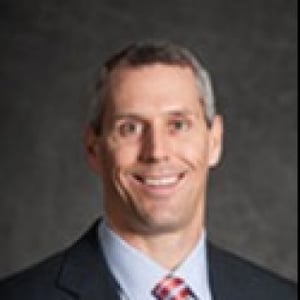
State Representative, Texas House of Representatives
Professor of Law, Antonin Scalia Law School, George Mason University
ILYA SOMIN is Professor of Law at George Mason University and the B. Kenneth Simon Chair in Constitutional Studies at the Cato Institute. His research focuses on constitutional law, property law, democratic theory, federalism, and migration rights. He is the author of Free to Move: Foot Voting, Migration, and Political Freedom (Oxford University Press, revised and expanded edition, 2022), Democracy and Political Ignorance: Why Smaller Government is Smarter (Stanford University Press, revised and expanded second edition, 2016), and The Grasping Hand: Kelo v. City of New London and the Limits of Eminent Domain (University of Chicago Press, 2015, rev. paperback ed., 2016), coauthor of A Conspiracy Against Obamacare: The Volokh Conspiracy and the Health Care Case (Palgrave Macmillan, 2013), and co-editor of Eminent Domain: A Comparative Perspective (Cambridge University Press, 2017). Democracy and Political Ignorance has been translated into Italian and Japanese.
Somin’s work has appeared in numerous scholarly journals, including the Yale Law Journal, Stanford Law Review, Northwestern University Law Review, Georgetown Law Journal, Critical Review, and others. Somin has also published articles in a variety of popular press outlets, including the New York Times, Washington Post, Wall Street Journal, Los Angeles Times, CNN, NBC, The Atlantic, USA Today, Boston Globe, US News and World Report, South China Morning Post, National Law Journal and Reason. He has been quoted or interviewed by the New York Times, Washington Post, Wall Street Journal, Time, Newsweek, The Economist, the Christian Science Monitor, the Financial Times, The Guardian, the Associated Press, CBS, MSNBC, NPR, BBC, Reuters, the Canadian Broadcasting Corporation, the Australian Broadcasting Corporation, Radio Free Europe/Radio Liberty, Al Jazeera, and the Voice of America, among other media.
Somin’s writings have been cited in decisions by the United States Supreme Court, multiple state supreme courts and lower federal courts, and the Supreme Court of Israel. He is co-counsel for the plaintiffs in VOS Selections, Inc. v. Trump, a case challenging the constitutionality of President Trump’s “Liberation Day” tariffs. Somin has testified on the use of drones for targeted killing in the War on Terror before the US Senate Judiciary Subcommittee on the Constitution, Civil Rights, and Human Rights. In 2009, he testified on property rights issues at the United States Senate Judiciary Committee confirmation hearings for Supreme Court Justice Sonia Sotomayor. Somin writes regularly for the popular Volokh Conspiracy law and politics blog, now affiliated with Reason magazine (previously affiliated with the Washington Post from 2014 to 2017). From 2006 to 2013, he served as Co-Editor of the Supreme Court Economic Review, one of the country’s top-rated law and economics journals.
Somin has served as a visiting professor at the University of Pennsylvania Law School. He has also been a visiting professor or scholar at the Georgetown University Law Center, the University of Hamburg, Germany, the University of Torcuato Di Tella in Buenos Aires, Argentina, Uriel Reichman University in Israel, and Zhengzhou University in China. He is a University Affiliate of the Schar School of Policy and Government at George Mason University, and an affiliated faculty member of the George Mason University Institute for Immigration Research. Before joining the faculty at George Mason, Somin was the John M. Olin Fellow in Law at Northwestern University Law School in 2002-2003. In 2001-2002, he clerked for the Hon. Judge Jerry E. Smith of the U.S. Court of Appeals for the Fifth Circuit. Professor Somin earned his B.A., Summa Cum Laude, at Amherst College, M.A. in Political Science from Harvard University, and J.D. from Yale Law School.
Judge, United States Court of Appeals, Ninth Circuit
Lawrence VanDyke serves as a circuit judge on the U.S. Court of Appeals for the Ninth Circuit. Prior to that appointment in January 2020, he served as a Deputy Assistant Attorney General in the Environment and Natural Resources Division of the United States Department of Justice. Before that, he served consecutively as the Solicitor General of two western states – Nevada and Montana. At the beginning of his legal career, he worked as an attorney in the Appellate and Constitutional Issues practice group at Gibson Dunn & Crutcher, LLP.
Judge VanDyke received his law degree magna cum laude from Harvard Law School, where he was an editor on the Harvard Law Review. He has engineering and theology undergraduate degrees and a masters degree in engineering management. He served as a law clerk to the Honorable Janice Rogers Brown of the United States Court of Appeals for the District of Columbia Circuit. Judge VanDyke and his wife Cheryl live in Reno, Nevada, and they have three children.
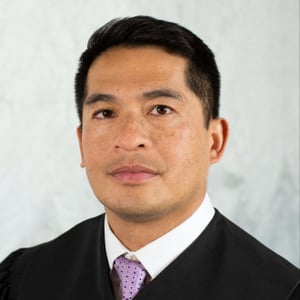
Judge, United States Court of Appeals, Ninth Circuit
Patrick J. Bumatay was confirmed as a U.S. Circuit Judge for the U.S. Court of Appeals for the Ninth Circuit in December 2019. He is based in San Diego, California.
Prior to his appointment, Judge Bumatay served as an Assistant United States Attorney in the U.S. Attorney’s Office for the Southern District of California, where he was a member of the Appellate and Narcotics Sections. He also served as a Counselor to the Attorney General on criminal law issues, including on national opioid strategy and combating transnational organized crime. Judge Bumatay has also worked in the Office of the Deputy Attorney General, the Office of the Associate Attorney General, and the Office of Legal Policy at the U.S. Department of Justice. Judge Bumatay has twice received the Attorney General’s Distinguished Service Award.
Judge Bumatay previously worked as an associate at Morvillo, Abramowitz, Grand, Iason, and Bohrer in New York, New York. Judge Bumatay clerked for the Honorable Timothy M. Tymkovich of the U.S. Court of Appeals for the Tenth Circuit and the Honorable Sandra L. Townes of the U.S. District Court for the Eastern District of New York. Judge Bumatay earned his B.A., cum laude, from Yale University and his J.D. from Harvard Law School.

Washington Supreme Court Rejects a Constitutional Right to Park
Daniel Himebaugh
The west coast is no longer waiting for the Supreme Court to opine on...
A Conversation with Judge Lawrence VanDyke
Idaho Lawyers Chapter
Boise, IDDaniel Webster Debate Series: May the States Protect Their Own Borders?
Mark Brnovich, Ilya Somin, Lawrence VanDyke
The Federalist Society's Georgetown Law Chapter'sDaniel Webster Debate Series presents Daniel Webster Debate Series:May the...
Daniel Webster Debate Series: May the States Protect Their Own Borders?
Litigation Update: City and County of San Francisco v. Environmental Protection Agency
Jonathan H. Adler, Robin Kundis Craig, Andre Monette
The Supreme Court recently decided that they will review a case dealing with the Clean...
Litigation Update: City and County of San Francisco v. Environmental Protection Agency
Jonathan H. Adler, Robin Kundis Craig, Andre Monette
The Supreme Court recently decided that they will review a case dealing with the Clean...
Litigation Update: City and County of San Francisco v. Environmental Protection Agency
Predistribution, Labor Standards, and Ideological Drift: Why Some Conservatives Are Embracing Labor Unions (and Why They Shouldn't)
Alexander T. MacDonald
Common ground isn’t always a good thing. For example, consider the growing popularity of “predistribution.”...
Panel III: Border Litigation
2024 Texas Chapters Conference
Fort Worth, TXNinth Circuit Judge Bumatay on the Constitutional Limits of Search and Seizure
California-UCLA Student Chapter
Los Angeles, CA