
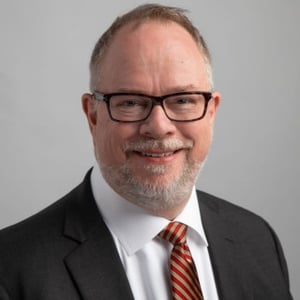
Managing Attorney of the Washington Office, Institute for Justice
William R. Maurer is the Managing Attorney of the Washington state office of the Institute for Justice, which engages in litigation in the areas of economic liberty, private property rights, educational choice, & freedom of speech.
Maurer is an advocate against the criminalization of poverty and the governmental use of the criminal and civil enforcement systems to raise revenue. He was lead counsel in a class action challenging the use of tickets to raise revenue in the city of Pagedale, Missouri. The suit resulted in a federal consent decree that reformed the city’s ticketing and municipal court system. He regularly speaks, teaches, and writes about the abuse of fines and fees in the criminal justice system. He was a participant in summits on taxation by citation put on by the White House and Department of Justice during the Obama Administration. His work on the issue includes serving as an advisory board member of the Fines and Fees Justice Center.
In addition to his work on criminal and civil justice reform, Maurer is a First Amendment litigator. In 2011, he successfully argued before the U.S. Supreme Court that Arizona’s punitive campaign financing regime was unconstitutional. Before the Washington Supreme Court, he successfully argued against efforts to classify radio commentary as a contribution under the state’s campaign finance law.
His cases and advocacy have been covered in the Washington Post, the New York Times, the Economist, the Wall Street Journal, and other major media outlets.
Maurer was named a “Washington Superlawyer” by Washington Law & Politics Magazine for several years. He is a chapter author in numerous legal reference works and has written several articles for law reviews and legal publications across the country.
Prior to joining IJ-WA, Maurer clerked for Washington Supreme Court Justice Richard Sanders and then practiced law at Perkins Coie LLP. Maurer received his law degree in 1994 from the University of Wisconsin – Madison, where he was an editor of the Wisconsin Law Review. He received his BA from Bard College in 1989.

Partner, McCarter & English LLP
Mr. Cote represents both small and large businesses and occasionally individuals in both federal and state courts throughout the country. His practice concentrates primarily on hospitality, employment, civil rights, contracts, unfair and deceptive conduct, class action, private property rights and appellate litigation.
During his time with McCarter, Mr. Cote has played an integral role in obtaining several significant victories for the firm's clients, including the dismissal of a challenge under the public trust doctrine to the private ownership of lawfully filled, tidelands that were developed pursuant to a legislative grant issued in 1832 and the successful defense of a large food service company in a case of first impression concerning the application and interpretation of the Massachusetts Tips Act. Mr. Cote was also instrumental in obtaining a sanctions award of $100,000 in connection with a construction accident case brought in bad faith against one of the firm's clients.
Prior to his admission to the bar, Mr. Cote served for over ten years as a paralegal and law clerk in Arizona, Massachusetts, Vermont and Washington, D.C. During this time, he served as the principal legal assistant to the Arizona Legislature's Ombudsman for Private Property Rights. He also clerked for the Honorable Roger J. Marzulla and Nancie G. Marzulla at Defenders of Property Rights, which, at the time, was the nation's only non-profit legal foundation dedicated exclusively to the protection of private property rights. He is a contributing author of that organization's 1999 publication "State Property Rights Legislation Report: Federalism in Action."
Mr. Cote presently serves as the vice-chair of the Boston Lawyers Division of the Federalist Society for Law and Public Policy Studies. He is also a member of the executive committee for the Federalist Society's Litigation Practice Group and the primary author of the Environmental Practice Group's 2001 terrorism briefing paper entitled: "National Security vs. Public Disclosure: The War on Terrorism's Implications Upon Federal Emergency Planning and Right to Know Laws."

George C. Dix Professor in Constitutional Law, Northwestern University Pritzker School of Law
John O. McGinnis is a graduate of Harvard College and Harvard Law School where he was an editor of the Harvard Law Review. He also has an MA degree from Balliol College, Oxford, in philosophy and theology. Professor McGinnis clerked on the U.S. Court of Appeals for the District of Columbia. From 1987 to 1991, he was deputy assistant attorney general in the Office of Legal Counsel at the Department of Justice. He is the author of Accelerating Democracy: Transforming Government Through Technology (Princeton 2013) and Originalism and the Good Constitution (Harvard 2013) (with M. Rappaport). He is a past winner of the Paul Bator award given by the Federalist Society to an outstanding academic under 40. He has been listed by the United States on the roster of panelists who may be called upon to decide World Trade Organization Disputes.

Counsel to the Firm, Cascadia Cross-Border Law
Margaret Stock focuses her practice on immigration and citizenship law. She is a nationally known expert on immigration and national security laws, and has testified regularly before Congressional committees on immigration, homeland security, and military matters. As a retired Lieutenant Colonel in the Military Police, U.S. Army Reserve, Margaret has extensive experience with U.S. military issues. She has also worked as a professor at the United States Military Academy at West Point, and she has served as an adjunct instructor at the University of Alaska. Margaret served as a member of the American Bar Association Commission on Immigration from 2008-2012. She regularly authors articles on military-related immigration issues, and is well-versed on “parole in place” for military family members and the Military Accessions Vital to the National Interest (“MAVNI”) Program. Margaret authored the book Immigration Law & the Military, which was published by the American Immigration Lawyers Association in 2012.
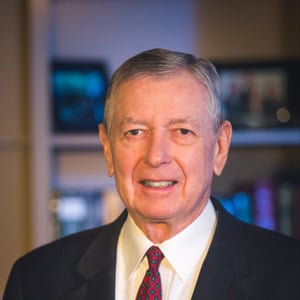
Chairman, The Ashcroft Law Firm LLC, and former United States Attorney General
Former U.S. Attorney General, Governor and U.S. Senator John Ashcroft serves as the firm’s founder and chairman. As Attorney General, and the U.S. Justice Department’s CEO, Mr. Ashcroft led the world’s largest and foremost international law firm and law enforcement agency—an organization larger than most Fortune 500 companies, with over 122,000 employees. Mr. Ashcroft integrated strategic planning, budgeting, and performance measures, which resulted in the DOJ earning a clean audit for the first time in its history.
Mr. Ashcroft boldly led the Department of Justice through the transformational period after the September 11, 2001, terrorist attacks. He subsequently reorganized the Department to focus on its number one priority: preventing terrorism. The tough antiterrorism campaign he directed helped keep America safe throughout his tenure and resulted in the dismantling of terrorist cells across America and the disruption of over 150 terrorist plots worldwide.
Within two months of the attacks, and with financial markets still reeling, the unprecedented corporate scandals at ENRON, WorldCom and dozens more unfolded, further destabilizing the weakened economy. John Ashcroft was called upon to restore America’s faith in the integrity of our marketplace. He marshaled the resources of the federal government to bring to justice those guilty of massive corporate fraud. At all times, he demanded that cases be brought swiftly, with appropriate serious penalties—always taking into account the best interests of the employees and shareholders whose lives were most directly affected.
From 1985 to 1993, as Governor of Missouri, Ashcroft balanced eight consecutive budgets, built a $120 million budget surplus and established a $190 million operating reserve. His management and fiscal integrity helped generate 338,000 new jobs state-wide, a triple-A bond rating from the three major Wall Street rating agencies, a per capita state and local tax burden ranked 49th in the United States and a 12 percent increase in personal income. His new education performance standards led Fortune magazine to name him as one of the nation’s top ten Education Governors. In 1991, the non-partisan National Governors Association voted him Chairman.
Elected to the U.S. Senate in 1994, he brought his management skills to Washington where he authored budget rules protecting Social Security and Medicare and helped balance the federal budget for the first time in decades. As a member of the Senate Judiciary, Foreign Relations and Commerce Committees, he worked to reform laws regulating the banking, telecommunications, aviation, transportation and information technology industries.
In 1973, Mr. Ashcroft served as Missouri Auditor, followed by two terms as Missouri Attorney General. He was raised in Springfield, Missouri, received his undergraduate degree from Yale University and his Juris Doctor from the University of Chicago.
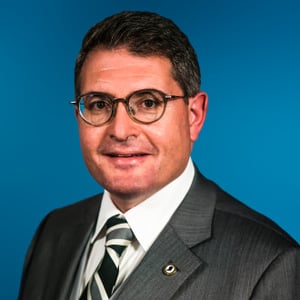
Co-Chairman, The Federalist Society for Law and Public Policy Studies
Leonard is Co-Chairman and former Executive Vice President of the Federalist Society, joining the organization over 25 years ago. Since that time he has been instrumental in helping the organization top 70,000, focusing on the growth of lawyers membership, operations and activities advancing limited, constitutional government. In addition to his work at the Society, Leonard has advised President Trump on judicial selection, assisted with the Gorsuch and Kavanaugh Supreme Court selection and confirmation process, and served as a member of the transition team. He also organized the outside coalition efforts in support of the Roberts and Alito U.S. Supreme Court confirmations. Leonard was appointed by President George W. Bush to three terms to the U.S. Commission on International Religious Freedom as chairman. He was also a U.S. Delegate to the UN Council and UN Commission on Human Rights during the Bush Administration. Leonard was the recipient of the 2009 Bradley Prize, along with the other founders and directors of the Federalist Society, for his work in advancing freedom and the rule of law. He is the coeditor of Presidential Leadership: Rating the Best and the Worst in the White House, as well as the author of opinion editorials in the New York Times,The Wall Street Journal, and Washington Post. Leonard holds degrees from Cornell University and Cornell Law School. He presently resides in Northern Virginia, where he and his wife Sally have raised their seven children.

The Transportation of Hazardous Materials After September 11: Issues and Developments
William R. Maurer
William R. Maurer [1]1. The ProblemShortly after the terrorist attacks against the United States on...
National Security vs. Public Disclosure: The War on Terrorism's Implications Upon Federal Emergency Planning and Right to Know Laws
Evan M. Slavitt, Gregory D. Cote
Evan M. Slavitt, Esq.Gregory D. Cote, Esq.Gadsby Hannah, LLPBoston, Massachusetts **The Federalist Society takes no...
Ambulance Chasing for Justice: How Private Lawsuits for Civil Damages Can Help Combat International Terror
Gordon Dwyer Todd
On January 21, 2002, the North Idaho College announced the donation of a tract of...
Should the Federal Government Backstop Insurance Industry Terrorism Coverage?
Judyth W. Pendell, Warren B. Azano
Judyth W. Pendell, Director, Center for Legal Policy, Manhattan InstituteWarren B. Azano, Vice President, Hartford...
The Workplace as a Front Line in the War Against Terrorism
Joseph McHugh, Jennifer B. Healey
The Federalist Society takes no position on particular legal or public policy initiatives. All expressions...
Money Laundering and Terrorism: A Failed Past and a Bleak Future
John Pickering
By: John PickeringNow more than ever, national security requires that the people of the United...
Combating Bioterrorism: The Product Liability Threat
Bert W. Rein, Kristina Reynolds Osterhaus
By: Bert W. Rein and Kristina R. Osterhaus [1]The September 11 attack and recent anthrax...
Expanding Trade: A Powerful Weapon Against Terrorism
John O. McGinnis
By John O. McGinnis [1]SummaryDefending the Homeland will involve more than beefing up security for...
United States Immigration Law in a World of Terror
Margaret D. Stock
By Margaret D. Stock*I. Introduction The terrorist attacks of September 11, 2001 have spurred a...
John Ashcroft Address Before The Federalist Society at the 2003 National Lawyers Convention
John Ashcroft, Leonard A. Leo
2003 National Lawyers Convention LEONARD LEO: It is early, but I promise that our first speaker...