

Vice President, Edwin Meese III Institute for the Rule of Law, Advancing American Freedom
John G. Malcolm oversees Advancing American Freedom’s work to increase understanding of the Constitution and the rule of law as Vice President of the organization’s Edwin Meese III Institute for the Rule of Law. Malcolm brings to the challenge a wealth of legal expertise and experience in both the public and private sectors.
Prior to joining Advancing American Freedom in 2025, Malcolm was the Vice President of the Institute for Constitutional Government and the Director of the Meese Center for Legal and Judicial Studies at the Heritage Foundation. Prior to joining Heritage in 2012, Malcolm was general counsel at the U.S. Commission on International Religious Freedom, as well as a distinguished practitioner in residence at Pepperdine Law School. From 2004 to 2009, Malcolm was executive vice president and director of worldwide anti-piracy operations for the Motion Picture Association.
Malcolm served as a deputy assistant attorney general in the Department of Justice’s Criminal Division from 2001 to 2004, where he oversaw sections on computer crime and intellectual property, domestic security, child exploitation and obscenity, and special investigations. Immediately prior to that, he was a founding partner in the Atlanta law firm of Malcolm & Schroeder, LLP.
From 1990 to 1997, Malcolm was an assistant U.S. attorney in Atlanta, assigned to the fraud and public corruption section, and also an associate independent counsel, investigating fraud and abuse in the Department of Housing and Urban Development. He was honored with the Director’s Award for Superior Performance for his work in connection with the successful prosecution of Walter Leroy Moody Jr., who assassinated an 11th Circuit judge and the head of the Savannah chapter of the NAACP.
A graduate of Harvard Law School and Columbia College, Malcolm began his career as a law clerk to a federal district court judge and a federal appellate court judge, and as an associate at the Atlanta-based law firm of Sutherland, Asbill & Brennan (new Eversheds Sutherland).
Malcolm, who resides in Washington, D.C., serves on the Board of Trustees of the Washington National Opera and is a Senate-confirmed member of the Board of Directors of the Legal Services Corporation, the largest funder of civil legal aid in the United States.
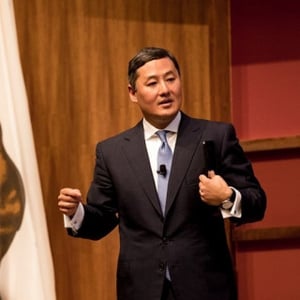
Emanuel S. Heller Professor of Law, University of California at Berkeley; Thomas Smith Senior Research Fellow, Civitas Institute, University of Texas at Austin
John Yoo is the Emanuel Heller Professor of Law at the University of California at Berkeley. He is also the Thomas Smith Senior Research Fellow, Civitas Institute, at the University of Texas at Austin. He is also a Nonresident Senior Fellow at the American Enterprise Institute.
His most recent book, The Politically Incorrect Guide to the Supreme Court, co-authored with Robert Delahunty, was published in 2023. Professor Yoo’s other books include Defender-in-Chief: Trump’s Fight for Presidential Power; Striking Power: How Cyber, Robots, and Space Weapons Change the Rules for War; Point of Attack: Preventive War, International Law, and Global Welfare; and Crisis and Command: A History of Executive Power from George Washington to George Bush.
He is a co-author of volumes 1 and 2 of R. Rossum, G. Tarr, V. Munoz & J. Yoo American Constitution Law (Routledge, 2026), and a co-editor of the eight-volume series on the 250th anniversary of the American Revolution, We Hold These Truths, with Yuval Levin and Adam White of the American Enterprise Institute.
Professor Yoo has published more than 100 articles in academic journals on subjects including national security, constitutional law, international law, and the Supreme Court. He also regularly contributes to the editorial pages of the Wall Street Journal, New York Times, Washington Post, Los Angeles Times, and National Review, among others.
Professor Yoo has served in all three branches of government. He was an official in the U.S. Department of Justice, where he worked on national security and terrorism issues after the 9/11 attacks. He served as general counsel of the U.S. Senate Judiciary Committee. He has been a law clerk for Supreme Court Justice Clarence Thomas and federal appeals Judge Laurence Silberman. He has been a visiting professor at the University of Texas at Austin’s School of Civic Leadership, Seoul National University, the Interdisciplinary Center Herzliya, Keio University, Trento University, the University of Chicago, and the Free University of Amsterdam.
Professor Yoo supervises the Public Law and Policy Program and the California Constitution Center. He also serves on the boards of Founding Forward, the Washington Legal Foundation, the Pacific Legal Foundation, the Ulysses Grant Institute, the Federalist Society’s Separation of Powers and Federalism Division, the Universidad Cientifica del Sur Law School, and the Asia-Pacific Law Institute at Seoul National University. He is a winner of the Federalist Society’s Paul Bator award and the Heritage Foundation’s Edwin Meese III Originalism Lectureship.
Professor Yoo graduated from Yale Law School and summa cum laude from Harvard College.
Harry Elwood Warren Scholar and Professor of Law, Boston University Law School
Jack Beermann’s scholarship focuses on two areas: civil rights litigation and administrative law. He is an authority on the circumstances under which state and local officials, and local governments, should be held liable for their constitutional violations. “What particularly fascinates me is studying the values underlying our public law system and how social movements and history have affected those values,” he says.
Professor Beermann has authored or co-authored four books on administrative law, including a widely-used casebook and the Emanuel Law Outline on the subject. He has also written extensively on the degree to which federal courts should defer to the legal determinations of federal agencies, on the problem of midnight rulemaking, in which outgoing administrations promulgate dozens of regulations at the end of their administrations and on the legal aspects of the funding crisis facing public employee pension funds in the United States.
His articles have appeared in prominent American journals such as the Stanford Law Review, UCLA Law Review, Duke Law Journal, and Boston University Law Review, and in foreign law journals including Germany’s Rechtstheorie and China’s Administrative Law Review. Recent articles include “The Public Pension Crisis” in the Washington & Lee Law Review, “Congressional Administration” in the San Diego Law Review and the “Constitutional Law of Presidential Transition” in the North Carolina Law Review. In 1998, he co-authored an article that examined civil rights violations in the popular television drama NYPD Blue and in 1993 he wrote “The Supreme Court’s Narrow View on Civil Rights” for the prestigious Supreme Court Review.
Before joining the Boston University faculty in 1984, Professor Beermann clerked for Judge Richard Cudahy of the United States Court of Appeals for the Seventh Circuit. In 2017, he was appointed as a public member of the Administrative Conference of the United States. In 2008, 2011 and 2014 he was visiting professor at Harvard Law School and in 1997, he was distinguished visiting professor at DePaul Law School. In 2004, 2005 and 2007, he taught at the Interdisciplinary Center in Herzliya, Israel, and in 2002, he taught at the China University of Political Science and Law in Beijing. He has lectured in Israel, Germany, Australia, Morocco, Portugal and Canada. At BU Law, Professor Beermann teaches administrative law, civil rights litigation, and constitutional law. In recent years, he has also taught introduction to American law (for foreign LLM students) and local government law.
Partner, Gibson, Dunn & Crutcher LLP
Thomas G. Hungar is a partner in the Washington, D.C., office of Gibson Dunn. His practice focuses on appellate litigation, and he assists clients with congressional investigations and complex trial court litigation matters as well. He has presented oral argument before the Supreme Court of the United States in 28 cases, including some of the Court’s most important patent, antitrust, securities, and environmental law decisions, and he has also appeared before numerous lower federal and state courts.
Thomas served as General Counsel to the U.S. House of Representatives from July 2016 until January 2019. As General Counsel, he provided legal advice and litigation representation on a non-partisan basis to the House and its leadership, members, officers, and staff, and he worked closely with numerous House committees in connection with their oversight and investigative activities. Previously, he served as a Deputy Solicitor General of the United States. In that position, he supervised business-related appellate litigation for the federal government, with particular emphasis on patent, antitrust, securities, and environmental appellate cases, and he also oversaw appellate litigation in banking, bankruptcy, tax, government contracts, communications, copyright, labor, trademark, and international trade matters. In private practice, Thomas’s appellate experience has encompassed those areas as well as class actions, constitutional law, employment law, product liability, administrative procedure, insurance coverage and bad faith, and general commercial litigation. He has handled scores of business-related appeals in the Supreme Court and lower appellate courts, and has briefed and argued many high-profile matters.
Thomas is a Fellow of the American Academy of Appellate Lawyers and is a frequent lecturer in his areas of expertise. While at the Department of Justice, he served as Appellate Counsel to the Intellectual Property Task Force Executive Staff, and he was awarded the John Marshall Award for Outstanding Legal Achievement, the Department’s highest award presented to attorneys for contributions and excellence in legal performance, in recognition of his handling of patent-law matters before the Supreme Court.
Most recently, Thomas has garnered national recognition for his Appellate Practice in The Legal 500 – United States, Best Lawyers in America, and in Chambers USA, which has repeatedly highlighted Thomas for his “expertise in appellate litigation” and experience with employment and antitrust disputes, as well as Congressional Investigations. Thomas was also recently named a “Litigation Star” by Benchmark Litigation.
Thomas served as an Assistant to the Solicitor General of the United States from 1992-1994. He also served as a law clerk to Justice Anthony M. Kennedy of the Supreme Court and to Circuit Judge Alex Kozinski of the United States Court of Appeals for the Ninth Circuit. He received his law degree from Yale Law School in 1987, where he was a Senior Editor of the Yale Law & Policy Review. He received his Bachelor of Science degree magna cum laude in mathematics/computer science and economics from Willamette University in 1984.
Thomas is admitted to practice in the District of Columbia.
Hugh and Hazel Darling Foundation Professor of Law; Director, Center for the Study of Constitutional Originalism, University of San Diego School of Law

Executive Vice President, The Federalist Society
Dean Reuter is Executive Vice President at the Federalist Society for Law and Public Policy Studies. He has served in two federal government agency Offices of the Inspector General, as Counsel to the Inspector General and Deputy Inspector General, responsible for policing the use of federal funds granted and contracted through those agencies. As such, he helped conduct and oversee criminal investigations across the country. He is the principal author of the non-fiction book, The Hidden Nazi: The Untold Story of America's Deal with the Devil, and editor of Liberty’s Nemesis: The Unchecked Expansion of the State and Confronting Terror: 9/11 and the Future of American National Security. He was appointed by the President and served as Vice-Chairman of the Board of Directors of the Corporation for National and Community Service, and recently served as an appointee on the U.S. Commission on Presidential Scholars. He is a graduate of Hood College (BA with Honors) and the University of Maryland School of Law.
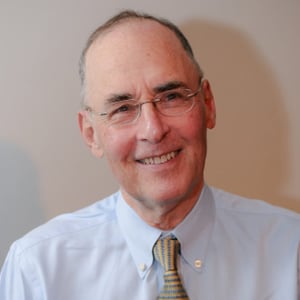
Trustee Professor of Law, New York Law School
From 1972-79, Schoenbrod served as one of the leaders of the Natural Resources Defense Council, where he campaigned to reduce lead in gasoline, resurrect the then-decrepit New York City subway, and protect the environment of Puerto Rico. Previously, he was Director of Program Development at the community development project that Senator Robert Kennedy established in Bedford Stuyvesant. He has also been a senior fellow at the Cato Institute and the American Enterprise Institute.
His books include
D.C. Confidential: Inside the Five Tricks of Washington (Encounter Books, 2017) with forewords by Governor Howard Dean and Senator Mike Lee;
Breaking the Logjam: Environmental Protection That Will Work (Yale University Press, 2010)(with Richard B. Stewart and Katrina M. Wyman);
Saving Our Environment from Washington: How Congress Grabs Power, Shirks Responsibility, and Shortchanges the People (Yale University Press, 2005);
Democracy by Decree: What Happens When Courts Run Government (Yale University Press, 2003) (with Ross Sandler); and
Power Without Responsibility: How Congress Abuses the People Through Delegation (Yale University Press, 1993).
In addition to writing scholarly articles, he has frequently contributed opinion pieces to the Wall Street Journal, The Hill, the New York Times, and other publications.
He has an undergraduate degree from Yale College, a graduate degree in economics from Oxford University, which he attended as a Marshall Scholar, and a law degree from Yale Law School.
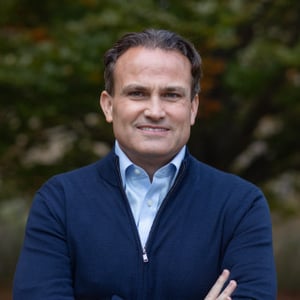
Professor of Law, University of Michigan Law School
Christopher J. Walker is a Professor of Law at the University of Michigan. Prior to joining Michigan law faculty in 2022, he spent a decade teaching at The Ohio State University Moritz College of Law. He previously clerked for Justice Anthony Kennedy of the U.S. Supreme Court, worked on the Civil Appellate Staff at the U.S. Department of Justice, and served on the Senate Judiciary Committee staff for the Gorsuch Supreme Court confirmation. Professor Walker’s research focuses on administrative law, regulation, and law and policy at the agency level. Outside the law school, he chaired the American Bar Association’s Section of Administrative Law and Regulatory Practice in 2020-21 and served as one of forty Public Members of the Administrative Conference of the United States from 2016-2022, and he continues to serve in both organizations in various capacities. He also works of counsel at the U.S. Chamber Litigation Center. In 2022, he received the Federalist Society’s Joseph Story Award.
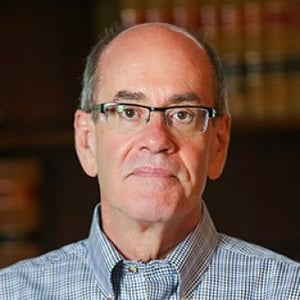
Grosscurth Professor of Law, University of Louisville
John Cross joined the Louisville faculty in 1987 after several years in private practice in Minneapolis. Since coming to Louisville, he has taught and published in a wide variety of areas, ranging from the first-year course in Civil Procedure to Animal Law. In recent years, however, he has increasingly focused his efforts in two broad areas: intellectual property law (both domestic and international), and the law governing court systems (Civil Procedure, Conflicts, Federal Jurisdiction, and Comparative Systems). Because of his exemplary work in the intellectual property field, Cross was named the Grosscurth Chair in Law in 2005.
His teaching interests reflect this same focus. He currently oversees the intellectual property curriculum at Louisville, and teaches many of the courses in that curriculum, including the Intellectual Property Survey, Trademark Law, Intellectual Property and Competition, Authors' and Performers' Rights, International Intellectual Property Law, Law and Computers, and Design Protection Law. He also continues to teach courses in court law, especially the first-year Civil Procedure Course and the capstone course in Federal Jurisdiction.
Cross' recent research parallels his teaching. This work has delved into various issues - both historic and contemporary - in intellectual property. For example, a recent article argues for the abolition of the current dual system of federal and state trademark law, proposing a unitary system in its place. Another article, published in a South African journal and reprinted in a German publication, argues that it is feasible to use an intellectual property model to protect folklore and traditional scientific knowledge. John is also a co-author of a casebook for the first year Civil Procedure course, along with Les Abramson at Louisville and Ellen Deason at Ohio State.
Because of the broad scope of Cross' research, his work has been recognized both in the United States and abroad. Most significantly, in 2006 he was awarded the degree of Doctor of Laws H.C. from the University of Turku in Finland, in recognition of his significant contributions to legal scholarship. He has also received two Fulbright awards (the maximum allowable), one in Finland (1995), the other in Ireland (2000). John has been invited to teach classes and/or give lectures in a number of foreign locales, including institutions in Argentina, Canada, Germany, England, Finland, Japan, the Netherlands, Norway, South Africa, and Sweden. In January of 2008, he was a visiting professor at the University of Western Ontario.
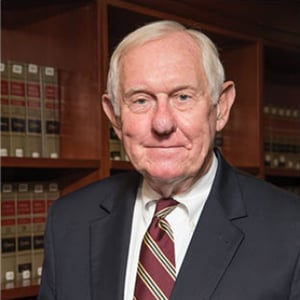
Pravel, Hewitt, Kimball and Kreiger Professorial Lecturer in Intellectual Property and Patent Law, George Washington University Law School
Ralph Oman practices and teaches copyright law at The George Washington University Law School as the Pravel Professorial Lecturer in Intellectual Property and Patent law. He also serves as a Fellow on the faculty of the law school’s Creative and Innovative Economy Center. He has taught at The George Washington University Law School since 1993. From 1994 to 2008, he was counsel to the international law firm, Dechert LLP. He has more than 36 years of experience in intellectual property law and legislation.
Before entering private practice in 1994, Mr. Oman was the register of copyrights of the United States (1985-93), the chief government official charged with administering the national copyright law. During his tenure as register, he helped move the United States into the Berne Convention for the Protection of Literary and Artistic Works, the oldest and most prestigious international copyright treaty, a goal sought by U.S. Registers for 100 years.
Prior to his appointment as register, Mr. Oman served as chief counsel for the Senate Subcommittee on Patents, Copyrights, and Trademarks of the U.S. Senate Judiciary Committee. In his total of 10 years on Capitol Hill working for Senator Hugh Scott of Pennsylvania and Senator Charles McCurdy Mathias of Maryland, he participated directly in many legislative enactments, most notably the 1976 revision of the copyright law. In 2002 he received the Jefferson Medal in recognition of his lifelong contribution to strong intellectual property protection.
Mr. Oman continues to promote intellectual property protection. He often serves in judicial proceedings as an expert witness, and he lectures frequently at venues around the world.
At Georgetown University Law Center, Mr. Oman served as executive editor of the Journal of International Law. After law school, he clerked for the Honorable C. Stanley Blair of the U.S. District Court for the District of Maryland. Prior to law school, Mr. Oman was a Naval Flight Officer, and he spent two tours of duty in Vietnam with his squadron. He was also a Foreign Service Officer and served as the U.S. Vice Consul in the Eastern Province of Saudi Arabia.
CoFounder, RightsClick
Steven’s extensive background in IP law and policy began as an attorney for the U.S. Senate Judiciary Committee, after which, he served as senior counsel for Policy and International Affairs at the U.S. Copyright Office and then as Chief Intellectual Property Counsel for the Global Intellectual Property Center of the U.S. Chamber of Commerce. Before co-founding RightsClick, he started the IP consultancy Sentinel Worldwide, and teaches copyright law at George Washington University Law School.
Alston & Bird Professor of Law, Duke University School of Law
Professor Young teaches constitutional law, federal courts, and foreign relations law. He is one of the nation's leading authorities on the constitutional law of federalism, having written extensively on the Rehnquist Court's "Federalist Revival" and the difficulties confronting courts as they seek to draw lines between national and state authority. He also is an active commentator on foreign relations law, where he focuses on the interaction between domestic and supranational courts and the application of international law by domestic courts. Professor Young also writes on constitutional interpretation and constitutional theory. He has been known to dabble in maritime law and comparative constitutional law.
A native of Abilene, Texas, Professor Young joined the Duke Law faculty in 2008, after serving as the Charles Alan Wright Chair in Federal Courts at the University of Texas at Austin School of Law, where he had taught since 1999. He graduated from Dartmouth College in 1990 and Harvard Law School in 1993. After law school, he served as a law clerk to Judge Michael Boudin of the 1st U.S. Circuit Court of Appeals (1993-94) and to Justice David Souter of the U.S. Supreme Court (1995-96). Professor Young practiced law at Cohan, Simpson, Cowlishaw, & Wulff in Dallas, Texas (1994-95) and at Covington & Burling in Washington, D.C. (1996-98), where he specialized in appellate litigation. He has also been a visiting professor at Harvard Law School (2004-05) and Villanova University School of Law (1998-99), as well as an adjunct professor at Georgetown University Law Center (1997).
Elected to the American Law Institute in 2006, Professor Young is an active participant in both public and private litigation in his areas of interest. He has been the principal author of amicus briefs on behalf of leading constitutional scholars in several recent Supreme Court cases, including Medellin v. Texas(concerning presidential power and the authority of the International Court of Justice over domestic courts) and Gonzales v. Raich (concerning federal power to regulate medical marijuana).
Professorial Lecturer in Law, George Washington University Law School
Theodore C. (Ted) Hirt was an attorney in the Department of Justice's Civil Division from August 1979 to March 2016. He was in its Federal Programs Branch from 1979 to 2008 (trial attorney, senior trial counsel, assistant director), and then in its Office of Immigration Litigation from 2008 to 2016 (trial attorney and senior litigation counsel). Among his responsibilities (September 2001 to March 2016) was being an advisor to the Assistant Attorneys General for the Civil Division, who serve ex officio on the Civil Rules Advisory Committee. Mr. Hirt’s areas of specialization include First Amendment issues, internet and telecommunications law, and electronic discovery. From 1976 to 1979, he was an associate at Fried, Frank, Harris, Shriver & Kampelman. From 1975 to 1976 he was an attorney in the Prehearing Division of the Michigan Court of Appeals.
Former United States Senator, Oklahoma
Tom A. Coburn, M.D. was elected to the U.S. Senate on November 2, 2004. Dr. Coburn's priorities in the Senate included reducing wasteful spending, protecting your liberty, balancing the budget, improving health care access and affordability, protecting the sanctity of all human life - including the unborn - and representing traditional, Oklahoma values. As a citizen legislator, Dr. Coburn pledged to serve no more than two terms in the Senate and to continue to care for patients. He was a member of the Senate Judiciary Committee, Homeland Security and Governmental Affairs Committee, and the Committee on Finance.
As a Senator, Dr. Coburn offered more amendments than any of his colleagues. He offered amendments to eliminate funding for the "Bridge to Nowhere," the "Woodstock Museum" in New York and countless other special interests earmarks sponsored by members of both parties. Dr. Coburn also worked to make government more accountable and transparent. In 2006, he teamed up with then-Senator Barack Obama to create http://www.usaspending.gov/, an online database of all federal spending.
Prior to his election to the Senate, Dr. Coburn represented Oklahoma's Second Congressional District in the House of Representatives from 1995 through 2001. He was first elected in 1994, then re-elected in 1996 and 1998, becoming the first Republican to hold the seat for consecutive terms. Dr. Coburn retired from Congress in 2001, fulfilling his pledge to serve no more than three terms in the House.
In 1970, Dr. Coburn graduated with an accounting degree from Oklahoma State University. From 1970 to 1978, Dr. Coburn served as manufacturing manager at the Ophthalmic Division of Coburn Optical Industries in Colonial Heights, Virginia. Under his leadership, the Virginia division of Coburn Optical grew from 13 employees to more than 350 and captured 35 percent of the U.S. market.
After the family business was sold, Dr. Coburn changed the course of his life by returning to school to become a physician at the University of Oklahoma Medical School where he graduated in 1983. He then did his internship in general surgery at St. Anthony's Hospital in Oklahoma City and family practice residency at the University of Arkansas, Fort Smith.
Dr. Coburn returned to Muskogee where he specialized in family medicine, obstetrics and the treatment of allergies. Dr. Coburn personally delivered more than 4,000 babies.
CoFounder, RightsClick
Steven’s extensive background in IP law and policy began as an attorney for the U.S. Senate Judiciary Committee, after which, he served as senior counsel for Policy and International Affairs at the U.S. Copyright Office and then as Chief Intellectual Property Counsel for the Global Intellectual Property Center of the U.S. Chamber of Commerce. Before co-founding RightsClick, he started the IP consultancy Sentinel Worldwide, and teaches copyright law at George Washington University Law School.
Grosscurth Professor of Law, University of Louisville
John Cross joined the Louisville faculty in 1987 after several years in private practice in Minneapolis. Since coming to Louisville, he has taught and published in a wide variety of areas, ranging from the first-year course in Civil Procedure to Animal Law. In recent years, however, he has increasingly focused his efforts in two broad areas: intellectual property law (both domestic and international), and the law governing court systems (Civil Procedure, Conflicts, Federal Jurisdiction, and Comparative Systems). Because of his exemplary work in the intellectual property field, Cross was named the Grosscurth Chair in Law in 2005.
His teaching interests reflect this same focus. He currently oversees the intellectual property curriculum at Louisville, and teaches many of the courses in that curriculum, including the Intellectual Property Survey, Trademark Law, Intellectual Property and Competition, Authors' and Performers' Rights, International Intellectual Property Law, Law and Computers, and Design Protection Law. He also continues to teach courses in court law, especially the first-year Civil Procedure Course and the capstone course in Federal Jurisdiction.
Cross' recent research parallels his teaching. This work has delved into various issues - both historic and contemporary - in intellectual property. For example, a recent article argues for the abolition of the current dual system of federal and state trademark law, proposing a unitary system in its place. Another article, published in a South African journal and reprinted in a German publication, argues that it is feasible to use an intellectual property model to protect folklore and traditional scientific knowledge. John is also a co-author of a casebook for the first year Civil Procedure course, along with Les Abramson at Louisville and Ellen Deason at Ohio State.
Because of the broad scope of Cross' research, his work has been recognized both in the United States and abroad. Most significantly, in 2006 he was awarded the degree of Doctor of Laws H.C. from the University of Turku in Finland, in recognition of his significant contributions to legal scholarship. He has also received two Fulbright awards (the maximum allowable), one in Finland (1995), the other in Ireland (2000). John has been invited to teach classes and/or give lectures in a number of foreign locales, including institutions in Argentina, Canada, Germany, England, Finland, Japan, the Netherlands, Norway, South Africa, and Sweden. In January of 2008, he was a visiting professor at the University of Western Ontario.
Pravel, Hewitt, Kimball and Kreiger Professorial Lecturer in Intellectual Property and Patent Law, George Washington University Law School
Ralph Oman practices and teaches copyright law at The George Washington University Law School as the Pravel Professorial Lecturer in Intellectual Property and Patent law. He also serves as a Fellow on the faculty of the law school’s Creative and Innovative Economy Center. He has taught at The George Washington University Law School since 1993. From 1994 to 2008, he was counsel to the international law firm, Dechert LLP. He has more than 36 years of experience in intellectual property law and legislation.
Before entering private practice in 1994, Mr. Oman was the register of copyrights of the United States (1985-93), the chief government official charged with administering the national copyright law. During his tenure as register, he helped move the United States into the Berne Convention for the Protection of Literary and Artistic Works, the oldest and most prestigious international copyright treaty, a goal sought by U.S. Registers for 100 years.
Prior to his appointment as register, Mr. Oman served as chief counsel for the Senate Subcommittee on Patents, Copyrights, and Trademarks of the U.S. Senate Judiciary Committee. In his total of 10 years on Capitol Hill working for Senator Hugh Scott of Pennsylvania and Senator Charles McCurdy Mathias of Maryland, he participated directly in many legislative enactments, most notably the 1976 revision of the copyright law. In 2002 he received the Jefferson Medal in recognition of his lifelong contribution to strong intellectual property protection.
Mr. Oman continues to promote intellectual property protection. He often serves in judicial proceedings as an expert witness, and he lectures frequently at venues around the world.
At Georgetown University Law Center, Mr. Oman served as executive editor of the Journal of International Law. After law school, he clerked for the Honorable C. Stanley Blair of the U.S. District Court for the District of Maryland. Prior to law school, Mr. Oman was a Naval Flight Officer, and he spent two tours of duty in Vietnam with his squadron. He was also a Foreign Service Officer and served as the U.S. Vice Consul in the Eastern Province of Saudi Arabia.
Alston & Bird Professor of Law, Duke University School of Law
Professor Young teaches constitutional law, federal courts, and foreign relations law. He is one of the nation's leading authorities on the constitutional law of federalism, having written extensively on the Rehnquist Court's "Federalist Revival" and the difficulties confronting courts as they seek to draw lines between national and state authority. He also is an active commentator on foreign relations law, where he focuses on the interaction between domestic and supranational courts and the application of international law by domestic courts. Professor Young also writes on constitutional interpretation and constitutional theory. He has been known to dabble in maritime law and comparative constitutional law.
A native of Abilene, Texas, Professor Young joined the Duke Law faculty in 2008, after serving as the Charles Alan Wright Chair in Federal Courts at the University of Texas at Austin School of Law, where he had taught since 1999. He graduated from Dartmouth College in 1990 and Harvard Law School in 1993. After law school, he served as a law clerk to Judge Michael Boudin of the 1st U.S. Circuit Court of Appeals (1993-94) and to Justice David Souter of the U.S. Supreme Court (1995-96). Professor Young practiced law at Cohan, Simpson, Cowlishaw, & Wulff in Dallas, Texas (1994-95) and at Covington & Burling in Washington, D.C. (1996-98), where he specialized in appellate litigation. He has also been a visiting professor at Harvard Law School (2004-05) and Villanova University School of Law (1998-99), as well as an adjunct professor at Georgetown University Law Center (1997).
Elected to the American Law Institute in 2006, Professor Young is an active participant in both public and private litigation in his areas of interest. He has been the principal author of amicus briefs on behalf of leading constitutional scholars in several recent Supreme Court cases, including Medellin v. Texas(concerning presidential power and the authority of the International Court of Justice over domestic courts) and Gonzales v. Raich (concerning federal power to regulate medical marijuana).
Grosscurth Professor of Law, University of Louisville
John Cross joined the Louisville faculty in 1987 after several years in private practice in Minneapolis. Since coming to Louisville, he has taught and published in a wide variety of areas, ranging from the first-year course in Civil Procedure to Animal Law. In recent years, however, he has increasingly focused his efforts in two broad areas: intellectual property law (both domestic and international), and the law governing court systems (Civil Procedure, Conflicts, Federal Jurisdiction, and Comparative Systems). Because of his exemplary work in the intellectual property field, Cross was named the Grosscurth Chair in Law in 2005.
His teaching interests reflect this same focus. He currently oversees the intellectual property curriculum at Louisville, and teaches many of the courses in that curriculum, including the Intellectual Property Survey, Trademark Law, Intellectual Property and Competition, Authors' and Performers' Rights, International Intellectual Property Law, Law and Computers, and Design Protection Law. He also continues to teach courses in court law, especially the first-year Civil Procedure Course and the capstone course in Federal Jurisdiction.
Cross' recent research parallels his teaching. This work has delved into various issues - both historic and contemporary - in intellectual property. For example, a recent article argues for the abolition of the current dual system of federal and state trademark law, proposing a unitary system in its place. Another article, published in a South African journal and reprinted in a German publication, argues that it is feasible to use an intellectual property model to protect folklore and traditional scientific knowledge. John is also a co-author of a casebook for the first year Civil Procedure course, along with Les Abramson at Louisville and Ellen Deason at Ohio State.
Because of the broad scope of Cross' research, his work has been recognized both in the United States and abroad. Most significantly, in 2006 he was awarded the degree of Doctor of Laws H.C. from the University of Turku in Finland, in recognition of his significant contributions to legal scholarship. He has also received two Fulbright awards (the maximum allowable), one in Finland (1995), the other in Ireland (2000). John has been invited to teach classes and/or give lectures in a number of foreign locales, including institutions in Argentina, Canada, Germany, England, Finland, Japan, the Netherlands, Norway, South Africa, and Sweden. In January of 2008, he was a visiting professor at the University of Western Ontario.
Pravel, Hewitt, Kimball and Kreiger Professorial Lecturer in Intellectual Property and Patent Law, George Washington University Law School
Ralph Oman practices and teaches copyright law at The George Washington University Law School as the Pravel Professorial Lecturer in Intellectual Property and Patent law. He also serves as a Fellow on the faculty of the law school’s Creative and Innovative Economy Center. He has taught at The George Washington University Law School since 1993. From 1994 to 2008, he was counsel to the international law firm, Dechert LLP. He has more than 36 years of experience in intellectual property law and legislation.
Before entering private practice in 1994, Mr. Oman was the register of copyrights of the United States (1985-93), the chief government official charged with administering the national copyright law. During his tenure as register, he helped move the United States into the Berne Convention for the Protection of Literary and Artistic Works, the oldest and most prestigious international copyright treaty, a goal sought by U.S. Registers for 100 years.
Prior to his appointment as register, Mr. Oman served as chief counsel for the Senate Subcommittee on Patents, Copyrights, and Trademarks of the U.S. Senate Judiciary Committee. In his total of 10 years on Capitol Hill working for Senator Hugh Scott of Pennsylvania and Senator Charles McCurdy Mathias of Maryland, he participated directly in many legislative enactments, most notably the 1976 revision of the copyright law. In 2002 he received the Jefferson Medal in recognition of his lifelong contribution to strong intellectual property protection.
Mr. Oman continues to promote intellectual property protection. He often serves in judicial proceedings as an expert witness, and he lectures frequently at venues around the world.
At Georgetown University Law Center, Mr. Oman served as executive editor of the Journal of International Law. After law school, he clerked for the Honorable C. Stanley Blair of the U.S. District Court for the District of Maryland. Prior to law school, Mr. Oman was a Naval Flight Officer, and he spent two tours of duty in Vietnam with his squadron. He was also a Foreign Service Officer and served as the U.S. Vice Consul in the Eastern Province of Saudi Arabia.
CoFounder, RightsClick
Steven’s extensive background in IP law and policy began as an attorney for the U.S. Senate Judiciary Committee, after which, he served as senior counsel for Policy and International Affairs at the U.S. Copyright Office and then as Chief Intellectual Property Counsel for the Global Intellectual Property Center of the U.S. Chamber of Commerce. Before co-founding RightsClick, he started the IP consultancy Sentinel Worldwide, and teaches copyright law at George Washington University Law School.
Alston & Bird Professor of Law, Duke University School of Law
Professor Young teaches constitutional law, federal courts, and foreign relations law. He is one of the nation's leading authorities on the constitutional law of federalism, having written extensively on the Rehnquist Court's "Federalist Revival" and the difficulties confronting courts as they seek to draw lines between national and state authority. He also is an active commentator on foreign relations law, where he focuses on the interaction between domestic and supranational courts and the application of international law by domestic courts. Professor Young also writes on constitutional interpretation and constitutional theory. He has been known to dabble in maritime law and comparative constitutional law.
A native of Abilene, Texas, Professor Young joined the Duke Law faculty in 2008, after serving as the Charles Alan Wright Chair in Federal Courts at the University of Texas at Austin School of Law, where he had taught since 1999. He graduated from Dartmouth College in 1990 and Harvard Law School in 1993. After law school, he served as a law clerk to Judge Michael Boudin of the 1st U.S. Circuit Court of Appeals (1993-94) and to Justice David Souter of the U.S. Supreme Court (1995-96). Professor Young practiced law at Cohan, Simpson, Cowlishaw, & Wulff in Dallas, Texas (1994-95) and at Covington & Burling in Washington, D.C. (1996-98), where he specialized in appellate litigation. He has also been a visiting professor at Harvard Law School (2004-05) and Villanova University School of Law (1998-99), as well as an adjunct professor at Georgetown University Law Center (1997).
Elected to the American Law Institute in 2006, Professor Young is an active participant in both public and private litigation in his areas of interest. He has been the principal author of amicus briefs on behalf of leading constitutional scholars in several recent Supreme Court cases, including Medellin v. Texas(concerning presidential power and the authority of the International Court of Justice over domestic courts) and Gonzales v. Raich (concerning federal power to regulate medical marijuana).
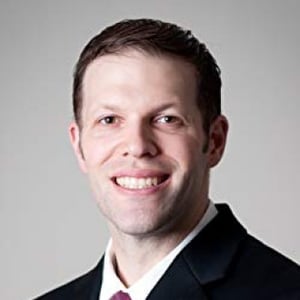
Director of Policy Studies & Senior Fellow, The Free State Foundation
Seth L. Cooper is Director of Policy Studies & Senior Fellow at The Free State Foundation. His work on federal communications and technology policy at the Free State Foundation began in 2009.
With Randolph May, Mr. Cooper is the co-author of Modernizing Copyright Law for the Digital Age: Constitutional Foundations for Reform (2020) and Constitutional Foundations of Intellectual Property: A Natural Rights Perspective (2015), both published by Carolina Academic Press. Along with Mr. May, Mr. Cooper also co-authored A Reader on Net Neutrality and Restoring Internet Freedom (2018) and #CommActUpdate: A Communications Law Fit for the Digital Age (2017), both published by Free State Foundation Press. He previously contributed to two chapters in Communications Law and Policy in the Digital Age (2012), published by Carolina Academic Press. Mr. Cooper's work has also appeared in such publications as CommLaw Conspectus, the San Jose Mercury News, Forbes.com, the Des Moines Register, the Baltimore Sun, the Washington Examiner, and the Washington Times.
Mr. Cooper previously served as Director to the Telecommunications and Information Technology Task Force at the American Legislative Exchange Council (ALEC). Mr. Cooper served as judicial clerk to the Honorable James Johnson at the Washington State Supreme Court. His co-writings about the Washington Supreme Court have appeared in the Gonzaga Law Review and in Federalist Society publications. He has worked in law and policy staff positions at the Washington State Senate and at the Discovery Institute's Center for Science & Culture. Mr. Cooper is a 2009 Lincoln Fellow at the Claremont Institute. He also has worked in private practice in the State of Washington, handling civil legal matters involving personal injuries, small business, contracts, and wills, trusts, and estates.
Mr. Cooper earned his B.A. degree in Political Science from Pacific Lutheran University and received his J.D. from Seattle University School of Law.
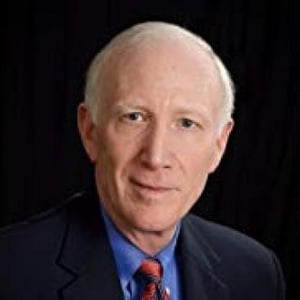
President, The Free State Foundation
Randolph J. May is Founder and President of The Free State Foundation. The Free State Foundation is an independent, non-profit free market-oriented think tank founded in 2006.
From October 1999-May 2006, May was a Senior Fellow and Director of Communications Policy Studies at The Progress & Freedom Foundation, a Washington, DC-based think tank. Prior to joining PFF, he practiced communications, administrative, and regulatory law as a partner at major national law firms. From 1978 to 1981, May served as Assistant General Counsel and Associate General Counsel at the Federal Communication Commission.
May has held numerous leadership positions in bar associations. He is a past Chair of the American Bar Association’s Section of Administrative Law and Regulatory Practice. He is a Fellow of the National Academy of Public Administration. Mr. May also has served as a Public Member of the Administrative Conference of the United States and currently is a Senior Fellow at ACUS.
Mr. May has published more than two hundred articles and essays on communications, administrative and constitutional law topics. He is author of A Call for a Radical New Communications Policy: Proposals for Free Market Reform, and co-author of #CommActUpdate: A Communications Law Fit for the Digital Age and The Constitutional Foundations of Intellectual Property. Mr. May is editor of two books, Communications Law and Policy in the Digital Age: The Next Five Years and New Directions in Communications Policy. In addition, he is the co-editor of two other books, Net Neutrality or Net Neutering: Should Broadband Internet Services Be Regulated? and Communications Deregulation and FCC Reform. In the past, Mr. May has written regular columns on legal and regulatory affairs for Legal Times and the National Law Journal, leading national legal periodicals.
He received his A.B. from Duke University and his J.D. from Duke Law School, where he serves as a member of the Board of Visitors.

Professor of Law, Antonin Scalia Law School, George Mason University
Adam Mossoff is Professor of Law at Antonin Scalia Law School, George Mason University. He has published extensively on why patents, copyrights, and other intellectual property rights have been—and should be—legally secured to innovators and creators as property rights. His scholarship has been relied on by the United States Supreme Court, by lower federal courts, and by U.S. federal agencies. He has been invited to testify numerous times before the U.S. Senate and the House of Representatives on intellectual property legislation. His writings on intellectual property policy have also appeared in the Wall Street Journal, New York Times, Forbes, Investors Business Daily, and in other media outlets. His journal articles can be downloaded here.
Professor Mossoff is a longstanding member of the Executive Committee of the Intellectual Property Practice Group of the Federalist Society, on which he served as Chairperson from 2016-2018, and he is Chair of the Intellectual Property Working Group of the Regulatory Transparency Project of the Federalist Society. He is a Senior Fellow and Chair of the Forum for Intellectual Property at the Hudson Institute, a Visiting Intellectual Property Fellow at the Heritage Foundation, and a member of the Board of Directors of the Center for Intellectual Property Understanding. He is a member of the Intellectual Property Rights Policy Committee of ANSI and he has served as Chair and Vice-Chair of the Intellectual Property Committee of the IEEE-USA, on which he remains a member in good standing.
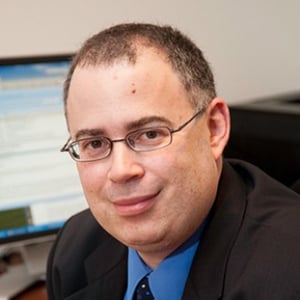
Vice Dean and Professor of Law, Villanova University School of Law
Professor Michael Risch joined the Villanova faculty in 2010 from the West Virginia University College of Law, where he directed the Entrepreneurship, Innovation and Law Program. Prior to joining the West Virginia faculty, he served as an Olin Fellow in Law at Stanford Law School. Professor Risch’s teaching and scholarship focus on intellectual property and internet law, with an emphasis on patents, trade secrets and information access. His articles have been published in the Stanford Law Review and Duke Law Journal, among others; online in the Yale Law Journal Online and PENNumbra; and less formally at the Madisonian, Prawfsblawg, and Patently-O blogs. Two of his articles have been cited by the United States Supreme Court. Professor Risch received his A.B. with honors and distinction in Public Policy and with distinction in Quantitative Economics from Stanford University, and his J.D. with high honors from the University of Chicago Law School. Prior to entering academia, he was a partner at intellectual property boutique Russo & Hale LLP in Palo Alto, California.
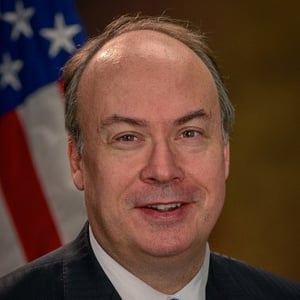
Assistant Attorney General, Environment and Natural Resources Division, U.S. Department of Justice
Jeffrey Bossert Clark was born in Philadelphia, Pennsylvania on April 17, 1967. He is a graduate of Harvard University (A.B. in economics and history, 1989), the University of Delaware (M.A. in urban affairs and public policy, 1993), and the Georgetown University Law Center (J.D., 1995).
Mr. Clark began his career working for the State of Delaware’s Department of Finance, Division of Revenue as an economics analyst in the field of tax policy. During his tenure from 1989 to 1992, he authored several white papers analyzing Delaware revenue sources. Delaware also selected Mr. Clark to submit an economic report and affidavit to the United States Supreme Court in the original jurisdiction case of Delaware v. New York, 507 U.S. 490 (1993).
He entered Georgetown’s law school in 1992 where he earned honors as an articles editor of the Georgetown Law Journal, an Olin Law & Economics Fellow, and a member of the Order of the Coif. From 1995 to 1996, Mr. Clark clerked for Judge Boggs of the U.S. Court of Appeals of the Sixth Circuit. Mr. Clark then joined the law firm of Kirkland & Ellis as an associate from 1996-2001. He worked as an appellate litigator on numerous Supreme Court and other appellate cases and developed expertise in administrative law, statutory interpretation, as well as antitrust, labor, environmental, and telecommunications law.
Mr. Clark went on to serve in ENRD from 2001-2005 as a Deputy Assistant Attorney General selected by Attorney General Ashcroft and Assistant Attorney General Tom Sansonetti. In that capacity, he supervised ENRD’s Appellate and Indian Resources Sections. He reviewed, edited, and contributed to virtually every brief that ENRD filed in the Courts of Appeals, including several cases of exceptional significance that he personally briefed and argued. During his service in the early 2000s, Mr. Clark argued and won numerous cases in multiple U.S. Courts of Appeals and worked on all Supreme Court cases arising out of ENRD’s work.
In 2005, Mr. Clark returned to Kirkland & Ellis LLP as a partner, where he litigated until his return to ENRD in 2018. There he worked on numerous multi-billion-dollar matters and continued to argue many appellate cases. His practice operated at all levels — appellate litigation, trial court litigation, agency proceedings, and regulatory and litigation counseling. He has been named a Super Lawyer for multiple years running, highlighted in the Legal 500, named to the “Legal Who’s Who for Environmental Law” in Corporate Responsibility Magazine, rated A.V. preeminent by Martindale Hubbell, and named a member of the National Association of Distinguished Counsel’s Nation’s One Percent. He also was named one of America’s Top 100 High Stakes Litigators.
President Trump nominated Mr. Clark to be the Assistant Attorney General of the Environment and Natural Resources Division (ENRD) on June 7, 2017. He was confirmed by the U.S. Senate on October 11, 2018 and sworn into office on November 1, 2018, followed by an investiture ceremony on November 15, 2018.

Topics
Atlantic Richfield Co. v. Christian: Major Superfund Case Generates More Questions Than Answers
Disclaimer: The author filed an amicus brief on behalf of Pacific Legal Foundation and the...
Federalism, COVID-19, and the Administrative State
Executive Branch Review Week Teleforum
TeleforumRestoring the Legislative Power to Congress: The Role of the Nondelegation Doctrine and Legislative Vetoes
Executive Branch Review Week Webinar
Is Our Modern Administrative State Unmoored from the Morality of Law?
Ted Hirt
A review of The Dubious Morality of Modern Administrative Law, by Richard A. Epstein (Manhattan Institute...
Necessary & Proper Episode 56: Highlights from Senator Tom Coburn (2015)
Tom A. Coburn
Recently we were saddened to learn of the passing of Senator Tom Coburn. In this...
Allen v. Cooper - Post-Decision SCOTUScast
Steven M. Tepp, John T. Cross, Ralph Oman, Ernest Young
On March 23, 2020, the U.S. Supreme Court released a decision in Allen v. Cooper,...
Courthouse Steps Decision Teleforum: Allen v. Cooper
John T. Cross, Ralph Oman, Steven M. Tepp, Ernest Young
Of Federalism, Copyright, and Blackbeard’s Revenge: The recent Supreme Court ruling in Allen v. Cooper is the...
Courthouse Steps Decision Teleforum: Allen v. Cooper
Intellectual Property Practice Group Teleforum
TeleforumModernizing Copyright Law for the Digital Age
Seth L. Cooper, Randolph May, Adam Mossoff, Michael Risch
In this teleforum, co-authors Randolph May and Seth Cooper will highlight key themes from their...
Capital Conversations: Jeffrey Clark, Assistant Attorney General, Environment and Natural Resources Division (ENRD), Department of Justice
Jeffrey Bossert Clark
The Environment and Natural Resources Division of the Department of Justice recently announced a policy...