

Commissioner, U.S. Equal Employment Opportunity Commission
Founder, Chairman, and CEO, Louis D. Brandeis Center for Human Rights Under Law
Hon. Kenneth L. Marcus is an internationally recognized expert in civil and human rights, as well as a leader in the fight against anti-Semitism on and off university campuses. He is the Founder, Chairman, and CEO of The Louis D. Brandeis Center for Human Rights Under Law, the leading civil rights legal organization fighting against anti-Semitism. The New York Times has called him “The Man Who Helped Redefine Campus Anti-Semitism.” He been described, in that paper, as “the single most effective and respected force” to combat anti-Semitism.
During his public service career, Marcus served as Assistant U.S. Secretary of Education for Civil Rights; Staff Director at the U.S. Commission on Civil Rights; and General Deputy Assistant U.S. Secretary of Housing and Urban Development for Fair Housing and Equal Opportunity.
In academia, he serves as Professorial Lecturer in Law at George Washington University. He formerly held the Lillie and Nathan Ackerman Chair in Equality and Justice in America at the City University of New York’s Bernard M. Baruch College, served as Visiting Research Professor of Political Science at Yeshiva University, and was a Board of Visitors member George Mason University and Distinguished Senior Fellow at that university’s law school. He is a member of the editorial board of the Journal of Contemporary Antisemitism and previously served as Associate Editor of the Journal for the Study of Anti-Semitism.
Marcus is also author of The Definition of Anti-Semitism (Oxford University Press) and Jewish Identity and Civil Rights in America (Cambridge University Press). He has published widely in academic journals as well as in more popular venues such as The Wall Street Journal, Washington Post, Newsweek, USA Today, and Politico. He is a graduate of Williams College and the University of California at Berkeley School of Law.
Earlier in his career, he was a litigation partner in two major law firms, where he conducted complex commercial and constitutional litigation. He also serves as Chairman emeritus of the Executive Committee of the Federalist Society for Law & Public Policy Civil Rights Practice Group.
Assistant Secretary for Fair Housing and Equal Opportunity, United States Department of Housing and Urban Development
Craig Trainor is Assistant Secretary for Fair Housing and Equal Opportunity at the United States Department of Housing and Urban Development. President Trump nominated Mr. Trainor for this position on February 11, 2025, and the United States Senate confirmed him on October 7, 2025.
A “Day One” Trump-Vance Administration official, he previously served as Acting Assistant Secretary for Civil Rights and Principal Deputy Assistant Secretary for Civil Rights at the United States Department of Education, where he spearheaded the Department’s efforts to reorient America’s civil rights regime from an unjust spoils system to one that protects the rights of all Americans. Mr. Trainor’s February 14, 2025, “Dear Colleague” letter is widely considered the Trump Administration’s blueprint for enforcing civil rights laws and restoring the Constitution’s promise of equal protection.
Prior to serving in the Trump-Vance Administration, he was Senior Special Counsel with the United States House of Representatives Committee on the Judiciary under Chairman Jim Jordan (R-OH), and Senior Litigation Counsel with the America First Policy Institute under the Honorable Pam Bondi.
For over ten years, Mr. Trainor was a criminal defense and civil rights lawyer in New York City, litigating cases in New York state court and the United States District Court for the Southern and Eastern Districts of New York.
Prior to founding his law practice, he served as a New York City prosecutor, an associate attorney at a white collar criminal defense firm, and a law clerk to Chief Judge Frederick J. Scullin, Jr., United States District Court for the Northern District of New York.
Assistant Secretary for Civil Rights, U.S. Department of Agriculture
Devon Westhill is the Assistant Secretary for Civil Rights at the U.S. Department of Agriculture. The U.S. Senate confirmed President Donald Trump’s nomination of Westhill on October 7, 2025.
Westhill returns to the USDA where he previously headed the civil rights office as Deputy Assistant Secretary in President Trump’s first term. His previous government appointments also include service at the U.S. Department of Labor, liaison to the Administrative Conference of the U.S., and liaison to the White House Initiative on Historically Black Colleges and Universities. Prior to returning to government service, Westhill was President and General Counsel of a nonprofit civil rights organization.
Westhill has testified on civil rights matters before Congress, federal agencies, and as an expert witness in federal court. He has spoken hundreds of times at college campuses, conferences, and on radio and TV programs, and he is frequently quoted in print publications, and his writing has appeared in numerous national outlets. A U.S. Navy veteran, Westhill earned his BA from the University of North Carolina at Chapel Hill and his JD from the University of Florida.
Co-Founder and President, Defense of Freedom Institute
Bob is a co-founder and President of DFI. He previously served as Senior Counselor to the Secretary of Education from 2017 through 2020 and Deputy General Counsel of the U.S. Department of Education from 2005 until 2009.
During his most recent tenure at the Department, Bob served on the Secretary’s Leadership Team as a strategic and legal adviser on higher education, civil rights, and congressional oversight matters. As the Department’s Regulatory Reform Officer, he also supervised the implementation of the Secretary’s regulatory agenda and was an architect of the Secretary’s reforms concerning Title IX and the Higher Education Act. As Deputy General Counsel, Bob advised on a wide variety of regulatory, legislative, and oversight matters.
Prior to joining the Department in 2017, Bob was vice president for regulatory compliance matters for several postsecondary institutions and practiced education and employment law in Washington, D.C. Before coming to the Department in 2005, he practiced law in New Orleans, litigating commercial, employment, and bankruptcy cases in Louisiana, Texas, and Mississippi.
Bob earned his A.B. in History from Georgetown University, studied British government and international politics at the London School of Economics and Political Science, and received his law degree from Tulane University Law School. His articles have been published by National Review, Real Clear Education, Washington Examiner, and other media outlets. Fox News has featured his work.
Bob is a member of the District of Columbia and Louisiana Bars and the Federalist Society for Law and Public Policy Studies.

Principal, Helwink Legal Group, PLLC
Jonathan served as an attorney at the U.S. Department of Education during the first Trump administration and is currently principal at Helwink Legal Group, PLLC.
Visiting Lecturer in Formal Organizations, Trinity College
Vice President & Senior Legal Fellow, Defending Education
Sarah Parshall Perry is vice president and senior legal fellow at Defending Education.
Before coming to Defending Education, Sarah served as a Senior Legal Fellow for the Edwin Meese III Center for Legal and Judicial Studies, part of the Institute for Constitutional Government at Heritage, where her work centered on civil rights and the proper role of the courts.
Sarah joined Heritage after serving as Senior Counsel to the Assistant Secretary for Civil Rights at the U.S. Department of Education where she focused on policy reform, technical guidance, and the Office for Civil Rights’ (OCR) annual report to Congress. While at OCR, she was appointed by the Acting Assistant Secretary to co-chair the Employment Engagement, Diversity, & Inclusion Council and, in coordination with the Deputy Assistant Secretary for Enforcement oversee the hiring of dozens of attorneys for OCR’s 12 regional offices nationwide. Prior to her tenure at the Department of Education, she spent six years at the Family Research Council in Washington, D.C. where she was Senior Fellow for Education Reform and later, became the regular substitute host for the “Washington Watch” radio show. Her work at the Family Research Council also included the building and oversight of multiple policy coalitions geared toward the fight against antisemitism in academia, curbing tech censorship, and protecting religious liberty.
Before joining FRC, Sarah was in-house counsel and director of development for a Baltimore advertising agency, providing management of all new business transactions from pitch to contract execution for the multi-million-dollar enterprise. She began her practice at the litigation firm of Simms Showers, LLP where her work included Title VII employment discrimination, maritime/admiralty, and False Claims Act (“Qui Tam”) law. Sarah has a law degree from the University of Virginia School of Law, where she was an editor of the Virginia Journal of International Law, a recipient of the American Jurisprudence award, a Phi Delta Phi honor society member, and a student practitioner in the appellate litigation clinic where she argued before the 4th Circuit Court of Appeals. She holds a B.S. in Journalism with honors from Liberty University.
Her commentary and analysis have appeared in media outlets across the country, including the AP, BBC, Fox News, NPR, The Hill, Washington Post, Washington Times, and the New York Times. She is the mother of three children, and the author of just as many books on the trials and triumphs of parenting children on the autism spectrum. Sarah is a member of the Kirkpatrick Society at the American Enterprise Institute, and makes her home north of Baltimore, Maryland.

Founding Partner, Cooper & Kirk PLLC
Charles J. Cooper is a founding member and the chairman of Cooper & Kirk, PLLC, “one of the Nation’s leading litigation boutiques” (Above The Law 2017). The National Law Journal recently wrote that Mr. Cooper’s “brilliant legal career has so far spanned five decades and thrust Cooper into the spotlight in some of the most historic moments of the country’s modern history.” He has argued nine cases before the United States Supreme Court and scores of appeals before each of the 13 federal courts of appeals and several state supreme courts. He has been lead trial counsel in numerous complex, weeks-long trials in federal courts throughout the country. Named by the National Law Journal as one of the 10 best litigators in Washington D.C., Mr. Cooper’s work has been reported in numerous press accounts, and he has been called a “powerhouse attorney” (Fortune 2015), “a hard-nosed litigator” (Washington Post 2017), and “one of the country’s most in-demand civil litigators and a Washington legal institution unto himself” (The American Spectator 2014).
After graduating from the University of Alabama School of Law in 1977, where he ranked first in his class and served as Editor-in-Chief of the Alabama Law Review, Mr. Cooper began his career as a law clerk to Judge Paul Roney on the Fifth Circuit Court of Appeals and to Justice William H. Rehnquist in 1978–79. He then practiced law in Atlanta for two years before joining the Civil Rights Division of the U.S. Department of Justice, where he served as the Deputy Assistant Attorney General in charge of, among other things, appellate matters. In 1985 President Reagan appointed him to the position of Assistant Attorney General for the Office of Legal Counsel, which is the office responsible for providing legal opinions and advice to the White House, the Attorney General, and Executive Branch departments and agencies on issues covering the full spectrum of federal constitutional, statutory, and regulatory law.
In 1988 he returned to private practice as a litigation partner in the Washington, D.C. office of McGuireWoods. From 1990 until the founding of Cooper & Kirk in 1996, he was a partner at Shaw Pittman (now Pillsbury Winthrop Shaw Pittman), where he headed the firm’s Constitutional and Government Litigation Group.
Mr. Cooper has represented a wide range of public and private clients in highly complex constitutional, civil rights, antitrust, healthcare, banking, intellectual property, elections, campaign finance, administrative, commercial, and government contract cases. He has led trial teams in cases that have won judgments and settlements valued in the billions of dollars and that have established ground-breaking constitutional precedents.
Much of Mr. Cooper’s practice has involved representing high-profile clients in nationally prominent matters, including: the State of Florida in a First Amendment suit brought by the Disney Company concerning its autonomous regulatory authority over its Disney World property; the Commonwealth of Virginia in a suit seeking to enjoin the removal of noncitizens from its voter rolls; 38 members of the Duke Lacrosse team falsely accused of rape by officials of Duke University and the City of Durham; Harper Lee in a copyright dispute with the heirs of Gregory Peck; high-ranking former government officials such as former Attorneys General John Ashcroft, Jeff Sessions, and William Barr, and Ambassador John Bolton; several Governors and United States Senators; over 100 Members of Congress; and many state, territorial, and local government bodies and officials. He has also represented and advised government officials and public figures in connection with sensitive private issues that needed to be, and were, resolved discreetly without becoming matters of public record.
In 1998 Chief Justice Rehnquist appointed Mr. Cooper to the Standing Committee on Rules of Practice and Procedure of the Judicial Conference of the United States, where he served for three terms. He also served as a Public Member, appointed by President George H.W. Bush, of the National Commission on Judicial Discipline and Removal. He is a member of numerous professional associations, including the American Law Institute (since 1993) and the American Academy of Appellate Lawyers (since 1996). He is also an active member of the Federalist Society and the Republican National Lawyers Association, which in 2010 named him Republican Lawyer of the Year and in 2016 honored him with its Edwin Meese III Award.
Mr. Cooper has published scores of articles and spoken extensively on constitutional and legal policy topics. He has appeared before congressional committees on 26 occasions, testifying as an expert on a wide variety of legal issues, including the Chevron doctrine of judicial deference to administrative agencies, the diversity of citizenship jurisdiction of federal courts, statehood bills for Puerto Rico and the District of Columbia, and the impeachment of President Clinton.

McCormick Professor of Jurisprudence; Director, James Madison Program, Princeton University
Robert P. George is McCormick Professor of Jurisprudence and Director of the James Madison Program in American Ideals and Institutions at Princeton University. He has several times been a Visiting Professor at Harvard Law School. He has served as Chairman of the U.S. Commission on International Religious Freedom and on the U.S. Commission on Civil Rights and the President’s Council on Bioethics. He has also served as the U.S. member of UNESCO’s World Commission on the Ethics of Scientific Knowledge and Technology. He was a Judicial Fellow at the Supreme Court of the United States, where he received the Justice Tom C. Clark Award. A Phi Beta Kappa graduate of Swarthmore, he holds the degrees of J.D. and M.T.S. from Harvard University and the degrees of D.Phil., B.C.L., D.C.L., and D.Litt. from Oxford University, in addition to twenty-one honorary doctorates. He is a recipient of the U.S. Presidential Citizens Medal, the Honorific Medal for the Defense of Human Rights of the Republic of Poland, the Canterbury Medal of the Becket Fund for Religious Liberty, the Bradley Prize, the Irving Kristol Award of the American Enterprise Institute, and Princeton University’s President’s Award for Distinguished Teaching. His books include Making Men Moral: Civil Liberties and Public Morality and In Defense of Natural Law (both published by Oxford University Press), as well as The Clash of Orthodoxies and Conscience and Its Enemies (both published by ISI Books).

Judge, United States Court of Appeals, District of Columbia Circuit
Judge Katsas was appointed to the D.C. Circuit in December 2017. He graduated from Princeton University and Harvard Law School, where he was an executive editor on the Harvard Law Review. Between 1989 and 1992, he served as a law clerk to Judge Edward Becker on the Third Circuit, to then-Judge Clarence Thomas on the D.C. Circuit, and to Justice Thomas on the Supreme Court. Between 1992 and 2001, he was an associate and then partner in the Washington office of Jones Day, where he specialized in appellate and complex civil litigation. Between 2001 and 2009, he served in many senior positions in the Department of Justice, including as Assistant Attorney General for the Civil Division and as Acting Associate Attorney General. In 2009, he returned to Jones Day. From January to December 2017, he served as Deputy Assistant to the President and Deputy Counsel to the President.
Before joining the bench, Judge Katsas argued more than 75 appeals, including three cases in the Supreme Court, 13 cases in the D.C. Circuit, and cases in every other federal court of appeals. By appointment of the Chief Justice, he served on the Advisory Committee on Appellate Rules from 2013 to 2017. In 2016, he was elected to membership in the American Academy of Appellate Lawyers.

Partner, Boies Schiller Flexner LLP
Eric is an appellate and trial litigator who represents plaintiffs and defendants in high-stakes litigation and regulatory matters. His practice focuses on constitutional law, government regulation, antitrust, and class actions. A former United States Supreme Court clerk, Special Counsel to the United States Senate Judiciary Committee, and Deputy Attorney General for the state of Alabama, Eric’s experience serving at the highest levels of state and federal government informs every aspect of his approach to litigation and regulatory issues.
Eric has briefed and argued high-stakes appeals and dispositive motions in a variety of state and federal courts and briefed multiple matters at the United States Supreme Court. He has served as lead or co-lead counsel in regulatory, constitutional, and consumer-protection suits, including a pathbreaking suit challenging the Department of Commerce’s regulations governing census apportionment. Eric’s experience ranges across wide variety of substantive areas, including antitrust, civil rights, criminal law, energy, insurance, healthcare, securities and corporate law, defamation and privacy law, Indian law, gambling regulation, and international judgment enforcement.
Before joining the firm, Eric was a law clerk to the Hon. Samuel A. Alito at the United States Supreme Court and Chief Judge William H. Pryor at the Eleventh Circuit. Eric also served as a special counsel to Senator Lindsey Graham in his capacity as chairman of the Senate Judiciary Committee and as a Deputy Attorney General and the Assistant Solicitor General for the State of Alabama.

Senior Counsel, Miller Johnson
Brett Swearingen is a Senior Counsel in Miller Johnson’s Employment and Labor practice. A native of Southwest Michigan, Brett’s practice focuses on employment and ERISA litigation, as well as counseling clients on employment matters and dealing with the government.
Mr. Swearingen litigates on behalf of clients in complex matters of employment and ERISA law, including FLSA collective actions, multiemployer pension withdrawal liability disputes, and government investigations. In addition, Brett regularly advises clients—especially state and federal contractors and grantees—on compliance with civil rights laws, as well as religious non-profits on matters regarding employment law and religious liberty. Brett is also experienced in the statistical analysis of workplace issues, such as using “disparate impact analysis” to help employers test for (and root out) potential discriminatory effects of workplace policies and practices.
Brett previously served as Counselor to the Deputy Secretary at the United States Department of Labor. At the DOL, he advised the Deputy Secretary and Secretary on employee benefits and civil rights matters and was a key advisor on several important rulemakings within the Employee Benefits Security Administration (EBSA) and the Office of Federal Contract Compliance Programs (OFCCP), including regulations concerning ESG investing, proxy voting, and fiduciary investment advice, and reforms to OFCCP’s enforcement procedures and religious exemption.
Prior to his time at DOL, Brett was a litigator in the employee benefits practice of a global law firm, where he defended clients in several multi-million dollar ERISA withdrawal liability cases against multiemployer pension funds concerning alleged evade or avoid liability, successor liability, and employer challenges to pension funds’ discount rates.
Mr. Swearingen is currently licensed in Michigan and Washington, D.C.
Chairman, Center for Equal Opportunity
Linda Chavez is Chairman of the Center for Equal Opportunity. She has published opinions and columns in newspapers across the country and appears regularly on cable news. Chavez is the author of the three books: Out of the Barrio: Toward a New Politics of Hispanic Assimilation, An Unlikely Conservative: The Transformation of an Ex-Liberal, and Betrayal: How Union Bosses Shake Down Their Members and Corrupt American Politics. She has been honored by the Library of Congress as a "Living Legend" and as nominee for Secretary of Labor by President George W. Bush.
Chavez has held many appointed positions and has served on numerous corporate and nonprofit boards. Among her appointed positions has been Chairman, National Commission on Migrant Education (1988-1992); White House Director of Public Liaison (1985); Staff Director of the U.S. Commission on Civil Rights (1983-1985); and member of the Administrative Conference of the United States (1984-1986). Chavez was also the Republican nominee for U.S. Senator from Maryland in 1986 and was elected by the United Nations' Human Rights Commission to serve a four-year term as U.S. Expert to the U.N. Sub-commission on the Prevention of Discrimination and Protection of Minorities.
Chavez earned her BA from the University of Colorado.

Will Skillman Fellow in Education, Center for Education Policy, The Heritage Foundation
Jonathan Butcher is the Will Skillman Fellow in Education at The Heritage Foundation. He is the author of Splintered: Critical Race Theory and the Progressive War on Truth (Bombardier Books, April 2022). He co-edited and wrote chapters in The Critical Classroom (The Heritage Foundation, 2022), discussing the racial prejudice that comes from the application of critical race theory in K-12 schools. In 2021, South Carolina Gov. Henry McMaster nominated Jonathan to serve on the board of the South Carolina Public Charter School District, a statewide charter school authorizer. He has researched and testified on education policy around the U.S.
Jonathan co-edited and wrote chapters in the book The Not-So-Great Society, which provides conservative solutions to the problems created by the ever-expanding federal footprint in preschool, K-12, and higher education.
In 2018 the Federal Commission on School Safety cited comments from his testimony in the commission’s final report. He has appeared on local and national TV outlets, including C-SPAN, Fox News, and HBO’s Vice News Tonight, and he has been a guest on many radio programs. His commentary has appeared nationally in places such as the Wall Street Journal, Education Week, National Review Online, Newsweek.com, and Forbes.com, along with newspapers around the country.
In 2017 he was a co-recipient of the State Policy Network’s Bob Williams Award for Most Influential Research for a proposal to protect free speech on campus, alongside Stanley Kurtz of the Ethics and Public Policy Center and Jim Manley of the Goldwater Institute.
Jonathan previously served as the education director at the Goldwater Institute, where he remains a senior fellow. He was a member of the Arizona Department of Education’s first Steering Committee for Empowerment Scholarship Accounts, the nation’s first education savings account program. He is also a Senior Fellow with The Beacon Center of Tennessee, a nonpartisan research organization, and a contributing scholar for the Georgia Center for Opportunity.
Prior to joining Goldwater, Jonathan was the director of accountability for the South Carolina Public Charter School District. Jonathan previously studied education policy at the Department of Education Reform at the University of Arkansas and worked with the School Choice Demonstration Project, the research team that evaluated voucher programs in Washington, D.C. and Milwaukee, Wisc.
Jonathan holds a B.A. in English from Furman University and an M.A. in economics from the University of Arkansas.
Co-Founder and President, Defense of Freedom Institute
Bob is a co-founder and President of DFI. He previously served as Senior Counselor to the Secretary of Education from 2017 through 2020 and Deputy General Counsel of the U.S. Department of Education from 2005 until 2009.
During his most recent tenure at the Department, Bob served on the Secretary’s Leadership Team as a strategic and legal adviser on higher education, civil rights, and congressional oversight matters. As the Department’s Regulatory Reform Officer, he also supervised the implementation of the Secretary’s regulatory agenda and was an architect of the Secretary’s reforms concerning Title IX and the Higher Education Act. As Deputy General Counsel, Bob advised on a wide variety of regulatory, legislative, and oversight matters.
Prior to joining the Department in 2017, Bob was vice president for regulatory compliance matters for several postsecondary institutions and practiced education and employment law in Washington, D.C. Before coming to the Department in 2005, he practiced law in New Orleans, litigating commercial, employment, and bankruptcy cases in Louisiana, Texas, and Mississippi.
Bob earned his A.B. in History from Georgetown University, studied British government and international politics at the London School of Economics and Political Science, and received his law degree from Tulane University Law School. His articles have been published by National Review, Real Clear Education, Washington Examiner, and other media outlets. Fox News has featured his work.
Bob is a member of the District of Columbia and Louisiana Bars and the Federalist Society for Law and Public Policy Studies.
President, Thomas B. Fordham Institute
Michael J. Petrilli is president of the Thomas B. Fordham Institute, research fellow at Stanford University’s Hoover Institution, executive editor of Education Next, editor in chief of the Education Gadfly Weekly, host of the Education Gadfly Show podcast, and a contributor at Forbes.com. An award-winning writer, he is the author of The Diverse Schools Dilemma, editor of Education for Upward Mobility, and co-editor of How to Educate an American and Follow the Science to School. An expert on charter schools, school accountability, evidence-based practices, and trends in test scores and other student outcomes, Petrilli has published opinion pieces in the New York Times, Washington Post, Wall Street Journal, Bloomberg, and Slate, and appears frequently on television and radio. Petrilli helped to create the U.S. Department of Education’s Office of Innovation and Improvement and the Policy Innovators in Education Network, and serves on the board of the Association of American Educators Foundation. He lives with his family in Bethesda, Maryland.
Director of Research, National Association of Scholars
David Randall is director of research at the National Association of Scholars (NAS). He has co-authored The Irreproducibility Crisis of Modern Science: Causes, Consequences, and the Road to Reform (2018), as well as articles on the irreproducibility crisis for The Wall Street Journal and The Hill. He has also written reports for the NAS on civics education, social justice education, college common readings, and the College Board’s Advanced Placement European History examination. His academic works include The Concept of Conversation: From Cicero’s Sermo to the Grand Siècle’s Conversation (2018) and The Conversational Enlightenment: The Reconception of Rhetoric in Eighteenth-Century Thought (2019).
David earned a Ph.D. in history from Rutgers University, an M.F.A. in fiction writing from Columbia University, a master’s degree in library science from the Palmer School at Long Island University, and a B.A. from Swarthmore College. Prior to working at NAS he was the sole librarian at the John McEnroe Library at New York Studio School, where he secured a number of grants for the school’s Lecture Series Archive Digitization Project.
Investigative Counsel, U.S. House Committee on Education and the Workforce
Kent Talbert is a Washington, DC-based attorney with over 25 years’ experience in providing advice on education law and policy in Congress, the U.S. Department of Education, and the private sector. His practice includes legal and policy advice to colleges and universities, for-profit schools, accrediting agencies, the pre-K-12 sector, charter school organizations, trade associations, and education-focused companies, as well as service as an expert witness. He currently serves as Investigative Counsel, U.S. House Committee on Education and the Workforce.
Prior to establishing his firm, Mr. Talbert practiced at Talbert & Eitel, PLLC from 2010-2012. From 2006-2009 he served as General Counsel of the U.S. Department of Education, advising the Secretary of Education on a broad range of legal and policy matters, including the reauthorization of the Higher Education Act of 1965, the drafting and implementation of regulations under the No Child Left Behind Act of 2001, and major education law cases pending before the Supreme Court of the United States and other appellate and trial courts. During his tenure as General Counsel, Mr. Talbert served as the Chief Regulatory Officer for the Department, overseeing all documents for publication in the Federal Register.
He has provided legal and strategic advice on the No Child Left Behind Act of 2001, the Higher Education Opportunity Act of 2008, the Ensuring Continued Access to Student Loans Act of 2008, the Freedom of Information Act (FOIA), the Family Educational Rights and Privacy Act (FERPA), the Rehabilitation Act of 1973, the Americans With Disabilities Act, Title IX of the Education Amendments of 1972, the Jeanne Clery Disclosure of Campus Security Policy and Campus Crime Statistics Act ("Clery Act"), Federal Student Aid program reviews, negotiated rulemaking, and accreditation.
Prior to his service as General Counsel, Mr. Talbert served as the Department's Deputy General Counsel for Departmental and Legislative Service from 2001-2006. Earlier in his career, Mr. Talbert served for over 12 years on House and Senate staff, both as Education Policy Counsel for the Committee on Education and the Workforce in the U.S. House of Representatives, and as a professional staff member of the Committee on Labor and Human Resources (now Committee on Health, Education, Labor, and Pensions) in the U.S. Senate.
Mr. Talbert is a member of the Bars of the District of Columbia and South Carolina, the Alliance of Public Charter School Attorneys, and the National Association of College and University Attorneys where he serves on the Committee on Legal Education. He is admitted to practice before the United States Supreme Court, the United States Court of Federal Claims, the United States Court of Appeals for the District of Columbia Circuit, the United States Court of Appeals for the Fourth Circuit, and all federal courts in South Carolina and Washington, DC.
Senior Counsel, America First Legal Foundation
Nicholas Barry has been a senior litigation counsel at America First Legal since 2022. During that time, he has filed numerous lawsuits challenging lawless actions by governments and businesses. Previously, he litigated catastrophic malpractice cases, and before that, he litigated cases as an Assistant Attorney General for the Tennessee Attorney General's Office. He began his career clerking for the United States District Court for the Eastern District of Kentucky for Judge William O. Bertelsman and was an associate at Stites & Harbison before joining the Tennessee Attorney General's Office. He is a graduate of Vanderbilt Law School.
General Counsel, Mountain States Legal Foundation
William E. Trachman is General Counsel for Mountain States Legal Foundation, where he protects the rights of individuals to live freely and securely under the U.S. Constitution. Previously, he was appointed to serve in the Department of Education as Deputy Assistant Secretary in the Office for Civil Rights. Prior to his appointment, he served as General Counsel to the Douglas County School District, where he helped litigate the fight for school choice in the school district. Presently, Mr. Trachman serves as Chair of the Colorado Federalist Society and the Vice Chair of the U.S. Commission on Civil Rights’ Colorado Advisory Board. He previously taught as an Adjunct Professor at the University of Denver, Sturm College of Law. He attended U.C. Berkeley for both undergraduate and law school, and then clerked for the Honorable Harris Hartz on the 10th Circuit Court of Appeals. Mr. Trachman is licensed in Colorado, California, and Washington, D.C.
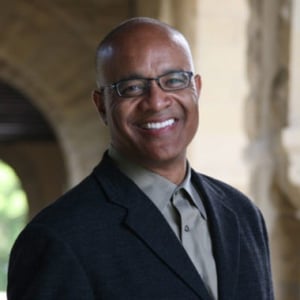
Jackson Eli Reynolds Professor of Law, Stanford Law School
Ralph Richard Banks is the Jackson Eli Reynolds Professor of Law at Stanford Law School and a professor, by courtesy, at the Stanford Graduate School of Education. He is the Founder and Faculty Director of the Stanford Center for Racial Justice, an initiative that aims to confront and counter the polarization that plagues American society through an analysis of contentious racial issues free from the orthodoxies of Left and Right.
Professor Banks is the co-author of two leading law school casebooks, Racial Justice and the Law: Cases and Materials (2016) (with co-editors Kim Forde-Mazrui, Guy Uriel Charles and Cristina Rodriguez) and Family Law in a Changing America (2nd ed. 2024) (with co-editors Douglas NeJaime, Joanna Grossman, and Suzanne Kim). He is also the author of the trade book Is Marriage for White People? How the African American Marriage Decline affects Everyone (2011; paperback 2012), described by the Los Angeles Times as a “must read,” by the New York Times as “important” and by the Wilson Quarterly (the official publication of the Woodrow Wilson International Center for Scholars) as one of the Top Ten Books of 2011. The book has been featured by a wide range of media outlets, including The Wall Street Journal, The Economist, Essence magazine, The Village Voice, Time, Newsweek/The Daily Beast, and also NPR (local and national) CNN, ABC News/Nightline, The View, and Fox News, among many others. His forthcoming book, The Big Sort: How College Can Make or Break the American Dream, will be published in 2025.
At Stanford, Professor Banks teaches Constitutional Law, Family Law and a variety of courses related to race, law and inequality. He joined the Stanford faculty in 1998 after clerking for federal judge Barrington D. Parker, serving as the Reginald F. Lewis Fellow at Harvard Law School and practicing law at the law firm O’Melveny & Myers. He graduated from Harvard Law School with honors and received Bachelor’s and Master’s degrees from Stanford University.

Partner, Consovoy McCarthy PLLC
Thomas R. McCarthy is a partner at Consovoy McCarthy Park PLLC. Mr. McCarthy assists clients with a wide array of issues in federal district and appellate courts across the country. He frequently represents clients in complex litigation involving diverse legal issues arising under the First Amendment, the Equal Protection Clause, the Commerce Clause, and other provisions of the U.S. Constitution. Mr. McCarthy also represents clients in litigation matters involving numerous federal statutes such as the Administrative Procedure Act, the Federal Arbitration Act, the Sherman Act, the Communications Act, the Voting Rights Act, and the Patent Act. He also represents clients with regulatory matters before the Federal Communications Commission, the Federal Trade Commission, and various other federal agencies.
Mr. McCarthy is a former law clerk to Judge David B. Sentelle of the United States Court of Appeals for the D.C. Circuit, and Judge Frank W. Bullock, Jr. of the United States District Court for the Middle District of North Carolina. Since 2011, McCarthy has been the co-director of the George Mason University School of Law Supreme Court Clinic. He previously taught an advanced constitutional law seminar at Mason Law.
Mr. McCarthy earned his BS from the University of Notre Dame, where he was a Notre Dame Scholar, and his JD magna cum laude from George Mason University School of Law. Mr. McCarthy is a member of the Virginia and District of Columbia bars.
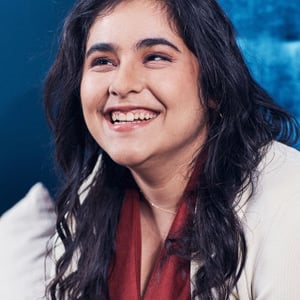
Aditi Juneja is the Executive Director of Democracy 2076, an organization founded in 2023 working long-term to change our Constitution, political culture, and political parties. She was most recently Chief of Staff at the Movement Voter Project and previously spent 4 years at Protect Democracy where she led the work of the National Task Force on Election Crises. Her writing has been featured in Vox, NPR, and Talking Points Memo. She received her J.D. from NYU Law School and a B.A. from Connecticut College
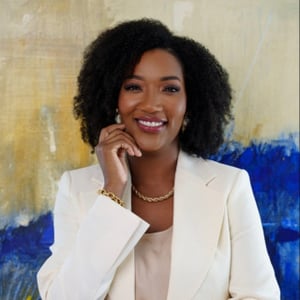
Managing Partner, AKP Management
Ayana Parsons is an award-winning leadership expert who founded and runs AKP Management LLC, a business and leadership consultancy for purpose-driven changemakers. In 2024, Ayana was named one of the 100 Most Influential African-Americans by The Root and one of 18 experts closing the racial wealth gap in America by Time Magazine.
In addition to AKP Management, Ayana is Co-Founder of the Fearless Fund, the first venture capital fund created for women of color by women of color. The fund was formed in 2019 to eradicate the racial and gender disparities that exist in venture capital.
Prior to AKP Management and Fearless Fund, Ayana co-founded Yardstick Management alongside her husband, Dr. Ebbie Parsons. Yardstick eventually became the best consulting firm in America (Inc. Magazine), providing organizational strategy support to hundreds of notable clients.
As part of her efforts to advance equity and inclusion at the highest levels, Ayana formerly led Board & CEO Inclusion at Korn Ferry. During her time as a Principal at Heidrick & Struggles, she served as a cabinet member for Stanford University’s Clayman Institute for Gender Research where she provided thought leadership on closing the gender gap in corporate boardrooms and in the executive suite. Prior to Korn Ferry and Heidrick & Struggles, Ayana served as the Global Head of Retail, Consumer Goods, and Lifestyle Industries at the World Economic Forum.
A seasoned corporate executive, Ayana’s industry career spans sales, marketing, strategy and general management roles at several of the world’s most admired companies including Philips, Pfizer, Kimberly-Clark and Procter & Gamble.
With 20+ years of experience as a venture capitalist, organizational consultant, corporate executive and entrepreneur, Ayana leverages her deep expertise in consumer markets, business strategy, general management, enterprise leadership, top team effectiveness, board effectiveness and inclusive talent management to help fuel personal and professional growth and transformation.
Assistant Secretary for Civil Rights, U.S. Department of Agriculture
Devon Westhill is the Assistant Secretary for Civil Rights at the U.S. Department of Agriculture. The U.S. Senate confirmed President Donald Trump’s nomination of Westhill on October 7, 2025.
Westhill returns to the USDA where he previously headed the civil rights office as Deputy Assistant Secretary in President Trump’s first term. His previous government appointments also include service at the U.S. Department of Labor, liaison to the Administrative Conference of the U.S., and liaison to the White House Initiative on Historically Black Colleges and Universities. Prior to returning to government service, Westhill was President and General Counsel of a nonprofit civil rights organization.
Westhill has testified on civil rights matters before Congress, federal agencies, and as an expert witness in federal court. He has spoken hundreds of times at college campuses, conferences, and on radio and TV programs, and he is frequently quoted in print publications, and his writing has appeared in numerous national outlets. A U.S. Navy veteran, Westhill earned his BA from the University of North Carolina at Chapel Hill and his JD from the University of Florida.

Professor of Law, University of Baltimore School of Law (on leave); Senior Counsel, U.S. Department of Justice
Professor Dolin’s scholarship centers on patent law with a specific focus on how the patent regime affects innovation, especially in bio-pharmaceutical areas. His work in these areas includes a number of scholarly articles, presentations, amicus briefs, and congressional testimony.
Dr. Dolin is currently on leave from his academic duties while he serves as Senior Counsel in the Civil Rights Division of the United States Department of Justice.
From January 2020 to January 2022, Professor Dolin served as a resident Associate Justice of the Supreme Court of the Republic of Palau. In this role, he (together with other members of the Court) heard appeals in civil, criminal, administrative, and constitutional law matters.
Prior to joining the University of Baltimore School of Law, Professor Dolin held visiting appointments in other law schools. He also served as a law clerk to the Hon. Pauline Newman, of the U.S. Court of Appeals for the Federal Circuit and the late Hon. H. Emory Widener Jr., of the U.S. Court of Appeals for the Fourth Circuit.
Rumors that he has a real Russian bear in his office are entirely true.
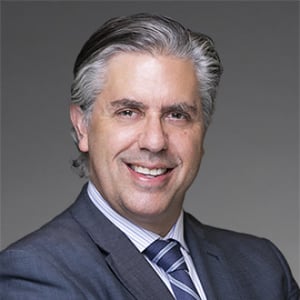
Associate Judge, Superior Court of the District of Columbia and President of the Bar Association of the District of Columbia
Craig E. Leen is an Associate Judge of the Superior Court of the District of Columbia. He also serves as the 139th President of the Bar Association of the District of Columbia and a Professorial Lecturer in Law at George Washington University School of Law.
Prior to being sworn in, Judge Leen was a partner at K&L Gates in the Washington, DC office focused on labor & employment, litigation, government contracts, and administrative & regulatory law. He was also the pro bono coordinator for the DC office.
Judge Leen was formerly a federal agency head, serving as Director of the Office of Federal Contract Compliance Programs (OFCCP) at the U.S. Department of Labor.
Prior to his federal service at OFCCP, Judge Leen was the City Attorney of the City of Coral Gables, and before that was Chief of the Appeals Section and then Chief of the Federal Litigation Section at the Miami-Dade County Attorney's Office. Earlier in his career, Judge Leen served as a law clerk to the Honorable Robert E. Keeton, United States District Judge, District of Massachusetts.
In recognition of his public service, Judge Leen received the Secretary's Exceptional Achievement Award - Professional while at the U.S. Department of Labor, and the Paul S. Buchman Award for Outstanding Contribution in the Area of Legal Public Service while in local government.
Judge Leen received his Juris Doctor from Columbia Law School, graduating as a Harlan Fiske Stone Scholar, and having served as a teaching fellow in both Contracts and Torts. Judge Leen received his Bachelor of Arts, cum laude, from Georgetown University, where he majored in both Government and Economics.

Senior Legal Counsel, Independent Women's Forum
Beth Parlato is the Senior Legal Advisor of Independent Women’s Law Center. Prior to joining IWLC, Beth was a trial litigator in New York State for over 30 years. During her time in private practice, Beth handled an array of matters in the areas of civil, family and business law, including representing not-for-profit organizations and churches. In 2020, she was among the first attorneys in the nation to represent clients in medical freedom and individual liberty litigation across the United States fighting unconstitutional COVID-19 mandates. Beth also served as a judge in New York for 12 years, presiding over criminal and civil matters, and had the honor of being the first female elected judge in Genesee County, NY. She has been a guest contributor to Fox News since 2016, as well as a frequent guest on conservative and Christian radio programs. Beth received a B.A. in Political Science from the University at Buffalo and earned her J.D. from Albany Law School in 1993.
General Counsel, Mountain States Legal Foundation
William E. Trachman is General Counsel for Mountain States Legal Foundation, where he protects the rights of individuals to live freely and securely under the U.S. Constitution. Previously, he was appointed to serve in the Department of Education as Deputy Assistant Secretary in the Office for Civil Rights. Prior to his appointment, he served as General Counsel to the Douglas County School District, where he helped litigate the fight for school choice in the school district. Presently, Mr. Trachman serves as Chair of the Colorado Federalist Society and the Vice Chair of the U.S. Commission on Civil Rights’ Colorado Advisory Board. He previously taught as an Adjunct Professor at the University of Denver, Sturm College of Law. He attended U.C. Berkeley for both undergraduate and law school, and then clerked for the Honorable Harris Hartz on the 10th Circuit Court of Appeals. Mr. Trachman is licensed in Colorado, California, and Washington, D.C.

Civil Rights in the Second Trump Administration: A Whole-of-Government Shift
Brittany Bull Panuccio, Kenneth L. Marcus, Craig Trainor, Devon Westhill
Shortly after retaking office, President Trump signed executive orders reorienting the federal government’s approach to...
Accreditation of Higher Education: A Primer
Robert S. Eitel, Jonathan Helwink, Adam Kissel, Sarah Parshall Perry
Unlike most nations, the United States eschews centralized control over its system of higher...
Plenary Panel 1: Justice Alito's Impact on Statutory Interpretation
Charles J. Cooper, Robert P. George, Gregory G. Katsas, Eric M. Palmer
Justice Alito’s statutory interpretation jurisprudence reflects a sustained commitment to textual analysis, structural coherence, and...
Explainer Episode 91 - OFCCP's Proposed Regulatory Changes
Brett Swearingen, Linda L. Chavez
On July 1st, 2025, the Office of Federal Contract Compliance Programs (OFCCP) released three proposed...
Topics
The First Amendment is Again in Colorado’s Crosshairs
No one doubts that the State of Colorado has an interest in protecting its citizens’...
Can the President Shut Down the Department of Education?
Jonathan Butcher, Robert S. Eitel, Michael J. Petrilli, David Randall, Kent D. Talbert
On March 20, President Trump signed E.O. 14242, Improving Education Outcomes by Empowering Parents, States, and Communities,...
Courthouse Steps Decision: Ames v. Ohio Department of Youth Services
Nicholas Barry, William E. Trachman
Marlean Ames, a straight woman, was denied promotion and later demoted in her role at...
The Future of DEI: The Case of the Fearless Fund
Ralph Richard Banks, Thomas R. McCarthy, Aditi Juneja, Ayana Parsons, Devon Westhill
In March 2025, President Trump issued an Executive Order scaling back federal DEI initiatives, signaling...
Courthouse Steps Decision: Feliciano v. Department of Transportation
Gregory Dolin, Craig E. Leen
Feliciano v. Department of Transportation the Court was presented with the question of whether a...
Will Maine Lose Federal Funding Over Civil Rights Enforcement?
Beth Parlato, William E. Trachman
Maine Governor Janet Mills and President Trump famously sparred at a lunch earlier this year,...