

Professor of the Practice of Law and Executive Director, Center on Law, Ethics and National Security, Duke University Law School
Charles J. Dunlap Jr. joined the Duke Law faculty in July 2010 where he is currently a professor of the practice of law and Executive Director of the Center on Law, Ethics and National Security. His teaching and scholarly writing focus on national security, law of armed conflict, the use of force under international law, civil-military relations, cyberwar, airpower, military justice, and ethical issues related to the practice of national security law.
Dunlap retired from the Air Force in June 2010, having attained the rank of major general during a 34-year career in the Judge Advocate General Corps. In his capacity as Deputy Judge Advocate General spanning from May 2006 to March 2010, he assisted the Judge Advocate General in the professional supervision of more than 2,200 judge advocates, 350 civilian lawyers, 1,400 enlisted paralegals, and 500 civilians around the world. In addition to overseeing an array of military justice, operational, international, and civil law functions, he provided legal advice to commanders and civilian leaders at all levels.
In the course of his career, Dunlap has been involved in various high-profile interagency and policy matters, including his testimony before the U.S. House of Representatives concerning the Military Commissions Act of 2006.
Dunlap previously served as the senior lawyer (staff judge advocate) at Air Combat Command Headquarters at Langley Air Force Base in Virginia, at Air Education and Training Command Headquarters at Randolph Air Force Base in Texas, and at U.S. Strategic Command, Omaha, Nebraska, among other leadership posts. Additionally, he served on the faculty of the Air Force Judge Advocate General School where he taught various civil and criminal law topics. An experienced trial lawyer, he also spent two years as a military trial judge for a 22-state circuit. He served tours in the United Kingdom and Korea, and deployed for operations in the Middle East and Africa. He also led military-to-military delegations to Colombia, Uruguay, South Africa, and the Czech Republic.
A prolific author and accomplished public speaker, Dunlap’s commentary on a wide variety of national security topics has been published in leading newspapers and military journals. His 2001 essay written for Harvard University’s Carr Center on “lawfare,” a concept he defines as “the use or misuse of law as a substitute for traditional military means to accomplish an operational objective,” has been highly influential among military scholars and in the broader legal academy.
Dunlap is also the author of the prize-winning essay, “The Origins of the Military Coup of 2012”, originally published in 1992, which was selected for the 40th Anniversary Edition of Parameters (Winter 2010-2011).
Dunlap’s legal scholarship has been published in the Stanford Law Review, the Yale Journal of International Affairs, the Harvard Law’s National Security Journal, the Wake Forest Law Review, the Fletcher Forum of World Affairs, the University of Nebraska Law Review, the Texas Tech Law Review, Temple Law’s Journal of International & Comparative Law, the University of North Carolina’s Journal of International Law, the Connecticut Law Review, the Tennessee Law Review, and the Vanderbilt Journal of Transnational Law, among others.
He’s also authored numerous articles and opinion pieces in a range of publications including The Atlantic, the New York Times, the Washington Post, the Washington Times, the Air Force Times, Strategic Studies Quarterly, the Georgetown Journal of International Affairs, Business Insider, the Journal of Genocide Research, The Hill, Small Wars Journal, and the blogs, Lawfare and Just Security.
Maj Gen Dunlap founded his blog Lawfire in 2015 and has since written over 300 posts on a wide variety of subjects.
Dunlap's wife, Joy, was a vice president of the National Association of Broadcasters, and later a deputy director of Government Relations for the Military Officers Association of America. She served as the elected president of Duke Campus Club, and is a recipient of the prestigious Order of the Emerald by Kappa Delta sorority. Her blog, Speaking Joyfully, won 3rd place in the blog category at the 2021 Blue Ridge Mountains Christian Writers Conference. They reside in Durham.
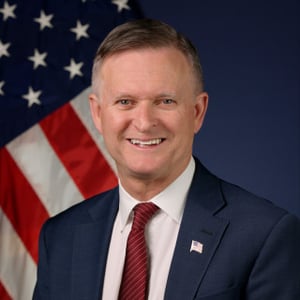
Deputy Secretary of Transportation, US Department of Transportation
Steven G. Bradbury was sworn in as the Deputy Secretary of Transportation on March 13, 2025, following his confirmation by the U.S. Senate on March 11, 2025. In this role, he oversees the Department’s operating administrations and spearheads initiatives to ensure a safe, efficient, and modern transportation system that strengthens economic productivity and global competitiveness. Deputy Secretary Bradbury also assists Secretary Duffy in managing the Department’s activities, including its workforce of over 58,000 employees and an annual budget exceeding $109 billion.
Bradbury previously served as the 23rd General Counsel of the Department of Transportation from 2017 to 2021, as the Acting Deputy Secretary from 2019, and as Acting Secretary of Transportation in 2021. As General Counsel, he was the chief legal officer, advising on all legal matters and ensuring the integrity and compliance of the Department’s policies and programs.
Before rejoining DOT, Bradbury was a Distinguished Fellow at The Heritage Foundation from December 2022 to March 2025. He has extensive experience in the public and private sector, having served as Principal Deputy and Acting Assistant Attorney General at the U.S. Department of Justice and as a partner at Kirkland & Ellis LLP and Dechert LLP. Earlier in his career, he clerked for Justice Clarence Thomas and Judge James L. Buckley.
Bradbury holds a J.D., magna cum laude, from the University of Michigan Law School and a B.A. in English from Stanford University.
Staff Judge Advocate, United States Cyber Command, U.S. Air Force
Colonel Gary Brown is the staff judge advocate of the United States Cyber Command.
Col Brown was called to the Nebraska Bar in 1987 and he has since remained a member in good standing. He was commissioned a first lieutenant in the Air Force in November, 1988. Col Brown is married to Joan Culling Brown of Omaha, Nebraska. He and Joan have four sons, Edmund, Andrew, Thomas and Philip
Senior Correspondent, The Daily Beast, and ASU Future of War Fel, New America
Shane Harris is an author and journalist who has written extensively about intelligence and national security. His new book, @War: The Rise of the Military Internet Complex, explores the frontlines of America's new cyber war (Eamon Dolan/Houghton Mifflin Harcourt, 2014). Mr. Harris' first book, The Watchers: The Rise of America's Surveillance, tells the story of five men who played central roles in the creation of a vast national security apparatus and the rise of surveillance in America (Penguin Press, 2010). The Watchers won the New York Public Library's Helen Bernstein Book Award for Excellence in Journalism, and the Economist named it one of the best books of 2010. Mr. Harris is the winner of the 2010 Gerald R. Ford Prize for Distinguished Reporting on National Defense. He has four times been named a finalist for the Livingston Awards for Young Journalists, which honor the best journalists in America under the age of 35.
Mr. Harris is currently a senior correspondent at The Daily Beast, where he covers national security, intelligence, and cyber security. He is also an ASU Future of War Fellow at New America. His work has appeared in The New York Times, The Wall Street Journal, Slate, TheAtlantic.com, National Journal, The Washington Post, The Bulletin of the Atomic Scientists, and the U.S. Naval Institute's Proceedings. He has provided analysis and commentary for CNN, NPR, the BBC, The History Channel, National Geographic, several foreign media organizations and many local public radio stations.
Prior to joining The Daily Beast, Mr. Harris was a senior writer at Foreign Policy magazine and, before that, at the Washingtonian magazine, where he was part of the team that won the publication its 2011 award for Excellence in Writing from the City and Regional Magazine Association. In 2012, Washingtonian won the coveted General Excellence award for the print magazine and web site, where Mr. Harris wrote a blog on national security called ADead Drop.
From 2005 to 2010, Mr. Harris was a staff correspondent for National Journal, where he wrote about intelligence and homeland security. Before that post, he was the technology editor and a staff correspondent at Government Executive magazine. Mr. Harris also was the managing editor for Movieline magazine in Los Angeles. He began his journalism career in 1999, as the research coordinator and a writer for Governing magazine in Washington.
Mr. Harris graduated from Wake Forest University with a B.A. in Politics in 1998. He is also a fiction writer. While living in Los Angeles, he helped found and served as the artistic director of a sketch comedy troupe. Mr. Harris is a Sundance Film Festival screenwriting finalist.

Professor Emeritus of Law, Antonin Scalia Law School, George Mason University
Jeremy A. Rabkin is a Professor Emeritus of Law at the Antonin Scalia Law School, George Mason University. Before joining the faculty in June 2007, he was for over two decades a professor in the Department of Government at Cornell University. Professor Rabkin serves on the board of directors of the Center for Individual Rights, a public interest law firm based in Washington, D.C. Previously he was a board member of the U.S. Institute of Peace and the board of academic advisors of the American Enterprise Institute.
Professor Rabkin’s books include Law Without Nations? (Princeton University Press, 2005). He authored “If You Need a Friend, Don’t Call a Cosmopolitan,” a chapter in Varieties of Sovereignty and Citizenship (Sigal R. Ben-Porath & Rogers M. Smith eds., University of Pennsylvania Press, 2012). His articles have appeared in major law reviews and political science journals and his journalistic contributions in a range of magazines and newspapers, including the Washington Post and the Wall Street Journal.

Professorial Lecturer in Law, The George Washington University
Paul Rosenzweig is an accomplished writer and speaker with a national reputation in cyber security and homeland security. He is the founder of Red Branch Consulting PLLC, a homeland security consulting company. He is also a Senior Advisor to The Chertoff Group. Mr. Rosenzweig formerly served as Deputy Assistant Secretary for Policy in the Department of Homeland Security.
He is a Professorial Lecturer in Law at George Washington University, and a Senior Fellow in the Tech, Law & Security Program at the American University, Washington College of Law. He serves as an advisor to and former member of the American Bar Association Standing Committee on Law and National Security, and a Contributing Editor of the Lawfare blog. He is a member of the ABA Cybersecurity Legal Task Force and of the United States Court of Appeals for the District of Columbia Circuit Advisory Committee on Admissions and Grievances. He serves, as well, as a Hearing Committee Member of the District of Columbia Board of Professional Responsibility. In 2011 he was a Carnegie Fellow in National Security Journalism at the Medill School of Journalism, Northwestern University.
Mr. Rosenzweig is a cum laude graduate of the University of Chicago Law School. He has an M.S. in Chemical Oceanography from the Scripps Institution of Oceanography, University of California at San Diego and a B.A from Haverford College. Following graduation from law school he served as a law clerk to the Honorable R. Lanier Anderson, III of the United States Court of Appeals for the Eleventh Circuit.
He is the author of Cyber Warfare: How Conflicts in Cyberspace are Challenging America and Changing the World and of three video lecture series from The Great Courses, Thinking About Cybersecurity: From Cyber Crime to Cyber Warfare; The Surveillance State: Big Data, Freedom, and You; and Investigating American Presidents.
He is the co-author (with James Jay Carafano) of Winning the Long War: Lessons from the Cold War for Defeating Terrorism and Preserving Freedom and co-editor (with Jill D. Rhodes and Robert S. Litt) of the Cybersecurity Handbook (3rd ed.). He is also co-editor (with Timothy McNulty and Ellen Shearer) of two books, Whistleblowers, Leaks and the Media: The First Amendment and National Security, and National Security Law in the News: A Guide for Journalists, Scholars, and Policymakers. Mr. Rosenzweig is a member of the Literary Society of Washington.

Fellow, National Security Institute, Antonin Scalia Law School, George Mason University
Vince Vitkowsky chaired the Executive Committee of the Federalist Society’s International and National Security Law and Policy Practice Group for over a decade. He is also a Fellow at the National Security Institute of George Mason University Law School. Vince spent 45 years in private practice, primarily in AmLaw 100/200 firms and their spin-offs. His practice included domestic and international commercial arbitration and litigation, as well as cyber risks and liabilities. Vince's current focus is on national security policy, artificial intelligence, cybersecurity, and counterterrorism. He has often written and spoken on national security and other public policy issues. Among other affiliations, Vince has been an Adjunct Fellow at the Center for Law and Counterterrorism of the Foundation for the Defense of Democracies, a member of the Executive Committee of the American Branch of the International Law Association, and Co-Chair of the Committee on Interventions and Trial Observations of the International Bar Association’s Human Rights Institute. He received his B.A. from Northwestern University and his J.D. from Cornell Law School.
Executive Director of the Military Law and Policy Institute and AMVETS Legal Clinic
Professor Rotunda is regarded as a leading expert in military law and currently teaches Law of War and a Family Violence Clinic. She is the author of Honor Bound: Inside the Guantanamo Trials, published by Carolina Academic Press (2008). She directed the Clinic for Legal Assistance to Service Members at George Mason School of Law, where she and her students successfully represented military families in various legal disputes, including Physical Evaluation Boards and Traumatic Service Group Life Insurance Appeals. Rotunda has recovered hundreds of thousands of dollars for disabled troops.
Professor Rotunda began her career in the US Army JAG Corps and has since been recruited by the National Veterans Legal Services Program (NVLSP) to produce a series of instructional DVDs about military law. She has also authored a coordinating outline and co-authored NVLSP's forthcoming book regarding military administrative/disability proceedings, to be published by Lexis Nexis. She remains in the Army Reserves and holds the rank of Major. Rotunda has served in several missions related to the Global War on Terror: she served in Guantanamo Bay, was the legal advisor to a team of investigators pursuing leads in the war on terror, served as a prosecutor at the Office of Military Commissions, represented wounded troops at Walter Reed Army Medical Center, and was the lawyer assigned to Jessica Lynch after Lynch's rescue.
Professor Rotunda is an avid writer and advocate for soldiers. She has written op-eds for The Christian Science Monitor, The Wall Street Journal, The Chicago Tribune, and The Washington Times. She is a regular television and radio commentator regarding military law and the ongoing trials in Guantanamo Bay. She has appeared on more than 20 nationally-syndicated radio shows, including The Michael Reagan Show, The Dennis Miller Show, and the Jim Bohannon Show. Rotunda has also appeared on national and international television news programs, including Hannity's America, the Brit Hume Report, and Al Jazeera.
B.A., University of Wyoming; J.D., University of Wyoming College of Law
Professor of the Practice of Law and Executive Director, Center on Law, Ethics and National Security, Duke University Law School
Charles J. Dunlap Jr. joined the Duke Law faculty in July 2010 where he is currently a professor of the practice of law and Executive Director of the Center on Law, Ethics and National Security. His teaching and scholarly writing focus on national security, law of armed conflict, the use of force under international law, civil-military relations, cyberwar, airpower, military justice, and ethical issues related to the practice of national security law.
Dunlap retired from the Air Force in June 2010, having attained the rank of major general during a 34-year career in the Judge Advocate General Corps. In his capacity as Deputy Judge Advocate General spanning from May 2006 to March 2010, he assisted the Judge Advocate General in the professional supervision of more than 2,200 judge advocates, 350 civilian lawyers, 1,400 enlisted paralegals, and 500 civilians around the world. In addition to overseeing an array of military justice, operational, international, and civil law functions, he provided legal advice to commanders and civilian leaders at all levels.
In the course of his career, Dunlap has been involved in various high-profile interagency and policy matters, including his testimony before the U.S. House of Representatives concerning the Military Commissions Act of 2006.
Dunlap previously served as the senior lawyer (staff judge advocate) at Air Combat Command Headquarters at Langley Air Force Base in Virginia, at Air Education and Training Command Headquarters at Randolph Air Force Base in Texas, and at U.S. Strategic Command, Omaha, Nebraska, among other leadership posts. Additionally, he served on the faculty of the Air Force Judge Advocate General School where he taught various civil and criminal law topics. An experienced trial lawyer, he also spent two years as a military trial judge for a 22-state circuit. He served tours in the United Kingdom and Korea, and deployed for operations in the Middle East and Africa. He also led military-to-military delegations to Colombia, Uruguay, South Africa, and the Czech Republic.
A prolific author and accomplished public speaker, Dunlap’s commentary on a wide variety of national security topics has been published in leading newspapers and military journals. His 2001 essay written for Harvard University’s Carr Center on “lawfare,” a concept he defines as “the use or misuse of law as a substitute for traditional military means to accomplish an operational objective,” has been highly influential among military scholars and in the broader legal academy.
Dunlap is also the author of the prize-winning essay, “The Origins of the Military Coup of 2012”, originally published in 1992, which was selected for the 40th Anniversary Edition of Parameters (Winter 2010-2011).
Dunlap’s legal scholarship has been published in the Stanford Law Review, the Yale Journal of International Affairs, the Harvard Law’s National Security Journal, the Wake Forest Law Review, the Fletcher Forum of World Affairs, the University of Nebraska Law Review, the Texas Tech Law Review, Temple Law’s Journal of International & Comparative Law, the University of North Carolina’s Journal of International Law, the Connecticut Law Review, the Tennessee Law Review, and the Vanderbilt Journal of Transnational Law, among others.
He’s also authored numerous articles and opinion pieces in a range of publications including The Atlantic, the New York Times, the Washington Post, the Washington Times, the Air Force Times, Strategic Studies Quarterly, the Georgetown Journal of International Affairs, Business Insider, the Journal of Genocide Research, The Hill, Small Wars Journal, and the blogs, Lawfare and Just Security.
Maj Gen Dunlap founded his blog Lawfire in 2015 and has since written over 300 posts on a wide variety of subjects.
Dunlap's wife, Joy, was a vice president of the National Association of Broadcasters, and later a deputy director of Government Relations for the Military Officers Association of America. She served as the elected president of Duke Campus Club, and is a recipient of the prestigious Order of the Emerald by Kappa Delta sorority. Her blog, Speaking Joyfully, won 3rd place in the blog category at the 2021 Blue Ridge Mountains Christian Writers Conference. They reside in Durham.
Director, Legal Project at the Middle East Forum
Distinguished Visiting Professor, Hofstra Law School
Scott Horton is a Distinguished Visiting Professor at Hofstra Law School and an adjunct professor at Columbia Law School. He teaches international commercial law and the law of armed conflict. He is also a contributing editor at Harper's Magazine and writes on law and legal policy issues for several other publications. A life-long human rights advocate, Scott served as counsel to Andrei Sakharov and Elena Bonner, among other activists in the former Soviet Union. He is a co-founder of the American University in Central Asia, where he currently serves as a trustee, and has been involved in some of the most significant foreign investment projects in the Central Eurasian region. Scott recently led a number of studies of issues associated with the conduct of the war on terror, including major studies of the introduction of highly coercive interrogation techniques and the program of extraordinary renditions for the New York City Bar Association, where he has chaired several committees, including, most recently, the Committee on International Law. He is also an associate of the Harriman Institute at Columbia University, a member of the board of the National Institute of Military Justice, Center on Law and Security of NYU Law School, the EurasiaGroup and the American Branch of the International Law Association and a member of the Council on Foreign Relations. He co-authored a recent study on legal accountability for private military contractors, Private Security Contractors at War. He appeared as a congressional witness five times in the last two years, offering testimony on issues under the law of armed conflict, military contractor liability and the extraordinary renditions program.
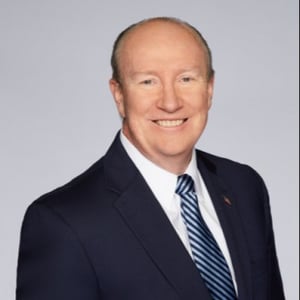
Senior Fellow, National Review
Bestselling author Andrew C. McCarthy is a contributing editor at National Review, a senior fellow at National Review Institute, and a Fox News contributor. He is a former Chief Assistant United States Attorney in the Southern District of New York and led the terrorism prosecution against the “Blind Sheikh” (Omar Abdel Rahman) and eleven other jihadists for conducting a war of urban terrorism against the United States that included the 1993 World Trade Center bombing and a plot to bomb New York City landmarks. During is 20-year career as a prosecutor, he received numerous honors, including the Justice Department’s highest awards. Andy speaks and writes widely on law and national security, radical Islam, politics, and culture. He has testified before Congress as an expert on issues of constitutional law, counterterrorism, and law-enforcement. He is a columnist for The Hill, and his essays and book reviews appear frequently at The New Criterion. His most recent New York Times bestselling book is Ball of Collusion (Encounter Books, 2019), about the Russiagate controversy (an updated version was published in 2020). His other books include Willful Blindness (2008), The Grand Jihad (2010), Spring Fever: The Illusion of Islamic Democracy (2012), and Faithless Execution (2014). He has also written several pamphlets in the Broadside series published by Encounter Books, most recently Islam and Free Speech (2015).
Fellow, National Security Institute, Antonin Scalia Law School, George Mason University
Vince Vitkowsky chaired the Executive Committee of the Federalist Society’s International and National Security Law and Policy Practice Group for over a decade. He is also a Fellow at the National Security Institute of George Mason University Law School. Vince spent 45 years in private practice, primarily in AmLaw 100/200 firms and their spin-offs. His practice included domestic and international commercial arbitration and litigation, as well as cyber risks and liabilities. Vince's current focus is on national security policy, artificial intelligence, cybersecurity, and counterterrorism. He has often written and spoken on national security and other public policy issues. Among other affiliations, Vince has been an Adjunct Fellow at the Center for Law and Counterterrorism of the Foundation for the Defense of Democracies, a member of the Executive Committee of the American Branch of the International Law Association, and Co-Chair of the Committee on Interventions and Trial Observations of the International Bar Association’s Human Rights Institute. He received his B.A. from Northwestern University and his J.D. from Cornell Law School.
Deputy Secretary of Transportation, US Department of Transportation
Steven G. Bradbury was sworn in as the Deputy Secretary of Transportation on March 13, 2025, following his confirmation by the U.S. Senate on March 11, 2025. In this role, he oversees the Department’s operating administrations and spearheads initiatives to ensure a safe, efficient, and modern transportation system that strengthens economic productivity and global competitiveness. Deputy Secretary Bradbury also assists Secretary Duffy in managing the Department’s activities, including its workforce of over 58,000 employees and an annual budget exceeding $109 billion.
Bradbury previously served as the 23rd General Counsel of the Department of Transportation from 2017 to 2021, as the Acting Deputy Secretary from 2019, and as Acting Secretary of Transportation in 2021. As General Counsel, he was the chief legal officer, advising on all legal matters and ensuring the integrity and compliance of the Department’s policies and programs.
Before rejoining DOT, Bradbury was a Distinguished Fellow at The Heritage Foundation from December 2022 to March 2025. He has extensive experience in the public and private sector, having served as Principal Deputy and Acting Assistant Attorney General at the U.S. Department of Justice and as a partner at Kirkland & Ellis LLP and Dechert LLP. Earlier in his career, he clerked for Justice Clarence Thomas and Judge James L. Buckley.
Bradbury holds a J.D., magna cum laude, from the University of Michigan Law School and a B.A. in English from Stanford University.
Staff Judge Advocate, United States Cyber Command, U.S. Air Force
Colonel Gary Brown is the staff judge advocate of the United States Cyber Command.
Col Brown was called to the Nebraska Bar in 1987 and he has since remained a member in good standing. He was commissioned a first lieutenant in the Air Force in November, 1988. Col Brown is married to Joan Culling Brown of Omaha, Nebraska. He and Joan have four sons, Edmund, Andrew, Thomas and Philip
Senior Correspondent, The Daily Beast, and ASU Future of War Fel, New America
Shane Harris is an author and journalist who has written extensively about intelligence and national security. His new book, @War: The Rise of the Military Internet Complex, explores the frontlines of America's new cyber war (Eamon Dolan/Houghton Mifflin Harcourt, 2014). Mr. Harris' first book, The Watchers: The Rise of America's Surveillance, tells the story of five men who played central roles in the creation of a vast national security apparatus and the rise of surveillance in America (Penguin Press, 2010). The Watchers won the New York Public Library's Helen Bernstein Book Award for Excellence in Journalism, and the Economist named it one of the best books of 2010. Mr. Harris is the winner of the 2010 Gerald R. Ford Prize for Distinguished Reporting on National Defense. He has four times been named a finalist for the Livingston Awards for Young Journalists, which honor the best journalists in America under the age of 35.
Mr. Harris is currently a senior correspondent at The Daily Beast, where he covers national security, intelligence, and cyber security. He is also an ASU Future of War Fellow at New America. His work has appeared in The New York Times, The Wall Street Journal, Slate, TheAtlantic.com, National Journal, The Washington Post, The Bulletin of the Atomic Scientists, and the U.S. Naval Institute's Proceedings. He has provided analysis and commentary for CNN, NPR, the BBC, The History Channel, National Geographic, several foreign media organizations and many local public radio stations.
Prior to joining The Daily Beast, Mr. Harris was a senior writer at Foreign Policy magazine and, before that, at the Washingtonian magazine, where he was part of the team that won the publication its 2011 award for Excellence in Writing from the City and Regional Magazine Association. In 2012, Washingtonian won the coveted General Excellence award for the print magazine and web site, where Mr. Harris wrote a blog on national security called ADead Drop.
From 2005 to 2010, Mr. Harris was a staff correspondent for National Journal, where he wrote about intelligence and homeland security. Before that post, he was the technology editor and a staff correspondent at Government Executive magazine. Mr. Harris also was the managing editor for Movieline magazine in Los Angeles. He began his journalism career in 1999, as the research coordinator and a writer for Governing magazine in Washington.
Mr. Harris graduated from Wake Forest University with a B.A. in Politics in 1998. He is also a fiction writer. While living in Los Angeles, he helped found and served as the artistic director of a sketch comedy troupe. Mr. Harris is a Sundance Film Festival screenwriting finalist.
Professor Emeritus of Law, Antonin Scalia Law School, George Mason University
Jeremy A. Rabkin is a Professor Emeritus of Law at the Antonin Scalia Law School, George Mason University. Before joining the faculty in June 2007, he was for over two decades a professor in the Department of Government at Cornell University. Professor Rabkin serves on the board of directors of the Center for Individual Rights, a public interest law firm based in Washington, D.C. Previously he was a board member of the U.S. Institute of Peace and the board of academic advisors of the American Enterprise Institute.
Professor Rabkin’s books include Law Without Nations? (Princeton University Press, 2005). He authored “If You Need a Friend, Don’t Call a Cosmopolitan,” a chapter in Varieties of Sovereignty and Citizenship (Sigal R. Ben-Porath & Rogers M. Smith eds., University of Pennsylvania Press, 2012). His articles have appeared in major law reviews and political science journals and his journalistic contributions in a range of magazines and newspapers, including the Washington Post and the Wall Street Journal.
Professorial Lecturer in Law, The George Washington University
Paul Rosenzweig is an accomplished writer and speaker with a national reputation in cyber security and homeland security. He is the founder of Red Branch Consulting PLLC, a homeland security consulting company. He is also a Senior Advisor to The Chertoff Group. Mr. Rosenzweig formerly served as Deputy Assistant Secretary for Policy in the Department of Homeland Security.
He is a Professorial Lecturer in Law at George Washington University, and a Senior Fellow in the Tech, Law & Security Program at the American University, Washington College of Law. He serves as an advisor to and former member of the American Bar Association Standing Committee on Law and National Security, and a Contributing Editor of the Lawfare blog. He is a member of the ABA Cybersecurity Legal Task Force and of the United States Court of Appeals for the District of Columbia Circuit Advisory Committee on Admissions and Grievances. He serves, as well, as a Hearing Committee Member of the District of Columbia Board of Professional Responsibility. In 2011 he was a Carnegie Fellow in National Security Journalism at the Medill School of Journalism, Northwestern University.
Mr. Rosenzweig is a cum laude graduate of the University of Chicago Law School. He has an M.S. in Chemical Oceanography from the Scripps Institution of Oceanography, University of California at San Diego and a B.A from Haverford College. Following graduation from law school he served as a law clerk to the Honorable R. Lanier Anderson, III of the United States Court of Appeals for the Eleventh Circuit.
He is the author of Cyber Warfare: How Conflicts in Cyberspace are Challenging America and Changing the World and of three video lecture series from The Great Courses, Thinking About Cybersecurity: From Cyber Crime to Cyber Warfare; The Surveillance State: Big Data, Freedom, and You; and Investigating American Presidents.
He is the co-author (with James Jay Carafano) of Winning the Long War: Lessons from the Cold War for Defeating Terrorism and Preserving Freedom and co-editor (with Jill D. Rhodes and Robert S. Litt) of the Cybersecurity Handbook (3rd ed.). He is also co-editor (with Timothy McNulty and Ellen Shearer) of two books, Whistleblowers, Leaks and the Media: The First Amendment and National Security, and National Security Law in the News: A Guide for Journalists, Scholars, and Policymakers. Mr. Rosenzweig is a member of the Literary Society of Washington.
Fellow, National Security Institute, Antonin Scalia Law School, George Mason University
Vince Vitkowsky chaired the Executive Committee of the Federalist Society’s International and National Security Law and Policy Practice Group for over a decade. He is also a Fellow at the National Security Institute of George Mason University Law School. Vince spent 45 years in private practice, primarily in AmLaw 100/200 firms and their spin-offs. His practice included domestic and international commercial arbitration and litigation, as well as cyber risks and liabilities. Vince's current focus is on national security policy, artificial intelligence, cybersecurity, and counterterrorism. He has often written and spoken on national security and other public policy issues. Among other affiliations, Vince has been an Adjunct Fellow at the Center for Law and Counterterrorism of the Foundation for the Defense of Democracies, a member of the Executive Committee of the American Branch of the International Law Association, and Co-Chair of the Committee on Interventions and Trial Observations of the International Bar Association’s Human Rights Institute. He received his B.A. from Northwestern University and his J.D. from Cornell Law School.

Russia, Syria and ISIS – An Update from the Experts
Birmingham, AlabamaLawfare
St. Thomas-MN Student Chapter
The Death of the Living Constitution
The Death of the Living Constitution
Mobile, AlabamaInternational Law Weekend Panels of Special Interest
New York, New YorkPanel One: National Security
Steven Gill Bradbury, Gary D. Brown, Shane Harris, Jeremy A. Rabkin, Paul Rosenzweig, Vincent Vitkowsky
Both President Bush and President Obama directed comprehensive reviews of America's cyber security strategy. The...
Panel One: National Security
Cyber Security, National Security and Economic Security
Washington, DCEnemy Combatants: Are the United States' Policies Legal?
Serving at the Pentagon During the War on Terror
International Lawfare and National Security
International & National Security Practice Group
New York