

Professor Emeritus, Paul M. Hebert Law Center, Louisiana State University
In memoriam
Dr. John Baker is Professor Emeritus of Law, and previously the Dale E. Bennett Professor of Law, at Louisiana State University Law School. He is currently Visiting Professor at Peking University School of Transnational Law (via Zoom) and has been Visiting Professor at The Center for the Constitution, Georgetown Law School (2013-2020). He has also been a Visiting Fellow at Oriel College, the University of Oxford (2012-2014) and taught at Blackfriars Hall, Oxford in 2014. Dr. Baker has also been an adjunct Fellow at the Heritage Foundation (Spring, 2008) and a Distinguished Scholar at the Catholic University of America Law School (2011-12). He has taught at Tulane Law School, George Mason Law School, Pepperdine Law School, New York Law School, Hong Kong University, and the University of Dallas, School of Management and also taught and/or lectured in 17 foreign countries. Notable among his foreign visits are the
following: Visiting Professor at the University of Lyon III (France) (1999-2011); Visiting Professor at the Universidad de los Andes, Chile (2012), as a Fulbright Specialist (2006); and a Fulbright Scholar at various universities in the Philippines. Dr. Baker received his J.D., with honors, from the University of Michigan Law School and his B.A., magna cum laude, from the University of Dallas. He also earned a Ph.D. in Political Thought from the University of London. Baker has taught over a dozen different subjects, mostly courses in public law. His main areas of interest are Constitutional Law (particularly federalism and separation of powers), Criminal Law, Anti-Terrorism Law, International Law, Health Care Law, Mediation, and Comparative Law.
In addition to law review articles and book chapters, Dr. Baker’s academic publications include Hall's Criminal Law: Cases and Materials (with Benson, Force and George; 5th ed. Michie, 1993); An Introduction to the Law of the United States (ed. with Levasseur; University Press of America, 1992). He has also published on Forbes.com, FoxNews.com, in The Washington Times, and a number of times in The Wall Street Journal. He argues in federal court, including two oral arguments in the U.S. Supreme Court. For many years, he co-taught courses for the Federalist Society on separation of powers with the late Supreme Court Justice Antonin Scalia. In September 2016, he co-taught a Supreme Court seminar in China with Justice Samuel Alito. Following law school, he served as a law clerk in federal district court and as an assistant district attorney in New Orleans before joining LSU in 1975. While a professor, he has been as a consultant to USAID, USIA (since rolled into the State Department), the Justice Department, the U.S. Senate Judiciary Subcommittee on Separation of Powers, and the Office of Planning in the White House. He served on an ABA Task Force which issued the report, The Federalization of Crime (1998) and later as a consultant to the “Bi-Partisan Task Force on the Over- federalization of Crime” (2012-2014) created by the U.S. House Judiciary Subcommittee on Crime. Dr. Baker was a co-founder of the first iteration (1995) of Stratfor Inc., a global intelligence agency. He co-authored its first book: The Intelligence Edge (with Friedman, Friedman and Chapman; Crown Books/Random House 1997). In 2022, he began a short, weekly video podcast available on YouTube and Rumble, The Baker Brief.
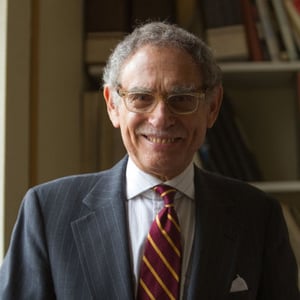
Founder and Co-Director, James Wilson Institute
Hadley Arkes joined the faculty of Amherst College in 1966. He became the Edward Ney Professor of Jurisprudence in 1987, and held that chair until he retired officially in July 2015. But he has not retired from writing and speaking. He has carried that teaching into a new phase; he has become the Founder and Director of the James Wilson Institute on Natural Rights and the American Founding in Washington, D.C. He has written eight books, mostly with Princeton and Cambridge University Presss. Among the books at Princeton have been: The Philosopher in the City (1981), First Things (1986), Beyond the Constitution (1990), and The Return of George Sutherland (1994). With Cambridge Press he has done Natural Rights and the Right to Choose (2002), and Constitutional Illusions & Anchoring Truths: The Touchstone of the Natural Law (2010). His most recent book, with Regnery Press is Mere Natural Law (2023) His articles have appeared in professional journals, but apart from his writing in more scholarly formats, he has become known to a wider audience through his writings in the Wall Street Journal, National Review, Civitas and First Things, a journal that took its name from his book of that title.
He was the main advocate, and architect, of the bill that became known as the Born-Alive Infants’ Protection Act. The account of his experience, in moving the bill through Congress, is contained as an epilogue or memoir in his book, Natural Rights & the Right to Choose. Arkes first prepared his proposal as part of the debating kit assembled for the first George Bush in 1988. The purpose of that proposal was to offer the “most modest first step” of all in legislating on abortion, and opening a conversation even with people who called themselves “pro-choice.” Professor Arkes proposed to begin simply by preserving the life of a child who survived an abortion–contrary to the holding of one federal judge, that such a child was not protected by the laws. Professor Arkes led the testimony on the bill before the Judiciary Committee of the U.S. House in July 2000, then again in July 2001. The legislative calendar was upended in the aftermath of September 11th, but in March 2002, the bill was brought to the floor of the House, where it passed unanimously. To the surprise of Professor Arkes, the bill was brought to the floor of the Senate on July 18 by the Deputy Majority Leader, Harry Reid, and passed in the same way. On August 5, President Bush signed the bill into law with Professor Arkes in attendance.
Professor Arkes was the founder, at Amherst, of the Committee for the American Founding, a group of alumni and students seeking to preserve, at Amherst, the doctrines of “natural rights” taught by the American Founders and Lincoln. That interest has been carried over now to the founding of a new center for the jurisprudence of natural law, in Washington, D.C.: the James Wilson Institute on Natural Rights and the American Founding, named for one of the premier minds among the American Founders. Professor Arkes has drawn to this project a cluster of accomplished federal judges who have wanted to get a firmer hold on the natural law, and brought them together with some gifted teachers of philosophy and law. The new institute will be sponsoring lectures and seminars in Washington and other parts of the country. The purpose of this new James Wilson Institute is to teach anew, to lawyers, judges, and students those principles of law that furnished the guide to the American Founders as they set about framing a Constitution. And the hope is to restore, to a new generation, the furnishings of mind of the men who formed this regime.
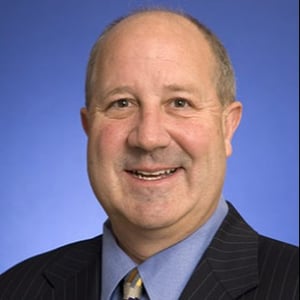
Senior Resident Scholar, Institute of Government Studies, UC Berkeley
Steven Hayward is currently senior resident scholar at the Institute of Governmental Studies at UC Berkeley, and a visiting lecturer at Berkeley Law School. He was previously the Ronald Reagan Distinguished Visiting Professor at Pepperdine University’s Graduate School of Public Policy, and was the inaugural visiting scholar in conservative thought and policy at the University of Colorado at Boulder in 2013-14. From 2002 to 2012 he was the F.K Weyerhaeuser Fellow in Law and Economics at the American Enterprise Institute in Washington DC, and has been senior fellow at the Pacific Research Institute in San Francisco since 1991.
He writes frequently for the New York Times, Washington Post, Wall Street Journal, National Review, the Weekly Standard, the Claremont Review of Books, and other publications. The author of six books including a two-volume chronicle of Reagan and his times entitled The Age of Reagan: The Fall of the Old Liberal Order, 1964-1980, and The Age of Reagan: The Conservative Counter-Revolution, 1980-1989, and the Almanac of Environmental Trends. His most recent book is Patriotism is Not Enough: Harry Jaffa, Walter Berns, and the Arguments That Redefined American Conservatism.

Executive Director, Salmon P. Chase Center for Civics, Culture, and Society, The Ohio State University
Professor Lee J. Strang serves as the inaugural executive director of the Salmon P. Chase Center for Civics, Culture, and Society at The Ohio State University.
Initiated in 2023 by the state of Ohio, the Chase Center will be an academic home at Ohio State for teaching, research, and programing on the foundations of the American constitutional order and its impact on society. As executive director, Professor Strang is responsible for organizing the center, overseeing the hiring and appointment of the center’s faculty, developing curriculum, and delivering student and academic programming. He also holds a faculty appointment in the Moritz College of Law at Ohio State.
Professor Strang is a nationally recognized legal scholar who has published dozens of articles in leading journals in the fields of constitutional law and interpretation, property law, and religion and the First Amendment. He co-edits the textbook Federal Constitutional Law, and his most recent book, Originalism’s Promise: A Natural Law Account of the American Constitution is the first book-length, natural law justification for originalism. He currently is writing on civic thought and leadership, and he is finalizing a book on the history of American Catholic legal education (with John M. Breen).
Before joining Ohio State, Professor Strang served as the inaugural director of the University of Toledo’s Institute of American Constitutional Thought & Leadership. He joined the Toledo College of Law faculty in 2008, was granted tenure in 2010, and was named John W. Stoepler Professor of Law & Values in 2015. The University of Toledo awarded Professor Strang its Outstanding Faculty Research and Scholarship Award in 2017. Before that, he was a visiting professor at Michigan State University College of Law. A graduate of the University of Iowa, where he was articles editor of the Iowa Law Review and Order of the Coif, Professor Strang holds an LL.M. degree from Harvard Law School.
Professor Strang has been a visiting scholar at the Georgetown Center for the Constitution and a visiting fellow at the James Madison Program at Princeton University. In 2016, he was appointed to the Ohio Advisory Committee of the U.S. Commission on Civil Rights and reappointed as chair in 2023.
Prior to teaching, Professor Strang served as a judicial clerk for Judge Alice M. Batchelder of the U.S. Court of Appeals for the Sixth Circuit. He was also an associate for Jenner & Block LLP in Chicago, where he practiced in general and appellate litigation.
Professor Strang is a frequent presenter at scholarly conferences. He is the president of the Board of Trustees of Northwest Ohio Classical Academy, Ohio’s first classical charter school. He is also a regular participant in debates at law schools across the country, a contributor to the media, and a speaker to political, civic, and religious groups.
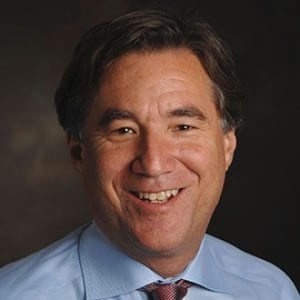
Ashe Family Chair Professor of Law, Georgia State University College of Law
Eric J. Segall graduated from Emory University, Phi Beta Kappa and summa cum laude, and from Vanderbilt Law School, where he was the research editor for the Law Review and member of Order of the Coif. He clerked for the Chief Judge Charles Moye Jr. for the Northern District of Georgia, and Albert J. Henderson of the 11th Circuit Court of Appeals. After his clerkships, Segall worked for Gibson, Dunn & Crutcher and the U.S. Department of Justice, before joining the Georgia State faculty in 1991.
Segall teaches federal courts and constitutional law I and II. He is the author of the books Originalism as Faith and Supreme Myths: Why the Supreme Court is not a Court and its Justices are not Judges. His articles on constitutional law have appeared in, among others, the Harvard Law Review Forum, the Stanford Law Review On Line, the UCLA Law Review, the George Washington Law Review, the Washington University Law Review, the University of Pennsylvania Journal of Constitutional Law, the Northwestern University Law Review Colloquy, and Constitutional Commentary among many others.
Segall’s op-eds and essays have appeared in the New York Times, the LA Times, The Atlantic, SLATE, Vox, Salon, and the Daily Beast, among others. He has appeared on CNN, Fox News, MSNBC, and France 24 and all four of Atlanta’s local television stations. He has also appeared on numerous local and national radio shows.
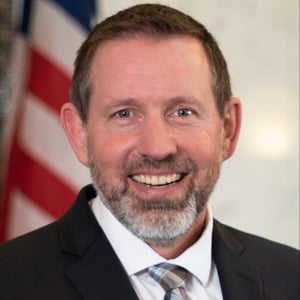
Judge, United States Court of Appeals, Ninth Circuit
Lawrence VanDyke serves as a circuit judge on the U.S. Court of Appeals for the Ninth Circuit. Prior to that appointment in January 2020, he served as a Deputy Assistant Attorney General in the Environment and Natural Resources Division of the United States Department of Justice. Before that, he served consecutively as the Solicitor General of two western states – Nevada and Montana. At the beginning of his legal career, he worked as an attorney in the Appellate and Constitutional Issues practice group at Gibson Dunn & Crutcher, LLP.
Judge VanDyke received his law degree magna cum laude from Harvard Law School, where he was an editor on the Harvard Law Review. He has engineering and theology undergraduate degrees and a masters degree in engineering management. He served as a law clerk to the Honorable Janice Rogers Brown of the United States Court of Appeals for the District of Columbia Circuit. Judge VanDyke and his wife Cheryl live in Reno, Nevada, and they have three children.

Julius E. Davis Professor of Law, University of Minnesota Law School
Ilan Wurman is the Julius E. Davis Professor of Law at the University of Minnesota, where he teaches administrative law and constitutional law. He previously taught at Arizona State University. He writes primarily on the Fourteenth Amendment, administrative law, separation of powers, and constitutionalism. His academic writing has appeared in the Yale Law Journal, the Stanford Law Review, the University of Chicago Law Review, the University of Pennsylvania Law Review, the Virginia Law Review, the Duke Law Journal, the Minnesota Law Review, the Notre Dame Law Review, and the Texas Law Review among other journals.
Professor Wurman is the author of the new book The Constitution of 1789: A New Introduction (Cambridge 2026). His previous books include A Debt Against the Living: An Introduction to Originalism (Cambridge 2017), and The Second Founding: An Introduction to the Fourteenth Amendment (Cambridge 2020). He is also the author of the casebook, Administrative Law Theory and Fundamentals: An Integrated Approach (Foundation Press 3d ed. 2025).
Professor Wurman practices law with the firm Tully Bailey. He has litigated a variety of administrative law and constitutional law cases, including cases involving COVID-19 restrictions, transmission lines, and Appointments Clause challenges. He also devised winning public nuisance theories to force city governments to address the increasingly challenging public camping crises throughout the country.
Shareholder, Parr Brown Gee & Loveless
Stephen Mouritsen is a member of Parr Brown’s commercial litigation group. Prior to joining Parr Brown, Mr. Mouritsen was an associate with the law firms of Willkie Farr & Gallagher LLP and Cravath, Swaine & Moore LLP in New York. Mr. Mouritsen served as a law clerk to the Honorable Associate Chief Justice Thomas R. Lee of the Utah Supreme Court. Prior to law school, Mr. Mouritsen worked as a registered financial representative for Fidelity Investments.
Mr. Mouritsen has experience with a wide variety of securities-related matters, including securities fraud, mortgage fraud, trading violations, market manipulation schemes, as well as SEC and PCAOB investigations. Mr. Mouritsen also has significant experience with internal investigations, environmental litigation, and corporate restructuring litigation.
With a background in linguistics, Mr. Mouritsen has written and lectured extensively on the intersection between law and language. His writing has appeared in the Yale Law Journal, the Washington Law Review, the Columbia Science and Technology Law Review, and at the Volokh Conspiracy legal blog. His work has been cited by judges in the United States Courts of Appeals for the Third, Sixth, and Tenth Circuits, as well as the Idaho, Michigan, Montana, and Utah Supreme Court. His work has also been cited in leading casebooks on legislation and contracts, and in the Congressional Research Service’s report on Statutory Interpretation.
Mr. Mouritsen currently serves as an adjunct professor at the J. Reuben Clark Law School at Brigham Young University, where he teaches courses on the theory and practice of legal interpretation and law and corpus linguistics. From 2016 through 2018, Mr. Mouritsen served as an associate (non-resident research fellow) at the University of Chicago Law School.
Mr. Mouritsen received his B.A. in English, from the Brigham Young University, in 2002. In 2007 he received his M.A. in linguistics from Brigham Young University. He attended Brigham Young University’s J. Reuben Clark Law School, where he was the Lead Articles Editor of the BYU Law Review, a First Prize, John S. Welch Award for Outstanding Legal Writing, and graduated magna cum laude in 2010.
Associate Professor & Director, Constitutional Government Initiative, Wheatley Institute, Brigham Young University
James C. Phillips is the Constitutional Government Initiative Director and an associate professor at BYU’s Wheatley Institute. He is also a fellow with the UC-Berkeley School of Law’s Public Law and Policy Program and an academic affiliate with the D.C.-based law firm Schaerr|Jaffe. His scholarship has been cited by judges around the country, including at the U.S. Supreme Court, and has been covered in various media outlets, including the New York Times Magazine, USA Today, Reuters, CNN, and Fox News. He is a member of the Executive Committee of the Federalist Society's Religious Liberty Practice Group and the J. Reuben Clark Law Society Religious Liberty Committee.
Prior to joining Wheatley, Phillips was associate professor of law at Chapman University’s Fowler School of Law, where he taught Constitutional Law, Religion and the Constitution, Civil Procedure, Family Law, and Professional Responsibility and was named 1L Professor of the Year. Dr. Phillips has taught Administrative Law at BYU’s J. Reuben Clark Law School, where he also helped conceive and design the Corpus of Founding-Era American English. He was also a Non-resident Fellow with Stanford Law School’s Constitutional Law Center.
Dr. Phillips has published dozens of academic articles, primarily in law journals, but also communications, business, and history journals. His longer pieces have been published in, for example, the University of Pennsylvania Law Review, the Southern California Law Review, and the Harvard Journal of Law and Public Policy, and his shorter articles have been published in journals such as the Yale Law Journal Forum and the Duke Law Journal Online. Dr. Phillips has also written op-eds on constitutional issues for Newsweek, The Atlantic, the Los Angeles Times, the Orange County Register, Deseret News, and National Review.
Prior to his university posts, Dr. Phillips practiced law as a Constitutional Law Fellow for the Becket Fund for Religious Liberty and an associate for Kirton | McConkie. He has worked on dozens of cases at the U.S. Supreme Court, as well as cases in federal and state courts throughout the country. He is a member of the bar in Utah and D.C. He clerked for Judge Thomas B. Griffith on the U.S. Court of Appeal for the D.C. Circuit and for Justice Thomas R. Lee on the Utah Supreme Court. Dr. Phillips earned his JD, Order of the Coif, from UC-Berkeley’s School of Law, where he was a member of the California Law Review. He also has a PhD in Jurisprudence & Social Policy from UC-Berkeley, an M.A. in Mass Communication from BYU, and a B.A. in History from Arizona State University.

Patrick Hotung Professor of Constitutional Law, Georgetown University Law Center; Faculty Director, Georgetown Center for the Constitution
Randy E. Barnett is the Patrick Hotung Professor of Constitutional Law at the Georgetown University Law Center and is the Faculty Director of the Georgetown Center for the Constitution. After graduating from Northwestern University and Harvard Law School, he tried many felony cases as a prosecutor in the Cook County States’ Attorney’s Office in Chicago. A recipient of a Guggenheim Fellowship in Constitutional Studies and the Bradley Prize, Professor Barnett has been a visiting professor at Penn, Northwestern and Harvard Law School.
Professor Barnett’s publications includes thirteen books, more than one hundred articles and reviews, as well as numerous op-eds. His most recent book is Felony Review: Tales of True Crime and Corruption in Chicago (2026). His other books on the Constitution include: A Life for Liberty: The Making of an American Originalist (2024); The Original Meaning of the Fourteenth Amendment: Its Letter and Spirit (2021) (with Evan Bernick); An Introduction to Constitutional Law: 100 Supreme Court Cases Everyone Should Know (2019) (with Josh Blackman); Restoring the Lost Constitution: The Presumption of Liberty (2nd ed. 2013); Our Republican Constitution: Securing the Liberty and Sovereignty of We the People (2016); and Constitutional Law: Cases in Context (5th ed. forthcoming 2027) (with Josh Blackman). His books on contracts are The Oxford Introductions to U.S. Law: Contracts (2010) and Contracts: Cases and Doctrine (7th ed. 2021) (with Nate Oman). And he is the author of The Structure of Liberty: Justice and the Rule of Law (2nd ed. 2014).
In 2004, he argued the medical marijuana case of Gonzalez v. Raich before the U.S. Supreme Court. In 2012, he was one of the lawyers representing the National Federation of Independent Business in its constitutional challenge to the Affordable Care Act in NFIB v. Sebelius. He’s appeared in numerous documentaries and portrayed a prosecutor in the 2010 science-fiction feature film, InAlienable: The Movie. On X he is @RandyEBarnett

Judge, United States Court of Appeals, Third Circuit
Judge Hardiman was appointed to the United States Court of Appeals for the Third Circuit on January 9, 2007 and was confirmed by the Senate (95-0) on March 15, 2007. Prior to becoming an appellate judge, Judge Hardiman served as a trial judge on the United States District Court for the Western District of Pennsylvania as of November 1, 2003. In 2008, Chief Justice John Roberts appointed Judge Hardiman to the Information Technology Committee of the Judicial Conference of the United States. Judge Hardiman was appointed Chairman of the IT Committee in 2013 and served in that capacity until September 2021. In 2021 he was appointed by the Director of the Administrative Office of the United States Courts to serve as Chair of the Judiciary IT Security Task Force, which completed its work in fall 2023. Chief Justice Roberts appointed Judge Hardiman to the Board of the Federal Judicial Center to serve from March 2020 until March 2024. As part of his work with the Center, Judge Hardiman now serves as Editor in Chief for the Manual for Complex Civil Litigation, Fifth.
Before entering judicial service, Judge Hardiman handled a wide variety of litigation matters in state and federal trial and appellate courts as a partner at Reed Smith LLP (1999-2003), a partner at Titus & McConomy LLP (1996-1999), and as an associate with its predecessor firm, Cindrich & Titus (1992-1996). Judge Hardiman began his legal career as an associate in the Washington, D.C. office of Skadden, Arps, Slate, Meagher & Flom (1990-1992).
A 1987 honors graduate of the University of Notre Dame, Judge Hardiman received his law degree in 1990 from the Georgetown University Law Center, where he served as a Notes and Comments Editor on the Georgetown Law Journal. In 2012, Judge Hardiman was elected as a member of the American Law Institute and was elected to its Council in 2019 and its Executive Committee in 2025. Judge Hardiman regularly teaches a seminar on Advanced Constitutional Law at Duquesne University School of Law and a one-week course entitled “Constitutional Law: the First and Second Amendments” at Georgetown University Law Center.
A native of Waltham, Massachusetts, Judge Hardiman has chambers in Pittsburgh, Pennsylvania. He and his wife Lori married in 1992 and have three children.
Carroll Professor of Jurisprudence, Georgetown Law
John Mikhail is the Carroll Professor of Jurisprudence at Georgetown University Law Center, where he has taught since 2004. He teaches and writes on a variety of topics, including constitutional law, moral psychology, moral and legal theory, and legal history. His recent scholarship has focused mainly on American constitutional history, including the original understanding of the Preamble, Tenth Amendment, and Emoluments, Ex Post Facto, and Necessary and Proper Clauses. Professor Mikhail received his B.A. from Amherst College, a Ph.D. in Philosophy from Cornell University, and his J.D. from Stanford Law School, where he was Senior Article Editor of the Stanford Law Review and Senior Submissions Editor of the Stanford Journal of International Law. Before coming to Georgetown, he was a Lecturer and Research Affiliate at MIT, an associate at Simpson, Thacher & Bartlett, and a judicial clerk to Judge Rosemary Barkett on the U.S. Court of Appeals for the Eleventh Circuit. Professor Mikhail served as the Law Center's Associate Dean for Research and Academic Programs from 2017 to 2020 and its Associate Dean for International and Transnational Programs from 2011 to 2013.
Executive Director, Salmon P. Chase Center for Civics, Culture, and Society, The Ohio State University
Professor Lee J. Strang serves as the inaugural executive director of the Salmon P. Chase Center for Civics, Culture, and Society at The Ohio State University.
Initiated in 2023 by the state of Ohio, the Chase Center will be an academic home at Ohio State for teaching, research, and programing on the foundations of the American constitutional order and its impact on society. As executive director, Professor Strang is responsible for organizing the center, overseeing the hiring and appointment of the center’s faculty, developing curriculum, and delivering student and academic programming. He also holds a faculty appointment in the Moritz College of Law at Ohio State.
Professor Strang is a nationally recognized legal scholar who has published dozens of articles in leading journals in the fields of constitutional law and interpretation, property law, and religion and the First Amendment. He co-edits the textbook Federal Constitutional Law, and his most recent book, Originalism’s Promise: A Natural Law Account of the American Constitution is the first book-length, natural law justification for originalism. He currently is writing on civic thought and leadership, and he is finalizing a book on the history of American Catholic legal education (with John M. Breen).
Before joining Ohio State, Professor Strang served as the inaugural director of the University of Toledo’s Institute of American Constitutional Thought & Leadership. He joined the Toledo College of Law faculty in 2008, was granted tenure in 2010, and was named John W. Stoepler Professor of Law & Values in 2015. The University of Toledo awarded Professor Strang its Outstanding Faculty Research and Scholarship Award in 2017. Before that, he was a visiting professor at Michigan State University College of Law. A graduate of the University of Iowa, where he was articles editor of the Iowa Law Review and Order of the Coif, Professor Strang holds an LL.M. degree from Harvard Law School.
Professor Strang has been a visiting scholar at the Georgetown Center for the Constitution and a visiting fellow at the James Madison Program at Princeton University. In 2016, he was appointed to the Ohio Advisory Committee of the U.S. Commission on Civil Rights and reappointed as chair in 2023.
Prior to teaching, Professor Strang served as a judicial clerk for Judge Alice M. Batchelder of the U.S. Court of Appeals for the Sixth Circuit. He was also an associate for Jenner & Block LLP in Chicago, where he practiced in general and appellate litigation.
Professor Strang is a frequent presenter at scholarly conferences. He is the president of the Board of Trustees of Northwest Ohio Classical Academy, Ohio’s first classical charter school. He is also a regular participant in debates at law schools across the country, a contributor to the media, and a speaker to political, civic, and religious groups.
Nancy Reeves Dreux Professor of Political Science, The University of Notre Dame
Michael Zuckert (B.A., Cornell University; PhD, University of Chicago, 1974) is Nancy Reeves Dreux Professor, and Department Chair of Political Science at University of Notre Dame. Professor Zuckert teaches graduate and undergraduate courses in Political Philosophy and Theory, American Political Thought, American Constitutional Law, American Constitutional History, Constitutional Theory, and Philosophy of Law. His advising specialties are graduate programs in political science.
Professor Zuckert has published extensively on a variety of topics, including George Orwell, Plato, Shakespeare, and contemporary liberal theory. He is currently finishing a book called Completing the Constitution: The Post-Civil War Amendments and is co-authoring another book on Machiavelli and Shakespeare. He has been commissioned to write the volume on John Rawls for a series on Twentieth Century Political Philosophy. He co-authored and co-produced public radio series Mr. Adams and Mr. Jefferson: A Nine Part Drama for the Radio. He also was senior scholar for Liberty! (1997), a six hour public television series on the American Revolution, and served as senior advisor on the PBS series on Benjamin Franklin (2002) and Alexander Hamilton (2007). He is currently head of the new Tocqueville Center for the Study of Religion in American Public Life.
Zuckert has received grants from NEH, the Woodrow Wilson Center, Earhart Foundation and NSF, and has taught at Carleton College, Cornell University, Claremont Men’s College, Fordham University, the University of Minnesota, the University of Michigan at Ann Arbor, and the University of Chicago.
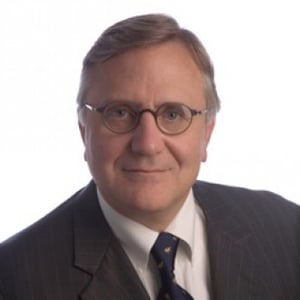
Reed Larson Professor of Labor Law, Ave Maria School of Law and, National Right To Work Legal Defense Foundation
John Raudabaugh is a labor lawyer and former Member of the U.S. National Labor Relations Board. He was a partner in law firms representing management concerning domestic and international labor law matters. Currently, he represents employees seeking relief from union and/or employer unfair labor practices. Mr. Raudabaugh has presented testimony to both Senate and House Committees regarding labor law reform. Professor Raudabaugh teaches Labor Law and a Labor Law Practicum at the Ave Maria School of Law. He is a graduate of the Wharton School of Finance and Commerce and New York State School of Industrial and Labor Relations with B.S. and M.S. degrees in labor economics and a J.D. degree from the University of Virginia Law School of Law.
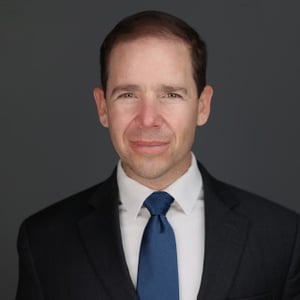
Founder and CEO, Lexpat Global Services
Adam Pearlman is the Founder and Chief Executive Officer of Lexpat Global Services. He is a National Security Law expert and a proven senior leader with experience across the U.S. Departments of Justice, Defense, and State, in the White House, and with the U.S. Federal Judiciary.
Before founding Lexpat, Mr. Pearlman served as the Senior Advisor for Legal Policy in the State Department’s Bureau of Counterterrorism. There, he counseled senior officials on matters covering the entire spectrum of programs and operations to counter terrorism and violent extremism. While participating in sensitive diplomatic engagements and helping to coordinate military operations, he also advised in the development of sanctions policy and initiatives to build legal and operational capacity in partner nations. Mr. Pearlman also managed the Bureau’s participation in federal litigation and led U.S. delegations in multilateral forums concerning criminal justice and rule of law. Separately, Mr. Pearlman supported the State Department’s Bureau of International Narcotics and Law Enforcement Affairs (INL) as the contracted Senior Justice and Rule of Law Advisor in Cabo Verde, Africa. There he was the chief implementer of a Foreign Assistance program that grew eight-fold during his tenure, building host nation capacity across the law enforcement, justice sector, rule of law, anti-money laundering, and corrections disciplines.
A former Associate Deputy General Counsel of the Department of Defense, Mr. Pearlman was agency counsel for complex civil and criminal national security matters in federal and military courts. He also led the Supreme Court and appellate unit of the team dedicated to litigating classified counterterrorism cases. His earlier service in the Department of Justice spanned four litigating divisions and the Office of the Deputy Attorney General. His diverse experience included reviewing complex international transactions and mergers, and advising on immigration removal proceedings, human rights abuses, and terrorist financing investigations. Mr. Pearlman also served with distinction in Iraq as an early advisor to the Iraqi High Tribunal’s prosecution of Saddam Hussein. He was a law clerk for The Honorable Royce C. Lamberth of the U.S. District Court for the District of Columbia, and during law school interned in the White House Counsel’s Office.
Mr. Pearlman is a Senior Fellow at the National Security Institute at George Mason University’s Antonin Scalia Law School, a member of the American Bar Association’s Advisory Committee on Law and National Security, and the Editor-in-Chief of the U.S. Intelligence Community Law Sourcebook. Previously, he has been a Term Member of the Council on Foreign Relations, National Security Fellow at the Foundation for Defense of Democracies, member of the ABA’s Africa Law Initiative Council and of the Center for Strategic & International Studies’ (CSIS) Project on Nuclear Issues, vice chairman of the ABA Section of International Law’s committees on national security, and aerospace and defense, and a liaison to the Board of Directors of the ABA’s Rule of Law Initiative. He has published articles in the Harvard National Security Journal, Stanford Law & Policy Review, Intelligence & National Security, The Foreign Service Journal, Lawfare, and many other outlets.
Mr. Pearlman earned his B.A., with honors, from UCLA, and his J.D., with honors, from The George Washington University Law School, where he was a member of the International Law Review. He also earned a Master of Science of Strategic Intelligence degree from the National Intelligence University, where he was the inaugural recipient of the Kornblum Award for national security law and ethics. Mr. Pearlman is a Certified Financial Crime Specialist and holds certificates in international human rights law from the University of Oxford and in anti-corruption law from American University’s Washington College of Law. He is admitted to the State Bars of California and Virginia, as well as to the Bar of the United States Supreme Court. He speaks and reads Portuguese at the intermediate level.
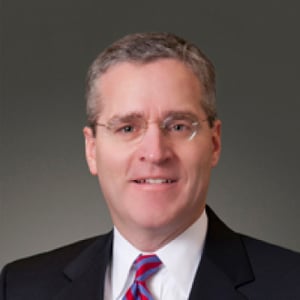
Partner, McGuireWoods LLP
Mr. Rowan's practice focuses on criminal and civil enforcement proceedings and internal investigations. He has substantial experience in federal law enforcement, as well as international and national security matters. He also advises corporate clients on compliance with the Foreign Corrupt Practices Act, the ITAR, the EAR and OFAC regulations.
Mr. Rowan spent 18 years in the Department of Justice (DOJ). He most recently served as Assistant Attorney General for National Security. In that Senate-confirmed position, Mr. Rowan led the National Security Division (NSD), which was formally created by statute in 2006 to bring together all of DOJ's national security operations under a single authority. As part of his duties, he supervised the government's practice before the Foreign Intelligence Surveillance Court; the oversight of intelligence-collection activities; the coordinated nationwide counterterrorism enforcement program; the administration of the Foreign Agents Registration Act; and the oversight of all espionage investigations.
He also oversaw DOJ's review of foreign acquisitions of U.S. companies through the interagency Committee on Foreign Investment in the United States (CFIUS). He previously served as the Principal Deputy Assistant Attorney General for the NSD, where he managed DOJ's national security investigations and prosecutions. In both positions, Mr. Rowan was responsible for supervising all of DOJ's prosecutions of export violations.
As a result of his DOJ service, he has particular experience in the application of the material support statutes, the Arms Export Control Act, the International Emergency Economic Powers Act, and statutes relating to economic espionage or disclosure of classified information. As the Principal Deputy, he directed the launch and implementation of a nationwide export enforcement initiative, an interagency effort to target the illegal export of sensitive technology and weapons components. Mr. Rowan continued to lead this initiative as Assistant Attorney General.
Mr. Rowan gained extensive courtroom experience while serving as an assistant U.S. attorney for more than 10 years in Washington, D.C. During his tenure, he handled more than 60 jury trials and a number of arguments before the District of Columbia Circuit Court of Appeals and the District of Columbia Court of Appeals.
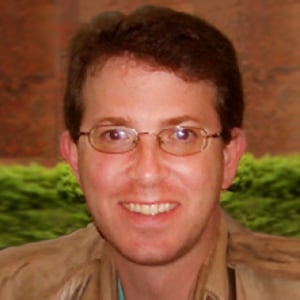
Adjunct Faculty, Johns Hopkins University
Mark S. Zaid, Esq. is a Washington, D.C.-based attorney who specializes in innovatively handling simple and complex administrative and litigation matters relating to national security, intelligence, international law, foreign sovereign and diplomatic immunity, defamation (plaintiff) and the Freedom of Information/Privacy Acts (FOI/PA). He teaches the D.C. Bar Continuing Legal Education classes on “The Basics of Filing and Litigating Freedom of Information/Privacy Act Requests” (since 2003), “Defending Security Clearances” (since 2006), and “Handling Whistleblower Cases: More than the Basics" (since 2016). Mr. Zaid was named as a Washington, D.C. Super Lawyer in 2009 (profiled), 2010, 2011, 2012, 2013, 2014 and 2015, as well as a “Best Lawyer” by Washingtonian Magazine in 2009, 2011, 2013, and 2015 for his national security work. As the National Law Journal once wrote, “if Agent Mulder ever needed a lawyer, Zaid would be his man.”
Mr. Zaid is also the Executive Director and founder of the James Madison Project, a Washington, D.C.-based organization, with the primary purpose of educating the public on issues relating to intelligence gathering and operations, secrecy policies, national security and government wrongdoing. “Curiously for this town,” wrote the American Bar Association Journal, “Zaid is an equal opportunity thorn out to pierce the sides of suit jackets bearing both elephants and donkeys on the lapels.”
A 1992 graduate of Albany Law School of Union University in New York, where he served as an Associate Editor of the Albany Law Review and now sits as a member of its Board of Trustees, he completed his undergraduate education (cum laude) in 1989 at the University of Rochester, New York with honors in Political Science and high honors in History. Mr. Zaid is a member of the Bars of New York State, Connecticut, the District of Columbia, Maryland and numerous federal courts.

Professor of Law, Northwestern University Pritzker School of Law
Joshua Kleinfeld teaches and writes about political, legal, and moral philosophy, criminal law, and criminal procedure. He also practices law in Northwestern's Juvenile Criminal Defense Clinic. He is a full professor with tenure at the Northwestern Pritzker School of the Law and (by courtesy) in Northwestern’s philosophy department. In 2017-18, he was a visiting professor at Harvard and Stanford Law Schools. He is the recipient of the Bator Award, given annually to one American law professor under the age of 40 who has demonstrated "excellence in legal scholarship, a commitment to teaching, a concern for students, and who has made a significant public impact."
In philosophy, Kleinfeld's research focuses on the idea of "embodied ethical life," as developed in the socio-theoretic tradition of Hegel, Weber, and Durkheim. This tradition aims to understand and critique social life by bringing to light the normative ideas implicit in social practices and institutions. In law, this means that the most interesting philosophical concepts are often those reflected or actualized in legal practice – in the law as judges and lawyers think of it and wield it.
In criminal law and procedure, Kleinfeld has developed a theory known as "reconstructivism," which holds that the chief office of criminal law is not to dole out retributive justice, nor to optimize crime and cost control, but to reconstruct a violated normative order in the wake of a crime. This work, which draws on the thought of Hegel, Durkheim, Jean Hampton, and Antony Duff, develops an alternative to retributive and utilitarian theories of criminal law by focusing on the distinctive social function and sense of justice at work in the criminal system.
Kleinfeld is also involved in practical criminal justice reform. In this vein, he defends children accused of homicide in the Northwestern Juvenile Criminal Defense clinic and assists in litigation efforts meant to reform American criminal law through the courts. He has also developed a view of criminal justice reform known as "democratization," which holds that the root of the American criminal justice crisis is a set of bureaucratic attitudes, structures, and incentives divorced from the American public’s concerns and sense of justice, and that the primary solution is to make criminal justice more community-focused and responsive to lay influences. Working with others, he has developed a number of policy proposals meant to reform American criminal justice in a democratic direction.
Kleinfeld holds a JD from Yale Law School, a PhD in philosophy from the Goethe University of Frankfurt (supervised by Axel Honneth, Klaus Günther, and Rainer Forst), and a BA in philosophy from Yale College. He clerked for Judge J. Harvie Wilkinson on the United States Court of Appeals for the Fourth Circuit; Judge Janice Rogers Brown on the United States Court of Appeals for the D.C. Circuit; and President (chief justice) Aharon Barak of the Supreme Court of Israel. He worked as an Associate at Debevoise & Plimpton LLP in Frankfurt, Germany, in the area of corporate criminal law. Before law school, he worked as a Senior Research Analyst at the White House’s Council on Bioethics.

Donald Phillip Rothschild Research Professor, George Washington University Law School
Renée Lettow Lerner is Donald Phillip Rothschild Research Professor of Law at George Washington University Law School.
Professor Lerner works in the fields of U.S. and English legal history, civil and criminal procedure, and comparative law. She advises judges, lawyers, and government officials from the United States and countries in Europe, Latin America, and Asia about the differences between adversarial and nonadversarial legal systems.
She writes extensively about the history of American juries. Her work includes not only scholarly articles, but also online publications intended for a broader audience of legal professionals and the public. In many different settings, she has debated the role of juries with other academics and with lawyers. She has a book forthcoming with Oxford University Press in the Very Short Introduction Series entitled “The Jury.” She is also working on a book about the American civil jury, from the colonial period to the present.
She is the author, with John Langbein and Bruce Smith, of the book History of the Common Law: The Development of Anglo-American Legal Institutions (2009).
Her recent writings include a book review of Amalia D. Kessler’s Inventing American Exceptionalism: The Origins of American Adversarial Legal Culture, 1800-1877, 67 J. Legal Ed. 888 (2018); “How the Creation of Appellate Courts in England and the United States Limited Judicial Comment on Evidence to the Jury,” 40 Journal of the Legal Profession 215 (2016); “The Troublesome Inheritance of Americans in Magna Carta and Trial by Jury,” in Magna Carta and its Modern Legacy 77-98 (Robert Hazell and James Melton eds., Cambridge University Press 2015); and “The Failure of Originalism in Preserving Constitutional Rights to Civil Jury Trial,” 22 William & Mary Bill of Rights Journal 811 (2014).
Professor Lerner received an A.B. summa cum laude in history from Princeton University. She was a Rhodes Scholar at Oxford University, where she studied English legal history. At Yale Law School, she was Articles Editor of the Yale Law Journal. She served as a law clerk to Justice Anthony M. Kennedy of the U.S. Supreme Court and to Judge Stephen F. Williams of the U.S. Court of Appeals for the District of Columbia Circuit. From 2003 to 2005, she served as Deputy Assistant Attorney General in the Office of Legal Counsel at the U.S. Department of Justice.
Professor, University of Illinois College of Law
Professor Suja A. Thomas's research interests include the Fifth, Sixth, and Seventh Amendment jury provisions, civil procedure, employment law, theories of constitutional interpretation, and consumer issues. She is currently working on two books, one entitled The Missing American Jury: Restoring Its Fundamental Constitutional Role, which Cambridge University Press will publish, and the other, co-authored with Sandra Sperino, entitled Unequal Justice: Why Employment Discrimination Plaintiffs Lose, which Oxford University Press will publish. Her article "Why Summary Judgment is Unconstitutional," published by the Virginia Law Review, has been the basis of arguments in the federal courts and was featured in a piece in The New York Times where her argument was referred to as "perfectly plausible." A panel of the 6th Circuit referred to her historical analysis in that article as "interesting," and her article was the impetus for a symposium of the Iowa Law Review. Professor Thomas's other work has also been influential. Her article on remittitur was the basis of a petition for certiorari to the Supreme Court, and a federal judge has commented that "her caution [regarding the effective elimination of the jury trial right through remittitur] merits evaluation by the federal courts." Also, recently, theWall Street Journal ran an article based on her co-authored article "Employer Costs and Conflicts Under the Affordable Care Act," published by the Cornell Law Review Online.
Professor Thomas earned her bachelor of arts from Northwestern University in mathematics and received her law degree from New York University School of Law. At N.Y.U., she served as an articles editor on the N.Y.U. Law Review, and she received several awards including the Leonard M. Henkin Prize for her note on equal rights under the 14th Amendment, the Mendes Hershman Prize for excellence in writing in the field of property law and the William Miller Memorial Award for outstanding scholarship in the field of municipal law. After graduating from law school and a federal clerkship in Chicago, Professor Thomas practiced law in New York City with Cravath, Swaine & Moore, Vladeck, Waldman, Elias & Engelhard, P.C. and Weil, Gotshal & Manges, LLP.
Professor Thomas began her academic career as a professor at the University of Cincinnati College of Law in 2000 and was a visiting professor at Vanderbilt University Law School in the spring of 2008. She joined the University of Illinois College of Law faculty in the fall of 2008.
Back in the day, Professor Thomas ran several marathons, including Boston, with a personal best of 3:02. She lives in Urbana with her husband Scott and dog Javi.
Founder and CEO, Lexpat Global Services
Adam Pearlman is the Founder and Chief Executive Officer of Lexpat Global Services. He is a National Security Law expert and a proven senior leader with experience across the U.S. Departments of Justice, Defense, and State, in the White House, and with the U.S. Federal Judiciary.
Before founding Lexpat, Mr. Pearlman served as the Senior Advisor for Legal Policy in the State Department’s Bureau of Counterterrorism. There, he counseled senior officials on matters covering the entire spectrum of programs and operations to counter terrorism and violent extremism. While participating in sensitive diplomatic engagements and helping to coordinate military operations, he also advised in the development of sanctions policy and initiatives to build legal and operational capacity in partner nations. Mr. Pearlman also managed the Bureau’s participation in federal litigation and led U.S. delegations in multilateral forums concerning criminal justice and rule of law. Separately, Mr. Pearlman supported the State Department’s Bureau of International Narcotics and Law Enforcement Affairs (INL) as the contracted Senior Justice and Rule of Law Advisor in Cabo Verde, Africa. There he was the chief implementer of a Foreign Assistance program that grew eight-fold during his tenure, building host nation capacity across the law enforcement, justice sector, rule of law, anti-money laundering, and corrections disciplines.
A former Associate Deputy General Counsel of the Department of Defense, Mr. Pearlman was agency counsel for complex civil and criminal national security matters in federal and military courts. He also led the Supreme Court and appellate unit of the team dedicated to litigating classified counterterrorism cases. His earlier service in the Department of Justice spanned four litigating divisions and the Office of the Deputy Attorney General. His diverse experience included reviewing complex international transactions and mergers, and advising on immigration removal proceedings, human rights abuses, and terrorist financing investigations. Mr. Pearlman also served with distinction in Iraq as an early advisor to the Iraqi High Tribunal’s prosecution of Saddam Hussein. He was a law clerk for The Honorable Royce C. Lamberth of the U.S. District Court for the District of Columbia, and during law school interned in the White House Counsel’s Office.
Mr. Pearlman is a Senior Fellow at the National Security Institute at George Mason University’s Antonin Scalia Law School, a member of the American Bar Association’s Advisory Committee on Law and National Security, and the Editor-in-Chief of the U.S. Intelligence Community Law Sourcebook. Previously, he has been a Term Member of the Council on Foreign Relations, National Security Fellow at the Foundation for Defense of Democracies, member of the ABA’s Africa Law Initiative Council and of the Center for Strategic & International Studies’ (CSIS) Project on Nuclear Issues, vice chairman of the ABA Section of International Law’s committees on national security, and aerospace and defense, and a liaison to the Board of Directors of the ABA’s Rule of Law Initiative. He has published articles in the Harvard National Security Journal, Stanford Law & Policy Review, Intelligence & National Security, The Foreign Service Journal, Lawfare, and many other outlets.
Mr. Pearlman earned his B.A., with honors, from UCLA, and his J.D., with honors, from The George Washington University Law School, where he was a member of the International Law Review. He also earned a Master of Science of Strategic Intelligence degree from the National Intelligence University, where he was the inaugural recipient of the Kornblum Award for national security law and ethics. Mr. Pearlman is a Certified Financial Crime Specialist and holds certificates in international human rights law from the University of Oxford and in anti-corruption law from American University’s Washington College of Law. He is admitted to the State Bars of California and Virginia, as well as to the Bar of the United States Supreme Court. He speaks and reads Portuguese at the intermediate level.

Partner, Steptoe LLP
Shannen W. Coffin is a partner in Steptoe’s Washington office, where co-chairs the firm’s appellate practice and is a member of the regulatory litigation practice group. He frequently represents clients in trial and appellate courts in matters involving constitutional and administrative law challenges to state and federal government regulatory action.
Mr. Coffin previously served as a senior lawyer in the Executive Branch. He was Counsel to Vice President Cheney in the Office of the Vice President of the United States, where, among other things, he served on the White House’s judicial selection committee. Before that, Mr. Coffin served as Deputy Assistant Attorney General in the US Justice Department’s Civil Division, where he was responsible for overseeing and coordinating trial litigation on behalf of the federal government for constitutional challenges to federal statutes, statutory and constitutional challenges to agency programs, and defense of national security and anti-terrorism programs.
Founder and Principal, Fillmore Global Strategies LLC
Ambassador Nathan A. Sales is the founder and principal of Fillmore Global Strategies LLC, a consultancy that provides legal and strategic advisory services on matters at the intersection of law, policy, and diplomacy.
From 2017 to 2021, Ambassador Sales served at the U.S. Department of State as Under Secretary for Civilian Security, Democracy, and Human Rights (acting). He oversaw nine bureaus and offices led by Senate-confirmed principals, with 1,300 employees and a combined foreign assistance budget of more than $5 billion annually, and the mission of preventing and countering threats to civilian security, including terrorism, mass atrocities, and violations of human rights and the rule of law.
Concurrently, Ambassador Sales was Ambassador-at-Large and Coordinator for Counterterrorism. After being nominated by the President and unanimously confirmed by the U.S. Senate, he was sworn in on August 10, 2017. He served as the principal adviser to the Secretary of State on international counterterrorism matters, and led the State Department’s Counterterrorism Bureau, a 200-person team with an annual foreign assistance budget of $400 million. He was also the Special Presidential Envoy to the Global Coalition to Defeat ISIS, leading U.S. relations with the 83-member Coalition and efforts to ensure the lasting defeat of ISIS in the Middle East and around the world.
While at the State Department, Ambassador Sales led the elements of the U.S. government’s China strategy promoting democratic values and human rights, including with respect to Hong Kong and Xinjiang. He oversaw the development and implementation of a wide range of U.S. government sanctions, including Global Magnitsky actions and Executive Order 13,936, targeting those responsible for undermining Hong Kong’s freedoms and autonomy. Ambassador Sales was the architect of the landmark 2017 UN Security Council Resolution 2396 on terrorist travel, and successfully pressed NATO to make counterterrorism a core Alliance mission. He led diplomatic engagements to persuade a dozen key partners in Europe and the Americas to designate Hizballah as a terrorist organization in its entirety. He launched the Western Hemisphere Counterterrorism Ministerial, in which heads of state and minister-level officials meet bianually to coordinate efforts against terrorist threats in the region. He led the U.S. government’s international efforts to combat white supremacist terrorism. Under his leadership, the State Department imposed terrorism sanctions on the Russian Imperial Movement – the first-ever U.S. designation of white supremacist terrorists.
Before joining the State Department, Ambassador Sales was Of Counsel at the law firm Kirkland & Ellis LLP (formerly Bancroft PLLC). He was also a tenured law professor, teaching and writing in the fields of administrative law, constitutional law, and national security law. His scholarship has been cited by the U.S. Supreme Court multiple times.
Ambassador Sales previously was Deputy Assistant Secretary for Policy at the U.S. Department of Homeland Security. He led DHS’s efforts to draft and implement legislation that strengthened the security of and expanded the Visa Waiver Program (which allows citizens of certain countries to travel to the United States without a visa). He headed the U.S. delegation in talks with seven countries to implement the new security measures and was the Secretary of Homeland Security’s Special Envoy to South Korea.
Ambassador Sales also served at the Office of Legal Policy at the U.S. Department of Justice, where he worked on regulatory initiatives, counterterrorism, and judicial confirmations. In 2005, he managed DOJ’s “war room” for the confirmation of Chief Justice John Roberts. He received the Attorney General’s Award for Exceptional Service – the Justice Department’s highest honor – for his role in drafting the USA PATRIOT Act, as well as the Attorney General’s Distinguished Service Award for his work on judicial confirmations.
In addition to his work at Fillmore Global Strategies, Ambassador Sales is a nonresident senior fellow at the Atlantic Council and a senior advisor at the Soufan Group, a global intelligence and security consultancy. He serves on a number of advisory boards, including for the Counter-Extremism Project (a nonprofit and nonpartisan international policy organization formed to combat the growing threat from extremist ideologies), the Secure Community Network (the official safety and security organization for the North American Jewish community), and the Sue J. Henry Center for Pre-Law Education at Miami University.
An Ohio native, Ambassador Sales received his B.A., summa cum laude, from Miami University in Oxford, Ohio, where he was elected to Phi Beta Kappa. He earned his J.D., magna cum laude, from Duke Law School, where he was Research Editor of the Duke Law Journal and joined the Order of the Coif. After law school, he clerked for the Honorable David B. Sentelle of the U.S. Court of Appeals for the DC Circuit.
Global eDiscovery Counsel, UBS AG
Prior to working at UBS AG, Jamie Brown was the Assistant General Counsel & eDiscover Counsel at the Commodity Futures Trading Commission.
Interim Dean, Florida International University College of Law
Dan Epstein was Vice President at America First Legal and an Associate Professor of Law at St. Thomas University in Miami, Florida. He also advises individuals and small businesses in affirmative and defensive actions against government overreach. Previously, he advised startups on regulatory matters as Director at a venture capital firm. His federal service includes being a Special Assistant to and Senior Associate Counsel to the President and a counsel for the House of Representatives Committee on Oversight and Government Reform. Earlier in his career, Mr. Epstein founded and ran Cause of Action, where he represented clients in government investigations and litigated regulatory, constitutional, political, and public law matters.
He holds a Ph.D. from George Washington University in Political Economy, a J.D. from Emory University School of Law, and a B.A. from Kenyon College. He is active in the Palm Beach community as a member of the Fourth Court of Appeals Judicial Nominating Commission in Florida, a transition team member to Florida Attorney General James Uthmeier, and the Chairman and Trustee of Palm Beach State College.
Partner, Shook Hardy & Bacon LLP
Patrick is a partner in the firm’s General Litigation and Business Services Division where he leads the practice on e-compliance and digital investigations. He is one of the few e-discovery and compliance attorneys in the nation that possesses the tripartite experience of an in-house corporate counsel from a Fortune 16 organization; a senior attorney at a federal regulatory agency; and a partner in a large law firm.
Patrick has extensive experience advising on discovery and investigative matters involving commercial litigation, compliance, regulatory requests, antitrust matters, and personnel issues. Combined with a deep understanding of forensics and enterprise technology platforms, Patrick’s experience advising clients on responding to federal agency requests under the Electronic Communications Privacy Act (ECPA) is balanced by his broad-based skill in negotiating enterprise software license agreements for collaboration platforms, e-discovery software and enterprise level computer forensic tools.
Before joining Shook Hardy & Bacon, Patrick served as senior special counsel for electronic discovery in the Office of the General Counsel at the U.S. Securities and Exchange Commission (SEC). During his tenure at SEC, Patrick co-chaired of the agency’s cross-divisional Electronic Discovery Action Team and co-authored The SEC Electronic Discovery and Litigation Response Manual. He counseled SEC senior leadership and agency staff on best practices and guidance for discovery and litigation strategy and privilege protections and on strategically significant matters involving forensics, technology and ECPA interpretation for subpoena enforcement.
Patrick appeared twice as SEC’s 30(b)(6) deponent to defend the agency’s discovery practices with favorable outcomes to the agency. He successfully designed and implemented SEC’s preservation process as well as a federal government-wide educational program that includes participation of the federal judiciary.
Prior to serving at SEC, Patrick was an experienced in-house counsel leading Verizon’s electronic discovery practice as Director of Electronic Discovery and Senior Litigation Counsel. Patrick was one of the nation’s first in-house attorneys charged to create and deploy defensible policies, guidelines and procedures for litigation response.
While at Verizon, Patrick testified as the company’s Federal Rules of Civil Procedure 30(b)(6) witness, defending the same policies and guidelines that he helped design and implement. In 2006, he was nominated for the Verizon Excellence Award after playing a key role in the successful completion of Verizon’s response to the Department of Justice’s Second Request for Documents in its acquisition of MCI. As a result of his work, Inside Counsel magazine named Verizon’s e-discovery team as one of the ten most innovative legal groups of 2007, the group’s second year winning the title.
In 2007, Patrick appeared with U.S. Supreme Court Justice Stephen Breyer at Georgetown University Law Center’s Summit on Electronic Discovery. He has testified before the U.S. Judicial Conference’s Advisory Committee on the Federal Rules of Evidence where he presented his position on Proposed Rule of Evidence 502. The committee included in its draft to the Judicial Conference language incorporating his suggestions.
Outside of work, Patrick volunteers his time as a co-founder at The Electronic Discovery Institute, a non-profit organization that conducts studies of litigation processes for the benefit of the federal and state judiciary.
Patrick lectures regularly at educational events and legal conferences internationally. He has appeared on National Public Radio’s Morning Edition and was interviewed for the August 2008 edition of The Economist.

Legal Scholar and Solo Practitioner
Jack received his B.A. in History from the University of Virginia in 1977, graduating with Highest Distinction. After graduating Yale Law School in 1980, he served active duty in the U.S. Army's JAG Corps, rising to the rank of Major, where he represented the United States in more than 250 cases.
He practiced for a decade as an Associate for Bradley Arant in Birmingham, Alabama. He proudly served the State of Alabama in the Office of the Attorney General, both as Deputy and Assistant Attorney General, handling complex civil and criminal litigation cases for the people of Alabama. In 2000, he won the "Best Brief Award" from the National Association of Attorneys General for his brief in a case decided by the U.S. Supreme Court, James Alexander v. Martha Sandoval – a case he won. He was Special Assistant to the Inspector General for the Corporation for National and Community Service, Visiting Legal Fellow for the Center for Judicial and Legal Studies for the Heritage Foundation, Of Counsel at Strickland Brockington Lewis, a solo practitioner, and General Counsel for Indigo Energy.
Most recently, he "re-upped" for military service, volunteering his legal services to the Georgia State Defense Force where twice each month he provided legal services for National Guardsmen who were being deployed. He wore his military uniform for the last time in October 2024.
Jack Park passed away on March 16, 2026.
Managing Partner, Redgrave LLP
Victoria Redgrave brings to the Firm a unique combination of skills and experience as in-house litigation counsel for two major corporations, outside counsel at an AmLaw 100 firm, and as general counsel at a technology company. She is the Managing Partner of Redgrave LLP.
Vickie served as Vice President, Practice Development & General Counsel for Technology Concepts & Design, Inc. (TCDI). During her tenure with TCDI, she was responsible for providing legal advice and counsel to the corporation on all legal matters, including the negotiation and preparation of master services agreements and RFP responses. Her responsibilities also included providing senior leadership to product development activities and to service delivery teams regarding expectations and needs of in-house counsel to litigation management and discovery.
Before joining TCDI, Vickie was Managing Counsel–Litigation for a Fortune 40 chemical company. In this role, Vickie led the company’s Products Liability Group, supervising a team of attorneys and paralegals responsible for managing all product liability litigation matters in North America. Vickie’s experience also included managing the company’s Discovery Practice Group. Her responsibilities in this role included the global enterprise-wide assessment of the company’s capabilities and exposure regarding compliance with both federal and state procedural rules regarding discovery of electronically stored information, as well as development and implementation of a comprehensive litigation response plan for electronic discovery. Vickie led the selection and implementation of technologies for electronic discovery and matter/information management within the company. She also provided counsel to the company’s information systems team on issues related to email management, server security, and data privacy.
Vickie also worked previously in-house for a Fortune 500 engine design and manufacturing company as Senior Counsel–Litigation and was a Senior Associate at Barnes & Thornburg.
Vickie received a J.D. from the Indiana University School of Law at Indianapolis (summa cum laude) and a B.S. from the University of Indianapolis (magna cum laude). Vickie is admitted to practice in Michigan and the District of Columbia.

Judge, United States Court of Appeals, Fifth Circuit
Judge Smith was appointed U.S. Circuit Judge for the Fifth Circuit by President Reagan and entered on duty in January 1988. He attended public schools in Lubbock, Texas, and graduated from Yale University, receiving a B.A. in 1969 and a J.D. in 1972.
Judge Smith was a Law Clerk to U.S. District Judge Halbert Woodward, Northern District of Texas, 1972-1973; with the Houston law firm of Fulbright & Jaworski as an Associate, 1973-1981, and as Partner, 1981-1984; and as City Attorney, City of Houston, 1984-1988. He was Chairman, Civil Service Commission, City of Houston, 1982-1984; and a Director, Harris County Housing Authority, 1978-1980.
Judge Smith lives in Houston and is married to Mary Jane Smith and has four children: Ruth Ann, Clark, J.J., and Brandon. He formerly was Chair of the Advisory Committee on Federal Rules of Evidence of the Judicial Conference of the United States. He assists LexisNexis/Matthew Bender & Co. in periodic revisions of several chapters of Moore’s Federal Practice.

Reasoned Argument Book Club: Rights, Ratification, and Revolution [Session 6]
John S. Baker
REASONED ARGUMENT: THE COUNTER TO CANCEL CULTURE American Argument Prior to, During, and Following theFederalist-Antifederalist...
Feddie Night Fights: Should the Declaration Inform the Constitution?
Hadley P. Arkes, Steven F. Hayward, Lee J. Strang
Feddie Night Fights. It’s on. The Federalist Society’s Student Division & Cincinnati Law Present: Should...
Feddie Night Frights: Originalism: Trick or Treat?
Eric J. Segall, Lawrence VanDyke, Ilan Wurman
The Federalist Society's Student Division &University of Texas Student Chapter Present Feddie Night Frights:Night of...
Corpus Linguistics in Legal Interpretation
Stephen Mouritsen, James C. Phillips
Corpus linguistics has recently emerged as a method for addressing problems in legal interpretation. Corpus...
The Relationship Between the Declaration of Independence and the Constitution
Randy E. Barnett, Thomas M. Hardiman, John Mikhail, Lee J. Strang, Michael P. Zuckert
In 1776, the Continental Congress declared the birth of a new nation. Six of the...
NLRB Trumps Five Obama Board Precedents
John N. Raudabaugh
In December, the NLRB released many important decisions. John Raudabaugh, Former NLRB Member, will join...
National Security Leaks
Adam R. Pearlman, J. Patrick Rowan, Mark S. Zaid
Leaks of classified or politically sensitive information have become part of the daily news cycle....
The Past and Future of the Criminal and Civil Jury
Joshua Kleinfeld, Renée Lettow Lerner, Suja Thomas
This debate will discuss the proper role of the criminal and civil jury in modern...
Public Service and Private Servers: The Law of Government Information Retention and Security - Podcast
Adam R. Pearlman, Shannen W. Coffin, Nathan A. Sales
There has been much in the news recently relating to public officials’ transmission and retention...
“The Dog Ate My Emails!”: Document Retention Policies, Litigation Holds, and Legal Ethics
Jamie Brown, Daniel Z. Epstein, Patrick Oot, John J. Park, Victoria A. Redgrave, Julie Goldsmith Reiser, Jerry E. Smith
Once upon a time, corporations, government departments, and other entities made their own decisions about...