
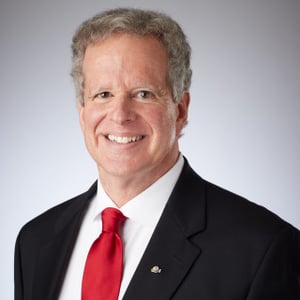
Director, Global Engagement; Vincent de Paul Professor of Law, DePaul University College of Law
Before joining DePaul, Dr. Alberto R. Coll served for five years as dean of the Center for Naval Warfare Studies, the U.S. Navy’s foremost strategic research center. A cum laude graduate from Princeton University in history, he earned his JD and PhD in government and foreign affairs from the University of Virginia. In 1982, Professor Coll joined the faculty at Georgetown University, and in 1986 was appointed secretary of the Navy Senior Research Fellow at the Naval War College. In 1989, he became the youngest holder of the Charles H. Stockton Chair of International Law, the college’s oldest chair. From 1990 to 1993, Professor Coll was principal deputy assistant secretary of defense, serving in the Pentagon office that oversaw the Defense Department’s policy, strategy and $3 billion budget for special operations forces and “low-intensity” conflict, including counterterrorism. For his work, he received the Secretary of Defense Medal for Outstanding Public Service. Professor Coll is the author of The Wisdom of Statecraft and editor of several other books on international relations and law. He is the author of prize-winning articles in the American Journal of International Law and the Naval War College Review, as well as articles in Foreign Policy, Washington Quarterly, Harvard Journal of International Law, the University of Pennsylvania Journal of International Law, and the UCLA Journal of International Law and Foreign Affairs. In 2004, Professor Coll received the Antonio Jose Irisarri Medal for his contribution to strengthening the rule of law and civilian control over the military in Guatemala. He has served as consultant to the Pew Charitable Trusts, the Ford Foundation, the Carnegie Council on Ethics and International Affairs, the Rand Corp., the United States Information Agency, and numerous defense and intelligence organizations. He is a frequent commentator on American foreign policy, U.S. relations with Cuba and Latin America, and international legal and political issues. Over the past 28 years he has lectured at more than 120 universities, think tanks, government agencies, and public forums in the United States, Latin America, Europe, Asia and South Africa. Professor Coll is a member of the Virginia Bar, the Council on Foreign Relations, and the Instituto de Estudios Juridicos y Politicos at the Universidad Complutense de Madrid. At DePaul, he teaches courses on international law, international human rights, U.S. foreign relations, terrorism, international trade and Latin America.
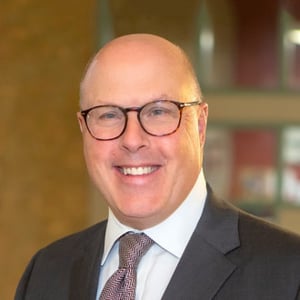
Senior Attorney, Sensient Technologies Corporation
Columnist, Chicago News Cooperative
James Warren is a news columnist for the Chicago News Cooperative. He formerly was managing editor and Washington bureau chief of the Chicago Tribune and the publisher of the Chicago Reader. The veteran journalist is also a political analyst for MSNBC and a contributor to The Atlantic. Jim came to Chicago in 1977 to join the financial section of the Chicago Sun-Times, where he worked as a general-assignment reporter and wrote about business, legal affairs and labor issues. In 1984, he moved to the Chicago Tribune as its labor and legal affairs writer. He later became the paper’s media writer and editor of its Tempo lifestyle section.
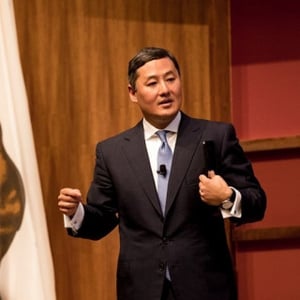
Emanuel S. Heller Professor of Law, University of California at Berkeley; Thomas Smith Senior Research Fellow, Civitas Institute, University of Texas at Austin
John Yoo is the Emanuel Heller Professor of Law at the University of California at Berkeley. He is also the Thomas Smith Senior Research Fellow, Civitas Institute, at the University of Texas at Austin. He is also a Nonresident Senior Fellow at the American Enterprise Institute.
His most recent book, The Politically Incorrect Guide to the Supreme Court, co-authored with Robert Delahunty, was published in 2023. Professor Yoo’s other books include Defender-in-Chief: Trump’s Fight for Presidential Power; Striking Power: How Cyber, Robots, and Space Weapons Change the Rules for War; Point of Attack: Preventive War, International Law, and Global Welfare; and Crisis and Command: A History of Executive Power from George Washington to George Bush.
He is a co-author of volumes 1 and 2 of R. Rossum, G. Tarr, V. Munoz & J. Yoo American Constitution Law (Routledge, 2026), and a co-editor of the eight-volume series on the 250th anniversary of the American Revolution, We Hold These Truths, with Yuval Levin and Adam White of the American Enterprise Institute.
Professor Yoo has published more than 100 articles in academic journals on subjects including national security, constitutional law, international law, and the Supreme Court. He also regularly contributes to the editorial pages of the Wall Street Journal, New York Times, Washington Post, Los Angeles Times, and National Review, among others.
Professor Yoo has served in all three branches of government. He was an official in the U.S. Department of Justice, where he worked on national security and terrorism issues after the 9/11 attacks. He served as general counsel of the U.S. Senate Judiciary Committee. He has been a law clerk for Supreme Court Justice Clarence Thomas and federal appeals Judge Laurence Silberman. He has been a visiting professor at the University of Texas at Austin’s School of Civic Leadership, Seoul National University, the Interdisciplinary Center Herzliya, Keio University, Trento University, the University of Chicago, and the Free University of Amsterdam.
Professor Yoo supervises the Public Law and Policy Program and the California Constitution Center. He also serves on the boards of Founding Forward, the Washington Legal Foundation, the Pacific Legal Foundation, the Ulysses Grant Institute, the Federalist Society’s Separation of Powers and Federalism Division, the Universidad Cientifica del Sur Law School, and the Asia-Pacific Law Institute at Seoul National University. He is a winner of the Federalist Society’s Paul Bator award and the Heritage Foundation’s Edwin Meese III Originalism Lectureship.
Professor Yoo graduated from Yale Law School and summa cum laude from Harvard College.

U.S. Court of Appeals, Seventh Circuit
Frank H. Easterbrook is a judge of the United States Court of Appeals for the Seventh Circuit and a Senior Lecturer at the Law School of the University of Chicago. He was Chief Judge from 2006–2013. Before joining the court in 1985, he was the Lee andBrena Freeman Professor of Law at the University of Chicago, where he taught and wrote in antitrust, securities, corporate law, jurisprudence, and criminal procedure. He has published The Economic Structure of Corporate Law (with Daniel R. Fischel) and about 100 scholarly articles. He served as Co-Editor of the Journal of Law and Economics from 1982 to 1991 and as a member of the Judicial Conference’s Standing Committee on Rules of Practice and Procedure from 1991 to 1997. Before joining the faculty of the Law School in 1979, Judge Easterbrook was Deputy Solicitor General of the United States. He holds degrees from Swarthmore College (B.A. with high honors, 1970) and the University of Chicago (J.D. cum laude, 1973), and is a member of the American Academy of Arts and Sciences, the American Law Institute, the Mont Pelerin Society, Phi Beta Kappa, and the Order of the Coif.
Visiting Scholar, American Enterprise Institute
Dr. Arthur Herman (Ph.D. Johns Hopkins, 1985) is the author of seven books, including the New York Times bestselling How the Scots Invented the Modern World (2001); the Pulitzer Prize Finalist Gandhi and Churchill (2008); To Rule the Waves: How the British Navy Shaped the Modern World (nominated for the UK’s Mountbatten Prize); and the highly acclaimed Freedom’s Forge: How American Business Produced Victory in World War II, which The Economist magazine picked as one of the Best Books of 2012.
His most recent work, The Cave and the Light: Plato Versus Aristotle and the Struggle for the Soul of Western Civilization, was published by Random House in 2013.
Educated at the University of Minnesota and Johns Hopkins University in history and classics, Dr. Herman is a frequent contributor on defense, energy, and technology issues to Commentary magazine, the New York Post, National Review, and the Wall Street Journal. He was also the first non-British citizen to be named to the Scottish Arts Council from 2007 to 2009.
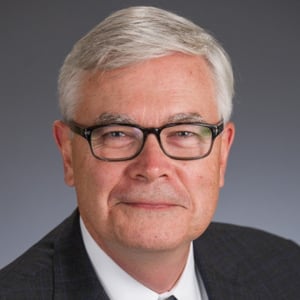
Senior Fellow, The Claremont Institute
Charles Kesler is a Senior Fellow of the Claremont Institute, Editor of the Claremont Review of Books, host of Claremont’s The American Mind video series, and the Dengler-Dykema Distinguished Professor of Government at Claremont McKenna College.
Dr. Kesler also teaches in the Claremont Institute’s Publius Fellows Program and Lincoln Fellows Program. He received his B.A. in Social Studies and his M.A. and Ph.D. in Government from Harvard University. From 1989 to 2008, Dr. Kesler was director of CMC’s Henry Salvatori Center for the Study of Individual Freedom in the Modern World.
He is the recipient of the prestigious 2018 Bradley Prize, a high honor bestowed upon distinguished individuals who have influenced American scholarship and debate.
From September 2000 to March 2001, he served as vice chairman of the Advisory Committee to the U.S. Congress's James Madison Commemoration Commission.
He was selected in June 2000 as a member of the Scholars Commission on the Jefferson-Hemings Issue sponsored by the Thomas Jefferson Heritage Society.
Dr. Kesler is the author of I Am the Change: Barack Obama and the Crisis of Liberalism (Broadside Books); the editor of Saving the Revolution: The Federalist Papers and the American Founding (Free Press); co-editor, with John B. Kienker, of Life, Liberty, and the Pursuit of Happiness: Ten Years of the Claremont Review of Books (Rowman & Littlefield); and co-editor, with William F. Buckley, Jr., of Keeping the Tablets: Modern American Conservative Thought (HarperCollins). He has written extensively on American constitutionalism and political thought, and his edition of The Federalist Papers (Signet Classics) is the best-selling edition in the country.

Executive Vice President, The Federalist Society
Dean Reuter is Executive Vice President at the Federalist Society for Law and Public Policy Studies. He has served in two federal government agency Offices of the Inspector General, as Counsel to the Inspector General and Deputy Inspector General, responsible for policing the use of federal funds granted and contracted through those agencies. As such, he helped conduct and oversee criminal investigations across the country. He is the principal author of the non-fiction book, The Hidden Nazi: The Untold Story of America's Deal with the Devil, and editor of Liberty’s Nemesis: The Unchecked Expansion of the State and Confronting Terror: 9/11 and the Future of American National Security. He was appointed by the President and served as Vice-Chairman of the Board of Directors of the Corporation for National and Community Service, and recently served as an appointee on the U.S. Commission on Presidential Scholars. He is a graduate of Hood College (BA with Honors) and the University of Maryland School of Law.
U.S. Court of Appeals, Seventh Circuit
Frank H. Easterbrook is a judge of the United States Court of Appeals for the Seventh Circuit and a Senior Lecturer at the Law School of the University of Chicago. He was Chief Judge from 2006–2013. Before joining the court in 1985, he was the Lee andBrena Freeman Professor of Law at the University of Chicago, where he taught and wrote in antitrust, securities, corporate law, jurisprudence, and criminal procedure. He has published The Economic Structure of Corporate Law (with Daniel R. Fischel) and about 100 scholarly articles. He served as Co-Editor of the Journal of Law and Economics from 1982 to 1991 and as a member of the Judicial Conference’s Standing Committee on Rules of Practice and Procedure from 1991 to 1997. Before joining the faculty of the Law School in 1979, Judge Easterbrook was Deputy Solicitor General of the United States. He holds degrees from Swarthmore College (B.A. with high honors, 1970) and the University of Chicago (J.D. cum laude, 1973), and is a member of the American Academy of Arts and Sciences, the American Law Institute, the Mont Pelerin Society, Phi Beta Kappa, and the Order of the Coif.
Visiting Scholar, American Enterprise Institute
Dr. Arthur Herman (Ph.D. Johns Hopkins, 1985) is the author of seven books, including the New York Times bestselling How the Scots Invented the Modern World (2001); the Pulitzer Prize Finalist Gandhi and Churchill (2008); To Rule the Waves: How the British Navy Shaped the Modern World (nominated for the UK’s Mountbatten Prize); and the highly acclaimed Freedom’s Forge: How American Business Produced Victory in World War II, which The Economist magazine picked as one of the Best Books of 2012.
His most recent work, The Cave and the Light: Plato Versus Aristotle and the Struggle for the Soul of Western Civilization, was published by Random House in 2013.
Educated at the University of Minnesota and Johns Hopkins University in history and classics, Dr. Herman is a frequent contributor on defense, energy, and technology issues to Commentary magazine, the New York Post, National Review, and the Wall Street Journal. He was also the first non-British citizen to be named to the Scottish Arts Council from 2007 to 2009.
Senior Fellow, The Claremont Institute
Charles Kesler is a Senior Fellow of the Claremont Institute, Editor of the Claremont Review of Books, host of Claremont’s The American Mind video series, and the Dengler-Dykema Distinguished Professor of Government at Claremont McKenna College.
Dr. Kesler also teaches in the Claremont Institute’s Publius Fellows Program and Lincoln Fellows Program. He received his B.A. in Social Studies and his M.A. and Ph.D. in Government from Harvard University. From 1989 to 2008, Dr. Kesler was director of CMC’s Henry Salvatori Center for the Study of Individual Freedom in the Modern World.
He is the recipient of the prestigious 2018 Bradley Prize, a high honor bestowed upon distinguished individuals who have influenced American scholarship and debate.
From September 2000 to March 2001, he served as vice chairman of the Advisory Committee to the U.S. Congress's James Madison Commemoration Commission.
He was selected in June 2000 as a member of the Scholars Commission on the Jefferson-Hemings Issue sponsored by the Thomas Jefferson Heritage Society.
Dr. Kesler is the author of I Am the Change: Barack Obama and the Crisis of Liberalism (Broadside Books); the editor of Saving the Revolution: The Federalist Papers and the American Founding (Free Press); co-editor, with John B. Kienker, of Life, Liberty, and the Pursuit of Happiness: Ten Years of the Claremont Review of Books (Rowman & Littlefield); and co-editor, with William F. Buckley, Jr., of Keeping the Tablets: Modern American Conservative Thought (HarperCollins). He has written extensively on American constitutionalism and political thought, and his edition of The Federalist Papers (Signet Classics) is the best-selling edition in the country.
Executive Vice President, The Federalist Society
Dean Reuter is Executive Vice President at the Federalist Society for Law and Public Policy Studies. He has served in two federal government agency Offices of the Inspector General, as Counsel to the Inspector General and Deputy Inspector General, responsible for policing the use of federal funds granted and contracted through those agencies. As such, he helped conduct and oversee criminal investigations across the country. He is the principal author of the non-fiction book, The Hidden Nazi: The Untold Story of America's Deal with the Devil, and editor of Liberty’s Nemesis: The Unchecked Expansion of the State and Confronting Terror: 9/11 and the Future of American National Security. He was appointed by the President and served as Vice-Chairman of the Board of Directors of the Corporation for National and Community Service, and recently served as an appointee on the U.S. Commission on Presidential Scholars. He is a graduate of Hood College (BA with Honors) and the University of Maryland School of Law.
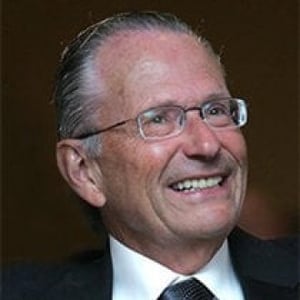
Earl Warren Professor of Public Law (Emeritus), UC Berkeley School of Law
Jesse Choper served as law clerk to Chief Justice Earl Warren of the U.S. Supreme Court following graduation from law school. He taught at the Wharton School of the University of Pennsylvania from 1957 to 1960, and at the University of Minnesota Law School from 1961 to 1965. He joined the Berkeley Law faculty in 1965. Choper has been a visiting professor at Harvard Law School, Fordham Law School, University of Milan, Free University in Amsterdam, Autonoma University in Barcelona, University of New South Wales in Sydney, University of Lucerne in Switzerland, and Catholic University of Portugal in Lisbon and Porto. He served as Berkeley Law’s dean from 1982 to 1992.
From 1979 to 1998, Choper was one of the three major lecturers at U.S. Law Week’s Annual Constitutional Law Conference in Washington, D.C. He has delivered 20 titled lectures at major universities throughout the country, including the Cooley Lectures at Michigan, the Stevens Lecture at Cornell, the Baum Lecture at Illinois, and the Lockhart Lecture at Minnesota. He has served on the executive committee of the Association of American Law Schools, and on the executive council of the American Academy of Arts and Sciences (of which he was vice president for more than ten years). He was national president of the Order of the Coif and is a member of the American Law Institute. In 1998 he received the UC Berkeley Distinguished Teaching Award and the Rutter Award for Teaching Distinction at Berkeley Law in 2006. In 2005 the Berkeley Law Alumni Association presented Choper with the Faculty Lifetime Achievement Award and the University of Pennsylvania Law School gave him the James Wilson Award, its highest award for alumni.
Choper’s major publications include the books, Judicial Review and the National Political Process: A Functional Reconsideration of the Role of the Supreme Court, which received the Order of the Coif Triennial Book Award in 1982, and Securing Religious Liberty: Principles for Judicial Interpretation of the Religion Clauses. His recent publications include the thirteenth edition of his Constitutional Law casebooks; the eighth edition of his Corporations casebook; the second edition of The Supreme Court and Its Justices; “The Political Question Doctrine: Suggested Criteria,” in Duke Law Journal (2005); “Wartime Process: A Dialogue on Congressional Power to Remove Issues From the Federal Courts,” in California Law Review (2007) (co-author); and “Who’s Afraid of the Eleventh Amendment? The Limited Impact of the Court’s Sovereign Immunity Rulings,” in Columbia Law Review (2006) (co-author).

Laurence A. Tisch Professor of Law and Director, Classical Liberal Institute, New York University School of Law; Director, Classical Liberal Institute, Civitas Institute University of Texas at Austin
Richard A. Epstein is the inaugural Laurence A. Tisch Professor of Law at NYU School of Law. Prior to his joining the faculty, he was a visiting law professor at NYU from 2007 through 2009. He served as the Peter and Kirstin Bedford Senior Fellow at the Hoover Institution from 2000 to 2024. Since 2024 to the present he is a senior lecturer at the Civitas Institute at the University of Texas—Austin. Epstein is also the James Parker Hall Distinguished Service Professor of Law Emeritus and a senior lecturer at the University of Chicago. His initial law school appointment was at the University of Southern California from 1968 to 1972. Epstein received an LL.D., h.c. from the University of Ghent, 2003. He has been a member of the American Academy of Arts and Sciences since 1985 and was a Senior Fellow of the Center for Clinical Medical Ethics at the University of Chicago Division of Biological Sciences, also from 1983. to 2022 He served as editor of the Journal of Legal Studies from 1981 to 1991, and of the Journal of Law and Economics from 1991-2001. From 2001 to 2010 he was a director of the John M. Olin Program in Law and Economics at the University of Chicago.
His newest book, The Myth of Birthright Citizenship: What the Fourteenth Amendment Really Says was published in 2026 (Encounter Books). Prior to that he has published many books including, The Dubious Morality of the Modern Administrative State (Roman & Littlefield 2020).Earlier he published th Classical Liberal Constitution: The Uncertain Quest for Limited Government (Harvard 2014) iHis previous books include Design for Liberty: Private Property, Public Administration and the Rule of Law (Harvard 2011); The Case Against the Employee Free Choice Act (Hoover 2009); Supreme Neglect: How to Revive the Constitutional Protection of Property Rights (Oxford 2008); Antitrust Decrees in Theory and Practice: Why Less is More (AEI 2007); Overdose: How Excessive Government Regulation Stifles Pharmaceutical Innovation (Yale University Press. 2006); How Progressives Rewrote the Constitution (Cato 2006); Cases and Materials on Torts (Aspen Law & Business; 8th ed. 2004); Skepticism and Freedom: A Modern Case for Classical Liberalism (University of Chicago, 2003); Torts (Aspen Law & Business 1999); Principles for a Free Society: Reconciling Individual Liberty with the Common Good (Perseus Books, 1998): Mortal Peril: Our Inalienable Rights to Health Care (Addison-Wesley, 1997); Simple Rules for a Complex World (Harvard, 1995); Bargaining With the State (Princeton, 1993); Forbidden Grounds: The Case Against Employment Discrimination Laws (Harvard , 1992); Takings: Private Property and the Power of Eminent Domain (Harvard, 1985); and Modern Products Liability Law (Greenwood Press, 1980). He has also edited(with Catherine M. Sharkey) Cases and Materials on the Law of Torts (10th edition 2012).
Professor Epstein has written numerous articles on a wide range of legal and interdisciplinary subjects. He has taught courses in administrative law, antitrust law, civil procedure, communications, constitutional law, contracts, corporations, criminal law, employment discrimination law, environmental law, food and drug law health law and policy, legal history, labor law, property, real estate development and finance, jurisprudence, labor law; land use planning, patents, individual, estate and corporate taxation, Roman Law; torts, and workers' compensation.
Professor Epstein also writes a regular column for Civitas Institute, which also sponsors his podcast, The Libertarian with Charles C.W. Cooke, and Law Talk, with Cooke and John Yoo. He also does a podcast with John Batchelor. And appears regularly on the Freedom File with Judge Andrew Napolitano.
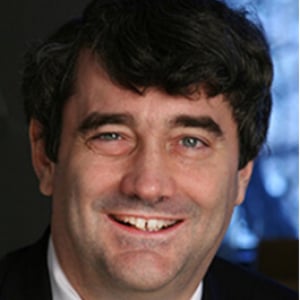
Clayton J. and Henry R. Barber Professor of Law, Northwestern University Pritzker School of Law and Co-Chairman, Board of Directors, The Federalist Society
STEVEN GOW CALABRESI is the Clayton J. & Henry R. Barber Professor at Northwestern Pritzker School of Law. He has also co-taught in the Fall semester at Yale Law School from 2013 to the present. Calabresi clerked for Justice Antonin Scalia and Judges Robert H. Bork and Ralph K. Winter. He was a Special Assistant to Attorney General Meese from 1985 to 1987 and worked with Ken Cribb as his deputy in 1987 on the second floor of the West Wing of the Reagan White House. Calabresi has written books on presidential power and comparative constitutional law and the origins of judicial review. He and Gary Lawson are the co-editors of a casebook on U.S. Constitutional Law, and Calabresi is also the co-editor of a casebook on comparative constitutional law. He has written over seventy law review articles since 1990.
Director, Program in Law and Economics, University of California Berkeley School of Law
Robert Cooter, a pioneer in the field of law and economics, began teaching in the Department of Economics at UC Berkeley in 1975 and joined the Boalt faculty in 1980. He has been a visiting member of the Institute for Advanced Study at Princeton and a recipient of various awards and fellowships, including Guggenheim, the Jack N. Pritzker Visiting Research Professorship at Northwestern Law School, and, most recently, the Max Planck Research Prize. He was an Olin visiting professor at the University of Virginia Law School and lectured at the University of Cologne in 1989. He is coeditor of the International Review of Law and Economics. He is one of the founders of the American Law and Economics Association and served from 1994 to 1995 as its president. In 1999 he was elected to the American Academy of Arts and Sciences.
Cooter has published a wide variety of articles on private law, constitutional law and economics, and law and economic development.
Recent publications include the third edition of the leading textbook Law and Economics (with Ulen, 1999), also translated into Spanish, Italian, Japanese, Chinese and Korean. He has also authored "Commodifying Liability" in The Fall and Rise of Freedom of Contract (1999), "Law from Order: Economic Development and the Jurisprudence of Social Norms" in A Not-so-Dismal Science: A Broader, Brighter Approach to Economies and Societies (1999), "Punitive Damages" in Philosophy of Law: An Encyclopedia (1999), and "Does Risk to Oneself Increase the Care Owed to Others? Law and Economics in Conflict" in the Journal of Legal Studies (with Porat, 2000).
Laurence A. Tisch Professor of Law and Director, Classical Liberal Institute, New York University School of Law; Director, Classical Liberal Institute, Civitas Institute University of Texas at Austin
Richard A. Epstein is the inaugural Laurence A. Tisch Professor of Law at NYU School of Law. Prior to his joining the faculty, he was a visiting law professor at NYU from 2007 through 2009. He served as the Peter and Kirstin Bedford Senior Fellow at the Hoover Institution from 2000 to 2024. Since 2024 to the present he is a senior lecturer at the Civitas Institute at the University of Texas—Austin. Epstein is also the James Parker Hall Distinguished Service Professor of Law Emeritus and a senior lecturer at the University of Chicago. His initial law school appointment was at the University of Southern California from 1968 to 1972. Epstein received an LL.D., h.c. from the University of Ghent, 2003. He has been a member of the American Academy of Arts and Sciences since 1985 and was a Senior Fellow of the Center for Clinical Medical Ethics at the University of Chicago Division of Biological Sciences, also from 1983. to 2022 He served as editor of the Journal of Legal Studies from 1981 to 1991, and of the Journal of Law and Economics from 1991-2001. From 2001 to 2010 he was a director of the John M. Olin Program in Law and Economics at the University of Chicago.
His newest book, The Myth of Birthright Citizenship: What the Fourteenth Amendment Really Says was published in 2026 (Encounter Books). Prior to that he has published many books including, The Dubious Morality of the Modern Administrative State (Roman & Littlefield 2020).Earlier he published th Classical Liberal Constitution: The Uncertain Quest for Limited Government (Harvard 2014) iHis previous books include Design for Liberty: Private Property, Public Administration and the Rule of Law (Harvard 2011); The Case Against the Employee Free Choice Act (Hoover 2009); Supreme Neglect: How to Revive the Constitutional Protection of Property Rights (Oxford 2008); Antitrust Decrees in Theory and Practice: Why Less is More (AEI 2007); Overdose: How Excessive Government Regulation Stifles Pharmaceutical Innovation (Yale University Press. 2006); How Progressives Rewrote the Constitution (Cato 2006); Cases and Materials on Torts (Aspen Law & Business; 8th ed. 2004); Skepticism and Freedom: A Modern Case for Classical Liberalism (University of Chicago, 2003); Torts (Aspen Law & Business 1999); Principles for a Free Society: Reconciling Individual Liberty with the Common Good (Perseus Books, 1998): Mortal Peril: Our Inalienable Rights to Health Care (Addison-Wesley, 1997); Simple Rules for a Complex World (Harvard, 1995); Bargaining With the State (Princeton, 1993); Forbidden Grounds: The Case Against Employment Discrimination Laws (Harvard , 1992); Takings: Private Property and the Power of Eminent Domain (Harvard, 1985); and Modern Products Liability Law (Greenwood Press, 1980). He has also edited(with Catherine M. Sharkey) Cases and Materials on the Law of Torts (10th edition 2012).
Professor Epstein has written numerous articles on a wide range of legal and interdisciplinary subjects. He has taught courses in administrative law, antitrust law, civil procedure, communications, constitutional law, contracts, corporations, criminal law, employment discrimination law, environmental law, food and drug law health law and policy, legal history, labor law, property, real estate development and finance, jurisprudence, labor law; land use planning, patents, individual, estate and corporate taxation, Roman Law; torts, and workers' compensation.
Professor Epstein also writes a regular column for Civitas Institute, which also sponsors his podcast, The Libertarian with Charles C.W. Cooke, and Law Talk, with Cooke and John Yoo. He also does a podcast with John Batchelor. And appears regularly on the Freedom File with Judge Andrew Napolitano.
Alexander M. Bickel Professor of Public Law, Yale Law School
Degrees from Davidson College, B.A. summa cum laude, 1973; Harvard University, M.A., 1974; Yale Law School, J.D, 1978. Clerked for Edward Weinfeld, 1978-79; Attorney at Shea & Gardner, 1979-82; Law Professor since 1982, tenured at Georgetown and Yale, visiting professor at Stanford, NYU, Toronto, Harvard, Columbia, Penn, Fordham, Vanderbilt. Author of casebooks on legislation and sexuality, gender and law, as well as monographs on statutory interpretation and the rights of sexual and gender minorities. Author of dozens of articles, by one empirical count a top ten most cited law professors.
Charles Evans Hughes Professor of Law, Columbia Law School
THOMAS W. MERRILL is the Charles Evans Hughes Professor of Law at Columbia Law School. He previously taught at Northwestern University School of Law and Yale Law School. He has undergraduate degrees from Grinnell College and Oxford University, where he studied as a Rhodes Scholar, and a law degree from the University of Chicago. He clerked on the D.C. Circuit (for Chief Judge David Bazelon) and the U.S. Supreme Court (for Justice Harry Blackmun). From 1987-1990 he served as Deputy Solicitor General, U.S. Department of Justice. Professor Merrill’s writings related to property include Property: Principles and Policies (Foundation Press Second Edition, 2012) (with Henry E. Smith); Property: The Oxford Introductions to U.S. Law (Oxford U. Press, 2010); Property: Takings (Foundation Press, 2002)(with David Dana); and numerous articles, including “The Economics of Public Use” (Cornell Law Review 1986); “The Landscape of Constitutional Property” (Virginia Law Review 2000); and “The Character of the Governmental Action” (Vermont Law Review 2012). He is a member of the American Academy of Arts and Sciences.
Clayton J. and Henry R. Barber Professor of Law, Northwestern University Pritzker School of Law and Co-Chairman, Board of Directors, The Federalist Society
STEVEN GOW CALABRESI is the Clayton J. & Henry R. Barber Professor at Northwestern Pritzker School of Law. He has also co-taught in the Fall semester at Yale Law School from 2013 to the present. Calabresi clerked for Justice Antonin Scalia and Judges Robert H. Bork and Ralph K. Winter. He was a Special Assistant to Attorney General Meese from 1985 to 1987 and worked with Ken Cribb as his deputy in 1987 on the second floor of the West Wing of the Reagan White House. Calabresi has written books on presidential power and comparative constitutional law and the origins of judicial review. He and Gary Lawson are the co-editors of a casebook on U.S. Constitutional Law, and Calabresi is also the co-editor of a casebook on comparative constitutional law. He has written over seventy law review articles since 1990.
Director, Program in Law and Economics, University of California Berkeley School of Law
Robert Cooter, a pioneer in the field of law and economics, began teaching in the Department of Economics at UC Berkeley in 1975 and joined the Boalt faculty in 1980. He has been a visiting member of the Institute for Advanced Study at Princeton and a recipient of various awards and fellowships, including Guggenheim, the Jack N. Pritzker Visiting Research Professorship at Northwestern Law School, and, most recently, the Max Planck Research Prize. He was an Olin visiting professor at the University of Virginia Law School and lectured at the University of Cologne in 1989. He is coeditor of the International Review of Law and Economics. He is one of the founders of the American Law and Economics Association and served from 1994 to 1995 as its president. In 1999 he was elected to the American Academy of Arts and Sciences.
Cooter has published a wide variety of articles on private law, constitutional law and economics, and law and economic development.
Recent publications include the third edition of the leading textbook Law and Economics (with Ulen, 1999), also translated into Spanish, Italian, Japanese, Chinese and Korean. He has also authored "Commodifying Liability" in The Fall and Rise of Freedom of Contract (1999), "Law from Order: Economic Development and the Jurisprudence of Social Norms" in A Not-so-Dismal Science: A Broader, Brighter Approach to Economies and Societies (1999), "Punitive Damages" in Philosophy of Law: An Encyclopedia (1999), and "Does Risk to Oneself Increase the Care Owed to Others? Law and Economics in Conflict" in the Journal of Legal Studies (with Porat, 2000).
Laurence A. Tisch Professor of Law and Director, Classical Liberal Institute, New York University School of Law; Director, Classical Liberal Institute, Civitas Institute University of Texas at Austin
Richard A. Epstein is the inaugural Laurence A. Tisch Professor of Law at NYU School of Law. Prior to his joining the faculty, he was a visiting law professor at NYU from 2007 through 2009. He served as the Peter and Kirstin Bedford Senior Fellow at the Hoover Institution from 2000 to 2024. Since 2024 to the present he is a senior lecturer at the Civitas Institute at the University of Texas—Austin. Epstein is also the James Parker Hall Distinguished Service Professor of Law Emeritus and a senior lecturer at the University of Chicago. His initial law school appointment was at the University of Southern California from 1968 to 1972. Epstein received an LL.D., h.c. from the University of Ghent, 2003. He has been a member of the American Academy of Arts and Sciences since 1985 and was a Senior Fellow of the Center for Clinical Medical Ethics at the University of Chicago Division of Biological Sciences, also from 1983. to 2022 He served as editor of the Journal of Legal Studies from 1981 to 1991, and of the Journal of Law and Economics from 1991-2001. From 2001 to 2010 he was a director of the John M. Olin Program in Law and Economics at the University of Chicago.
His newest book, The Myth of Birthright Citizenship: What the Fourteenth Amendment Really Says was published in 2026 (Encounter Books). Prior to that he has published many books including, The Dubious Morality of the Modern Administrative State (Roman & Littlefield 2020).Earlier he published th Classical Liberal Constitution: The Uncertain Quest for Limited Government (Harvard 2014) iHis previous books include Design for Liberty: Private Property, Public Administration and the Rule of Law (Harvard 2011); The Case Against the Employee Free Choice Act (Hoover 2009); Supreme Neglect: How to Revive the Constitutional Protection of Property Rights (Oxford 2008); Antitrust Decrees in Theory and Practice: Why Less is More (AEI 2007); Overdose: How Excessive Government Regulation Stifles Pharmaceutical Innovation (Yale University Press. 2006); How Progressives Rewrote the Constitution (Cato 2006); Cases and Materials on Torts (Aspen Law & Business; 8th ed. 2004); Skepticism and Freedom: A Modern Case for Classical Liberalism (University of Chicago, 2003); Torts (Aspen Law & Business 1999); Principles for a Free Society: Reconciling Individual Liberty with the Common Good (Perseus Books, 1998): Mortal Peril: Our Inalienable Rights to Health Care (Addison-Wesley, 1997); Simple Rules for a Complex World (Harvard, 1995); Bargaining With the State (Princeton, 1993); Forbidden Grounds: The Case Against Employment Discrimination Laws (Harvard , 1992); Takings: Private Property and the Power of Eminent Domain (Harvard, 1985); and Modern Products Liability Law (Greenwood Press, 1980). He has also edited(with Catherine M. Sharkey) Cases and Materials on the Law of Torts (10th edition 2012).
Professor Epstein has written numerous articles on a wide range of legal and interdisciplinary subjects. He has taught courses in administrative law, antitrust law, civil procedure, communications, constitutional law, contracts, corporations, criminal law, employment discrimination law, environmental law, food and drug law health law and policy, legal history, labor law, property, real estate development and finance, jurisprudence, labor law; land use planning, patents, individual, estate and corporate taxation, Roman Law; torts, and workers' compensation.
Professor Epstein also writes a regular column for Civitas Institute, which also sponsors his podcast, The Libertarian with Charles C.W. Cooke, and Law Talk, with Cooke and John Yoo. He also does a podcast with John Batchelor. And appears regularly on the Freedom File with Judge Andrew Napolitano.
Alexander M. Bickel Professor of Public Law, Yale Law School
Degrees from Davidson College, B.A. summa cum laude, 1973; Harvard University, M.A., 1974; Yale Law School, J.D, 1978. Clerked for Edward Weinfeld, 1978-79; Attorney at Shea & Gardner, 1979-82; Law Professor since 1982, tenured at Georgetown and Yale, visiting professor at Stanford, NYU, Toronto, Harvard, Columbia, Penn, Fordham, Vanderbilt. Author of casebooks on legislation and sexuality, gender and law, as well as monographs on statutory interpretation and the rights of sexual and gender minorities. Author of dozens of articles, by one empirical count a top ten most cited law professors.
Charles Evans Hughes Professor of Law, Columbia Law School
THOMAS W. MERRILL is the Charles Evans Hughes Professor of Law at Columbia Law School. He previously taught at Northwestern University School of Law and Yale Law School. He has undergraduate degrees from Grinnell College and Oxford University, where he studied as a Rhodes Scholar, and a law degree from the University of Chicago. He clerked on the D.C. Circuit (for Chief Judge David Bazelon) and the U.S. Supreme Court (for Justice Harry Blackmun). From 1987-1990 he served as Deputy Solicitor General, U.S. Department of Justice. Professor Merrill’s writings related to property include Property: Principles and Policies (Foundation Press Second Edition, 2012) (with Henry E. Smith); Property: The Oxford Introductions to U.S. Law (Oxford U. Press, 2010); Property: Takings (Foundation Press, 2002)(with David Dana); and numerous articles, including “The Economics of Public Use” (Cornell Law Review 1986); “The Landscape of Constitutional Property” (Virginia Law Review 2000); and “The Character of the Governmental Action” (Vermont Law Review 2012). He is a member of the American Academy of Arts and Sciences.
Director, Global Engagement; Vincent de Paul Professor of Law, DePaul University College of Law
Before joining DePaul, Dr. Alberto R. Coll served for five years as dean of the Center for Naval Warfare Studies, the U.S. Navy’s foremost strategic research center. A cum laude graduate from Princeton University in history, he earned his JD and PhD in government and foreign affairs from the University of Virginia. In 1982, Professor Coll joined the faculty at Georgetown University, and in 1986 was appointed secretary of the Navy Senior Research Fellow at the Naval War College. In 1989, he became the youngest holder of the Charles H. Stockton Chair of International Law, the college’s oldest chair. From 1990 to 1993, Professor Coll was principal deputy assistant secretary of defense, serving in the Pentagon office that oversaw the Defense Department’s policy, strategy and $3 billion budget for special operations forces and “low-intensity” conflict, including counterterrorism. For his work, he received the Secretary of Defense Medal for Outstanding Public Service. Professor Coll is the author of The Wisdom of Statecraft and editor of several other books on international relations and law. He is the author of prize-winning articles in the American Journal of International Law and the Naval War College Review, as well as articles in Foreign Policy, Washington Quarterly, Harvard Journal of International Law, the University of Pennsylvania Journal of International Law, and the UCLA Journal of International Law and Foreign Affairs. In 2004, Professor Coll received the Antonio Jose Irisarri Medal for his contribution to strengthening the rule of law and civilian control over the military in Guatemala. He has served as consultant to the Pew Charitable Trusts, the Ford Foundation, the Carnegie Council on Ethics and International Affairs, the Rand Corp., the United States Information Agency, and numerous defense and intelligence organizations. He is a frequent commentator on American foreign policy, U.S. relations with Cuba and Latin America, and international legal and political issues. Over the past 28 years he has lectured at more than 120 universities, think tanks, government agencies, and public forums in the United States, Latin America, Europe, Asia and South Africa. Professor Coll is a member of the Virginia Bar, the Council on Foreign Relations, and the Instituto de Estudios Juridicos y Politicos at the Universidad Complutense de Madrid. At DePaul, he teaches courses on international law, international human rights, U.S. foreign relations, terrorism, international trade and Latin America.
Senior Attorney, Sensient Technologies Corporation
Columnist, Chicago News Cooperative
James Warren is a news columnist for the Chicago News Cooperative. He formerly was managing editor and Washington bureau chief of the Chicago Tribune and the publisher of the Chicago Reader. The veteran journalist is also a political analyst for MSNBC and a contributor to The Atlantic. Jim came to Chicago in 1977 to join the financial section of the Chicago Sun-Times, where he worked as a general-assignment reporter and wrote about business, legal affairs and labor issues. In 1984, he moved to the Chicago Tribune as its labor and legal affairs writer. He later became the paper’s media writer and editor of its Tempo lifestyle section.
Emanuel S. Heller Professor of Law, University of California at Berkeley; Thomas Smith Senior Research Fellow, Civitas Institute, University of Texas at Austin
John Yoo is the Emanuel Heller Professor of Law at the University of California at Berkeley. He is also the Thomas Smith Senior Research Fellow, Civitas Institute, at the University of Texas at Austin. He is also a Nonresident Senior Fellow at the American Enterprise Institute.
His most recent book, The Politically Incorrect Guide to the Supreme Court, co-authored with Robert Delahunty, was published in 2023. Professor Yoo’s other books include Defender-in-Chief: Trump’s Fight for Presidential Power; Striking Power: How Cyber, Robots, and Space Weapons Change the Rules for War; Point of Attack: Preventive War, International Law, and Global Welfare; and Crisis and Command: A History of Executive Power from George Washington to George Bush.
He is a co-author of volumes 1 and 2 of R. Rossum, G. Tarr, V. Munoz & J. Yoo American Constitution Law (Routledge, 2026), and a co-editor of the eight-volume series on the 250th anniversary of the American Revolution, We Hold These Truths, with Yuval Levin and Adam White of the American Enterprise Institute.
Professor Yoo has published more than 100 articles in academic journals on subjects including national security, constitutional law, international law, and the Supreme Court. He also regularly contributes to the editorial pages of the Wall Street Journal, New York Times, Washington Post, Los Angeles Times, and National Review, among others.
Professor Yoo has served in all three branches of government. He was an official in the U.S. Department of Justice, where he worked on national security and terrorism issues after the 9/11 attacks. He served as general counsel of the U.S. Senate Judiciary Committee. He has been a law clerk for Supreme Court Justice Clarence Thomas and federal appeals Judge Laurence Silberman. He has been a visiting professor at the University of Texas at Austin’s School of Civic Leadership, Seoul National University, the Interdisciplinary Center Herzliya, Keio University, Trento University, the University of Chicago, and the Free University of Amsterdam.
Professor Yoo supervises the Public Law and Policy Program and the California Constitution Center. He also serves on the boards of Founding Forward, the Washington Legal Foundation, the Pacific Legal Foundation, the Ulysses Grant Institute, the Federalist Society’s Separation of Powers and Federalism Division, the Universidad Cientifica del Sur Law School, and the Asia-Pacific Law Institute at Seoul National University. He is a winner of the Federalist Society’s Paul Bator award and the Heritage Foundation’s Edwin Meese III Originalism Lectureship.
Professor Yoo graduated from Yale Law School and summa cum laude from Harvard College.
U.S. Court of Appeals, Seventh Circuit
Frank H. Easterbrook is a judge of the United States Court of Appeals for the Seventh Circuit and a Senior Lecturer at the Law School of the University of Chicago. He was Chief Judge from 2006–2013. Before joining the court in 1985, he was the Lee andBrena Freeman Professor of Law at the University of Chicago, where he taught and wrote in antitrust, securities, corporate law, jurisprudence, and criminal procedure. He has published The Economic Structure of Corporate Law (with Daniel R. Fischel) and about 100 scholarly articles. He served as Co-Editor of the Journal of Law and Economics from 1982 to 1991 and as a member of the Judicial Conference’s Standing Committee on Rules of Practice and Procedure from 1991 to 1997. Before joining the faculty of the Law School in 1979, Judge Easterbrook was Deputy Solicitor General of the United States. He holds degrees from Swarthmore College (B.A. with high honors, 1970) and the University of Chicago (J.D. cum laude, 1973), and is a member of the American Academy of Arts and Sciences, the American Law Institute, the Mont Pelerin Society, Phi Beta Kappa, and the Order of the Coif.
Visiting Scholar, American Enterprise Institute
Dr. Arthur Herman (Ph.D. Johns Hopkins, 1985) is the author of seven books, including the New York Times bestselling How the Scots Invented the Modern World (2001); the Pulitzer Prize Finalist Gandhi and Churchill (2008); To Rule the Waves: How the British Navy Shaped the Modern World (nominated for the UK’s Mountbatten Prize); and the highly acclaimed Freedom’s Forge: How American Business Produced Victory in World War II, which The Economist magazine picked as one of the Best Books of 2012.
His most recent work, The Cave and the Light: Plato Versus Aristotle and the Struggle for the Soul of Western Civilization, was published by Random House in 2013.
Educated at the University of Minnesota and Johns Hopkins University in history and classics, Dr. Herman is a frequent contributor on defense, energy, and technology issues to Commentary magazine, the New York Post, National Review, and the Wall Street Journal. He was also the first non-British citizen to be named to the Scottish Arts Council from 2007 to 2009.
Senior Fellow, The Claremont Institute
Charles Kesler is a Senior Fellow of the Claremont Institute, Editor of the Claremont Review of Books, host of Claremont’s The American Mind video series, and the Dengler-Dykema Distinguished Professor of Government at Claremont McKenna College.
Dr. Kesler also teaches in the Claremont Institute’s Publius Fellows Program and Lincoln Fellows Program. He received his B.A. in Social Studies and his M.A. and Ph.D. in Government from Harvard University. From 1989 to 2008, Dr. Kesler was director of CMC’s Henry Salvatori Center for the Study of Individual Freedom in the Modern World.
He is the recipient of the prestigious 2018 Bradley Prize, a high honor bestowed upon distinguished individuals who have influenced American scholarship and debate.
From September 2000 to March 2001, he served as vice chairman of the Advisory Committee to the U.S. Congress's James Madison Commemoration Commission.
He was selected in June 2000 as a member of the Scholars Commission on the Jefferson-Hemings Issue sponsored by the Thomas Jefferson Heritage Society.
Dr. Kesler is the author of I Am the Change: Barack Obama and the Crisis of Liberalism (Broadside Books); the editor of Saving the Revolution: The Federalist Papers and the American Founding (Free Press); co-editor, with John B. Kienker, of Life, Liberty, and the Pursuit of Happiness: Ten Years of the Claremont Review of Books (Rowman & Littlefield); and co-editor, with William F. Buckley, Jr., of Keeping the Tablets: Modern American Conservative Thought (HarperCollins). He has written extensively on American constitutionalism and political thought, and his edition of The Federalist Papers (Signet Classics) is the best-selling edition in the country.
Executive Vice President, The Federalist Society
Dean Reuter is Executive Vice President at the Federalist Society for Law and Public Policy Studies. He has served in two federal government agency Offices of the Inspector General, as Counsel to the Inspector General and Deputy Inspector General, responsible for policing the use of federal funds granted and contracted through those agencies. As such, he helped conduct and oversee criminal investigations across the country. He is the principal author of the non-fiction book, The Hidden Nazi: The Untold Story of America's Deal with the Devil, and editor of Liberty’s Nemesis: The Unchecked Expansion of the State and Confronting Terror: 9/11 and the Future of American National Security. He was appointed by the President and served as Vice-Chairman of the Board of Directors of the Corporation for National and Community Service, and recently served as an appointee on the U.S. Commission on Presidential Scholars. He is a graduate of Hood College (BA with Honors) and the University of Maryland School of Law.
Earl Warren Professor of Public Law (Emeritus), UC Berkeley School of Law
Jesse Choper served as law clerk to Chief Justice Earl Warren of the U.S. Supreme Court following graduation from law school. He taught at the Wharton School of the University of Pennsylvania from 1957 to 1960, and at the University of Minnesota Law School from 1961 to 1965. He joined the Berkeley Law faculty in 1965. Choper has been a visiting professor at Harvard Law School, Fordham Law School, University of Milan, Free University in Amsterdam, Autonoma University in Barcelona, University of New South Wales in Sydney, University of Lucerne in Switzerland, and Catholic University of Portugal in Lisbon and Porto. He served as Berkeley Law’s dean from 1982 to 1992.
From 1979 to 1998, Choper was one of the three major lecturers at U.S. Law Week’s Annual Constitutional Law Conference in Washington, D.C. He has delivered 20 titled lectures at major universities throughout the country, including the Cooley Lectures at Michigan, the Stevens Lecture at Cornell, the Baum Lecture at Illinois, and the Lockhart Lecture at Minnesota. He has served on the executive committee of the Association of American Law Schools, and on the executive council of the American Academy of Arts and Sciences (of which he was vice president for more than ten years). He was national president of the Order of the Coif and is a member of the American Law Institute. In 1998 he received the UC Berkeley Distinguished Teaching Award and the Rutter Award for Teaching Distinction at Berkeley Law in 2006. In 2005 the Berkeley Law Alumni Association presented Choper with the Faculty Lifetime Achievement Award and the University of Pennsylvania Law School gave him the James Wilson Award, its highest award for alumni.
Choper’s major publications include the books, Judicial Review and the National Political Process: A Functional Reconsideration of the Role of the Supreme Court, which received the Order of the Coif Triennial Book Award in 1982, and Securing Religious Liberty: Principles for Judicial Interpretation of the Religion Clauses. His recent publications include the thirteenth edition of his Constitutional Law casebooks; the eighth edition of his Corporations casebook; the second edition of The Supreme Court and Its Justices; “The Political Question Doctrine: Suggested Criteria,” in Duke Law Journal (2005); “Wartime Process: A Dialogue on Congressional Power to Remove Issues From the Federal Courts,” in California Law Review (2007) (co-author); and “Who’s Afraid of the Eleventh Amendment? The Limited Impact of the Court’s Sovereign Immunity Rulings,” in Columbia Law Review (2006) (co-author).
Laurence A. Tisch Professor of Law and Director, Classical Liberal Institute, New York University School of Law; Director, Classical Liberal Institute, Civitas Institute University of Texas at Austin
Richard A. Epstein is the inaugural Laurence A. Tisch Professor of Law at NYU School of Law. Prior to his joining the faculty, he was a visiting law professor at NYU from 2007 through 2009. He served as the Peter and Kirstin Bedford Senior Fellow at the Hoover Institution from 2000 to 2024. Since 2024 to the present he is a senior lecturer at the Civitas Institute at the University of Texas—Austin. Epstein is also the James Parker Hall Distinguished Service Professor of Law Emeritus and a senior lecturer at the University of Chicago. His initial law school appointment was at the University of Southern California from 1968 to 1972. Epstein received an LL.D., h.c. from the University of Ghent, 2003. He has been a member of the American Academy of Arts and Sciences since 1985 and was a Senior Fellow of the Center for Clinical Medical Ethics at the University of Chicago Division of Biological Sciences, also from 1983. to 2022 He served as editor of the Journal of Legal Studies from 1981 to 1991, and of the Journal of Law and Economics from 1991-2001. From 2001 to 2010 he was a director of the John M. Olin Program in Law and Economics at the University of Chicago.
His newest book, The Myth of Birthright Citizenship: What the Fourteenth Amendment Really Says was published in 2026 (Encounter Books). Prior to that he has published many books including, The Dubious Morality of the Modern Administrative State (Roman & Littlefield 2020).Earlier he published th Classical Liberal Constitution: The Uncertain Quest for Limited Government (Harvard 2014) iHis previous books include Design for Liberty: Private Property, Public Administration and the Rule of Law (Harvard 2011); The Case Against the Employee Free Choice Act (Hoover 2009); Supreme Neglect: How to Revive the Constitutional Protection of Property Rights (Oxford 2008); Antitrust Decrees in Theory and Practice: Why Less is More (AEI 2007); Overdose: How Excessive Government Regulation Stifles Pharmaceutical Innovation (Yale University Press. 2006); How Progressives Rewrote the Constitution (Cato 2006); Cases and Materials on Torts (Aspen Law & Business; 8th ed. 2004); Skepticism and Freedom: A Modern Case for Classical Liberalism (University of Chicago, 2003); Torts (Aspen Law & Business 1999); Principles for a Free Society: Reconciling Individual Liberty with the Common Good (Perseus Books, 1998): Mortal Peril: Our Inalienable Rights to Health Care (Addison-Wesley, 1997); Simple Rules for a Complex World (Harvard, 1995); Bargaining With the State (Princeton, 1993); Forbidden Grounds: The Case Against Employment Discrimination Laws (Harvard , 1992); Takings: Private Property and the Power of Eminent Domain (Harvard, 1985); and Modern Products Liability Law (Greenwood Press, 1980). He has also edited(with Catherine M. Sharkey) Cases and Materials on the Law of Torts (10th edition 2012).
Professor Epstein has written numerous articles on a wide range of legal and interdisciplinary subjects. He has taught courses in administrative law, antitrust law, civil procedure, communications, constitutional law, contracts, corporations, criminal law, employment discrimination law, environmental law, food and drug law health law and policy, legal history, labor law, property, real estate development and finance, jurisprudence, labor law; land use planning, patents, individual, estate and corporate taxation, Roman Law; torts, and workers' compensation.
Professor Epstein also writes a regular column for Civitas Institute, which also sponsors his podcast, The Libertarian with Charles C.W. Cooke, and Law Talk, with Cooke and John Yoo. He also does a podcast with John Batchelor. And appears regularly on the Freedom File with Judge Andrew Napolitano.

Debate: "Resolved: That the President's War Powers are (Nearly) Absolute"
Alberto R. Coll, James C. Dunlop, James Warren, John C. Yoo
While serving as Deputy Assistant Attorney General after 9/11, and in his many articles and...
Panel Discussion: Confronting Terror: 9/11 and the Future of American National Security
Frank H. Easterbrook, Arthur Herman, Charles R. Kesler, Dean Reuter
On September 15, 2011, the Chicago Lawyers Chapter hosted the 9/11 Tenth Anniversary Program featuring this...
Panel Discussion: Confronting Terror: 9/11 and the Future of American National Security
Frank H. Easterbrook, Arthur Herman, Charles R. Kesler, Dean Reuter
On September 15, 2011, the Chicago Lawyers Chapter hosted the 9/11 Tenth Anniversary Program featuring this...
Debate: "Resolved: That the President's War Powers are (Nearly) Absolute"
9/11 Tenth Anniversary Program
Chicago, IL9/11 Tenth Anniversary Program
The Chicago Lawyers Chapter
Chicago, ILPanel Discussion: Confronting Terror: 9/11 and the Future of American National Security
9/11 Tenth Anniversary Program
Chicago, ILDebate on Obamacare
Jesse H. Choper, Richard A. Epstein
On March 10, 2011, the California-Berkeley Student Chapter hosted this debate on Obamacare between Prof. Richard Epstein of NYU School...
Debate on Obamacare
California-Berkeley Student Chapter
Berkeley, CAShowcase Panel II: Government of the People, by the People, and for the People?
Steven G. Calabresi, Robert D. Cooter, Richard A. Epstein, William N. Eskridge, Thomas W. Merrill
Direct democracy is feasible today to an extent that it was not feasible in 1787....
Showcase Panel II: Government of the People, by the People, and for the People?
Steven G. Calabresi, Robert D. Cooter, Richard A. Epstein, William N. Eskridge, Thomas W. Merrill
Direct democracy is feasible today to an extent that it was not feasible in 1787....