
Senior Attorney, Institute for Justice
Paul Avelar is the Managing Attorney of the Institute for Justice Arizona Office. He joined the Institute in March 2010 and litigates free speech, property rights, economic liberty, school choice and other constitutional cases in federal and state courts.
As the head of IJ’s national Braiding Freedom Initiative, Paul represents natural hair braiders across the country to protect their right to earn an honest living. The Initiative uses lawsuits, activism and research to remove laws that require potential braiders to undergo hundreds of costly training hours just to braid hair. Since IJ launched the Braiding Freedom Initiative in 2014, 12 additional states have freed braiders from unnecessary licensing burdens. Paul drafted the model Natural Hair Braiding Protection Act, which has been adopted in Arkansas, Indiana, Iowa, Kentucky, Nebraska, New Hampshire, Texas and South Dakota. He is currently representing braiders in Missouri, where state laws infringe upon their right to earn an honest living.
In his free speech work, Paul has challenged numerous laws that trample First Amendment rights. In Arizona Freedom Club PAC v. Bennett, he represented candidates and independent groups in a successful U.S. Supreme Court challenge to the “matching funds” provision of Arizona’s publicly financed elections system. He represented grassroots groups and individuals in Arizona, Mississippi and Washington, where state laws burdened their political speech by requiring them to register with the government, to navigate complex regulations and to face fines and possible criminal penalties merely because they talked about political issues. In Washington, Paul protected a lawyer’s right to defend, pro-bono, the First Amendment rights of political speakers. Through litigation and legislation, Paul leads the fight against abusive civil forfeiture laws in Arizona and elsewhere.
Paul also co-authored the most comprehensive published study of economic liberty protections in the Arizona Constitution. The Chief Justice of the Arizona Supreme Court appointed Paul to the Task Force on the Review of the Role and Governance Structure of the State Bar of Arizona, where he dissented from the majority report and called on leaders to substantially reform the Bar and state regulation of the practice of law. He often speaks at law schools across the country about constitutional issues and his work at IJ.
Prior to joining IJ-AZ, Paul worked as an attorney in Philadelphia. He clerked for Judge Roger Miner on the 2nd U.S. Circuit Court of Appeals, Justice Andrew Hurwitz on the Arizona Supreme Court, and Judge Daniel Barker on the Arizona Court of Appeals.
Paul graduated manga cum laude from the Arizona State University College of Law in 2004 and was elected to the Order of the Coif. He received his undergraduate degree from Princeton University in 2000.
Policy Advisor, Heartland Institute
Jeff Stier is a policy advisor to the Heartland Institute.
He is widely quoted in the media and has written health policy op-eds for The Wall Street Journal, the Los Angeles Times, USA Today, The New York Post, The Washington Examiner, and Foxnews.com. The New York Times, the Associated Press, Reuters, CNN, Fox News, CNBC, MSNBC, NPR and other major outlets have interviewed and quoted Stier on a wide range of topics.
Stier has testified at state and local legislatures throughout the U.S., at FDA scientific hearings and at the Office of Management and Budget. He has also been a voice for freedom at hearings at the United Nations and in Israel’s Knesset. During more than two decades of advancing public health and defending liberty, Stier has been a speaker at CPAC, policy retreats for elected officials and medical and legal conferences.
Stier advises leading investment firms on regulatory and legal risk.
Earlier, Mr. Stier crafted health and environmental policy in the Office of the Mayor during the Giuliani administration in New York City.
Mr. Stier serves on the boards of the non-profit Jewish International Connections and Park City Jewish Collective. While earning his law degree at the Benjamin N. Cardozo School of Law, Mr. Stier served two terms as Editor-In-Chief of the Cardozo Law Forum. Jeff and his canine, BB, served as a Certified Crisis Response Strike Team with NATIONAL Crisis Response Canines, supporting survivors and first-responders.
Managing Director, Berkeley Research Group
Dan Troy is the Managing Director at Berkeley Research Group.
Prior to that, he was the Chief Business Officer, Chief Administrative Officer, and General Counsel of Valo in Boston, Massachusetts.
Prior to joining Valo, he served as the Senior Vice President & General Counsel of GlaxoSmithKline and was a member of its Corporate Executive Team. Dan joined GSK in September 2008 and was responsible for leading the company’s legal department in protecting GSK’s intellectual property; managing litigation; supporting business development transactions; and business compliance and risk management. In 2012, Dan led the integration team following the acquisition of Human Genome Sciences, which later resulted in the launch of Benlysta, the first lupus treatment in 50 years. Dan led GSK’s Contributions Committee in the US and also led the Government Affairs, Public Policy and Patient Advocacy team from 2012 until 2014.
Prior to joining GSK, he was a Partner at the Washington law firm Sidley Austin LLP, where he principally represented pharmaceutical companies and trade associations on matters related to the US Food and Drug Administration (FDA) and government regulations. Dan was formerly Chief Counsel for the FDA, where he served as a primary liaison to the White House and the US Department of Health and Human Services.
Dan has chaired the American Bar Association's Section of Administrative Law and is a member of the American Law Institute. He currently chairs the US Chamber of Commerce Litigation Center. He has also chaired the Civil Justice Reform Group, as well as the PhRMA Law Section Executive Committee. He was the 2012 CPR Corporate Leadership Award recipient and, in 2013, was named a 'Legend in the Law' at the Burton Awards.
Dan holds a B.S. in Industrial and Labor Relations from Cornell University and a J.D. from Columbia University School of Law, where he was a member of the Law Review and a Kent Scholar. After graduation from law school, he was a law clerk for the US Circuit Court of Appeals for the District of Columbia Circuit.

Judge, United States Court of Appeals, Fifth Circuit
Judge Duncan received his B.A. from Louisiana State University in 1994, his J.D. from the Paul M. Hebert Law Center at Louisiana State University in 1997, and his LL.M. from Columbia Law School in 2004.
After graduating from law school, he clerked for Louisiana-based Circuit Judge John Malcolm Duhé Jr. of the United States Court of Appeals for the Fifth Circuit.
From 2008–2012, Duncan served as Appellate Chief for Louisiana's Attorney General's office. From 2012–2014, he served as general counsel of the Becket Fund for Religious Liberty. From 2004-2008, he was an assistant professor of law at the University of Mississippi School of Law.
Before becoming a judge, Duncan practiced at the Washington, D.C. firm of Schaerr Duncan LLP, where he was a founding partner. He was appointed by President Trump to the United States Court of Appeals for the Fifth Circuit on May 1, 2018.
F. Elwood and Eleanor Davis Professor Emeritus of Law, The George Washington University Law School
Professor Lupu joined the law school in 1990. After graduating from law school, where he was case editor of the Harvard Law Review, he practiced law with the Boston firm of Hill & Barlow and then joined the law faculty at Boston University, where he taught from 1973 to 1989. During that time, he also served as a visiting professor at Northeastern University and at the University of California, Berkeley. In 1989–90, he was the professor-in-residence on the Appellate Staff of the Civil Division of the U.S. Department of Justice.
Professor Lupu is a nationally recognized scholar in constitutional law, with an emphasis in his writings on the religion clauses of the First Amendment. Together with his colleague Professor Robert Tuttle, Professor Lupu is the co-author of Secular Government, Religious People (Eerdmans Pub. Co., 2014) and many law journal articles.
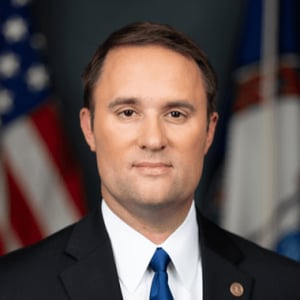
Attorney General of Virginia
In 2021, Jason Miyares was elected Attorney General and became the first Hispanic-American to hold statewide office in Virginia. From 2015 to 2021, Miyares served in the House of Delegates, and was a conservative voice in Richmond, standing up against the Defund the Police movement and proudly standing with the law enforcement community. Recognized as a “Champion of Free Enterprise” by the Virginia Chamber of Commerce, then-Delegate Miyares consistently opposed higher taxes and regulations that make it hard for small business owners to expand and thrive. Prior to his service in the House of Delegates, Miyares served as a prosecutor (Assistant Commonwealth's Attorney) for the City of Virginia Beach.
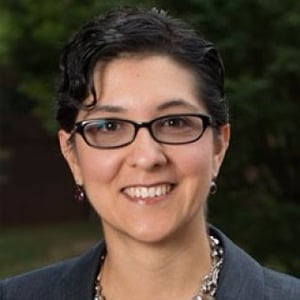
Professor of the Practice, Philosophy, McGrath Institute for Church Life, University of Notre Dame
Melissa Moschella is Professor of the Practice in Philosophy at the University of Notre Dame’s McGrath Institute for Church Life. Her work spans the fields of ethics, political philosophy, and law, and her areas of special expertise include natural law theory, biomedical ethics, and the family (especially parental rights). She is the author of To Whom Do Children Belong? Parental Rights, Civic Education and Children’s Autonomy (Cambridge University Press, 2016), and Ethics, Politics, and Natural Law: Principles for Human Flourishing (University of Notre Dame Press, forthcoming Spring 2025). Professor Moschella has also published numerous articles in scholarly journals as well as popular media outlets, including Notre Dame Law Review, The American Journal of Jurisprudence, The Journal of Law and Religion, Bioethics, The Journal of Medical Ethics, The New York Times, USA Today, The Washington Post, The Federalist, and First Things. She was recently awarded the Heritage Foundation’s Freedom and Opportunity Prize. She graduated magna cum laude from Harvard College, earned a Licentiate in Philosophy summa cum laude from the Pontifical University of the Holy Cross, and received her Ph.D. in Political Philosophy from Princeton University.
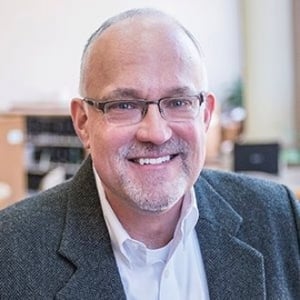
Associate Dean. Professor of Law, and Val Nolan Faculty Fellow, Maurer School of Law, Indiana University
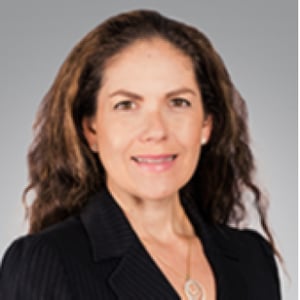
Partner, Gibson, Dunn & Crutcher, LLP
Svetlana S. Gans is a partner in the Washington, D.C. office of Gibson, Dunn & Crutcher, LLP where she helps clients navigate complex consumer protection, privacy, and competition related regulatory proceedings before the U.S. Federal Trade Commission (FTC), , U.S. Department of Justice Antitrust Division, State Attorneys General and other enforcement bodies. Ms. Gans also assists on litigation matters and provides strategic counseling and advice related to public policy issues.
Before joining Gibson Dunn, she served as the Vice President & Associate General Counsel at NCTA, the Internet & Television Association, where she helped lead the association’s consumer protection and competition policy work. Prior to joining NCTA, Ms. Gans served with distinction as Chief of Staff to Acting Chairman Maureen K. Ohlhausen at the FTC. As the agency chief of staff, Ms. Gans managed and oversaw agency operations, including bureau and office heads reporting to the Chairman, a seven-member office staff, and an agency budget of over $300 million. She also served as the Acting Chairman’s key advisor on consumer protection and competition investigations and litigation, working with a diverse team of attorneys and economists to preserve competition and protect U.S. consumers. She created, executed, and oversaw several strategic initiatives for the agency, including the agency process reform, regulatory reform, and data security transparency initiatives. Previously, Ms. Gans had the unique experience of serving in both litigating bureaus of the FTC: the Bureau of Competition and the Bureau of Consumer Protection.
Prior to her time in government, Ms. Gans worked as an antitrust associate at major law firms. Her practice focused on defending consumer product, financial services, and trade association clients in regulatory and private investigations alleging conspiracy and violations of antitrust and consumer protection laws.
Ms. Gans has been an active leader in the ABA Antitrust Law Section (“Section”) for two decades, and currently serves as the Section’s Marketing Officer. Ms. Gans helped create the Section’s Young Lawyer Representative Program, now in its 10th year, and the Section’s Law Ambassador Program, each aimed at developing and promoting the next generation of consumer protection and competition attorneys. Ms. Gans is also active in the Federal Communications Bar Association, currently serving as Co-Chair of the Diversity Pipeline Initiative and the Women’s Leadership Committee.
Ms. Gans received her law degree with high honors from the University of Denver College of Law. During law school, Ms. Gans served as a Judicial Intern to the Honorable John L. Kane, Jr. and as an Honors Program Paralegal for the United States Department of Justice Antitrust Division, Merger Taskforce. Ms. Gans earned her undergraduate degree cum laude from Boston University.
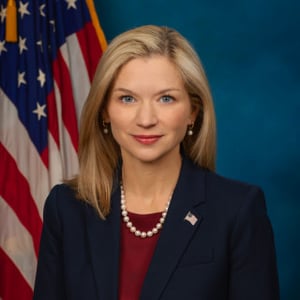
U.S. Attorney, U.S. Attorney's Office for the District of Utah
Melissa Holyoak was nominated by President Trump to serve as U.S. Attorney for the District of Utah on January 29, 2026. Holyoak was appointed on November 17, 2025 by Attorney General Pam Bondi to serve as Interim U.S. Attorney for the District of Utah.
Prior to that, Holyoak served as a Commissioner of the Federal Trade Commission from March 25, 2024 until her appointment as U.S. Attorney. During her FTC tenure, Commissioner Holyoak strove to vigorously enforce the antitrust and consumer protection laws while acting within the agency’s constitutional and statutory remit. She spoke widely about a range of FTC priorities, including improving competition enforcement, effectively applying existing laws to emerging trends in technology, and protecting children and teens online. She also published numerous statements about FTC matters.
Holyoak brings extensive experience as a litigator and leader. She served as Solicitor General with the Utah Attorney General’s Office where she oversaw the civil appeals, criminal appeals, constitutional defense and special litigation, and antitrust and data privacy divisions. She also managed multistate matters including those involving consumer protection and antitrust claims.
Before taking on that role, she served as president and general counsel of Hamilton Lincoln Law Institute, a Washington, D.C.-based public interest law firm and in other public interest attorney positions with the Competitive Enterprise Institute and the Center for Class Action Fairness. Holyoak represented class members challenging unfair class actions and consumers fighting regulatory abuse in federal district courts and appellate courts across the country.
Holyoak has argued in the Fifth, Seventh, Eighth, Ninth, Tenth and D.C. Circuits. She is a former prosecutor and attorney with O’Melveny & Myers LLP. She graduated from the University of Utah S.J. Quinney College of Law in 2003 as a member of the Order of the Coif and the Law Review. Holyoak is a member of the bars of Utah, D.C., and Missouri (inactive). Her husband Dr. Joshua Holyoak is a urologist and together they have four beautiful children.
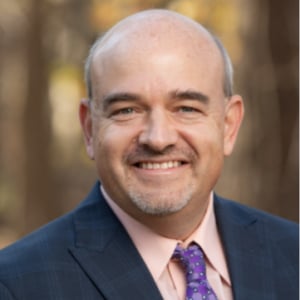
Newton D. Baker-Baker & Hostetler Chair in Law, Moritz College of Law, The Ohio State University
Professor Douglas A. Berman is Newton D. Baker-Baker & Hostetler Chair in Law and Executive Director of the Drug Enforcement and Policy Center, housed in the Moritz College of Law. Berman’s principal teaching and research focus is in the area of criminal law and criminal sentencing, though he also has teaching and practice experience in the fields of legislation and intellectual property. He has taught Criminal Law, Criminal Punishment and Sentencing, Criminal Procedure – Investigation, Marijuana Law, Policy & Reform Seminar, Federal and State Clemency Decision-making, The Death Penalty, Legislation, Introduction to Intellectual Property, Second Amendment Seminar, and the Legislation Clinic.
Professor Berman attended Princeton University and Harvard Law School. In law school, he was an editor and developments office chair of the Harvard Law Review and also served as a teaching assistant for a Harvard University philosophy course. After graduation from law school in 1993, Professor Berman served as a law clerk for Judge Jon O. Newman and then for Judge Guido Calabresi, both on the United States Court of Appeals for the Second Circuit. After clerking, Professor Berman was a litigation associate at the law firm of Paul, Weiss, Rifkind, Wharton, and Garrison in New York City.
Professor Berman is the co-author of two casebooks. Sentencing Law and Policy: Cases, Statutes and Guidelines, published by Aspen Publishers, is now in its fifth edition. Marijuana Law and Policy was released by Carolina Academic Press in 2020. In addition to authoring numerous articles on topics ranging from capital punishment to the federal sentencing guidelines, Professor Berman has served as a managing editor of the Federal Sentencing Reporter for more than twenty five years, and also serves as an editor of the Ohio State Journal of Criminal Law.
Professor Berman is the sole creator and author of the widely-read and widely-cited blog, Sentencing Law and Policy. The blog often receives nearly 50,000 page views per month (and had over 20,000 hits the day of the Supreme Court’s major sentencing decision in United States v. Booker). Professor Berman’s work on the Sentencing Law and Policy blog, which he describes as a form of “scholarship in action,” has been profiled or discussed at length in articles appearing in the Wall Street Journal, Legal Affairs magazine, Lawyers Weekly USA, Legal Times, Columbus Monthly, and in numerous other print and online publications.
In addition, Sentencing Law and Policy has the distinction of being the first blog cited by the U.S. Supreme Court (for a document appearing exclusively on the site), and substantive analysis in particular blog posts has been cited in numerous appellate and district court rulings, in many briefs submitted to federal and state courts around the country, and in hundreds of law review articles.
Professor Berman is a member of the Council on Criminal Justice and frequently is consulted by national and state policymakers, sentencing commissioners, and public policy groups concerning sentencing law and policy reforms. He has testified before the U.S. House of Representatives and before numerous sentencing commissions. He also is frequently contacted by national and local media concerning sentencing and marijuana reform developments.
Professor Berman has appeared on national television, radio and podcast news programs and has been extensively quoted in newspaper articles appearing in nearly every major national paper and many local papers, including The New York Times, The Washington Post, The Wall Street Journal, Legal Times, and in pieces from the Associated Press, Reuters, and Knight-Ridder news services.
Professor Berman sometimes serves as a consultant to lawyers working on important or interesting sentencing cases. In most instances, Professor Berman’s consulting has been on an ad hoc and pro bono basis, and it usually involves a quick review of draft briefs and other court filings and then providing general advice on litigation strategies. On some occasions, however, Professor Berman has been formally retained to play a more sustained role in certain cases, including being retained by law firms to provide consulting service on various cutting-edge federal sentencing issues.
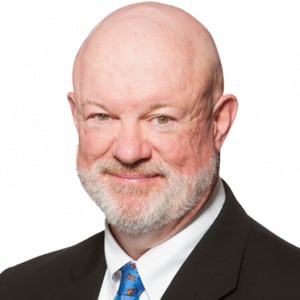
Senior Legal Fellow, the Meese Institute for the Rule of Law, Advancing American Freedom
Paul J. Larkin is a Senior Legal Fellow in the Meese Institute for the Rule of Law at Advancing American Freedom. Paul has held various positions in the federal and state governments throughout his career, such as being an attorney in the Organized Crime and Racketeering Section of the Criminal Division at the U.S. Department of Justice, an Assistant to the Solicitor General in the Office of the Solicitor General at the U.S. Department of Justice, Special Agent-in-Charge and Acting Director of the Criminal Investigation Division at the Environmental Protection Agency, and a member of the Parole Abolition and Sentencing Reform Commission and of the Juvenile Justice Reform Commission in the Office of Virginia Governor George Allen.
He has also worked at Verizon Communications and two law firms in Washington, D.C. His current research is principally in the fields of drug policy, criminal justice policy, and administrative law and policy. He has published numerous articles in law and public policy journals, both in print and online.
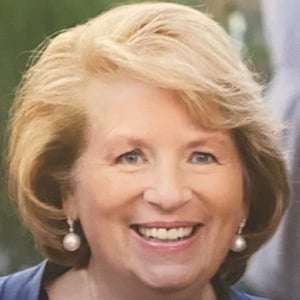
Professor of Psychobiology, Harvard Medical School; Department of Psychiatry, McLean Hospital
Bertha Madras, PhD is a Professor of Psychobiology at Harvard Medical School (Harvard faculty 40 years) She is based at McLean Hospital and cross-appointed at the Massachusetts General Hospital
Scientific Research. Dr. Madras’s translational and multidisciplinary research focuses on the neurobiology of addiction, neuropsychiatric disorders, and drug policy
Authorship. She is author of more than 500 scientific manuscripts, reviews, book chapters, abstracts. She also is co-editor of academic books including “The Cell Biology of Addiction”; “Effects of Drug Abuse on the Human Nervous System”; “Imaging of the Human Brain in Health and Disease”
Intellectual Property. Inventor, co-inventor on 19 issued U.S. patents and 27 issued international patents
Government, other Service
• 2018-present, National Academy of Medicine Opioid Collaborative. Member
• 2024. United Nations Office on Drugs and Crime. Panel on Consequences of Drug Use
• 2017. President’s Commission on Combating Drug Addiction and the Opioid Crisis. Appointed by President Trump as one of six Commission members: Gov. C. Baker (MA); Attorney General P. Bondi (FL); Gov. C. Christie, (Chair, NJ); Gov. R. Cooper (NC), Congressman P. Kennedy (RI), Prof. Madras (MA). She was charged with shepherding, writing major components of Report
• 2016. Vatican Pontifical Academy of Sciences. Panelist on Narcotics; co-author of final report
• 2014-2015. U.S. Department of Justice. Sole expert witness DoJ, on marijuana re-scheduling
• 2015. World Health Organization. Sole author of report commissioned by World Health Organization, “Update of Cannabis and its Medical Use”; co-author of “The Health and Social Effects of Nonmedical Cannabis Use
• 2014. National Football League (NFL). Member, Committee on prescription drugs
• 2006-2008. Deputy Director for Demand Reduction in the White House Office of National Drug Control Policy (ONDCP), Executive Office of the President; a presidential appointment confirmed with unanimous consent (99-0) by U.S. Senate
Educational Outreach
• 2023-2025 HARVARD X. Developer of course for parents on drug prevention
• 2001-. Cold Spring Harbor Laboratories. Developer, international course on Cell Biology of Addiction. Course is offered biannually to present
• 1991-2004. Museum of Science, Boston. Directed production of a museum exhibit, a CD (licensed by Disney) “Changing Your Mind: Drugs in the Brain” and play
• 1995. DEA-NIDA Museum Exhibit. Wrote draft of storyboard for exhibit, 1 Times Square, NYC, NY
• 1991-2005. Addiction biology. Developed, instructor 4th year HMS medical students
Honors, awards
• 2026: Barry Prize, American Academy of Sciences and Letters
• 2025: Asteroid 147703MADRAS named for BK Madras by the International Astronomical Union
• 2024: American Academy of Sciences and Letters, inductee
• Research and public service awards (partial list): NIDA Public Service Award, NIH MERIT Award, CPDD Innovator Award, American Academy of Addiction Psychiatry, Jack H. Mendelson Memorial Research Award, CPDD Fischman Award, Adler Distinguished Service Award, CADCA National Leadership Award, Nils Bejerot Award, others
• 2006: Better World Report designated her brain imaging invention as “one of 25 technology transfer innovations (university to industry) that changed the world”.
Her experiences in neuroscience research, drug addiction, education, government and public service offer a unique perspective at the intersection of science and public policy.
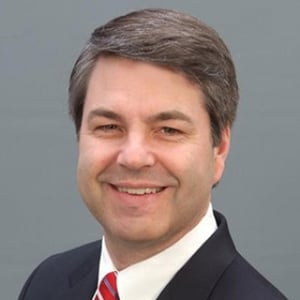
Partner and Co-Chair, Public Policy Group, Shook Hardy & Bacon LLP
Mark Behrens co-chairs Shook's Washington, DC-based Public Policy Practice Group and is a leading national expert on civil justice issues with over thirty years of experience. A substantial part of his practice is working to improve the civil litigation environment through state and federal legislation; in the courts through amicus curiae briefs; through legal scholarship and judicial education; and in the court of public opinion.
Mark is actively involved in civil justice reform efforts at the federal and state levels. He has testified before the U.S. Congress and most state legislatures on behalf of business and civil justice organizations. Mark also has an active amicus brief practice specializing in tort liability and civil justice issues. He has authored or co-authored over 150 amicus briefs in cases before the United States Supreme Court and federal and state appellate courts on behalf of business, civil justice, and defense lawyer organizations. In addition, Mark routinely files comments on behalf of business, civil justice, and defense lawyer organizations regarding potential changes to federal and state court rules. He chairs the International Association of Defense Counsel’s (IADC) Civil Justice Response Committee and serves on the Board of Directors of Lawyers for Civil Justice (LCJ).
Mark is a member of the American Law Institute (ALI). He received his J.D. in 1990 from Vanderbilt University Law School, where he was a member of the Vanderbilt Law Review. He received his B.A. in economics from the University of Wisconsin in 1987.
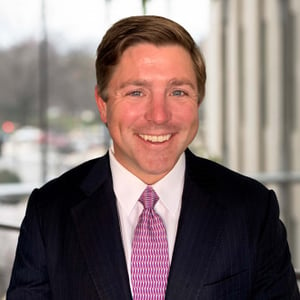
General Counsel, xAI and X
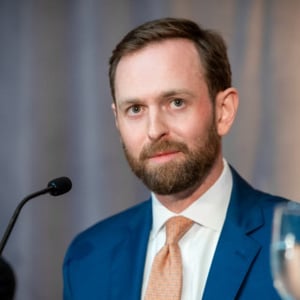
Commissioner, Federal Trade Commission
Andrew N. Ferguson was sworn in April 2, 2024 as a Commissioner of the Federal Trade Commission. President Joe Biden named Ferguson to a term that expires on September 25, 2030.
Ferguson most recently served as solicitor general of the Commonwealth of Virginia. Prior to that position, he served as chief counsel to U.S. Sen. Mitch McConnell of Kentucky, the Republican leader, and as a Republican counsel on the U.S. Senate Judiciary Committee. He also practiced law at several Washington, D.C. law firms. He earned his undergraduate degree and law degree from the University of Virginia. After law school, Ferguson clerked for Judge Karen L. Henderson on the U.S. Court of Appeals for the D.C. Circuit and U.S. Supreme Court Justice Clarence Thomas.
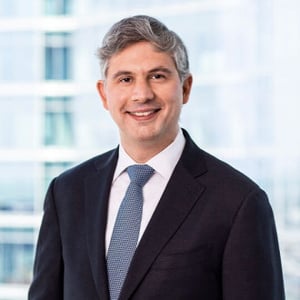
Partner, Keller Postman
Ashley Keller is one of the founding Partners of Keller Postman LLC. An experienced trial and appellate lawyer, Ashley helps set strategic direction across virtually all of the firm’s cases. He represents clients in a wide variety of practice areas and types of claims, including product-liability, antitrust, class action, and arbitration matters.
Ashley is one of the leaders of Keller Postman’s national product-liability practice. He leverages his ability to detangle complex concepts and develop novel legal theories to support individual client matters and as counsel on numerous product-liability multidistrict litigation matters. He chairs the plaintiffs’ Law & Briefing Committee in the Zantac (Ranitidine) Product Liability MDL in the U.S. District Court for the Southern District of Florida.
Ashley also litigates complex antitrust and class action matters. Among his notable cases, Ashley represents numerous States in antitrust litigation against Google for monopolizing products and services used by advertisers and publishers in online-display advertising.
Ashley also has played a central role in developing the firm’s pioneering arbitration practice, which includes pursuing individual arbitrations for clients whose claims are subject to arbitration clauses with class-action waivers. In part through managing the complexity of pursuing these individual claims simultaneously, the firm has secured millions in settlements for more than 500,000 employees and consumers.
Before launching Keller Postman, Ashley co-founded the litigation finance firm Gerchen Keller Capital, which grew to more than $1.3 billion in assets under management and was the world’s largest private investment manager focused on legal and regulatory risk prior to being acquired by Burford Capital in 2016.
Previously, Ashley was a partner at Bartlit Beck Herman Palenchar & Scott LLP, The American Lawyer’s litigation boutique of the year. While there, he handled various trial and appellate matters involving multi-billion-dollar securities and patent cases, contract disputes, mass torts, and class actions.
Ashley also worked as an analyst at Alyeska Investment Group, a Chicago-based market-neutral hedge fund, where he focused on investments in companies facing litigation and other complicated regulatory matters.
Ashley was named a 2021 Plaintiffs’ Lawyers Trailblazer by the National Law Journal. He is also listed on Lawdragon’s 500 Leading Lawyers in America, Lawdragon’s 500 Leading Plaintiff Consumer Lawyers, Lawdragon’s Leading Plaintiff Financial Lawyers, National Trial Lawyers’ Top 100, and Illinois Super Lawyers.
Ashley was a law clerk for Justice Anthony M. Kennedy at the Supreme Court of the United States and Judge Richard Posner at the U.S. Court of Appeals for the Seventh Circuit. He graduated magna cum laude from Harvard College, received his M.B.A. from the University of Chicago Booth School of Business and received his J.D. from the University of Chicago Law School, where he graduated first in his class.
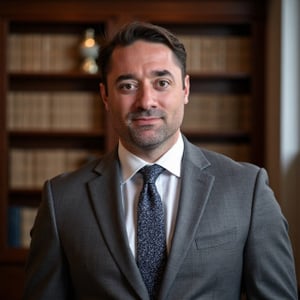
Partner, Holtzman Vogel Baran Torchinsky & Josefiak PLLC
Brandon Smith is a partner at Holtzman Vogel, based in Tennessee, where he focuses on government investigations, white collar matters, and specialty litigation. A seasoned government leader and legal strategist, Brandon has played a central role in shaping conservative policy and litigation at the highest levels of state government.
Before joining the firm, Brandon served as Chief of Staff and Assistant Solicitor General in the Tennessee Attorney General’s Office. In that role, he led multi-state litigation, high-profile constitutional challenges, and efforts to counter federal overreach and ESG-related corporate activism. He worked closely with nearly every Republican Attorney General’s Office in the country, coordinating litigation, strategy, and multi-state policy efforts.
Earlier in his career, Brandon served as Executive Director of Legislative and Regulatory Affairs for Kentucky Governor Matt Bevin and as Policy Director to Kansas Governor Sam Brownback, where he helped drive key legislative and budget initiatives. He also held roles as Deputy Director of the Federalist Society and as an adjunct professor at American University.
Brandon’s career has been defined by a commitment to defending federalism, advancing conservative governance, and shaping legal and policy fights that matter.
Donald M. Ephraim Professor of Law and Economics, University of Chicago Law School
Tony Casey is an expert on business law, finance, and corporate bankruptcy. His research—which has been published in the Yale Law Journal, the Columbia Law Review, the Supreme Court Review, and the University of Chicago Law Review—examines the intersection of finance and law. He has also written about the role of intellectual property law in the organization and financing of creative projects and about how technological innovation is changing the foundations of our legal system more generally.
Before entering academics, Professor Casey was a partner at Kirkland and Ellis, LLP. Before joining Kirkland & Ellis, he was an associate at Wachtell, Lipton, Rosen & Katz. His legal practice focused on corporate bankruptcy, merger litigation, white-collar investigations, securities litigation, and complex class actions. Casey also served as a law clerk for Chief Judge Joel M. Flaum of the United States Court of Appeals for the Seventh Circuit.
Professor Casey received his JD with High Honors in 2002 from the University of Chicago Law School. He received the John M. Olin Prize for the outstanding student of law and economics.
Professor Casey teaches courses and seminars in corporate governance, business law, bankruptcy and reorganization, finance, litigation strategy, civil procedure, and law and technology.
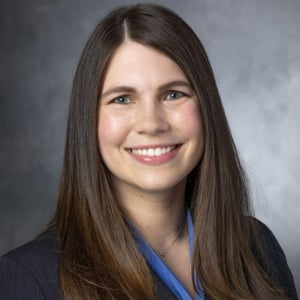
Associate Professor of Law, Emory University School of Law
Lindsey Simon is an associate professor at the Emory University School of Law.
Her research focuses on the bankruptcy system, drawing concepts from bankruptcy structure and procedure to address broader institutional design challenges. Simon’s articles have been published in the Administrative Law Review, the Cardozo Law Review, the Indiana Law Journal and the North Carolina Law Review. Simon’s most recent scholarship addresses the intersection between mass torts and bankruptcy, including an article on non-debtor relief in Chapter 11 forthcoming in the Yale Law Journal. She has assisted academics, judges, members of Congress and many other stakeholders on the subject of mass tort bankruptcies, and her commentary in connection with the Purdue Pharma, Boy Scouts of America and USA Gymnastics bankruptcies has appeared in various media outlets, including The Wall Street Journal, The New York Times, Forbes, The Economist, NPR and Reuters.
Before joining the Emory Law faculty in 2023, Professor Simon served as the Robert Cotten Alston Associate Chair in Corporate Law at the University of Georgia School of Law. Prior to becoming a professor, Simon was an associate at Kilpatrick Townsend & Stockton, where her practice involved a mix of commercial litigation and corporate restructuring matters. She represented corporations, committees and individuals in state and federal litigation, both in and out of the bankruptcy context. Simon also practiced at a litigation boutique in Chicago, Illinois, and served as a judicial clerk for Judge Beverly B. Martin on the U.S. Court of Appeals for the Eleventh Circuit. Additionally, she taught as an adjunct professor at the Georgia State University College of Law.
Simon earned her law degree magna cum laude from the Northwestern University Pritzker School of Law and obtained her Bachelor of Music magna cum laude and her Master of Education from Vanderbilt University.
She is an active member of the American Bankruptcy Institute, where she serves as a member of the ABI Diversity Working Group. She previously served as vice chair and community service co-chair for the Georgia Network of the International Women's Insolvency & Restructuring Confederation and as vice president of the board of directors of the Georgia Latino Law Foundation.

University Professor of Law and Executive Director, Liberty & Law Center, Antonin Scalia Law School, George Mason University
David Bernstein holds a University Professorship chair at the Antonin Scalia Law School, where he has been teaching since 1995. He has also been a visiting professor at the University of Michigan, Georgetown University, William & Mary, Brooklyn Law School, the University of Turin, and Hebrew University. Professor Bernstein teaches Constitutional Law, Evidence, and Products Liability.
A prolific author, Professor Bernstein often challenges the conventional wisdom with prodigious research and sharp, original analysis. He is the author of five books, and coauthor of two more. Professor Bernstein’s book Rehabilitating Lochner was praised across the political spectrum as “intellectual history in its highest form,” a “fresh perspective and a cogent analysis,” “delightful and informative,” “sharp and iconoclastic,” and “a terrific work of historical revisionism.” Columnist George Will praised Bernstein’s most recent book, Classified, The Untold Story of Racial Classification in America, as “perhaps the most consequential American book of 2022.”
Professor Bernstein has also written dozens of articles and essays published in major law reviews, including the California Law Review, Columbia Law Review, Michigan Law Review, and Yale Law Journal. An article he coauthored, Defending Daubert: It’s Time to Amend Federal Rule of Evidence 702, directly inspired a pending amendment to Rule 702.
Professor Bernstein blogs at the Instapundit.com, the Times of Israel, and the Volokh Conspiracy. He is a graduate of the Yale Law School, where he was senior editor of the Yale Law Journal and a John M. Olin Fellow in Law, Economics, and Public Policy.

H.H. Macaulay Endowed Professor of Economics, Clemson College of Business
Thomas Hazlett is the Hugh H. Macaulay Endowed Professor of Economics at Clemson University. He has previously held faculty positions at George Mason University, the University of California, Davis, and the Wharton School, and served as Chief Economist of the Federal Communications Commission. A noted expert in regulatory economics and information markets, his research has appeared in academic forums such as the Journal of Law & Economics, RAND Journal of Economics, the Journal of Financial Economics, the University of Pennsylvania Law Review and the Columbia Law Review. He has also written for such popular periodicals as the Wall Street Journal, The Economist, Slate, the N.Y. Times, N.Y. Daily News, Reuters.com, Business Week, The New Republic and the Financial Times. His most recent book, The Political Spectrum: The Tumultuous Liberation of Wireless Technology, from Herbert Hoover to the Smartphone, (Yale, 2017), was featured as one of the top tech books of the year at CES 2018.

Executive Vice President, Chief Legal Officer, Gates Corporation
Matthew R. A. Heiman joined the Company in May 2026 and has served as the Company’s Chief Legal Officer and Corporate Secretary since June 2026. As Chief Legal Officer, Mr. Heiman is responsible for all legal functions for Gates, including securities and corporate governance, M&A, litigation, commercial, regulatory, compliance, patents and trademarks, real estate, employment and labor, sustainability and environmental matters. Prior to joining Gates, Mr. Heiman held senior legal leadership roles at Waystar, where he served as Chief Legal & Administrative Officer from 2023 to 2025 and as General Counsel and Corporate Secretary from 2020 to 2023. Prior to that, he was with Johnson Controls, where he served as Vice President, Corporate Secretary, and Associate General Counsel. Mr. Heiman has been a Senior Fellow for the National Security Institute at George Mason University’s Antonin Scalia School of Law since 2018.

Founder and Executive Director, National Security Institute; Assistant Professor of Law, Antonin Scalia Law School, George Mason University
Jamil N. Jaffer is the Founder and Executive Director of the National Security Institute at the Antonin Scalia Law School at George Mason University where he also serves as an Assistant Professor of Law, Director of the National Security Law and Policy Program, and Director of the Cyber, Intelligence, and National Security LLM Program. Jamil also teaches classes on counterterrorism, intelligence, surveillance, cybersecurity, and other national security matters, as well as a summer course held abroad with U.S. Supreme Court Justice Neil M. Gorsuch. Jamil is also affiliated with Stanford University’s Center for International Security and Cooperation and previously served as a Visiting Fellow at the Hoover Institution from 2016 to 2019.
Jamil is also a Venture Partner with Paladin Capital Group, where he assists the firm with investments across the full range of its themes and theses, including a focus on dual-use national security technologies. Jamil also serves on the board of directors of RangeForce, a cybersecurity training and readiness platform startup and Tozny, a digital identity startup, and on the advisory boards of U.S. Strategic Metals, North America’s largest primary producer of cobalt, a critical mineral used in EV batteries, aerospace, and other national security applications; and Constella Intelligence, a deep and dark web intelligence startup. Jamil also serves as an advisor to Beacon Global Strategies, a strategic advisory firm and Duco, a technology platform startup that connects corporations with geopolitical and international business experts. Jamil is also the managing director of Trigraph Caveat Capital, a private investment vehicle.
Among other things, Jamil currently serves on the Board of Directors for the Greater Washington Board of Trade, the Board of Advisors for the Global Cyber Alliance, and the Advisory Board of the Foundation for the Defense of Democracies’ Center on Cyber and Tech Innovation, the Executive Committee of the Reagan Institute Strategy Group. Jamil is also a Fellow at the Academy for Judaic, Christian, and Islamic Studies, an advisor to the Concordia Summit, and is a member of the Board of Directors for the Center for Intelligence Policy, the Board of Directors of Speech First, and the Executive Committee of the International Law and National Security Practice Group of the Federalist Society.
Immediately prior to his current positions, from 2015-2021, Jamil served as a senior business leader at IronNet Cybersecurity, helping take the company from a bootstrapped first-year technology products startup through two rounds of venture capital fundraising, growing from 40 employees to over 300, and through its listing on New York Stock Exchange. In his role as IronNet's Senior Vice President for Strategy, Partnerships & Corporate Development, Jamil worked directly for the co-CEOs of the company, Gen (ret.) Keith B. Alexander, the former Director of the National Security Agency and Founding Commander of U.S. Cyber Command, and Bill Welch, the former COO of Zscaler and Duo; in that role, Jamil led all of the company’s strategic and technology partnership efforts, including developing go-to-market and technology integration plans with some of the largest cloud platforms and cybersecurity companies in the market, evaluating potential acquisition targets, and developing overall corporate strategy and thought leadership around collective security and collaborative defense in the cyber arena.
Prior to his time at IronNet, Jamil served on the leadership team of the Senate Foreign Relations Committee as Chief Counsel and Senior Advisor under Chairman Bob Corker (R-TN), where he worked on key national security and foreign policy issues, including leading the drafting of the proposed Authorization for the Use of Military Force against ISIS in 2014 and 2015, the AUMF against Syria in 2013, and revisions to the 9/11 AUMF against al Qaeda. Jamil was also the lead architect of the Iran Nuclear Agreement Review Act and two sanctions laws against Russia for its first intervention in Ukraine.
Prior to joining SFRC, Jamil served as Senior Counsel to the House Permanent Select Committee on Intelligence under Chairman Mike Rogers (R-MI) where he led the committee’s oversight of NSA surveillance, NRO intelligence issues, and NGA analytic and collection matters, as well as intelligence community-wide counterterrorism issues. Jamil was also the lead architect of the Cyber Intelligence Sharing and Protection Act, the nation’s first cyber threat intelligence sharing legislation that was signed into law in 2015.
In the Bush Administration, Jamil served in the White House as an Associate Counsel to the President, handling Defense Department, State Department, and intelligence community matters, and serving as one of the White House Counsel’s primary representatives to the National Security Council Deputies Committee.
Prior to the White House, Jamil served on the leadership team of the Justice Department’s National Security Division as Counsel to the Assistant Attorney General for National Security, where he focused on counterterrorism and intelligence matters. At NSD, Jamil helped lead the division’s work on In re: Directives, the first ever two-party litigated matter in the FISA Court and the second case before the FISA Court of Review in its 30-year history. Jamil also led NSD’s efforts on the President’s Comprehensive National Cybersecurity Initiative (CNCI), including the drafting of NSPD-54/HSPD-23, and related classified matters, and advised the National Security Agency (NSA) and U.S. Cyber Command’s predecessor organization, the Joint Function Component Command for Network Warfare (JFCC-NW), on matters related to cyber intelligence collection and offensive cyber activities. For his work on these matters, Jamil was awarded the Assistant Attorney General’s Award for Special Initiative and was among the group of lawyers awarded the Director of National Intelligence’s 2008 Legal Award (Team of the Year – Cyber Legal).
Jamil also served in other positions in the Justice Department, including in the Office of Legal Policy, where he worked on the confirmations of Chief Justice John G. Roberts, Jr. and Justice Samuel A. Alito, Jr. to the United States Supreme Court.
Jamil also served as a lawyer in private practice at Kellogg Huber, a Washington, DC-based litigation boutique, as a policy advisor to Congressman Bob Goodlatte (R-VA), and as a staff member or senior advisor on a number of political campaigns, including two presidential campaigns and a presidential transition team. While in law school, Jamil was a member of the University of Chicago Law Review, managing editor of the Chicago Journal of International Law, and National Symposium Editor of the Harvard Journal of Law & Public Policy. Following law school, Jamil served as a law clerk to Judge Edith H. Jones of the United States Court of Appeals for the Fifth Circuit and, later in his career, as a law clerk to then-Judge Neil M. Gorsuch when he first joined the United States Court of Appeals for the Tenth Circuit as well as a law clerk to Justice Neil Gorsuch when he joined the U.S. Supreme Court.
Jamil has published multiple op-eds and academic articles on national security, foreign policy, cybersecurity, counterterrorism, encryption, and intelligence matters, and is the co-author of a book chapter with former NSA Director Gen. (Ret.) Keith B. Alexander on national security and the press in National Security, Leaks, and the Freedom of the Press: The Pentagon Papers Fifty Years On (2021) and a book chapter with former CIA Director Gen. (ret.) Mike Hayden on ISIS, al Qaeda, and other international terrorist groups in Choosing to Lead: American Foreign Policy for a Disordered World (2015). Jamil has also written book chapters on cybersecurity and surveillance, as well as op-eds and policy papers with former Attorney General Michael B. Mukasey, former National Counterterrorism Center Director Matt Olsen, and Congressman Mike Waltz (R-FL), among others.
Jamil has previously taught graduate-level courses in intelligence law and policy at George Washington University’s Elliott School of International Affairs and the National Intelligence University, served an outside advisor to the Cyberspace Solarium Commission, and has recently testified before committees of the U.S. Senate and House of Representatives on China, cybersecurity, counterterrorism, and other national security matters. Jamil has also recently appeared on a range of national television and radio outlets including CNN, Fox News, Fox Business, MSNBC, Bloomberg, PBS, Voice of America, and National Public Radio, and in various print and online publications, including the Wall Street Journal, New York Times, and the Washington Post on a range of national security matters including cybersecurity, counterterrorism, surveillance, encryption, privacy, and foreign policy issues.
Jamil holds degrees from UCLA (BA, cum laude), the University of Chicago Law School (JD, with honors), and the United States Naval War College (MA, with distinction).

Nonresident Senior Fellow, Cyber Statecraft Initiative, Atlantic Council
Megan Stifel is a Nonresident Senior Fellow with the Cyber Statecraft Initiative at the Brent Scowcroft Center on International Security and the Founder of Silicon Harbor Consultants, which provides strategic cybersecurity operations and policy counsel. Prior to founding Silicon Harbor Consultants, she was an attorney in the National Security Division at the U.S. Department of Justice (DOJ). She most recently served on detail as a Director for International Cyber Policy in the National Security Council at the White House. In this role Ms. Stifel developed and implemented policies in connection with Internet governance, cybersecurity, and cybercrime.
Prior to the White House, Ms. Stifel worked at the Computer Crime and Intellectual Property Section (CCIPS). At CCIPS she collaborated with law enforcement agencies to investigate and prosecute computer crime cases, including identity theft, network intrusion, and malware distribution.
Ms. Stifel also previously served as the Director for Cyber Policy at NSD, where she coordinated the Division's policy and legal analysis in connection with the 2009 Cyberspace Policy Review (CSPR) and the 2008 Comprehensive National Cybersecurity Initiative, cyber-related legislative proposals, cybersecurity investigations, cyber operations, and the telecommunications supply chain. She was a member of the interagency group that developed the 2011 International Strategy for Cyberspace and the CSPR.
Ms. Stifel earned her B.A. in International Studies and German, magna cum laude, from the University of Notre Dame and her J.D. from Indiana University.
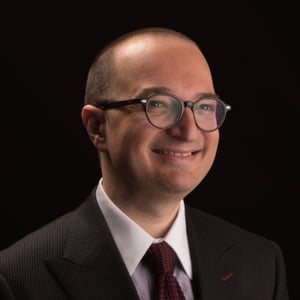
Professor of Law, University of Baltimore School of Law (on leave); Senior Counsel, U.S. Department of Justice
Professor Dolin’s scholarship centers on patent law with a specific focus on how the patent regime affects innovation, especially in bio-pharmaceutical areas. His work in these areas includes a number of scholarly articles, presentations, amicus briefs, and congressional testimony.
Dr. Dolin is currently on leave from his academic duties while he serves as Senior Counsel in the Civil Rights Division of the United States Department of Justice.
From January 2020 to January 2022, Professor Dolin served as a resident Associate Justice of the Supreme Court of the Republic of Palau. In this role, he (together with other members of the Court) heard appeals in civil, criminal, administrative, and constitutional law matters.
Prior to joining the University of Baltimore School of Law, Professor Dolin held visiting appointments in other law schools. He also served as a law clerk to the Hon. Pauline Newman, of the U.S. Court of Appeals for the Federal Circuit and the late Hon. H. Emory Widener Jr., of the U.S. Court of Appeals for the Fourth Circuit.
Rumors that he has a real Russian bear in his office are entirely true.
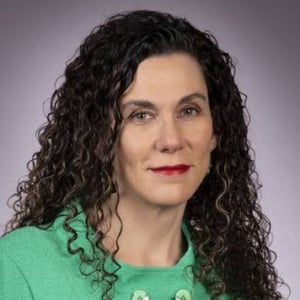
Associate Professor of Law, Center for Intellectual Property and Entrepreneurship, University of Missouri School of Law
Professor Lietzan researches, writes, and teaches primarily in the areas of food and drug regulation, intellectual property, and administrative law. Some of her recent scholarship has focused on the nature and purpose of the new drug approval system, federal regulation of fecal microbiota transplantation, federal regulation of products derived from cannabis, the political economy of the Hatch-Waxman (generic drug) statute, and incentives to study already approved drugs for new uses. She is an award-winning teacher, and she has been an elected member of the American Law Institute since 2006.
Professor Lietzan brings to her scholarship and teaching eighteen years of private practice experience, eight of them as a partner in the food and drug group at Covington & Burling in Washington, DC. In practice, she handled a wide range of complex legal problems and broader legislative and regulatory policy questions affecting FDA-regulated companies. This work included lifecycle management and strategy issues, regulatory strategy and advocacy, white collar defense, congressional investigations, briefing in products liability cases, and international regulatory policy work. She was involved in every major amendment to the Federal Food, Drug, and Cosmetic Act (FDCA) between 1997 and 2014 and was deeply immersed for more than a decade in the development of the Biologics Price Competition and Innovation Act of 2010. She has been consistently identified by her peers in private practice as a “Best Lawyer in America” in the categories of FDA law (since 2013) and Biotechnology Law (since 2007).
Professor Lietzan has held one leadership position or another at the Food and Drug Law Institute (FDLI) since 2004, including a stint on its Board of Directors from 2008 to 2012. She also held leadership positions in the American Bar Association’s Section of Science and Technology Law for fourteen years.
Professor Lietzan received a bachelor’s degree from the University of North Carolina, where she graduated with honors in history. She holds a master’s degree in history from UCLA and a law degree with high honors from Duke Law School.

Is the FDA Trying to Ban Direct-to-Consumer Drug Ads?
Paul Avelar, Jeff Stier, Dan Troy
The Trump Administration has been exploring new ways to tighten requirements for direct-to-consumer advertisements for...
Religious Liberties: Religious Liberty, Parental Rights, and the Challenges Posed by the Transgender Movement
Stuart Kyle Duncan, Ira C. “Chip” Lupu, Jason Miyares, Melissa Moschella, Steve Sanders
State and federal laws in a wide variety of settings tend to support gender transition...
Fireside Chat with FTC Commissioner Melissa Holyoak
Svetlana Gans, Melissa Holyoak
Join us on Wednesday, July 10th at 12:00 PM ET for a special lunch panel...
The Law, Policy, and Politics of Rescheduling Cannabis
Douglas A. Berman, Paul James Larkin, Bertha K. Madras
The legal status of cannabis has been a controversial issue ever since the Controlled Substances...
Missouri Attorney General Candidate Forum
In-Person Registration for this event is now closed, you may join the waitilist. If you...
A discussion within the right: Why is there not a larger conservative plaintiffs' bar?
Mark A. Behrens, James M. Burnham, Andrew N. Ferguson, Ashley Keller, Brandon J. Smith
For decades, the plaintiffs' bar has been populated by liberal lawyers who support left-wing elected...
Chapter 11 Bankruptcy & Mass Torts: A Review of the Third Circuit’s LTL Opinion
Anthony J. Casey, Lindsey Simon
In 2021, LTL Management LLC (LTL), a newly created and separate subsidiary of Johnson &...
Roundup Weedkiller Litigation
David Bernstein
In a series of recent decisions, both federal and state courts have allowed the admission...
What to do about Facebook: On Data Privacy and the Future of Tech Regulation
Thomas Hazlett, Matthew R. A. Heiman, Jamil N. Jaffer, Megan Stifel
Facebook is not getting many "likes" these days following revelations that Cambridge Analytica accessed personal...
Courthouse Steps: Sandoz Inc. v. Amgen Inc. - Podcast
Gregory Dolin, Erika Lietzan
In a decision likely to shape not only future biosimilar litigation but the biosimilar industry...