
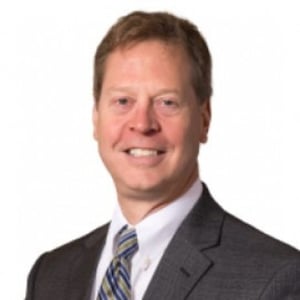
Partner, Conner & Winters
Donn C. Meindertsma is a partner in the Washington, DC office of Conner & Winters.

George C. Dix Professor in Constitutional Law, Northwestern University Pritzker School of Law
John O. McGinnis is a graduate of Harvard College and Harvard Law School where he was an editor of the Harvard Law Review. He also has an MA degree from Balliol College, Oxford, in philosophy and theology. Professor McGinnis clerked on the U.S. Court of Appeals for the District of Columbia. From 1987 to 1991, he was deputy assistant attorney general in the Office of Legal Counsel at the Department of Justice. He is the author of Accelerating Democracy: Transforming Government Through Technology (Princeton 2013) and Originalism and the Good Constitution (Harvard 2013) (with M. Rappaport). He is a past winner of the Paul Bator award given by the Federalist Society to an outstanding academic under 40. He has been listed by the United States on the roster of panelists who may be called upon to decide World Trade Organization Disputes.
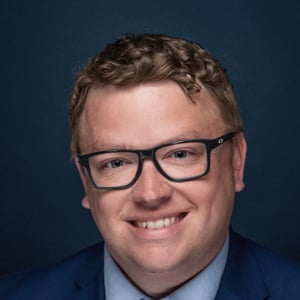
Deputy Counsel, Wisconsin Institute for Law & Liberty
Lucas Vebber is deputy counsel at the Wisconsin Institute for Law & Liberty ("WILL") in Milwaukee, Wisconsin. At WILL he litigates cases in state and federal courts where he focuses on separation of powers and regulatory issues. His litigation efforts have won several national awards, and he has been named a Legal All Star by the Wisconsin Law Journal.
Before joining WILL Lucas worked in a variety of roles in Madison, most recently serving as General Counsel and Director of the Litigation Center at Wisconsin Manufacturers & Commerce, the state’s chamber of commerce and manufacturers’ association. Prior to that Lucas worked for the state in both the legislature and executive branch.
Lucas has a bachelor’s degree from Marquette University in Milwaukee and a law degree from the University of Saint Thomas in Minneapolis.

Chief Economist, American Compass
Oren Cass is the chief economist at American Compass and author of The Once and Future Worker: A Vision for the Renewal of Work in America (2018). He is a contributing editor for the Financial Times and a contributing opinion writer for the New York Times.
From 2005 to 2015, Oren worked as a management consultant in Bain & Company’s Boston and Delhi offices. During this period, he also earned his J.D. magna cum laude from Harvard Law School, where he was elected vice president and treasurer of the Harvard Law Review and oversaw the journal’s budget and operations. While still in law school, Oren also became Domestic Policy Director for Governor Mitt Romney’s 2012 presidential campaign, editing and producing the campaign’s “jobs book” and developing its domestic policy strategy, proposals, and research. He joined the Manhattan Institute as a senior fellow in 2015 and became a prolific scholar, publishing more than 15 reports for MI and editing its popular “Issues 2016” and “Issues 2020” series, testifying before seven congressional committees and speaking on dozens of college campuses. He founded American Compass at the start of 2020.
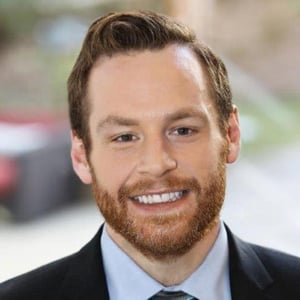
Deputy Director - Center for Effective Public Management; Senior Fellow - Governance Studies, The Brookings Institution
John Hudak is deputy director of the Center for Effective Public Management and a senior fellow in Governance Studies. His research examines questions of presidential power in the contexts of administration, personnel, and public policy. Additionally, he focuses on campaigns and elections, legislative-executive interaction, and state and federal marijuana policy.
John’s 2016 book, Marijuana: A Short History, offers a unique, up-to-date profile of how cannabis emerged from the shadows of counterculture and illegality to become a serious, even mainstream, public policy issue and source of legal revenue for both businesses and governments. In it, he describes why attitudes and policy have changed, and what those changes mean for marijuana's future place in society.
His 2014 Presidential Pork: White House Influence over the Distribution of Federal Grants demonstrates that pork-barrel politics occurs beyond the halls of Congress. Presidents capitalize on their discretionary funding authority to target federal dollars to swing states in advance of presidential elections. His other work explores how agency staffing, expertise, and institutional structure facilitate or hinder presidential power and influence. This research explores the balance between political control and bureaucratic expertise in the delivery of public policy.
John’s work has been recognized for its quality and contribution by the Midwest Political Science Association and the American Political Science Association’s Presidency Research Group. His work has been supported by institutions including the National Science Foundation.
Prior to joining Brookings, John served as the program director and as a graduate fellow at the Center for the Study of Democratic Institutions. He holds a B.A. in political science and economics from the University of Connecticut and an M.A. and Ph.D. in political science from Vanderbilt University.
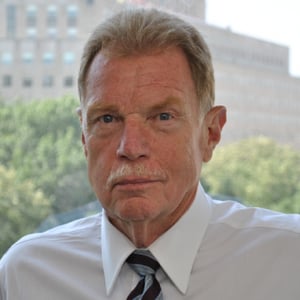
Senior Fellow, Hudson Institute
David W. Murray is a Senior Fellow at Hudson Institute where he co-directs the Center for Substance Abuse Policy Research. While serving previous posts as Chief Scientist and Associate Deputy Director (Supply Reduction) in the federal government’s Office of National Drug Control Policy, Murray directed extensive scientific research on all aspects of the drug problem and helped coordinate high-level inter-agency efforts to limit the production of illicit drugs and counter the transnational criminal organizations that control their global shipment and marketing.
Before entering government, Murray was executive director of the Statistical Assessment Service and held academic appointments at Connecticut College and Brown, Brandeis, and Georgetown Universities. He is the author of numerous scholarly papers, essays, and commentaries; co-author (with Joel Schwartz and S. Robert Lichter) of the widely-noted book It Ain’t Necessarily So: How Media Make and Unmake the Scientific Picture of Reality; and a frequent guest on major network television and radio programs.
Murray holds an M.A. and Ph.D. in social anthropology from the University of Chicago.
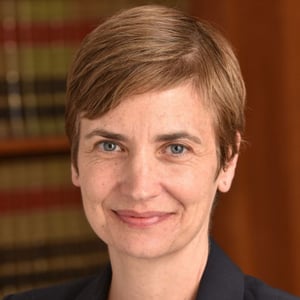
Vice Dean for Faculty Development and Professor of Law, UCLA Law
Joanna Schwartz is Vice Dean for Faculty Development and Professor of Law at UCLA School of Law. She teaches Civil Procedure and a variety of courses on police accountability and public interest lawyering. In 2015, she received UCLA's Distinguished Teaching Award.
Professor Schwartz is one of the country's leading experts on police misconduct litigation. Professor Schwartz additionally studies the dynamics of modern civil litigation. She is co-author, with Stephen Yeazell, of a leading casebook, Civil Procedure (9th Edition), and her scholarship has appeared in the New York University Law Review, the Texas Law Review, the UCLA Law Review, and the Yale Law Journal, among others.
Professor Schwartz is a graduate of Brown University and Yale Law School. After law school, Professor Schwartz clerked for Judge Denise Cote of the Southern District of New York and Judge Harry Pregerson of the Ninth Circuit Court of Appeals. She was then associated with Emery Celli Brinckerhoff & Abady LLP, in New York City, where she specialized in police misconduct, prisoners' rights, and First Amendment litigation.
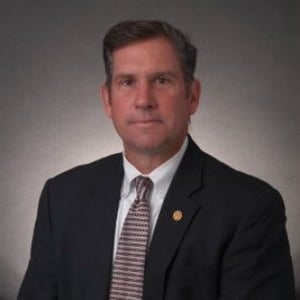
Police Auditor, Fairfax County, Virginia
Richard Schott is Fairfax County's first independent police auditor. He assumed the position in April 2017.
Schott has spent his entire 27-year FBI career as a special agent working with local law enforcement officers, and for the past 16 years has provided training to members of state and local law enforcement agencies, including legal issues associated with police officers’ use of force and deadly force.
He has extensive experience with Color of Law violations, including reviewing police reports and citizen complaints, recommending to U.S. Department of Justice attorneys whether or not to proceed with investigations and conducting the ensuing investigations.
Schott is also an instructor at the FBI Academy in Quantico, where he has taught thousands of new agents on basic constitutional criminal procedure and the legal ramifications involved when an agent uses force.
He was previously the associate division counsel for the Atlanta Division of the FBI, where he supervised the division’s forfeiture program. As a special agent for the Birmingham Division, he orchestrated security for the 1996 Summer Olympic Games’ soccer events in the area.
Schott has published 12 articles on various legal topics and is a member of the United States Supreme Court Bar and the International Association of Chiefs of Police. Schott is also an adjunct faculty member for the University of Virginia.
Schott received a bachelor’s degree in political science from the University of New Orleans and his juris doctorate from the Loyola University School of Law in New Orleans.

Executive Director, Committee for Justice
Ashley Baker is Executive Director of the Committee for Justice and founder of the Alliance on Antitrust coalition. Her work focuses on antitrust law, technology regulation, administrative-agency authority, the Supreme Court, and judicial nominations. She closely follows the Federal Trade Commission and the Department of Justice’s Antitrust Division, with particular attention to merger review, agency procedure, and the effects of regulation on American innovation and competitiveness. She is also founder of the Alliance on Antitrust Coalition.
Ashley has testified before the United States Senate on antitrust law. Her writing has appeared in Fox News, USA Today, The Boston Globe, The Hill, RealClearPolitics, The American Spectator, and other national publications. She also provides policy analysis through congressional testimony and correspondence, regulatory comments, and public commentary.
Ashley serves on the Federalist Society’s Regulatory Transparency Project and Antitrust and Consumer Protection Practice Group Executive Committee. She is also active in the Republican National Lawyers Association and has spoken on the Supreme Court and the federal judiciary. An authority on the judicial-confirmation process, she worked closely on the successful confirmation efforts for Justices Neil Gorsuch and Brett Kavanaugh, as well as multiple federal appellate judges.

Director, Commercial Freedom; Senior Fellow, R Street Institute
C. Jarrett Dieterle researches and writes on regulatory affairs, alcohol policy, occupational licensing and other commercial freedom issues. He also oversees the Institute’s postal, labor and disintermediation policy programs.
Jarrett previously worked as a regulatory attorney at a Washington law firm. In that role, he advised private companies on how to navigate complex regulatory regimes and helped them challenge overreaching regulations. He also practiced appellate advocacy, co-authoring several Supreme Court amicus briefs. He previously clerked for a federal judge on the U.S. Court of Federal Claims, and has worked and written for numerous policy organizations and think tanks such as the Reason Foundation, Manhattan Institute, Mackinac Center, Federalist Society, Institute for Justice, Atlantic Legal Foundation and the Washington Legal Foundation.
Jarrett earned his bachelor’s from the University of Richmond, with a major in political science and minor in economics. He received his juris doctor from Georgetown University Law Center.
Jarrett currently lives in Richmond, Virginia with his wife, Maria, and their Australian shepherd, Pepper.

Whistling in Chevronland: Why Department of Labor Interpretations of the Sarbanes-Oxley Act Whistleblower Provisions Do Not Deserve Judicial Deference
Donn C. Meindertsma
Note from the Editor: The Federalist Society takes no positions on particular legal and public...
Topics
Justice Kavanaugh, Technology, and the Future of Free Speech
In a case closely watched for its potential impact on the debate about tech companies'...
What Does Bitcoin Need to Succeed as a Currency? [POLICYbrief]
John O. McGinnis
How can a cryptocurrency like Bitcoin succeed in a society based on regulated fiat money?...
Dear Colleague: Guidance Documents & Executive Agencies [POLICYbrief]
Lucas Vebber
Commonly used by federal agencies, guidance documents are intended to educate people regarding the implementation...
Basic Income: Pros and Cons [POLICYbrief]
Oren Cass
How might receiving a guaranteed check from the government every month impact the welfare safety...
Should DEA Remove Cannabis from Schedule I? [POLICYbrief]
John Hudak, David W. Murray
The Drug Enforcement Agency lists cannabis as a Schedule I substance, meaning it has no...
Qualified Immunity In America: An Overview & Conversation [POLICYbrief]
Joanna C. Schwartz, Richard Schott
Created by the Supreme Court in 1967, the legal doctrine of qualified immunity shields government...
Topics
Second Amendment Returns to Supreme Court in New York State Rifle
The U.S. Supreme Court is taking up a Second Amendment case for oral argument for...
Justice Gorsuch, Carpenter, & the Fourth Amendment [POLICYbrief]
Ashley Baker
Though Justice Neil Gorsuch filed one of the four dissenting opinions in Carpenter v. United...
Tennessee Wine & Spirits Retailers Association v. Blair [SCOTUSbrief]
Jarrett Dieterle
Tennessee’s liquor retail licenses require residency within the state, which favors in-state retailers over out-of-state...