
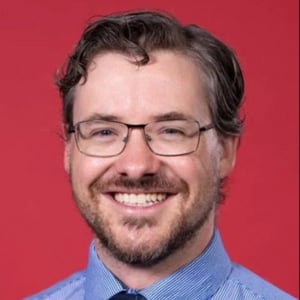
Senior Legal Fellow, Pacific Legal Foundation
Ethan Blevins is a senior legal fellow working primarily on equality and opportunity issues and property rights on PLF’s Constitutional Scholarship team. He previously worked as a staff attorney with PLF, mostly suing his favorite defendant, the City of Seattle. He earned a nickname from The Seattle Times as “the sharpest pin around to the council’s liberal bubble.” He’s had a lifelong dream to earn a superhero name, so he proudly accepts the teasing title of “The Pin” from his coworkers.
In addition to his legal work, Ethan has spoken and written on a variety of legal and policy issues. He has appeared on numerous radio and television programs, and his writings have appeared in The Wall Street Journal, The Seattle Times, The Salt Lake Tribune, The Hill, and other major publications.
Ethan’s introduction to liberty began as a teenager when he read Arthur Koestler’s chilling account of communism in Darkness at Noon. He was living in China at the time, and he saw firsthand the corruption and poverty wrought by dictatorship.
He felt inspired to dedicate his legal career to fighting for liberty after clerking for then-Justice Don Willett on the Texas Supreme Court, a judge known for his fierce commitment to constitutional rights (and his Twitter presence).
Ethan earned his law degree cum laude from Duke School of Law, as well as a master’s degree in international and comparative law. He writes poetry and fiction and has completed two fantasy novels, with several other books always in the works. He also enjoys mnemonics, comic books, gaming, and playing the ukulele. He lives in Bountiful, Utah, with his wife and four kids.
Ethan is a member of the bar only in the states of Montana, Utah and Washington.
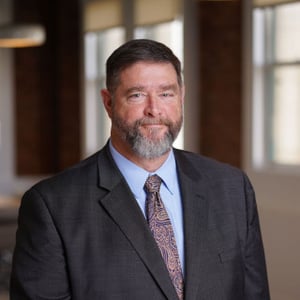
Partner, Briscoe Prows Kao Ivester & Bazel LLP
Tony Francois is experienced in Water and Real Property Law, Land Use and Zoning, Environmental Regulation, Natural Resources Development, Agricultural Law, and Constitutional Law. He has represented homeowners, builders, farmers and ranchers, trade associations, and water districts in administrative, civil, and criminal proceedings before state and federal administrative agencies and state and federal trial and appellate courts. He is a member of the California State Bar and the Northern, Eastern, and Central Districts of California and the Districts of New Mexico and North Dakota, and has litigated cases in federal courts in California, Oregon, Washington, Idaho, Montana, Nevada, Arizona, New Mexico, Colorado, North and South Dakota, Minnesota, Massachusetts, Maryland, South Carolina, and the District of Columbia, as well as the Sixth, Eighth, Ninth, and Tenth Circuit Courts of Appeals. He has appeared before the Supreme Courts of California, Idaho, Nevada, and the United States.
Prior to attending law school, he served as an infantry officer in the United States Army, and was stationed in the former West Germany during the fall of the Berlin Wall.
Tony was an Attorney at Pacific Legal Foundation from 2012 to 2021. He was a lobbyist for 10 years, first with California Farm Bureau Federation from 2003 to 2007, and then with KP Public Affairs from 2007 to 2012. He was an attorney at McQuaid, Bedford & Van Zandt in San Francisco from 1999 – 2003.
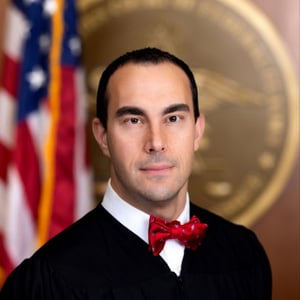
U.S. Court of Federal Claims and Jurist-In-Residence Professor of Law, The University of Akron School of Law
Judge Ryan T. Holte was sworn in as a judge on the United States Court of Federal Claims in July 2019. Prior to confirmation he served as the David L. Brennan Professor of Law and Director of the Center for Intellectual Property Law and Technology at The University of Akron School of Law (2017-2019) and an assistant professor of law at Southern Illinois University School of Law (2013-2017). Judge Holte has written and presented widely on patent law subjects and empirical legal studies of Federal Circuit and district court patent law cases. His most recent articles were published in the Iowa Law Review (2019), George Mason Law Review (2018), and Washington Law Review (2017).
In practice, Judge Holte served for six years as general counsel and partner of an electrical engineering technology company and is co-inventor of multiple patents related to Systems and Methods for Countering Satellite-Navigated Munitions. Prior to entering academia, Judge Holte practiced as a litigation attorney at the Federal Trade Commission and an associate in the Intellectual Property Practice Group at Jones Day. Prior to practice, he served as a law clerk to Judge Stanley F. Birch, Jr. on the United States Court of Appeals for the Eleventh Circuit and as a law clerk to Judge Loren A. Smith on the United States Court of Federal Claims.
Judge Holte received his JD from the University of California Davis School of Law and his BS, magna cum laude, in engineering from the California Maritime Academy where he was a First Class graduate of the Corps of Cadets Third Engineering Division and sailed as a U.S. Merchant Marine oiler.
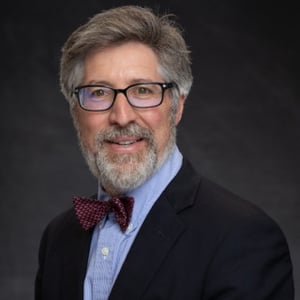
Associate Professor of Government, Hillsdale College, Washington, D.C. Campus
Richard Samuelson is an Associate Professor of Government at Hillsdale College’s Washington, D.C., campus. Dr. Samuelson is an historian of the American founding and of American politics and constitutional thought. He graduated from Bates College and received his MA and PhD in American history from the University of Virginia. Dr. Samuelson taught at California State University San Bernardino from 2007 to 2022. He was the 2009-2010 Garwood Visiting Fellow at Princeton University’s James Madison Program.
Dr. Samuelson has written extensively on John Adams and on the Adams family of Massachusetts, and on the constitutional politics of the founding more largely. His work also connects the founding with more contemporary issues, with a particular focus on religious liberty, and the challenge the modern American state, and contemporary civil rights laws present to religious liberty.
His essays and reviews have appeared in The Review of Politics, The William and Mary Quarterly, Commentary, The Claremont Review of Books, The Public Interest, National Review, and other publications. He has also contributed many essays and reviews to such online publications as Mosaic, Law and Liberty, Realclearpolitics, and other platforms.

Judge, Arizona Court of Appeals, Division One
The Honorable Jennifer M. Perkins began service on the Arizona Court of Appeals, Division One, on October 30, 2017. At the time of her appointment by Governor Douglas Ducey, Judge Perkins was Assistant Solicitor General for the State of Arizona.
Judge Perkins was born in Portales, New Mexico, and primarily raised in Albuquerque. She attended the prestigious Albuquerque Academy from 1988-1995, before moving to Washington D.C. to attend the Elliott School of International Affairs at the George Washington University as a National Merit Scholar. Therafter, she relocated again to Dallas, Texas, and earned her juris doctor from the SMU Dedman School of Law, graduating cum laude in 2002.
Judge Perkins started her career at the law firm of Browning & Peifer (now Peifer, Hanson, Mullins, and Baker) in Albuquerque, New Mexico. While there, she litigated complex commercial matters including class action plaintiff and defense work, and assisted with employment and contract litigation. In 2003, the judge accompanied the Honorable James O. Browning in transitioning to the federal district court bench, serving as his first law clerk.
After her clerkship, Judge Perkins moved to Arizona to work for the Institute for Justice, Arizona Chapter, a public interest law firm. She spent five years with IJ-AZ litigating civil rights cases in Arizona and across the country. In 2009, the judge became Disciplinary Counsel for the Arizona Commission on Judicial Conduct, where she reviewed and prosecuted ethics complaints against state court judges throughout Arizona. After five years serving the state in this capacity, Judge Perkins entered private practice by joining an appellate law firm in Phoenix. While there, she worked on state and federal appeals involving a wide range of legal subjects, including complex business disputes, property rights, judicial ethics, and personal injury matters.
In January 2015, Judge Perkins joined the Office of the Arizona Attorney General to serve as the first Assistant Solicitor General; in that capacity, she was responsible for oversight of Attorney General Opinions and served as ethics counsel to the entire office. In addition to these two primary roles, the judge assisted on a variety of matters including trial and appellate litigation of election-related matters; federal appellate litigation with the Federalism Unit; state criminal appeals; and drafting amicus briefs on behalf of Arizona in state and federal courts.

Trial Lawyer, Osborn Maledon, P.A., Former Judge, Arizona Superior Court
James focuses his practice on trial and appellate representation in complex commercial litigation and elections disputes. He also serves as arbitrator, mediator, and special master.
Before joining the firm, James served as a judge on the Arizona Superior Court, where he presided over hundreds of jury trials, bench trials, evidentiary hearings, and oral arguments. The civil trials he oversaw included commercial torts, consumer fraud, contract, professional malpractice, and personal injury claims. He also handled many election matters involving challenges to candidates and their nominating petitions, disputes regarding initiative descriptions and petitions, and challenges to statutes’ constitutionality. While on the bench, James also conducted settlement conferences for cases before other judges. He would work collaboratively with the lawyers and parties to consider the strengths and weaknesses of each side’s case and, more importantly, find solutions that avoided the burden and expense of trial. James is on the AAA panel of arbitration neutrals.
Before his judicial appointment, James was a partner in an international law firm and specialized in consumer-facing class action defense plus commercial litigation. He appeared in federal and state trial and appellate courts, and handled arbitration disputes, throughout the country.
James often writes on issues about evidence and civil procedure. Before taking the bench, he also wrote extensively about RICO and class action matters.
James is a member of the State Bar of Arizona Civil Jury Instructions Committee and formerly served on the Civil Practice and Procedure Committee.
Judge, Arizona Court of Appeals, Division One
The Honorable Jennifer M. Perkins began service on the Arizona Court of Appeals, Division One, on October 30, 2017. At the time of her appointment by Governor Douglas Ducey, Judge Perkins was Assistant Solicitor General for the State of Arizona.
Judge Perkins was born in Portales, New Mexico, and primarily raised in Albuquerque. She attended the prestigious Albuquerque Academy from 1988-1995, before moving to Washington D.C. to attend the Elliott School of International Affairs at the George Washington University as a National Merit Scholar. Therafter, she relocated again to Dallas, Texas, and earned her juris doctor from the SMU Dedman School of Law, graduating cum laude in 2002.
Judge Perkins started her career at the law firm of Browning & Peifer (now Peifer, Hanson, Mullins, and Baker) in Albuquerque, New Mexico. While there, she litigated complex commercial matters including class action plaintiff and defense work, and assisted with employment and contract litigation. In 2003, the judge accompanied the Honorable James O. Browning in transitioning to the federal district court bench, serving as his first law clerk.
After her clerkship, Judge Perkins moved to Arizona to work for the Institute for Justice, Arizona Chapter, a public interest law firm. She spent five years with IJ-AZ litigating civil rights cases in Arizona and across the country. In 2009, the judge became Disciplinary Counsel for the Arizona Commission on Judicial Conduct, where she reviewed and prosecuted ethics complaints against state court judges throughout Arizona. After five years serving the state in this capacity, Judge Perkins entered private practice by joining an appellate law firm in Phoenix. While there, she worked on state and federal appeals involving a wide range of legal subjects, including complex business disputes, property rights, judicial ethics, and personal injury matters.
In January 2015, Judge Perkins joined the Office of the Arizona Attorney General to serve as the first Assistant Solicitor General; in that capacity, she was responsible for oversight of Attorney General Opinions and served as ethics counsel to the entire office. In addition to these two primary roles, the judge assisted on a variety of matters including trial and appellate litigation of election-related matters; federal appellate litigation with the Federalism Unit; state criminal appeals; and drafting amicus briefs on behalf of Arizona in state and federal courts.
Trial Lawyer, Osborn Maledon, P.A., Former Judge, Arizona Superior Court
James focuses his practice on trial and appellate representation in complex commercial litigation and elections disputes. He also serves as arbitrator, mediator, and special master.
Before joining the firm, James served as a judge on the Arizona Superior Court, where he presided over hundreds of jury trials, bench trials, evidentiary hearings, and oral arguments. The civil trials he oversaw included commercial torts, consumer fraud, contract, professional malpractice, and personal injury claims. He also handled many election matters involving challenges to candidates and their nominating petitions, disputes regarding initiative descriptions and petitions, and challenges to statutes’ constitutionality. While on the bench, James also conducted settlement conferences for cases before other judges. He would work collaboratively with the lawyers and parties to consider the strengths and weaknesses of each side’s case and, more importantly, find solutions that avoided the burden and expense of trial. James is on the AAA panel of arbitration neutrals.
Before his judicial appointment, James was a partner in an international law firm and specialized in consumer-facing class action defense plus commercial litigation. He appeared in federal and state trial and appellate courts, and handled arbitration disputes, throughout the country.
James often writes on issues about evidence and civil procedure. Before taking the bench, he also wrote extensively about RICO and class action matters.
James is a member of the State Bar of Arizona Civil Jury Instructions Committee and formerly served on the Civil Practice and Procedure Committee.
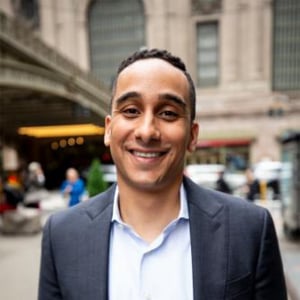
Nick Ohnell Fellow, The Manhattan Institute
Rafael Mangual is the Nick Ohnell Fellow at the Manhattan Institute, a contributing editor of City Journal, and a member of the Council on Criminal Justice. His first book, Criminal (In)Justice, was released in July 2022. He has authored and coauthored a number of MI reports and op-eds on issues ranging from urban crime and jail violence to broader matters of criminal and civil justice reform. His work has been featured and mentioned in a wide array of publications, including the Wall Street Journal, The Atlantic, New York Post, The New York Times, The Washington Post, Philadelphia Inquirer and City Journal. Mangual also regularly appears on Fox News and has made a number of national and local television and radio appearances on outlets such as C-SPAN and Bloomberg Radio. In 2020, he was appointed to serve a four-year term as a member of the New York State Advisory Committee of the U.S. Commission on Civil Rights.
Prior to joining MI in 2015, Rafael worked in corporate communications for the International Trademark Association. He holds a B.A. in corporate communications from the City University of New York’s Baruch College and a J.D. from DePaul University in Chicago, where he was president of the Federalist Society and vice president of the Appellate Moot Court team. After graduating from law school, Mangual was inducted into the Order of the Barristers, a national honor society for excellence in oral and written advocacy.
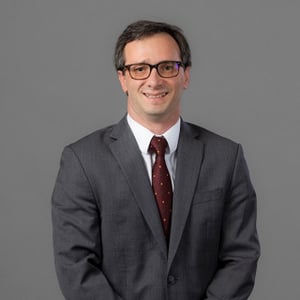
Assistant Professor of Law, George Mason University, Antonin Scalia Law School
Robert Leider is an Assistant Professor of Law at Antonin Scalia Law School, George Mason University. His scholarly interests are in criminal law, criminal procedure, and constitutional law, especially concerning questions about the use of force and the rule of law. He has written on the law of self-defense, the constitutional allocation of military power, and gun control. Among other places, he has published in the Florida Law Review (forthcoming), the Indiana Law Journal, and the Wall Street Journal.
Before joining Antonin Scalia Law School, Professor Leider was at Arnold & Porter in Washington, DC. He was previously with Mayer Brown LLP and was an Olin-Searle-Smith Fellow at the University of Pennsylvania Law School. He has clerked for Judge Diane S. Sykes, of the U.S. Court of Appeals for the Seventh Circuit, and Justice Clarence Thomas. Professor Leider earned a BA, summa cum laude, from The George Washington University, a JD from Yale Law School, and a PhD in Philosophy (dissertation defended with distinction) from Georgetown University. While at Yale, he served as an articles editor for the Yale Law Journal.
Professor Leider teaches criminal law and torts.
Judge, Arizona Court of Appeals, Division One
The Honorable Jennifer M. Perkins began service on the Arizona Court of Appeals, Division One, on October 30, 2017. At the time of her appointment by Governor Douglas Ducey, Judge Perkins was Assistant Solicitor General for the State of Arizona.
Judge Perkins was born in Portales, New Mexico, and primarily raised in Albuquerque. She attended the prestigious Albuquerque Academy from 1988-1995, before moving to Washington D.C. to attend the Elliott School of International Affairs at the George Washington University as a National Merit Scholar. Therafter, she relocated again to Dallas, Texas, and earned her juris doctor from the SMU Dedman School of Law, graduating cum laude in 2002.
Judge Perkins started her career at the law firm of Browning & Peifer (now Peifer, Hanson, Mullins, and Baker) in Albuquerque, New Mexico. While there, she litigated complex commercial matters including class action plaintiff and defense work, and assisted with employment and contract litigation. In 2003, the judge accompanied the Honorable James O. Browning in transitioning to the federal district court bench, serving as his first law clerk.
After her clerkship, Judge Perkins moved to Arizona to work for the Institute for Justice, Arizona Chapter, a public interest law firm. She spent five years with IJ-AZ litigating civil rights cases in Arizona and across the country. In 2009, the judge became Disciplinary Counsel for the Arizona Commission on Judicial Conduct, where she reviewed and prosecuted ethics complaints against state court judges throughout Arizona. After five years serving the state in this capacity, Judge Perkins entered private practice by joining an appellate law firm in Phoenix. While there, she worked on state and federal appeals involving a wide range of legal subjects, including complex business disputes, property rights, judicial ethics, and personal injury matters.
In January 2015, Judge Perkins joined the Office of the Arizona Attorney General to serve as the first Assistant Solicitor General; in that capacity, she was responsible for oversight of Attorney General Opinions and served as ethics counsel to the entire office. In addition to these two primary roles, the judge assisted on a variety of matters including trial and appellate litigation of election-related matters; federal appellate litigation with the Federalism Unit; state criminal appeals; and drafting amicus briefs on behalf of Arizona in state and federal courts.
Trial Lawyer, Osborn Maledon, P.A., Former Judge, Arizona Superior Court
James focuses his practice on trial and appellate representation in complex commercial litigation and elections disputes. He also serves as arbitrator, mediator, and special master.
Before joining the firm, James served as a judge on the Arizona Superior Court, where he presided over hundreds of jury trials, bench trials, evidentiary hearings, and oral arguments. The civil trials he oversaw included commercial torts, consumer fraud, contract, professional malpractice, and personal injury claims. He also handled many election matters involving challenges to candidates and their nominating petitions, disputes regarding initiative descriptions and petitions, and challenges to statutes’ constitutionality. While on the bench, James also conducted settlement conferences for cases before other judges. He would work collaboratively with the lawyers and parties to consider the strengths and weaknesses of each side’s case and, more importantly, find solutions that avoided the burden and expense of trial. James is on the AAA panel of arbitration neutrals.
Before his judicial appointment, James was a partner in an international law firm and specialized in consumer-facing class action defense plus commercial litigation. He appeared in federal and state trial and appellate courts, and handled arbitration disputes, throughout the country.
James often writes on issues about evidence and civil procedure. Before taking the bench, he also wrote extensively about RICO and class action matters.
James is a member of the State Bar of Arizona Civil Jury Instructions Committee and formerly served on the Civil Practice and Procedure Committee.

Public Lands at the Founding
Ethan Blevins, Tony Francois, Ryan T. Holte, Richard Samuelson
In this Federalist Society America 250 series, experts analyze modern legal and policy debates through...
Litigation Update: Arizona Supreme Court Opinion in Planned Parenthood v. Mayes / Hazelrigg
Jennifer Perkins, James D. Smith
Throughout Arizona’s history as a state, the criminal code authorized penalties against any person who...
Litigation Update: Arizona Supreme Court Opinion in Planned Parenthood v. Mayes / Hazelrigg
Jennifer Perkins, James D. Smith
Throughout Arizona’s history as a state, the criminal code authorized penalties against any person who...
Litigation Update: Arizona Supreme Court Opinion in Planned Parenthood v. Mayes / Hazelrigg
Police Use of Force and the Practical Limits of Popular Reform Proposals: A Response to Rizer and Mooney
Rafael A. Mangual
Note from the Editor: The Federalist Society takes no positions on particular legal and public...
Kisela v. Hughes - Post-Decision SCOTUScast
Robert Leider
On April 2, 2018, the Supreme Court decided Kisela v. Hughes. In 2010, Andrew Kisela,...
State Court Docket Watch News Clips: 11/10/2015
Wisconsin Supreme Court Justice Shirley Abrahamson has opted to drop her lawsuit seeking to restore...