

Professor of Law and Centennial Chair, South Texas College of Law Houston
Josh Blackman is a national thought leader on constitutional law and the United States Supreme Court. Josh’s work was quoted during two presidential impeachment trials. He has testified before Congress and advises federal and state lawmakers. Josh regularly appears on TV, including NBC, CBS, ABC, Fox, and the BBC. Josh is also a frequent guest on NPR and other syndicated radio programs. He has published commentaries in the New York Times, Wall Street Journal, Washington Post, and leading national publications.
Since 2012, Josh has served as a professor at the South Texas College of Law Houston. He holds the Centennial Chair of Constitutional Law. Josh is an Adjunct Fellow at the Manhattan Institute. Josh has written more than seven dozen law review articles that have been cited more than a thousand times. Josh was selected as the Jurist of the Year by the Texas Journal of Law & Public Policy, received the inaugural Meese III Originalism Award, and was awarded the Inaugural Joseph Story Award. Josh was selected by Forbes Magazine for the “30 Under 30” in Law and Policy. Josh is the President of the Harlan Institute, and founded FantasySCOTUS, the Internet’s Premier Supreme Court Fantasy League. He blogs at the Volokh Conspiracyand posts@JoshMBlackman.
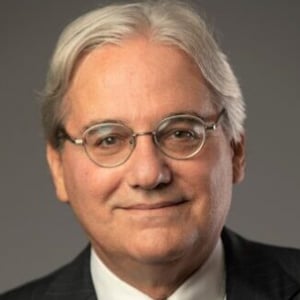
Clinical Professor of Law, Cornell Law School
William A. Jacobson is a Clinical Professor of Law and Director of the Securities Law Clinic.
He is a 1981 graduate of Hamilton College and a 1984 graduate of Harvard Law School. At Harvard he was Senior Editor of the Harvard International Law Journal and Director of Litigation for the Harvard Prison Legal Assistance Project.
Prior to joining the Cornell law faculty in 2007, Professor Jacobson had a highly successful civil litigation and arbitration practice in Providence, Rhode Island, concentrating in investment, employment, and business disputes in the securities industry, including many high profile cases reported in leading newspapers and magazines.
Professor Jacobson has argued cases in numerous federal and state courts, including the Courts of Appeal for the First, Fifth and Sixth Circuits, and the Rhode Island Supreme Court.
Professor Jacobson has a national reputation as a leading practitioner in securities arbitration. He was Treasurer, and is a former member of the Executive Committee and Board of Directors of the Public Investors Arbitration Bar Association, a professional organization of attorneys dedicated to protecting public investors. He frequently is quoted in national media on issues related to investment fraud and investor protection, and in the past has served as one of a small number of private practice attorneys who trained new arbitrators for the Financial Industry Regulatory Authority.
Professor Jacobson is co-author of the Securities Arbitration Desk Reference (Thomson-Reuters), updated annually.
Professor Jacobson also is the founder and publisher of Legal Insurrection, a popular politics and law website. He is frequently quoted in the media on political and legal topics, has authored many Op-Eds in major publications, and appears on television and radio to discuss politics and the law.
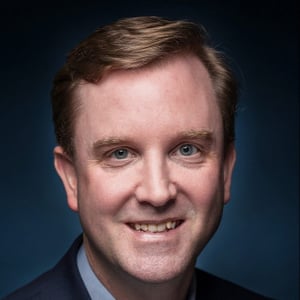
Vice President and Deputy Counsel, Wisconsin Institute for Law and Liberty
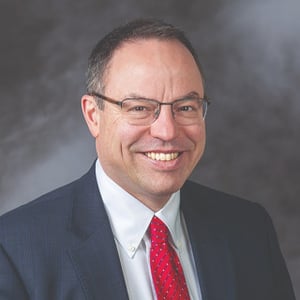
Professor of Law and J. Philip Johnson Faculty Fellow, University of North Dakota School of Law
Michael S. McGinniss is Professor of Law and J. Philip Johnson Faculty Fellow at the University of North Dakota School of Law, where he joined the faculty in 2010 and served as the Dean from 2019 to 2022. He chairs the executive committee for the Federalist Society's Practice Group on Professional Responsibility and Legal Education.
Before entering the legal academy, Professor McGinniss served for twelve years as a Disciplinary Counsel for the Supreme Court of Delaware. He currently teaches courses on Professional Responsibility, Advanced Legal Ethics, Civil Procedure, and Federal Courts. He also serves as Faculty Advisor for the North Dakota Law Review and the UND Law Federalist Society student chapter.
Professor McGinniss’ research and scholarship interests are wide-ranging and include lawyer and judicial ethics, lawyer discipline and regulation of the profession, constitutional law (especially First Amendment, separation of powers, and federalism), and cultural challenges faced by conservatives in the law schools and the legal profession. His most recent law review article, Declaring Independence to Secure Integrity: The Supreme Court Justices' Code of Conduct, was published in the Federalist Society Review. His article Expressing Conscience with Candor: Saint Thomas More and First Freedoms in the Legal Profession, was published in the Harvard Journal of Law & Public Policy.
Professor McGinniss has spoken to Federalist Society lawyer and student chapters across the country about judicial independence and ethics, especially relating to the federal courts and the United States Supreme Court Justices. In addition, he has spoken to several chapters about rising challenges to ideological diversity and targeting of conservative viewpoints in law schools and the legal profession. Although he is very pleased to speak on these and many other topics that may be of interest to lawyer and student chapters, in 2026-2027, he has particular interest in speaking on the topic “Lawyer Discipline as Political ‘Resistance’: Separation of Powers, Federalism, and the Rule of Law,” concerning his work-in-progress on the weaponization of professional disciplinary processes against conservative lawyers for political and ideological purposes.

Senior Policy Counsel, Public Knowledge
As Senior Policy Counsel, Meredith focuses on copyright, DMCA, intellectual property reform, and governance issues, as well as telecommunications regulatory matters. Prior to working at Public Knowledge, Meredith worked on consumer policy issues at the Federal Communications Commission, the Trans-Atlantic Consumer Dialogue, and Knowledge Ecology International. Meredith received her J.D. and A.B. from the University of Chicago. When not in the office, she’s an avid video gamer and desert hiker.
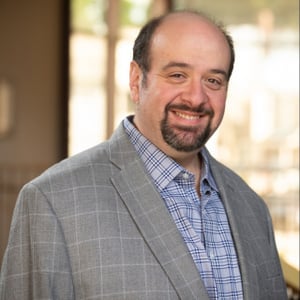
Associate Professor, UNH Franklin Pierce School of Law
Zvi S. Rosen is an Associate Professor at UNH Franklin Pierce School of Law and the Faculty Director of the Franklin Pierce Society for Intellectual Property. He has served as a Assistant Professor at the Southern Illinois University School of Law, as a Visiting Assistant Professor at the Maurice A. Deane School of Law at Hofstra University, and as a Visiting Scholar and Professorial Lecturer in Law at George Washington University School of Law.
In 2015-2016, he was the Abraham L. Kaminstein Scholar in Residence at the U.S. Copyright Office. Mr. Rosen received his J.D. from Northwestern University School of Law in 2005 and LLM in Intellectual Property in 2006 from the George Washington University Law School. He has practiced at Fried, Frank, Harris, Shriver & Jacobson LLP as well as smaller firms and his own practice, and clerked for the Hon. Thomas B. Bennett of the U.S. Bankruptcy Court for the Northern District of Alabama. He has written extensively on the development of modern copyright and trademark law, as well as on bankruptcy law.
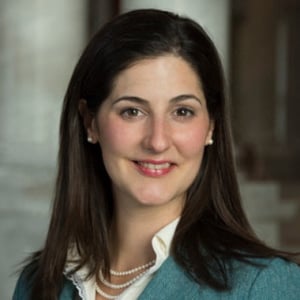
Senior Vice President & General Counsel, News/Media Alliance
Regan Smith is Senior Vice President & General Counsel at the News/Media Alliance. She is a recognized expert in intellectual property law and policy who has testified before multiple parliamentary bodies and spoken in other government, academic, and industry forums on topics including copyright, artificial intelligence, digital rights management, free expression, algorithmic regulation, music, and collective licensing.
Previously, Ms. Smith served as General Counsel and Associate Register of Copyrights at the U.S. Copyright Office, where she assumed a broad range of responsibilities as a member of the agency’s senior leadership team. In that role, she oversaw an extensive portfolio of regulatory, litigation, and policy matters, including over 45 regulatory proceedings and several matters before the Supreme Court. Ms. Smith spearheaded the agency’s policy and legal work to update the licensing for musical works under the Music Modernization Act, overhauled the rulemaking regarding anticircumvention of technological measures required by the Digital Millennium Copyright Act (DMCA), and served on the administrative board determining final appeals to denials of registration applications on the thorniest questions of copyrightability. During her tenure, she helped formulate the government's views in every copyright litigation to reach the Supreme Court and multiple circuits.
Immediately prior to News/Media Alliance, Ms. Smith was Head of Public Policy in Spotify’s government affairs group, leading global intellectual property and music policy matters. Earlier in her career, she spent several years in private practice, focusing on intellectual property, media law, First Amendment, advertising, and emerging technology issues, and was previously an executive at an entertainment company that produced feature film and live theatrical properties.
Ms. Smith teaches copyright law at the George Washington University. She is a trustee of the Copyright Society of the U.S.A., the Chair of the ABA’s Copyright Legislation committee, and the recipient of many professional accolades, including the Librarian of Congress’s distinguished service award.
Ms. Smith received a JD from Harvard Law School and a BA in philosophy and political science from the University of Michigan.
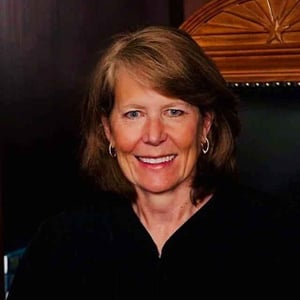
Presiding Disciplinary Judge, Arizona Supreme Court
Margaret H. Downie is the Presiding Disciplinary Judge for the Arizona Supreme Court — presiding over formal attorney discipline, disability, and reinstatement proceedings. Judge Downie previously served as Executive Director of the Arizona Commission on Judicial Conduct and Staff Director of the Arizona Supreme Court’s Judicial Ethics Advisory Committee. From 2008 to 2017, Judge Downie was a judge on the Arizona Court of Appeals, Division One. Prior to that, she spent 11 years on the Maricopa County Superior Court, where she was Associate Presiding Judge and Civil Presiding Judge.
Judge Downie graduated with a B.A. degree, magna cum laude, from the University of Arkansas at Little Rock. She received her J.D. degree, magna cum laude, from Georgetown University in Washington, D.C. After law school, Judge Downie worked in the civil litigation department of Jennings, Strouss & Salmon in Phoenix. Thereafter, she spent almost ten years in the lawyer regulation department of the State Bar of Arizona, ultimately serving as Chief Bar Counsel.
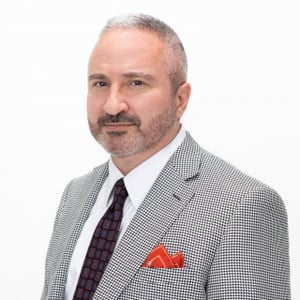
Shareholder, Greenberg Traurig
Greenberg Traurig Phoenix Litigation chair Andy Halaby advises clients on professional responsibility and related matters, including discipline defense, disqualification, and lawyer liability matters, as well as issues and opportunities arising from Arizona’s Alternative Business Structure (ABS) law. He has served on the Arizona Supreme Court's Task Forces on Lawyer Ethics, Professionalism, and the Unauthorized Practice of Law, and Judicial Performance Review, and chaired the State Bar of Arizona's Conflict Case Committee. Andy also practices extensively in intellectual property litigation. A former professional engineer registered with the United States Patent and Trademark Office, Andy has served as lead counsel in dozens of patent infringement and other IP matters. His published work has been cited in, among other things, treatises on intellectual property law, remedies, evidence, professional responsibility and the First Amendment, as well as in numerous scholarly articles. He has taught multiple semesters of Professional Responsibility, Patent Litigation, and other courses at the Sandra Day O’Connor College of Law at Arizona State University.
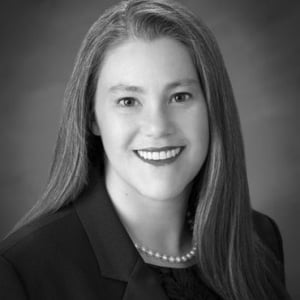
Judge, Arizona Court of Appeals, Division One
The Honorable Jennifer M. Perkins began service on the Arizona Court of Appeals, Division One, on October 30, 2017. At the time of her appointment by Governor Douglas Ducey, Judge Perkins was Assistant Solicitor General for the State of Arizona.
Judge Perkins was born in Portales, New Mexico, and primarily raised in Albuquerque. She attended the prestigious Albuquerque Academy from 1988-1995, before moving to Washington D.C. to attend the Elliott School of International Affairs at the George Washington University as a National Merit Scholar. Therafter, she relocated again to Dallas, Texas, and earned her juris doctor from the SMU Dedman School of Law, graduating cum laude in 2002.
Judge Perkins started her career at the law firm of Browning & Peifer (now Peifer, Hanson, Mullins, and Baker) in Albuquerque, New Mexico. While there, she litigated complex commercial matters including class action plaintiff and defense work, and assisted with employment and contract litigation. In 2003, the judge accompanied the Honorable James O. Browning in transitioning to the federal district court bench, serving as his first law clerk.
After her clerkship, Judge Perkins moved to Arizona to work for the Institute for Justice, Arizona Chapter, a public interest law firm. She spent five years with IJ-AZ litigating civil rights cases in Arizona and across the country. In 2009, the judge became Disciplinary Counsel for the Arizona Commission on Judicial Conduct, where she reviewed and prosecuted ethics complaints against state court judges throughout Arizona. After five years serving the state in this capacity, Judge Perkins entered private practice by joining an appellate law firm in Phoenix. While there, she worked on state and federal appeals involving a wide range of legal subjects, including complex business disputes, property rights, judicial ethics, and personal injury matters.
In January 2015, Judge Perkins joined the Office of the Arizona Attorney General to serve as the first Assistant Solicitor General; in that capacity, she was responsible for oversight of Attorney General Opinions and served as ethics counsel to the entire office. In addition to these two primary roles, the judge assisted on a variety of matters including trial and appellate litigation of election-related matters; federal appellate litigation with the Federalism Unit; state criminal appeals; and drafting amicus briefs on behalf of Arizona in state and federal courts.
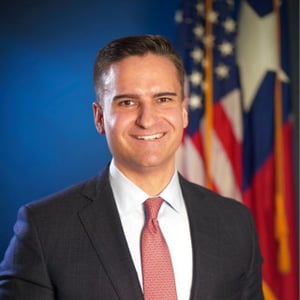
Deputy Attorney General, Civil Litigation, Texas Attorney General
James Lloyd is the Deputy Attorney General for Civil Litigation for the Texas Attorney General. He serves alongside over 600 lawyers and staff across eleven practice groups handling more than 35,000 cases involving the State of Texas. James also serves as Chief of the Antitrust Division, leading the enforcement of state and federal antitrust laws and representing the interests of Texas in national antitrust matters alongside federal enforcers.
James previously practiced at global law firms Sidley Austin LLP and Mayer Brown LLP, managing a range of high-profile matters for public and private companies. He began his legal career as a law clerk to Justice David Medina on the Texas Supreme Court.
James has served in a variety of roles in public service. He is currently an Intelligence Officer in the U.S. Navy Reserve, assigned to the Commander of the U.S. Pacific Fleet. James served on the Presidential Transition Team for President Donald Trump, where he advised on financial regulatory policy and led the transition of the U.S. Securities and Exchange Commission. James previously served at the White House as Senior Writer to President George W. Bush. He was also a member of the national security staff, coordinating policymaking and oversight with senior officials among the Cabinet departments and agencies.
James received his J.D. from The University of Texas School of Law, where he was Articles Editor for the Texas Law Review and a teaching assistant to Admiral Bobby Inman. He earned his bachelor’s degree from Rice University, where he was student body president and received the Joseph Cooper Prize in Public Policy.
A seventh-generation Texan, James comes from a family of litigators, including his mother, his sister, and his father who has served over 18 years on the Texas judiciary. James is Chair of the State Bar of Texas Antitrust and Business Litigation Section and serves on the Executive Committee of The Federalist Society’s Corporations, Securities, and Antitrust Practice Group.
James has spent over a decade as a volunteer attorney for veterans legal clinics in Houston and Austin. He is also a member of the Legal Affairs Roundtable for the Intelligence and National Security Alliance (INSA) and is also a longtime supporter of the Houston Livestock Show and Rodeo, serving on the Mutton Bustin' Committee.
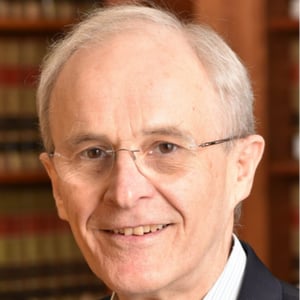
Levin, Mabie & Levin Professor of Law, University of Florida Levin College of Law
Professor Lynn M. LoPucki comes to UF in August 2022 from the UCLA School of Law where he taught Secured Transactions and Business Associations for twenty-two years. His Stakeholder Takeover Project is an effort to provide corporate stakeholders with the information they need to control corporations through markets. For example, the Project website ranks the S&P 500 companies by their greenhouse gas emissions. The UC Davis Law Review published the first Project article, Repurposing the Corporation Through Stakeholder Markets, in February 2022 and will publish the second, Corporate Greenhouse Gas Disclosures, in November.
Professor LoPucki has published more than seventy-five articles in highly regarded law reviews, including the Yale Law Journal, Stanford Law Review, University of Chicago Law Review, University of Michigan Law Review, University of Pennsylvania Law Review, Virginia Law Review, Cornell Law Review, Duke Law Journal, and Northwestern University Law Review. He co-authors three Aspen Casebooks: Business Associations: A Systems Approach (2020) (with Andrew Verstein); Secured Transactions: A Systems Approach (9th edition with Elizabeth Warren and Robert M. Lawless), and Commercial Transactions: A Systems Approach (7th edition with Elizabeth Warren, Daniel L. Keating, Ronald Mann, and Robert M. Lawless).
Since 1994, the Florida-UCLA-LoPucki Bankruptcy Research Database has collected large, public company bankruptcy data and disseminated it to the public and to bankruptcy researchers throughout the world. Those data provided the foundation for Professor LoPucki’s books, Courting Failure: How Competition for Big Cases is Corrupting the Bankruptcy Courts (University of Michigan Press 2005) and Professional Fees in Corporate Bankruptcies: Data, Analysis, and Evaluation (Oxford University Press, 2011) (with Joseph Doherty).
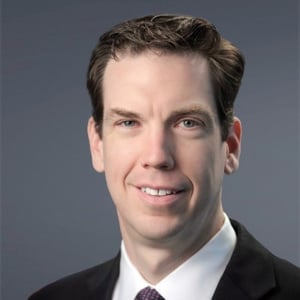
Partner, Fusion Law, PLLC
Paul is the founding partner of Fusion Law, PLLC. He has extensive experience with state, federal, and global regulators building coalitions and implementing policies to promote innovation in financial services. He is responsible for designing and implementing the first state (Arizona) and federal (CFPB) FinTech sandboxes in the United States. He also designed the CFPB no-action letter and trial disclosure policies. He helped found the first global regulatory innovation coalition (Global Financial Innovation Network) and led the founding of the first U.S. regulatory innovation coalition (American Consumer Financial Innovation Network). He served on the Financial Stability Oversight Council subcommittee on digital assets. He also has drafted state-level laws on blockchain and utility tokens.
Paul also has significant enforcement and litigation experience. He led many multi-state consumer protection enforcement matters as Civil Litigation Division Chief at the Arizona Attorney General’s Office.
Prior to his government service, Paul practiced law in the areas of securities litigation and transactional work for approximately six years at two well-known law firms. He also clerked on the U.S. Court of Appeals for the Fourth Circuit.
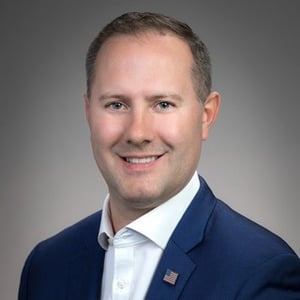
Head of Corporate Governance, Strive Asset Management
Justin Danhof is the Head of Corporate Governance at Strive Asset Management. Previously, he served as General Counsel for the National Center for Public Policy Research, as well as Director of the Center’s Free Enterprise Project. He also worked in the Miami-Dade State’s Attorney’s Office in the Economic Crimes and Cybercrimes Division, for the Massachusetts Alliance for Economic Development and at the U.S. Securities and Exchange Commission.
Mr. Danhof’s work has been widely published and quoted in major newspapers, including the Wall Street Journal, the New York Times, Politico, USA Today, the Los Angeles Times, the San Francisco Chronicle, the Boston Globe, the Christian Science Monitor, and the Washington Post. He has also appeared on the Fox News Channel, One America News Network, and the Fox Business Channel, among others.
Mr. Danhof is a member of the Federalist Society and Christian Legal Society.
Mr. Danhof is a graduate of Bentley University (Waltham, MA), where he received a Bachelor of Science in economics and finance and pitched for three seasons on the school’s NCAA Division II baseball team. Mr. Danhof completed his graduate studies at the University of Miami School of Law where he received his Juris Doctor and Master of Laws in Taxation.
Mr. Danhof is licensed to practice law in New York and Washington, D.C.
Vice President of Intellectual Property, Chief Patent Counsel, Celgene Corporation
Mr. Peter Cicala is the Chief Patent Counsel and Vice President of Intellectual Property at Celgene Corporation. His legal practice focuses on all aspects of pharmaceutical and biotechnology intellectual property law. He has extensive experience in patent litigation, prosecution, product lifecycle management, R&D collaborations and joint ventures in the pharma/biotech industry. Mr. Cicala has particular expertise with Hatch-Waxman Paragraph IV litigation as well as substantial experience with patent and regulatory litigation in Europe. Mr. Cicala has regularly participated in due diligence investigations, patent, trademark and copyright licensing, as well as M&A transactions and patent litigation settlements. Additionally, Mr. Cicala has over 10 years of experience as a medicinal chemist and has worked in drug development programs for several major pharmaceutical companies and universities.

Professor of Law, University of Baltimore School of Law (on leave); Senior Counsel, U.S. Department of Justice
Professor Dolin’s scholarship centers on patent law with a specific focus on how the patent regime affects innovation, especially in bio-pharmaceutical areas. His work in these areas includes a number of scholarly articles, presentations, amicus briefs, and congressional testimony.
Dr. Dolin is currently on leave from his academic duties while he serves as Senior Counsel in the Civil Rights Division of the United States Department of Justice.
From January 2020 to January 2022, Professor Dolin served as a resident Associate Justice of the Supreme Court of the Republic of Palau. In this role, he (together with other members of the Court) heard appeals in civil, criminal, administrative, and constitutional law matters.
Prior to joining the University of Baltimore School of Law, Professor Dolin held visiting appointments in other law schools. He also served as a law clerk to the Hon. Pauline Newman, of the U.S. Court of Appeals for the Federal Circuit and the late Hon. H. Emory Widener Jr., of the U.S. Court of Appeals for the Fourth Circuit.
Rumors that he has a real Russian bear in his office are entirely true.

Director, Sterne Kessler Goldstein & Fox PLLC
Robert Greene Sterne is a founding director of Sterne Kessler Goldstein & Fox. At the age of 26, and just one year out of law school, he set out to create a different kind of law firm—one that recognized the contributions of all its members and put a strong emphasis on scientific and technical knowledge. Now, nearly four decades later, Sterne has helped to nurture and grow this revolutionary idea into one of the top five largest intellectual property specialty firms in the country. And in so doing, he has established his place as one of the leading patent lawyers in the United States. In fact, Rob has been recognized by the Financial Times as one of the "Top Ten Most Innovative Lawyers in North America 2015," by Law360 as one of the "Top 25 Icons of IP," and among the country's "IP Trailblazers & Pioneers 2014" by the National Law Journal. He is highly respected by his peers and has received some of the most prestigious awards and rankings for professional excellence in intellectual property law.

Professor of Law, Southern Illinois University School of Law
Professor Mark F. Schultz joined the faculty in 2003. He teaches and writes primarily in the area of intellectual property.
Professor Schultz is a frequent author and speaker known for his work on the law and economics of the global intellectual property system. In one of his most influential projects, he worked with the Organization for Economic Cooperation and Development (OECD) to construct a groundbreaking global trade secret protection index (the TSPI). The TSPI is influencing policy discussions on this cutting-edge topic in capitals around the world. Other recent projects have included an empirical study that quantified for the first time the backlogs in patent offices worldwide, a report on how patented innovation is meeting global health challenges, and the construction of a new global index of copyright strength.
Professor Schultz is an influential voice in public policy debates regarding intellectual property. He has testified before the U.S. Congress on copyright law at the invitation of the House Judiciary Committee and has briefed the staff of the U.S. Senate Judiciary Committee on trade secret legislation. He speaks frequently around the world about the connection between secure and effective intellectual property rights and flourishing national economies and individual lives, with invitations from the U.S. Patent and Trademark Office, the U.S. Trade Representative, and the U.S. Copyright Office, as well as numerous academic institutions, think tanks, and industry groups. He served as an NGO delegate to the World Intellectual Property Organization (WIPO) for several years during the WIPO Development Agenda talks. He is also one of the organizers of an ongoing multilateral diplomatic dialogue on best practices in national trade secret laws, and is co-founder of the Center for Protection of Intellectual Property (CPIP) at George Mason University in Washington, D.C.
Among the awards and recognition he has received for his scholarship was the School of Law's Outstanding Scholar of the Year award in 2008. He has been a distinguished visiting scholar at the University of Botswana and a visiting professor at DePaul University College of Law.
Professor Schultz graduated with honors from the George Washington University School of Law. Following law school, he was a judicial clerk for the Hon. Daniel M. Friedman of the United States Court of Appeals for the Federal Circuit in Washington, D.C., and the Hon. Eric G. Bruggink of the United States Court of Federal Claims. Prior to joining academia, he practiced law for a decade, serving as outside general counsel to several tech startups and helping technology companies to expand their businesses and commercialize their intellectual property in dozens of countries. He holds a B.A. in International Economics from George Washington University and has done PhD level coursework in development economics at Southern Illinois University.
He is active in leadership roles in local and national organizations. He has served as chair of the Federalist Society's Intellectual Property Practice Group and the AALS Section on Internet and Computer Law. He is an officer of the American Bar Association's International IP Committee of the International Law Section and the American Intellectual Property Law Association’s Trade Secret Law Committee. He currently is chair of the Academic Advisory Board of the Copyright Alliance.
Professor Schultz teaches Copyright Law, Trade Secret Law, Trademark Law, and a senior seminar on Intellectual Property and Global Development. He established and directs both the Specialization in Intellectual Property Law and the IP Semester in Practice Externship Program. He also co-founded a Legal Globalization Class, offered every other year, that takes students to South Africa and Botswana after spending a semester learning about the legal system, culture, history, and politics of southern Africa. The popular course is a once-in-a-lifetime experience that introduces students to leading lawyers, judges, government officials, and human rights advocates, taking them from Cape Town to Johannesburg to Gaborone as well as many popular destinations including game reserves, national parks, the Cape of Good Hope, and the Cradle of Humankind.

Dr. John Eastman is the former Henry Salvatori Professor of Law & Community Service and former Dean at Chapman University's Dale E. Fowler School of Law, where he had been a member of the faculty since 1999, specializing in Constitutional Law, Legal History, and Property. He is a founding director of the Center for Constitutional Jurisprudence, a public interest law firm affiliated with the Claremont Institute that he founded in 1999. He has a Ph.D. in Government from the Claremont Graduate School and a J.D. from the University of Chicago Law School, and a B.A. in Politics and Economics from the University of Dallas. He serves as the Chairman of the Board of the National Organization for Marriage.
Prior to joining the Chapman law faculty, Dr. Eastman served as a law clerk to the Honorable Clarence Thomas, Associate Justice, Supreme Court of the United States, and to the Honorable J. Michael Luttig, Judge, United States Court of Appeals for the Fourth Circuit and practiced law with the national law firm of Kirkland & Ellis. Dr. Eastman has also represented numerous clients in important constitutional law matters and has argued before the Supreme Court. On behalf of the Claremont Institute Center for Constitutional Jurisprudence, he has participated as amicus curiae before the Supreme Court of the United States, U.S. Courts of Appeals, and State Supreme Courts in more than one hundred cases of constitutional significance, including Boy Scouts of America v. Dale, Zelman v. Simmons-Harris (the school vouchers case), Kelo v. New London, Ct. (eminent domain), and Van Orden v. Perry (the 10 Commandments case). He has also appeared as an expert legal commentator on numerous television and radio programs, including C-SPAN, Fox News, PBS, NewsHour, and The O'Reilly Factor.
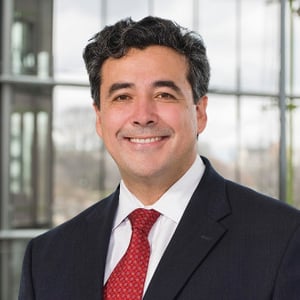
Partner-in-Charge Washington, Jones Day
Noel Francisco served as the 47th Solicitor General of the United States in the Trump Administration, from 2017 to 2020. He has argued some of the most important cases the Supreme Court has heard in recent years on a wide array of issues.
For example, as Solicitor General, he argued Trump v. Hawaii, where he successfully defended the president's orders restricting travel from countries deemed to present security risks; Janus v. AFSCME, which upheld the First Amendment rights of public employees who decline to join labor unions; Kisor v. Wilkie, which adopted his argument that the "Auer deference doctrine" should be significantly curtailed but retained in its core applications; Apple Inc. v. Pepper, which addressed whether Apple's App Store customers had standing to sue the company for antitrust violations; Knick v. Township of Scott, which held that property owners could sue state and local governments in federal court to vindicate Fifth Amendment takings claims; and Seila Law LLC v. CFPB, which invalidated restrictions on the president's authority to remove the director of the Consumer Financial Protection Bureau.
He also spearheaded the government's general strategy to seek emergency relief in the appellate courts and the Supreme Court when lower courts issued nationwide injunctions against important government programs.
Noel's service as Solicitor General built on his previous tenure at Jones Day, during which he argued McDonnell v. United States, which reversed the federal bribery conviction of the governor of Virginia; NLRB v. Noel Canning, which limited the president's constitutional recess appointments power; and Zubik v. Burwell, which challenged federal insurance coverage regulations that violated Catholic organizations' religious beliefs.

George Mason University Foundation Professor of Law, Antonin Scalia Law School, George Mason University
TODD J. ZYWICKI is George Mason University Foundation Professor of Law at Antonin Scalia Law School at George Mason University and Research Fellow of the George Mason Law and Economics Center. During the Fall 2023 semester he served as the Visiting Scholar in Conservative Thought and Policy for the Bruce Benson Center for the Study of Western Civilization at the University of Colorado-Boulder. From 2020-2021 he was Chair of the Consumer Financial Protection Bureau Taskforce on Federal Consumer Financial Law. In 2021 he was inducted to the American College of Consumer Financial Services Lawyers. He is also a Senior Fellow of the F.A. Hayek Program for the Advanced Study of Politics, Philosophy, and Economics at George Mason University and a former Senior Fellow of the Cato Institute. From 2015-2017 he was Executive Director of the George Mason Law and Economics Center. He served as Co-Editor of the Supreme Court Economic Review from 2006-2017. From 2003-2004, Professor Zywicki served as the Director of the Office of Policy Planning at the Federal Trade Commission. He has also taught at Vanderbilt University Law School, Georgetown University Law Center, Boston College Law School, Mississippi College School of Law, and China University of Political Science and Law.
Professor Zywicki clerked for Judge Jerry E. Smith of the U.S. Court of Appeals for the Fifth Circuit and worked as an associate at Alston & Bird in Atlanta, Georgia, where he practiced bankruptcy and commercial law. He received his J.D. from the University of Virginia, where he was executive editor of the Virginia Tax Review and John M. Olin Scholar in Law and Economics. Professor Zywicki also received an M.A. in Economics from Clemson University and an A.B. cum Laude with high honors in his major from Dartmouth College.
Professor Zywicki is also a Lone Mountain Fellow of the Property and Environment Research Center, a Fellow of the International Centre for Economic Research in Turin, Italy, and a former Senior Fellow of the Goldwater Institute. During the Fall 2008 Semester Professor Zywicki was the Searle Fellow of the George Mason University School of Law and was a 2008-09 W. Glenn Campbell and Rita Ricardo-Campbell National Fellow and the Arch W. Shaw National Fellow at the Hoover Institution on War, Revolution and Peace. He has lectured and consulted with government officials around the world, including Iceland, Italy, Japan, and Guatemala. In 2006 Professor Zywicki served as a Member of the United States Department of Justice Study Group on “Identifying Fraud, Abuse and Errors in the United States Bankruptcy System.”
Professor Zywicki is the author of more than 130 articles in leading law reviews and peer-reviewed economics journals. He is one of the Top 10 most-cited law professors in the field of Commercial Law and one of the Top 25 law professors on Twitter as measured by engagement levels. He is one of the Top 50 Most Downloaded Law Authors at the Social Science Research Network. He has testified multiple times before Congress on issues of consumer bankruptcy law and consumer credit and is a frequent commentator on legal issues in the print and broadcast media, including the Wall Street Journal, New York Times, The Washington Post, The Washington Times, Nightline, The Newshour with Jim Lehrer, Neil Cavuto Show, Fox & Friends, Smerconish, Fox News @ Night with Shannon Bream, Fox Business, CNN, CNBC, Bloomberg News, BBC, The Diane Rehm Show, Lou Dobbs Show, Jerry Doyle Show, and The Laura Ingraham Show.
Professor Zywicki is former Chairman and a current member of the Board of Directors of the Competitive Enterprise Institute, and is a member of the Board of Directors of the Institute for Humane Studies, Bill of Rights Institute, the Executive Committee for the Federalist Society's Financial Institutions and E-Commerce Practice Group, the Board of Trustees of the Foundation for Research on Economics and the Environment. He formerly served on the Governing Board and the Advisory Council for the Financial Services Research Program at George Washington University School of Business. He is currently the Chair of the Academic Advisory Council for the following organizations: The Bill of Rights Institute, the film “We the People in IMAX,” and the McCormick-Tribune Foundation “Freedom Museum” in Chicago, Illinois. He is a member of the Board of Visitors of Ralston College and was a member of the Board of Trustees of Yorktown University. From 2005-2009 he served as an elected Alumni Trustee of the Dartmouth College Board of Trustees.

Executive Vice President, The Federalist Society
Dean Reuter is Executive Vice President at the Federalist Society for Law and Public Policy Studies. He has served in two federal government agency Offices of the Inspector General, as Counsel to the Inspector General and Deputy Inspector General, responsible for policing the use of federal funds granted and contracted through those agencies. As such, he helped conduct and oversee criminal investigations across the country. He is the principal author of the non-fiction book, The Hidden Nazi: The Untold Story of America's Deal with the Devil, and editor of Liberty’s Nemesis: The Unchecked Expansion of the State and Confronting Terror: 9/11 and the Future of American National Security. He was appointed by the President and served as Vice-Chairman of the Board of Directors of the Corporation for National and Community Service, and recently served as an appointee on the U.S. Commission on Presidential Scholars. He is a graduate of Hood College (BA with Honors) and the University of Maryland School of Law.
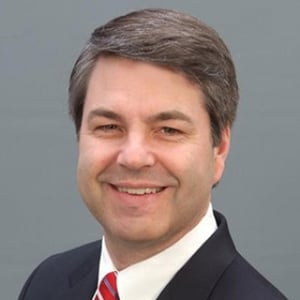
Partner and Co-Chair, Public Policy Group, Shook Hardy & Bacon LLP
Mark Behrens co-chairs Shook's Washington, DC-based Public Policy Practice Group and is a leading national expert on civil justice issues with over thirty years of experience. A substantial part of his practice is working to improve the civil litigation environment through state and federal legislation; in the courts through amicus curiae briefs; through legal scholarship and judicial education; and in the court of public opinion.
Mark is actively involved in civil justice reform efforts at the federal and state levels. He has testified before the U.S. Congress and most state legislatures on behalf of business and civil justice organizations. Mark also has an active amicus brief practice specializing in tort liability and civil justice issues. He has authored or co-authored over 150 amicus briefs in cases before the United States Supreme Court and federal and state appellate courts on behalf of business, civil justice, and defense lawyer organizations. In addition, Mark routinely files comments on behalf of business, civil justice, and defense lawyer organizations regarding potential changes to federal and state court rules. He chairs the International Association of Defense Counsel’s (IADC) Civil Justice Response Committee and serves on the Board of Directors of Lawyers for Civil Justice (LCJ).
Mark is a member of the American Law Institute (ALI). He received his J.D. in 1990 from Vanderbilt University Law School, where he was a member of the Vanderbilt Law Review. He received his B.A. in economics from the University of Wisconsin in 1987.

Bias, DEI, and CLE: Navigating the Constitutional Limits of Mandatory Training
Josh Blackman, William Jacobson, Daniel Lennington, Michael S. McGinniss
CLE credit for this event is available at On-Demand CLE. Jurisdictions increasingly require attorneys to...
AI Training vs. Copyright Law: Updates from the Copyright Office and the Courts
Meredith Filak Rose, Zvi Rosen, Regan Smith
Whether AI training and generation is a fair use under copyright law puts two important...
Topics
An AI Maker Was Just Found Liable for Copyright Infringement. What Does This Portend for Content Creators and AI Makers?
In a case decided on February 11, the makers of generative AI (GenAI), such as...
Developments in Artificial Intelligence and the Law
Minnesota Lawyers Chapter
Eagan, MNEthics CLE 2023: Recent Developments in Legal Ethics & Professional Responsibility
Margaret H. Downie, Andrew Halaby, Jennifer Perkins
CLE credit for this event is available at On-Demand CLE. In this CLE webinar, Judge Jennifer...
How Reliable are Corporate ESG Ratings?
James R. Lloyd, Lynn M. LoPucki, Paul N. Watkins, Justin Danhof
Environmental, Social, and Corporate Governance (ESG) investing has grown in popularity in recent years. As...
Administrative "Death Squads" for Patents? Assessing the New Administrative Procedures for Challenging Patents - Podcast
Peter Cicala, Gregory Dolin, Robert Greene Sterne, Mark F. Schultz
Property rights in patented inventions are being struck down at an unprecedented rate in a...
Del Monte and El Paso: Going to Revlon-Land With a Conflicted Financial Advisor
Note from the Editor: This article examines two recent cases in the Delaware Court of...
Noel Canning Decision on Recess Appointments - Podcast
John C. Eastman, Noel J. Francisco, Todd J. Zywicki, Dean Reuter
Given the breaking news, George Mason Law School Professor Todd Zywicki, Chapman University School of...
Philadelphia Tort Litigation: Forum Shopping and Venue Reform
Mark A. Behrens
The Federalist Society takes no position on particular legal or public policy initiatives. Any expressions...