
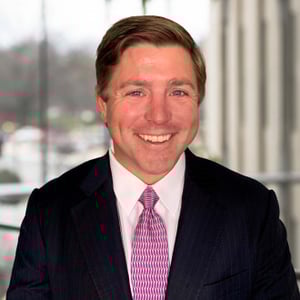
General Counsel, xAI and X
Partner, Gibson Dunn
Jeff Wall is Co-Chair of the Appellate and Constitutional Law Practice Group at Gibson Dunn and a former Acting Solicitor General of the United States. He has argued more than 30 cases before the U.S. Supreme Court and is widely regarded as one of the nation’s leading appellate advocates. Last year, he was named Appellate Attorney of the Year by The National Law Journal. He has been honored as The American Lawyer’s “Litigator of the Week” three times since 2024, for securing the elimination of a $650 million award against several national pharmacy chains; persuading the Delaware Supreme Court to reinstate Tesla CEO Elon Musk’s $60 billion incentive-compensation plan; and delivering what was described as a “knockout blow” to the Federal Communications Commission’s net neutrality rules in the Sixth Circuit after more than a decade of regulatory uncertainty.
A Fellow of the American Academy of Appellate Lawyers, Jeff is widely regarded for his ability to distill complex legal issues into clear, persuasive arguments. He is ranked Band 1 by Chambers USA, which has praised his “formidable reputation,” describing him as a “sophisticated” and “brilliant advocate” with an “impressive track record before the Supreme Court.” He is also a three-time Law360 Appellate MVP, most recently earning back-to-back honors in 2024 and 2025.
Jeff is a member of the American Law Institute, President of the Edward Coke Appellate Inn of Court, trustee of the Supreme Court Historical Society, and former member of the Advisory Committee on Procedures for the U.S. Court of Appeals for the D.C. Circuit. Before his service in the Solicitor General’s Office and time in private practice, Jeff clerked for Justice Clarence Thomas of the U.S. Supreme Court and Judge J. Harvie Wilkinson III of the U.S. Court of Appeals for the Fourth Circuit. Jeff has a robust pro bono practice and role in his community, serving on the board of the St. Albans School and its School of Public Service.
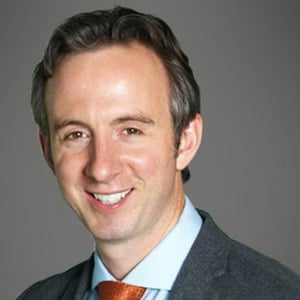
Professor of Law, University of Minnesota Law School
Professor James W. Coleman is a scholar of energy law. He specializes in North American energy infrastructure, transport, and trade. He is also a nonresident senior fellow at the American Enterprise Institute focused on energy policy.
Professor Coleman has testified before Congress on steps to speed up energy infrastructure permits. He also worked with a team of experts as part of Alberta's Royalty Review to revise the Canadian province's management of its vast oil and gas resources.
Before joining Minnesota, Professor Coleman taught at Southern Methodist University's Dedman School of Law, the University of Calgary’s law and business schools, and Harvard Law School. Earlier, he practiced environmental and appellate law at Sidley Austin in Washington, D.C., and clerked for the Honorable Steven M. Colloton of the U.S. Court of Appeals for the Eighth Circuit.
Professor Coleman received two degrees from Harvard University—a J.D. (cum laude) and B.A. in biology (magna cum laude with highest honors in the field). As a result of his undergraduate thesis on butterfly genetics, which required fieldwork in Central Asia, a species of lycaenid butterfly was named after him—Agrodiaetus ripartii colemani.
Vice President, Regulatory Affairs, NRG Energy
Travis Kavulla joined NRG after a decade of work as a policy wonk and government regulator. Previously, Travis headed up energy and environmental policy for the R Street Institute, a think tank, and before that was twice elected to public office as a utility commissioner in Montana. Travis has also held leadership roles in national policy circles, including as president of the National Association of Regulatory Utility Commissioners. During his work in public life, Travis has written dozens of articles and speeches on electricity policy and regulation.
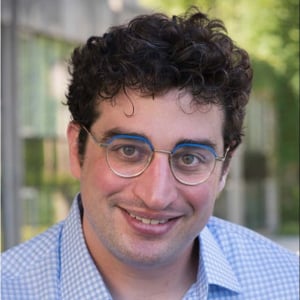
Associate Professor of Law, Yale Law School
Josh Macey teaches and writes about bankruptcy, environmental law, energy law, and the regulation of financial institutions. He is the three-time winner of the Morrison Prize for most influential environmental law article of the previous year (“Zombie Energy Laws,” 73 Vanderbilt Law Review; “Long Live the Federal Power Act’s Bright Line,” 134 Harvard Law Review; "Clean Energy Through Grid Reliability," 74 Stanford Law Review). He is also a co-author on one of the leading Energy Law casebooks and has been recognized by the American Bankruptcy Institute as one of the “40 Under 40” emerging leaders in insolvency practice.
Professor Macey graduated from Yale College, the London School of Economics, and Yale Law School. He has worked at Morgan Stanley and clerked for Judge J. Harvie Wilkinson III on the Court of Appeals for the Fourth Circuit
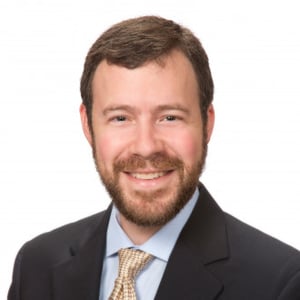
Director, Electricity Law Initiative, Harvard Law School
Ari Peskoe is the Director of the Electricity Law Initiative at the Harvard Law School Environmental and Energy Law Program. He has written extensively about electricity regulation, on issues ranging from Constitutional challenges to states’ energy laws to federal regulation of distributed energy resources. Prior to the Environmental and Energy Law Program, Ari was an associate at a law firm in Washington, D.C. where he litigated before the Federal Energy Regulatory Commission about the Western Energy Crisis. Before that, Ari was a Peace Corps Volunteer in Ghana and spent two years trying to bring the 2012 Olympics to New York. He received his J.D. from Harvard Law School and graduated from the University of Pennsylvania with degrees in electrical engineering and business.
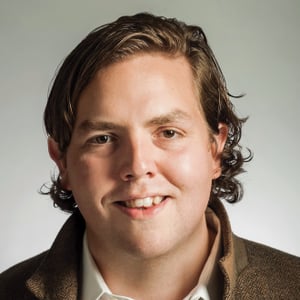
Harry Kalven, Jr. Professor of Law & Faculty Director, Constitutional Law Institute, University of Chicago Law School
William Baude is a Professor of Law and the Faculty Director of the Constitutional Law Institute at the University of Chicago Law School, where he teaches federal courts, constitutional law, and conflict of laws. His current research interests include different aspects of the Fourteenth Amendment (particularly both Section One and Section Three) and the nature of judicial discretion.
Among his other activities Baude is: the co-editor of two textbooks, The Constitution of the United States and Hart & Wechsler's Federal Courts in the Federal System; an Affiliated Scholar at the Center for the Study of Constitutional Originalism; a founding member of the Academic Freedom Alliance; a member of the American Law Institute; an occasional blogger at The Volokh Conspiracy; and a podcaster on Divided Argument. He also recently served on the Presidential Commission on the Supreme Court of the United States.
Professor Baude received his BS in Mathematics from the University of Chicago and his JD from Yale Law School. He then clerked for then-Judge Michael McConnell on the United States Court of Appeals, and Chief Justice John Roberts on the United States Supreme Court. Before joining the Chicago faculty, he was a fellow at the Stanford Constitutional Law Center, and a lawyer in Washington, DC.
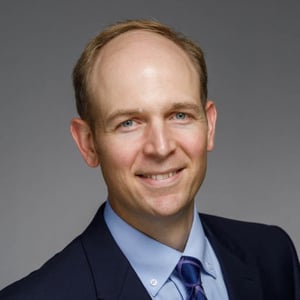
Professor of Law, Notre Dame Law School
Professor Samuel L. Bray joined the Notre Dame Law School faculty in 2018. Before coming to Notre Dame, he was an assistant professor of law at UCLA from 2011 to 2016, and a professor of law from 2016 to 2018. In addition, he was a Harrington Faculty Fellow at the University of Texas-Austin for the 2016-2017 academic year.
Bray is a graduate of the University of Chicago Law School, and he clerked for then-Judge Michael W. McConnell on the U.S. Court of Appeals for the Tenth Circuit. After clerking, he practiced law at Mayer Brown LLP, was an associate-in-law at Columbia Law School, and was executive director of the Constitutional Law Center at Stanford Law School.

Laurence A. Tisch Professor of Law and Director, Classical Liberal Institute, New York University School of Law; Director, Classical Liberal Institute, Civitas Institute University of Texas at Austin
Richard A. Epstein is the Laurence A. Tisch Professor of Law, at New York University, a senior research fellow at the Civitas Institute at the University of Texas Austin, and a senior Lecturer, the University of Chicago. He received an LL.D., h.c . from the University of Ghent, 2003 , and an LLD h.c . from the University of Siegen in 2018 and the Bradley Prize in 2011. He has been a member of the American Academy of Arts and Sciences since 1985. He has edited both the Journal of Legal Studies (1981-1991) and the Journal of Law and Economics (1991-2001). He is also a founder and director of the Classical Liberal Institute at NYU Law School. His most recent book is The Classical Liberal Constitution: The Uncertain Quest for Limited Government (2014). His other books include Takings: Private Property and the Power of Eminent Domain ( 1985); Bargaining with the State (1993); Simple Rules for a Complex World (1995); Principles for a Free Society: Reconciling Individual Liberty and the Common Good (1998); Skepticism and Freedom: A Modern Theory of Classical Liberalism (2003); Design for Liberty: Private Property, Public Administration and the Rule of Law (2011), and most recently, The Myth of Birthright citizenship—and Beyond (2026). He has taught courses in , administrative law, antitrust, constitutional, contracts, environmental law, land use planning; real property, torts and water law. He has written and spoken extensively on a wide range of topics, and is writes a regular column for Defining Ideas.
Assistant Professor of Law, USC Gould School of Law
Erik Hovenkamp’s research focuses on antitrust; IP and innovation policy; law and economics; and industrial organization. His work has been published in a range of leading law reviews and economics journals, including the Yale Law Journal; the Journal of Industrial Economics; and the University of Chicago Law Review, among many others.
Hovenkamp earned a PhD in economics and a JD, both from Northwestern University. Prior to joining the USC faculty in 2019, he was a postdoctoral fellow at Harvard Law School in the Project on the Foundations of Private Law and a Visiting Fellow at Yale Law School in the Information Society Project. In 2018 he was a Visiting Lecturer at Boston University School of Law.
Stevenson Bernard Professor, George Washington University Law School
The Honorable F. Scott Kieff is the Stevenson Bernard Professor at George Washington University Law School and a Visiting Fellow at Stanford University’s Hoover Institution.
He served as Commissioner of the U.S. International Trade Commission from 2013-2017. He also served during the Bush, Obama, and Trump Administrations in the part-time leadership of the national security defense-intelligence community.
He was previously a professor of law and medicine at Washington University in Saint Louis and a Senior Fellow at Hoover. A former law clerk to U.S. Circuit Judge Giles S. Rich, he is a graduate of Penn Law School and MIT, where he studied molecular biology and microeconomics. He was elected to the European Academy of Sciences and Arts in 2012 and the Academia Europaea in 2024.
His private sector work through Kieff Strategies LLC (www.kieffstrategies.com) provides neutral services including mediation and compliance, and expert services including crisis management, advising, and testimony.
Professor of the Practice of Law, Stanford Law School
Doug Melamed practiced law for 43 years before spending the 2014-15 academic year at the Law School as the Herman Phleger Visiting Professor of Law. He was appointed Professor of the Practice of Law in 2015.
From 2009 until 2014, Professor Melamed was Senior Vice President and General Counsel of Intel Corporation and was responsible for overseeing Intel’s legal, government affairs and corporate affairs departments. Prior to joining Intel in 2009, he was a partner in the Washington, D.C., office of WilmerHale, a global law firm in which he served as a chair of the Antitrust and Competition Practice Group. His practice included appellate and trial court litigation, counseling, and representing clients in matters before government law enforcement and regulatory agencies. He joined WilmerHale’s predecessor in 1971. From 1996 to 2001, Professor Melamed served in the U.S. Department of Justice as Acting Assistant Attorney General in charge of the Antitrust Division and, before that, as Principal Deputy Assistant Attorney General.
Professor Melamed has received numerous professional awards and honors. He has been the Distinguished Visitor from Practice and an adjunct professor at the Georgetown University Law Center, and he has authored numerous articles on antitrust and on law and economics. He is a member of the boards of directors of the Nasdaq exchanges and the American Law Institute and a Contributing Editor of the Antitrust Law Journal. He was for many years a member of the Yale University Council and a member of the board of trustees of Sidwell Friends School in Washington, D.C. After graduating from law school, he clerked for Judge Charles M. Merrill of the U.S. Court of Appeals for the Ninth Circuit.

Executive Vice President, The Federalist Society
Dean Reuter is Executive Vice President at the Federalist Society for Law and Public Policy Studies. He has served in two federal government agency Offices of the Inspector General, as Counsel to the Inspector General and Deputy Inspector General, responsible for policing the use of federal funds granted and contracted through those agencies. As such, he helped conduct and oversee criminal investigations across the country. He is the principal author of the non-fiction book, The Hidden Nazi: The Untold Story of America's Deal with the Devil, and editor of Liberty’s Nemesis: The Unchecked Expansion of the State and Confronting Terror: 9/11 and the Future of American National Security. He was appointed by the President and served as Vice-Chairman of the Board of Directors of the Corporation for National and Community Service, and recently served as an appointee on the U.S. Commission on Presidential Scholars. He is a graduate of Hood College (BA with Honors) and the University of Maryland School of Law.
Professor of Law, University of Minnesota Law School
Professor James W. Coleman is a scholar of energy law. He specializes in North American energy infrastructure, transport, and trade. He is also a nonresident senior fellow at the American Enterprise Institute focused on energy policy.
Professor Coleman has testified before Congress on steps to speed up energy infrastructure permits. He also worked with a team of experts as part of Alberta's Royalty Review to revise the Canadian province's management of its vast oil and gas resources.
Before joining Minnesota, Professor Coleman taught at Southern Methodist University's Dedman School of Law, the University of Calgary’s law and business schools, and Harvard Law School. Earlier, he practiced environmental and appellate law at Sidley Austin in Washington, D.C., and clerked for the Honorable Steven M. Colloton of the U.S. Court of Appeals for the Eighth Circuit.
Professor Coleman received two degrees from Harvard University—a J.D. (cum laude) and B.A. in biology (magna cum laude with highest honors in the field). As a result of his undergraduate thesis on butterfly genetics, which required fieldwork in Central Asia, a species of lycaenid butterfly was named after him—Agrodiaetus ripartii colemani.
Vice President, Regulatory Affairs, NRG Energy
Travis Kavulla joined NRG after a decade of work as a policy wonk and government regulator. Previously, Travis headed up energy and environmental policy for the R Street Institute, a think tank, and before that was twice elected to public office as a utility commissioner in Montana. Travis has also held leadership roles in national policy circles, including as president of the National Association of Regulatory Utility Commissioners. During his work in public life, Travis has written dozens of articles and speeches on electricity policy and regulation.
Associate Professor of Law, Yale Law School
Josh Macey teaches and writes about bankruptcy, environmental law, energy law, and the regulation of financial institutions. He is the three-time winner of the Morrison Prize for most influential environmental law article of the previous year (“Zombie Energy Laws,” 73 Vanderbilt Law Review; “Long Live the Federal Power Act’s Bright Line,” 134 Harvard Law Review; "Clean Energy Through Grid Reliability," 74 Stanford Law Review). He is also a co-author on one of the leading Energy Law casebooks and has been recognized by the American Bankruptcy Institute as one of the “40 Under 40” emerging leaders in insolvency practice.
Professor Macey graduated from Yale College, the London School of Economics, and Yale Law School. He has worked at Morgan Stanley and clerked for Judge J. Harvie Wilkinson III on the Court of Appeals for the Fourth Circuit
Director, Electricity Law Initiative, Harvard Law School
Ari Peskoe is the Director of the Electricity Law Initiative at the Harvard Law School Environmental and Energy Law Program. He has written extensively about electricity regulation, on issues ranging from Constitutional challenges to states’ energy laws to federal regulation of distributed energy resources. Prior to the Environmental and Energy Law Program, Ari was an associate at a law firm in Washington, D.C. where he litigated before the Federal Energy Regulatory Commission about the Western Energy Crisis. Before that, Ari was a Peace Corps Volunteer in Ghana and spent two years trying to bring the 2012 Olympics to New York. He received his J.D. from Harvard Law School and graduated from the University of Pennsylvania with degrees in electrical engineering and business.
Laurence A. Tisch Professor of Law and Director, Classical Liberal Institute, New York University School of Law; Director, Classical Liberal Institute, Civitas Institute University of Texas at Austin
Richard A. Epstein is the Laurence A. Tisch Professor of Law, at New York University, a senior research fellow at the Civitas Institute at the University of Texas Austin, and a senior Lecturer, the University of Chicago. He received an LL.D., h.c . from the University of Ghent, 2003 , and an LLD h.c . from the University of Siegen in 2018 and the Bradley Prize in 2011. He has been a member of the American Academy of Arts and Sciences since 1985. He has edited both the Journal of Legal Studies (1981-1991) and the Journal of Law and Economics (1991-2001). He is also a founder and director of the Classical Liberal Institute at NYU Law School. His most recent book is The Classical Liberal Constitution: The Uncertain Quest for Limited Government (2014). His other books include Takings: Private Property and the Power of Eminent Domain ( 1985); Bargaining with the State (1993); Simple Rules for a Complex World (1995); Principles for a Free Society: Reconciling Individual Liberty and the Common Good (1998); Skepticism and Freedom: A Modern Theory of Classical Liberalism (2003); Design for Liberty: Private Property, Public Administration and the Rule of Law (2011), and most recently, The Myth of Birthright citizenship—and Beyond (2026). He has taught courses in , administrative law, antitrust, constitutional, contracts, environmental law, land use planning; real property, torts and water law. He has written and spoken extensively on a wide range of topics, and is writes a regular column for Defining Ideas.
Assistant Professor of Law, USC Gould School of Law
Erik Hovenkamp’s research focuses on antitrust; IP and innovation policy; law and economics; and industrial organization. His work has been published in a range of leading law reviews and economics journals, including the Yale Law Journal; the Journal of Industrial Economics; and the University of Chicago Law Review, among many others.
Hovenkamp earned a PhD in economics and a JD, both from Northwestern University. Prior to joining the USC faculty in 2019, he was a postdoctoral fellow at Harvard Law School in the Project on the Foundations of Private Law and a Visiting Fellow at Yale Law School in the Information Society Project. In 2018 he was a Visiting Lecturer at Boston University School of Law.
Stevenson Bernard Professor, George Washington University Law School
The Honorable F. Scott Kieff is the Stevenson Bernard Professor at George Washington University Law School and a Visiting Fellow at Stanford University’s Hoover Institution.
He served as Commissioner of the U.S. International Trade Commission from 2013-2017. He also served during the Bush, Obama, and Trump Administrations in the part-time leadership of the national security defense-intelligence community.
He was previously a professor of law and medicine at Washington University in Saint Louis and a Senior Fellow at Hoover. A former law clerk to U.S. Circuit Judge Giles S. Rich, he is a graduate of Penn Law School and MIT, where he studied molecular biology and microeconomics. He was elected to the European Academy of Sciences and Arts in 2012 and the Academia Europaea in 2024.
His private sector work through Kieff Strategies LLC (www.kieffstrategies.com) provides neutral services including mediation and compliance, and expert services including crisis management, advising, and testimony.
Professor of the Practice of Law, Stanford Law School
Doug Melamed practiced law for 43 years before spending the 2014-15 academic year at the Law School as the Herman Phleger Visiting Professor of Law. He was appointed Professor of the Practice of Law in 2015.
From 2009 until 2014, Professor Melamed was Senior Vice President and General Counsel of Intel Corporation and was responsible for overseeing Intel’s legal, government affairs and corporate affairs departments. Prior to joining Intel in 2009, he was a partner in the Washington, D.C., office of WilmerHale, a global law firm in which he served as a chair of the Antitrust and Competition Practice Group. His practice included appellate and trial court litigation, counseling, and representing clients in matters before government law enforcement and regulatory agencies. He joined WilmerHale’s predecessor in 1971. From 1996 to 2001, Professor Melamed served in the U.S. Department of Justice as Acting Assistant Attorney General in charge of the Antitrust Division and, before that, as Principal Deputy Assistant Attorney General.
Professor Melamed has received numerous professional awards and honors. He has been the Distinguished Visitor from Practice and an adjunct professor at the Georgetown University Law Center, and he has authored numerous articles on antitrust and on law and economics. He is a member of the boards of directors of the Nasdaq exchanges and the American Law Institute and a Contributing Editor of the Antitrust Law Journal. He was for many years a member of the Yale University Council and a member of the board of trustees of Sidwell Friends School in Washington, D.C. After graduating from law school, he clerked for Judge Charles M. Merrill of the U.S. Court of Appeals for the Ninth Circuit.
Executive Vice President, The Federalist Society
Dean Reuter is Executive Vice President at the Federalist Society for Law and Public Policy Studies. He has served in two federal government agency Offices of the Inspector General, as Counsel to the Inspector General and Deputy Inspector General, responsible for policing the use of federal funds granted and contracted through those agencies. As such, he helped conduct and oversee criminal investigations across the country. He is the principal author of the non-fiction book, The Hidden Nazi: The Untold Story of America's Deal with the Devil, and editor of Liberty’s Nemesis: The Unchecked Expansion of the State and Confronting Terror: 9/11 and the Future of American National Security. He was appointed by the President and served as Vice-Chairman of the Board of Directors of the Corporation for National and Community Service, and recently served as an appointee on the U.S. Commission on Presidential Scholars. He is a graduate of Hood College (BA with Honors) and the University of Maryland School of Law.
Laurence A. Tisch Professor of Law and Director, Classical Liberal Institute, New York University School of Law; Director, Classical Liberal Institute, Civitas Institute University of Texas at Austin
Richard A. Epstein is the Laurence A. Tisch Professor of Law, at New York University, a senior research fellow at the Civitas Institute at the University of Texas Austin, and a senior Lecturer, the University of Chicago. He received an LL.D., h.c . from the University of Ghent, 2003 , and an LLD h.c . from the University of Siegen in 2018 and the Bradley Prize in 2011. He has been a member of the American Academy of Arts and Sciences since 1985. He has edited both the Journal of Legal Studies (1981-1991) and the Journal of Law and Economics (1991-2001). He is also a founder and director of the Classical Liberal Institute at NYU Law School. His most recent book is The Classical Liberal Constitution: The Uncertain Quest for Limited Government (2014). His other books include Takings: Private Property and the Power of Eminent Domain ( 1985); Bargaining with the State (1993); Simple Rules for a Complex World (1995); Principles for a Free Society: Reconciling Individual Liberty and the Common Good (1998); Skepticism and Freedom: A Modern Theory of Classical Liberalism (2003); Design for Liberty: Private Property, Public Administration and the Rule of Law (2011), and most recently, The Myth of Birthright citizenship—and Beyond (2026). He has taught courses in , administrative law, antitrust, constitutional, contracts, environmental law, land use planning; real property, torts and water law. He has written and spoken extensively on a wide range of topics, and is writes a regular column for Defining Ideas.
Assistant Professor of Law, USC Gould School of Law
Erik Hovenkamp’s research focuses on antitrust; IP and innovation policy; law and economics; and industrial organization. His work has been published in a range of leading law reviews and economics journals, including the Yale Law Journal; the Journal of Industrial Economics; and the University of Chicago Law Review, among many others.
Hovenkamp earned a PhD in economics and a JD, both from Northwestern University. Prior to joining the USC faculty in 2019, he was a postdoctoral fellow at Harvard Law School in the Project on the Foundations of Private Law and a Visiting Fellow at Yale Law School in the Information Society Project. In 2018 he was a Visiting Lecturer at Boston University School of Law.
Stevenson Bernard Professor, George Washington University Law School
The Honorable F. Scott Kieff is the Stevenson Bernard Professor at George Washington University Law School and a Visiting Fellow at Stanford University’s Hoover Institution.
He served as Commissioner of the U.S. International Trade Commission from 2013-2017. He also served during the Bush, Obama, and Trump Administrations in the part-time leadership of the national security defense-intelligence community.
He was previously a professor of law and medicine at Washington University in Saint Louis and a Senior Fellow at Hoover. A former law clerk to U.S. Circuit Judge Giles S. Rich, he is a graduate of Penn Law School and MIT, where he studied molecular biology and microeconomics. He was elected to the European Academy of Sciences and Arts in 2012 and the Academia Europaea in 2024.
His private sector work through Kieff Strategies LLC (www.kieffstrategies.com) provides neutral services including mediation and compliance, and expert services including crisis management, advising, and testimony.
Professor of the Practice of Law, Stanford Law School
Doug Melamed practiced law for 43 years before spending the 2014-15 academic year at the Law School as the Herman Phleger Visiting Professor of Law. He was appointed Professor of the Practice of Law in 2015.
From 2009 until 2014, Professor Melamed was Senior Vice President and General Counsel of Intel Corporation and was responsible for overseeing Intel’s legal, government affairs and corporate affairs departments. Prior to joining Intel in 2009, he was a partner in the Washington, D.C., office of WilmerHale, a global law firm in which he served as a chair of the Antitrust and Competition Practice Group. His practice included appellate and trial court litigation, counseling, and representing clients in matters before government law enforcement and regulatory agencies. He joined WilmerHale’s predecessor in 1971. From 1996 to 2001, Professor Melamed served in the U.S. Department of Justice as Acting Assistant Attorney General in charge of the Antitrust Division and, before that, as Principal Deputy Assistant Attorney General.
Professor Melamed has received numerous professional awards and honors. He has been the Distinguished Visitor from Practice and an adjunct professor at the Georgetown University Law Center, and he has authored numerous articles on antitrust and on law and economics. He is a member of the boards of directors of the Nasdaq exchanges and the American Law Institute and a Contributing Editor of the Antitrust Law Journal. He was for many years a member of the Yale University Council and a member of the board of trustees of Sidwell Friends School in Washington, D.C. After graduating from law school, he clerked for Judge Charles M. Merrill of the U.S. Court of Appeals for the Ninth Circuit.
Executive Vice President, The Federalist Society
Dean Reuter is Executive Vice President at the Federalist Society for Law and Public Policy Studies. He has served in two federal government agency Offices of the Inspector General, as Counsel to the Inspector General and Deputy Inspector General, responsible for policing the use of federal funds granted and contracted through those agencies. As such, he helped conduct and oversee criminal investigations across the country. He is the principal author of the non-fiction book, The Hidden Nazi: The Untold Story of America's Deal with the Devil, and editor of Liberty’s Nemesis: The Unchecked Expansion of the State and Confronting Terror: 9/11 and the Future of American National Security. He was appointed by the President and served as Vice-Chairman of the Board of Directors of the Corporation for National and Community Service, and recently served as an appointee on the U.S. Commission on Presidential Scholars. He is a graduate of Hood College (BA with Honors) and the University of Maryland School of Law.
United States Attorney, Eastern District of Kentucky
Robert M. Duncan, Jr. is the United States Attorney for the Eastern District of Kentucky. He was nominated by President Donald Trump on August 3, 2017, and confirmed by the United States Senate on November 9, 2017.
Prior to his appointment, Duncan had served for more than a decade as an Assistant United States Attorney in the Eastern District of Kentucky. Beginning in 2011 and continuing until his appointment as United States Attorney, Duncan focused on the prosecution of Organized Crime Drug Enforcement Task Force cases, working with federal, state, and local law enforcement personnel to disrupt and dismantle complex drug trafficking and money laundering organizations operating in the District and elsewhere. From 2007 to 2013, Duncan served as coordinator of the office’s Project Safe Neighborhoods Program, a Department of Justice initiative to reduce gun and gang crime through education, community outreach, and prosecution.
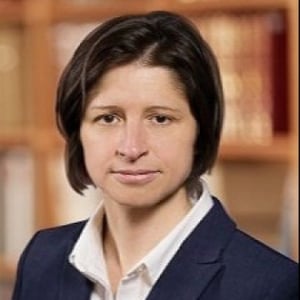
Attorney, Sheehey Furlong & Behm P.C.
Christina E. Nolan, the former United States Attorney for Vermont, is a principal in the firm. She focuses on complex civil litigation, defense of government enforcement actions, false claims act defense and enforcement, white collar and serious felony criminal defense, and internal investigations. Having previously served as a state and federal prosecutor, Christina has tried more than a dozen cases to juries, regularly handled evidentiary hearings before federal and state trial courts, and appeared several times before the United States Court of Appeals for the Second Circuit.
Christina, a native Vermonter, was employed from 2010 to 2021 at the U.S. Attorney’s Office in Vermont (USAO), serving first as an Assistant U.S. Attorney in the Criminal Division for nearly 8 years, and then leading the office as U.S. Attorney from November 2017 until March 2021. Following the bipartisan recommendation of Senator Patrick Leahy and Governor Phil Scott, Christina was nominated for the chief law enforcement officer post by the President and unanimously confirmed by the U.S. Senate. As U.S. Attorney, Christina supervised all federal criminal and civil investigations and prosecutions in Vermont, served as chief spokesperson for federal law enforcement and the USAO, and partnered with community leaders and government officials to promote criminal justice policies and launch community-based and law enforcement initiatives.
U.S. Attorney General William Barr selected Christina as one of a dozen U.S. Attorneys to sit on the Attorney General’s Advisory Committee, which advises the Attorney General on all aspects of criminal and civil policy. Christina chaired the Advisory Committee’s Controlled Substances Subcommittee (CSS), and was a member of its Health Care Fraud and Domestic Violence Working Groups. Christina also cochaired the Justice Department’s initiative to combat sexual harassment in housing during the pandemic and helped lead the Attorney General’s effort to implement police reform pursuant to the 2020 Executive Order on Safe Policing for Safe Communities. In her capacity as leader of the CSS, Christina testified before the U.S. Senate Judiciary Committee concerning fentanyl enforcement policy and proposed fentanyl legislation. In Vermont, Christina sat on Governor Scott’s Opioid Coordination, Substance Misuse, and Emergency Preparedness Councils and cochaired the Vermont Human Trafficking Task Force.
As U.S. Attorney, Christina actively supervised a range of criminal and civil cases involving drug trafficking; firearms and violence; human trafficking; organized crime; child exploitation; wire, health care, bank, and securities fraud; embezzlement and money laundering; government contracting fraud; medical malpractice; and federal False Claims Act enforcement. Under Christina’s leadership, the USAO resolved criminal felony antikickback charges and civil False Claims Act claims against Purdue Pharma L.P. as part of the largest criminal resolution ever reached against a pharmaceutical company; charged the largest fraud case in Vermont history relating to the EB-5/Jay Peak financial scandal in the Northeast Kingdom and obtained a guilty plea from the lead defendant; and secured unprecedented False Claims Act civil and criminal settlements against healthcare companies that garnered national attention.
As a federal prosecutor, Christina investigated and prosecuted financial, narcotics, violent, child exploitation, and other crimes. She tried six federal cases to juries, each trial resulting in conviction. Among her most notable cases was the prosecution and conviction of Richard Monroe for the drug-related murder of University of Vermont student, Kevin DeOliveira, in Burlington. Monroe is serving a 25-year sentence. As Assistant U.S. Attorney, Christina was also tasked with oversight of all opioid trafficking prosecutions and investigations in Eastern Vermont and served as the USAO’s Violent Crime Coordinator.
Before joining the USAO, Christina served as an Assistant District Attorney in Middlesex County, Massachusetts, where she tried numerous cases to juries and prosecuted a variety of state crimes, including DUI, drug trafficking, firearms, and domestic violence matters. From 2005 to 2009, Nolan worked as a litigation associate at Goodwin Procter, LLP, a large Boston law firm. In that role, she represented white collar defendants, conducted internal investigation, supervised complex civil litigation, and played a managerial role in the representation of a corporate executive in a high-profile federal securities fraud prosecution. The securities fraud case ended in dismissal of charges against the client.
After law school, Christina clerked for The Honorable F. Dennis Saylor, IV of the United States District Court for the District of Massachusetts.
Christina graduated magna cum laude from Boston College Law School in 2004, where she served a Senior Editor on the Boston College Law Review. She earned her Bachelor’s degrees in political science and history from the University of Vermont, where she graduated summa cum laude.
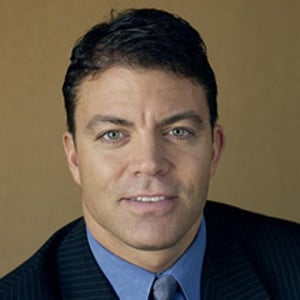
Daniel Levin Professor of Public Policy, The University of Chicago
Tomas J. Philipson is the Daniel Levin Professor of Public Policy Studies at the University of Chicago Harris School of Public Policy and directs the Becker Friedman Institute’s Program on Foundational Research in Health Care Markets and Policies within the Health Economics Initiative. He is also an associate member of the Department of Economics and a former senior lecturer at the Law School. His research focuses on health economics, and he teaches master's and PhD courses in microeconomics and health economics at the University.
Philipson is a US citizen but was born and raised in Sweden where he obtained his undergraduate degree in mathematics at Uppsala University. He received his MA and PhD in economics from the Wharton School at the University of Pennsylvania. He has been a visiting faculty member at Yale University and a visiting senior fellow at the World Bank.
Philipson has served in several public sector positions. He served in the second Bush Administration as the senior economic advisor to the head of the Food and Drug Administration and subsequently as the senior economic advisor to the head of the Centers for Medicare and Medicaid Services. He served as a health care advisor to Senator John McCain during his campaign for President of the United States. He was appointed by the Speaker of the US House of Representatives to the Key Indicator Commission created by the Affordable Care Act. He has served as a scientific advisor to Congress on the 21st Century Cures legislation and on the steering committee of Vice President Biden's Cancer Moon Shot Initiative.
Philipson is the recipient of numerous international and national research awards. He has twice been the recipient of the highest honor of his field: the Kenneth Arrow Award of the International Health Economics Association (for best paper in the field of health economics). In addition, he was awarded the Garfield Award by Research America, The Prêmio Haralambos Simeonidisand from the Brazilian Economic Association, and the Distinguished Economic Research Award from the Milken Institute. Philipson has been awarded numerous grants and awards from both public and private agencies, including the National Institutes of Health, the National Science Foundation, the Rockefeller Foundation, the Alfred P. Sloan Foundation, the John M. Olin Foundation, and the Royal Swedish Academy of Sciences.
Philipson is a founding editor of the journal Forums for Health Economics & Policy of Berkeley Electronic Press and has been on the editorial board of the journal Health Economics and The European Journal of Health Economics. His research has been published widely in all leading academic journals of economics such as the American Economic Review, Journal of Political Economy, Quarterly Journal of Economics, Journal of Economic Theory, Journal of Health Economics, Health Affairs, and Econometrica.
Philipson is a fellow, board member, or associate of a number of other organizations outside the University of Chicago, including the National Bureau of Economic Research, the American Enterprise Institute, the Manhattan Institute (where he was chairman of Project FDA), the Heartland Institute, the Milken Institute, the RAND Corporation, and the USC Shaeffer Center for Health Economics and Policy. At the University of Chicago, he is affiliated with the John M. Olin Program of Law & Economics, the George J. Stigler Center for the Study of the Economy and the State, the Population Research Center, and NORC. He has served on the University-wide Council on Research and on the Advisory Committee to the University's Office of Intellectual Property and Technology Transfer.
Philipson has done executive consulting for both private corporations, including many US Fortune 100 companies, as well as government organizations domestically and internationally. This has included work for the President's Council on Science and Technology, the National Academy of Sciences, and the UK National Health Service. It has also included work for multi-lateral organizations such as the World Bank, the World Intellectual Property Organization, and the OECD. In 2007 he co-founded Precision Heath Economics LLC, which was sold in 2015 to Precision for Medicine Group LLC.
Philipson’s research is frequently disseminated through the popular press. He is a monthly op-ed contributor for Forbes magazine and frequently appears in numerous popular media outlets such as CNN, CBS, FOX News, Bloomberg TV, National Public Radio, New York Times, Wall Street Journal, Businessweek, The Economist, Washington Post, Investor's Business Daily, and USA Today. He is a frequent keynote speaker at many domestic and international health care events and conferences.
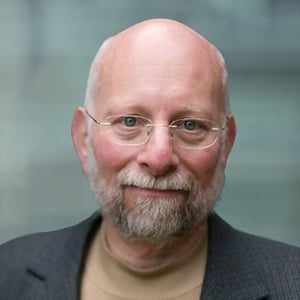
Senior Fellow, Cato Institute
Jeffrey A. Singer is a senior fellow at the Cato Institute and works in the Department of Health Policy Studies. He is principal and founder of Valley Surgical Clinics Ltd., the largest and oldest group private surgical practice in Arizona, and has been in private practice as a general surgeon for more than 35 years.
He is also a visiting fellow at the Goldwater Institute in Phoenix. Singer is a member of the Board of Scientific Advisors of the American Council on Science and Health. From 1994 to 2016, he was a regular contributor to Arizona Medicine, the journal of the Arizona Medical Association. He served on the Advisory Board Council of the Center for Political Thought and Leadership at Arizona State University from 2014 to 2018 and is an adjunct instructor in the Program on Political History and Leadership at ASU. He writes and speaks extensively on regional and national public policy, with a specific focus on the areas of health care policy and the harmful effects of drug prohibition.
He received his BA from Brooklyn College (City University of New York) and his MD from New York Medical College. He is a fellow of the American College of Surgeons.

From UChicago to DOJ: A Conversation with James Burnham and Jeff Wall
Chicago Student Chapter
Chicago, ILLuncheon Panel: Climate Change and the Free Market
James W. Coleman, Travis Kavulla, Joshua C. Macey, Ari Peskoe
The energy sector is undergoing a period of profound change. In the 1990s and 2000s...
Luncheon Panel: Climate Change and the Free Market
Washington, DC25th Annual Federalist Society Faculty Conference
Washington, DCThe Presentation of the Second Annual Eaton Award at The University of Chicago
Chicago Student Chapter
Chicago, ILSecuring Innovation: How Patent Law Shapes U.S. National and Economic Security
Richard A. Epstein, Erik Hovenkamp, F. Scott Kieff, A. Douglas Melamed, Dean Reuter
Intellectual property (IP) leadership is critical to U.S. economic and national security. Patent leadership in...
Securing Innovation: How Patent Law Shapes U.S. National and Economic Security
Richard A. Epstein, Erik Hovenkamp, F. Scott Kieff, A. Douglas Melamed, Dean Reuter
Intellectual property (IP) leadership is critical to U.S. economic and national security. Patent leadership in...
Securing Innovation: How Patent Law Shapes U.S. National and Economic Security
TeleforumTopics
The 2022 Joseph Story Award
The Federalist Society is delighted to announce that the winner of the 2022 Joseph Story...
Opioids in 2021: Enforcement Strategies and Policy Prescriptions
Robert M. Duncan, Christina E. Nolan, Tomas J. Philipson, Jeffrey A. Singer
Opioid deaths in the US rose 29% during the course of the recent COVID pandemic....