

Judge, United States Court of Appeals, Third Circuit
Stephanos Bibas is a judge on the U.S. Court of Appeals for the Third Circuit. Judge Bibas was previously a professor of law and criminology at the University of Pennsylvania Law School. As director of the Penn Law Supreme Court Clinic, he argued six cases before the Supreme Court of the United States and filed briefs in dozens of others. He graduated summa cum laude and Phi Beta Kappa from Columbia University in 1989 with a B.A. in political theory and from Oxford University in 1991 with a B.A. in jurisprudence. He then earned his J.D. from Yale Law School in 1994.
After graduating from Yale Law, Judge Bibas clerked for Judge Patrick Higginbotham of the U.S. Court of Appeals for the Fifth Circuit and Justice Anthony Kennedy on the Supreme Court and was a litigation associate at Covington & Burling LLP in Washington, D.C. Thereafter, Judge Bibas served as an Assistant U.S. Attorney in the Southern District of New York, where he successfully prosecuted the world’s leading expert in Tiffany stained glass for hiring a grave robber to steal priceless Tiffany windows from cemeteries. Before his tenure at Penn Law, Judge Bibas taught at the University of Chicago Law School and the University of Iowa College of Law and was a research fellow at Yale Law School. He has published two books and seventy scholarly articles.
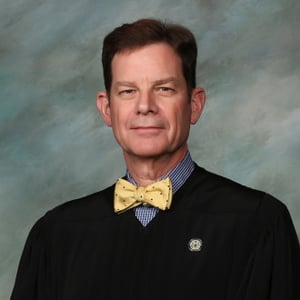
Judge, United States Court of Appeals, Fifth Circuit
Kurt D. Engelhardt was nominated for a seat on the United States Fifth Circuit Court of Appeals by President Donald J. Trump, confirmed by the Senate on May 9, 2018, and officially sworn in as a United States Circuit Judge on May 15, 2018. Judge Engelhardt is based in New Orleans, Louisiana, at the John Minor Wisdom U.S. Court of Appeals Building.
Judge Engelhardt was previously nominated for a seat on the United States District Court for the Eastern District of Louisiana by President George W. Bush, and upon confirmation, was officially sworn in as a United States District Judge on December 14, 2001. While a District Judge, Judge Engelhardt served by designation on nine different panels of the United States Fifth Circuit Court of Appeals. On October 1, 2015, he became Chief United States District Court Judge for the Eastern District of Louisiana, a position he held until joining the United States Fifth Circuit on May 15, 2018.
Judge Engelhardt attended Brother Martin High School in New Orleans, where he graduated with honors in 1978. He attended Louisiana State University in Baton Rouge, from which he graduated with a Bachelor of Arts in history in 1982. In the Fall of 1982, Judge Engelhardt commenced his legal education at the Paul M. Hebert Law Center at Louisiana State University, graduating in May of 1985.
Judge Engelhardt served a two-year clerkship with Judge Charles Grisbaum, Jr. of the Louisiana Fifth Circuit Court of Appeal, located in Gretna, Louisiana. From there, he became associated with the Metairie law firm of Little, Metzger and Lamz (APLC), and worked in the downtown New Orleans office of that firm in 1988-89. He then joined the law firm of Hailey, McNamara, Hall, Larmann & Papale, became a partner in July 1998, and practiced there until his confirmation to the federal bench in December 2001.
In 1995, Judge Engelhardt was nominated for a spot on the nine-member Louisiana Judiciary Commission, and was appointed by the Governor to serve a four-year term on that body. In 1998, he was elected by his fellow commission members to serve as Chairman, in which capacity he presided over the Commission’s trials of formal charges lodged against sitting state judges. His work on the Judiciary Commission has been cited for its excellence by the Louisiana Supreme Court.
Judge Engelhardt is a member of the Advisory Board of the New Orleans Chapter of The Federalist Society; a past member of the United States Judicial Conference Committee on Federal-State Jurisdiction; a member of the Board of Directors (and past president) of the New Orleans Chapter of the Federal Bar Association; a member of the American Judicature Society; and a member of the Federal Circuit Bar Association. He has served on the Fifth Circuit's Criminal Pattern Jury Instruction Committee, charged with updating and/or drafting pattern jury instructions for district judges within the jurisdiction of the United States Fifth Circuit. Recently, he was appointed by Fifth Circuit Chief Judge Carl Stewart to chair the Circuit's Judicial Impairment Protocol Committee, established to create a framework for the judiciary to internally address disabilities of all types which may impact a judge's ability to handle his/her docket.
Judge Engelhardt is also a member of the American Bar Association, Jefferson Bar Association, Louisiana State Bar Association, New Orleans Bar Association, and the Phi Alpha Delta Law Fraternity. Judge Engelhardt serves on the Board of Directors of the Cancer Association of Greater New Orleans.
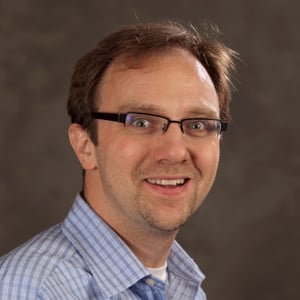
Associate Director of Litigation, National Immigrant Justice Center
Mark Fleming is the Associate Director of Litigation at the National Immigrant Justice Center (NIJC) located in Chicago, Illinois. Mr. Fleming focuses on litigation and public policy at the intersection of state and local law enforcement and civil immigration enforcement. He has litigated multiple class actions related to Immigration and Customs Enforcement’s (ICE) use of immigration detainers. Mr. Fleming provided technical expertise in the drafting and passage of Chicago’s Welcoming City Ordinance in 2012 and the Illinois TRUST Act in 2017. Mr. Fleming has been quoted in various national media outlets and appeared in a PBS FRONTLINE documentary on ICE enforcement and detention. Mr. Fleming graduated magna cum laude from the Georgetown University Law Center.
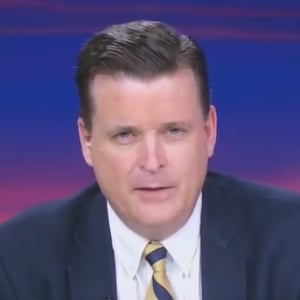
Director of Litigation, Immigration Reform Law Institute
Mr. Hajec joined the Immigration Reform Law Institute (IRLI) in 2017 as its Director of Litigation, and is responsible for overseeing IRLI’s public interest litigation. Previously, he has focused his career on constitutional and other civil rights law in the public interest, and has had an abiding concern about the many adverse effects of illegal and excessive legal immigration on American jobs and communities.
At IRLI, in addition to representing plaintiffs in immigration-related civil lawsuits, he has overseen the drafting and filing of nearly 100 briefs, mostly amicus curiae briefs in defense of the Trump administration’s immigration initiatives, which have been subjected to an unprecedented degree of legal assault by well-funded interest groups.
Prior to joining IRLI, Mr. Hajec was an attorney at the Center for Individual Rights (CIR), where he litigated a string of high-profile cases, including the defense of videographer James O’Keefe in suits brought by former ACORN employees, a class action suit on behalf of Asian American students discriminated against by the New York City public schools, and a case that resulted in the U.S. Court of Appeals for the Fifth Circuit’s striking down Texas’s psychologists licensing statute as an overbroad restriction on free speech.
Before CIR, Mr. Hajec was an officer in the Navy Judge Advocate General’s Corps, where he served as a defense counsel before courts-martial and then as Appellate Government Counsel, arguing over 100 appeals before the Navy-Marine Corps Court of Criminal Appeals and the Court of Appeals for the Armed Forces. He received the Navy Commendation Medal for his legal work, and also because of his poor handling of an emergency during a hurricane.
He received his law degree from the University of Pennsylvania Law School and his undergraduate degree, cum laude, from the University of Michigan. He has a Ph.D. in philosophy from the University of Miami, and studied philosophy and sociology at Oxford University.

Vice President, Edwin Meese III Institute for the Rule of Law, Advancing American Freedom
John G. Malcolm oversees Advancing American Freedom’s work to increase understanding of the Constitution and the rule of law as Vice President of the organization’s Edwin Meese III Institute for the Rule of Law. Malcolm brings to the challenge a wealth of legal expertise and experience in both the public and private sectors.
Prior to joining Advancing American Freedom in 2025, Malcolm was the Vice President of the Institute for Constitutional Government and the Director of the Meese Center for Legal and Judicial Studies at the Heritage Foundation. Prior to joining Heritage in 2012, Malcolm was general counsel at the U.S. Commission on International Religious Freedom, as well as a distinguished practitioner in residence at Pepperdine Law School. From 2004 to 2009, Malcolm was executive vice president and director of worldwide anti-piracy operations for the Motion Picture Association.
Malcolm served as a deputy assistant attorney general in the Department of Justice’s Criminal Division from 2001 to 2004, where he oversaw sections on computer crime and intellectual property, domestic security, child exploitation and obscenity, and special investigations. Immediately prior to that, he was a founding partner in the Atlanta law firm of Malcolm & Schroeder, LLP.
From 1990 to 1997, Malcolm was an assistant U.S. attorney in Atlanta, assigned to the fraud and public corruption section, and also an associate independent counsel, investigating fraud and abuse in the Department of Housing and Urban Development. He was honored with the Director’s Award for Superior Performance for his work in connection with the successful prosecution of Walter Leroy Moody Jr., who assassinated an 11th Circuit judge and the head of the Savannah chapter of the NAACP.
A graduate of Harvard Law School and Columbia College, Malcolm began his career as a law clerk to a federal district court judge and a federal appellate court judge, and as an associate at the Atlanta-based law firm of Sutherland, Asbill & Brennan (new Eversheds Sutherland).
Malcolm, who resides in Washington, D.C., serves on the Board of Trustees of the Washington National Opera and is a Senate-confirmed member of the Board of Directors of the Legal Services Corporation, the largest funder of civil legal aid in the United States.
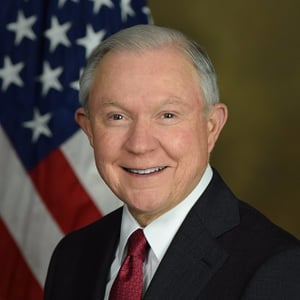
Former United States Attorney General
Jeff Sessions served as the 84th Attorney General of the United States from February 9, 2017 until November 7, 2018.
Prior to becoming Attorney General, Mr. Sessions served as a United States Senator for Alabama since 1996. As a United States Senator, he focused his energies on maintaining a strong military, upholding the rule of law, limiting the role of government, and providing tax relief to stimulate economic growth and to empower Americans to keep more of their hard-earned money.
Mr. Sessions was born in Selma, Alabama on December 24, 1946, and grew up in Hybart, the son of a country store owner. Growing up in the country, Sessions was instilled with certain core values – honesty, hard work, belief in God and parental respect – that define him today. In 1964, he became an Eagle Scout and thereafter received the Distinguished Eagle Scout Award. After attending school in nearby Camden, Sessions attended Huntingdon College in Montgomery, graduating with a Bachelor of Arts degree in 1969. He received a Juris Doctorate degree from the University of Alabama in 1973. Sessions served in the United States Army Reserve from 1973 to 1986, ultimately attaining the rank of Captain. He still considers that period to be one of the most rewarding chapters of his life.
Sessions’ interest in the law led to a distinguished legal career, first as a practicing attorney in Russellville, Alabama, and then in Mobile. Following a two-year stint as Assistant United States Attorney for the Southern District of Alabama (1975-1977), Sessions was nominated by President Reagan in 1981 and confirmed by the Senate to serve as the United States Attorney for the Southern District of Alabama, a position he held for 12 years. Sessions was elected Alabama Attorney General in 1995, serving as the State’s chief legal officer until 1996, when he entered the United States Senate.
Sessions and his wife, Mary Blackshear Sessions, originally of Gadsden, Alabama, have three children, Mary Abigail Reinhardt, Ruth Sessions Walk, and Sam. They have seven granddaughters, Jane Ritchie, Alexa, Gracie, Sophia, Hannah, Joanna, and Phoebe, and three grandsons, Jim Beau, Lewis, and Nicholas.

Professor of Law, Antonin Scalia Law School, George Mason University
ILYA SOMIN is Professor of Law at George Mason University and the B. Kenneth Simon Chair in Constitutional Studies at the Cato Institute. His research focuses on constitutional law, property law, democratic theory, federalism, and migration rights. He is the author of Free to Move: Foot Voting, Migration, and Political Freedom (Oxford University Press, revised and expanded edition, 2022), Democracy and Political Ignorance: Why Smaller Government is Smarter (Stanford University Press, revised and expanded second edition, 2016), and The Grasping Hand: Kelo v. City of New London and the Limits of Eminent Domain (University of Chicago Press, 2015, rev. paperback ed., 2016), coauthor of A Conspiracy Against Obamacare: The Volokh Conspiracy and the Health Care Case (Palgrave Macmillan, 2013), and co-editor of Eminent Domain: A Comparative Perspective (Cambridge University Press, 2017). Democracy and Political Ignorance has been translated into Italian and Japanese.
Somin’s work has appeared in numerous scholarly journals, including the Yale Law Journal, Stanford Law Review, Northwestern University Law Review, Georgetown Law Journal, Critical Review, and others. Somin has also published articles in a variety of popular press outlets, including the New York Times, Washington Post, Wall Street Journal, Los Angeles Times, CNN, NBC, The Atlantic, USA Today, Boston Globe, US News and World Report, South China Morning Post, National Law Journal and Reason. He has been quoted or interviewed by the New York Times, Washington Post, Wall Street Journal, Time, Newsweek, The Economist, the Christian Science Monitor, the Financial Times, The Guardian, the Associated Press, CBS, MSNBC, NPR, BBC, Reuters, the Canadian Broadcasting Corporation, the Australian Broadcasting Corporation, Radio Free Europe/Radio Liberty, Al Jazeera, and the Voice of America, among other media.
Somin’s writings have been cited in decisions by the United States Supreme Court, multiple state supreme courts and lower federal courts, and the Supreme Court of Israel. He is co-counsel for the plaintiffs in VOS Selections, Inc. v. Trump, a case challenging the constitutionality of President Trump’s “Liberation Day” tariffs. Somin has testified on the use of drones for targeted killing in the War on Terror before the US Senate Judiciary Subcommittee on the Constitution, Civil Rights, and Human Rights. In 2009, he testified on property rights issues at the United States Senate Judiciary Committee confirmation hearings for Supreme Court Justice Sonia Sotomayor. Somin writes regularly for the popular Volokh Conspiracy law and politics blog, now affiliated with Reason magazine (previously affiliated with the Washington Post from 2014 to 2017). From 2006 to 2013, he served as Co-Editor of the Supreme Court Economic Review, one of the country’s top-rated law and economics journals.
Somin has served as a visiting professor at the University of Pennsylvania Law School. He has also been a visiting professor or scholar at the Georgetown University Law Center, the University of Hamburg, Germany, the University of Torcuato Di Tella in Buenos Aires, Argentina, Uriel Reichman University in Israel, and Zhengzhou University in China. He is a University Affiliate of the Schar School of Policy and Government at George Mason University, and an affiliated faculty member of the George Mason University Institute for Immigration Research. Before joining the faculty at George Mason, Somin was the John M. Olin Fellow in Law at Northwestern University Law School in 2002-2003. In 2001-2002, he clerked for the Hon. Judge Jerry E. Smith of the U.S. Court of Appeals for the Fifth Circuit. Professor Somin earned his B.A., Summa Cum Laude, at Amherst College, M.A. in Political Science from Harvard University, and J.D. from Yale Law School.
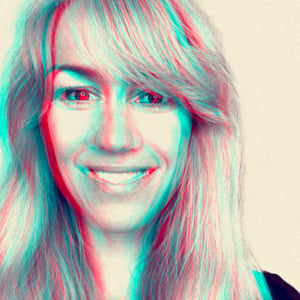
Assistant Professor in the Communication, Culture & Technology Program, Georgetown University
Prof. Meg Leta (previously Ambrose) Jones is an Assistant Professor in the Communication, Culture & Technology program at Georgetown University where she researches rules and technological change with a focus on privacy, data protection, and automation in information and communication technologies. She is also an affiliate faculty member of the Science, Technology, and International Affairs program in Georgetown's School of Foreign Service, the Center for Privacy & Technology at Georgetown Law Center, and the Brussels Privacy Hub at Vrije Universiteit Brussel. Dr. Jones's research interests cover issues including comparative information and communication technology law, engineering and information ethics, critical information and data studies, robotics law and policy, and the legal history of technology. She engages with interdisciplinary fields like cyberlaw, science and technology studies, and communication and information policy using comparative, interpretive, legal, and historical methods. Ctrl+Z: The Right to be Forgotten, her first book, is about the social, legal, and technical issues surrounding digital oblivion. Advised by Paul Ohm, Dr. Jones earned a Ph.D. in Technology, Media & Society from the University of Colorado, Engineering and Applied Science (ATLAS). Prior to pursuing a Ph.D., she earned a J.D. from the University of Illinois College of Law in 2008, where she focused on technology and information issues. She has held fellowships and research positions with the NSF funded eCSite project in the University of Colorado Department of Computer Science, the Silicon Flatirons Center at the University of Colorado School of Law, the Harvard Berkman Center for Internet & Society, and CableLabs. Since 2013, Dr. Jones has been teaching and researching in Washington, DC at Georgetown University.
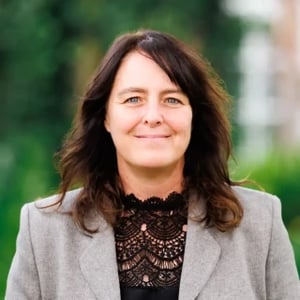
Professor of Law and Journalism, University of Florida
Professor Jane Bambauer is the Brechner Eminent Scholar at the Levin College of Law and at the College of Journalism and Communications. She teaches Torts, First Amendment, Media Law, Criminal Procedure, and Privacy Law.
Professor Bambauer’s research assesses the social costs and benefits of Big Data, AI, and predictive algorithms. Her work analyzes how the regulation of these new information technologies will affect free speech, privacy, law enforcement, health and safety, competitive markets, and government accountability. Professor Bambauer’s research has been featured in over 20 scholarly publications, including the Stanford Law Review, the Michigan Law Review, the California Law Review, and the Journal of Empirical Legal Studies. Her work has also been featured in media outlets, including the Washington Post, the New York Times, Fox News, and Lawfare, where she is a contributing editor.
Professor Bambauer currently serves as the Chair of the National AI Advisory Committee Subcommittee on Law Enforcement, and she has previously served as the deputy director of the Center for Quantum Networks, a multi-institutional engineering research center funded by the National Science Foundation. She holds a B.S. in Mathematics from Yale College and a J.D. from Yale Law School.

Milton R. Underwood Chair in Free Enterprise, Vanderbilt University Law School
Brian Fitzpatrick is the Milton R. Underwood Chair in Free Enterprise and Professor of Law at Vanderbilt Law School, where his research focuses on class action litigation, federal courts, judicial selection, and constitutional law. He is best known for his empirical studies of class action settlements as well as his book The Conservative Case for Class Actions (University of Chicago Press, 2019). Professor Fitzpatrick joined Vanderbilt's law faculty in 2007 after serving as the John M. Olin Fellow at New York University School of Law. He graduated first in his class from Harvard Law School and went on to clerk for Judge Diarmuid O'Scannlain on the U.S. Court of Appeals for the Ninth Circuit and Justice Antonin Scalia on the U.S. Supreme Court. After his clerkships, Professor Fitzpatrick practiced commercial and appellate litigation for several years at Sidley Austin in Washington, D.C., and served as Special Counsel for Supreme Court Nominations to U.S. Senator John Cornyn. Before earning his law degree, Fitzpatrick graduated summa cum laude with a bachelor's of science in chemical engineering from the University of Notre Dame. He has received the Hall-Hartman Outstanding Professor Award, which recognizes excellence in classroom teaching, for his Civil Procedure and Federal Courts courses.

Judge, United States Court of Appeals, Sixth Circuit
The Honorable Joan L. Larsen is a judge of the United States Court of Appeals for the Sixth Circuit. She was nominated by the President on May 8, 2017 and confirmed by the Senate on November 1, 2017. Before her appointment to the federal bench, Judge Larsen served two terms as a Justice of the Michigan Supreme Court, where she was the court’s liaison to Michigan’s drug, sobriety, mental health and veteran’s courts.
Before becoming a judge, Judge Larsen was a faculty member at the University of Michigan Law School, where she was also Special Counsel to the Dean and received the L. Hart Wright Award for Excellence in Teaching. Judge Larsen's research and teaching interests included constitutional law, criminal procedure, statutory interpretation, and presidential power. Judge Larsen continues to assist the law school as the adviser to the Henry M. Campbell Moot Court Competition.
Judge Larsen began her legal career as a law clerk to the Hon. David B. Sentelle of the United States Court of Appeals for the D.C. Circuit and to Justice Antonin Scalia of the Supreme Court of the United States. Following her clerkships, she joined the law firm of Sidley Austin, where she was a member of the Constitutional, Criminal, and Civil Litigation Section. She later served as Deputy Assistant Attorney General in the United States Department of Justice, Office of Legal Counsel.
Judge Larsen graduated first in her class from Northwestern University School of Law, where she served as articles editor of the Northwestern University Law Review and earned the John Paul Stevens Award for Academic Excellence. She received her B.A., with highest honors, from the University of Northern Iowa.
Regents' Professor, Milton O. Riepe Chair in Constitutional Law,, The University of Arizona James E. Rogers College of Law
Professor Toni Massaro received her B.S. degree, with highest distinction, from Northwestern University. She obtained her law degree from the College of William and Mary, where she served as Editor-in-Chief of the William and Mary Law Review. Massaro was in private practice in Chicago with Vedder, Price, Kaufman and Kammholz. She also has taught at Washington and Lee University, Stanford University, UNC-Chapel Hill, and the University of Florida.
Prof. Massaro joined the faculty at the University of Arizona College of Law in 1989. Since 1997, she has been the Milton O. Riepe Chair in Constitutional Law. In 2006, she was named a Regent's Professor by the Arizona Board of Regents. From 1999 - 2009, she served as Dean of the College of Law, the first woman to hold that post.
Prof. Massaro is the author of The Arc of Due Process in American Constitutional Law (with E. Thomas Sullivan), Constitutional Literacy: A Core Curriculum for a Multicultural Nation, and Civil Procedure: Cases and Problems (with Barbara Allen Babcock and Norman Spaulding). She also is the author of dozens of law review articles on constitutional law, shame penalties, and law and emotion. She currently teaches Constitutional Law I, First Amendment, and Equal Protection. Prof. Massaro is an eight time recipient of the Teacher of the Year Award.
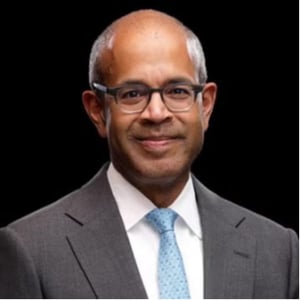
Partner, Davis Polk & Wardwell LLP
Kannon is the head of our Supreme Court & Appellate practice. He has argued 41 cases before the U.S. Supreme Court and has argued more than 150 appeals in courts across the country, including every federal court of appeals and numerous state courts.
Kannon is ranked as a “Star Individual” in appellate law by Chambers USA, where a client notes, “It’s hard to think of enough superlatives to describe his talent, his judgment, his ability, his experience – he is as good as it gets.” Legal 500 U.S. recognizes Kannon in its Hall of Fame for appellate work. A client shares, “His work is the best in the business, and he is a wonderful human being in addition to being a world-class appellate litigator.”
In 2024 and 2022, Kannon was a finalist for the American Lawyer’s “Litigator of the Year” award. He was named “Appellate Litigator of the Year” by Benchmark Litigation in 2021 and was a 2026 finalist for that recognition.
Before entering private practice, Kannon served as an Assistant to the Solicitor General at the U.S. Department of Justice.

Chief Judge, United States Court of Appeals, Sixth Circuit
JEFFREY S. SUTTON is the Chief Judge of the United States Court of Appeals for the Sixth Circuit. He has served as Chair of the Federal Judicial Conference Committee on Rules of Practice and Procedure, Chair of the Advisory Committee on Appellate Rules, and Chair of the Supreme Court Fellows Commission. He currently serves as Chair of the Executive Committee of the Judicial Conference of the United States. Since 1993, Chief Judge Sutton has been an adjunct professor at The Ohio State University College of Law, where he teaches seminars on State Constitutional Law, the United States Supreme Court, and Appellate Advocacy. He also teaches a class on State Constitutional Law at Harvard Law School. Among other publications, he is the author of Who Decides? States as Laboratories of Constitutional Experimentation and 51 Imperfect Solutions: States and the Making of American Constitutional Law. He is the co-author of a casebook, State Constitutional Law: The Modern Experience, as well as The Law of Judicial Precedent. He is also the co-editor of The Essential Scalia: On the Constitution, the Courts, and the Rule of Law. In 2006, Chief Judge Sutton was elected to the American Law Institute, and in 2017 he was elected to its Council.
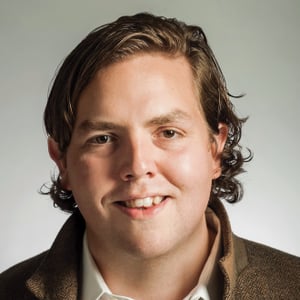
Harry Kalven, Jr. Professor of Law & Faculty Director, Constitutional Law Institute, University of Chicago Law School
William Baude is a Professor of Law and the Faculty Director of the Constitutional Law Institute at the University of Chicago Law School, where he teaches federal courts, constitutional law, and conflict of laws. His current research interests include different aspects of the Fourteenth Amendment (particularly both Section One and Section Three) and the nature of judicial discretion.
Among his other activities Baude is: the co-editor of two textbooks, The Constitution of the United States and Hart & Wechsler's Federal Courts in the Federal System; an Affiliated Scholar at the Center for the Study of Constitutional Originalism; a founding member of the Academic Freedom Alliance; a member of the American Law Institute; an occasional blogger at The Volokh Conspiracy; and a podcaster on Divided Argument. He also recently served on the Presidential Commission on the Supreme Court of the United States.
Professor Baude received his BS in Mathematics from the University of Chicago and his JD from Yale Law School. He then clerked for then-Judge Michael McConnell on the United States Court of Appeals, and Chief Justice John Roberts on the United States Supreme Court. Before joining the Chicago faculty, he was a fellow at the Stanford Constitutional Law Center, and a lawyer in Washington, DC.
Associate, Covington & Burling LLP
Kathryn Bi is an Associate at Covington & Burling LLP. She graduated from the University of Chicago Law School in 2015 and from Dartmouth College in 2009 where she earned Bachelor of Engineering and Bachelor of Arts degrees. Prior to law school Kathryn worked for three years as a chemical engineer at DuPont Corporation in Palo Alto and Genzyme Corporation in Boston.
Senior Associate to the President and Secretary of the University of Arizona
Jon Dudas has served as the Senior Associate to the President and Secretary of the University of Arizona since July 2014.
Mr. Dudas spent fourteen years in service to the U.S. Government, and as head of the USPTO, he led a performance-based government agency with 9,000 employees and a nearly $2 billion annual budget. During his tenure, the USPTO achieved record-level performance in meeting key annual objectives, and led key patent cooperation and development missions with China, India, Europe, Brazil and several other countries.
In addition to holding his post as Director of the USPTO from 2004 – 2009, Mr. Dudas’s public sector experience includes serving as Counsel for Legal Policy and Senior Floor Assistant for The Speaker of the House for the U.S. House of Representatives and Staff Director and Deputy General Counsel for the Committee on the Judiciary. After his appointment as Director of the USPTO, Mr. Dudas was a partner at Foley & Lardner LLP in Washington D.C. and then President of FIRST (For Inspiration and Recognition of Science and Technology), a national nonprofit that works to educate and inspire children to pursue careers in technology, science and innovation. He also served as a member of the Board of Directors for Conversant Intellectual Property Management, Inc., of Ottowa, Ontario. Mr. Dudas holds a J.D. from the University of Chicago and a bachelor’s degree in finance from the University of Illinois.
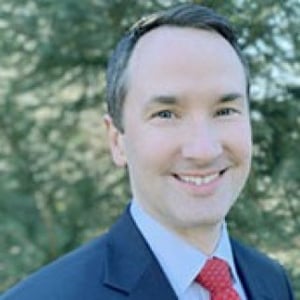
Chief Counsel, U.S. Chamber Litigation Center
Steven P. Lehotsky has significant experience developing and executing litigation strategies to help businesses and trade associations address their most important regulatory and public-policy challenges.
Before founding Lehotsky Keller LLP, Mr. Lehotsky directed the litigation strategy of the U.S. Chamber of Commerce, the world's leading business federation, where he worked from 2013-2021. While at the U.S. Chamber’s Litigation Center, he served as chief litigation counsel. Mr. Lehotsky led the Chamber's efforts to bring successful challenges to federal, state, and local regulations of business. He also directed the U.S. Chamber's efforts to defend pro-growth regulatory reforms. Mr. Lehotsky also led and implemented the U.S. Chamber’s strategies for filing hundreds of amicus curiae briefs in the U.S. Supreme Court, federal appellate and district courts, and state supreme and appellate courts. He is a frequent speaker at events and conferences on litigation and regulatory trends.
Mr. Lehotsky previously was an attorney at WilmerHale LLP in both the Washington D.C. and Boston offices, where he practiced government and regulatory litigation, appellate litigation, and counseling on constitutional, statutory, and regulatory issues for clients across a wide variety of industry sectors. He also previously practiced as a commercial litigator at Goodwin Procter LLP in Boston.
In addition, Mr. Lehotsky was an Attorney-Adviser in the Office of Legal Counsel of the U.S. Department of Justice from 2006-2009, advising the White House and executive departments and agencies on constitutional and statutory issues relating to national security, immigration, international sanctions under the International Emergency Economic Powers Act and other programs, the response to the 2008 financial crisis, pandemic influenza and infectious-disease mitigation, cybersecurity, and congressional investigations, among many other subjects.
Mr. Lehotsky was a law clerk for Justice Antonin Scalia of the Supreme Court of the United States and Chief Judge Douglas H. Ginsburg of the U.S. Court of Appeals for the District of Columbia Circuit.

Justice, Michigan Supreme Court
Stephen Markman was appointed Justice of the Michigan Supreme Court on October 1, 1999. He served as the Chief Justice from 2017-2019. Before his appointment, he served as Judge on the Michigan Court of Appeals from 1995-1999. Prior to this, he practiced law with the firm of Miller, Canfield, Paddock & Stone in Detroit.
From 1989-1993, Justice Markman served as United States Attorney, or federal prosecutor, in Michigan, after having been nominated by President George H. W. Bush and confirmed by the United States Senate. From 1985-1989, he served as Assistant Attorney General of the United States, after having been nominated by President Ronald Reagan and confirmed by the United States Senate. In that position, he headed the Department of Justice’s Office of Legal Policy, which served as the principal policy development office within the Department, and which coordinated the federal judicial selection process. Prior to this, he served for seven years as Chief Counsel of the United States Senate Subcommittee on the Constitution, and as Deputy Chief Counsel of the United States Senate Judiciary Committee.
Justice Markman has authored articles for such publications as the University of Michigan Journal of Law Reform, the Detroit College of Law Review, the Stanford Law Review, the University of Chicago Law Review, the American Criminal Justice Law Review, the Barrister’s Law Journal, the Harvard Journal of Law & Public Policy, and the American University Law Review. He has also served as a contributing editor of National Review magazine, and has authored chapters in such books as “In the Name of Justice: The Aims of the Criminal Law,” “Still the Law of the Land,” and “Originalism: A Quarter Century of Debate.”
Justice Markman has taught constitutional law at Hillsdale College since 1993. He has served on the Board of Directors of the Western Michigan University Thomas M. Cooley Law School. He traveled to Ukraine on two occasions on behalf of the State Department, to provide assistance in the development of that nation’s post-Soviet constitution. He is a Fellow of the Michigan Bar Foundation, a Master of the Bench of the Inns of Court, and a member of the One Hundred Club. He has spoken before hundreds of youth, civic, charitable, and legal groups throughout Michigan and nationally, and has coached Little League baseball and basketball. He lives with his wife Mary Kathleen in Mason, and has two sons, James and Charles.
Justice Markman was re-elected to the Supreme Court in 2000, 2004, and 2012. His present term expires January 1, 2021.
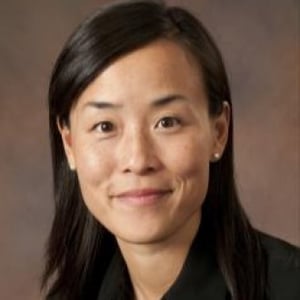
Professor of Law, University of Chicago Law School
Jennifer Nou is Professor of Law at the University of Chicago Law School. Nou’s main research interests are in administrative law, executive branch dynamics, regulatory policy, and constitutional separation-of-powers. Prior to joining the faculty, she was a Public Law Fellow at the Law School and also worked as a policy analyst and special assistant at the Office of Information and Regulatory Affairs. Nou is a graduate of Yale College and Yale Law School, and received an MPhil in Politics from Oxford University as a Marshall Scholar. After law school, she was a law clerk to Judge Richard Posner of the US Court of Appeals for the Seventh Circuit and then to Justice Stephen Breyer of the US Supreme Court. She is currently a public member of the Administrative Conference of the United States.
Harry Kalven, Jr. Professor of Law & Faculty Director, Constitutional Law Institute, University of Chicago Law School
William Baude is a Professor of Law and the Faculty Director of the Constitutional Law Institute at the University of Chicago Law School, where he teaches federal courts, constitutional law, and conflict of laws. His current research interests include different aspects of the Fourteenth Amendment (particularly both Section One and Section Three) and the nature of judicial discretion.
Among his other activities Baude is: the co-editor of two textbooks, The Constitution of the United States and Hart & Wechsler's Federal Courts in the Federal System; an Affiliated Scholar at the Center for the Study of Constitutional Originalism; a founding member of the Academic Freedom Alliance; a member of the American Law Institute; an occasional blogger at The Volokh Conspiracy; and a podcaster on Divided Argument. He also recently served on the Presidential Commission on the Supreme Court of the United States.
Professor Baude received his BS in Mathematics from the University of Chicago and his JD from Yale Law School. He then clerked for then-Judge Michael McConnell on the United States Court of Appeals, and Chief Justice John Roberts on the United States Supreme Court. Before joining the Chicago faculty, he was a fellow at the Stanford Constitutional Law Center, and a lawyer in Washington, DC.
Associate, Covington & Burling LLP
Kathryn Bi is an Associate at Covington & Burling LLP. She graduated from the University of Chicago Law School in 2015 and from Dartmouth College in 2009 where she earned Bachelor of Engineering and Bachelor of Arts degrees. Prior to law school Kathryn worked for three years as a chemical engineer at DuPont Corporation in Palo Alto and Genzyme Corporation in Boston.
Senior Associate to the President and Secretary of the University of Arizona
Jon Dudas has served as the Senior Associate to the President and Secretary of the University of Arizona since July 2014.
Mr. Dudas spent fourteen years in service to the U.S. Government, and as head of the USPTO, he led a performance-based government agency with 9,000 employees and a nearly $2 billion annual budget. During his tenure, the USPTO achieved record-level performance in meeting key annual objectives, and led key patent cooperation and development missions with China, India, Europe, Brazil and several other countries.
In addition to holding his post as Director of the USPTO from 2004 – 2009, Mr. Dudas’s public sector experience includes serving as Counsel for Legal Policy and Senior Floor Assistant for The Speaker of the House for the U.S. House of Representatives and Staff Director and Deputy General Counsel for the Committee on the Judiciary. After his appointment as Director of the USPTO, Mr. Dudas was a partner at Foley & Lardner LLP in Washington D.C. and then President of FIRST (For Inspiration and Recognition of Science and Technology), a national nonprofit that works to educate and inspire children to pursue careers in technology, science and innovation. He also served as a member of the Board of Directors for Conversant Intellectual Property Management, Inc., of Ottowa, Ontario. Mr. Dudas holds a J.D. from the University of Chicago and a bachelor’s degree in finance from the University of Illinois.
Chief Counsel, U.S. Chamber Litigation Center
Steven P. Lehotsky has significant experience developing and executing litigation strategies to help businesses and trade associations address their most important regulatory and public-policy challenges.
Before founding Lehotsky Keller LLP, Mr. Lehotsky directed the litigation strategy of the U.S. Chamber of Commerce, the world's leading business federation, where he worked from 2013-2021. While at the U.S. Chamber’s Litigation Center, he served as chief litigation counsel. Mr. Lehotsky led the Chamber's efforts to bring successful challenges to federal, state, and local regulations of business. He also directed the U.S. Chamber's efforts to defend pro-growth regulatory reforms. Mr. Lehotsky also led and implemented the U.S. Chamber’s strategies for filing hundreds of amicus curiae briefs in the U.S. Supreme Court, federal appellate and district courts, and state supreme and appellate courts. He is a frequent speaker at events and conferences on litigation and regulatory trends.
Mr. Lehotsky previously was an attorney at WilmerHale LLP in both the Washington D.C. and Boston offices, where he practiced government and regulatory litigation, appellate litigation, and counseling on constitutional, statutory, and regulatory issues for clients across a wide variety of industry sectors. He also previously practiced as a commercial litigator at Goodwin Procter LLP in Boston.
In addition, Mr. Lehotsky was an Attorney-Adviser in the Office of Legal Counsel of the U.S. Department of Justice from 2006-2009, advising the White House and executive departments and agencies on constitutional and statutory issues relating to national security, immigration, international sanctions under the International Emergency Economic Powers Act and other programs, the response to the 2008 financial crisis, pandemic influenza and infectious-disease mitigation, cybersecurity, and congressional investigations, among many other subjects.
Mr. Lehotsky was a law clerk for Justice Antonin Scalia of the Supreme Court of the United States and Chief Judge Douglas H. Ginsburg of the U.S. Court of Appeals for the District of Columbia Circuit.
Justice, Michigan Supreme Court
Stephen Markman was appointed Justice of the Michigan Supreme Court on October 1, 1999. He served as the Chief Justice from 2017-2019. Before his appointment, he served as Judge on the Michigan Court of Appeals from 1995-1999. Prior to this, he practiced law with the firm of Miller, Canfield, Paddock & Stone in Detroit.
From 1989-1993, Justice Markman served as United States Attorney, or federal prosecutor, in Michigan, after having been nominated by President George H. W. Bush and confirmed by the United States Senate. From 1985-1989, he served as Assistant Attorney General of the United States, after having been nominated by President Ronald Reagan and confirmed by the United States Senate. In that position, he headed the Department of Justice’s Office of Legal Policy, which served as the principal policy development office within the Department, and which coordinated the federal judicial selection process. Prior to this, he served for seven years as Chief Counsel of the United States Senate Subcommittee on the Constitution, and as Deputy Chief Counsel of the United States Senate Judiciary Committee.
Justice Markman has authored articles for such publications as the University of Michigan Journal of Law Reform, the Detroit College of Law Review, the Stanford Law Review, the University of Chicago Law Review, the American Criminal Justice Law Review, the Barrister’s Law Journal, the Harvard Journal of Law & Public Policy, and the American University Law Review. He has also served as a contributing editor of National Review magazine, and has authored chapters in such books as “In the Name of Justice: The Aims of the Criminal Law,” “Still the Law of the Land,” and “Originalism: A Quarter Century of Debate.”
Justice Markman has taught constitutional law at Hillsdale College since 1993. He has served on the Board of Directors of the Western Michigan University Thomas M. Cooley Law School. He traveled to Ukraine on two occasions on behalf of the State Department, to provide assistance in the development of that nation’s post-Soviet constitution. He is a Fellow of the Michigan Bar Foundation, a Master of the Bench of the Inns of Court, and a member of the One Hundred Club. He has spoken before hundreds of youth, civic, charitable, and legal groups throughout Michigan and nationally, and has coached Little League baseball and basketball. He lives with his wife Mary Kathleen in Mason, and has two sons, James and Charles.
Justice Markman was re-elected to the Supreme Court in 2000, 2004, and 2012. His present term expires January 1, 2021.
Professor of Law, University of Chicago Law School
Jennifer Nou is Professor of Law at the University of Chicago Law School. Nou’s main research interests are in administrative law, executive branch dynamics, regulatory policy, and constitutional separation-of-powers. Prior to joining the faculty, she was a Public Law Fellow at the Law School and also worked as a policy analyst and special assistant at the Office of Information and Regulatory Affairs. Nou is a graduate of Yale College and Yale Law School, and received an MPhil in Politics from Oxford University as a Marshall Scholar. After law school, she was a law clerk to Judge Richard Posner of the US Court of Appeals for the Seventh Circuit and then to Justice Stephen Breyer of the US Supreme Court. She is currently a public member of the Administrative Conference of the United States.
Principal Deputy Assistant Secretary, Office for Civil Rights, United States Department of Education
Seth Galanter serves as the Principal Deputy Assistant Secretary for Civil Rights in the Department of Education.
Seth started his career at the Department of Justice, where he worked in the Civil Rights Division. During his 8 years there, he argued over 40 cases in the courts of appeals on a range of topics, including sexual harassment under Title IX.
Seth later moved into private practice at Morrison and Foerster, where he was in the Appellate Practice Group. During his time there, Seth argued two cases in the Supreme Court. Seth was also named Pro Bono Lawyer of the Year during this time by the Washington DC Bar for his work regarding people with disabilities.
Seth joined the Department of Education in 2011.

Senior Scholar, Manhattan Institute; Professor of Law Emerita, University of San Diego
Gail Heriot is a Senior Scholar at the Manhattan Institute, a Professor of Law Emerita at the University of San Diego and the Chairman of the Board of the American Civil Rights Project. She served on the U.S. Commission on Civil Rights for 18 years. Her new book is entitled “Why We Walk on Eggshells: How Our Civil Rights Laws Stifle Our Public Discourse.”
Senior Counsel & Director of Education Policy for At-Risk Studen, National Women's Law Center
Lara S. Kaufmann is Senior Counsel and Director for Education Policy for At-Risk Students. She works on the advancement of women and girls at school and in the workplace. Lara engages in litigation, advocacy, and public education, with a particular focus on improving educational outcomes for at-risk girls, including pregnant and parenting students. Lara co-authored the Center’s 2012 report, A Pregnancy Test for Schools: The Impact of Education Laws on Pregnant and Parenting Students, as well as its 2009 report, Listening to Latinas: Barriers to High School Graduation. Before joining the Center, Lara was a Staff Attorney with the Federal Trade Commission’s Bureau of Consumer Protection, and prior to that she was an Assistant United States Attorney in Chicago. Lara also worked with the law firm of McDermott, Will & Emery, and was law clerk to then-Chief Judge Marvin Aspen of the U.S. District Court for the Northern District of Illinois. Lara is a graduate of the University of Michigan and Northwestern University School of Law.
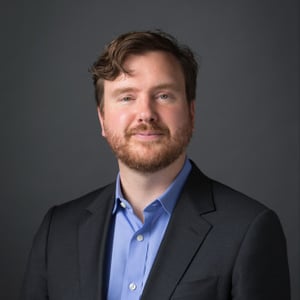
President and CEO, Foundation for Individual Rights in Education (FIRE)
Greg Lukianoff is an attorney, New York Times best-selling author, and the President and CEO of the Foundation for Individual Rights in Education (FIRE). He is the author of Unlearning Liberty: Campus Censorship and the End of American Debate, Freedom From Speech, and FIRE’s Guide to Free Speech on Campus. Most recently, he co-authored The Coddling of the American Mind: How Good Intentions and Bad Ideas Are Setting Up a Generation for Failure with Jonathan Haidt. This New York Times best-seller expands on their September 2015 Atlantic cover story of the same name. Greg is also an Executive Producer of Can We Take a Joke? (2015), a feature-length documentary that explores the collision between comedy, censorship, and outrage culture, both on and off campus, and of Mighty Ira: A Civil Liberties Story (2020), a feature-length film about the life and career of former ACLU Executive Director Ira Glasser.
Greg has been published in The New York Times, The Wall Street Journal, The Washington Post, Los Angeles Times, The Boston Globe, and numerous other publications. He frequently appears on TV shows and radio programs, including the CBS Evening News, The Today Show, and NPR’s Morning Edition. In 2008, he became the first-ever recipient of the Playboy Foundation’s Freedom of Expression Award, and he has testified before both the U.S. Senate and the House of Representatives about free speech issues on America’s college campuses.
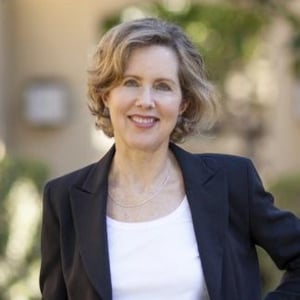
Thomas W. Smith Fellow; Contributing Editor, City Journal, Manhattan Institute
Heather Mac Donald is the Thomas W. Smith Fellow at the Manhattan Institute, a contributing editor of City Journal, and a New York Times bestselling author. She is a recipient of the 2005 Bradley Prize. Mac Donald’s work at City Journal has covered a range of topics, including higher education, immigration, policing, homelessness and homeless advocacy, criminal-justice reform, and race relations. Her writing has appeared in the Wall Street Journal, Washington Post, New York Times, Los Angeles Times, The New Republic, and The New Criterion. Mac Donald's newest book, The Diversity Delusion: How Race and Gender Pandering Corrupt the University and Undermine Our Culture (2018), argues that toxic ideas first spread by higher education have undermined humanistic values, fueled intolerance, and widened divisions in our larger culture.
Mac Donald’s The War on Cops (2016), a New York Times bestseller, warns that raced-based attacks on the criminal-justice system, from the White House on down, are eroding the authority of law and putting lives at risk. Other previous works include The Burden of Bad Ideas (2001), a collection of Mac Donald’s City Journal essays, details the effects of the 1960s counterculture’s destructive march through America’s institutions. In The Immigration Solution: A Better Plan than Today’s (2007), coauthored with Victor Davis Hanson and Steven Malanga, she chronicles the effects of broken immigration laws and proposes a practical solution to securing the country’s porous borders. In Are Cops Racist? (2010), another City Journal anthology, Mac Donald investigates the workings of the police, the controversy over so-called racial profiling, and the anti-profiling lobby’s harmful effects on black Americans.
A nonpracticing lawyer, Mac Donald clerked for the Honorable Stephen Reinhardt, U.S. Court of Appeals for the Ninth Circuit, and was an attorney-advisor in the Office of the General Counsel of the U.S. Environmental Protection Agency and a volunteer with the Natural Resources Defense Council. She has frequently testified before U.S. House and Senate Committees. In 1998, Mac Donald was appointed to Mayor Rudolph Giuliani’s task force on the City University of New York. She has received numerous awards for her writing:
A frequent guest on Fox News and other TV and radio programs, Mac Donald holds a B.A. in English from Yale University, graduating with a Mellon Fellowship to Cambridge University, where she earned an M.A. in English and studied in Italy through a Clare College study grant. She holds a J.D. from Stanford University Law School.
At the Criminal Justice Legal Foundation's 2018 annual meeting in downtown Los Angeles, U.S. Attorney General Jeff Sessions called Mac Donald, “the greatest thinker on criminal justice in America today.”

Judge, United States Court of Appeals, Seventh Circuit
Judge Sykes was nominated to the Seventh Circuit by President George W. Bush and confirmed by the Senate in 2004. Prior to her appointment to the federal bench, Judge Sykes served as a justice on the Wisconsin Supreme Court. Governor Tommy G. Thompson appointed her in September 1999 to fill a mid-term vacancy on the state supreme court, and she was elected to a full ten-year term in April 2000. From 1992-1999, Judge Sykes served on the state trial bench in Milwaukee County (elected in 1992 and re-elected in 1998). From 1985-1992, Judge Sykes practiced law with the Milwaukee firm of Whyte & Hirschboeck, S.C., and from 1984-1985, was a law clerk to Federal Judge Terence T. Evans.
Born and raised in the Milwaukee area, Judge Sykes earned a bachelor’s degree in journalism from Northwestern University in 1980 and a law degree from Marquette University Law School in 1984. Between college and law school, Judge Sykes worked as a reporter for The Milwaukee Journal.
Judge Sykes has two sons.

Patrick Hotung Professor of Constitutional Law, Georgetown University Law Center; Faculty Director, Georgetown Center for the Constitution
Randy E. Barnett is the Patrick Hotung Professor of Constitutional Law at the Georgetown University Law Center and is the Faculty Director of the Georgetown Center for the Constitution. After graduating from Northwestern University and Harvard Law School, he tried many felony cases as a prosecutor in the Cook County States’ Attorney’s Office in Chicago. A recipient of a Guggenheim Fellowship in Constitutional Studies and the Bradley Prize, Professor Barnett has been a visiting professor at Penn, Northwestern and Harvard Law School.
Professor Barnett’s publications includes thirteen books, more than one hundred articles and reviews, as well as numerous op-eds. His most recent book is Felony Review: Tales of True Crime and Corruption in Chicago (2026). His other books on the Constitution include: A Life for Liberty: The Making of an American Originalist (2024); The Original Meaning of the Fourteenth Amendment: Its Letter and Spirit (2021) (with Evan Bernick); An Introduction to Constitutional Law: 100 Supreme Court Cases Everyone Should Know (2019) (with Josh Blackman); Restoring the Lost Constitution: The Presumption of Liberty (2nd ed. 2013); Our Republican Constitution: Securing the Liberty and Sovereignty of We the People (2016); and Constitutional Law: Cases in Context (5th ed. forthcoming 2027) (with Josh Blackman). His books on contracts are The Oxford Introductions to U.S. Law: Contracts (2010) and Contracts: Cases and Doctrine (7th ed. 2021) (with Nate Oman). And he is the author of The Structure of Liberty: Justice and the Rule of Law (2nd ed. 2014).
In 2004, he argued the medical marijuana case of Gonzalez v. Raich before the U.S. Supreme Court. In 2012, he was one of the lawyers representing the National Federation of Independent Business in its constitutional challenge to the Affordable Care Act in NFIB v. Sebelius. He’s appeared in numerous documentaries and portrayed a prosecutor in the 2010 science-fiction feature film, InAlienable: The Movie. On X he is @RandyEBarnett
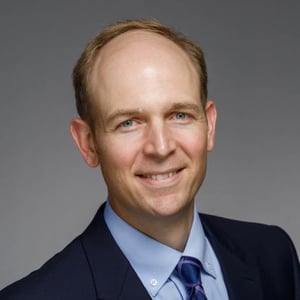
Professor of Law, Notre Dame Law School
Professor Samuel L. Bray joined the Notre Dame Law School faculty in 2018. Before coming to Notre Dame, he was an assistant professor of law at UCLA from 2011 to 2016, and a professor of law from 2016 to 2018. In addition, he was a Harrington Faculty Fellow at the University of Texas-Austin for the 2016-2017 academic year.
Bray is a graduate of the University of Chicago Law School, and he clerked for then-Judge Michael W. McConnell on the U.S. Court of Appeals for the Tenth Circuit. After clerking, he practiced law at Mayer Brown LLP, was an associate-in-law at Columbia Law School, and was executive director of the Constitutional Law Center at Stanford Law School.
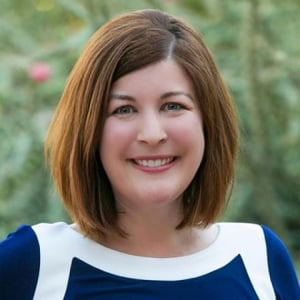
Clinical Professor of Law, University of Arizona, James E. Rogers College of Law
Tessa L. Dysart is the Assistant Director of Legal Writing and Associate Clinical Professor of Law at the University of Arizona, James E. Rogers College of Law. With the Hon. Leslie H. Southwick of the United States Court of Appeals for the Fifth Circuit, she co-authored the third edition of Winning on Appeal: Better Briefs and Oral Arguments. She manages the Appellate Advocacy Blog, writes on human trafficking and constitutional law, and lectures nationally on developing effective state anti-trafficking laws.
Professor Dysart is a graduate of Willamette University and Harvard Law School. She clerked for the Hon. Dennis W. Shedd of the United States Court of Appeals for the Fourth Circuit. Her practice experience includes working for the United States Department of Justice Office of Legal Policy and the Senate Judiciary Committee. Prior to joining the College of Law faculty she taught appellate advocacy and constitutional law courses at Regent University School of Law, where she coached award-winning moot court teams and advised the program to a national ranking.

Laurence A. Tisch Professor of Law and Director, Classical Liberal Institute, New York University School of Law; Senior Fellow, The Civitas Institute, University of Texas at Austin
Richard A. Epstein is the inaugural Laurence A. Tisch Professor of Law at NYU School of Law. Prior to his joining the faculty, he was a visiting law professor at NYU from 2007 through 2009. He served as the Peter and Kirstin Bedford Senior Fellow at the Hoover Institution from 2000 to 2024. Since 2024 to the present he is a senior lecturer at the Civitas Institute at the University of Texas—Austin. Epstein is also the James Parker Hall Distinguished Service Professor of Law Emeritus and a senior lecturer at the University of Chicago. His initial law school appointment was at the University of Southern California from 1968 to 1972. Epstein received an LL.D., h.c. from the University of Ghent, 2003. He has been a member of the American Academy of Arts and Sciences since 1985 and was a Senior Fellow of the Center for Clinical Medical Ethics at the University of Chicago Division of Biological Sciences, also from 1983. to 2022 He served as editor of the Journal of Legal Studies from 1981 to 1991, and of the Journal of Law and Economics from 1991-2001. From 2001 to 2010 he was a director of the John M. Olin Program in Law and Economics at the University of Chicago.
His newest book, The Myth of Birthright Citizenship: What the Fourteenth Amendment Really Says was published in 2026 (Encounter Books). Prior to that he has published many books including, The Dubious Morality of the Modern Administrative State (Roman & Littlefield 2020).Earlier he published th Classical Liberal Constitution: The Uncertain Quest for Limited Government (Harvard 2014) iHis previous books include Design for Liberty: Private Property, Public Administration and the Rule of Law (Harvard 2011); The Case Against the Employee Free Choice Act (Hoover 2009); Supreme Neglect: How to Revive the Constitutional Protection of Property Rights (Oxford 2008); Antitrust Decrees in Theory and Practice: Why Less is More (AEI 2007); Overdose: How Excessive Government Regulation Stifles Pharmaceutical Innovation (Yale University Press. 2006); How Progressives Rewrote the Constitution (Cato 2006); Cases and Materials on Torts (Aspen Law & Business; 8th ed. 2004); Skepticism and Freedom: A Modern Case for Classical Liberalism (University of Chicago, 2003); Torts (Aspen Law & Business 1999); Principles for a Free Society: Reconciling Individual Liberty with the Common Good (Perseus Books, 1998): Mortal Peril: Our Inalienable Rights to Health Care (Addison-Wesley, 1997); Simple Rules for a Complex World (Harvard, 1995); Bargaining With the State (Princeton, 1993); Forbidden Grounds: The Case Against Employment Discrimination Laws (Harvard , 1992); Takings: Private Property and the Power of Eminent Domain (Harvard, 1985); and Modern Products Liability Law (Greenwood Press, 1980). He has also edited(with Catherine M. Sharkey) Cases and Materials on the Law of Torts (10th edition 2012).
Professor Epstein has written numerous articles on a wide range of legal and interdisciplinary subjects. He has taught courses in administrative law, antitrust law, civil procedure, communications, constitutional law, contracts, corporations, criminal law, employment discrimination law, environmental law, food and drug law health law and policy, legal history, labor law, property, real estate development and finance, jurisprudence, labor law; land use planning, patents, individual, estate and corporate taxation, Roman Law; torts, and workers' compensation.
Professor Epstein also writes a regular column for Civitas Institute, which also sponsors his podcast, The Libertarian with Charles C.W. Cooke, and Law Talk, with Cooke and John Yoo. He also does a podcast with John Batchelor. And appears regularly on the Freedom File with Judge Andrew Napolitano.

George C. Dix Professor in Constitutional Law, Northwestern University Pritzker School of Law
John O. McGinnis is a graduate of Harvard College and Harvard Law School where he was an editor of the Harvard Law Review. He also has an MA degree from Balliol College, Oxford, in philosophy and theology. Professor McGinnis clerked on the U.S. Court of Appeals for the District of Columbia. From 1987 to 1991, he was deputy assistant attorney general in the Office of Legal Counsel at the Department of Justice. He is the author of Accelerating Democracy: Transforming Government Through Technology (Princeton 2013) and Originalism and the Good Constitution (Harvard 2013) (with M. Rappaport). He is a past winner of the Paul Bator award given by the Federalist Society to an outstanding academic under 40. He has been listed by the United States on the roster of panelists who may be called upon to decide World Trade Organization Disputes.

Executive Vice President and Senior Counselor to the President, The Federalist Society for Law and Public Policy Studies
B.A., Yale; J.D., University of Chicago. Lee Liberman Otis is the Executive Vice President and Senior Counselor to the President at the Federalist Society. She also serves as a member of the American Law Institute (ALI), a senior fellow of the Administrative Conference (ACUS), and as the co-chair of the National Constitution Center's Coalition of Freedom Advisory Board. She previously was a special assistant and an Associate Deputy Attorney General at the U.S. Department of Justice, General Counsel of the Department of Energy, an associate in the appellate section of Jones, Day, Reavis & Pogue, an associate counsel to President George H.W. Bush, and a law clerk to Associate Justice Antonin Scalia. She also served as an assistant professor of law at George Mason, where she taught legislation, federal jurisdiction, constitutional law, civil procedure, and appellate advocacy. Ms. Otis has been an important member of the Federalist Society team since the organization’s beginnings. Together with David McIntosh, she led the effort to start what became the Chicago chapter of the Society. She also helped organize the Society’s first conference at Yale, its second conference at Chicago, and its first Lawyers Division chapter in Washington DC, as well as the effort to incorporate the Society, recruit its permanent staff, and obtain its early funding. She was a Founding Director of the Federalist Society.
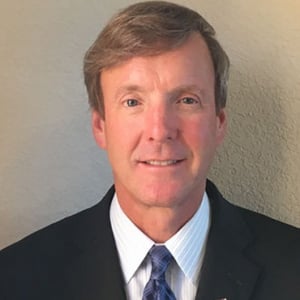
Professor of Law; Director, Warrior Defense Project, St. Mary's University School of Law
Lt. Colonel (U.S. Army, Ret.) Jeffrey F. Addicott is a Distingushed Professor of Law and the Director of the Warrior Defense Project at St. Mary’s University School of Law, San Antonio, Texas (2000-current). An active-duty Army officer in the Judge Advocate General’s Corps for twenty years, Professor Addicott spent a quarter of his career as the senior legal advisor to the United States Army’s Special Forces. As an internationally recognized authority on national security and terrorism law Professor Addicott not only lectures and participates in professional and academic organizations both in the United States and abroad (over 1,000 speeches), but he also testifies before Congress on a variety of legal issues. Dr. Addicott is a regular contributor to national and international news media outlets to include FOX News, MSNBC, OAN, CNN, BBC, New York Times, Washington Post, Wall Street Journal, and USA Today, (over 5,000 interviews). Addicott is a prolific author, publishing over 100 books, articles, and monographs on a variety of legal and policy issues. His most recent book (2026) is entitled: Christian Doctrines.
Among his many contributions to the field, Professor Addicott pioneered the teaching of law of war and human rights courses to the militaries of numerous nascent democracies in Eastern Europe and Latin America. For these efforts he was awarded the Legion of Merit, named the “Army Judge Advocate of the Year,” and honored as a co-recipient of the American Bar Association’s Hodson Award. Addicott has served in senior legal positions in Germany, Korea, Panama, and throughout the United States (1980-2000). Professor Addicott holds a Doctor of Juridical Science (S.J.D.) and Master of Laws (LL.M.) from the University of Virginia School of Law. He also received a Master of Laws (LL.M.) from the Army Judge Advocate General’s School, where he was the Deputy Director of the International & Operational Law Division, and a Juris Doctor (J.D.) from the University of Alabama School of Law. Apart from teaching a variety of courses at the law school to include National Security Law and Terrorism Law, Dr. Addicott served as the Associate Dean for Administration at St. Mary's University School of Law (2006-2007) and as the Director of the Center for Terrorism Law (2005-2018). Dr. Addicott was the 2007 recipient of “St. Mary’s University School of Law Distinguished Faculty Award.” Dr. Addicott also heads Christian Doctrine Ministries, where he teaches non-denominational Bible classes (2009-current) at St. Mary’s University School of Law.

Professor of Law and Centennial Chair, South Texas College of Law Houston
Josh Blackman is a national thought leader on constitutional law and the United States Supreme Court. Josh’s work was quoted during two presidential impeachment trials. He has testified before Congress and advises federal and state lawmakers. Josh regularly appears on TV, including NBC, CBS, ABC, Fox, and the BBC. Josh is also a frequent guest on NPR and other syndicated radio programs. He has published commentaries in the New York Times, Wall Street Journal, Washington Post, and leading national publications.
Since 2012, Josh has served as a professor at the South Texas College of Law Houston. He holds the Centennial Chair of Constitutional Law. Josh is an Adjunct Fellow at the Manhattan Institute. Josh has written more than seven dozen law review articles that have been cited more than a thousand times. Josh was selected as the Jurist of the Year by the Texas Journal of Law & Public Policy, received the inaugural Meese III Originalism Award, and was awarded the Inaugural Joseph Story Award. Josh was selected by Forbes Magazine for the “30 Under 30” in Law and Policy. Josh is the President of the Harlan Institute, and founded FantasySCOTUS, the Internet’s Premier Supreme Court Fantasy League. He blogs at the Volokh Conspiracyand posts@JoshMBlackman.
Clinical Professor of Law, University of Arizona, James E. Rogers College of Law
Tessa L. Dysart is the Assistant Director of Legal Writing and Associate Clinical Professor of Law at the University of Arizona, James E. Rogers College of Law. With the Hon. Leslie H. Southwick of the United States Court of Appeals for the Fifth Circuit, she co-authored the third edition of Winning on Appeal: Better Briefs and Oral Arguments. She manages the Appellate Advocacy Blog, writes on human trafficking and constitutional law, and lectures nationally on developing effective state anti-trafficking laws.
Professor Dysart is a graduate of Willamette University and Harvard Law School. She clerked for the Hon. Dennis W. Shedd of the United States Court of Appeals for the Fourth Circuit. Her practice experience includes working for the United States Department of Justice Office of Legal Policy and the Senate Judiciary Committee. Prior to joining the College of Law faculty she taught appellate advocacy and constitutional law courses at Regent University School of Law, where she coached award-winning moot court teams and advised the program to a national ranking.
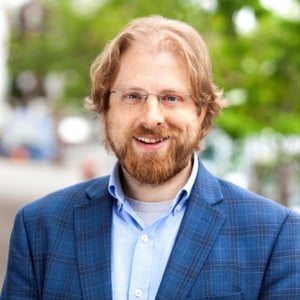
Senior Fellow and Academic Director, Penn Carey Law School
Gus Hurwitz is a Senior Fellow and the Academic Director of the Center for Technology, Innovation & Competition and the University of Pennsylvania Carey Law School where he is working to develop academic and scholarly programs at the intersecution of law, technology, and policy.
He is also Director of Law & Economics Programs at the International Center for Law & Economics (ICLE), a think tank based in Portland, Oregon, where he directs its law and economics-focused research program and helps to translate academic research into applied policy issues.
Hurwitz's research focuses on the regulation of technology, including administrative and regulatory law, antitrust law, torts and products liability, and media law - alongside cognate fields. Inrecent years he has worked on an AI standardization initiative with Seoul National University, a UNICEF-organized study of broadband deployment to public schools in Rwanda, and a book on conglomerate and ecosystems theories of antitrust.
He has published over 30 articles and book chapters, two books (one on cybersecurity law & policy, one on media regulation in the digital era) and have two more in process, over 100 shorter writings (op-eds, shorter analyses, blog posts, &c), hosted over 100 podcast episodes, and regularly appear or am quoted in popular media (including the NY Times, Wall Street Journal, Washington Post, and Associated Press). His work has been cited by legislators, federal courts of appeals, and federal regulatory agencies.
He was previously a full professor and founding director of the Governance & Technology Center at the University of Nebraska, prior to which he was the inaugural research fellow at the Center for Technology, Innovation & Competition (CTIC). From 2007 to 2010, he was a trial attorney with the U.S. Department of Justice Antitrust Division in the Telecommunications and Media Enforcement Section.
He also is, or has been, affiliated with the Classical Liberal Institute at New York University School of Law, the National Security Institute at George Mason University, and the American Enterprise Institute (AEI).
Before attending law school, Hurwitz worked at Los Alamos National Lab and interned at the Naval Research Lab. During this time his work was recognized by the Federal Laboratory Consortium, Los Alamos National Lab, IEEE & ACM, Corporation for Education Network Initiatives in California, R&D Magazine, and even the Guinness Book of World Records.
A current list of Hurwitz’s publications is available on his website: GusHurwitz.net.

Antonin Scalia Professor of Law, Harvard Law School
Stephen E. Sachs is the Antonin Scalia Professor of Law at Harvard Law School, where he teaches civil procedure, conflict of laws, and seminars on constitutional law. His research focuses on the law and theory of constitutional interpretation, the jurisdiction of state and federal courts, the history of procedure and private law, and the role of the general common law in the U.S. legal system.
Sachs has authored numerous articles, essays, and book chapters. He is an elected member of the American Law Institute, an adviser to the ALI’s project on the Restatement of the Law (Third), Conflict of Laws, a former member of the Judicial Conference’s Advisory Committee on Appellate Rules, and a founding member of the Academic Freedom Alliance.
In 2020, Sachs received the Federalist Society’s Joseph Story Award, which recognizes a young academic who has demonstrated excellence in legal scholarship, a commitment to teaching, a concern for students, and who has made a significant public impact in a manner that advances the rule of law in a free society.
Sachs previously taught at Duke University School of Law and as a visiting professor at the University of Chicago Law School. Before entering academia, he practiced in the Washington, D.C., litigation group of Mayer Brown LLP, and he clerked for Chief Justice John G. Roberts Jr. as well as for Judge Stephen F. Williams of the U.S. Court of Appeals for the D.C. Circuit.
Sachs received his J.D. from Yale Law School, where he was executive editor of the Yale Law Journal and served both as executive editor and articles editor of the Yale Law & Policy Review. A Rhodes Scholar, he graduated from Oxford University with a first-class BA (Hons) degree in philosophy, politics, and economics. He received his A.B. degree summa cum laude in history from Harvard University, earning the Sophia Freund Prize.
Sachs is a licensed attorney in Massachusetts and the District of Columbia, and he is authorized to practice before the D.C. Circuit, the Second Circuit, the Seventh Circuit, and the Supreme Court of the United States.
Professor of Law, Antonin Scalia Law School, George Mason University
ILYA SOMIN is Professor of Law at George Mason University and the B. Kenneth Simon Chair in Constitutional Studies at the Cato Institute. His research focuses on constitutional law, property law, democratic theory, federalism, and migration rights. He is the author of Free to Move: Foot Voting, Migration, and Political Freedom (Oxford University Press, revised and expanded edition, 2022), Democracy and Political Ignorance: Why Smaller Government is Smarter (Stanford University Press, revised and expanded second edition, 2016), and The Grasping Hand: Kelo v. City of New London and the Limits of Eminent Domain (University of Chicago Press, 2015, rev. paperback ed., 2016), coauthor of A Conspiracy Against Obamacare: The Volokh Conspiracy and the Health Care Case (Palgrave Macmillan, 2013), and co-editor of Eminent Domain: A Comparative Perspective (Cambridge University Press, 2017). Democracy and Political Ignorance has been translated into Italian and Japanese.
Somin’s work has appeared in numerous scholarly journals, including the Yale Law Journal, Stanford Law Review, Northwestern University Law Review, Georgetown Law Journal, Critical Review, and others. Somin has also published articles in a variety of popular press outlets, including the New York Times, Washington Post, Wall Street Journal, Los Angeles Times, CNN, NBC, The Atlantic, USA Today, Boston Globe, US News and World Report, South China Morning Post, National Law Journal and Reason. He has been quoted or interviewed by the New York Times, Washington Post, Wall Street Journal, Time, Newsweek, The Economist, the Christian Science Monitor, the Financial Times, The Guardian, the Associated Press, CBS, MSNBC, NPR, BBC, Reuters, the Canadian Broadcasting Corporation, the Australian Broadcasting Corporation, Radio Free Europe/Radio Liberty, Al Jazeera, and the Voice of America, among other media.
Somin’s writings have been cited in decisions by the United States Supreme Court, multiple state supreme courts and lower federal courts, and the Supreme Court of Israel. He is co-counsel for the plaintiffs in VOS Selections, Inc. v. Trump, a case challenging the constitutionality of President Trump’s “Liberation Day” tariffs. Somin has testified on the use of drones for targeted killing in the War on Terror before the US Senate Judiciary Subcommittee on the Constitution, Civil Rights, and Human Rights. In 2009, he testified on property rights issues at the United States Senate Judiciary Committee confirmation hearings for Supreme Court Justice Sonia Sotomayor. Somin writes regularly for the popular Volokh Conspiracy law and politics blog, now affiliated with Reason magazine (previously affiliated with the Washington Post from 2014 to 2017). From 2006 to 2013, he served as Co-Editor of the Supreme Court Economic Review, one of the country’s top-rated law and economics journals.
Somin has served as a visiting professor at the University of Pennsylvania Law School. He has also been a visiting professor or scholar at the Georgetown University Law Center, the University of Hamburg, Germany, the University of Torcuato Di Tella in Buenos Aires, Argentina, Uriel Reichman University in Israel, and Zhengzhou University in China. He is a University Affiliate of the Schar School of Policy and Government at George Mason University, and an affiliated faculty member of the George Mason University Institute for Immigration Research. Before joining the faculty at George Mason, Somin was the John M. Olin Fellow in Law at Northwestern University Law School in 2002-2003. In 2001-2002, he clerked for the Hon. Judge Jerry E. Smith of the U.S. Court of Appeals for the Fifth Circuit. Professor Somin earned his B.A., Summa Cum Laude, at Amherst College, M.A. in Political Science from Harvard University, and J.D. from Yale Law School.
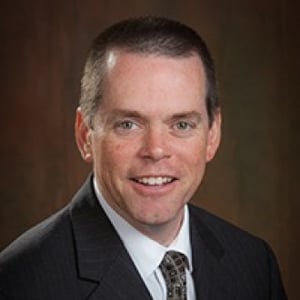
Associate Professor of Law,, St. Thomas University College of Law
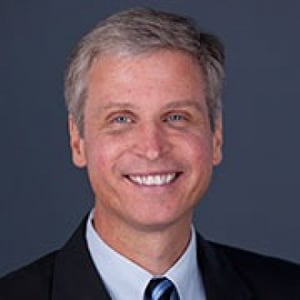
Frank Edwards Tyler Distinguished Professor of Law, University of Kansas School of Law
Stephen Ware is the author of five books, over 60 law review articles and many other publications. His writings have been cited by the Supreme Court of the United States and in at least 37 other cases. Ware teaches and writes on:
each with an international or comparative dimension. An experienced teacher of lawyering skills exercises in which student groups negotiate, mediate, and draft legal documents, Professor Ware takes this approach in his Transnational Dispute Resolution course, which he has customized for universities from Beijing to Istanbul to Kansas.
Ware has testified before both houses of the U.S. Congress, several state legislatures and, as an expert witness, in court. He is a frequent guest lecturer and speaker at academic and professional conferences—having given such presentations throughout the U.S. and in several other countries. He has appeared on numerous television and radio stations and been quoted in The New York Times, Wall Street Journal, USA Today, Financial Times, National Law Journal and many other news outlets. He is an elected member of the American Law Institute (ALI) and has served, at various times in his career, on the editorial board of the Journal of Legal Education and as an arbitrator for the American Arbitration Association.
Ware was named as the Frank Edwards Tyler Distinguished Professor of Law in 2019.
Harry Kalven, Jr. Professor of Law & Faculty Director, Constitutional Law Institute, University of Chicago Law School
William Baude is a Professor of Law and the Faculty Director of the Constitutional Law Institute at the University of Chicago Law School, where he teaches federal courts, constitutional law, and conflict of laws. His current research interests include different aspects of the Fourteenth Amendment (particularly both Section One and Section Three) and the nature of judicial discretion.
Among his other activities Baude is: the co-editor of two textbooks, The Constitution of the United States and Hart & Wechsler's Federal Courts in the Federal System; an Affiliated Scholar at the Center for the Study of Constitutional Originalism; a founding member of the Academic Freedom Alliance; a member of the American Law Institute; an occasional blogger at The Volokh Conspiracy; and a podcaster on Divided Argument. He also recently served on the Presidential Commission on the Supreme Court of the United States.
Professor Baude received his BS in Mathematics from the University of Chicago and his JD from Yale Law School. He then clerked for then-Judge Michael McConnell on the United States Court of Appeals, and Chief Justice John Roberts on the United States Supreme Court. Before joining the Chicago faculty, he was a fellow at the Stanford Constitutional Law Center, and a lawyer in Washington, DC.
Associate, Covington & Burling LLP
Kathryn Bi is an Associate at Covington & Burling LLP. She graduated from the University of Chicago Law School in 2015 and from Dartmouth College in 2009 where she earned Bachelor of Engineering and Bachelor of Arts degrees. Prior to law school Kathryn worked for three years as a chemical engineer at DuPont Corporation in Palo Alto and Genzyme Corporation in Boston.
Senior Associate to the President and Secretary of the University of Arizona
Jon Dudas has served as the Senior Associate to the President and Secretary of the University of Arizona since July 2014.
Mr. Dudas spent fourteen years in service to the U.S. Government, and as head of the USPTO, he led a performance-based government agency with 9,000 employees and a nearly $2 billion annual budget. During his tenure, the USPTO achieved record-level performance in meeting key annual objectives, and led key patent cooperation and development missions with China, India, Europe, Brazil and several other countries.
In addition to holding his post as Director of the USPTO from 2004 – 2009, Mr. Dudas’s public sector experience includes serving as Counsel for Legal Policy and Senior Floor Assistant for The Speaker of the House for the U.S. House of Representatives and Staff Director and Deputy General Counsel for the Committee on the Judiciary. After his appointment as Director of the USPTO, Mr. Dudas was a partner at Foley & Lardner LLP in Washington D.C. and then President of FIRST (For Inspiration and Recognition of Science and Technology), a national nonprofit that works to educate and inspire children to pursue careers in technology, science and innovation. He also served as a member of the Board of Directors for Conversant Intellectual Property Management, Inc., of Ottowa, Ontario. Mr. Dudas holds a J.D. from the University of Chicago and a bachelor’s degree in finance from the University of Illinois.
Chief Counsel, U.S. Chamber Litigation Center
Steven P. Lehotsky has significant experience developing and executing litigation strategies to help businesses and trade associations address their most important regulatory and public-policy challenges.
Before founding Lehotsky Keller LLP, Mr. Lehotsky directed the litigation strategy of the U.S. Chamber of Commerce, the world's leading business federation, where he worked from 2013-2021. While at the U.S. Chamber’s Litigation Center, he served as chief litigation counsel. Mr. Lehotsky led the Chamber's efforts to bring successful challenges to federal, state, and local regulations of business. He also directed the U.S. Chamber's efforts to defend pro-growth regulatory reforms. Mr. Lehotsky also led and implemented the U.S. Chamber’s strategies for filing hundreds of amicus curiae briefs in the U.S. Supreme Court, federal appellate and district courts, and state supreme and appellate courts. He is a frequent speaker at events and conferences on litigation and regulatory trends.
Mr. Lehotsky previously was an attorney at WilmerHale LLP in both the Washington D.C. and Boston offices, where he practiced government and regulatory litigation, appellate litigation, and counseling on constitutional, statutory, and regulatory issues for clients across a wide variety of industry sectors. He also previously practiced as a commercial litigator at Goodwin Procter LLP in Boston.
In addition, Mr. Lehotsky was an Attorney-Adviser in the Office of Legal Counsel of the U.S. Department of Justice from 2006-2009, advising the White House and executive departments and agencies on constitutional and statutory issues relating to national security, immigration, international sanctions under the International Emergency Economic Powers Act and other programs, the response to the 2008 financial crisis, pandemic influenza and infectious-disease mitigation, cybersecurity, and congressional investigations, among many other subjects.
Mr. Lehotsky was a law clerk for Justice Antonin Scalia of the Supreme Court of the United States and Chief Judge Douglas H. Ginsburg of the U.S. Court of Appeals for the District of Columbia Circuit.
Justice, Michigan Supreme Court
Stephen Markman was appointed Justice of the Michigan Supreme Court on October 1, 1999. He served as the Chief Justice from 2017-2019. Before his appointment, he served as Judge on the Michigan Court of Appeals from 1995-1999. Prior to this, he practiced law with the firm of Miller, Canfield, Paddock & Stone in Detroit.
From 1989-1993, Justice Markman served as United States Attorney, or federal prosecutor, in Michigan, after having been nominated by President George H. W. Bush and confirmed by the United States Senate. From 1985-1989, he served as Assistant Attorney General of the United States, after having been nominated by President Ronald Reagan and confirmed by the United States Senate. In that position, he headed the Department of Justice’s Office of Legal Policy, which served as the principal policy development office within the Department, and which coordinated the federal judicial selection process. Prior to this, he served for seven years as Chief Counsel of the United States Senate Subcommittee on the Constitution, and as Deputy Chief Counsel of the United States Senate Judiciary Committee.
Justice Markman has authored articles for such publications as the University of Michigan Journal of Law Reform, the Detroit College of Law Review, the Stanford Law Review, the University of Chicago Law Review, the American Criminal Justice Law Review, the Barrister’s Law Journal, the Harvard Journal of Law & Public Policy, and the American University Law Review. He has also served as a contributing editor of National Review magazine, and has authored chapters in such books as “In the Name of Justice: The Aims of the Criminal Law,” “Still the Law of the Land,” and “Originalism: A Quarter Century of Debate.”
Justice Markman has taught constitutional law at Hillsdale College since 1993. He has served on the Board of Directors of the Western Michigan University Thomas M. Cooley Law School. He traveled to Ukraine on two occasions on behalf of the State Department, to provide assistance in the development of that nation’s post-Soviet constitution. He is a Fellow of the Michigan Bar Foundation, a Master of the Bench of the Inns of Court, and a member of the One Hundred Club. He has spoken before hundreds of youth, civic, charitable, and legal groups throughout Michigan and nationally, and has coached Little League baseball and basketball. He lives with his wife Mary Kathleen in Mason, and has two sons, James and Charles.
Justice Markman was re-elected to the Supreme Court in 2000, 2004, and 2012. His present term expires January 1, 2021.
Professor of Law, University of Chicago Law School
Jennifer Nou is Professor of Law at the University of Chicago Law School. Nou’s main research interests are in administrative law, executive branch dynamics, regulatory policy, and constitutional separation-of-powers. Prior to joining the faculty, she was a Public Law Fellow at the Law School and also worked as a policy analyst and special assistant at the Office of Information and Regulatory Affairs. Nou is a graduate of Yale College and Yale Law School, and received an MPhil in Politics from Oxford University as a Marshall Scholar. After law school, she was a law clerk to Judge Richard Posner of the US Court of Appeals for the Seventh Circuit and then to Justice Stephen Breyer of the US Supreme Court. She is currently a public member of the Administrative Conference of the United States.
Senior Advisor, Covington & Burling
Senator Jon Kyl advises companies on domestic and international policies that influence U.S. and multi-national businesses and assists corporate clients on tax, health care, national security, and intellectual property matters, among others.
Jon served in the U.S. Senate from 1995 to 2013, retiring as the second-highest ranking Republican senator. He returned to the Senate in September 2018 after being appointed to succeed the late John McCain, and retired again at the end of 2018.
During Jon’s 26 years in Congress, he built a reputation for mastering the complexities of legislative policy and coalition building, first in the House of Representatives and then in the Senate. In 2010, Time magazine called him one of the 100 most influential people in the world, noting his "encyclopedic knowledge of domestic and foreign policy, and his hard work and leadership" and his "power to persuade."
Jon sat on the powerful Senate Finance Committee and was the ranking Republican on the Senate Judiciary Committee’s Subcommittee on Crime and Terrorism. A member of the Republican Leadership for well over a decade, Jon chaired the Senate Republican Policy Committee and the Senate Republican Conference, before becoming Senate Republican Whip. In filling Senator McCain’s seat, he served on the Armed Services and Homeland Security Committees.

The Wisdom and Legality of Sanctuary Cities
Stephanos Bibas, Kurt Damian Engelhardt, Mark Fleming, Christopher Hajec, John G. Malcolm, Jefferson B. Sessions, Ilya Somin
On November 14, 2019, the Federalist Society's Criminal Law & Procedure Practice Group hosted a...
Becoming an Academic
2019 National Student Symposium
Phoenix, AZThe Right To Be Forgotten
Meg Leta Jones, Jane Bambauer
The “right to be forgotten” refers to the right of individuals to have a company...
7 Minute Presentations of Works in Progress Panel 2-A
20th Annual Federalist Society Faculty Conference
San Diego, CALitigation: How Justice Scalia's Writing Style Affected American Jurisprudence
Brian T. Fitzpatrick, Joan Larsen, Toni Massaro, Kannon K. Shanmugam, Jeffrey S. Sutton
In addition to being a brilliant legal thinker, Justice Scalia was widely regarded as a...
Panel I: Innovation and the Administrative State
William Baude, Kathryn Bi, Jon Dudas, Steven Lehotsky, Steve J. Markman, Jennifer Nou
Regulation can be a significant barrier to innovation, protecting incumbents and making it harder to...
Panel I: Innovation and the Administrative State
William Baude, Kathryn Bi, Jon Dudas, Steven Lehotsky, Steve J. Markman, Jennifer Nou
Regulation can be a significant barrier to innovation, protecting incumbents and making it harder to...
Panel I: Innovation and the Administrative State
2015 National Student Symposium
Chicago, ILSexual Assault on Campus
Seth Galanter, Gail L. Heriot, Lara S. Kaufmann, Greg Lukianoff, Heather Mac Donald, Diane S. Sykes
Sexual assault on campus is a serious issue—so serious that it is difficult for some...
Post-Election Wrap-Up with Sen. Jon Kyl
Phoenix, Arizona