
Office of the Florida Attorney General
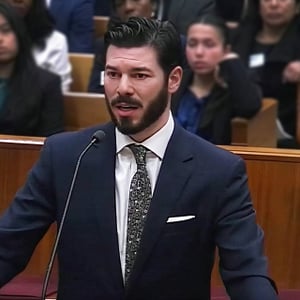
JEFFREY DESOUSA served as the Acting Solicitor General in the Florida Attorney General’s Office, where he focused on criminal appeals and constitutional litigation, primarily in the United States and Florida Supreme Courts, the Eleventh Circuit Court of Appeal, and the Florida district courts. He is a member of the Florida Bar’s Appellate Court Rules Committee and the First District Appellate American Inn of Court. After graduating with honors from Georgetown Law, Jeffrey served as an appellate attorney for the Miami-Dade Public Defender’s Office. He has worked on hundreds of appellate cases and presented oral argument in approximately 70, including 18 in the Florida Supreme Court.
Senior Legal Fellow, the Meese Institute for the Rule of Law, Advancing American Freedom
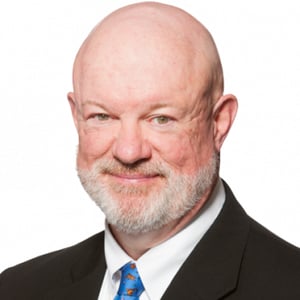
Paul J. Larkin is a Senior Legal Fellow in the Meese Institute for the Rule of Law at Advancing American Freedom. Paul has held various positions in the federal and state governments throughout his career, such as being an attorney in the Organized Crime and Racketeering Section of the Criminal Division at the U.S. Department of Justice, an Assistant to the Solicitor General in the Office of the Solicitor General at the U.S. Department of Justice, Special Agent-in-Charge and Acting Director of the Criminal Investigation Division at the Environmental Protection Agency, and a member of the Parole Abolition and Sentencing Reform Commission and of the Juvenile Justice Reform Commission in the Office of Virginia Governor George Allen.
He has also worked at Verizon Communications and two law firms in Washington, D.C. His current research is principally in the fields of drug policy, criminal justice policy, and administrative law and policy. He has published numerous articles in law and public policy journals, both in print and online.
Senior Fellow, National Review
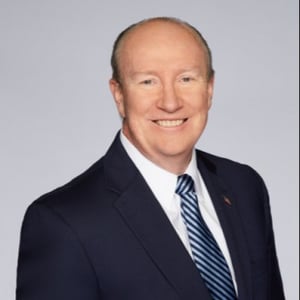
Bestselling author Andrew C. McCarthy is a contributing editor at National Review, a senior fellow at National Review Institute, and a Fox News contributor. He is a former Chief Assistant United States Attorney in the Southern District of New York and led the terrorism prosecution against the “Blind Sheikh” (Omar Abdel Rahman) and eleven other jihadists for conducting a war of urban terrorism against the United States that included the 1993 World Trade Center bombing and a plot to bomb New York City landmarks. During is 20-year career as a prosecutor, he received numerous honors, including the Justice Department’s highest awards. Andy speaks and writes widely on law and national security, radical Islam, politics, and culture. He has testified before Congress as an expert on issues of constitutional law, counterterrorism, and law-enforcement. He is a columnist for The Hill, and his essays and book reviews appear frequently at The New Criterion. His most recent New York Times bestselling book is Ball of Collusion (Encounter Books, 2019), about the Russiagate controversy (an updated version was published in 2020). His other books include Willful Blindness (2008), The Grand Jihad (2010), Spring Fever: The Illusion of Islamic Democracy (2012), and Faithless Execution (2014). He has also written several pamphlets in the Broadside series published by Encounter Books, most recently Islam and Free Speech (2015).
Member, Ifrah Law
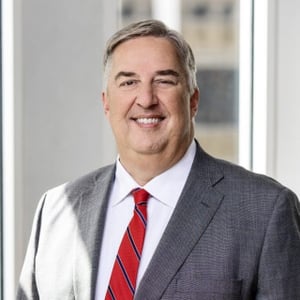
After 27 years as a prosecutor, James (“Jim”) Trusty brings to Ifrah Law extensive experience in complex, multi-district white collar litigation, especially in matters involving RICO, The Computer Fraud and Abuse Act, and The Money Laundering Control Act of 1986.
Jim has represented a wide variety of individuals and corporations in the white-collar space. He regularly represents professional athletes, both criminally and civilly, and during 2022 and 2023 he represented President Trump during pre-indictment litigation relating to the Mar-a-Lago and January 6 cases.
Prior to joining Ifrah Law, Jim had a long career in public service, most recently as Chief of the Organized Crime Section at the United States Department of Justice. For seven years, Jim was ultimately responsible for investigating and prosecuting regional, national, and international cases, supervising significant pleadings, and providing strategic and tactical guidance in investigations and multi-defendant trials. In addition to running the RICO Review Unit, which reviewed and approved all criminal RICO cases brought by federal prosecutors, he also was in charge of establishing and promoting policies focused on immigration reform, firearms trafficking, proposed Congressional testimony for DOJ officials, and internet gambling. Significant and sensitive matters on which he worked include the post-conviction review of the Alaska corruption case related to U.S. v. Theodore Stevens and the investigation into allegations of misconduct by a sitting U.S. Attorney and one of her subordinates.
Prior to his work at DOJ, Jim acted as Assistant U.S. Attorney in Greenbelt, Maryland, where he investigated and prosecuted a wide variety of white-collar and other criminal cases, including The Washington area Sniper investigation. He also prosecuted three death penalty cases and was a member of the Attorney General’s Capital Review Committee, responsible for assessing capital-eligible cases such as the Boston Marathon Bomber and the Charleston Church massacre.
In 2018, Jim was appointed by the Governor of Maryland to serve on The Task Force to Study Maryland’s Criminal Gang Statutes. The Task Force assessed the efficacy of existing state laws as they apply to gang-related criminal activity in the state and presented its findings and recommendations to the Governor.
Office of the Florida Attorney General
JEFFREY DESOUSA served as the Acting Solicitor General in the Florida Attorney General’s Office, where he focused on criminal appeals and constitutional litigation, primarily in the United States and Florida Supreme Courts, the Eleventh Circuit Court of Appeal, and the Florida district courts. He is a member of the Florida Bar’s Appellate Court Rules Committee and the First District Appellate American Inn of Court. After graduating with honors from Georgetown Law, Jeffrey served as an appellate attorney for the Miami-Dade Public Defender’s Office. He has worked on hundreds of appellate cases and presented oral argument in approximately 70, including 18 in the Florida Supreme Court.
Senior Legal Fellow, the Meese Institute for the Rule of Law, Advancing American Freedom
Paul J. Larkin is a Senior Legal Fellow in the Meese Institute for the Rule of Law at Advancing American Freedom. Paul has held various positions in the federal and state governments throughout his career, such as being an attorney in the Organized Crime and Racketeering Section of the Criminal Division at the U.S. Department of Justice, an Assistant to the Solicitor General in the Office of the Solicitor General at the U.S. Department of Justice, Special Agent-in-Charge and Acting Director of the Criminal Investigation Division at the Environmental Protection Agency, and a member of the Parole Abolition and Sentencing Reform Commission and of the Juvenile Justice Reform Commission in the Office of Virginia Governor George Allen.
He has also worked at Verizon Communications and two law firms in Washington, D.C. His current research is principally in the fields of drug policy, criminal justice policy, and administrative law and policy. He has published numerous articles in law and public policy journals, both in print and online.
Senior Fellow, National Review
Bestselling author Andrew C. McCarthy is a contributing editor at National Review, a senior fellow at National Review Institute, and a Fox News contributor. He is a former Chief Assistant United States Attorney in the Southern District of New York and led the terrorism prosecution against the “Blind Sheikh” (Omar Abdel Rahman) and eleven other jihadists for conducting a war of urban terrorism against the United States that included the 1993 World Trade Center bombing and a plot to bomb New York City landmarks. During is 20-year career as a prosecutor, he received numerous honors, including the Justice Department’s highest awards. Andy speaks and writes widely on law and national security, radical Islam, politics, and culture. He has testified before Congress as an expert on issues of constitutional law, counterterrorism, and law-enforcement. He is a columnist for The Hill, and his essays and book reviews appear frequently at The New Criterion. His most recent New York Times bestselling book is Ball of Collusion (Encounter Books, 2019), about the Russiagate controversy (an updated version was published in 2020). His other books include Willful Blindness (2008), The Grand Jihad (2010), Spring Fever: The Illusion of Islamic Democracy (2012), and Faithless Execution (2014). He has also written several pamphlets in the Broadside series published by Encounter Books, most recently Islam and Free Speech (2015).
Member, Ifrah Law
After 27 years as a prosecutor, James (“Jim”) Trusty brings to Ifrah Law extensive experience in complex, multi-district white collar litigation, especially in matters involving RICO, The Computer Fraud and Abuse Act, and The Money Laundering Control Act of 1986.
Jim has represented a wide variety of individuals and corporations in the white-collar space. He regularly represents professional athletes, both criminally and civilly, and during 2022 and 2023 he represented President Trump during pre-indictment litigation relating to the Mar-a-Lago and January 6 cases.
Prior to joining Ifrah Law, Jim had a long career in public service, most recently as Chief of the Organized Crime Section at the United States Department of Justice. For seven years, Jim was ultimately responsible for investigating and prosecuting regional, national, and international cases, supervising significant pleadings, and providing strategic and tactical guidance in investigations and multi-defendant trials. In addition to running the RICO Review Unit, which reviewed and approved all criminal RICO cases brought by federal prosecutors, he also was in charge of establishing and promoting policies focused on immigration reform, firearms trafficking, proposed Congressional testimony for DOJ officials, and internet gambling. Significant and sensitive matters on which he worked include the post-conviction review of the Alaska corruption case related to U.S. v. Theodore Stevens and the investigation into allegations of misconduct by a sitting U.S. Attorney and one of her subordinates.
Prior to his work at DOJ, Jim acted as Assistant U.S. Attorney in Greenbelt, Maryland, where he investigated and prosecuted a wide variety of white-collar and other criminal cases, including The Washington area Sniper investigation. He also prosecuted three death penalty cases and was a member of the Attorney General’s Capital Review Committee, responsible for assessing capital-eligible cases such as the Boston Marathon Bomber and the Charleston Church massacre.
In 2018, Jim was appointed by the Governor of Maryland to serve on The Task Force to Study Maryland’s Criminal Gang Statutes. The Task Force assessed the efficacy of existing state laws as they apply to gang-related criminal activity in the state and presented its findings and recommendations to the Governor.
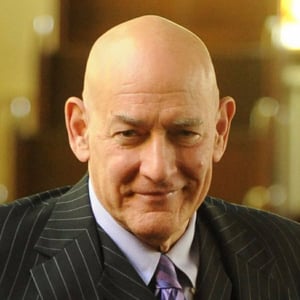
Raoul Berger Professor of Legal History at Northwestern University School of Law
Stephen Presser is a leading American legal historian and expert on shareholder liability for corporate debts. He is frequently an invited witness before committees of the U.S. Senate and House of Representatives on issues of constitutional law. He holds a joint appointment with the J. L. Kellogg Graduate School of Management and also teaches in Northwestern's history department.
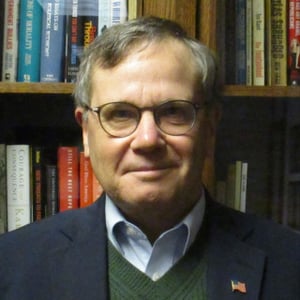
Senior Fellow in Constitutional Jurisprudence, Independence Institute
Professor Robert G. Natelson is a constitutional scholar and author.
Rob’s constitutional scholarship has been cited repeatedly by justices and parties at the U.S. Supreme Court—as well as by federal appeals courts, and at least 18 state supreme courts.
Rob’s research into the Constitution’s original meaning has carried him to libraries throughout the United States and in Britain, including four months at Oxford University. His books and articles span many different parts of the Constitution, including groundbreaking studies of the Necessary and Proper Clause, the Indian Commerce Clause, federalism, Founding-Era interpretation, regulation of elections, and the amendment process of Article V. He created the first-ever online bibliography for 18th century materials used in constitutional research. He is a contributing author to the Encyclopedia of the Supreme Court of the United States (on Magna Carta). He contributed eight essays to the third edition of the Heritage Guide to the Constitution: five on the amendment procedure and one each on the Guarantee Clause, the Postal Clause, and the Recess Appointments Clause.
U.S. Supreme Court justices have relied explicitly on Rob’s research in 41 citations in 13 separate cases.
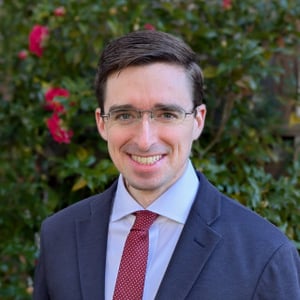
Solicitor General, Alabama Office of the Attorney General
Barrett Bowdre serves as solicitor general in the Alabama Attorney General’s Office, where he oversees the state’s appellate docket and helps defend the state’s interests in courts throughout the country. He previously served as principal deputy solicitor general and, before that, deputy solicitor general. He is a former law clerk to Judge Paul J. Kelly, Jr., of the U.S. Court of Appeals for the Tenth Circuit, then-Chief Judge W. Keith Watkins of the U.S. District Court for the Middle District of Alabama, and then-Chief Judge Ed Carnes of the U.S. Court of Appeals for the Eleventh Circuit. He holds a J.D., summa cum laude, from the University of Alabama School of Law and a B.A., cum laude, from Furman University. Before attending law school, he worked as a research assistant at the American Enterprise Institute, where he researched civic education initiatives and helped compile literary anthologies exploring the American character.
Sean Collins is a member of the University of Alabama School of Law class of 2024. After graduation, he will serve as a law clerk to Judge Allen Winsor of the U.S. District Court for the Northern District of Florida, then as a law clerk to Judge Robert Luck of the U.S. Court of Appeals for the Eleventh Circuit. Before attending law school, he graduated magna cum laude from Hillsdale College, where he studied Classics, Philosophy, and Religion and was a member of one of the only undergraduate Federalist Society chapters in the country.

What Did the Founders Think of the President’s Pardon Power?
Jeffrey DeSousa, Paul James Larkin, Andrew McCarthy, James Trusty
In this Federalist Society America250 series, experts analyze modern legal and policy debates through the...
What Did the Founders Think of the President’s Pardon Power?
Jeffrey DeSousa, Paul James Larkin, Andrew McCarthy, James Trusty
In this Federalist Society America250 series, experts analyze modern legal and policy debates through the...
The Past Is Not a Foreign Country: How a Historical Critique of Originalism Misses That the Past Is Prologue
Stephen B. Presser
A review of Jonathan Gienapp, Against Constitutional Originalism: A Historical Critique (2024) This review is...
Applying the Founders' Originalism
Robert G. Natelson
The 1787 Federal Convention drafted, and the ratifiers approved, the United States Constitution under the...
Topics
Moore v. United States and the Uncertainty About “Direct” and “Indirect” Taxes
Our Constitution distinguishes between direct and indirect taxes. Indirect tax rates must be uniform throughout...
Topics
Torchbearer of the Republic: James Madison’s Fights for Freedom and the Constitution.
This post originally appeared at the Pacific Legal Foundation. James Madison is remembered as the...
Topics
The Invisible American Founding
Five years ago, the 1619 Project opened a new battle over how our children learn...
Topics
The Meaning of “Regulate Commerce” to the Constitution’s Ratifiers: An Update
Constitutional Background The constitutional justification for much of the federal regulatory and administrative apparatus rests...
Topics
The Supreme Court’s Confused Decision in Haaland v. Brackeen
On June 15, the Supreme Court issued Haaland v. Brackeen. Among other issues, the Court...
State Court Docket Watch: Glass v. City of Montgomery
Barrett Bowdre, Sean Collins
Alabama’s constitution prohibits the legislature from enacting a “local law”—one that applies only in one...