

Vice President for Legal Affairs, Goldwater Institute
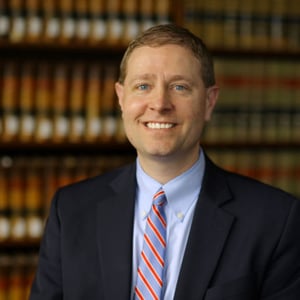
Executive Director, Salmon P. Chase Center for Civics, Culture, and Society, The Ohio State University
Professor Lee J. Strang serves as the inaugural executive director of the Salmon P. Chase Center for Civics, Culture, and Society at The Ohio State University.
Initiated in 2023 by the state of Ohio, the Chase Center will be an academic home at Ohio State for teaching, research, and programing on the foundations of the American constitutional order and its impact on society. As executive director, Professor Strang is responsible for organizing the center, overseeing the hiring and appointment of the center’s faculty, developing curriculum, and delivering student and academic programming. He also holds a faculty appointment in the Moritz College of Law at Ohio State.
Professor Strang is a nationally recognized legal scholar who has published dozens of articles in leading journals in the fields of constitutional law and interpretation, property law, and religion and the First Amendment. He co-edits the textbook Federal Constitutional Law, and his most recent book, Originalism’s Promise: A Natural Law Account of the American Constitution is the first book-length, natural law justification for originalism. He currently is writing on civic thought and leadership, and he is finalizing a book on the history of American Catholic legal education (with John M. Breen).
Before joining Ohio State, Professor Strang served as the inaugural director of the University of Toledo’s Institute of American Constitutional Thought & Leadership. He joined the Toledo College of Law faculty in 2008, was granted tenure in 2010, and was named John W. Stoepler Professor of Law & Values in 2015. The University of Toledo awarded Professor Strang its Outstanding Faculty Research and Scholarship Award in 2017. Before that, he was a visiting professor at Michigan State University College of Law. A graduate of the University of Iowa, where he was articles editor of the Iowa Law Review and Order of the Coif, Professor Strang holds an LL.M. degree from Harvard Law School.
Professor Strang has been a visiting scholar at the Georgetown Center for the Constitution and a visiting fellow at the James Madison Program at Princeton University. In 2016, he was appointed to the Ohio Advisory Committee of the U.S. Commission on Civil Rights and reappointed as chair in 2023.
Prior to teaching, Professor Strang served as a judicial clerk for Judge Alice M. Batchelder of the U.S. Court of Appeals for the Sixth Circuit. He was also an associate for Jenner & Block LLP in Chicago, where he practiced in general and appellate litigation.
Professor Strang is a frequent presenter at scholarly conferences. He is the president of the Board of Trustees of Northwest Ohio Classical Academy, Ohio’s first classical charter school. He is also a regular participant in debates at law schools across the country, a contributor to the media, and a speaker to political, civic, and religious groups.
Vice President for Legal Affairs, Goldwater Institute
Executive Director, Salmon P. Chase Center for Civics, Culture, and Society, The Ohio State University
Professor Lee J. Strang serves as the inaugural executive director of the Salmon P. Chase Center for Civics, Culture, and Society at The Ohio State University.
Initiated in 2023 by the state of Ohio, the Chase Center will be an academic home at Ohio State for teaching, research, and programing on the foundations of the American constitutional order and its impact on society. As executive director, Professor Strang is responsible for organizing the center, overseeing the hiring and appointment of the center’s faculty, developing curriculum, and delivering student and academic programming. He also holds a faculty appointment in the Moritz College of Law at Ohio State.
Professor Strang is a nationally recognized legal scholar who has published dozens of articles in leading journals in the fields of constitutional law and interpretation, property law, and religion and the First Amendment. He co-edits the textbook Federal Constitutional Law, and his most recent book, Originalism’s Promise: A Natural Law Account of the American Constitution is the first book-length, natural law justification for originalism. He currently is writing on civic thought and leadership, and he is finalizing a book on the history of American Catholic legal education (with John M. Breen).
Before joining Ohio State, Professor Strang served as the inaugural director of the University of Toledo’s Institute of American Constitutional Thought & Leadership. He joined the Toledo College of Law faculty in 2008, was granted tenure in 2010, and was named John W. Stoepler Professor of Law & Values in 2015. The University of Toledo awarded Professor Strang its Outstanding Faculty Research and Scholarship Award in 2017. Before that, he was a visiting professor at Michigan State University College of Law. A graduate of the University of Iowa, where he was articles editor of the Iowa Law Review and Order of the Coif, Professor Strang holds an LL.M. degree from Harvard Law School.
Professor Strang has been a visiting scholar at the Georgetown Center for the Constitution and a visiting fellow at the James Madison Program at Princeton University. In 2016, he was appointed to the Ohio Advisory Committee of the U.S. Commission on Civil Rights and reappointed as chair in 2023.
Prior to teaching, Professor Strang served as a judicial clerk for Judge Alice M. Batchelder of the U.S. Court of Appeals for the Sixth Circuit. He was also an associate for Jenner & Block LLP in Chicago, where he practiced in general and appellate litigation.
Professor Strang is a frequent presenter at scholarly conferences. He is the president of the Board of Trustees of Northwest Ohio Classical Academy, Ohio’s first classical charter school. He is also a regular participant in debates at law schools across the country, a contributor to the media, and a speaker to political, civic, and religious groups.

Harry Kalven, Jr. Professor of Law & Faculty Director, Constitutional Law Institute, University of Chicago Law School
William Baude is a Professor of Law and the Faculty Director of the Constitutional Law Institute at the University of Chicago Law School, where he teaches federal courts, constitutional law, and conflict of laws. His current research interests include different aspects of the Fourteenth Amendment (particularly both Section One and Section Three) and the nature of judicial discretion.
Among his other activities Baude is: the co-editor of two textbooks, The Constitution of the United States and Hart & Wechsler's Federal Courts in the Federal System; an Affiliated Scholar at the Center for the Study of Constitutional Originalism; a founding member of the Academic Freedom Alliance; a member of the American Law Institute; an occasional blogger at The Volokh Conspiracy; and a podcaster on Divided Argument. He also recently served on the Presidential Commission on the Supreme Court of the United States.
Professor Baude received his BS in Mathematics from the University of Chicago and his JD from Yale Law School. He then clerked for then-Judge Michael McConnell on the United States Court of Appeals, and Chief Justice John Roberts on the United States Supreme Court. Before joining the Chicago faculty, he was a fellow at the Stanford Constitutional Law Center, and a lawyer in Washington, DC.
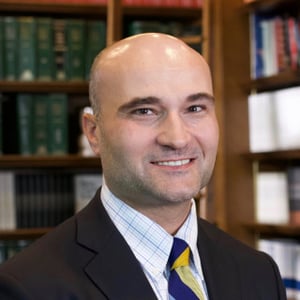
Deputy Attorney General, Legal Strategy, Texas
Ryan serves as Deputy Attorney General for Legal Strategy in the Texas Attorney General's Leadership Team. He most recently acted as Associate Deputy Attorney General for Civil Litigation. For the previous four years, Mr. Walters served in the Special Litigation Division—as Special Counsel, Deputy Chief, and eventually Chief. In those positions, he led the Attorney General's most significant litigation against the Biden Administration, including successful challenges to federal rules weakening immigration enforcement and those imposing gender-identity mandates on Texas's workplaces, schools, and hospitals. Prior to his tenure in the Office of the Attorney General, Mr. Walters served as an attorney with the Texas Public Policy Foundation, as an Assistant Attorney General in the Ohio Attorney General’s Office, and as a commercial litigator at two international law firms. He is a graduate of The Ohio State University and holds law degrees from the University of Michigan Law School and the University of California, Berkeley, School of Law.
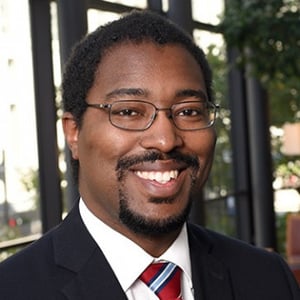
Partner, Taft Stettinius & Hollister LLP
Philip litigates complex matters in state and federal courts. He has briefed appeals in multiple U.S. Courts of Appeals, including the Sixth, Seventh, and Ninth Circuits, as well as state appellate courts in Ohio, Kentucky, and Georgia. Philip has also represented amici at both the cert petition and merits stages in the U.S. Supreme Court.
Prior to joining Taft, Philip served as a law clerk for Judge Raymond M. Kethledge of the U.S. Court of Appeals for the Sixth Circuit, Judge Amul R. Thapar of the U.S. District Court for the Eastern District of Kentucky, and Judge Lavenski R. Smith of the U.S. Court of Appeals for the Eighth Circuit.
Philip serves on the board of directors for the Cincinnati and Northern Kentucky lawyers chapters of the Federalist Society. He was a 2018 James Wilson Fellow with the James Wilson Institute, a 2013 John Marshall Fellow with the Claremont Institute Center for Constitutional Jurisprudence, and a 2011 Blackstone Fellow with the Alliance Defending Freedom.
Philip received his undergraduate degree, with Highest Honors, from Ouachita Baptist University. He received his J.D. from the University of Virginia School of Law, where he served as the submissions review editor for the Journal of Law and Politics.

Assistant Professor of Law, The Ohio State University - Moritz College of Law
Bridget Dooling is a nationally recognized expert on administrative law and regulatory policy. Her scholarship on regulatory matters has been or will be published in leading legal journals including the Duke Law Journal, the Administrative Law Review, the Minnesota Law Review Headnotes, the American University Law Review and The Annals of Health Law.
Professor Dooling teaches courses on legislation and regulation, administrative law and other regulatory topics. She is a Senior Fellow at the Administrative Conference of the United States (ACUS) and recently served on the Council of the American Bar Association’s Section of Administrative Law and Regulatory Practice.
Prior to joining the faculty at Ohio State, Dooling was a research professor with the George Washington University Regulatory Studies Center and a professor of law (by courtesy) at GW Law. Before that, Professor Dooling spent over 10 years in the federal government as a deputy chief, senior policy analyst and attorney for the Office of Information and Regulatory Affairs at the U.S. Office of Management and Budget.

Professor of Law and Associate Dean, Boston College Law School; Nonresident Senior Fellow, American Enterprise Institute, Boston College Law School
Professor Lyons is a Professor and Associate Dean at Boston College Law School. He specializes in telecommunications and tech policy, energy, and administrative law. Before joining the faculty, he practiced at the firm of Munger, Tolles and Olson in Los Angeles. He also clerked for the Judge Cynthia Holcomb Hall of the Ninth Circuit Court of Appeals.
Professor Lyons is also a Nonresident Senior Fellow at the American Enterprise Institute, where he has written over 250 blog posts on tech policy issues, including net neutrality, telecommunications regulation, First Amendment issues with tech regulation, and generative AI.
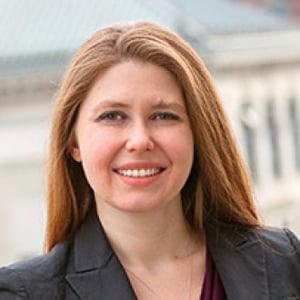
Professor of Law, Brooklyn Law School
Professor Mulligan teaches Internet law, intellectual property law, and trusts & estates. Her research addresses efforts to adapt intellectual property law for the digital age, the relationship between law and technology, and theories of constitutional interpretation. Recently, she has written about the Internet of Things, robot punishment, and early translations of the Constitution.
While at Brooklyn, Professor Mulligan researched as a visiting scholar at the Georgetown Center for the Constitution and taught as a visiting associate professor at Yale Law School. Previously, she taught at the University of Georgia and was a postdoctoral associate and lecturer in law at the Information Society Project at Yale Law School. Her scholarship has been published in a variety of journals and law reviews, including Georgia Law Review, SMU Law Review, and Constitutional Commentary.
Professor Mulligan earned her bachelor’s degree cum laude and her law degree cum laude from Harvard University, where she worked as a production and article editor for the Harvard Journal of Law & Technology. Before entering academia, she served as a law clerk for Judge Charles F. Lettow of the U.S. Court of Federal Claims.

Professor of Law, University of Michigan Law School
Christopher J. Walker is a Professor of Law at the University of Michigan. Prior to joining Michigan law faculty in 2022, he spent a decade teaching at The Ohio State University Moritz College of Law. He previously clerked for Justice Anthony Kennedy of the U.S. Supreme Court, worked on the Civil Appellate Staff at the U.S. Department of Justice, and served on the Senate Judiciary Committee staff for the Gorsuch Supreme Court confirmation. Professor Walker’s research focuses on administrative law, regulation, and law and policy at the agency level. Outside the law school, he chaired the American Bar Association’s Section of Administrative Law and Regulatory Practice in 2020-21 and served as one of forty Public Members of the Administrative Conference of the United States from 2016-2022, and he continues to serve in both organizations in various capacities. He also works of counsel at the U.S. Chamber Litigation Center. In 2022, he received the Federalist Society’s Joseph Story Award.

Professor of Law, Texas A&M University School of Law
Daniel E. Walters is an a Professor of Law at the Texas A&M University School of Law. Prior to joining the Texas A&M faculty, he was an Assistant Professor of Law at Penn State Law, and before that a Regulation Fellow at the University of Pennsylvania Carey School of Law. He earned a JD from the University of Michigan Law School and a PhD in political science from the University of Wisconsin-Madison. He clerked for the Honorable M. Margaret McKeown on the U.S. Court of Appeals for the Ninth Circuit. He is also admitted to practice law (but inactive) in Illinois.
Professor Walters writes about administrative and regulatory law, with a particular focus on the implications of democratic theory for the administrative state, on public participation in administrative processes, on deference doctrines, on empirical studies of administrative behavior, and on the court-agency relationship. He also writes about climate change and energy law, with an emphasis on electric transmission lines, grid governance, the food-climate nexus, and climate legislation. His articles have appeared in many of the top journals in law and public administration, including the Yale Law Journal, the Stanford Law Review, the Michigan Law Review, the Cornell Law Review, the Georgetown Law Journal, the University of Pennsylvania Law Review, the Southern California Law Review, the Emory Law Journal, the Iowa Law Review, the Harvard Environmental Law Review, the Administrative Law Review, Ecology Law Quarterly, and the Journal of Public Administration Research & Theory (JPART), among others. He is a co-editor, with Cary Coglianese, of a forthcoming book: Regulation in a Turbulent Era. He is a former winner of the Richard D. Cudahy Writing Competition on Administrative & Regulatory Law (student category) and the Beryl A. Radin Award for best article in JPART, and his work has been included in the Environmental Law Institute’s Environmental Law & Policy Review’s list of top environmental law review articles.
Professor Walters is an active volunteer in several professional organizations, including the ABA Section of Administrative Law & Regulatory Practice (the Section) and the Foundation for Natural Resources and Energy Law (FNREL). Since 2020, he has served as the Editor-in-Chief of Administrative & Regulatory Law News, the ABA Section’s quarterly magazine, and in 2023 he was recently elected to a three-year term on the Section’s Council of Advisors. He has served since 2022 on the Natural Resources Law Teacher’s Planning Committee within FNREL, and before that he was a Trustee with the organization from 2021-2022.
Assistant Professor of Law, The Ohio State University - Moritz College of Law
Bridget Dooling is a nationally recognized expert on administrative law and regulatory policy. Her scholarship on regulatory matters has been or will be published in leading legal journals including the Duke Law Journal, the Administrative Law Review, the Minnesota Law Review Headnotes, the American University Law Review and The Annals of Health Law.
Professor Dooling teaches courses on legislation and regulation, administrative law and other regulatory topics. She is a Senior Fellow at the Administrative Conference of the United States (ACUS) and recently served on the Council of the American Bar Association’s Section of Administrative Law and Regulatory Practice.
Prior to joining the faculty at Ohio State, Dooling was a research professor with the George Washington University Regulatory Studies Center and a professor of law (by courtesy) at GW Law. Before that, Professor Dooling spent over 10 years in the federal government as a deputy chief, senior policy analyst and attorney for the Office of Information and Regulatory Affairs at the U.S. Office of Management and Budget.
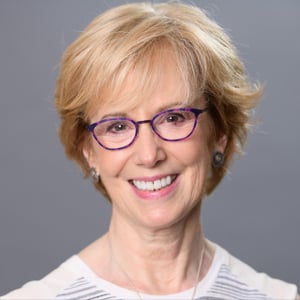
Director, GW Regulatory Studies Center & Distinguished Professor of Practice, Trachtenberg School of Public Policy & Public Administration, The George Washington University
Susan Dudley is the Founder and Director of the George Washington University Regulatory Studies Center, established in 2009 to raise awareness of regulations’ effects and improve regulatory policy through research, education, and outreach. She is also a distinguished professor of practice in the Trachtenberg School of Public Policy and Public Administration. She is past-president of the Society for Benefit Cost Analysis, a senior fellow of the Administrative Conference of the United States, and on the Regulatory Transparency Project Regulatory Practice Working Group. Her book, Regulation: A Primer, with Jerry Brito, is available on Amazon.com.
From April 2007 through January 2009, Professor Dudley served as the Presidentially-appointed Administrator of the Office of Information and Regulatory Affairs in the U.S. Office of Management and Budget and was responsible for the review of draft executive branch regulations under Executive Order 12866, the collection of federal-government-wide information under the Paperwork Reduction Act, the development and implementation of government-wide policies in the areas of information policy, privacy, and statistical policy, and international regulatory cooperation efforts.
Prior to OIRA, she directed the Regulatory Studies Program at the Mercatus Center at George Mason University, and taught courses on regulation at the George Mason University School of Law. Earlier in her career, Professor Dudley served as an economist at OIRA, as well as the Environmental Protection Agency and the Commodity Futures Trading Commission. She was also a consultant to government and private clients at Economists Incorporated. She holds a Master of Science degree from the Sloan School of Management at MIT and a Bachelor of Science degree (summa cum laude) in Resource Economics from the University of Massachusetts, Amherst.
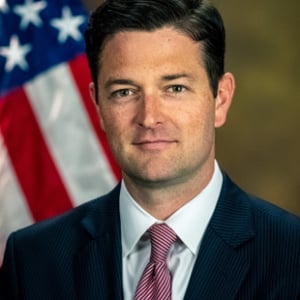
Senior Counsel and Director of Global Regulatory Matters, ConsenSys Software
Bill Hughes is senior counsel and director of global regulatory matters for ConsenSys Software, the leading Ethereum blockchain software company. Bill focuses on the diverse and ever evolving crypto global regulatory landscape, and the legal and public policy issues with which ConsenSys and the broader crypto ecosystem is grappling.
Bill joined ConsenSys after serving as an Associate Deputy Attorney General at the Department of Justice, where he managed, among other things, the Department’s work on prospective regulations, legislative proposals, and policies across a broad spectrum of legal and operational issues. He worked closely with the White House and other federal agencies on regulatory and policy initiatives and coordinated DOJ’s law enforcement response to COVID-19-related consumer fraud and money laundering. Bill also has served at the White House, where he oversaw various operational components. Bill began his career by clerking for a federal judge in New York and litigating with the firm of Sullivan & Cromwell LLP. Bill received his JD from the University of Virginia School of Law and his BA from Vanderbilt University.
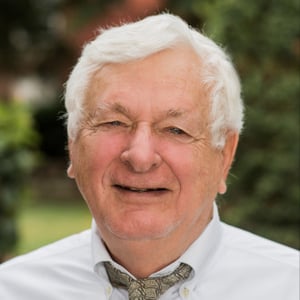
Lyle T. Alverson Professor of Law, George Washington University Law School
Professor Pierce is author of over twenty books and 130 articles on administrative law, government regulation, and the effects of various forms of government intervention on the performance of markets. His books and articles have been cited in hundreds of judicial opinions, including over a dozen opinions of the U.S. Supreme Court.

Laurence H. Silberman Chair in Constitutional Governance, American Enterprise Institute; Executive Director, Antonin Scalia Law School’s C. Boyden Gray Center for the Study of the Administrative State
Adam J. White is the Laurence H. Silberman Chair in Constitutional Governance and senior fellow at the American Enterprise Institute, where he focuses on the Supreme Court and the administrative state. He also directs the Antonin Scalia Law School’s C. Boyden Gray Center for the Study of the Administrative State.
He writes on regulation and constitutional government for a variety of publications. He practiced law in Washington, D.C., after clerking for the D.C. Circuit's Judge David Sentelle. He also has been chairman of the ABA's Administrative Law Section.
In 2021, he served on the Presidential Commission on the Supreme Court of the United States, where he criticized “Court packing” and other efforts to restructure the Supreme Court.
Vice President for Legal Affairs, Goldwater Institute
Executive Director, Salmon P. Chase Center for Civics, Culture, and Society, The Ohio State University
Professor Lee J. Strang serves as the inaugural executive director of the Salmon P. Chase Center for Civics, Culture, and Society at The Ohio State University.
Initiated in 2023 by the state of Ohio, the Chase Center will be an academic home at Ohio State for teaching, research, and programing on the foundations of the American constitutional order and its impact on society. As executive director, Professor Strang is responsible for organizing the center, overseeing the hiring and appointment of the center’s faculty, developing curriculum, and delivering student and academic programming. He also holds a faculty appointment in the Moritz College of Law at Ohio State.
Professor Strang is a nationally recognized legal scholar who has published dozens of articles in leading journals in the fields of constitutional law and interpretation, property law, and religion and the First Amendment. He co-edits the textbook Federal Constitutional Law, and his most recent book, Originalism’s Promise: A Natural Law Account of the American Constitution is the first book-length, natural law justification for originalism. He currently is writing on civic thought and leadership, and he is finalizing a book on the history of American Catholic legal education (with John M. Breen).
Before joining Ohio State, Professor Strang served as the inaugural director of the University of Toledo’s Institute of American Constitutional Thought & Leadership. He joined the Toledo College of Law faculty in 2008, was granted tenure in 2010, and was named John W. Stoepler Professor of Law & Values in 2015. The University of Toledo awarded Professor Strang its Outstanding Faculty Research and Scholarship Award in 2017. Before that, he was a visiting professor at Michigan State University College of Law. A graduate of the University of Iowa, where he was articles editor of the Iowa Law Review and Order of the Coif, Professor Strang holds an LL.M. degree from Harvard Law School.
Professor Strang has been a visiting scholar at the Georgetown Center for the Constitution and a visiting fellow at the James Madison Program at Princeton University. In 2016, he was appointed to the Ohio Advisory Committee of the U.S. Commission on Civil Rights and reappointed as chair in 2023.
Prior to teaching, Professor Strang served as a judicial clerk for Judge Alice M. Batchelder of the U.S. Court of Appeals for the Sixth Circuit. He was also an associate for Jenner & Block LLP in Chicago, where he practiced in general and appellate litigation.
Professor Strang is a frequent presenter at scholarly conferences. He is the president of the Board of Trustees of Northwest Ohio Classical Academy, Ohio’s first classical charter school. He is also a regular participant in debates at law schools across the country, a contributor to the media, and a speaker to political, civic, and religious groups.
Assistant Professor of Law, The Ohio State University - Moritz College of Law
Bridget Dooling is a nationally recognized expert on administrative law and regulatory policy. Her scholarship on regulatory matters has been or will be published in leading legal journals including the Duke Law Journal, the Administrative Law Review, the Minnesota Law Review Headnotes, the American University Law Review and The Annals of Health Law.
Professor Dooling teaches courses on legislation and regulation, administrative law and other regulatory topics. She is a Senior Fellow at the Administrative Conference of the United States (ACUS) and recently served on the Council of the American Bar Association’s Section of Administrative Law and Regulatory Practice.
Prior to joining the faculty at Ohio State, Dooling was a research professor with the George Washington University Regulatory Studies Center and a professor of law (by courtesy) at GW Law. Before that, Professor Dooling spent over 10 years in the federal government as a deputy chief, senior policy analyst and attorney for the Office of Information and Regulatory Affairs at the U.S. Office of Management and Budget.
Professor of Law and Associate Dean, Boston College Law School; Nonresident Senior Fellow, American Enterprise Institute, Boston College Law School
Professor Lyons is a Professor and Associate Dean at Boston College Law School. He specializes in telecommunications and tech policy, energy, and administrative law. Before joining the faculty, he practiced at the firm of Munger, Tolles and Olson in Los Angeles. He also clerked for the Judge Cynthia Holcomb Hall of the Ninth Circuit Court of Appeals.
Professor Lyons is also a Nonresident Senior Fellow at the American Enterprise Institute, where he has written over 250 blog posts on tech policy issues, including net neutrality, telecommunications regulation, First Amendment issues with tech regulation, and generative AI.
Professor of Law, Brooklyn Law School
Professor Mulligan teaches Internet law, intellectual property law, and trusts & estates. Her research addresses efforts to adapt intellectual property law for the digital age, the relationship between law and technology, and theories of constitutional interpretation. Recently, she has written about the Internet of Things, robot punishment, and early translations of the Constitution.
While at Brooklyn, Professor Mulligan researched as a visiting scholar at the Georgetown Center for the Constitution and taught as a visiting associate professor at Yale Law School. Previously, she taught at the University of Georgia and was a postdoctoral associate and lecturer in law at the Information Society Project at Yale Law School. Her scholarship has been published in a variety of journals and law reviews, including Georgia Law Review, SMU Law Review, and Constitutional Commentary.
Professor Mulligan earned her bachelor’s degree cum laude and her law degree cum laude from Harvard University, where she worked as a production and article editor for the Harvard Journal of Law & Technology. Before entering academia, she served as a law clerk for Judge Charles F. Lettow of the U.S. Court of Federal Claims.
Professor of Law, University of Michigan Law School
Christopher J. Walker is a Professor of Law at the University of Michigan. Prior to joining Michigan law faculty in 2022, he spent a decade teaching at The Ohio State University Moritz College of Law. He previously clerked for Justice Anthony Kennedy of the U.S. Supreme Court, worked on the Civil Appellate Staff at the U.S. Department of Justice, and served on the Senate Judiciary Committee staff for the Gorsuch Supreme Court confirmation. Professor Walker’s research focuses on administrative law, regulation, and law and policy at the agency level. Outside the law school, he chaired the American Bar Association’s Section of Administrative Law and Regulatory Practice in 2020-21 and served as one of forty Public Members of the Administrative Conference of the United States from 2016-2022, and he continues to serve in both organizations in various capacities. He also works of counsel at the U.S. Chamber Litigation Center. In 2022, he received the Federalist Society’s Joseph Story Award.
Professor of Law, Texas A&M University School of Law
Daniel E. Walters is an a Professor of Law at the Texas A&M University School of Law. Prior to joining the Texas A&M faculty, he was an Assistant Professor of Law at Penn State Law, and before that a Regulation Fellow at the University of Pennsylvania Carey School of Law. He earned a JD from the University of Michigan Law School and a PhD in political science from the University of Wisconsin-Madison. He clerked for the Honorable M. Margaret McKeown on the U.S. Court of Appeals for the Ninth Circuit. He is also admitted to practice law (but inactive) in Illinois.
Professor Walters writes about administrative and regulatory law, with a particular focus on the implications of democratic theory for the administrative state, on public participation in administrative processes, on deference doctrines, on empirical studies of administrative behavior, and on the court-agency relationship. He also writes about climate change and energy law, with an emphasis on electric transmission lines, grid governance, the food-climate nexus, and climate legislation. His articles have appeared in many of the top journals in law and public administration, including the Yale Law Journal, the Stanford Law Review, the Michigan Law Review, the Cornell Law Review, the Georgetown Law Journal, the University of Pennsylvania Law Review, the Southern California Law Review, the Emory Law Journal, the Iowa Law Review, the Harvard Environmental Law Review, the Administrative Law Review, Ecology Law Quarterly, and the Journal of Public Administration Research & Theory (JPART), among others. He is a co-editor, with Cary Coglianese, of a forthcoming book: Regulation in a Turbulent Era. He is a former winner of the Richard D. Cudahy Writing Competition on Administrative & Regulatory Law (student category) and the Beryl A. Radin Award for best article in JPART, and his work has been included in the Environmental Law Institute’s Environmental Law & Policy Review’s list of top environmental law review articles.
Professor Walters is an active volunteer in several professional organizations, including the ABA Section of Administrative Law & Regulatory Practice (the Section) and the Foundation for Natural Resources and Energy Law (FNREL). Since 2020, he has served as the Editor-in-Chief of Administrative & Regulatory Law News, the ABA Section’s quarterly magazine, and in 2023 he was recently elected to a three-year term on the Section’s Council of Advisors. He has served since 2022 on the Natural Resources Law Teacher’s Planning Committee within FNREL, and before that he was a Trustee with the organization from 2021-2022.
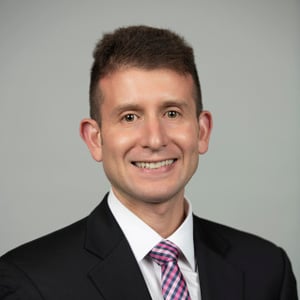
Professor of Political Science, Ohio State University
Professor Kogan is a Professor of Political Science at The Ohio State University, where his research focuses on American politics, public policy, and the intersection of political institutions and electoral behavior. He is widely recognized for his empirical work on political accountability, voter behavior, and institutional design, with research published in leading academic journals and cited in major policy discussions. Professor Kogan frequently provides policy analysis to state and national audiences, and his insights offer a data-driven perspective on the political and institutional dynamics.
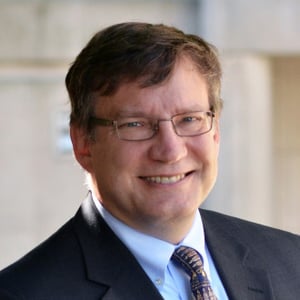
Chairman and Founder, Institute for Free Speech; Josiah H. Blackmore II/Shirley M. Nault Designated Professor of Law, Capital University Law School
Assistant Professor of Law, The Ohio State University - Moritz College of Law
Bridget Dooling is a nationally recognized expert on administrative law and regulatory policy. Her scholarship on regulatory matters has been or will be published in leading legal journals including the Duke Law Journal, the Administrative Law Review, the Minnesota Law Review Headnotes, the American University Law Review and The Annals of Health Law.
Professor Dooling teaches courses on legislation and regulation, administrative law and other regulatory topics. She is a Senior Fellow at the Administrative Conference of the United States (ACUS) and recently served on the Council of the American Bar Association’s Section of Administrative Law and Regulatory Practice.
Prior to joining the faculty at Ohio State, Dooling was a research professor with the George Washington University Regulatory Studies Center and a professor of law (by courtesy) at GW Law. Before that, Professor Dooling spent over 10 years in the federal government as a deputy chief, senior policy analyst and attorney for the Office of Information and Regulatory Affairs at the U.S. Office of Management and Budget.
Director, GW Regulatory Studies Center & Distinguished Professor of Practice, Trachtenberg School of Public Policy & Public Administration, The George Washington University
Susan Dudley is the Founder and Director of the George Washington University Regulatory Studies Center, established in 2009 to raise awareness of regulations’ effects and improve regulatory policy through research, education, and outreach. She is also a distinguished professor of practice in the Trachtenberg School of Public Policy and Public Administration. She is past-president of the Society for Benefit Cost Analysis, a senior fellow of the Administrative Conference of the United States, and on the Regulatory Transparency Project Regulatory Practice Working Group. Her book, Regulation: A Primer, with Jerry Brito, is available on Amazon.com.
From April 2007 through January 2009, Professor Dudley served as the Presidentially-appointed Administrator of the Office of Information and Regulatory Affairs in the U.S. Office of Management and Budget and was responsible for the review of draft executive branch regulations under Executive Order 12866, the collection of federal-government-wide information under the Paperwork Reduction Act, the development and implementation of government-wide policies in the areas of information policy, privacy, and statistical policy, and international regulatory cooperation efforts.
Prior to OIRA, she directed the Regulatory Studies Program at the Mercatus Center at George Mason University, and taught courses on regulation at the George Mason University School of Law. Earlier in her career, Professor Dudley served as an economist at OIRA, as well as the Environmental Protection Agency and the Commodity Futures Trading Commission. She was also a consultant to government and private clients at Economists Incorporated. She holds a Master of Science degree from the Sloan School of Management at MIT and a Bachelor of Science degree (summa cum laude) in Resource Economics from the University of Massachusetts, Amherst.
Senior Counsel and Director of Global Regulatory Matters, ConsenSys Software
Bill Hughes is senior counsel and director of global regulatory matters for ConsenSys Software, the leading Ethereum blockchain software company. Bill focuses on the diverse and ever evolving crypto global regulatory landscape, and the legal and public policy issues with which ConsenSys and the broader crypto ecosystem is grappling.
Bill joined ConsenSys after serving as an Associate Deputy Attorney General at the Department of Justice, where he managed, among other things, the Department’s work on prospective regulations, legislative proposals, and policies across a broad spectrum of legal and operational issues. He worked closely with the White House and other federal agencies on regulatory and policy initiatives and coordinated DOJ’s law enforcement response to COVID-19-related consumer fraud and money laundering. Bill also has served at the White House, where he oversaw various operational components. Bill began his career by clerking for a federal judge in New York and litigating with the firm of Sullivan & Cromwell LLP. Bill received his JD from the University of Virginia School of Law and his BA from Vanderbilt University.
Lyle T. Alverson Professor of Law, George Washington University Law School
Professor Pierce is author of over twenty books and 130 articles on administrative law, government regulation, and the effects of various forms of government intervention on the performance of markets. His books and articles have been cited in hundreds of judicial opinions, including over a dozen opinions of the U.S. Supreme Court.
Laurence H. Silberman Chair in Constitutional Governance, American Enterprise Institute; Executive Director, Antonin Scalia Law School’s C. Boyden Gray Center for the Study of the Administrative State
Adam J. White is the Laurence H. Silberman Chair in Constitutional Governance and senior fellow at the American Enterprise Institute, where he focuses on the Supreme Court and the administrative state. He also directs the Antonin Scalia Law School’s C. Boyden Gray Center for the Study of the Administrative State.
He writes on regulation and constitutional government for a variety of publications. He practiced law in Washington, D.C., after clerking for the D.C. Circuit's Judge David Sentelle. He also has been chairman of the ABA's Administrative Law Section.
In 2021, he served on the Presidential Commission on the Supreme Court of the United States, where he criticized “Court packing” and other efforts to restructure the Supreme Court.

Proclaiming Liberty with Tim Sandefur
Timothy Sandefur, Lee J. Strang
As America celebrates the 250th anniversary of the Declaration of Independence, Proclaiming Liberty by Timothy...
Proclaiming Liberty with Tim Sandefur
Timothy Sandefur, Lee J. Strang
As America celebrates the 250th anniversary of the Declaration of Independence, Proclaiming Liberty by Timothy...
Proclaiming Liberty with Tim Sandefur
Courthouse Steps Oral Argument: Galette v. New Jersey Transit Corporation
William Baude, Ryan Daniel Walters, Philip D. Williamson
In August 2018, Cedric Galette sustained injuries when his stopped vehicle was struck by a...
Panel: Abundance and the Law
Bridget Dooling, Daniel Lyons, Christina M. Mulligan, Christopher J. Walker, Daniel E. Walters
Prof. Bridget Dooling, Assistant Professor of Law, Michael E. Moritz College of Law, Ohio State University...
Panel: Abundance and the Law
New Orleans, LAWelcome Remarks by AALS President-Elect Danielle Conway
Event Video: Welcome Remarks by AALS President-Elect Danielle Conway
NRSC v. FEC: The Future of Campaign Finance
Columbus Lawyer Chapter
Columbus, OHPlenary 4: The Art of Deregulation: Executive Orders and Limited Government
Washington, DCPlenary 4: The Art of Deregulation: Executive Orders and Limited Government
Bridget Dooling, Susan E. Dudley, William C. Hughes, Richard J. Pierce, Adam White
CLE credit for this event is available at On-Demand CLE. Since taking office on January 20,...