
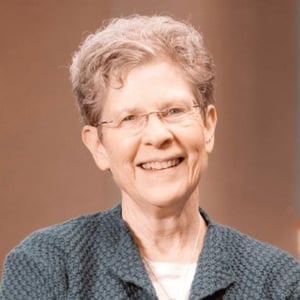
Senior Judge, U.S. Court of Appeals, Sixth Circuit
Alice M. Batchelder obtained her first judicial post as a judge on the U.S. Bankruptcy Court for the Northern District of Ohio in 1983. After two years, she was appointed by President Ronald Reagan to the U.S. District Court for the Northern District of Ohio. In 1991 President George H.W. Bush appointed her to her position on the U.S. Court of Appeals for the Sixth Circuit. From August 2009 to August 2014, Judge Batchelder served as Chief Judge of the Sixth Circuit. In March 2019, she took Senior Status and continues to work nearly full time.
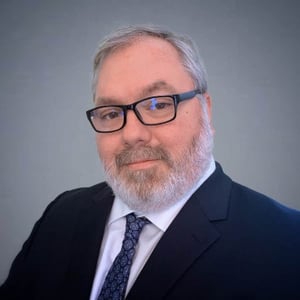
Director of Engagement, New Civil Liberties Alliance
NCLA’s Director of Engagement, Clegg Ivey, began his career as a software developer when he sold his first piece of code at the age of 15. Later, as a tech attorney, he represented clients like Google, Apple, Netscape, and Sun. Clegg then became a Silicon Valley tech entrepreneur, raising millions in venture capital for a series of startups he co-founded that were eventually acquired by firms like Cisco, Actel, and others. Most recently, he spent years building a local retail empire in Savannah that the COVID lockdown forced him to close.
Clegg has been fighting against the encroachment of the administrative state for three decades. As a tech lawyer in the ‘90s, he worked to keep the fledgling Internet free of government regulation. In the ‘00s he defended his own startups – against the FDA when it came after his energy drink company and against the FTC when it threatened his telephony and computer monitoring startups. During the ‘10s Clegg fought the good fight against countless state and local bureaucrats and regulatory agencies that made life difficult for his retail businesses.
Clegg is a graduate of Tulane University and the University of Chicago Law School. He also clerked for the Hon. Alice M. Batchelder on the U.S. Court of Appeals for the Sixth Circuit. He taught classes on technology and public policy as an adjunct at Tulane University and classes on entrepreneurship as a visiting professor at Zhejiang University.
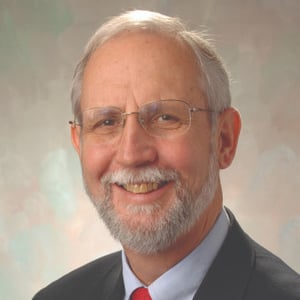
C. Blake McDowell, Jr. Professor of Law, University of Akron
William S. Jordan, III is Emeritus Professor of Law, retired from The University of Akron School of Law, where he taught Administrative Law. He also taught Property, Environmental Law, and Evidence. He received his B.A. from Stanford University and his J.D., cum laude, from the University of Michigan. He served as an attorney-advisor at the U.S. Department of Housing and Urban Development, then with the Washington, D.C., firm of Sheldon, Harmon, Roisman & Weiss, which became Harmon, Weiss, and Jordan, where he engaged primarily in environmental and administrative litigation. Dean Jordan is an active member and Fellow of the Section of Administrative Law and Regulatory Practice of the ABA. He has served on the Council of the Section, as Chair of the Judicial Review Committee, the Membership Committee, and the Publications Committee. He served for eighteen years as a contributing editor to the Administrative and Regulatory Law News.
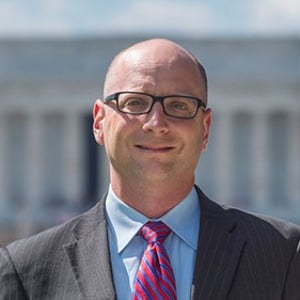
Partner, Consovoy McCarthy Park PLLC
Mr. Strawbridge provides clients with advice and representation at the pre-litigation, trial, and appellate stages. He has represented a broad range of individual and institutional clients on matters of constitutional law, financial and securities regulation, environmental laws, complex commercial disputes, and consumer protection statutes. His experience includes arbitrations, trial and appellate litigation, and administrative and regulatory proceedings.
Mr. Strawbridge served as a law clerk to Supreme Court Justice Clarence Thomas, Judge Morris Sheppard Arnold of the United States Court of Appeals for the Eighth Circuit, and Justice Howard Dana of the Supreme Judicial Court of Maine. Previously, Mr. Strawbridge was a partner at two large international law firms. He worked as a newspaper reporter for four years before attending law school. Mr. Strawbridge is an adjunct professor for the Supreme Court Clinic at the Antonin Scalia Law School at George Mason University.
Mr. Strawbridge earned a Bachelor of Journalism from the University of Missouri, and his J.D. summa cum laude from Creighton University School of Law. Mr. Strawbridge is a member of the Maine and Massachusetts bars.
Senior Judge, U.S. Court of Appeals, Sixth Circuit
Alice M. Batchelder obtained her first judicial post as a judge on the U.S. Bankruptcy Court for the Northern District of Ohio in 1983. After two years, she was appointed by President Ronald Reagan to the U.S. District Court for the Northern District of Ohio. In 1991 President George H.W. Bush appointed her to her position on the U.S. Court of Appeals for the Sixth Circuit. From August 2009 to August 2014, Judge Batchelder served as Chief Judge of the Sixth Circuit. In March 2019, she took Senior Status and continues to work nearly full time.
Director of Engagement, New Civil Liberties Alliance
NCLA’s Director of Engagement, Clegg Ivey, began his career as a software developer when he sold his first piece of code at the age of 15. Later, as a tech attorney, he represented clients like Google, Apple, Netscape, and Sun. Clegg then became a Silicon Valley tech entrepreneur, raising millions in venture capital for a series of startups he co-founded that were eventually acquired by firms like Cisco, Actel, and others. Most recently, he spent years building a local retail empire in Savannah that the COVID lockdown forced him to close.
Clegg has been fighting against the encroachment of the administrative state for three decades. As a tech lawyer in the ‘90s, he worked to keep the fledgling Internet free of government regulation. In the ‘00s he defended his own startups – against the FDA when it came after his energy drink company and against the FTC when it threatened his telephony and computer monitoring startups. During the ‘10s Clegg fought the good fight against countless state and local bureaucrats and regulatory agencies that made life difficult for his retail businesses.
Clegg is a graduate of Tulane University and the University of Chicago Law School. He also clerked for the Hon. Alice M. Batchelder on the U.S. Court of Appeals for the Sixth Circuit. He taught classes on technology and public policy as an adjunct at Tulane University and classes on entrepreneurship as a visiting professor at Zhejiang University.
C. Blake McDowell, Jr. Professor of Law, University of Akron
William S. Jordan, III is Emeritus Professor of Law, retired from The University of Akron School of Law, where he taught Administrative Law. He also taught Property, Environmental Law, and Evidence. He received his B.A. from Stanford University and his J.D., cum laude, from the University of Michigan. He served as an attorney-advisor at the U.S. Department of Housing and Urban Development, then with the Washington, D.C., firm of Sheldon, Harmon, Roisman & Weiss, which became Harmon, Weiss, and Jordan, where he engaged primarily in environmental and administrative litigation. Dean Jordan is an active member and Fellow of the Section of Administrative Law and Regulatory Practice of the ABA. He has served on the Council of the Section, as Chair of the Judicial Review Committee, the Membership Committee, and the Publications Committee. He served for eighteen years as a contributing editor to the Administrative and Regulatory Law News.
Partner, Consovoy McCarthy Park PLLC
Mr. Strawbridge provides clients with advice and representation at the pre-litigation, trial, and appellate stages. He has represented a broad range of individual and institutional clients on matters of constitutional law, financial and securities regulation, environmental laws, complex commercial disputes, and consumer protection statutes. His experience includes arbitrations, trial and appellate litigation, and administrative and regulatory proceedings.
Mr. Strawbridge served as a law clerk to Supreme Court Justice Clarence Thomas, Judge Morris Sheppard Arnold of the United States Court of Appeals for the Eighth Circuit, and Justice Howard Dana of the Supreme Judicial Court of Maine. Previously, Mr. Strawbridge was a partner at two large international law firms. He worked as a newspaper reporter for four years before attending law school. Mr. Strawbridge is an adjunct professor for the Supreme Court Clinic at the Antonin Scalia Law School at George Mason University.
Mr. Strawbridge earned a Bachelor of Journalism from the University of Missouri, and his J.D. summa cum laude from Creighton University School of Law. Mr. Strawbridge is a member of the Maine and Massachusetts bars.
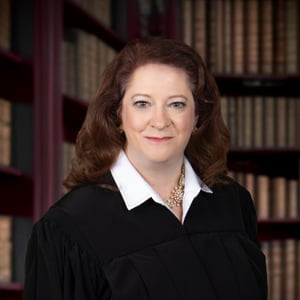
Judge, Wisconsin Second District Court of Appeals
HON. MARIA S. LAZAR, Wisconsin Court of Appeals, District II, August, 2022—present. Waukesha
County Circuit Court Judge, August, 2015-July, 2022, rotations included Presiding Judge Juvenile
Division; Criminal Division, Presiding Judge; Drug Treatment Court Judge; and Civil Division. Formerly
a Wisconsin Assistant Attorney General, in the Special Litigation and Appeals unit and was in private
practice for 20 years. She was President of the Milwaukee Bar Association, was on its Board of Directors
and served two terms on the State of Wisconsin’s Board of Governors. Judge Lazar earned her B.A.
degree, magna cum laude, from Mount Mary College and her J.D. from Georgetown University Law
Center.
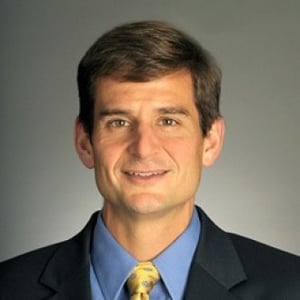
Professor of Law & Co-Director of the Institute on the Supreme Court of the United States, Chicago-Kent College of Law
A member of the Chicago-Kent faculty since 2008, Professor Schmidt teaches in the areas of constitutional law, legal history, comparative constitutional law, and sports law. He has written on a variety of topics, including the historical development of the Fourteenth Amendment, the history of Brown v. Board of Education, the Tea Party as a constitutional movement, how Supreme Court Justices communicate with the American people, and the rise of free agency in Major League Baseball. He has published in leading law reviews and peer-review journals, among them Constitutional Commentary, Cornell Law Review, Law and History Review, Northwestern University Law Review, and UCLA Law Review. His article Divided by Law: The Sit-Ins and the Role of the Courts in the Civil Rights Movement won the 2014 Association of American Law Schools' Scholarly Papers Competition and the 2016 American Society for Legal History Surrency Prize.
Professor Schmidt is the author of two books: The Sit-Ins: Protest and Legal Change in the Civil Rights Era (University of Chicago Press, 2018); and Civil Rights in America: A History (Cambridge University Press, 2021). He is currently working on a new book project, a history of the U.S. Supreme Court and its relationship with the American people over the last century.
Professor Schmidt earned a J.D. from Harvard Law School, a Ph.D. in American studies and an M.A. in history from Harvard University, and a B.A. from Dartmouth College. Professor Schmidt is also a research professor at the American Bar Foundation, where he serves as the editor of Law & Social Inquiry, one of the leading peer-reviewed journals in sociolegal studies.
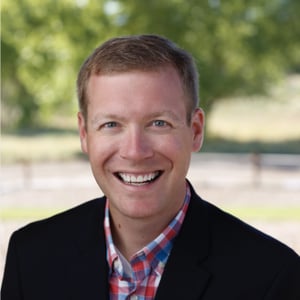
President, Center for American Rights
Daniel Suhr serves as president of the Center for American Rights, where he spends every day on the front lines of the fight to preserve our rights and liberties. The Center's mission is to advance free speech, free enterprise, and parental freedom in education through strategic, precedent-setting litigation.
Daniel formerly worked as policy director for Wisconsin Governor Scott Walker, as chief of staff for Wisconsin Lieutenant Governor Rebecca Kleefisch, and as a law clerk for Judge Diane Sykes of the U.S. Court of Appeals for the Seventh Circuit. He holds a B.A. and J.D. from Marquette University, and master’s degrees from Georgetown and the University of Missouri.
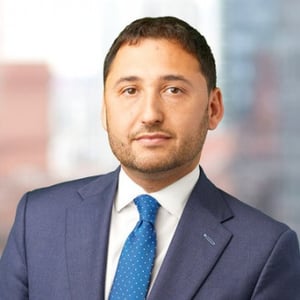
Partner, Troutman Pepper Locke LLP
Misha leads Troutman Peppers' national appellate and Supreme Court practice. Most recently, he successfully obtained orders from the Supreme Court blocking an unconstitutional restriction on places of worship, as well as overturning a lower court order that had blocked several state election laws. He has also argued and prevailed before the Supreme Court in Gill v. Whitford, one of the most significant redistricting cases in decades, as well as Murr v. Wisconsin, a high-stakes regulatory taking case.
Before joining Troutman, Misha served as Solicitor General of the State of Wisconsin. Misha previously served as a law clerk for the Honorable Anthony M. Kennedy of the Supreme Court, Janice Rogers Brown of the D.C. Circuit, and Alex Kozinski of the 9th Circuit. He graduated from Georgetown University Law Center, where he was President of the Federalist Society Chapter.
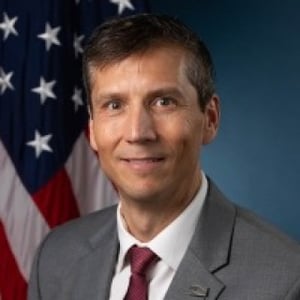
U.S. Attorney, Middle District of Tennessee, U.S. Department of Justice
Braden Boucek was sworn in on December 24, 2025, as the United States Attorney for the Middle District of Tennessee. Prior to becoming United States Attorney, Mr. Boucek served as the senior vice president of litigation at the Southeastern Legal Foundation having previously served as the vice president of legal affairs at the Beacon Center. Mr. Boucek has extensive experience as a prosecutor, starting his career at the Tennessee Attorney General’s Office before serving for two years as an Assistant District Attorney General in Williamson County. He was a federal prosecutor for ten years, first serving as an Assistant United States Attorney in the Western District of Tennessee from 2005 to 2011. From 2011 to 2015, Mr. Boucek was an Assistant United States Attorney in the Middle District of Tennessee, the district he now leads as the United States Attorney.
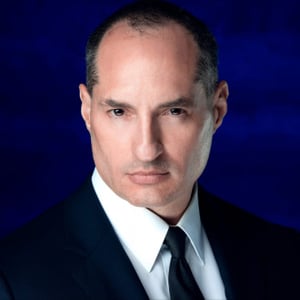
Lecturer in Residence and Executive Director, California Constitution Center, University of California, Berkeley, School of Law
David A. Carrillo received his doctorate from Berkeley Law before joining the faculty as a lecturer in residence and the founding executive director of the California Constitution Center in 2012. The center is devoted to developing scholarship concerning the California constitution and the California Supreme Court. Dr. Carrillo coauthored a casebook on California constitutional law, teaches courses on the California constitution and the California Supreme Court, publishes articles on those subjects, and is editor-in-chief of SCOCAblog.com, a blog about the state high court.
Before starting his academic career Dr. Carrillo was in active practice for 16 years, as a Deputy Attorney General with the California Department of Justice, as a Deputy City Attorney in San Francisco, as a Deputy District Attorney in Contra Costa County, and as a commercial litigation associate in private practice. A member of the California bar since 1995, Dr. Carrillo is admitted to practice before the Supreme Court of the United States, the Ninth Circuit Court of Appeals, and the Northern, Southern, Central, and Eastern District Courts of California.
In October 2019, California Governor Gavin Newsom appointed Dr. Carrillo to a four-year term on the California Law Revision Commission, where he is serving as the 2021-22 vice-chair. He also serves on the board of the Constitutional Rights Foundation and chairs the Citrin Center advisory board. His past charitable and professional board service includes: the Bar Association of San Francisco; the California Bar Foundation; the National Advisory Council of the Institute of Governmental Studies; the Foundation for Democracy and Justice; the State Bar Committee on Appellate Courts; the Justice and Diversity Center of the Bar Association of San Francisco; the Volunteer Legal Services Corporation in Alameda County; and the Berkeley Law Alumni Association. Dr. Carrillo chaired the judicial appointments committee of the Alameda County Bar Association, and served on the State Bar Commission on Judicial Nominees Evaluation and the Committee of Bar Examiners, as well as San Francisco and Alameda bar association committees on judicial appointments. He is a life member of the La Raza Lawyers Association (San Francisco and East Bay) and the Hispanic National Bar Association.
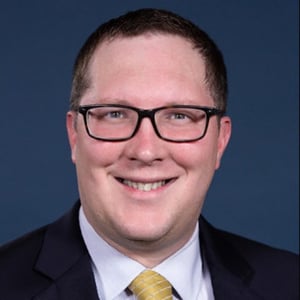
Attorney, Pacific Legal Foundation
Luke A. Wake is an attorney at the Pacific Legal Foundation. Prior to joining PLF, he was a senior staff attorney at the NFIB Small Business Legal Center.
Wake has particular expertise on environmental and land use issues, and has worked on numerous other constitutional issues and matters of importance to small business owners. He is an ardent defender of private property rights, which he believes are essential to the free enterprise system and the foundation of American liberty. As a strong advocate of individual rights and economic liberties, he has built his career defending small business interests.
Wake has focused on a whole host of issues, from employment law matters to regulatory compliance. In addition to serving as a resource for small business owners, Wake is committed to ensuring that the voice of small business is heard in the nation’s courts. As an appellate practitioner, Wake has focused particularly on informing the courts on matters of administrative law and on issues under the Fifth Amendment’s Takings Clause. He is also working to advance small business interests in law review articles, and was recently published in the Berkeley Journal of Law & Ecology. See R.S. Radford & Luke A. Wake, Deciphering and Extrapolating: Searching for Sense in Penn Central, 38 Ecology L.Q. 731, 746-747 (2011).
Before joining the Legal Center’s team, Wake completed a prestigious two-year fellowship as an attorney in the Pacific Legal Foundation’s College of Public Interest Law. Wake is a graduate of Case Western Reserve University School of Law in Cleveland Ohio, and is a member of the California Bar. He completed his undergraduate studies at Elon University in North Carolina in 2006 where he focused on political theory and corporate communications.

Emanuel S. Heller Professor of Law, University of California at Berkeley; Thomas Smith Senior Research Fellow, The Civitas Institute, University of Texas at Austin
John Yoo is the Emanuel Heller Professor of Law at the University of California at Berkeley. He is also the Thomas Smith Senior Research Fellow, Civitas Institute, at the University of Texas at Austin. He is also a Nonresident Senior Fellow at the American Enterprise Institute.
His most recent book, The Politically Incorrect Guide to the Supreme Court, co-authored with Robert Delahunty, was published in 2023. Professor Yoo’s other books include Defender-in-Chief: Trump’s Fight for Presidential Power; Striking Power: How Cyber, Robots, and Space Weapons Change the Rules for War; Point of Attack: Preventive War, International Law, and Global Welfare; and Crisis and Command: A History of Executive Power from George Washington to George Bush.
He is a co-author of volumes 1 and 2 of R. Rossum, G. Tarr, V. Munoz & J. Yoo American Constitution Law (Routledge, 2026), and a co-editor of the eight-volume series on the 250th anniversary of the American Revolution, We Hold These Truths, with Yuval Levin and Adam White of the American Enterprise Institute.
Professor Yoo has published more than 100 articles in academic journals on subjects including national security, constitutional law, international law, and the Supreme Court. He also regularly contributes to the editorial pages of the Wall Street Journal, New York Times, Washington Post, Los Angeles Times, and National Review, among others.
Professor Yoo has served in all three branches of government. He was an official in the U.S. Department of Justice, where he worked on national security and terrorism issues after the 9/11 attacks. He served as general counsel of the U.S. Senate Judiciary Committee. He has been a law clerk for Supreme Court Justice Clarence Thomas and federal appeals Judge Laurence Silberman. He has been a visiting professor at the University of Texas at Austin’s School of Civic Leadership, Seoul National University, the Interdisciplinary Center Herzliya, Keio University, Trento University, the University of Chicago, and the Free University of Amsterdam.
Professor Yoo supervises the Public Law and Policy Program and the California Constitution Center. He also serves on the boards of Founding Forward, the Washington Legal Foundation, the Pacific Legal Foundation, the Ulysses Grant Institute, the Federalist Society’s Separation of Powers and Federalism Division, the Universidad Cientifica del Sur Law School, and the Asia-Pacific Law Institute at Seoul National University. He is a winner of the Federalist Society’s Paul Bator award and the Heritage Foundation’s Edwin Meese III Originalism Lectureship.
Professor Yoo graduated from Yale Law School and summa cum laude from Harvard College.

Shareholder & Co-Chair of the Workplace Policy Institute, Littler Mendelson P.C.
Alexander T. MacDonald advises employers on all aspects of the employment and labor landscape, focusing on emerging legislation and regulation. He has extensive experience advising businesses on worker classification, arbitration, the administrative and regulatory process, and the future of work. He frequently writes, publishes, and speaks on these subjects. His work has been cited by scholars and appellate courts. He is a recognized voice for the management perspective.
Alexander is a co-chair of the Workplace Policy Institute (WPI) team. With WPI, he advises employers on legislative, administrative, and regulatory developments at the state and federal level. He advocates for employers in the regulatory and administrative process. He also helps employers protect their businesses by understanding and anticipating cutting-edge legal developments.
Alexander also has extensive experience in traditional labor law. He represents management in all aspects of labor-management relations, including unfair labor practice charges, grievance arbitrations, representation elections, contract negotiations, and related litigation, including litigation in the U.S. courts of appeals.
Before joining Littler, Alexander served as the director, future of work, for a major technology company. He also worked in a national labor and employment law firm and a major public-sector general counsel’s office. He was a law clerk to the senior judges in the District of Columbia Court of Appeals.
He is also a veteran of the U.S. Air Force. He served in Operations Enduring Freedom and Iraqi Freedom. In law school, he graduated first in his class
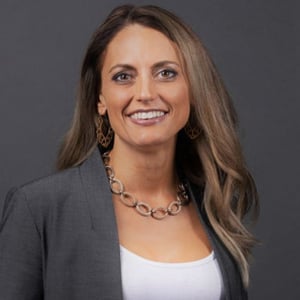
Judge, U.S. Court of Appeals for the Third Circuit
Hon. Jennifer Mascott served as Associate Professor of Law and Director of the Separation of Powers Institute at The Catholic University of America’s Columbus School of Law before her appointment to the federal bench. On July 16, 2025, President Donald J. Trump nominated her to the U.S. Court of Appeals for the Third Circuit (Delaware), and she was confirmed on October 9, 2025.
Prior to her confirmation, Judge Mascott wrote extensively in administrative and constitutional law, statutory interpretation, and the separation of powers. Her scholarship—published in leading journals including the Stanford Law Review, Notre Dame Law Review, and Supreme Court Review—was cited by the U.S. Supreme Court and multiple federal courts. She also contributed Supreme Court commentary for NBC Universal.
Before joining Catholic Law, she was an Assistant Professor and Co-Director of The C. Boyden Gray Center at George Mason University’s Antonin Scalia Law School. In 2022 she became co-author of Beermann, Cass & Diver’s Administrative Law: Cases and Materials (9th ed.). In 2023 she received the Justice Joseph Story Award for excellence in scholarship, teaching, and advancing the rule of law.
Judge Mascott also served as a Council Member of the ABA’s Administrative Law Section and as a Public Member of the Administrative Conference of the United States. She frequently testified before Congress on executive power, regulatory reform, and judicial jurisdiction, and participated in multiple Supreme Court confirmation hearings.
From 2019 to 2021, she took leave from academia to serve as Deputy Assistant Attorney General in the Department of Justice’s Office of Legal Counsel and later as Associate Deputy Attorney General, where she argued federal cases and assisted with Justice Amy Coney Barrett’s confirmation. Earlier in her career, she clerked for Justice Clarence Thomas and for then-Judge Brett M. Kavanaugh on the D.C. Circuit.
Judge Mascott earned her J.D. summa cum laude from the George Washington University Law School and her B.A. from the same institution.
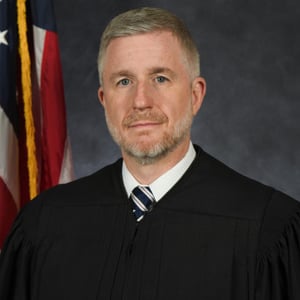
Judge, United States Court of Appeals, Third Circuit
Judge Paul Matey was appointed to the United States Court of Appeals for the Third Circuit in 2019 by President Trump.
Before his judicial service, Judge Matey was a partner at Lowenstein Sandler in New Jersey where he practiced complex commercial litigation and criminal defense. Earlier, Judge Matey was the Senior Vice President, General Counsel and Secretary for University Hospital Newark, an academic medical center and teaching hospital.
He also served as the Deputy Chief Counsel to Governor Chris Christie, and as an Assistant United States Attorney in the District of New Jersey, where he was awarded the Justice Department’s Director’s Award for Superior Performance. He also practiced at the Washington D.C. firm of Kellogg, Hansen, Todd, Figel & Frederick, and served as a law clerk to judges on the United States Court of Appeals for the Third Circuit and the United States District Court for the District of New Jersey.
He earned his bachelor’s degree from the University of Scranton, a Jesuit University, in 1993, and his juris doctorate, summa cum laude, from Seton Hall University School of Law in 2001, where he served as Editor-in-Chief of the Seton Hall Law Review.
In 2019, Judge Matey was elected to membership in the American Law Institute and, since 2020, has lectured on administrative law and the American legal history at Seton Hall.
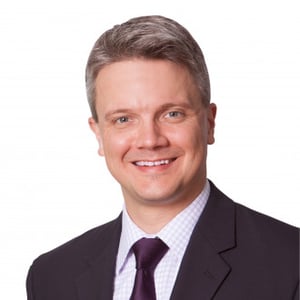
James G. Phillipp Professor of Law, University of Michigan Law School
Julian Davis Mortenson writes on constitutional and international law. His current book project—The Founders' President (under contract, Harvard University Press)—develops a comprehensive account of presidential power at the American Founding. He is also co-authoring a new constitutional law casebook, scheduled for publication by Foundation Press in 2020.
Professor Mortenson is an award-winning teacher and an active litigator. Representative constitutional matters include his work as lead counsel in a pre-Obergefell suit that required Michigan to recognize the marriages of more than 300 same-sex couples; his representation of discharged military service members challenging the "Don't Ask, Don't Tell" law; and his work as one of the principal drafters of the merits briefs in the landmark case Boumediene v. Bush, which secured the right of Guantanamo detainees to challenge their incarceration. He regularly litigates complex transnational matters in the U.S. courts, and has served as arbitrator, counsel, and expert witness in a wide variety of commercial and investor-state disputes.
Before joining the faculty, Professor Mortenson worked at the law firm WilmerHale, in the President's Office of the International Criminal Tribunal for the former Yugoslavia, and as a law clerk for both Justice David H. Souter and The Hon. J. Harvie Wilkinson III. Prior to law school, he was a management consultant with a client portfolio spanning the finance, manufacturing, oil and gas, and information technology industries. Professor Mortenson was salutatorian of his class at Stanford Law School and received an AB in history, summa cum laude, from Harvard College.

James Monroe Distinguished Professor of Law and Albert Clark Tate, Jr., Professor of Law, University of Virginia School of Law
Professor Saikrishna Prakash’s scholarship focuses on separation of powers, particularly executive powers. He teaches Constitutional Law, Foreign Relations Law and Presidential Powers at the Law School.
Prakash’s most recent book, “The Living Presidency: An Originalist Argument Against Its Ever-Expanding Powers,” was published by Harvard Belknap Press in 2020. He also authored “Imperial from the Beginning: The Constitution of the Original Executive” (Yale University Press, 2015). The former book focuses on the modern presidency while the latter considers the presidency of the Founders.
Prakash has authored over 75 law review articles. Among them are “Of Synchronicity and Supreme Law” in the Harvard Law Review, “The Indefensible Duty to Defend” in the Columbia Law Review, and “50 States, 50 Attorneys General and 50 Approaches to the Duty to Defend” and “The Executive Power Over Foreign Affairs” in the Yale Law Journal.
Prakash has published op-eds in The New York Times, The Wall Street Journal and the Los Angeles Times. At the request of Democrats and Republicans, he has testified before Congress on matters of presidential removal, the Mueller Report and how Congress might better check the presidency. He is currently a Miller Center Senior Fellow. In 2015, he received the Roger Traynor award for faculty scholarship. In the same year, he received an honorable mention from the American Society of Legal Writers for his book “Imperial from the Beginning.” He has given named lectures at William & Mary Law School, Princeton University and Toledo Law School, and keynote addresses at several conferences.
Prakash majored in economics and political science at Stanford University. At Yale Law School, he served as senior editor of the Yale Law Journal and received the John M. Olin Fellowship in Law, Economics and Public Policy. He subsequently clerked for Judge Laurence H. Silberman of the U.S. Court of Appeals for the District of Columbia Circuit and for Justice Clarence Thomas of the U.S. Supreme Court. After practicing in New York for two years, he served as a visiting professor at the University of Illinois College of Law and as an associate professor at Boston University School of Law. He then spent several years at the University of San Diego School of Law as the Herzog Research Professor of Law. Prakash has been a visiting professor at Northwestern University and the University of Chicago. He also has served as a James Madison Fellow at Princeton University and Visiting Research Fellow at the Hoover Institution of War & Peace at Stanford University.
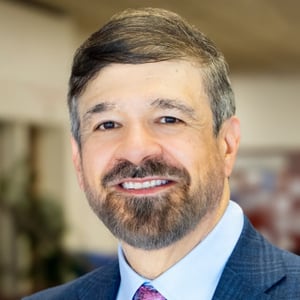
Hugh and Hazel Darling Foundation Professor of Law; Director, Center for the Study of Constitutional Originalism, University of San Diego School of Law
Judge, U.S. Court of Appeals for the Third Circuit
Hon. Jennifer Mascott served as Associate Professor of Law and Director of the Separation of Powers Institute at The Catholic University of America’s Columbus School of Law before her appointment to the federal bench. On July 16, 2025, President Donald J. Trump nominated her to the U.S. Court of Appeals for the Third Circuit (Delaware), and she was confirmed on October 9, 2025.
Prior to her confirmation, Judge Mascott wrote extensively in administrative and constitutional law, statutory interpretation, and the separation of powers. Her scholarship—published in leading journals including the Stanford Law Review, Notre Dame Law Review, and Supreme Court Review—was cited by the U.S. Supreme Court and multiple federal courts. She also contributed Supreme Court commentary for NBC Universal.
Before joining Catholic Law, she was an Assistant Professor and Co-Director of The C. Boyden Gray Center at George Mason University’s Antonin Scalia Law School. In 2022 she became co-author of Beermann, Cass & Diver’s Administrative Law: Cases and Materials (9th ed.). In 2023 she received the Justice Joseph Story Award for excellence in scholarship, teaching, and advancing the rule of law.
Judge Mascott also served as a Council Member of the ABA’s Administrative Law Section and as a Public Member of the Administrative Conference of the United States. She frequently testified before Congress on executive power, regulatory reform, and judicial jurisdiction, and participated in multiple Supreme Court confirmation hearings.
From 2019 to 2021, she took leave from academia to serve as Deputy Assistant Attorney General in the Department of Justice’s Office of Legal Counsel and later as Associate Deputy Attorney General, where she argued federal cases and assisted with Justice Amy Coney Barrett’s confirmation. Earlier in her career, she clerked for Justice Clarence Thomas and for then-Judge Brett M. Kavanaugh on the D.C. Circuit.
Judge Mascott earned her J.D. summa cum laude from the George Washington University Law School and her B.A. from the same institution.

Chief Judge, United States Court of Appeals, Eleventh Circuit
William H. Pryor Jr. serves as Chief Circuit Judge on the United States Court of Appeals for the Eleventh Circuit.
In 2013–18, he served on the United States Sentencing Commission and, in 2017–18, served as Acting Chair.
He has taught as a visiting professor at the University of Alabama School of Law and previously taught as an adjunct professor at the Cumberland School of Law of Samford University.
He served as the 45th Attorney General of Alabama from 1997 to 2004. When he took office, he was the youngest attorney general in the nation. In his reelection, he received the highest percentage of votes of any statewide candidate.
He graduated magna cum laude from Tulane Law School where he finished first in the common-law curriculum and was editor in chief of the Tulane Law Review. He then served as a law clerk for Judge John Minor Wisdom of the U.S. Court of Appeals for the Fifth Circuit.
He is a member of The American Law Institute and an Adviser for the RESTATEMENT OF THE LAW THIRD, CONFLICT OF LAWS. He is a coauthor with Bryan Garner, Justices Gorsuch and Kavanaugh, and several other judges of a treatise, THE LAW OF JUDICIAL PRECEDENT. He has published in the Yale Law Journal, Columbia Law Review, Virginia Law Review, Notre Dame Law Review, Harvard Journal of Law & Public Policy, Yale Law & Policy Review, George Mason Law Review, Florida Law Review, Alabama Law Review, Case Western Reserve Law Review, and Tulane Law Review. He has published op-eds in The Wall Street Journal, The New York Times, National Review, and USA Today. He has debated at National Lawyers’ Conventions of the Federalist Society (including on National Public Radio) and at the Oxford Union in the United Kingdom. And he is listed among several “widely admired judicial writers” in Bryan Garner’s The Redbook: A Manual on Legal Style.
He is a member of the Tulane Law School Hall of Fame and has received the Defender of the Constitution Award from the Heritage Foundation, the Jurist of the Year Award from the Texas Review of Law & Politics, and the St. Thomas More Award from the St. Thomas More Society of Atlanta. Judge Pryor is also a proud member of the National Society of the Sons of the American Revolution.

Chief Judge, United States Court of Appeals, Sixth Circuit
JEFFREY S. SUTTON is the Chief Judge of the United States Court of Appeals for the Sixth Circuit. He has served as Chair of the Federal Judicial Conference Committee on Rules of Practice and Procedure, Chair of the Advisory Committee on Appellate Rules, and Chair of the Supreme Court Fellows Commission. He currently serves as Chair of the Executive Committee of the Judicial Conference of the United States. Since 1993, Chief Judge Sutton has been an adjunct professor at The Ohio State University College of Law, where he teaches seminars on State Constitutional Law, the United States Supreme Court, and Appellate Advocacy. He also teaches a class on State Constitutional Law at Harvard Law School. Among other publications, he is the author of Who Decides? States as Laboratories of Constitutional Experimentation and 51 Imperfect Solutions: States and the Making of American Constitutional Law. He is the co-author of a casebook, State Constitutional Law: The Modern Experience, as well as The Law of Judicial Precedent. He is also the co-editor of The Essential Scalia: On the Constitution, the Courts, and the Rule of Law. In 2006, Chief Judge Sutton was elected to the American Law Institute, and in 2017 he was elected to its Council.
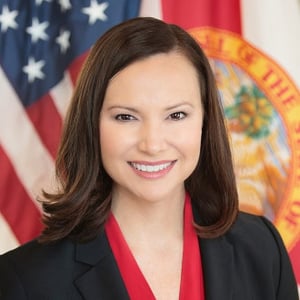
Attorney General, Florida
Attorney General Ashley Moody, a fifth generation Floridian, was born and raised in Plant City, Florida. She attended the University of Florida where she earned her bachelors and masters degrees in accounting and juris doctorate. She later attended Stetson University College of Law earning a masters of law in international law. In 2018, she was elected the 38th Attorney General of Florida.
General Moody joined the United States Attorney’s Office prosecuting drug, firearm, and fraud offenses. While a federal prosecutor, Ashley was commended by the DEA for prosecutorial excellence and outstanding initiative in drug law enforcement. She was also recognized by the Florida Department of Law Enforcement for her lead of “Operation Round-Up,” a targeted prosecution of violent and repeat offenders.
In 2006, at the age of 31, General Moody became the youngest judge in Florida when she was elected Circuit Court Judge of the 13th Judicial Circuit in Hillsborough County. As a judge, she founded the Attorney Ad Litem program recruiting volunteer attorneys to stand in the place of parents who did not appear in court with their children. She also developed a mentoring program for at-risk children within the juvenile delinquency system.
Ashley is married to Justin, a federal law enforcement agent. They have two sons, Connor and Brandon. Their eldest son Brandon is serving in the United States Army.
Senior Judge, U.S. Court of Appeals, Sixth Circuit
Alice M. Batchelder obtained her first judicial post as a judge on the U.S. Bankruptcy Court for the Northern District of Ohio in 1983. After two years, she was appointed by President Ronald Reagan to the U.S. District Court for the Northern District of Ohio. In 1991 President George H.W. Bush appointed her to her position on the U.S. Court of Appeals for the Sixth Circuit. From August 2009 to August 2014, Judge Batchelder served as Chief Judge of the Sixth Circuit. In March 2019, she took Senior Status and continues to work nearly full time.
Director of Engagement, New Civil Liberties Alliance
NCLA’s Director of Engagement, Clegg Ivey, began his career as a software developer when he sold his first piece of code at the age of 15. Later, as a tech attorney, he represented clients like Google, Apple, Netscape, and Sun. Clegg then became a Silicon Valley tech entrepreneur, raising millions in venture capital for a series of startups he co-founded that were eventually acquired by firms like Cisco, Actel, and others. Most recently, he spent years building a local retail empire in Savannah that the COVID lockdown forced him to close.
Clegg has been fighting against the encroachment of the administrative state for three decades. As a tech lawyer in the ‘90s, he worked to keep the fledgling Internet free of government regulation. In the ‘00s he defended his own startups – against the FDA when it came after his energy drink company and against the FTC when it threatened his telephony and computer monitoring startups. During the ‘10s Clegg fought the good fight against countless state and local bureaucrats and regulatory agencies that made life difficult for his retail businesses.
Clegg is a graduate of Tulane University and the University of Chicago Law School. He also clerked for the Hon. Alice M. Batchelder on the U.S. Court of Appeals for the Sixth Circuit. He taught classes on technology and public policy as an adjunct at Tulane University and classes on entrepreneurship as a visiting professor at Zhejiang University.
C. Blake McDowell, Jr. Professor of Law, University of Akron
William S. Jordan, III is Emeritus Professor of Law, retired from The University of Akron School of Law, where he taught Administrative Law. He also taught Property, Environmental Law, and Evidence. He received his B.A. from Stanford University and his J.D., cum laude, from the University of Michigan. He served as an attorney-advisor at the U.S. Department of Housing and Urban Development, then with the Washington, D.C., firm of Sheldon, Harmon, Roisman & Weiss, which became Harmon, Weiss, and Jordan, where he engaged primarily in environmental and administrative litigation. Dean Jordan is an active member and Fellow of the Section of Administrative Law and Regulatory Practice of the ABA. He has served on the Council of the Section, as Chair of the Judicial Review Committee, the Membership Committee, and the Publications Committee. He served for eighteen years as a contributing editor to the Administrative and Regulatory Law News.
Partner, Consovoy McCarthy Park PLLC
Mr. Strawbridge provides clients with advice and representation at the pre-litigation, trial, and appellate stages. He has represented a broad range of individual and institutional clients on matters of constitutional law, financial and securities regulation, environmental laws, complex commercial disputes, and consumer protection statutes. His experience includes arbitrations, trial and appellate litigation, and administrative and regulatory proceedings.
Mr. Strawbridge served as a law clerk to Supreme Court Justice Clarence Thomas, Judge Morris Sheppard Arnold of the United States Court of Appeals for the Eighth Circuit, and Justice Howard Dana of the Supreme Judicial Court of Maine. Previously, Mr. Strawbridge was a partner at two large international law firms. He worked as a newspaper reporter for four years before attending law school. Mr. Strawbridge is an adjunct professor for the Supreme Court Clinic at the Antonin Scalia Law School at George Mason University.
Mr. Strawbridge earned a Bachelor of Journalism from the University of Missouri, and his J.D. summa cum laude from Creighton University School of Law. Mr. Strawbridge is a member of the Maine and Massachusetts bars.

Panel Two: Is the Administrative State a Threat to Individual Liberty?
Alice Batchelder, Clegg Ivey, William S. Jordan, Patrick Strawbridge
Law in the form of regulation is increasingly made, enforced, and adjudicated by administrative agencies,...
Panel Two: Is the Administrative State a Threat to Individual Liberty?
Alice Batchelder, Clegg Ivey, William S. Jordan, Patrick Strawbridge
Law in the form of regulation is increasingly made, enforced, and adjudicated by administrative agencies,...
Panel Two: U.S. Supreme Court Review
Maria S. Lazar, Christopher Schmidt, Daniel Suhr, Misha Tseytlin
Featuring: Prof. Christopher W. Schmidt, Professor of Law & Co-Director of ISCOTUS, Chicago-Kent College of Law Daniel...
The Separation of Powers, From Washington to Sacramento
Braden H. Boucek, David A. Carrillo, Luke A. Wake, John C. Yoo
Are state governors subject to the same separation of powers restrictions as the federal president?...
Bargaining Rights Gone Wrong: How State Courts Invented a Constitutional Duty to Bargain and How It Harms Individual Workers
Alexander T. MacDonald
Constitutions often give you the right to do things. They give you the right to...
V: Modern Debates, Old Insights: The Federalists, Anti-Federalists, and Executive Power (Panel)
Jenn L. Mascott, Paul B. Matey, Julian Davis Mortenson, Saikrishna Prakash, Michael B. Rappaport
In the contemporary debates over the nature of executive power, two ideas are perennially prominent...
Panel Two: Is the Administrative State a Threat to Individual Liberty?
Columbus, OHTalks with Authors: Who Decides? States as Laboratories of Constitutional Experimentation
Jenn L. Mascott, William H. Pryor, Jeffrey S. Sutton
As federalism becomes an increasingly important principle of our constitutional structure, Chief Judge Jeffrey Sutton...
Remarks from Attorney General Ashley Moody [Florida Chapters Conference]
Ashley Moody
Florida Attorney General Ashley Moodey delievered the opening remarks at the Federalist Society's Eighth Annual...
Topics
Religious Liberty Update on Congress and the Biden Administration
Congress 1. The Fairness For All Act (FFAA) is likely dead after House Republican Chair...