

Senior Fellow and Director of Constitutional Studies, Manhattan Institute
Ilya Shapiro is a senior fellow and director of constitutional studies at the Manhattan Institute and a contributing editor of City Journal. Previously he was executive director and senior lecturer at the Georgetown Center for the Constitution, and before that a vice president of the Cato Institute.
Shapiro is the author of Lawless: The Miseducation of America’s Elites (2025) and Supreme Disorder: Judicial Nominations and the Politics of America’s Highest Court (2020), coauthor of Religious Liberties for Corporations? (2014), and editor of 11 volumes of the Cato Supreme Court Review (2008-18). He has contributed to a variety of academic, popular, and professional publications, including the Wall Street Journal, Harvard Journal of Law & Public Policy, Washington Post, Los Angeles Times, USA Today, National Review, and Newsweek. He also regularly provides commentary for various media outlets, writes the Shapiro’s Gavel newsletter on Substack, and once appeared on the Colbert Report.
Shapiro has testified many times before Congress and state legislatures and has filed more than 500 amicus curiae “friend of the court” briefs in the Supreme Court. He lectures regularly on behalf of the Federalist Society, is a member of the board of fellows of the Jewish Policy Center, was an inaugural Washington Fellow at the National Review Institute, and has been an adjunct law professor at the George Washington University and University of Mississippi. He is also the chairman of the board of advisers of the Mississippi Justice Institute, a barrister in the Edward Coke Appellate Inn of Court, and a former member of the Virginia Advisory Committee to the U.S. Commission on Civil Rights.
Earlier in his career, Shapiro was a special assistant/adviser to the Multi-National Force in Iraq on rule-of-law issues and practiced at Patton Boggs and Cleary Gottlieb. Before entering private practice, he clerked for Judge E. Grady Jolly of the U.S. Court of Appeals for the Fifth Circuit. He holds an AB from Princeton University, an MSc from the London School of Economics, and a JD from the University of Chicago Law School.

Partner, Baker Hostetler LLP
David Rivkin is a member of the firm's litigation, international and environmental teams and is co-leader of the firm's national appellate practice. He has extensive experience in constitutional, administrative and international law litigation and has been involved in numerous high-profile cases. With his prior experience in the government sector, David draws on a wealth of knowledge when providing compliance advice to companies and handling enforcement proceedings before government agencies on issues arising out of multilateral and unilateral sanctions, the Foreign Corrupt Practices Act (FCPA), anti-boycott issues, bankruptcy and financial fraud matters, and environmental and energy issues.
David has developed and implemented legislative, regulatory and litigation initiatives for two presidential administrations. Over the years, he has published hundreds of articles, op-eds, book reviews and book chapters on a variety of international, legal, constitutional, defense, arms control, foreign policy, environmental and energy issues for various newspapers and magazines, including The Wall Street Journal, The Washington Post, The New York Times, USA Today and The Los Angeles Times, and has been a frequent commentator and guest on TV and radio shows including ABC, CBS, NBC, CNN, Fox News, NPR and PBS.
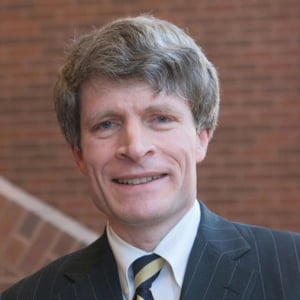
S. Walter Richey Professor of Corporate Law, University of Minnesota Law School
Professor Richard W. Painter received his B.A., summa cum laude, in history from Harvard University and his J.D. from Yale University, where he was an editor of the Yale Journal on Regulation. Following law school, he clerked for Judge John T. Noonan Jr., of the United States Court of Appeals for the Ninth Circuit and later practiced at Sullivan & Cromwell in New York City and Finn Dixon & Herling in Stamford, Connecticut.
He has served as a tenured member of the law faculty at the University of Oregon School of Law and the University of Illinois College of Law, where he was the Guy Raymond and Mildred Van Voorhis Jones Professor of Law from 2002 to 2005.
From February 2005 to July 2007, he was Associate Counsel to the President in the White House Counsel's office, serving as the chief ethics lawyer for the President, White House employees and senior nominees to Senate-confirmed positions in the Executive Branch. He is a member of the American Law Institute and is an advisor for the new ALI Principles of Government Ethics. He has also been active in the Professional Responsibility Section of the American Bar Association.
Professor Painter has also been active in law reform efforts aimed at deterring securities fraud and improving ethics of corporate managers and lawyers. A key provision of the Sarbanes-Oxley Act of 2002 requiring the SEC to issue rules of professional responsibility for securities lawyers was based on earlier proposals Professor Painter made in law review articles and to the ABA and the SEC. He has given dozens of lectures on the Sarbanes-Oxley Act to law schools, bar associations, and learned societies, such as the American Academy of Arts and Sciences. Professor Painter has on four separate occasions provided invited testimony before committees of the U.S. House of Representatives or the U.S. Senate on securities litigation and/or the role of attorneys in corporate governance.
His book, Getting the Government America Deserves: How Ethics Reform Can Make a Difference, was published by Oxford University Press in January 2009. He has written op-eds on government ethics for various publications including the New York Times, the Washington Post and the Los Angeles Times, and he has been interviewed several times on government ethics and corporate ethics by national news organizations, including appearances on Lawrence O'Donnell (MSNBC), Anderson Cooper 360 (CNN), CNN News, Fox News, National Public Radio All Things Considered, and Minnesota Public Radio News. In 2011, he testified before the U.S. House Government Oversight Committee on partisan political activity by government officials and reform of the Hatch Act. Professor Painter has also given expert testimony in cases involving securities transactions and the professional responsibility of lawyers. He testified as a defense witness in SEC. v. The Reserve Money Market Fund (SDNY, November 2012), a jury trial of an SEC enforcement action against the founders of the world's oldest money market fund that ended with a defense verdict on all of the fraud counts.
Professor Painter is the author of two casebooks: Securities Litigation and Enforcement (with Margaret Sachs and Donna Nagy; West 2003; Second Edition, 2007; Third Edition 2011) and Professional and Personal Responsibilities of the Lawyer (with Judge John T. Noonan Jr.; Foundation 1997; Second Edition, 2001; Third Edition 2011). He has written dozens of articles, book reviews, and essays, including a series of papers and a forthcoming book with Minnesota colleague Claire Hill on the personal responsibility of investment bankers.
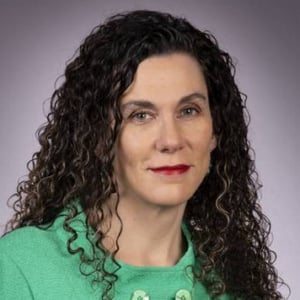
Associate Professor of Law, Center for Intellectual Property and Entrepreneurship, University of Missouri School of Law
Professor Lietzan researches, writes, and teaches primarily in the areas of food and drug regulation, intellectual property, and administrative law. Some of her recent scholarship has focused on the nature and purpose of the new drug approval system, federal regulation of fecal microbiota transplantation, federal regulation of products derived from cannabis, the political economy of the Hatch-Waxman (generic drug) statute, and incentives to study already approved drugs for new uses. She is an award-winning teacher, and she has been an elected member of the American Law Institute since 2006.
Professor Lietzan brings to her scholarship and teaching eighteen years of private practice experience, eight of them as a partner in the food and drug group at Covington & Burling in Washington, DC. In practice, she handled a wide range of complex legal problems and broader legislative and regulatory policy questions affecting FDA-regulated companies. This work included lifecycle management and strategy issues, regulatory strategy and advocacy, white collar defense, congressional investigations, briefing in products liability cases, and international regulatory policy work. She was involved in every major amendment to the Federal Food, Drug, and Cosmetic Act (FDCA) between 1997 and 2014 and was deeply immersed for more than a decade in the development of the Biologics Price Competition and Innovation Act of 2010. She has been consistently identified by her peers in private practice as a “Best Lawyer in America” in the categories of FDA law (since 2013) and Biotechnology Law (since 2007).
Professor Lietzan has held one leadership position or another at the Food and Drug Law Institute (FDLI) since 2004, including a stint on its Board of Directors from 2008 to 2012. She also held leadership positions in the American Bar Association’s Section of Science and Technology Law for fourteen years.
Professor Lietzan received a bachelor’s degree from the University of North Carolina, where she graduated with honors in history. She holds a master’s degree in history from UCLA and a law degree with high honors from Duke Law School.
Senior Fellow and Director of Constitutional Studies, Manhattan Institute
Ilya Shapiro is a senior fellow and director of constitutional studies at the Manhattan Institute and a contributing editor of City Journal. Previously he was executive director and senior lecturer at the Georgetown Center for the Constitution, and before that a vice president of the Cato Institute.
Shapiro is the author of Lawless: The Miseducation of America’s Elites (2025) and Supreme Disorder: Judicial Nominations and the Politics of America’s Highest Court (2020), coauthor of Religious Liberties for Corporations? (2014), and editor of 11 volumes of the Cato Supreme Court Review (2008-18). He has contributed to a variety of academic, popular, and professional publications, including the Wall Street Journal, Harvard Journal of Law & Public Policy, Washington Post, Los Angeles Times, USA Today, National Review, and Newsweek. He also regularly provides commentary for various media outlets, writes the Shapiro’s Gavel newsletter on Substack, and once appeared on the Colbert Report.
Shapiro has testified many times before Congress and state legislatures and has filed more than 500 amicus curiae “friend of the court” briefs in the Supreme Court. He lectures regularly on behalf of the Federalist Society, is a member of the board of fellows of the Jewish Policy Center, was an inaugural Washington Fellow at the National Review Institute, and has been an adjunct law professor at the George Washington University and University of Mississippi. He is also the chairman of the board of advisers of the Mississippi Justice Institute, a barrister in the Edward Coke Appellate Inn of Court, and a former member of the Virginia Advisory Committee to the U.S. Commission on Civil Rights.
Earlier in his career, Shapiro was a special assistant/adviser to the Multi-National Force in Iraq on rule-of-law issues and practiced at Patton Boggs and Cleary Gottlieb. Before entering private practice, he clerked for Judge E. Grady Jolly of the U.S. Court of Appeals for the Fifth Circuit. He holds an AB from Princeton University, an MSc from the London School of Economics, and a JD from the University of Chicago Law School.
Regent Law School
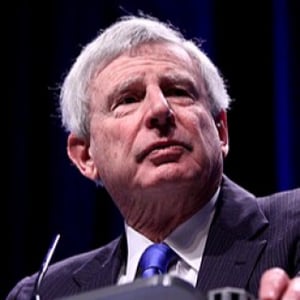
Senior Scholar, The Fund for American Studies
Donald J. Devine (born 1937) is an American political scientist and former government official, who has popularized fusionism as taught by Frank Meyer. He is associated to The Fund for American Studies and The Heritage Foundation. He is also a trustee of the Philadelphia Society.
Devine served as the Office of Personnel Management director of Ronald Reagan's first administration. During his tenure, he helped cut 100,000 federal jobs, and over $6 billion in benefits. He was labeled by The Washington Post as a "terrible swift sword of the civil service", by The New York Times as "the Grinch", and by Federal Times as the "Rasputin of the reduction in force".
Devine taught government and politics at the University of Maryland, and Western civilization at Bellevue University. He has written more than ten libertarian conservative books, and was a contributor to Project 2025.
S. Walter Richey Professor of Corporate Law, University of Minnesota Law School
Professor Richard W. Painter received his B.A., summa cum laude, in history from Harvard University and his J.D. from Yale University, where he was an editor of the Yale Journal on Regulation. Following law school, he clerked for Judge John T. Noonan Jr., of the United States Court of Appeals for the Ninth Circuit and later practiced at Sullivan & Cromwell in New York City and Finn Dixon & Herling in Stamford, Connecticut.
He has served as a tenured member of the law faculty at the University of Oregon School of Law and the University of Illinois College of Law, where he was the Guy Raymond and Mildred Van Voorhis Jones Professor of Law from 2002 to 2005.
From February 2005 to July 2007, he was Associate Counsel to the President in the White House Counsel's office, serving as the chief ethics lawyer for the President, White House employees and senior nominees to Senate-confirmed positions in the Executive Branch. He is a member of the American Law Institute and is an advisor for the new ALI Principles of Government Ethics. He has also been active in the Professional Responsibility Section of the American Bar Association.
Professor Painter has also been active in law reform efforts aimed at deterring securities fraud and improving ethics of corporate managers and lawyers. A key provision of the Sarbanes-Oxley Act of 2002 requiring the SEC to issue rules of professional responsibility for securities lawyers was based on earlier proposals Professor Painter made in law review articles and to the ABA and the SEC. He has given dozens of lectures on the Sarbanes-Oxley Act to law schools, bar associations, and learned societies, such as the American Academy of Arts and Sciences. Professor Painter has on four separate occasions provided invited testimony before committees of the U.S. House of Representatives or the U.S. Senate on securities litigation and/or the role of attorneys in corporate governance.
His book, Getting the Government America Deserves: How Ethics Reform Can Make a Difference, was published by Oxford University Press in January 2009. He has written op-eds on government ethics for various publications including the New York Times, the Washington Post and the Los Angeles Times, and he has been interviewed several times on government ethics and corporate ethics by national news organizations, including appearances on Lawrence O'Donnell (MSNBC), Anderson Cooper 360 (CNN), CNN News, Fox News, National Public Radio All Things Considered, and Minnesota Public Radio News. In 2011, he testified before the U.S. House Government Oversight Committee on partisan political activity by government officials and reform of the Hatch Act. Professor Painter has also given expert testimony in cases involving securities transactions and the professional responsibility of lawyers. He testified as a defense witness in SEC. v. The Reserve Money Market Fund (SDNY, November 2012), a jury trial of an SEC enforcement action against the founders of the world's oldest money market fund that ended with a defense verdict on all of the fraud counts.
Professor Painter is the author of two casebooks: Securities Litigation and Enforcement (with Margaret Sachs and Donna Nagy; West 2003; Second Edition, 2007; Third Edition 2011) and Professional and Personal Responsibilities of the Lawyer (with Judge John T. Noonan Jr.; Foundation 1997; Second Edition, 2001; Third Edition 2011). He has written dozens of articles, book reviews, and essays, including a series of papers and a forthcoming book with Minnesota colleague Claire Hill on the personal responsibility of investment bankers.
Partner, Baker Hostetler LLP
David Rivkin is a member of the firm's litigation, international and environmental teams and is co-leader of the firm's national appellate practice. He has extensive experience in constitutional, administrative and international law litigation and has been involved in numerous high-profile cases. With his prior experience in the government sector, David draws on a wealth of knowledge when providing compliance advice to companies and handling enforcement proceedings before government agencies on issues arising out of multilateral and unilateral sanctions, the Foreign Corrupt Practices Act (FCPA), anti-boycott issues, bankruptcy and financial fraud matters, and environmental and energy issues.
David has developed and implemented legislative, regulatory and litigation initiatives for two presidential administrations. Over the years, he has published hundreds of articles, op-eds, book reviews and book chapters on a variety of international, legal, constitutional, defense, arms control, foreign policy, environmental and energy issues for various newspapers and magazines, including The Wall Street Journal, The Washington Post, The New York Times, USA Today and The Los Angeles Times, and has been a frequent commentator and guest on TV and radio shows including ABC, CBS, NBC, CNN, Fox News, NPR and PBS.
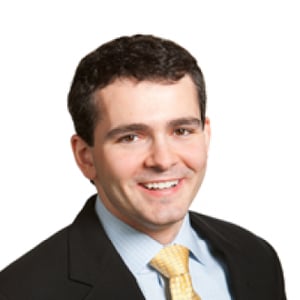
President, The Ethics and Public Policy Center
Ryan T. Anderson, Ph.D., is the President of the Ethics and Public Policy Center. In May 2025, Anderson was appointed by President Trump to the Religious Liberty Commission.
He is the author or co-author of five books, including the just-released Tearing Us Apart: How Abortion Harms Everything and Solves Nothing. Previous books include When Harry Became Sally: Responding to the Transgender Moment, Truth Overruled: The Future of Marriage and Religious Freedom, What Is Marriage? Man and Woman: A Defense, and Debating Religious Liberty and Discrimination. He is the co-editor of A Liberalism Safe for Catholicism? Perspectives from “The Review of Politics.”
Anderson’s research has been cited by two U.S. Supreme Court justices, Justice Samuel Alito and Justice Clarence Thomas, in two Supreme Court cases.
He received his bachelor of arts degree from Princeton University, graduating Phi Beta Kappa and magna cum laude, and he received his doctoral degree in political philosophy from the University of Notre Dame. His dissertation was titled: “Neither Liberal Nor Libertarian: A Natural Law Approach to Social Justice and Economic Rights.”
Anderson has made appearances on ABC, CNN, CNBC, MSNBC, and Fox News. His work has been published by the New York Times, the Washington Post, the Wall Street Journal, Oxford University Press, Cambridge University Press, the Harvard Journal of Law and Public Policy, the Harvard Health Policy Review, the Georgetown Journal of Law and Public Policy, First Things, the Claremont Review of Books, and National Review.
He is the John Paul II Teaching Fellow in Social Thought at the University of Dallas, a member of the James Madison Society at Princeton University, and a Fellow of the Institute for Human Ecology at the Catholic University of America, as well as the Founding Editor of Public Discourse, the online journal of the Witherspoon Institute of Princeton, New Jersey.
For 9 years he was the William E. Simon senior research fellow at The Heritage Foundation, and has served as an adjunct professor of philosophy and political science at Christendom College, and a Visiting Fellow at the Veritas Center at Franciscan University. He has also served as an assistant editor of First Things.
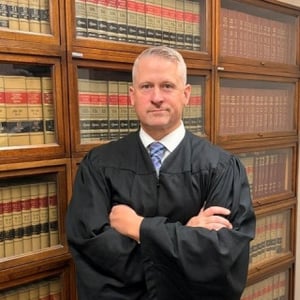
Judge, United States District Court, Northern District of Texas
Matthew J. Kacsmaryk serves as United States District Judge for the Northern District of Texas.
He previously served as (1) an Associate in the Dallas office of Baker Botts LLP, (2) an Assistant United States Attorney, and (3) Deputy General Counsel to FLI.
He is an Honors graduate of the University of Texas Law School.
In 2013, he earned the Attorney General’s Award for Excellence in Furthering the Interest of U.S. National Security.
In 2026, he was named Jurist of the Year by the Texas Review of Law & Politics, the conservative law review at the University of Texas.

Professor of Law, South Texas College of Law Houston
Josh Blackman is a national thought leader on constitutional law and the United States Supreme Court. Josh’s work was quoted during two presidential impeachment trials. He has testified before Congress and advises federal and state lawmakers. Josh regularly appears on TV, including NBC, CBS, ABC, Fox, and the BBC. Josh is also a frequent guest on NPR and other syndicated radio programs. He has published commentaries in the New York Times, Wall Street Journal, Washington Post, and leading national publications.
Since 2012, Josh has served as a professor at the South Texas College of Law Houston. He holds the Centennial Chair of Constitutional Law. Josh is an Adjunct Fellow at the Manhattan Institute. Josh has written more than seven dozen law review articles that have been cited more than a thousand times. Josh was selected as the Jurist of the Year by the Texas Journal of Law & Public Policy, received the inaugural Meese III Originalism Award, and was awarded the Inaugural Joseph Story Award. Josh was selected by Forbes Magazine for the “30 Under 30” in Law and Policy. Josh is the President of the Harlan Institute, and founded FantasySCOTUS, the Internet’s Premier Supreme Court Fantasy League. He blogs at the Volokh Conspiracyand posts@JoshMBlackman.

Courthouse Steps: Packingham v. North Carolina - Podcast
Ilya Shapiro
In Packingham v. North Carolina, the Supreme Court will decide whether the First Amendment bars...
Courthouse Steps: Packingham v. North Carolina
TeleforumHampton Roads Federalist Society Supper Club: SCOTUS Confirmation Process
Virginia Beach, VirginiaTopics
Campaign Finance Takeaways from the 2016 Election
2016 was a surprising year in politics. One surprise that hasn’t received much attention yet...
Lunch with Dr. Devine
Montgomery, AlabamaPresidential Conflicts? - Podcast
David B. Rivkin, Richard W. Painter
“Suggestions that President-elect Donald Trump put his business holdings in a 'blind trust,' which would...
Presidential Conflicts?
TeleforumThe Future of Religious Liberty
Dallas, TexasObamacare, Religious Liberty, and Executive Power
Montgomery, AlabamaA Second Look at the CREATES Act: What’s Not Being Said
Erika Lietzan
Note from the Editor: This article critically discusses the CREATES Act, which is currently pending...