
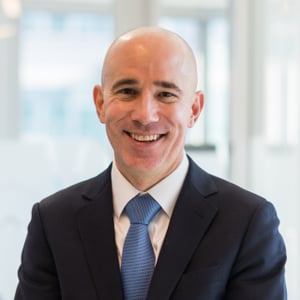
Partner, KaiserDillon PLLC
A former Assistant United States Attorney with dozens of trials under his belt, Justin Dillon now uses his years of litigation and investigative experience to defend clients in Title IX and campus discipline cases and in complex, high-stakes white-collar criminal investigations.
Justin has gained nationwide attention for his work representing students and professors in campus misconduct cases, which he and his firm have handled at more than 100 schools nationwide. Along with his partner Chris Muha, he co-authored Title IX Hearings and Litigation: A Practitioner’s Guide, published by The Foundation for Individual Rights and Expression and available here to any member of FIRE’s Legal Network.
While most of his cases are successfully resolved on campus, Justin is not afraid to take it all the way to court—he was the first lawyer in the country to win summary judgment against a university in a campus sexual assault case, and he has never lost a lawsuit against a college.
In his white-collar practice, Justin has successfully defended the General Counsel of a public company in a foreign-bribery investigation, helped a government contractor avoid criminal charges after a lengthy federal investigation, and represented numerous individuals and small-business owners.
Justin also frequently represents government employees under investigation for alleged ethical or criminal misconduct, including a former Cabinet secretary, a former Senate-confirmed head of a federal agency, and many other federal employees and federal prosecutors. He has extensive experience with Offices of Inspector General and the Justice Department’s Office of Professional Responsibility (OPR). He is also the former white-collar crime columnist for the website Above the Law; a collection of his columns is available here.
Earlier in his career, Justin worked for the Civil Rights Division of the Justice Department and later spent five and a half years as a federal prosecutor in Washington, DC, where he led more than 100 Grand Jury investigations, tried more than 60 criminal cases, and handled more than a dozen appeals.
Justin has been recognized by Chambers & Partners in Litigation: White-Collar Crime & Government Investigations in Washington, DC. He has also been recognized by Best Lawyers© in the category Criminal Defense: White-Collar; named by Super Lawyers as one of the Top Rated White Collar Crime Attorneys in Washington, D.C.; and selected by Washingtonian Magazine as one of Washington’s Best Lawyers in Criminal Defense.
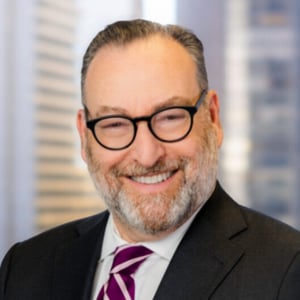
Founder, Chairman, and CEO, Louis D. Brandeis Center for Human Rights Under Law
Hon. Kenneth L. Marcus is an internationally recognized expert in civil and human rights, as well as a leader in the fight against anti-Semitism on and off university campuses. He is the Founder, Chairman, and CEO of The Louis D. Brandeis Center for Human Rights Under Law, the leading civil rights legal organization fighting against anti-Semitism. The New York Times has called him “The Man Who Helped Redefine Campus Anti-Semitism.” He been described, in that paper, as “the single most effective and respected force” to combat anti-Semitism.
During his public service career, Marcus served as Assistant U.S. Secretary of Education for Civil Rights; Staff Director at the U.S. Commission on Civil Rights; and General Deputy Assistant U.S. Secretary of Housing and Urban Development for Fair Housing and Equal Opportunity.
In academia, he serves as Professorial Lecturer in Law at George Washington University. He formerly held the Lillie and Nathan Ackerman Chair in Equality and Justice in America at the City University of New York’s Bernard M. Baruch College, served as Visiting Research Professor of Political Science at Yeshiva University, and was a Board of Visitors member George Mason University and Distinguished Senior Fellow at that university’s law school. He is a member of the editorial board of the Journal of Contemporary Antisemitism and previously served as Associate Editor of the Journal for the Study of Anti-Semitism.
Marcus is also author of The Definition of Anti-Semitism (Oxford University Press) and Jewish Identity and Civil Rights in America (Cambridge University Press). He has published widely in academic journals as well as in more popular venues such as The Wall Street Journal, Washington Post, Newsweek, USA Today, and Politico. He is a graduate of Williams College and the University of California at Berkeley School of Law.
Earlier in his career, he was a litigation partner in two major law firms, where he conducted complex commercial and constitutional litigation. He also serves as Chairman emeritus of the Executive Committee of the Federalist Society for Law & Public Policy Civil Rights Practice Group.
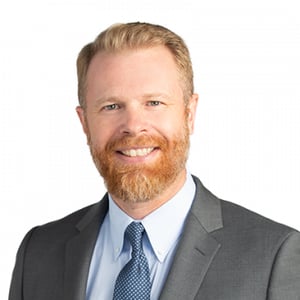
Owner, Schneider Education & Employment Law PLLC
Scott Schneider is the owner and founder of Schneider Education & Employment Law and has advised companies and educational institutions nationwide on a variety of complex legal issues with a focus on particularly sensitive matters like institutional response to sexual misconduct.
Prior to founding Schneider Education & Employment Law, Scott was an equity partner in two major national law firms and served as in-house counsel for Tulane University.
He is a prominent litigator as well as a sought-after advisor on Title IX, labor and employment law issues, and various risk management concerns. He has led numerous investigations of serial sex abuse allegations, allegations of misconduct involving senior leadership and other acts of institutional misconduct. He has also handled various high-profile program reviews of institutional response to sexual misconduct, racial discrimination, athletics department ethics and compliance, and treatment of at-risk employees and students.
Scott has provided training nationally to thousands of personnel on a variety of issues, including Title IX; labor and employment law; faculty hiring, promotion and tenure processes; and Greek Life risk management. Scott also provides expert witness testimony on matters dealing with institutional response to allegations of sexual misconduct.
Scott regularly presents to national organizations, including the National Association of College and University Attorneys (NACUA), the National Association of Independent Schools (NAIS), the Association for Student Conduct Administration (ASCA) Gehring Academy, the International Association of Campus Law Enforcement Administrators (IACLEA), the Association of College and University Housing Officers-International (ACUHO-I), EDUCAUSE and various associations of independent schools.
Additionally, Scott previously served as an award-winning professor at Tulane University, where he taught courses on higher education and labor and employment law and created the Tulane University Law School’s Title IX certification program. Scott has been retained by the National Center for Campus Public Safety to serve as a faculty member for its Trauma-Informed Sexual Assault Investigation and Adjudication training program for campus officials. Scott also serves on the faculty for the State University of New York’s Student Conduct Institute where he provides training on informal resolution and restorative justice.
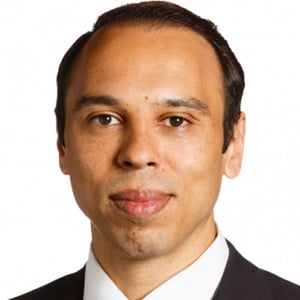
Vice President of Domestic and Economic Policy, The Heritage Foundation
Roger Severino is Vice President of Economic and Domestic Policy, and the Joseph C. and Elizabeth A. Anderlik Fellow at The Heritage Foundation.
Severino is a national authority on civil rights, conscience and religious freedom, the administrative state, and information privacy, particularly as applied to health care law and policy. Find his tweets at @RogerSeverino_.
Severino spearheaded the HHS Accountability Project while a Senior Fellow at EPPC from 2021 to 2023. Previously, Severino was Director of HHS’ Office for Civil Rights, where he led a team of over 250 staff enforcing our nation’s civil rights, conscience and religious freedom, and health information privacy laws. He served from 2017 to 2021 and was the longest-serving OCR director of the past three decades.
Prior to joining HHS, Severino served for two years as Director of the DeVos Center for Religion and Civil Society at Heritage, advocating for life, family, and religious-freedom policies. Before that, he was a trial attorney for seven years at the U.S. Department of Justice’s Civil Rights Division where he enforced the Fair Housing Act and the Civil Rights Act of 1964. Severino started his legal career at the Becket Fund for Religious Liberty, where he was Legal Counsel and Chief Operations Officer and defended the rights of people of all faiths under federal and international law.
Severino has been profiled in The New York Times, The Atlantic, The Wall Street Journal, and The Hill and has appeared on Fox News, CNN, MSNBC, NPR, and PBS, among others. In 2020, The New York Times dubbed him and his wife Carrie, “a conservative power couple” to be reckoned with.
Severino holds a JD from Harvard Law School, a master’s degree in public policy, with highest distinction, from Carnegie Mellon University, and a bachelor’s degree in business from the University of Southern California. He was appointed by President Trump to the Administrative Conference of the United States and is a member of the District of Columbia and the Commonwealth of Virginia bars.
As OCR director, Severino founded the federal government’s first division dedicated exclusively to conscience and religious freedom compliance and enforcement. He enforced the Weldon Amendment for the first time against a state (California) after it coerced families and religious organizations into paying for abortion insurance coverage, leading to a $200 million federal funding disallowance. He also enforced laws protecting pro-life pregnancy resource centers from discrimination by states hostile to their message and enforced laws prohibiting forced participation in abortions by medical professionals.
With respect to civil rights, Severino protected older persons and people with disabilities from being denied life-saving care due to discriminatory “quality of life” judgments, especially during the COVID-19 pandemic. He also achieved a landmark sexual harassment resolution with Michigan State University in the wake of the Larry Nassar sexual assault scandal and protected the rights of non-English speakers to have equal access to health and human services.
In the area of health privacy, he secured the largest HIPAA monetary settlement in history and achieved the largest number of enforcement resolutions both in a single year and across four years. He also facilitated the transformational use of Skype, Zoom, and Facetime for delivery of telehealth during the COVID-19 pandemic and beyond.
His regulatory reform activities resulted in a comprehensive conscience protection regulation and proposed a life-affirming disability rights regulation. He achieved regulatory savings of $3.6 billion in health care industry costs over five years and identified and proposed an additional $3.2 billion in cost savings from the repeal of ineffective and unnecessary regulatory burdens.
Severino is a Spanish speaker who teaches salsa and west coast swing in his spare time.
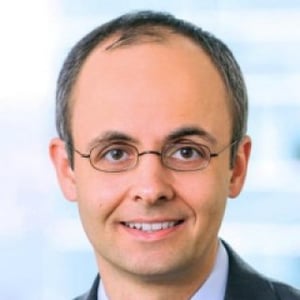
Partner, Skadden, Arps, Slate, Meagher and Flom, LLP and Affiliates
Boris Bershteyn is a partner at Skadden, Arps, Slate, Meagher and Flom, LLP. He served as acting Administrator of the Office of Information and Regulatory Affairs in 2012 and 2013, and as General Counsel of the Office of Management and Budget (OMB) starting 2011. In 2010 and 2011, Bershteyn served as Special Assistant to the President and Associate White House Counsel, focusing on legal issues in regulatory, economic, health, and environmental policy. In 2009 and 2010, he served as the Deputy General Counsel of OMB. Earlier in his career, he served as a law clerk to Justice David H. Souter of the U.S. Supreme Court and Judge José A. Cabranes of the U.S. Court of Appeals for the Second Circuit. He holds a B.A. in Economics and Political Science from Stanford University and a J.D. from Yale Law School. Among other positions, Bershteyn serves as Senior Fellow of the Administrative Conference of the United States, the Chair of the Board of Advisors of the Institute for Policy Integrity at NYU Law School, and Trustee of the U.S. Supreme Court Historical Society.
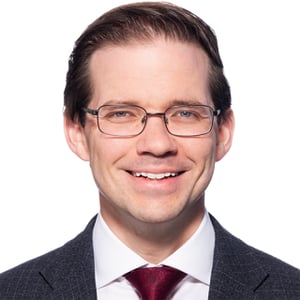
Of Counsel, Covington & Burling LLP
The Honorable Paul J. Ray is currently Of Counsel at Covington & Burling LLP where he advises clients on regulatory opportunities and challenges and helps them formulate and execute advocacy strategies for their regulatory policy priorities before the executive branch and Congress.
During the first Trump Administration, Paul held various senior positions at the Office of Information and Regulatory Affairs (OIRA) within the White House’s Office of Management and Budget, including as acting, and then Senate-confirmed, head of the office. As OIRA Administrator (the "regulations czar"), Paul supervised the review of hundreds of regulations from across the government, drafted numerous executive orders governing the regulatory process, and led the Administration’s regulatory reform effort. As a result of this experience, Paul is well-positioned to help clients understand and achieve regulatory policy priorities in the context of the government’s regulatory agenda and ongoing reform efforts.
Most recently, Paul was also the Director of the Roe Institute for Economic Policy Studies at The Heritage Foundation. In that role, he supervised the formulation of the Foundation’s economic and regulatory policy recommendations and provided technical assistance to congressional committees and staff regarding legislative changes to the regulatory process. In addition to his role at The Heritage Foundation, Paul also served as a Senior Advisor at a strategic advisory firm. Before his time in government, Paul practiced law at a law firm in Washington, specializing in administrative law matters.
Prior to his role at the White House, Paul was Counselor to the Secretary at the U.S. Department of Labor. There he led departmental efforts in high-profile rulemakings and helped formulate the Department’s legal positions and strategy.
Paul served as a law clerk to Supreme Court Justice Samuel Alito and as a law clerk to the Honorable Debra Livingston of the U.S. Court of Appeals for the Second Circuit.
Paul is a thought leader in the conservative legal movement and is a frequent commentator and speaker on regulatory policy and reform matters, including at law schools, professional gatherings, and other venues. He is the Chairman of Innovations in Peacebuilding International and the Regulatory Process Working Group of the Federalist Society’s Regulatory Transparency Project and a public member of the Administrative Conference of the United States. Paul is also an adjunct lecturer at the Hillsdale College School of Government.
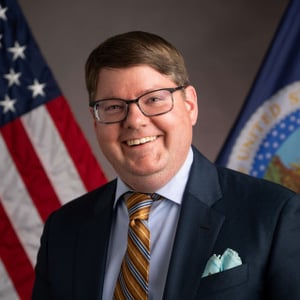
Deputy Secretary of Agriculture, U.S. Department of Agriculture
Judge Stephen Alexander Vaden was appointed as the Deputy Secretary of the U.S. Department of Agriculture on July 7, 2025. Alongside Secretary Brooke L. Rollins, Deputy Secretary Vaden leads the Department’s operations and implements policies that support America’s food and farm systems. A native of Union City, Tennessee, Deputy Secretary Vaden brings expertise in agricultural policy, law, and rural development. Previously, he served as a judge on the U.S. Court of International Trade and as General Counsel of USDA. Throughout Deputy Secretary Vaden’s time as General Counsel, he led successful Supreme Court litigation, advanced regulatory reform, and supported the implementation of the 2018 Farm Bill. He is a graduate of Yale Law School and Vanderbilt University. A public servant with strong agricultural roots, Deputy Secretary Vaden is committed to revitalizing rural America and ensuring an abundant, affordable, and safe U.S. food supply.
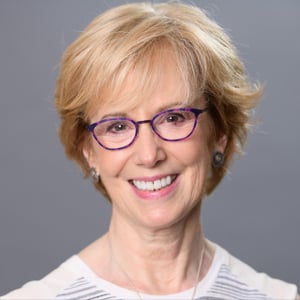
Director, GW Regulatory Studies Center & Distinguished Professor of Practice, Trachtenberg School of Public Policy & Public Administration, The George Washington University
Susan Dudley is the Founder and Director of the George Washington University Regulatory Studies Center, established in 2009 to raise awareness of regulations’ effects and improve regulatory policy through research, education, and outreach. She is also a distinguished professor of practice in the Trachtenberg School of Public Policy and Public Administration. She is past-president of the Society for Benefit Cost Analysis, a senior fellow of the Administrative Conference of the United States, and on the Regulatory Transparency Project Regulatory Practice Working Group. Her book, Regulation: A Primer, with Jerry Brito, is available on Amazon.com.
From April 2007 through January 2009, Professor Dudley served as the Presidentially-appointed Administrator of the Office of Information and Regulatory Affairs in the U.S. Office of Management and Budget and was responsible for the review of draft executive branch regulations under Executive Order 12866, the collection of federal-government-wide information under the Paperwork Reduction Act, the development and implementation of government-wide policies in the areas of information policy, privacy, and statistical policy, and international regulatory cooperation efforts.
Prior to OIRA, she directed the Regulatory Studies Program at the Mercatus Center at George Mason University, and taught courses on regulation at the George Mason University School of Law. Earlier in her career, Professor Dudley served as an economist at OIRA, as well as the Environmental Protection Agency and the Commodity Futures Trading Commission. She was also a consultant to government and private clients at Economists Incorporated. She holds a Master of Science degree from the Sloan School of Management at MIT and a Bachelor of Science degree (summa cum laude) in Resource Economics from the University of Massachusetts, Amherst.
Of Counsel, Covington & Burling LLP
The Honorable Paul J. Ray is currently Of Counsel at Covington & Burling LLP where he advises clients on regulatory opportunities and challenges and helps them formulate and execute advocacy strategies for their regulatory policy priorities before the executive branch and Congress.
During the first Trump Administration, Paul held various senior positions at the Office of Information and Regulatory Affairs (OIRA) within the White House’s Office of Management and Budget, including as acting, and then Senate-confirmed, head of the office. As OIRA Administrator (the "regulations czar"), Paul supervised the review of hundreds of regulations from across the government, drafted numerous executive orders governing the regulatory process, and led the Administration’s regulatory reform effort. As a result of this experience, Paul is well-positioned to help clients understand and achieve regulatory policy priorities in the context of the government’s regulatory agenda and ongoing reform efforts.
Most recently, Paul was also the Director of the Roe Institute for Economic Policy Studies at The Heritage Foundation. In that role, he supervised the formulation of the Foundation’s economic and regulatory policy recommendations and provided technical assistance to congressional committees and staff regarding legislative changes to the regulatory process. In addition to his role at The Heritage Foundation, Paul also served as a Senior Advisor at a strategic advisory firm. Before his time in government, Paul practiced law at a law firm in Washington, specializing in administrative law matters.
Prior to his role at the White House, Paul was Counselor to the Secretary at the U.S. Department of Labor. There he led departmental efforts in high-profile rulemakings and helped formulate the Department’s legal positions and strategy.
Paul served as a law clerk to Supreme Court Justice Samuel Alito and as a law clerk to the Honorable Debra Livingston of the U.S. Court of Appeals for the Second Circuit.
Paul is a thought leader in the conservative legal movement and is a frequent commentator and speaker on regulatory policy and reform matters, including at law schools, professional gatherings, and other venues. He is the Chairman of Innovations in Peacebuilding International and the Regulatory Process Working Group of the Federalist Society’s Regulatory Transparency Project and a public member of the Administrative Conference of the United States. Paul is also an adjunct lecturer at the Hillsdale College School of Government.
Partner, KaiserDillon PLLC
A former Assistant United States Attorney with dozens of trials under his belt, Justin Dillon now uses his years of litigation and investigative experience to defend clients in Title IX and campus discipline cases and in complex, high-stakes white-collar criminal investigations.
Justin has gained nationwide attention for his work representing students and professors in campus misconduct cases, which he and his firm have handled at more than 100 schools nationwide. Along with his partner Chris Muha, he co-authored Title IX Hearings and Litigation: A Practitioner’s Guide, published by The Foundation for Individual Rights and Expression and available here to any member of FIRE’s Legal Network.
While most of his cases are successfully resolved on campus, Justin is not afraid to take it all the way to court—he was the first lawyer in the country to win summary judgment against a university in a campus sexual assault case, and he has never lost a lawsuit against a college.
In his white-collar practice, Justin has successfully defended the General Counsel of a public company in a foreign-bribery investigation, helped a government contractor avoid criminal charges after a lengthy federal investigation, and represented numerous individuals and small-business owners.
Justin also frequently represents government employees under investigation for alleged ethical or criminal misconduct, including a former Cabinet secretary, a former Senate-confirmed head of a federal agency, and many other federal employees and federal prosecutors. He has extensive experience with Offices of Inspector General and the Justice Department’s Office of Professional Responsibility (OPR). He is also the former white-collar crime columnist for the website Above the Law; a collection of his columns is available here.
Earlier in his career, Justin worked for the Civil Rights Division of the Justice Department and later spent five and a half years as a federal prosecutor in Washington, DC, where he led more than 100 Grand Jury investigations, tried more than 60 criminal cases, and handled more than a dozen appeals.
Justin has been recognized by Chambers & Partners in Litigation: White-Collar Crime & Government Investigations in Washington, DC. He has also been recognized by Best Lawyers© in the category Criminal Defense: White-Collar; named by Super Lawyers as one of the Top Rated White Collar Crime Attorneys in Washington, D.C.; and selected by Washingtonian Magazine as one of Washington’s Best Lawyers in Criminal Defense.
Founder, Chairman, and CEO, Louis D. Brandeis Center for Human Rights Under Law
Hon. Kenneth L. Marcus is an internationally recognized expert in civil and human rights, as well as a leader in the fight against anti-Semitism on and off university campuses. He is the Founder, Chairman, and CEO of The Louis D. Brandeis Center for Human Rights Under Law, the leading civil rights legal organization fighting against anti-Semitism. The New York Times has called him “The Man Who Helped Redefine Campus Anti-Semitism.” He been described, in that paper, as “the single most effective and respected force” to combat anti-Semitism.
During his public service career, Marcus served as Assistant U.S. Secretary of Education for Civil Rights; Staff Director at the U.S. Commission on Civil Rights; and General Deputy Assistant U.S. Secretary of Housing and Urban Development for Fair Housing and Equal Opportunity.
In academia, he serves as Professorial Lecturer in Law at George Washington University. He formerly held the Lillie and Nathan Ackerman Chair in Equality and Justice in America at the City University of New York’s Bernard M. Baruch College, served as Visiting Research Professor of Political Science at Yeshiva University, and was a Board of Visitors member George Mason University and Distinguished Senior Fellow at that university’s law school. He is a member of the editorial board of the Journal of Contemporary Antisemitism and previously served as Associate Editor of the Journal for the Study of Anti-Semitism.
Marcus is also author of The Definition of Anti-Semitism (Oxford University Press) and Jewish Identity and Civil Rights in America (Cambridge University Press). He has published widely in academic journals as well as in more popular venues such as The Wall Street Journal, Washington Post, Newsweek, USA Today, and Politico. He is a graduate of Williams College and the University of California at Berkeley School of Law.
Earlier in his career, he was a litigation partner in two major law firms, where he conducted complex commercial and constitutional litigation. He also serves as Chairman emeritus of the Executive Committee of the Federalist Society for Law & Public Policy Civil Rights Practice Group.
Owner, Schneider Education & Employment Law PLLC
Scott Schneider is the owner and founder of Schneider Education & Employment Law and has advised companies and educational institutions nationwide on a variety of complex legal issues with a focus on particularly sensitive matters like institutional response to sexual misconduct.
Prior to founding Schneider Education & Employment Law, Scott was an equity partner in two major national law firms and served as in-house counsel for Tulane University.
He is a prominent litigator as well as a sought-after advisor on Title IX, labor and employment law issues, and various risk management concerns. He has led numerous investigations of serial sex abuse allegations, allegations of misconduct involving senior leadership and other acts of institutional misconduct. He has also handled various high-profile program reviews of institutional response to sexual misconduct, racial discrimination, athletics department ethics and compliance, and treatment of at-risk employees and students.
Scott has provided training nationally to thousands of personnel on a variety of issues, including Title IX; labor and employment law; faculty hiring, promotion and tenure processes; and Greek Life risk management. Scott also provides expert witness testimony on matters dealing with institutional response to allegations of sexual misconduct.
Scott regularly presents to national organizations, including the National Association of College and University Attorneys (NACUA), the National Association of Independent Schools (NAIS), the Association for Student Conduct Administration (ASCA) Gehring Academy, the International Association of Campus Law Enforcement Administrators (IACLEA), the Association of College and University Housing Officers-International (ACUHO-I), EDUCAUSE and various associations of independent schools.
Additionally, Scott previously served as an award-winning professor at Tulane University, where he taught courses on higher education and labor and employment law and created the Tulane University Law School’s Title IX certification program. Scott has been retained by the National Center for Campus Public Safety to serve as a faculty member for its Trauma-Informed Sexual Assault Investigation and Adjudication training program for campus officials. Scott also serves on the faculty for the State University of New York’s Student Conduct Institute where he provides training on informal resolution and restorative justice.
Vice President of Domestic and Economic Policy, The Heritage Foundation
Roger Severino is Vice President of Economic and Domestic Policy, and the Joseph C. and Elizabeth A. Anderlik Fellow at The Heritage Foundation.
Severino is a national authority on civil rights, conscience and religious freedom, the administrative state, and information privacy, particularly as applied to health care law and policy. Find his tweets at @RogerSeverino_.
Severino spearheaded the HHS Accountability Project while a Senior Fellow at EPPC from 2021 to 2023. Previously, Severino was Director of HHS’ Office for Civil Rights, where he led a team of over 250 staff enforcing our nation’s civil rights, conscience and religious freedom, and health information privacy laws. He served from 2017 to 2021 and was the longest-serving OCR director of the past three decades.
Prior to joining HHS, Severino served for two years as Director of the DeVos Center for Religion and Civil Society at Heritage, advocating for life, family, and religious-freedom policies. Before that, he was a trial attorney for seven years at the U.S. Department of Justice’s Civil Rights Division where he enforced the Fair Housing Act and the Civil Rights Act of 1964. Severino started his legal career at the Becket Fund for Religious Liberty, where he was Legal Counsel and Chief Operations Officer and defended the rights of people of all faiths under federal and international law.
Severino has been profiled in The New York Times, The Atlantic, The Wall Street Journal, and The Hill and has appeared on Fox News, CNN, MSNBC, NPR, and PBS, among others. In 2020, The New York Times dubbed him and his wife Carrie, “a conservative power couple” to be reckoned with.
Severino holds a JD from Harvard Law School, a master’s degree in public policy, with highest distinction, from Carnegie Mellon University, and a bachelor’s degree in business from the University of Southern California. He was appointed by President Trump to the Administrative Conference of the United States and is a member of the District of Columbia and the Commonwealth of Virginia bars.
As OCR director, Severino founded the federal government’s first division dedicated exclusively to conscience and religious freedom compliance and enforcement. He enforced the Weldon Amendment for the first time against a state (California) after it coerced families and religious organizations into paying for abortion insurance coverage, leading to a $200 million federal funding disallowance. He also enforced laws protecting pro-life pregnancy resource centers from discrimination by states hostile to their message and enforced laws prohibiting forced participation in abortions by medical professionals.
With respect to civil rights, Severino protected older persons and people with disabilities from being denied life-saving care due to discriminatory “quality of life” judgments, especially during the COVID-19 pandemic. He also achieved a landmark sexual harassment resolution with Michigan State University in the wake of the Larry Nassar sexual assault scandal and protected the rights of non-English speakers to have equal access to health and human services.
In the area of health privacy, he secured the largest HIPAA monetary settlement in history and achieved the largest number of enforcement resolutions both in a single year and across four years. He also facilitated the transformational use of Skype, Zoom, and Facetime for delivery of telehealth during the COVID-19 pandemic and beyond.
His regulatory reform activities resulted in a comprehensive conscience protection regulation and proposed a life-affirming disability rights regulation. He achieved regulatory savings of $3.6 billion in health care industry costs over five years and identified and proposed an additional $3.2 billion in cost savings from the repeal of ineffective and unnecessary regulatory burdens.
Severino is a Spanish speaker who teaches salsa and west coast swing in his spare time.
Partner, Skadden, Arps, Slate, Meagher and Flom, LLP and Affiliates
Boris Bershteyn is a partner at Skadden, Arps, Slate, Meagher and Flom, LLP. He served as acting Administrator of the Office of Information and Regulatory Affairs in 2012 and 2013, and as General Counsel of the Office of Management and Budget (OMB) starting 2011. In 2010 and 2011, Bershteyn served as Special Assistant to the President and Associate White House Counsel, focusing on legal issues in regulatory, economic, health, and environmental policy. In 2009 and 2010, he served as the Deputy General Counsel of OMB. Earlier in his career, he served as a law clerk to Justice David H. Souter of the U.S. Supreme Court and Judge José A. Cabranes of the U.S. Court of Appeals for the Second Circuit. He holds a B.A. in Economics and Political Science from Stanford University and a J.D. from Yale Law School. Among other positions, Bershteyn serves as Senior Fellow of the Administrative Conference of the United States, the Chair of the Board of Advisors of the Institute for Policy Integrity at NYU Law School, and Trustee of the U.S. Supreme Court Historical Society.
Of Counsel, Covington & Burling LLP
The Honorable Paul J. Ray is currently Of Counsel at Covington & Burling LLP where he advises clients on regulatory opportunities and challenges and helps them formulate and execute advocacy strategies for their regulatory policy priorities before the executive branch and Congress.
During the first Trump Administration, Paul held various senior positions at the Office of Information and Regulatory Affairs (OIRA) within the White House’s Office of Management and Budget, including as acting, and then Senate-confirmed, head of the office. As OIRA Administrator (the "regulations czar"), Paul supervised the review of hundreds of regulations from across the government, drafted numerous executive orders governing the regulatory process, and led the Administration’s regulatory reform effort. As a result of this experience, Paul is well-positioned to help clients understand and achieve regulatory policy priorities in the context of the government’s regulatory agenda and ongoing reform efforts.
Most recently, Paul was also the Director of the Roe Institute for Economic Policy Studies at The Heritage Foundation. In that role, he supervised the formulation of the Foundation’s economic and regulatory policy recommendations and provided technical assistance to congressional committees and staff regarding legislative changes to the regulatory process. In addition to his role at The Heritage Foundation, Paul also served as a Senior Advisor at a strategic advisory firm. Before his time in government, Paul practiced law at a law firm in Washington, specializing in administrative law matters.
Prior to his role at the White House, Paul was Counselor to the Secretary at the U.S. Department of Labor. There he led departmental efforts in high-profile rulemakings and helped formulate the Department’s legal positions and strategy.
Paul served as a law clerk to Supreme Court Justice Samuel Alito and as a law clerk to the Honorable Debra Livingston of the U.S. Court of Appeals for the Second Circuit.
Paul is a thought leader in the conservative legal movement and is a frequent commentator and speaker on regulatory policy and reform matters, including at law schools, professional gatherings, and other venues. He is the Chairman of Innovations in Peacebuilding International and the Regulatory Process Working Group of the Federalist Society’s Regulatory Transparency Project and a public member of the Administrative Conference of the United States. Paul is also an adjunct lecturer at the Hillsdale College School of Government.
Deputy Secretary of Agriculture, U.S. Department of Agriculture
Judge Stephen Alexander Vaden was appointed as the Deputy Secretary of the U.S. Department of Agriculture on July 7, 2025. Alongside Secretary Brooke L. Rollins, Deputy Secretary Vaden leads the Department’s operations and implements policies that support America’s food and farm systems. A native of Union City, Tennessee, Deputy Secretary Vaden brings expertise in agricultural policy, law, and rural development. Previously, he served as a judge on the U.S. Court of International Trade and as General Counsel of USDA. Throughout Deputy Secretary Vaden’s time as General Counsel, he led successful Supreme Court litigation, advanced regulatory reform, and supported the implementation of the 2018 Farm Bill. He is a graduate of Yale Law School and Vanderbilt University. A public servant with strong agricultural roots, Deputy Secretary Vaden is committed to revitalizing rural America and ensuring an abundant, affordable, and safe U.S. food supply.
Director, GW Regulatory Studies Center & Distinguished Professor of Practice, Trachtenberg School of Public Policy & Public Administration, The George Washington University
Susan Dudley is the Founder and Director of the George Washington University Regulatory Studies Center, established in 2009 to raise awareness of regulations’ effects and improve regulatory policy through research, education, and outreach. She is also a distinguished professor of practice in the Trachtenberg School of Public Policy and Public Administration. She is past-president of the Society for Benefit Cost Analysis, a senior fellow of the Administrative Conference of the United States, and on the Regulatory Transparency Project Regulatory Practice Working Group. Her book, Regulation: A Primer, with Jerry Brito, is available on Amazon.com.
From April 2007 through January 2009, Professor Dudley served as the Presidentially-appointed Administrator of the Office of Information and Regulatory Affairs in the U.S. Office of Management and Budget and was responsible for the review of draft executive branch regulations under Executive Order 12866, the collection of federal-government-wide information under the Paperwork Reduction Act, the development and implementation of government-wide policies in the areas of information policy, privacy, and statistical policy, and international regulatory cooperation efforts.
Prior to OIRA, she directed the Regulatory Studies Program at the Mercatus Center at George Mason University, and taught courses on regulation at the George Mason University School of Law. Earlier in her career, Professor Dudley served as an economist at OIRA, as well as the Environmental Protection Agency and the Commodity Futures Trading Commission. She was also a consultant to government and private clients at Economists Incorporated. She holds a Master of Science degree from the Sloan School of Management at MIT and a Bachelor of Science degree (summa cum laude) in Resource Economics from the University of Massachusetts, Amherst.
Of Counsel, Covington & Burling LLP
The Honorable Paul J. Ray is currently Of Counsel at Covington & Burling LLP where he advises clients on regulatory opportunities and challenges and helps them formulate and execute advocacy strategies for their regulatory policy priorities before the executive branch and Congress.
During the first Trump Administration, Paul held various senior positions at the Office of Information and Regulatory Affairs (OIRA) within the White House’s Office of Management and Budget, including as acting, and then Senate-confirmed, head of the office. As OIRA Administrator (the "regulations czar"), Paul supervised the review of hundreds of regulations from across the government, drafted numerous executive orders governing the regulatory process, and led the Administration’s regulatory reform effort. As a result of this experience, Paul is well-positioned to help clients understand and achieve regulatory policy priorities in the context of the government’s regulatory agenda and ongoing reform efforts.
Most recently, Paul was also the Director of the Roe Institute for Economic Policy Studies at The Heritage Foundation. In that role, he supervised the formulation of the Foundation’s economic and regulatory policy recommendations and provided technical assistance to congressional committees and staff regarding legislative changes to the regulatory process. In addition to his role at The Heritage Foundation, Paul also served as a Senior Advisor at a strategic advisory firm. Before his time in government, Paul practiced law at a law firm in Washington, specializing in administrative law matters.
Prior to his role at the White House, Paul was Counselor to the Secretary at the U.S. Department of Labor. There he led departmental efforts in high-profile rulemakings and helped formulate the Department’s legal positions and strategy.
Paul served as a law clerk to Supreme Court Justice Samuel Alito and as a law clerk to the Honorable Debra Livingston of the U.S. Court of Appeals for the Second Circuit.
Paul is a thought leader in the conservative legal movement and is a frequent commentator and speaker on regulatory policy and reform matters, including at law schools, professional gatherings, and other venues. He is the Chairman of Innovations in Peacebuilding International and the Regulatory Process Working Group of the Federalist Society’s Regulatory Transparency Project and a public member of the Administrative Conference of the United States. Paul is also an adjunct lecturer at the Hillsdale College School of Government.
Director, GW Regulatory Studies Center & Distinguished Professor of Practice, Trachtenberg School of Public Policy & Public Administration, The George Washington University
Susan Dudley is the Founder and Director of the George Washington University Regulatory Studies Center, established in 2009 to raise awareness of regulations’ effects and improve regulatory policy through research, education, and outreach. She is also a distinguished professor of practice in the Trachtenberg School of Public Policy and Public Administration. She is past-president of the Society for Benefit Cost Analysis, a senior fellow of the Administrative Conference of the United States, and on the Regulatory Transparency Project Regulatory Practice Working Group. Her book, Regulation: A Primer, with Jerry Brito, is available on Amazon.com.
From April 2007 through January 2009, Professor Dudley served as the Presidentially-appointed Administrator of the Office of Information and Regulatory Affairs in the U.S. Office of Management and Budget and was responsible for the review of draft executive branch regulations under Executive Order 12866, the collection of federal-government-wide information under the Paperwork Reduction Act, the development and implementation of government-wide policies in the areas of information policy, privacy, and statistical policy, and international regulatory cooperation efforts.
Prior to OIRA, she directed the Regulatory Studies Program at the Mercatus Center at George Mason University, and taught courses on regulation at the George Mason University School of Law. Earlier in her career, Professor Dudley served as an economist at OIRA, as well as the Environmental Protection Agency and the Commodity Futures Trading Commission. She was also a consultant to government and private clients at Economists Incorporated. She holds a Master of Science degree from the Sloan School of Management at MIT and a Bachelor of Science degree (summa cum laude) in Resource Economics from the University of Massachusetts, Amherst.
Of Counsel, Covington & Burling LLP
The Honorable Paul J. Ray is currently Of Counsel at Covington & Burling LLP where he advises clients on regulatory opportunities and challenges and helps them formulate and execute advocacy strategies for their regulatory policy priorities before the executive branch and Congress.
During the first Trump Administration, Paul held various senior positions at the Office of Information and Regulatory Affairs (OIRA) within the White House’s Office of Management and Budget, including as acting, and then Senate-confirmed, head of the office. As OIRA Administrator (the "regulations czar"), Paul supervised the review of hundreds of regulations from across the government, drafted numerous executive orders governing the regulatory process, and led the Administration’s regulatory reform effort. As a result of this experience, Paul is well-positioned to help clients understand and achieve regulatory policy priorities in the context of the government’s regulatory agenda and ongoing reform efforts.
Most recently, Paul was also the Director of the Roe Institute for Economic Policy Studies at The Heritage Foundation. In that role, he supervised the formulation of the Foundation’s economic and regulatory policy recommendations and provided technical assistance to congressional committees and staff regarding legislative changes to the regulatory process. In addition to his role at The Heritage Foundation, Paul also served as a Senior Advisor at a strategic advisory firm. Before his time in government, Paul practiced law at a law firm in Washington, specializing in administrative law matters.
Prior to his role at the White House, Paul was Counselor to the Secretary at the U.S. Department of Labor. There he led departmental efforts in high-profile rulemakings and helped formulate the Department’s legal positions and strategy.
Paul served as a law clerk to Supreme Court Justice Samuel Alito and as a law clerk to the Honorable Debra Livingston of the U.S. Court of Appeals for the Second Circuit.
Paul is a thought leader in the conservative legal movement and is a frequent commentator and speaker on regulatory policy and reform matters, including at law schools, professional gatherings, and other venues. He is the Chairman of Innovations in Peacebuilding International and the Regulatory Process Working Group of the Federalist Society’s Regulatory Transparency Project and a public member of the Administrative Conference of the United States. Paul is also an adjunct lecturer at the Hillsdale College School of Government.
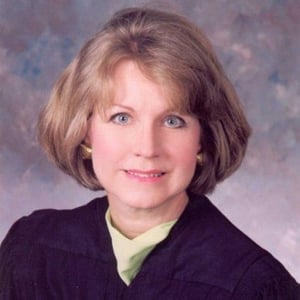
Judge, United States Court of Appeals, Fifth Circuit
Judge Edith Clement sits on the United States Court of Appeals for the Fifth Circuit. Judge Clement worked in a private practice as a maritime attorney in New Orleans, Louisiana, before being appointed in 1991 to the United States District Court for the Eastern District of Louisiana by President George H. W. Bush. In 2001, she was appointed by President George W. Bush to the United States Court of Appeals for the Fifth Circuit. Judge Clement is a member of the Maritime Law Association of the United States, the Federal Bar Association, the American Law Institute, the Federalist Society, the Tulane Law Schools Inn of Court, and the Committee on the Administrative Office of the Judicial Conference of the United States. She is a graduate of the University of Alabama and received her JD from Tulane Law School.
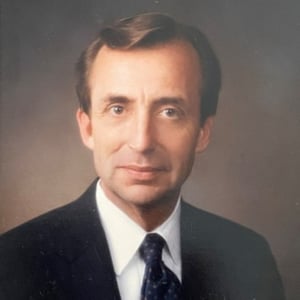
Partner, Montgomery Barnett
Harvey Charles Koch, Jr, a native of Hammond La. and a resident of New Orleans for 80 years, was born on August 15, 1934, and died peacefully on July 13, 2020, from cancer at age 85.
Mr. Koch's practice included complex commercial litigation, litigation management, insurance coverage and extra-contractual defense litigation, the construction process, construction litigation and arbitration, contract interpretation, sports and entertainment law, fidelity, surety and financial institution bonds, lawyer's malpractice, errors and omissions, life and long term care and fine arts coverages.
Mr. Koch participated in negotiations in Egypt after the Yom Kippur War leading to removal of ships sunk in the Suez Canal; represented a consortium of companies involved in reconstructing Kuwait and its oil fields after Operation Desert Storm; represented a major international insurance company in developing indemnity agreements, construction bonds, and guarantees for use with contractors in twelve foreign countries; represented the lead insurer in the adjustment of the business interruption claims of the Titan IV rockets manufacturer when the solid rocket fuel manufacturing plant supplying that missile program was destroyed in an explosion. And Mr. Koch has defended parties in complex litigation involving nuclear power and fossil fuel plants; the shipping industry; the former Louisiana Sunday Closing laws; and the resurfacing of both runways of the New Orleans International Airport (MSY) in the 1980's. Mr. Koch currently represents the international construction management firm managing all construction at the New Orleans Louis Armstrong International Airport (MSY).
As an appellate practitioner, Mr. Koch briefed the United States Supreme Court on the Insurance Industry's position on coverage issues regarding the Security Dealer's Blanket Bond, and the New Zealand Supreme Court on the interpretation by United States Courts on coverage issues related to the Financial Institution Bond.
Mr. Koch was listed in Best Lawyers in America (Construction), was a Fellow of the American College of Construction Lawyers (Founder and Former Chair of its Insurance Industry Committee and a former member of its Board of Governors), and was a consultative member of the American Law Institute. Mr. Koch chaired the American Bar Association's Fidelity and Surety Law Committee, Co-Chaired the ABA's first three National Institutes of the Forum on the Construction Industry, chaired six ABA National Law Institutes, founded and served as first Chair of the Louisiana Bar Association's Section on Construction, Fidelity and Surety Law, served as a Vice Chair of the Fidelity and Surety Law Committee of the International Association of Defense Counsel, served on both the Surety Claims Institute Board of Governors and the Advisory Council of the Chief Judge of the Court of Federal Claims in Washington, D.C., was a Trustee of the Federalist Society, was a member of the National Bond Claims Association, was one of the four Advisors Emeritus of the Fidelity Law Association and was a Life Fellow of both the American and Louisiana Bar Foundations.
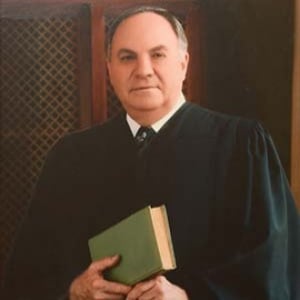
Justice, Louisiana Supreme Court
Harry Thomas Lemmon was a Justice of the Louisiana Supreme Court from May 16, 1980 to May 16, 2001. Born in Morgan City, Louisiana, Lemmon graduated from Morgan City High School in 1948, and from the University of Southwestern Louisiana in 1952. After briefly working as a chemist for American Oil Company, he served in the United States Army Chemical Corps in the Korean War. He graduated from Loyola University New Orleans College of Law in 1963, and was in private practice from then until 1970.
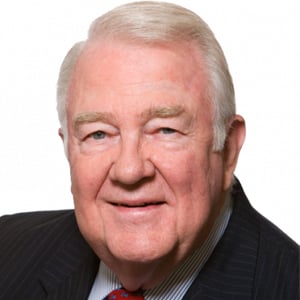
Ronald Reagan Distinguished Fellow Emeritus, The Heritage Foundation
Edwin Meese III, the prominent conservative leader, thinker and elder statesman, continues a quarter-century formal association with The Heritage Foundation as the leading think tank’s Ronald Reagan Distinguished Fellow Emeritus.
In that capacity, Meese oversees special projects and acts as an ambassador for Heritage within the conservative movement.
Meese was chairman of Heritage’s Center for Legal and Judicial Studies from its founding in 2001 until what he calls his “semi-retirement” on Feb. 1, 2013.
He joined Heritage in 1988 as the think tank's first Ronald Reagan Distinguished Fellow -- the only policy chair in the country to be officially named for the 40th president. His work focused on keeping President Reagan’s legacy of conservative principles alive in public debate and discourse.
The legal center now bears his name, in recognition of Meese’s contributions to the rule of law and the nation’s understanding of constitutional law. Its mission is to educate government officials, the media and the public about the Constitution and legal principles -- and how they affect public policy.
Perhaps best known as U.S. attorney general during Reagan’s second term, Meese’s service to the conservative icon stretched from the California governor’s mansion in 1966 to the White House in 1981 before he went to the Department of Justice four years later.
His Heritage “hats” kept Meese among the major conservative voices in national policy debates at an age when most men and women enjoyed quiet retirements.
In 2006, for example, Meese was named to the Iraq Study Group, a special presidential commission dedicated to examining the best resolutions for America's involvement in Iraq. In the past few years he wrote and spoke about constitutional topics ranging from religious liberty to the responsibility of Supreme Court justices.
Immediately after Reagan's death in 2004, and in the years since, Meese often agreed to major media appearances to discuss the lasting impact of his old friend, mentor and boss. He has summarized the Reagan legacy in three accomplishments: Reagan cut taxes and kept them low. He worked to defeat and end the Soviet Union and its worldwide push for communism. And he restored America's faith in itself after years of failure and "malaise."
"I admired him as a leader and cherish his friendship," Meese wrote in a 2004 essay for Heritage members and supporters. "Ronald Reagan had strong convictions. He was committed to the principles that had led to the founding of our nation. And he had the courage to follow his convictions against all odds." <[>Edwin Meese III was born Dec. 2, 1931, to Edwin Jr. and Leone Meese in Oakland, Calif. He graduated from Yale University in 1953 and holds a law degree from the University of California-Berkeley.
Meese spent much of his adult life working for Reagan, first after the former actor, sports announcer and athlete was elected as California’s governor in 1966 and then when he sought and won the presidency in 1980.
Reagan never forgot Meese's loyalty and hard work. During a press conference at which reporters questioned Meese's actions at the Justice Department, Reagan replied: "If Ed Meese is not a good man, there are no good men."
During the Reagan governorship, Meese served as executive assistant and chief of staff from 1969 through 1974 and as legal affairs secretary from 1967 through 1968. He previously was deputy district attorney in Alameda County, Calif.
From January 1981 to February 1985, Meese held the position of counsellor to the president -- the senior job on the White House staff -- and functioned as Reagan's chief policy adviser. In 1985, he received Government Executive magazine's annual award for excellence in management.
Meese served as the 75th attorney general of the United States from February 1985 to August 1988. As the nation's chief law enforcement officer, he directed the Justice Department and led international efforts to combat terrorism, drug trafficking and organized crime.
Meese’s relationship with Heritage began when he met with senior management to discuss the think tank's landmark policy guide, Mandate for Leadership, prepared for the incoming administration. Meese later recalled that Reagan personally handed out copies of the 1,093-page book to members of his Cabinet and asked them to read it. Nearly two-thirds of Mandate's 2,000 recommendations would be adopted or attempted by the Reagan administration.
More than a decade after joining Heritage, Meese assumed the chairmanship of its Center for Legal and Judicial Studies. Under his guidance, the center counseled White House staffers, Justice Department officials and Senate Judiciary Committee members on the importance of filling judicial vacancies with qualified men and women who are committed to interpreting the Constitution according to the founding document's original meaning.
The center became known for hosting "moot court" practice sessions to sharpen the arguments of attorneys slated to bring important cases before the Supreme Court. Those cases addressed constitutional issues ranging from property rights to racial preferences in primary and secondary schools to restrictions on free speech in campaign finance law.
Meese headed the legal center's Advisory Board for the writing and editing of the best-selling book, The Heritage Guide to the Constitution (Regnery, 2005). In it, 109 experts walked readers through a clause-by-clause analysis of the Constitution. Sen. Tom Coburn (R-Okla.) was among those keeping the reference work handy during Judiciary Committee hearings on Supreme Court nominees.
Meese's other books include “Leadership, Ethics and Policing” (Prentice Hall, 2004); “Making America Safer” (Heritage, 1997); and “With Reagan: The Inside Story” (Regnery Gateway, 1992).He wrote the Introduction to a well-received 2010 book on the “overcriminalization” trend, “One Nation Under Arrest,” by Heritage veterans Paul Rosenzweig and Brian W. Walsh.
He also is a distinguished visiting fellow at the Hoover Institution at Stanford University in California and lectures, writes and consults throughout the United States on a variety of subjects.
As both attorney general and counsellor to Reagan, Meese was a member of the Cabinet and the National Security Council. He served as chairman of the Domestic Policy Council and the National Drug Policy Board. After Reagan won the White House in the 1980 election, Meese headed the transition team. During the campaign, he was the Reagan-Bush Committee's senior official.
Meese had a career outside government and politics. From 1977 to 1981, he was a law professor at the University of San Diego, where he also directed the Center for Criminal Justice Policy and Management.
He was an executive in the aerospace and transportation industry as vice president for administration of Rohr Industries Inc. in Chula Vista, Calif. He left Rohr to return to the practice of law, doing corporate and general work in San Diego County.
A retired colonel in the Army Reserve, Meese remains active in numerous civic and educational organizations.
He and his wife, Ursula, have two grown children and reside in McLean, Va.
Judge, United States Court of Appeals, Fifth Circuit
Judge Edith Clement sits on the United States Court of Appeals for the Fifth Circuit. Judge Clement worked in a private practice as a maritime attorney in New Orleans, Louisiana, before being appointed in 1991 to the United States District Court for the Eastern District of Louisiana by President George H. W. Bush. In 2001, she was appointed by President George W. Bush to the United States Court of Appeals for the Fifth Circuit. Judge Clement is a member of the Maritime Law Association of the United States, the Federal Bar Association, the American Law Institute, the Federalist Society, the Tulane Law Schools Inn of Court, and the Committee on the Administrative Office of the Judicial Conference of the United States. She is a graduate of the University of Alabama and received her JD from Tulane Law School.
Partner, Montgomery Barnett
Harvey Charles Koch, Jr, a native of Hammond La. and a resident of New Orleans for 80 years, was born on August 15, 1934, and died peacefully on July 13, 2020, from cancer at age 85.
Mr. Koch's practice included complex commercial litigation, litigation management, insurance coverage and extra-contractual defense litigation, the construction process, construction litigation and arbitration, contract interpretation, sports and entertainment law, fidelity, surety and financial institution bonds, lawyer's malpractice, errors and omissions, life and long term care and fine arts coverages.
Mr. Koch participated in negotiations in Egypt after the Yom Kippur War leading to removal of ships sunk in the Suez Canal; represented a consortium of companies involved in reconstructing Kuwait and its oil fields after Operation Desert Storm; represented a major international insurance company in developing indemnity agreements, construction bonds, and guarantees for use with contractors in twelve foreign countries; represented the lead insurer in the adjustment of the business interruption claims of the Titan IV rockets manufacturer when the solid rocket fuel manufacturing plant supplying that missile program was destroyed in an explosion. And Mr. Koch has defended parties in complex litigation involving nuclear power and fossil fuel plants; the shipping industry; the former Louisiana Sunday Closing laws; and the resurfacing of both runways of the New Orleans International Airport (MSY) in the 1980's. Mr. Koch currently represents the international construction management firm managing all construction at the New Orleans Louis Armstrong International Airport (MSY).
As an appellate practitioner, Mr. Koch briefed the United States Supreme Court on the Insurance Industry's position on coverage issues regarding the Security Dealer's Blanket Bond, and the New Zealand Supreme Court on the interpretation by United States Courts on coverage issues related to the Financial Institution Bond.
Mr. Koch was listed in Best Lawyers in America (Construction), was a Fellow of the American College of Construction Lawyers (Founder and Former Chair of its Insurance Industry Committee and a former member of its Board of Governors), and was a consultative member of the American Law Institute. Mr. Koch chaired the American Bar Association's Fidelity and Surety Law Committee, Co-Chaired the ABA's first three National Institutes of the Forum on the Construction Industry, chaired six ABA National Law Institutes, founded and served as first Chair of the Louisiana Bar Association's Section on Construction, Fidelity and Surety Law, served as a Vice Chair of the Fidelity and Surety Law Committee of the International Association of Defense Counsel, served on both the Surety Claims Institute Board of Governors and the Advisory Council of the Chief Judge of the Court of Federal Claims in Washington, D.C., was a Trustee of the Federalist Society, was a member of the National Bond Claims Association, was one of the four Advisors Emeritus of the Fidelity Law Association and was a Life Fellow of both the American and Louisiana Bar Foundations.
Justice, Louisiana Supreme Court
Harry Thomas Lemmon was a Justice of the Louisiana Supreme Court from May 16, 1980 to May 16, 2001. Born in Morgan City, Louisiana, Lemmon graduated from Morgan City High School in 1948, and from the University of Southwestern Louisiana in 1952. After briefly working as a chemist for American Oil Company, he served in the United States Army Chemical Corps in the Korean War. He graduated from Loyola University New Orleans College of Law in 1963, and was in private practice from then until 1970.
Ronald Reagan Distinguished Fellow Emeritus, The Heritage Foundation
Edwin Meese III, the prominent conservative leader, thinker and elder statesman, continues a quarter-century formal association with The Heritage Foundation as the leading think tank’s Ronald Reagan Distinguished Fellow Emeritus.
In that capacity, Meese oversees special projects and acts as an ambassador for Heritage within the conservative movement.
Meese was chairman of Heritage’s Center for Legal and Judicial Studies from its founding in 2001 until what he calls his “semi-retirement” on Feb. 1, 2013.
He joined Heritage in 1988 as the think tank's first Ronald Reagan Distinguished Fellow -- the only policy chair in the country to be officially named for the 40th president. His work focused on keeping President Reagan’s legacy of conservative principles alive in public debate and discourse.
The legal center now bears his name, in recognition of Meese’s contributions to the rule of law and the nation’s understanding of constitutional law. Its mission is to educate government officials, the media and the public about the Constitution and legal principles -- and how they affect public policy.
Perhaps best known as U.S. attorney general during Reagan’s second term, Meese’s service to the conservative icon stretched from the California governor’s mansion in 1966 to the White House in 1981 before he went to the Department of Justice four years later.
His Heritage “hats” kept Meese among the major conservative voices in national policy debates at an age when most men and women enjoyed quiet retirements.
In 2006, for example, Meese was named to the Iraq Study Group, a special presidential commission dedicated to examining the best resolutions for America's involvement in Iraq. In the past few years he wrote and spoke about constitutional topics ranging from religious liberty to the responsibility of Supreme Court justices.
Immediately after Reagan's death in 2004, and in the years since, Meese often agreed to major media appearances to discuss the lasting impact of his old friend, mentor and boss. He has summarized the Reagan legacy in three accomplishments: Reagan cut taxes and kept them low. He worked to defeat and end the Soviet Union and its worldwide push for communism. And he restored America's faith in itself after years of failure and "malaise."
"I admired him as a leader and cherish his friendship," Meese wrote in a 2004 essay for Heritage members and supporters. "Ronald Reagan had strong convictions. He was committed to the principles that had led to the founding of our nation. And he had the courage to follow his convictions against all odds." <[>Edwin Meese III was born Dec. 2, 1931, to Edwin Jr. and Leone Meese in Oakland, Calif. He graduated from Yale University in 1953 and holds a law degree from the University of California-Berkeley.
Meese spent much of his adult life working for Reagan, first after the former actor, sports announcer and athlete was elected as California’s governor in 1966 and then when he sought and won the presidency in 1980.
Reagan never forgot Meese's loyalty and hard work. During a press conference at which reporters questioned Meese's actions at the Justice Department, Reagan replied: "If Ed Meese is not a good man, there are no good men."
During the Reagan governorship, Meese served as executive assistant and chief of staff from 1969 through 1974 and as legal affairs secretary from 1967 through 1968. He previously was deputy district attorney in Alameda County, Calif.
From January 1981 to February 1985, Meese held the position of counsellor to the president -- the senior job on the White House staff -- and functioned as Reagan's chief policy adviser. In 1985, he received Government Executive magazine's annual award for excellence in management.
Meese served as the 75th attorney general of the United States from February 1985 to August 1988. As the nation's chief law enforcement officer, he directed the Justice Department and led international efforts to combat terrorism, drug trafficking and organized crime.
Meese’s relationship with Heritage began when he met with senior management to discuss the think tank's landmark policy guide, Mandate for Leadership, prepared for the incoming administration. Meese later recalled that Reagan personally handed out copies of the 1,093-page book to members of his Cabinet and asked them to read it. Nearly two-thirds of Mandate's 2,000 recommendations would be adopted or attempted by the Reagan administration.
More than a decade after joining Heritage, Meese assumed the chairmanship of its Center for Legal and Judicial Studies. Under his guidance, the center counseled White House staffers, Justice Department officials and Senate Judiciary Committee members on the importance of filling judicial vacancies with qualified men and women who are committed to interpreting the Constitution according to the founding document's original meaning.
The center became known for hosting "moot court" practice sessions to sharpen the arguments of attorneys slated to bring important cases before the Supreme Court. Those cases addressed constitutional issues ranging from property rights to racial preferences in primary and secondary schools to restrictions on free speech in campaign finance law.
Meese headed the legal center's Advisory Board for the writing and editing of the best-selling book, The Heritage Guide to the Constitution (Regnery, 2005). In it, 109 experts walked readers through a clause-by-clause analysis of the Constitution. Sen. Tom Coburn (R-Okla.) was among those keeping the reference work handy during Judiciary Committee hearings on Supreme Court nominees.
Meese's other books include “Leadership, Ethics and Policing” (Prentice Hall, 2004); “Making America Safer” (Heritage, 1997); and “With Reagan: The Inside Story” (Regnery Gateway, 1992).He wrote the Introduction to a well-received 2010 book on the “overcriminalization” trend, “One Nation Under Arrest,” by Heritage veterans Paul Rosenzweig and Brian W. Walsh.
He also is a distinguished visiting fellow at the Hoover Institution at Stanford University in California and lectures, writes and consults throughout the United States on a variety of subjects.
As both attorney general and counsellor to Reagan, Meese was a member of the Cabinet and the National Security Council. He served as chairman of the Domestic Policy Council and the National Drug Policy Board. After Reagan won the White House in the 1980 election, Meese headed the transition team. During the campaign, he was the Reagan-Bush Committee's senior official.
Meese had a career outside government and politics. From 1977 to 1981, he was a law professor at the University of San Diego, where he also directed the Center for Criminal Justice Policy and Management.
He was an executive in the aerospace and transportation industry as vice president for administration of Rohr Industries Inc. in Chula Vista, Calif. He left Rohr to return to the practice of law, doing corporate and general work in San Diego County.
A retired colonel in the Army Reserve, Meese remains active in numerous civic and educational organizations.
He and his wife, Ursula, have two grown children and reside in McLean, Va.

Biden administration’s proposed rule on Title IX
Washington, DCBiden administration’s proposed rule on Title IX
Justin E. Dillon, Kenneth L. Marcus, Scott Schneider, Roger Severino
Featuring: Justin Dillon, Partner, KaiserDillon PLLC Roger Severino, Vice President, Heritage Foundation Scott Schneider, Partner,...
Creatures of Statute: Administrative Agencies in Practice
Boris Bershteyn, Paul J. Ray, Stephen Alexander Vaden
Join the Federalist Society’s Regulatory Transparency Project and Capitol Hill Chapter for the first in...
Creatures of Statute: Administrative Agencies in Practice
Washington, DCDeep Dive Episode 230 - Who Is Regulating the Regulators?
Susan E. Dudley, Paul J. Ray
In the Executive Office of the President is a small office that most people outside...
Who Is Regulating the Regulators?
Susan E. Dudley, Paul J. Ray
In the Executive Office of the President is a small office that most people outside...
Who Is Regulating the Regulators?
A Regulatory Transparency Project Webinar
TeleforumTopics
What Adam Liptak Doesn’t Know about Brown v. Board and Originalism
Adam Liptak, the New York Times’ Supreme Court reporter, recently published an article in which...
1996 James Madison Lecture [Archive Collection]
Edith Brown Clement, Martin Feldman, Harvey C. Koch, Harry T. Lemmon, Edwin Meese
On October 9, 1996, the Federalist Society's student chapter at Loyola University School of Law...
1996 James Madison Lecture [Archive Collection]
Edith Brown Clement, Martin Feldman, Harvey C. Koch, Harry T. Lemmon, Edwin Meese
On October 9, 1996, the Federalist Society's student chapter at Loyola University School of Law...