

Chief Policy Counsel, Council on Criminal Justice and Senior Advisor, Right on Crime
Marc A. Levin is the Chief Policy Counsel for the Council on Criminal Justice (counciloncj.org) and Senior Advisor for Right on Crime.
An attorney and accomplished author on legal and public policy issues, Marc began the Foundation’s criminal justice program in 2005. This work contributed to nationally praised policy changes that have been followed by dramatic declines in crime and incarceration in Texas. Building on this success, in 2010, Levin developed the concept for the Right on Crime initiative, a TPPF project in partnership with Prison Fellowship and the American Conservative Union Foundation. Right on Crime has become the national clearinghouse for conservative criminal justice reforms and has contributed to the adoption of policies in dozens of states that fight crime, support victims, and protect taxpayers.
In 2014, Levin was named one of the “Politico 50” in the magazine’s annual “list of thinkers, doers, and dreamers who really matter in this age of gridlock and dysfunction.”
Marc has testified on criminal justice policy on four occasions before Congress and has testified before legislatures in states including Texas, Nevada, Kansas, Wisconsin, and California. He also has met personally with leaders such as U.S. Presidents, Speakers of the House, and the Justice Commtitee of the United Kingdom Parliament to share his ideas on criminal justice reform. In 2007, he was honored in a resolution unanimously passed by the Texas House of Representatives that stated, “Mr. Levin’s intellect is unparalleled and his research is impeccable.”
Since 2005, Marc has published dozens of policy papers on topics such as sentencing, probation, parole, reentry, and overcriminalization which are available on the TPPF website. Levin’s articles on law and public policy have been featured in publications such as the Wall Street Journal, USA Today, Texas Review of Law & Politics, National Law Journal, New York Daily News, Jerusalem Post, Toronto Star, Atlanta Journal-Constitution, Philadelphia Inquirer, San Francisco Chronicle, Washington Times, Los Angeles Daily Journal, Charlotte Observer, Dallas Morning News, Houston Chronicle, Austin American-Statesman, San Antonio Express-News and Reason Magazine.
In 1999, Marc graduated with honors from the University of Texas with a B.A. in Plan II Honors and Government. In 2002, Marc received his J.D. with honors from the University of Texas School of Law. Marc was a Charles G. Koch Summer Fellow in 1996. He served as a law clerk to Judge Will Garwood on the U.S. Court of Appeals for the Fifth Circuit and Staff Attorney at the Texas Supreme Court.

Vice President, Edwin Meese III Institute for the Rule of Law, Advancing American Freedom
John G. Malcolm oversees Advancing American Freedom’s work to increase understanding of the Constitution and the rule of law as Vice President of the organization’s Edwin Meese III Institute for the Rule of Law. Malcolm brings to the challenge a wealth of legal expertise and experience in both the public and private sectors.
Prior to joining Advancing American Freedom in 2025, Malcolm was the Vice President of the Institute for Constitutional Government and the Director of the Meese Center for Legal and Judicial Studies at the Heritage Foundation. Prior to joining Heritage in 2012, Malcolm was general counsel at the U.S. Commission on International Religious Freedom, as well as a distinguished practitioner in residence at Pepperdine Law School. From 2004 to 2009, Malcolm was executive vice president and director of worldwide anti-piracy operations for the Motion Picture Association.
Malcolm served as a deputy assistant attorney general in the Department of Justice’s Criminal Division from 2001 to 2004, where he oversaw sections on computer crime and intellectual property, domestic security, child exploitation and obscenity, and special investigations. Immediately prior to that, he was a founding partner in the Atlanta law firm of Malcolm & Schroeder, LLP.
From 1990 to 1997, Malcolm was an assistant U.S. attorney in Atlanta, assigned to the fraud and public corruption section, and also an associate independent counsel, investigating fraud and abuse in the Department of Housing and Urban Development. He was honored with the Director’s Award for Superior Performance for his work in connection with the successful prosecution of Walter Leroy Moody Jr., who assassinated an 11th Circuit judge and the head of the Savannah chapter of the NAACP.
A graduate of Harvard Law School and Columbia College, Malcolm began his career as a law clerk to a federal district court judge and a federal appellate court judge, and as an associate at the Atlanta-based law firm of Sutherland, Asbill & Brennan (new Eversheds Sutherland).
Malcolm, who resides in Washington, D.C., serves on the Board of Trustees of the Washington National Opera and is a Senate-confirmed member of the Board of Directors of the Legal Services Corporation, the largest funder of civil legal aid in the United States.
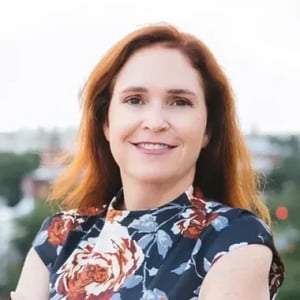
Founder & President, Due Process Institute
Shana founded the Due Process Institute because, after years of first-hand defense work and criminal legal reform advocacy, she became convinced that the Constitution needed and deserved its own lobbying firm--particularly in the area of procedural due process rights.
With 20 years of project management, lobbying, legal defense, and teaching experience, Shana's goal is to achieve meaningful solutions to as many of these problems, in the shortest amount of time possible, for the betterment of as many people as possible, as well as to prevent any of it from getting worse on her watch.
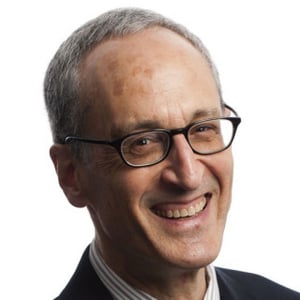
Chancellor’s Professor of Law, UC Irvine School of Law
Professor Simons is a leading scholar of tort law, criminal law, and law and philosophy and Co-director of the Center for Legal Philosophy. He has served since 2014 as Chief Reporter for the American Law Institute’s Restatement Third of Torts: Intentional Torts to Persons. In January 2019, he was the recipient of the 2019 William L. Prosser Award by the Association of American Law Schools Section on Torts and Compensation Systems, which recognizes “outstanding contributions of law teachers in scholarship, teaching and service” related to tort law and compensation systems.
Professor Simons has published influential scholarship concerning consent, assumption of risk and contributory negligence; the nature and role of mental states in criminal, tort and constitutional law; and negligence as a moral and legal concept. He has also explored such topics as bias crimes, corrective justice, the logic of egalitarian norms, mistake and impossibility in criminal law, and strict criminal liability.
Before joining UC Irvine School of Law, Prof. Simons was Professor of Law and The Honorable Frank R. Kenison Distinguished Scholar in Law at Boston University School of Law. He was a law clerk to U.S. Supreme Court Justice Thurgood Marshall and to Judge James L. Oakes, U.S. Court of Appeals for the Second Circuit. Prof. Simons also worked as an associate at Goodwin, Procter & Hoar in Boston, in the field of civil litigation. He received his J.D. from Michigan Law School, magna cum laude, and graduated from Yale University, summa cum laude, with a B.A. in philosophy.

Laurence A. Tisch Professor of Law and Director, Classical Liberal Institute, New York University School of Law; Senior Fellow, The Civitas Institute, University of Texas at Austin
Richard A. Epstein is the inaugural Laurence A. Tisch Professor of Law at NYU School of Law. Prior to his joining the faculty, he was a visiting law professor at NYU from 2007 through 2009. He served as the Peter and Kirstin Bedford Senior Fellow at the Hoover Institution from 2000 to 2024. Since 2024 to the present he is a senior lecturer at the Civitas Institute at the University of Texas—Austin. Epstein is also the James Parker Hall Distinguished Service Professor of Law Emeritus and a senior lecturer at the University of Chicago. His initial law school appointment was at the University of Southern California from 1968 to 1972. Epstein received an LL.D., h.c. from the University of Ghent, 2003. He has been a member of the American Academy of Arts and Sciences since 1985 and was a Senior Fellow of the Center for Clinical Medical Ethics at the University of Chicago Division of Biological Sciences, also from 1983. to 2022 He served as editor of the Journal of Legal Studies from 1981 to 1991, and of the Journal of Law and Economics from 1991-2001. From 2001 to 2010 he was a director of the John M. Olin Program in Law and Economics at the University of Chicago.
His newest book, The Myth of Birthright Citizenship: What the Fourteenth Amendment Really Says was published in 2026 (Encounter Books). Prior to that he has published many books including, The Dubious Morality of the Modern Administrative State (Roman & Littlefield 2020).Earlier he published th Classical Liberal Constitution: The Uncertain Quest for Limited Government (Harvard 2014) iHis previous books include Design for Liberty: Private Property, Public Administration and the Rule of Law (Harvard 2011); The Case Against the Employee Free Choice Act (Hoover 2009); Supreme Neglect: How to Revive the Constitutional Protection of Property Rights (Oxford 2008); Antitrust Decrees in Theory and Practice: Why Less is More (AEI 2007); Overdose: How Excessive Government Regulation Stifles Pharmaceutical Innovation (Yale University Press. 2006); How Progressives Rewrote the Constitution (Cato 2006); Cases and Materials on Torts (Aspen Law & Business; 8th ed. 2004); Skepticism and Freedom: A Modern Case for Classical Liberalism (University of Chicago, 2003); Torts (Aspen Law & Business 1999); Principles for a Free Society: Reconciling Individual Liberty with the Common Good (Perseus Books, 1998): Mortal Peril: Our Inalienable Rights to Health Care (Addison-Wesley, 1997); Simple Rules for a Complex World (Harvard, 1995); Bargaining With the State (Princeton, 1993); Forbidden Grounds: The Case Against Employment Discrimination Laws (Harvard , 1992); Takings: Private Property and the Power of Eminent Domain (Harvard, 1985); and Modern Products Liability Law (Greenwood Press, 1980). He has also edited(with Catherine M. Sharkey) Cases and Materials on the Law of Torts (10th edition 2012).
Professor Epstein has written numerous articles on a wide range of legal and interdisciplinary subjects. He has taught courses in administrative law, antitrust law, civil procedure, communications, constitutional law, contracts, corporations, criminal law, employment discrimination law, environmental law, food and drug law health law and policy, legal history, labor law, property, real estate development and finance, jurisprudence, labor law; land use planning, patents, individual, estate and corporate taxation, Roman Law; torts, and workers' compensation.
Professor Epstein also writes a regular column for Civitas Institute, which also sponsors his podcast, The Libertarian with Charles C.W. Cooke, and Law Talk, with Cooke and John Yoo. He also does a podcast with John Batchelor. And appears regularly on the Freedom File with Judge Andrew Napolitano.

George Mason University Foundation Professor of Law, Antonin Scalia Law School, George Mason University
TODD J. ZYWICKI is George Mason University Foundation Professor of Law at Antonin Scalia Law School at George Mason University and Research Fellow of the George Mason Law and Economics Center. During the Fall 2023 semester he served as the Visiting Scholar in Conservative Thought and Policy for the Bruce Benson Center for the Study of Western Civilization at the University of Colorado-Boulder. From 2020-2021 he was Chair of the Consumer Financial Protection Bureau Taskforce on Federal Consumer Financial Law. In 2021 he was inducted to the American College of Consumer Financial Services Lawyers. He is also a Senior Fellow of the F.A. Hayek Program for the Advanced Study of Politics, Philosophy, and Economics at George Mason University and a former Senior Fellow of the Cato Institute. From 2015-2017 he was Executive Director of the George Mason Law and Economics Center. He served as Co-Editor of the Supreme Court Economic Review from 2006-2017. From 2003-2004, Professor Zywicki served as the Director of the Office of Policy Planning at the Federal Trade Commission. He has also taught at Vanderbilt University Law School, Georgetown University Law Center, Boston College Law School, Mississippi College School of Law, and China University of Political Science and Law.
Professor Zywicki clerked for Judge Jerry E. Smith of the U.S. Court of Appeals for the Fifth Circuit and worked as an associate at Alston & Bird in Atlanta, Georgia, where he practiced bankruptcy and commercial law. He received his J.D. from the University of Virginia, where he was executive editor of the Virginia Tax Review and John M. Olin Scholar in Law and Economics. Professor Zywicki also received an M.A. in Economics from Clemson University and an A.B. cum Laude with high honors in his major from Dartmouth College.
Professor Zywicki is also a Lone Mountain Fellow of the Property and Environment Research Center, a Fellow of the International Centre for Economic Research in Turin, Italy, and a former Senior Fellow of the Goldwater Institute. During the Fall 2008 Semester Professor Zywicki was the Searle Fellow of the George Mason University School of Law and was a 2008-09 W. Glenn Campbell and Rita Ricardo-Campbell National Fellow and the Arch W. Shaw National Fellow at the Hoover Institution on War, Revolution and Peace. He has lectured and consulted with government officials around the world, including Iceland, Italy, Japan, and Guatemala. In 2006 Professor Zywicki served as a Member of the United States Department of Justice Study Group on “Identifying Fraud, Abuse and Errors in the United States Bankruptcy System.”
Professor Zywicki is the author of more than 130 articles in leading law reviews and peer-reviewed economics journals. He is one of the Top 10 most-cited law professors in the field of Commercial Law and one of the Top 25 law professors on Twitter as measured by engagement levels. He is one of the Top 50 Most Downloaded Law Authors at the Social Science Research Network. He has testified multiple times before Congress on issues of consumer bankruptcy law and consumer credit and is a frequent commentator on legal issues in the print and broadcast media, including the Wall Street Journal, New York Times, The Washington Post, The Washington Times, Nightline, The Newshour with Jim Lehrer, Neil Cavuto Show, Fox & Friends, Smerconish, Fox News @ Night with Shannon Bream, Fox Business, CNN, CNBC, Bloomberg News, BBC, The Diane Rehm Show, Lou Dobbs Show, Jerry Doyle Show, and The Laura Ingraham Show.
Professor Zywicki is former Chairman and a current member of the Board of Directors of the Competitive Enterprise Institute, and is a member of the Board of Directors of the Institute for Humane Studies, Bill of Rights Institute, the Executive Committee for the Federalist Society's Financial Institutions and E-Commerce Practice Group, the Board of Trustees of the Foundation for Research on Economics and the Environment. He formerly served on the Governing Board and the Advisory Council for the Financial Services Research Program at George Washington University School of Business. He is currently the Chair of the Academic Advisory Council for the following organizations: The Bill of Rights Institute, the film “We the People in IMAX,” and the McCormick-Tribune Foundation “Freedom Museum” in Chicago, Illinois. He is a member of the Board of Visitors of Ralston College and was a member of the Board of Trustees of Yorktown University. From 2005-2009 he served as an elected Alumni Trustee of the Dartmouth College Board of Trustees.
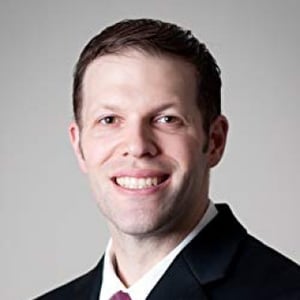
Director of Policy Studies & Senior Fellow, The Free State Foundation
Seth L. Cooper is Director of Policy Studies & Senior Fellow at The Free State Foundation. His work on federal communications and technology policy at the Free State Foundation began in 2009.
With Randolph May, Mr. Cooper is the co-author of Modernizing Copyright Law for the Digital Age: Constitutional Foundations for Reform (2020) and Constitutional Foundations of Intellectual Property: A Natural Rights Perspective (2015), both published by Carolina Academic Press. Along with Mr. May, Mr. Cooper also co-authored A Reader on Net Neutrality and Restoring Internet Freedom (2018) and #CommActUpdate: A Communications Law Fit for the Digital Age (2017), both published by Free State Foundation Press. He previously contributed to two chapters in Communications Law and Policy in the Digital Age (2012), published by Carolina Academic Press. Mr. Cooper's work has also appeared in such publications as CommLaw Conspectus, the San Jose Mercury News, Forbes.com, the Des Moines Register, the Baltimore Sun, the Washington Examiner, and the Washington Times.
Mr. Cooper previously served as Director to the Telecommunications and Information Technology Task Force at the American Legislative Exchange Council (ALEC). Mr. Cooper served as judicial clerk to the Honorable James Johnson at the Washington State Supreme Court. His co-writings about the Washington Supreme Court have appeared in the Gonzaga Law Review and in Federalist Society publications. He has worked in law and policy staff positions at the Washington State Senate and at the Discovery Institute's Center for Science & Culture. Mr. Cooper is a 2009 Lincoln Fellow at the Claremont Institute. He also has worked in private practice in the State of Washington, handling civil legal matters involving personal injuries, small business, contracts, and wills, trusts, and estates.
Mr. Cooper earned his B.A. degree in Political Science from Pacific Lutheran University and received his J.D. from Seattle University School of Law.
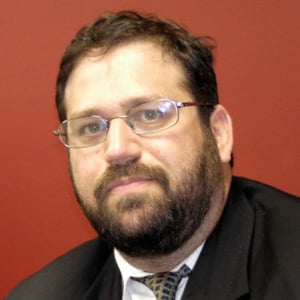
Senior Vice President, Public Knowledge
Harold Feld is the Senior Vice President for Public Knowledge, one of the nation’s premier consumer advocacy organizations working at the intersection of copyright, telecommunications and the Internet. Feld is a highly regarded thought leader in the areas of telecommunications and digital consumer protection, and author of The Case for the Digital Platform Act: Market Structure and Regulation of Digital Platforms. He was previously Senior Vice President at the Media Access Project (MAP), a public interest law firm, where he advanced competition policies in media, telecommunications and technology. Prior to joining MAP, Feld was an associate at Covington & Burling, and clerked for the DC Court of Appeals.

President, The Free State Foundation
Randolph J. May is Founder and President of The Free State Foundation. The Free State Foundation is an independent, non-profit free market-oriented think tank founded in 2006.
From October 1999-May 2006, May was a Senior Fellow and Director of Communications Policy Studies at The Progress & Freedom Foundation, a Washington, DC-based think tank. Prior to joining PFF, he practiced communications, administrative, and regulatory law as a partner at major national law firms. From 1978 to 1981, May served as Assistant General Counsel and Associate General Counsel at the Federal Communication Commission.
May has held numerous leadership positions in bar associations. He is a past Chair of the American Bar Association’s Section of Administrative Law and Regulatory Practice. He is a Fellow of the National Academy of Public Administration. Mr. May also has served as a Public Member of the Administrative Conference of the United States and currently is a Senior Fellow at ACUS.
Mr. May has published more than two hundred articles and essays on communications, administrative and constitutional law topics. He is author of A Call for a Radical New Communications Policy: Proposals for Free Market Reform, and co-author of #CommActUpdate: A Communications Law Fit for the Digital Age and The Constitutional Foundations of Intellectual Property. Mr. May is editor of two books, Communications Law and Policy in the Digital Age: The Next Five Years and New Directions in Communications Policy. In addition, he is the co-editor of two other books, Net Neutrality or Net Neutering: Should Broadband Internet Services Be Regulated? and Communications Deregulation and FCC Reform. In the past, Mr. May has written regular columns on legal and regulatory affairs for Legal Times and the National Law Journal, leading national legal periodicals.
He received his A.B. from Duke University and his J.D. from Duke Law School, where he serves as a member of the Board of Visitors.
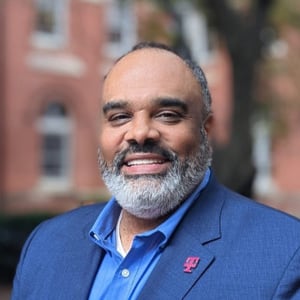
Vice President, Strategic Alliances & External Affairs, T-Mobile
Clint Odom is the vice president for strategic alliances & external affairs at T-Mobile. Previously, Odom led policy and advocacy for the National Urban League while simultaneously serving as executive director of their Washington Bureau. Odom served for a decade in the United States Senate as legislative director for Senator Kamala Harris of California and general counsel to Senator Bill Nelson of Florida.
Odom also served as a senior advisor at the Federal Communications Commission and practiced law at the firm Dow, Lohnes & Albertson (now Cooley LLP). Odom served as a law clerk to the Honorable Henry T. Wingate of the U.S. District Court of the Southern District of Mississippi and is a graduate of Louisiana State University and the University of Pennsylvania Law School.

Discussing Attempts to Address Federal Overcriminalization
Marc Levin, John G. Malcolm, Shana O’Toole, Kenneth W. Simons
A recent executive order entitled “Fighting Overcriminalization in Federal Regulations” and two congressional proposals: the...
Open Minds with Prof. Richard Epstein and Prof. Todd Zywicki Part I
Richard A. Epstein, Todd J. Zywicki
Prof. Richard Epstein joins Prof. Todd Zywicki to discuss his academic journey, where he learned...
The FCC's Digital Discrimination Rulemaking: Facilitating Equal Access to Broadband Services
Seth L. Cooper, Harold Feld, Randolph May, Clint Odom
The Infrastructure Investment and Jobs Act, signed into law on November 15, 2021, requires the...