

Senior Editor, The American Spectator
Tom Bethell was a senior editor of The American Spectator and author of The Politically Incorrect Guide to Science, The Noblest Triumph: Property and Prosperity Through the Ages, and most recently Questioning Einstein: Is Relativity Necessary? (2009).

President, Columbia University
Lee C. Bollinger became Columbia University’s 19th president in 2002 and is the longest serving Ivy League president. Under his leadership, Columbia stands again at the very top rank of great research universities, distinguished by comprehensive academic excellence, an innovative and sustainable approach to global engagement, two of the largest capital campaigns in the history of higher education, and the institution’s most ambitious campus expansion in over a century.
President Bollinger is Columbia’s first Seth Low Professor of the University, a member of the Columbia Law School faculty, and one of the nation's foremost First Amendment scholars. Each fall semester, he teaches “Freedom of Speech and Press” to Columbia undergraduate students. He has two books coming out in 2021: National Security, Leaks and Freedom of the Press: The Pentagon Papers Fifty Years On, co-edited with Geoffrey R. Stone, which will be published by Oxford University Press; and Regardless of Frontiers: Global Freedom of Expression in a Troubled World, co-edited with Agnès Callamard, which will be published by Columbia University Press.
As president of the University of Michigan, Bollinger led the school’s historic litigation in Grutter v. Bollinger and Gratz v. Bollinger, Supreme Court decisions that upheld and clarified the importance of diversity as a compelling justification for affirmative action in higher education. He speaks and writes frequently about the value of racial, cultural, and socioeconomic diversity to American society through opinion columns, media interviews, and public appearances around the country. Columbia remains one of the most diverse universities among its peer institutions and has seen the number of applicants to Columbia College and the selectivity of admissions at the school reach record levels.
As Columbia’s president, Bollinger conceived and led the University’s most ambitious expansion in over a century with the creation of the Manhattanville campus in West Harlem, the first campus plan in the nation to receive the U.S. Green Building Council’s highest certification for sustainable development. An historic community benefits agreement emerging from the city and state review process for the new campus provides Columbia’s local neighborhoods with decades of investment in the community’s health, education and economic growth. The first two buildings, the Jerome L. Greene Science Center and the Lenfest Center for the Arts, opened in the spring of 2017. The third, the Forum, which hosts conferences, meetings, and symposia, opened in September of 2018.
Bollinger’s commitment to excellence in architecture is evident across Columbia’s campuses, from Renzo Piano’s master plan for Manhattanville, to the recently opened Roy and Diana Vagelos Education Center at Columbia University Irving Medical Center, designed by Diller Scofidio + Renfro, to Rafael Moneo’s design for the Northwest Corner Building on the historic Morningside campus, to the Campbell Sports Center at Baker Field designed by Steven Holl.
Among Bollinger’s signal achievements at Columbia are the development of a network of nine Columbia Global Centers on four continents and the creation of new venues on the University’s home campus supporting global conversations and scholarship, including the World Leaders Forum and the Committee on Global Thought.
From November 1996 to 2002, Bollinger was president of the University of Michigan, where he also served as a law professor and dean of the law school.
He is a fellow of both the American Academy of Arts and Sciences and the American Philosophical Society. He is widely published on legal and constitutional issues involving free speech and press, and his books include: The Free Press Century, Uninhibited, Robust, and Wide-Open: A Free Press for a New Century; Eternally Vigilant: Free Speech in the Modern Era; Images of a Free Press; and The Tolerant Society: Freedom of Speech and Extremist Speech in America.
Bollinger has received the National Humanitarian Award from the National Conference for Community and Justice and the National Equal Justice Award from the NAACP Legal Defense and Educational Fund for his leadership on affirmative action. He also received the Clark Kerr Award, the highest award conferred by the faculty of the University of California, Berkeley, for his service to higher education, especially on matters of freedom of speech and diversity. He is the recipient of multiple honorary degrees from universities in this country and abroad.
Bollinger is a director of Graham Holdings Company (formerly The Washington Post Company) and serves as a member of the Pulitzer Prize Board. From 2007 to 2012, he was director of the Federal Reserve Bank of New York, where he also served as chair from 2010 to 2012.
After graduating from the University of Oregon and Columbia Law School, where he was an Articles Editor of Columbia Law Review, Bollinger served as law clerk for Judge Wilfred Feinberg on the United States Court of Appeals for the Second Circuit and for Chief Justice Warren Burger on the United States Supreme Court. He joined the University of Michigan Law School faculty in 1973.
Bollinger was born in Santa Rosa, California and raised there and in Baker, Oregon. He is married to artist Jean Magnano Bollinger, and they have two children and five grandchildren.

Laurence A. Tisch Professor of Law and Director, Classical Liberal Institute, New York University School of Law; Director, Classical Liberal Institute, Civitas Institute University of Texas at Austin
Richard A. Epstein is the inaugural Laurence A. Tisch Professor of Law at NYU School of Law. Prior to his joining the faculty, he was a visiting law professor at NYU from 2007 through 2009. He served as the Peter and Kirstin Bedford Senior Fellow at the Hoover Institution from 2000 to 2024. Since 2024 to the present he is a senior lecturer at the Civitas Institute at the University of Texas—Austin. Epstein is also the James Parker Hall Distinguished Service Professor of Law Emeritus and a senior lecturer at the University of Chicago. His initial law school appointment was at the University of Southern California from 1968 to 1972. Epstein received an LL.D., h.c. from the University of Ghent, 2003. He has been a member of the American Academy of Arts and Sciences since 1985 and was a Senior Fellow of the Center for Clinical Medical Ethics at the University of Chicago Division of Biological Sciences, also from 1983. to 2022 He served as editor of the Journal of Legal Studies from 1981 to 1991, and of the Journal of Law and Economics from 1991-2001. From 2001 to 2010 he was a director of the John M. Olin Program in Law and Economics at the University of Chicago.
His newest book, The Myth of Birthright Citizenship: What the Fourteenth Amendment Really Says was published in 2026 (Encounter Books). Prior to that he has published many books including, The Dubious Morality of the Modern Administrative State (Roman & Littlefield 2020).Earlier he published th Classical Liberal Constitution: The Uncertain Quest for Limited Government (Harvard 2014) iHis previous books include Design for Liberty: Private Property, Public Administration and the Rule of Law (Harvard 2011); The Case Against the Employee Free Choice Act (Hoover 2009); Supreme Neglect: How to Revive the Constitutional Protection of Property Rights (Oxford 2008); Antitrust Decrees in Theory and Practice: Why Less is More (AEI 2007); Overdose: How Excessive Government Regulation Stifles Pharmaceutical Innovation (Yale University Press. 2006); How Progressives Rewrote the Constitution (Cato 2006); Cases and Materials on Torts (Aspen Law & Business; 8th ed. 2004); Skepticism and Freedom: A Modern Case for Classical Liberalism (University of Chicago, 2003); Torts (Aspen Law & Business 1999); Principles for a Free Society: Reconciling Individual Liberty with the Common Good (Perseus Books, 1998): Mortal Peril: Our Inalienable Rights to Health Care (Addison-Wesley, 1997); Simple Rules for a Complex World (Harvard, 1995); Bargaining With the State (Princeton, 1993); Forbidden Grounds: The Case Against Employment Discrimination Laws (Harvard , 1992); Takings: Private Property and the Power of Eminent Domain (Harvard, 1985); and Modern Products Liability Law (Greenwood Press, 1980). He has also edited(with Catherine M. Sharkey) Cases and Materials on the Law of Torts (10th edition 2012).
Professor Epstein has written numerous articles on a wide range of legal and interdisciplinary subjects. He has taught courses in administrative law, antitrust law, civil procedure, communications, constitutional law, contracts, corporations, criminal law, employment discrimination law, environmental law, food and drug law health law and policy, legal history, labor law, property, real estate development and finance, jurisprudence, labor law; land use planning, patents, individual, estate and corporate taxation, Roman Law; torts, and workers' compensation.
Professor Epstein also writes a regular column for Civitas Institute, which also sponsors his podcast, The Libertarian with Charles C.W. Cooke, and Law Talk, with Cooke and John Yoo. He also does a podcast with John Batchelor. And appears regularly on the Freedom File with Judge Andrew Napolitano.
Thomas G. Long Professor of Law, University of Michigan Law School
Bill Miller, the Thomas G. Long Professor of Law, has been a member of the Michigan Law faculty since 1984. His research centers on saga Iceland, from whence the materials studied in his course Bloodfeuds and which provides the sources for his Bloodtaking and Peacemaking: Feud, Law, and Society in Saga Iceland (1990).
He also has written about emotions, mostly unpleasant ones involving self-assessment, and select vices and virtues. Thus his books: Humiliation (1993); The Anatomy of Disgust (1997)—named the best book of 1997 in anthropology/sociology by the Association of American Publishers; The Mystery of Courage (2000); Faking It (2003), which deals with anxieties of role, identity, and posturings of authenticity; Losing It (2011), where he turns a jaundiced eye toward aging and decline; and the latest in the grim series to appear Jan. 2020: Outrageous Fortune: Gloomy Reflections on Luck and Life. The Chicago Tribune named Losing It to its list of best books of the year; Macleans magazine of Canada also listed it in its top 10 nonfiction books of 2011. Eye for an Eye (2006) is an extended treatment of the law of the talion. Audun and the Polar Bear: Luck, Law, and Largesse in a Medieval Tale of Risky Business (2008) offers an expansive interpretation of a superbly crafted short Icelandic tale. "Why is your axe bloody:" A Reading of Njáls Saga is exactly what the subtitle indicates; yet another book on a saga, Hrafnkel or the Ambiguities: Hard Cases, Hard Choices, appeared in 2017. He also has been a visiting professor at Yale, the University of Chicago, the University of Bergen, the University of Tel Aviv, and Harvard, and in 2008, was the Carnegie Centenary Trust Professor at the University of St. Andrews, where he is now also an honorary professor of history.
Professor of Philosophy (emeritus), Bowling Green State University
Jeffrey Paul is a retired professor of philosophy at Bowling Green State University, the Associate Director of the Social Philosophy and Policy Center, and a Research Professor at the Freedom Center.
Jeffrey Paul is a retired professor of philosophy at Bowling Green State University, the Associate Director of the Social Philosophy and Policy Center, and a Research Professor at the Freedom Center. His research and teaching focus on ethics, political philosophy, and law.
Research Interests:
Jeffrey is the co-editor, with Richard A. Epstein, of Labor Law and the Employment Market (Transaction, 1985). He has published essays on ethics and political philosophy in The Monist, Philosophical Review, the Personalist, Pacific Philosophical Quarterly, the Review of Metaphysics, Reason Papers, Orbis, the Journal of Medical Ethics, the History of Political Thought, the Hastings Center Report, and in John Gray and Z.A. Pelczynski’s collection Conceptions of Liberty in Political Theory.
His collection Reading Nozick was published by Rowman and Allanheld in 1981. He is Associate Editor of Social Philosophy & Policy, as well as a coeditor of many collections of essays on moral and political philosophy published by Cambridge University Press.
Jeffrey founded the Social Philosophy and Policy Center at Bowling Green State University with Fred D. Miller, Jr., in 1981. He is presently Associate Director of the Center.
Lohse Chair in Water and Natural Resources & Professor Emerita of Law, The University of Arizona James E. Rogers College of Law
Carol M. Rose is the Ashby Lohse Chair in Water and Natural Resources at the University of Arizona James E. Rogers College of Law and was previously the Gordon Bradford Tweedy Professor of Law and Organization at Yale Law School.
Rose graduated from Antioch College with a B.A. (1962) and received an M.A. from the University of Chicago (1963), a Ph.D. in History from Cornell University (1969) and a J.D. from the University of Chicago Law School (1977).
In 2010, Rose was awarded the Brigham–Kanner Property Rights Prize, awarded by the College of William & Mary School of Law annually to an individual whose work has advanced the cause of private property rights. Rose's notable works include Perspectives on Property Law (Aspen 3d ed. 2014) (with Robert Ellickson and Henry E. Smith) and Property and Persuasion: Essays on the History, Theory, and Rhetoric of Ownership (Westview Press 1994).
Senior Editor, The American Spectator
Tom Bethell was a senior editor of The American Spectator and author of The Politically Incorrect Guide to Science, The Noblest Triumph: Property and Prosperity Through the Ages, and most recently Questioning Einstein: Is Relativity Necessary? (2009).
President, Columbia University
Lee C. Bollinger became Columbia University’s 19th president in 2002 and is the longest serving Ivy League president. Under his leadership, Columbia stands again at the very top rank of great research universities, distinguished by comprehensive academic excellence, an innovative and sustainable approach to global engagement, two of the largest capital campaigns in the history of higher education, and the institution’s most ambitious campus expansion in over a century.
President Bollinger is Columbia’s first Seth Low Professor of the University, a member of the Columbia Law School faculty, and one of the nation's foremost First Amendment scholars. Each fall semester, he teaches “Freedom of Speech and Press” to Columbia undergraduate students. He has two books coming out in 2021: National Security, Leaks and Freedom of the Press: The Pentagon Papers Fifty Years On, co-edited with Geoffrey R. Stone, which will be published by Oxford University Press; and Regardless of Frontiers: Global Freedom of Expression in a Troubled World, co-edited with Agnès Callamard, which will be published by Columbia University Press.
As president of the University of Michigan, Bollinger led the school’s historic litigation in Grutter v. Bollinger and Gratz v. Bollinger, Supreme Court decisions that upheld and clarified the importance of diversity as a compelling justification for affirmative action in higher education. He speaks and writes frequently about the value of racial, cultural, and socioeconomic diversity to American society through opinion columns, media interviews, and public appearances around the country. Columbia remains one of the most diverse universities among its peer institutions and has seen the number of applicants to Columbia College and the selectivity of admissions at the school reach record levels.
As Columbia’s president, Bollinger conceived and led the University’s most ambitious expansion in over a century with the creation of the Manhattanville campus in West Harlem, the first campus plan in the nation to receive the U.S. Green Building Council’s highest certification for sustainable development. An historic community benefits agreement emerging from the city and state review process for the new campus provides Columbia’s local neighborhoods with decades of investment in the community’s health, education and economic growth. The first two buildings, the Jerome L. Greene Science Center and the Lenfest Center for the Arts, opened in the spring of 2017. The third, the Forum, which hosts conferences, meetings, and symposia, opened in September of 2018.
Bollinger’s commitment to excellence in architecture is evident across Columbia’s campuses, from Renzo Piano’s master plan for Manhattanville, to the recently opened Roy and Diana Vagelos Education Center at Columbia University Irving Medical Center, designed by Diller Scofidio + Renfro, to Rafael Moneo’s design for the Northwest Corner Building on the historic Morningside campus, to the Campbell Sports Center at Baker Field designed by Steven Holl.
Among Bollinger’s signal achievements at Columbia are the development of a network of nine Columbia Global Centers on four continents and the creation of new venues on the University’s home campus supporting global conversations and scholarship, including the World Leaders Forum and the Committee on Global Thought.
From November 1996 to 2002, Bollinger was president of the University of Michigan, where he also served as a law professor and dean of the law school.
He is a fellow of both the American Academy of Arts and Sciences and the American Philosophical Society. He is widely published on legal and constitutional issues involving free speech and press, and his books include: The Free Press Century, Uninhibited, Robust, and Wide-Open: A Free Press for a New Century; Eternally Vigilant: Free Speech in the Modern Era; Images of a Free Press; and The Tolerant Society: Freedom of Speech and Extremist Speech in America.
Bollinger has received the National Humanitarian Award from the National Conference for Community and Justice and the National Equal Justice Award from the NAACP Legal Defense and Educational Fund for his leadership on affirmative action. He also received the Clark Kerr Award, the highest award conferred by the faculty of the University of California, Berkeley, for his service to higher education, especially on matters of freedom of speech and diversity. He is the recipient of multiple honorary degrees from universities in this country and abroad.
Bollinger is a director of Graham Holdings Company (formerly The Washington Post Company) and serves as a member of the Pulitzer Prize Board. From 2007 to 2012, he was director of the Federal Reserve Bank of New York, where he also served as chair from 2010 to 2012.
After graduating from the University of Oregon and Columbia Law School, where he was an Articles Editor of Columbia Law Review, Bollinger served as law clerk for Judge Wilfred Feinberg on the United States Court of Appeals for the Second Circuit and for Chief Justice Warren Burger on the United States Supreme Court. He joined the University of Michigan Law School faculty in 1973.
Bollinger was born in Santa Rosa, California and raised there and in Baker, Oregon. He is married to artist Jean Magnano Bollinger, and they have two children and five grandchildren.
Laurence A. Tisch Professor of Law and Director, Classical Liberal Institute, New York University School of Law; Director, Classical Liberal Institute, Civitas Institute University of Texas at Austin
Richard A. Epstein is the inaugural Laurence A. Tisch Professor of Law at NYU School of Law. Prior to his joining the faculty, he was a visiting law professor at NYU from 2007 through 2009. He served as the Peter and Kirstin Bedford Senior Fellow at the Hoover Institution from 2000 to 2024. Since 2024 to the present he is a senior lecturer at the Civitas Institute at the University of Texas—Austin. Epstein is also the James Parker Hall Distinguished Service Professor of Law Emeritus and a senior lecturer at the University of Chicago. His initial law school appointment was at the University of Southern California from 1968 to 1972. Epstein received an LL.D., h.c. from the University of Ghent, 2003. He has been a member of the American Academy of Arts and Sciences since 1985 and was a Senior Fellow of the Center for Clinical Medical Ethics at the University of Chicago Division of Biological Sciences, also from 1983. to 2022 He served as editor of the Journal of Legal Studies from 1981 to 1991, and of the Journal of Law and Economics from 1991-2001. From 2001 to 2010 he was a director of the John M. Olin Program in Law and Economics at the University of Chicago.
His newest book, The Myth of Birthright Citizenship: What the Fourteenth Amendment Really Says was published in 2026 (Encounter Books). Prior to that he has published many books including, The Dubious Morality of the Modern Administrative State (Roman & Littlefield 2020).Earlier he published th Classical Liberal Constitution: The Uncertain Quest for Limited Government (Harvard 2014) iHis previous books include Design for Liberty: Private Property, Public Administration and the Rule of Law (Harvard 2011); The Case Against the Employee Free Choice Act (Hoover 2009); Supreme Neglect: How to Revive the Constitutional Protection of Property Rights (Oxford 2008); Antitrust Decrees in Theory and Practice: Why Less is More (AEI 2007); Overdose: How Excessive Government Regulation Stifles Pharmaceutical Innovation (Yale University Press. 2006); How Progressives Rewrote the Constitution (Cato 2006); Cases and Materials on Torts (Aspen Law & Business; 8th ed. 2004); Skepticism and Freedom: A Modern Case for Classical Liberalism (University of Chicago, 2003); Torts (Aspen Law & Business 1999); Principles for a Free Society: Reconciling Individual Liberty with the Common Good (Perseus Books, 1998): Mortal Peril: Our Inalienable Rights to Health Care (Addison-Wesley, 1997); Simple Rules for a Complex World (Harvard, 1995); Bargaining With the State (Princeton, 1993); Forbidden Grounds: The Case Against Employment Discrimination Laws (Harvard , 1992); Takings: Private Property and the Power of Eminent Domain (Harvard, 1985); and Modern Products Liability Law (Greenwood Press, 1980). He has also edited(with Catherine M. Sharkey) Cases and Materials on the Law of Torts (10th edition 2012).
Professor Epstein has written numerous articles on a wide range of legal and interdisciplinary subjects. He has taught courses in administrative law, antitrust law, civil procedure, communications, constitutional law, contracts, corporations, criminal law, employment discrimination law, environmental law, food and drug law health law and policy, legal history, labor law, property, real estate development and finance, jurisprudence, labor law; land use planning, patents, individual, estate and corporate taxation, Roman Law; torts, and workers' compensation.
Professor Epstein also writes a regular column for Civitas Institute, which also sponsors his podcast, The Libertarian with Charles C.W. Cooke, and Law Talk, with Cooke and John Yoo. He also does a podcast with John Batchelor. And appears regularly on the Freedom File with Judge Andrew Napolitano.
Thomas G. Long Professor of Law, University of Michigan Law School
Bill Miller, the Thomas G. Long Professor of Law, has been a member of the Michigan Law faculty since 1984. His research centers on saga Iceland, from whence the materials studied in his course Bloodfeuds and which provides the sources for his Bloodtaking and Peacemaking: Feud, Law, and Society in Saga Iceland (1990).
He also has written about emotions, mostly unpleasant ones involving self-assessment, and select vices and virtues. Thus his books: Humiliation (1993); The Anatomy of Disgust (1997)—named the best book of 1997 in anthropology/sociology by the Association of American Publishers; The Mystery of Courage (2000); Faking It (2003), which deals with anxieties of role, identity, and posturings of authenticity; Losing It (2011), where he turns a jaundiced eye toward aging and decline; and the latest in the grim series to appear Jan. 2020: Outrageous Fortune: Gloomy Reflections on Luck and Life. The Chicago Tribune named Losing It to its list of best books of the year; Macleans magazine of Canada also listed it in its top 10 nonfiction books of 2011. Eye for an Eye (2006) is an extended treatment of the law of the talion. Audun and the Polar Bear: Luck, Law, and Largesse in a Medieval Tale of Risky Business (2008) offers an expansive interpretation of a superbly crafted short Icelandic tale. "Why is your axe bloody:" A Reading of Njáls Saga is exactly what the subtitle indicates; yet another book on a saga, Hrafnkel or the Ambiguities: Hard Cases, Hard Choices, appeared in 2017. He also has been a visiting professor at Yale, the University of Chicago, the University of Bergen, the University of Tel Aviv, and Harvard, and in 2008, was the Carnegie Centenary Trust Professor at the University of St. Andrews, where he is now also an honorary professor of history.
Professor of Philosophy (emeritus), Bowling Green State University
Jeffrey Paul is a retired professor of philosophy at Bowling Green State University, the Associate Director of the Social Philosophy and Policy Center, and a Research Professor at the Freedom Center.
Jeffrey Paul is a retired professor of philosophy at Bowling Green State University, the Associate Director of the Social Philosophy and Policy Center, and a Research Professor at the Freedom Center. His research and teaching focus on ethics, political philosophy, and law.
Research Interests:
Jeffrey is the co-editor, with Richard A. Epstein, of Labor Law and the Employment Market (Transaction, 1985). He has published essays on ethics and political philosophy in The Monist, Philosophical Review, the Personalist, Pacific Philosophical Quarterly, the Review of Metaphysics, Reason Papers, Orbis, the Journal of Medical Ethics, the History of Political Thought, the Hastings Center Report, and in John Gray and Z.A. Pelczynski’s collection Conceptions of Liberty in Political Theory.
His collection Reading Nozick was published by Rowman and Allanheld in 1981. He is Associate Editor of Social Philosophy & Policy, as well as a coeditor of many collections of essays on moral and political philosophy published by Cambridge University Press.
Jeffrey founded the Social Philosophy and Policy Center at Bowling Green State University with Fred D. Miller, Jr., in 1981. He is presently Associate Director of the Center.
Lohse Chair in Water and Natural Resources & Professor Emerita of Law, The University of Arizona James E. Rogers College of Law
Carol M. Rose is the Ashby Lohse Chair in Water and Natural Resources at the University of Arizona James E. Rogers College of Law and was previously the Gordon Bradford Tweedy Professor of Law and Organization at Yale Law School.
Rose graduated from Antioch College with a B.A. (1962) and received an M.A. from the University of Chicago (1963), a Ph.D. in History from Cornell University (1969) and a J.D. from the University of Chicago Law School (1977).
In 2010, Rose was awarded the Brigham–Kanner Property Rights Prize, awarded by the College of William & Mary School of Law annually to an individual whose work has advanced the cause of private property rights. Rose's notable works include Perspectives on Property Law (Aspen 3d ed. 2014) (with Robert Ellickson and Henry E. Smith) and Property and Persuasion: Essays on the History, Theory, and Rhetoric of Ownership (Westview Press 1994).
Senior Fellow in Constitutional Jurisprudence, Independence Institute
Professor Robert G. Natelson is a constitutional scholar and author.
Rob’s constitutional scholarship has been cited repeatedly by justices and parties at the U.S. Supreme Court—as well as by federal appeals courts, and at least 18 state supreme courts.
Rob’s research into the Constitution’s original meaning has carried him to libraries throughout the United States and in Britain, including four months at Oxford University. His books and articles span many different parts of the Constitution, including groundbreaking studies of the Necessary and Proper Clause, the Indian Commerce Clause, federalism, Founding-Era interpretation, regulation of elections, and the amendment process of Article V. He created the first-ever online bibliography for 18th century materials used in constitutional research. He is a contributing author to the Encyclopedia of the Supreme Court of the United States (on Magna Carta). He contributed eight essays to the third edition of the Heritage Guide to the Constitution: five on the amendment procedure and one each on the Guarantee Clause, the Postal Clause, and the Recess Appointments Clause.
U.S. Supreme Court justices have relied explicitly on Rob’s research in 41 citations in 13 separate cases.

Professor Emeritus of Law, Antonin Scalia Law School, George Mason University
Jeremy A. Rabkin is a Professor Emeritus of Law at the Antonin Scalia Law School, George Mason University. Before joining the faculty in June 2007, he was for over two decades a professor in the Department of Government at Cornell University. Professor Rabkin serves on the board of directors of the Center for Individual Rights, a public interest law firm based in Washington, D.C. Previously he was a board member of the U.S. Institute of Peace and the board of academic advisors of the American Enterprise Institute.
Professor Rabkin’s books include Law Without Nations? (Princeton University Press, 2005). He authored “If You Need a Friend, Don’t Call a Cosmopolitan,” a chapter in Varieties of Sovereignty and Citizenship (Sigal R. Ben-Porath & Rogers M. Smith eds., University of Pennsylvania Press, 2012). His articles have appeared in major law reviews and political science journals and his journalistic contributions in a range of magazines and newspapers, including the Washington Post and the Wall Street Journal.
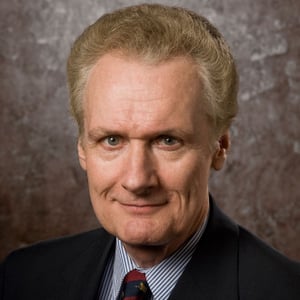
Vice President for Legal Affairs, Cato Institute
Roger Pilon is the Cato’s Institute’s vice president for legal affairs, the founding director of Cato’s Robert A. Levy Center for Constitutional Studies, the inaugural holder of Cato’s B. Kenneth Simon Chair in Constitutional Studies, and the founding publisher of the Cato Supreme Court Review.
Prior to joining Cato, Pilon held five senior posts in the Reagan administration, including at State and Justice, and was a national fellow at Stanford’s Hoover Institution. In 1989 the Bicentennial Commission presented him with its Benjamin Franklin Award for excellence in writing on the U.S. Constitution. In 2001 Columbia University’s School of General Studies awarded him its Alumni Medal of Distinction. Pilon lectures and debates at universities and law schools across the country and testifies often before Congress.
His writing has appeared in the Wall Street Journal, the Washington Post, the New York Times, the Los Angeles Times, Legal Times, National Law Journal, Harvard Journal of Law and Public Policy, Stanford Law and Policy Review, and elsewhere. He has appeared on ABC’s Nightline, CBS’s 60 Minutes II, Fox News Channel, NPR, CNN, MSNBC, CNBC, C-SPAN, and other media.
Pilon holds a BA from Columbia University, an MA and a PhD from the University of Chicago, and a JD from the George Washington University School of Law.

Clayton J. and Henry R. Barber Professor of Law, Northwestern University Pritzker School of Law and Co-Chairman, Board of Directors, The Federalist Society
STEVEN GOW CALABRESI is the Clayton J. & Henry R. Barber Professor at Northwestern Pritzker School of Law. He has also co-taught in the Fall semester at Yale Law School from 2013 to the present. Calabresi clerked for Justice Antonin Scalia and Judges Robert H. Bork and Ralph K. Winter. He was a Special Assistant to Attorney General Meese from 1985 to 1987 and worked with Ken Cribb as his deputy in 1987 on the second floor of the West Wing of the Reagan White House. Calabresi has written books on presidential power and comparative constitutional law and the origins of judicial review. He and Gary Lawson are the co-editors of a casebook on U.S. Constitutional Law, and Calabresi is also the co-editor of a casebook on comparative constitutional law. He has written over seventy law review articles since 1990.
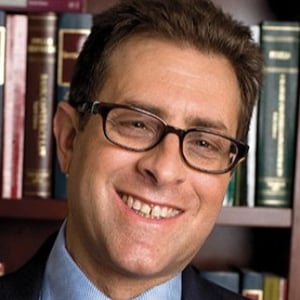
Jacob D. Fuchsberg Professor of Law, New York University School of Law
Professor Friedman is one of the country’s leading authorities on constitutional law and the federal courts. He is a prolific scholar, working at the intersections of law, politics and history. Friedman teaches a wide variety of courses including Constitutional Law, Federal Courts, and Criminal Procedure. He writes extensively about judicial review, constitutional law and theory, federal jurisdiction and judicial behavior. His scholarship appears regularly in the nation’s top law and peer-edited reviews. He is the author of widely-recognized The Will of the People: How Public Opinion Has Influenced the Supreme Court and Shaped the Meaning of the Constitution (Farrar, Strauss & Giroux, 2009), which examines the history of the relationship between popular opinion and the Supreme Court, from 1776 to the present. Along with his co-author Stephen Burbank, Friedman co-edited and contributed to Judicial Independence at the Crossroads: An Interdisciplinary Approach, which questions common assumptions about the nature of judicial independence and how it can be protected. The book has been cited and relied upon countless times by scholars and policymakers alike. Professor Friedman is a frequent contributor to the nation's leading journals, both on-line and print. His work has appeared in The New York Times, Salon, The Los Angeles Times, Politico andThe New Republic, among others.
Professor Friedman is a frequent speaker at events of all sorts. Given the interdisciplinary nature of his work, Professor Friedman regularly appears at conferences in law, political science and history. He is a founder and co-convener of the “roughly biennial” Constitutional Theory Conference. He organizes many multi-disciplinary conferences, including one on Modeling Law, and another – done under the auspices of the American Constitution Society – on Reconstruction: America’s Second Founding. He presents papers regularly at home and abroad. He has been a visiting scholar and lecturer at the Rockefeller Foundation Study and Conference Center in Bellagio, Italy, the Groupe d’Etudes et de Recherches sur law Justice Constitutionnelle Aix-en-Provence, Sciences-Po in Aix-en-Provence, and Hong Kong University.
Professor Friedman regularly serves as a litigator or litigation consultant in a variety of matters in the federal and state courts. He has represented a wide range of clients, both public and private. Notably, he represents both civil liberties claimants and state and local governments. He has been active in the areas of reproductive rights, the jurisdictional allocation of cases between the federal and state courts, and the proper scope of the federal government’s commerce power. He has filed a number of amicus briefs with the U.S. Supreme Court.
Actively engaged in a range of important service activities, at NYU Professor Friedman created the Academic Careers Program and founded and is now co-director of the Furman Academic Program. Both programs are dedicated to preparing young scholars for academic careers. In the past he was extensively involved with the American Judicature Society, was President of the Tennessee Civil Liberties Union, served on the Board of the State and Local Legal Center, and on the steering committee of New York University’s Institute for Law and Society. He recently completed a term as Vice Dean of New York University School of Law.
Professor Friedman graduated from the University of Chicago and received his law degree magna cum laude from Georgetown University Law Center. He clerked for the Honorable Phyllis A. Kravitch of the U.S. Court of Appeals for the 11th Circuit and also worked as a litigation associate at Davis, Polk & Wardwell in Washington D.C. He was a professor at Vanderbilt Law School before joining the NYU faculty in 2000. In 1995 he won the Clarence Darrow Award from the ACLU of Tennessee for his work in defense of civil liberties.
J.D., Georgetown University Law Center, 1982
B.A., University of Chicago, 1978
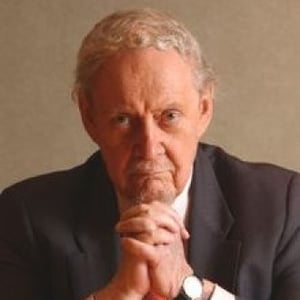
Former Judge, U.S. Court of Appeals, DC Circuit
Robert Heron Bork served as Solicitor General, acting Attorney General, and judge for the United States Court of Appeals for the District of Columbia Circuit. Judge Bork passed away in December 2012.
Tribute to Judge Robert Bork by John McGinnis - Event Audio/Video
Celebration of the Life of Robert Heron Bork 1927-2012
Judge Robert H. Bork: His Life and Legacy - Practice Group Podcast
A Conference Discussing the Contributions of Judge Robert H. Bork - June 26, 2007
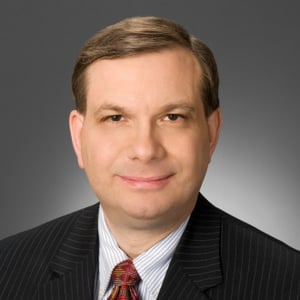
National Affairs Columnist, National Review
John Fund is National Affairs Columnist for National Review magazine and a on-air analyst on the Fox News Channel. He is considered a notable expert on American politics and the nexus between politics and economics.
He previously served as a columnist and editorial board member for The Wall Street Journal. He is the author of several books, including Who's Counting: Bow Fraudsters and Bureaucrats Put Your Vote At Risk (Encounter Books, 2012); Stealing Elections: How Voter Fraud Threatens Our Democracy (Encounter Books, 2008) and The Dangers of Regulation Through Litigation (ATRA Press, 2008). He worked as a research analyst for the California Legislature in Sacramento before beginning his journalism career as a reporter for the syndicated columnists Rowland Evans and Robert Novak.
Roll Call, the newspaper of Capitol Hill, called him "the Tom Paine of the modern Congressional reform movement." He has won awards from the Institute for Justice, The School Choice Aliance and the Warren Brooks award for journalistic excellence from the American Legislative Exchange Council.
National Affairs Columnist, National Review
John Fund is National Affairs Columnist for National Review magazine and a on-air analyst on the Fox News Channel. He is considered a notable expert on American politics and the nexus between politics and economics.
He previously served as a columnist and editorial board member for The Wall Street Journal. He is the author of several books, including Who's Counting: Bow Fraudsters and Bureaucrats Put Your Vote At Risk (Encounter Books, 2012); Stealing Elections: How Voter Fraud Threatens Our Democracy (Encounter Books, 2008) and The Dangers of Regulation Through Litigation (ATRA Press, 2008). He worked as a research analyst for the California Legislature in Sacramento before beginning his journalism career as a reporter for the syndicated columnists Rowland Evans and Robert Novak.
Roll Call, the newspaper of Capitol Hill, called him "the Tom Paine of the modern Congressional reform movement." He has won awards from the Institute for Justice, The School Choice Aliance and the Warren Brooks award for journalistic excellence from the American Legislative Exchange Council.
National Affairs Columnist, National Review
John Fund is National Affairs Columnist for National Review magazine and a on-air analyst on the Fox News Channel. He is considered a notable expert on American politics and the nexus between politics and economics.
He previously served as a columnist and editorial board member for The Wall Street Journal. He is the author of several books, including Who's Counting: Bow Fraudsters and Bureaucrats Put Your Vote At Risk (Encounter Books, 2012); Stealing Elections: How Voter Fraud Threatens Our Democracy (Encounter Books, 2008) and The Dangers of Regulation Through Litigation (ATRA Press, 2008). He worked as a research analyst for the California Legislature in Sacramento before beginning his journalism career as a reporter for the syndicated columnists Rowland Evans and Robert Novak.
Roll Call, the newspaper of Capitol Hill, called him "the Tom Paine of the modern Congressional reform movement." He has won awards from the Institute for Justice, The School Choice Aliance and the Warren Brooks award for journalistic excellence from the American Legislative Exchange Council.
Associate Editor, Washington Times and Senitor Editor, The American Spectator
Associate Editor, Washington Times and Senitor Editor, The American Spectator

Panel I: The Idea of Property [Archive Collection]
Tom Bethell, Lee C. Bollinger, David M. Di Rita, Richard A. Epstein, William Ian Miller, Jeffrey Paul, Carol M. Rose
On March 10-11, 1989, the Federalist Society's University of Michigan student chapter hosted the eighth...
Panel I: The Idea of Property [Archive Collection]
Tom Bethell, Lee C. Bollinger, David M. Di Rita, Richard A. Epstein, William Ian Miller, Jeffrey Paul, Carol M. Rose
On March 10-11, 1989, the Federalist Society's University of Michigan student chapter hosted the eighth...
Why Constitutional Lawyers Need to Know Latin
Robert G. Natelson
Note from the Editor: This article discusses the role of the Latin language and other...
Are Voter ID Laws Fair?
Little Rock, ArkansasObama's Enforcer: Eric Holder's Justice Department
Chicago, IllinoisThe Once and Future King
Milwaukee, WisconsinSuppressing the Vote or Stopping Fraud: The Voter ID Debate
Clayton (St. Louis), MissouriThe Holder Team's Misguided Management of the DOJ
The Holder Team's Misguided Management of the DOJ
Forum on Judge Bork's Article: "Individual Liberty and the Constitution"
Jeremy A. Rabkin, Roger Pilon, Steven G. Calabresi, Barry Friedman, Robert H. Bork
In a recent article in "The American Spectator" Judge Bork set out some thoughts on individual liberty and...