
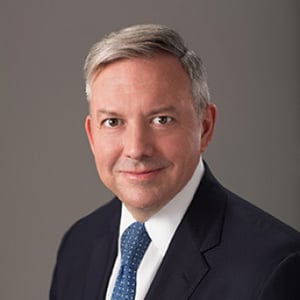
First Court of Appeals, Texas
Michael Massengale was appointed to the First Court of Appeals by Governor Rick Perry on June 15, 2009. He was elected in 2010 and re-elected to a full term in 2012.
Justice Massengale is board certified in civil appellate law by the Texas Board of Legal Specialization. Before joining the court, he was a partner in the trial department at Baker Botts L.L.P. where he specialized in commercial litigation involving corporate mergers and acquisitions, fraudulent transfers, securities fraud, and antitrust. He has also tried a number of personal injury and property damage lawsuits to jury verdicts.
He graduated with honors from The University of Texas School of Law. He earned the Outstanding Editor Award from the Texas Law Review, having published his student note, served as Book Review Editor, and edited the ninth edition of Texas Rules of Form. After law school, he clerked for Judge Harold R. DeMoss, Jr. of the United States Court of Appeals for the Fifth Circuit. He is a graduate of Dartmouth College and an Eagle Scout.
Among other civic and professional activities, Justice Massengale serves as a commissioner on the Permanent Judicial Commission For Children, Youth & Families where he chairs the Training Committee and oversees the Commission's judicial and attorney training programs. He is an elected member of the American Law Institute. He also curates a blog on the history of the Texas Constitution, atwww.texconst.wordpress.com. His wife, Lindsey, is a board-certified ophthalmologist specializing in diseases of the vitreous and retina.
Author, Sharia-ism Is Here: The Battle to Control Women and Everyone Else
Joy Brighton is a former Wall Street trader who today is part of an international team of experts concerned about the non-transparent risks of the Shariah-compliant Islamic finance investment market. She speaks with legal, policy, grassroots, and legislative leaders who are concerned about the challenge to America's national security, civil and women's rights, First Amendment freedoms, and free capital financial markets posed by Shariaism, the political movement of radical Islam. She is the author of Shariaism is Here: The Battle for Control of Women and Everyone Else, released January 2014.
Ms. Brighton is a graduate of Columbia Business School and has been a fixed-income salesperson and trader for Lehman Brothers, a mortgage pipeline hedge trader for Chase Home Mortgage, and an adjunct Professor of Securities and Investments at Fairleigh Dickinson University and Ramapo College. Later, as a graduate of Fordham University with a Master's in Psychological Counseling, Ms. Brighton worked as an executive coach catering to investment professionals and a college mental health counselor.
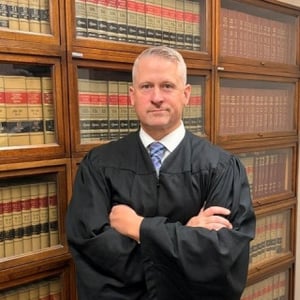
Judge, United States District Court, Northern District of Texas
Matthew J. Kacsmaryk serves as United States District Judge for the Northern District of Texas.
He previously served as (1) an Associate in the Dallas office of Baker Botts LLP, (2) an Assistant United States Attorney, and (3) Deputy General Counsel to FLI.
He is an Honors graduate of the University of Texas Law School.
In 2013, he earned the Attorney General’s Award for Excellence in Furthering the Interest of U.S. National Security.
In 2026, he was named Jurist of the Year by the Texas Review of Law & Politics, the conservative law review at the University of Texas.
Former Comptroller of Public Accounts, State of Texas
The Hon. Susan Combs served as the Comptroller of Public Accounts for the State of Texas from 2007 to 2015.
Associate Professor, University of Denver Sturm College of Law
Professor Justin Pidot graduated with high honors from Wesleyan University before attending Stanford Law School, where he graduated with distinction and was editor in chief of the Stanford Environmental Law Journal. Professor Pidot clerked for Judge Judith W. Rogers of the U.S. Court of Appeals for the District of Columbia Circuit. Prior to joining the University of Denver faculty, he was an appellate litigator at the Environment and Natural Resources Division of the U.S. Department of Justice, where he presented argument in more than a dozen federal appellate cases and acted as the staff attorney on two cases before the United States Supreme Court. Professor Pidot also completed a fellowship at the Georgetown Environmental Law & Policy Institute.
Professor Pidot’s scholarship and teaching focus on environmental law, natural resources law, and federal courts.
Senior Fellow, Competitive Enterprise Institute
William Yeatman is CEI's senior fellow specializing in environmental policy and energy markets.
His commentary has been widely featured in newspapers from coast to coast and also on nationwide television and radio.Yeatman has twice testified before congress and numerous times before state legislatures.
Prior to joining CEI, he was a Peace Corps volunteer in the Kyrgyz Republic, where he taught entrepreneurship and small business management to rural women. Before that, he ran a homeless shelter in Denver, Colorado.
He holds a Masters in International Administration from the Denver University Graduate School of International Studies and a Bachelor's in Environmental Sciences from the University of Virginia

Former Solicitor General of Texas
Jonathan F. Mitchell is Principal at Mitchell Law PLLC. He received his law degree with high honors from the University of Chicago Law School, where he was an articles editor of The University of Chicago Law Review and a member of the Order of the Coif.
After graduating from law school, Mr. Mitchell clerked for Judge J. Michael Luttig of the U.S. Court of Appeals for the Fourth Circuit and for Justice Antonin Scalia of the Supreme Court of the United States. He then served as an Attorney-Adviser in the Office of Legal Counsel of the United States Department of Justice from 2003 through 2006. After leaving the Department of Justice, Mr. Mitchell served as a Visiting Researcher at Georgetown University Law Center, a Visiting Assistant Professor at the University of Chicago Law School from 2006 through 2008, and an Assistant Professor of Law at George Mason University from 2008 through 2010.
In 2010, Mr. Mitchell was appointed Solicitor General of Texas, a position he held until January 2015. After leaving the Texas Solicitor General’s office, Mr. Mitchell served as the Searle Visiting Professor of Law at the University of Texas School of Law before joining the Hoover Institution as a Visiting Fellow from 2015 to 2016. Mr. Mitchell also served as a Visiting Professor of Law at Stanford Law School before opening his own law firm in 2018.
Mr. Mitchell has published numerous works of scholarship in top-10 law journals, and he has written articles on textualism, national-security law, criminal law and procedure, judicial review and judicial federalism, and the legality of stare decisis in constitutional adjudication.
Mr. Mitchell has argued eight times before the Supreme Court of the United States, and more than 20 times in the federal courts of appeals. He has also argued before Supreme Court of Texas and in numerous trial courts. Mr. Mitchell has authored the principal merits brief in 11 Supreme Court cases, and has written and submitted more than 20 amicus curiae briefs in the Supreme Court.
Mr. Mitchell devised the novel enforcement mechanism in the Texas Heartbeat Act, also known as Senate Bill 8, which avoids pre-enforcement judicial review by prohibiting government officials from enforcing the statute and empowering private citizens to bring lawsuits against those who violate it. This produced an end-run around Roe v. Wade and allowed Texas and other states to impose pre-viability abortion bans despite the continued existence of Roe.
Research Director, Civitas Institute
Michael Toth is the research director at the Civitas Institute, where he focuses on the legal and policy developments reshaping global markets, from energy to emerging technology. His work has appeared in The Wall Street Journal, Washington Post, and Bloomberg, among other major outlets. A graduate of Stanford and the University of Virginia, his analysis is informed by his firsthand experience as general counsel to several early-stage companies, where he navigated the complex regulatory environments at the core of today’s policy debates.
Executive Director, Texas Indigent Defense Commission
James D. Bethke serves as the Executive Director of the Texas Indigent Defense Commission formerly called the Task Force on Indigent Defense. The Commission is charged with implementing a statewide system of standards, financing and other resources for criminal defendants unable to hire attorneys. He is also an ex-officio member Governor Perry’s Criminal Justice Advisory Council and a member of the Texas Criminal Justice Integrity Unit. Nationally, he serves on the Indigent Defense Advisory Group for the ABA Standing Committee for Legal Aid and Indigent Defendants and is a member of the National Research & Data Analysis Committee for the National Legal Aid & Defenders Association. He is a past-chair of the Juvenile Law Exam Commission for the Texas Board of Legal Specialization and is a Texas Bar Foundation Life Fellow. He is a U.S. Army veteran from the 101st Airborne Division, is a graduate of the University of Texas at Tyler and the Texas Tech University law school.
Adjunct Scholar and Former Director, Project On Criminal Justice, Cato Institute
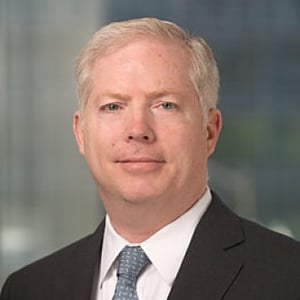
Tim Lynch is an attorney specializing in criminal law, constitutional law, and civil liberties. He is an adjunct scholar at the Cato Institute and the former director of Cato’s Project on Criminal Justice. His research interests include all aspects of constitutional criminal procedure, overcriminalization, the drug war, and police and prosecutorial misconduct. In 2000, he served on the National Committee to Prevent Wrongful Executions. Lynch also prepares amicus briefs before appellate courts and the U.S. Supreme Court in cases involving constitutional rights. He is the editor of In the Name of Justice: Leading Experts Reexamine the Classic Article “The Aims of the Criminal Law” and After Prohibition: An Adult Approach to Drug Policies in the 21st Century.
Lynch has published a variety of articles in both the law journals and in opinion pieces for the New York Times, the Washington Post, the Wall Street Journal, the Los Angeles Times, and other newspapers. He has appeared on The PBS NewsHour, NBC Nightly News, ABC World News Tonight, and C-SPAN’s Washington Journal. Lynch is a member of the Virginia, District of Columbia, and Supreme Court bars. He earned both a BS and a JD from Marquette University.
Mr. Lynch can be reached via his personal website.
Robert B. McKay Professor of Law, New York University School of Law
Stephen Schulhofer is one of the nation’s most distinguished scholars of criminal justice. He has written more than 50 scholarly articles and seven books, including the leading casebook in the field, and highly regarded, widely cited work on a range of criminal justice and national security topics. His most recent book More Essential Than Ever: The Fourth Amendment in the Twenty-First Century (Oxford University Press, 2012) is a comprehensive review and analysis of Fourth Amendment history, the Supreme Court’s constitutional methodology, current Fourth Amendment doctrine, and a wide range of contemporary problems concerning searches and seizures, electronic surveillance, and the intersection between national security needs and the right to privacy. Schulhofer’s scholarship has been distinguished by his simultaneous engagement with doctrinal analysis, criminal justice policy, and his own original empirical work. He has written on counterterrorism, police interrogation, rape law, administrative searches, drug enforcement, indigent defense, sentencing reform, plea bargaining, battered spouse syndrome, and many other criminal justice matters. His current projects include analyses of national security secrecy, the right to privacy in electronic communications, and an empirical study of the impact of counterterrorism policing on immigrant communities in New York and London. In addition, he currently serves as the reporter for the American Law Institute’s project to revise the sexual offense provisions of the Model Penal Code. Previously, Schulhofer was the Julius Kreeger Professor of Law and director of the Center for Studies in Criminal Justice at the University of Chicago Law School, and was the Ferdinand Wakeman Hubbell Professor of Law at the University of Pennsylvania Law School. He completed his BA at Princeton University and his JD at Harvard Law School, both summa cum laude. He then clerked for two years for US Supreme Court Justice Hugo Black and practiced law for three years before beginning his academic career
Former Solicitor General of Texas
Jonathan F. Mitchell is Principal at Mitchell Law PLLC. He received his law degree with high honors from the University of Chicago Law School, where he was an articles editor of The University of Chicago Law Review and a member of the Order of the Coif.
After graduating from law school, Mr. Mitchell clerked for Judge J. Michael Luttig of the U.S. Court of Appeals for the Fourth Circuit and for Justice Antonin Scalia of the Supreme Court of the United States. He then served as an Attorney-Adviser in the Office of Legal Counsel of the United States Department of Justice from 2003 through 2006. After leaving the Department of Justice, Mr. Mitchell served as a Visiting Researcher at Georgetown University Law Center, a Visiting Assistant Professor at the University of Chicago Law School from 2006 through 2008, and an Assistant Professor of Law at George Mason University from 2008 through 2010.
In 2010, Mr. Mitchell was appointed Solicitor General of Texas, a position he held until January 2015. After leaving the Texas Solicitor General’s office, Mr. Mitchell served as the Searle Visiting Professor of Law at the University of Texas School of Law before joining the Hoover Institution as a Visiting Fellow from 2015 to 2016. Mr. Mitchell also served as a Visiting Professor of Law at Stanford Law School before opening his own law firm in 2018.
Mr. Mitchell has published numerous works of scholarship in top-10 law journals, and he has written articles on textualism, national-security law, criminal law and procedure, judicial review and judicial federalism, and the legality of stare decisis in constitutional adjudication.
Mr. Mitchell has argued eight times before the Supreme Court of the United States, and more than 20 times in the federal courts of appeals. He has also argued before Supreme Court of Texas and in numerous trial courts. Mr. Mitchell has authored the principal merits brief in 11 Supreme Court cases, and has written and submitted more than 20 amicus curiae briefs in the Supreme Court.
Mr. Mitchell devised the novel enforcement mechanism in the Texas Heartbeat Act, also known as Senate Bill 8, which avoids pre-enforcement judicial review by prohibiting government officials from enforcing the statute and empowering private citizens to bring lawsuits against those who violate it. This produced an end-run around Roe v. Wade and allowed Texas and other states to impose pre-viability abortion bans despite the continued existence of Roe.
Retired, Winston & Strawn LLP
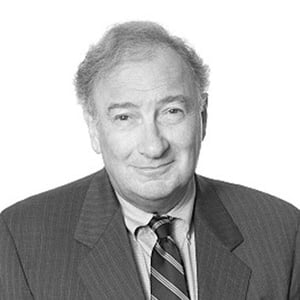
Jerry Loeser is of counsel in the Chicago office of Winston & Strawn, and his practice focuses on banking regulation. He has extensive experience in counseling financial services clients on, among other things, bank acquisitions, privacy, financial modernization, the USA PATRIOT Act, Basel II and III, lending limits, capital, trust, affiliate transactions, and Federal Reserve, OCC, FDIC, and CFPB regulations.
Prior to working at large corporate law firms, Jerry was chief regulatory and compliance counsel for Comerica Bank, where he also served as senior vice president and deputy general counsel and as general counsel of its retail bank division. Before that, he served as chief regulatory in-house counsel at Wells Fargo & Co. Jerry began his legal career advising the Board of Governors of the Federal Reserve System in Washington, D.C.
Former Comptroller of Public Accounts, State of Texas
The Hon. Susan Combs served as the Comptroller of Public Accounts for the State of Texas from 2007 to 2015.
Associate Professor, University of Denver Sturm College of Law
Professor Justin Pidot graduated with high honors from Wesleyan University before attending Stanford Law School, where he graduated with distinction and was editor in chief of the Stanford Environmental Law Journal. Professor Pidot clerked for Judge Judith W. Rogers of the U.S. Court of Appeals for the District of Columbia Circuit. Prior to joining the University of Denver faculty, he was an appellate litigator at the Environment and Natural Resources Division of the U.S. Department of Justice, where he presented argument in more than a dozen federal appellate cases and acted as the staff attorney on two cases before the United States Supreme Court. Professor Pidot also completed a fellowship at the Georgetown Environmental Law & Policy Institute.
Professor Pidot’s scholarship and teaching focus on environmental law, natural resources law, and federal courts.
Senior Fellow, Competitive Enterprise Institute
William Yeatman is CEI's senior fellow specializing in environmental policy and energy markets.
His commentary has been widely featured in newspapers from coast to coast and also on nationwide television and radio.Yeatman has twice testified before congress and numerous times before state legislatures.
Prior to joining CEI, he was a Peace Corps volunteer in the Kyrgyz Republic, where he taught entrepreneurship and small business management to rural women. Before that, he ran a homeless shelter in Denver, Colorado.
He holds a Masters in International Administration from the Denver University Graduate School of International Studies and a Bachelor's in Environmental Sciences from the University of Virginia
Executive Director, Texas Indigent Defense Commission
James D. Bethke serves as the Executive Director of the Texas Indigent Defense Commission formerly called the Task Force on Indigent Defense. The Commission is charged with implementing a statewide system of standards, financing and other resources for criminal defendants unable to hire attorneys. He is also an ex-officio member Governor Perry’s Criminal Justice Advisory Council and a member of the Texas Criminal Justice Integrity Unit. Nationally, he serves on the Indigent Defense Advisory Group for the ABA Standing Committee for Legal Aid and Indigent Defendants and is a member of the National Research & Data Analysis Committee for the National Legal Aid & Defenders Association. He is a past-chair of the Juvenile Law Exam Commission for the Texas Board of Legal Specialization and is a Texas Bar Foundation Life Fellow. He is a U.S. Army veteran from the 101st Airborne Division, is a graduate of the University of Texas at Tyler and the Texas Tech University law school.
Robert B. McKay Professor of Law, New York University School of Law
Stephen Schulhofer is one of the nation’s most distinguished scholars of criminal justice. He has written more than 50 scholarly articles and seven books, including the leading casebook in the field, and highly regarded, widely cited work on a range of criminal justice and national security topics. His most recent book More Essential Than Ever: The Fourth Amendment in the Twenty-First Century (Oxford University Press, 2012) is a comprehensive review and analysis of Fourth Amendment history, the Supreme Court’s constitutional methodology, current Fourth Amendment doctrine, and a wide range of contemporary problems concerning searches and seizures, electronic surveillance, and the intersection between national security needs and the right to privacy. Schulhofer’s scholarship has been distinguished by his simultaneous engagement with doctrinal analysis, criminal justice policy, and his own original empirical work. He has written on counterterrorism, police interrogation, rape law, administrative searches, drug enforcement, indigent defense, sentencing reform, plea bargaining, battered spouse syndrome, and many other criminal justice matters. His current projects include analyses of national security secrecy, the right to privacy in electronic communications, and an empirical study of the impact of counterterrorism policing on immigrant communities in New York and London. In addition, he currently serves as the reporter for the American Law Institute’s project to revise the sexual offense provisions of the Model Penal Code. Previously, Schulhofer was the Julius Kreeger Professor of Law and director of the Center for Studies in Criminal Justice at the University of Chicago Law School, and was the Ferdinand Wakeman Hubbell Professor of Law at the University of Pennsylvania Law School. He completed his BA at Princeton University and his JD at Harvard Law School, both summa cum laude. He then clerked for two years for US Supreme Court Justice Hugo Black and practiced law for three years before beginning his academic career
Adjunct Scholar and Former Director, Project On Criminal Justice, Cato Institute
Tim Lynch is an attorney specializing in criminal law, constitutional law, and civil liberties. He is an adjunct scholar at the Cato Institute and the former director of Cato’s Project on Criminal Justice. His research interests include all aspects of constitutional criminal procedure, overcriminalization, the drug war, and police and prosecutorial misconduct. In 2000, he served on the National Committee to Prevent Wrongful Executions. Lynch also prepares amicus briefs before appellate courts and the U.S. Supreme Court in cases involving constitutional rights. He is the editor of In the Name of Justice: Leading Experts Reexamine the Classic Article “The Aims of the Criminal Law” and After Prohibition: An Adult Approach to Drug Policies in the 21st Century.
Lynch has published a variety of articles in both the law journals and in opinion pieces for the New York Times, the Washington Post, the Wall Street Journal, the Los Angeles Times, and other newspapers. He has appeared on The PBS NewsHour, NBC Nightly News, ABC World News Tonight, and C-SPAN’s Washington Journal. Lynch is a member of the Virginia, District of Columbia, and Supreme Court bars. He earned both a BS and a JD from Marquette University.
Mr. Lynch can be reached via his personal website.

Executive Director, Ohio Dental Association
David J. Owsiany is the executive director of the Ohio Dental Association and a past president of the Columbus Lawyers Chapter of the Federalist Society.
He has served as CEO of a statewide health care association, president of the Buckeye Institute, chief of policy for the Ohio Department of Insurance, judicial law clerk for the Illinois Appellate Court, and staffer on the United State Senate Judiciary Committee.
Mr. Owsiany has written dozens of articles on legal and public policy issues for various publications, including the University of Toledo Law Review, the Federalist Society's State Court Docket Watch, Columbus Dispatch, Cincinnati Enquirer, Crain’s Cleveland Business, and Akron Beacon Journal.
Owsiany received his J.D. from Washington University School of Law in St. Louis and B.A. from the University of Michigan in Ann Arbor.
Assistant Professor of Law, Emory University School of Law
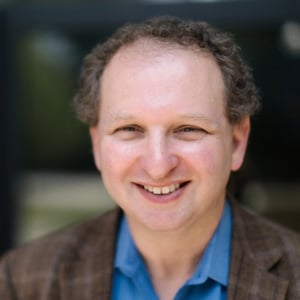
Alexander "Sasha" Volokh is an assistant professor of law, joining the Emory Law faculty in Fall 2009.
Professor Volokh earned his B.S. from UCLA and his J.D. and Ph.D. in economics from Harvard University. He clerked for Judge Alex Kozinski of the Ninth Circuit and for Supreme Court Justices Sandra Day O'Connor and Samuel Alito. Before coming to Emory, he was a visiting associate professor at Georgetown University Law Center and a visiting assistant professor at University of Houston Law Center.
His interests include law and economics, administrative law and the regulatory process, environmental law and policy, and legal history. His current research topics include the private management of government services, medieval law, judicial decisionmaking and statutory interpretation.

The Texas Bill of Rights
Houston, TexasDevelopments at the Consumer Financial Protection Bureau: January 29, 2015 – March 10, 2015
Julius L. Loeser
Developments at the Consumer Financial Protection Bureau: January 29, 2015 – March 10, 2015 Julius...
“Sue-and-Settle” and the Endangered Species Act - Podcast
Susan Combs, Justin Pidot, William Yeatman
Endangered Species Act listing settlements between the Environmental Protection Agency and private parties have not...
Creeping Sharia-ism or Free Exercise of Religion: Islamic Law in America
Irvine, California“Sue-and-Settle” and the Endangered Species Act
TeleforumStare Decisis and Constitutional Text
Public Defenders and Client Choice - Podcast
James D. Bethke, Stephen Schulhofer, Tim Lynch
In 1963, the Supreme Court ruled that indigent persons accused of crimes must be provided...
North Carolina Board of Dental Examiners v. Federal Trade Commission
David J. Owsiany, Alexander Volokh
Note from the Editor: The Federalist Society is pleased to present two different perspectives on the North...
Public Defenders and Client Choice
Criminal Law & Procedure Practice Group Teleforum
TeleforumLife as Solicitor General