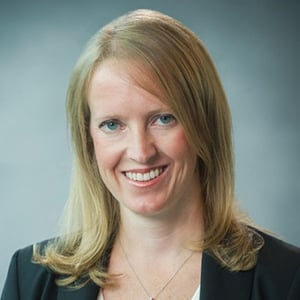
United States Senator, Texas
Ted Cruz represents 28 million Texans in the U.S. Senate as a passionate fighter for limited government and economic growth. He has authored 39 legislative measures signed into law. Recent victories include expanding 529 college savings accounts to allow parents to save for K–12 public, private, and religious education, leading the effort to repeal Obamacare’s individual mandate, imposing sanctions on terrorists who use civilians as human shields, designating North Korea as a state sponsor of terrorism, reauthorizing and reforming NASA, ensuring the availability of additional records to help solve civil rights cold cases, supporting thousands of Texas jobs, and leading the fight to confirm principled constitutionalists to our courts.
Senator Cruz is a graduate of Princeton University and Harvard Law School, a former law clerk to Chief Justice William Rehnquist, and former solicitor general of Texas. He has argued nine cases before the Supreme Court. In November of 2018, he was re-elected to the Senate by the people of Texas.
Partner, Jackson Walker
Arthur offers clients a winning combination of trial and appellate experience gained as a federal prosecutor and more than 20 years of experience in handling patent, copyright, trademark, and trade secrets litigation.
While his practice concentrates on intellectual property litigation, Arthur also has significant experience in internal investigations, False Claims Act suits, partnership and breach of fiduciary duty, breach of contract, and employment litigation. Arthur also has represented clients testifying before Congressional committees.
Arthur writes and speaks frequently on topics ranging from the case against Boston bomber Dzhokhar Tsarnaev to patent litigation reform.
Prior to joining Michael Best, Arthur served as an Assistant United States Attorney in the Southern District of New York, where he was the lead prosecutor in criminal trials, including federal intellectual property crimes. He also argued numerous appeals.
United States Senator, Texas
Ted Cruz represents 28 million Texans in the U.S. Senate as a passionate fighter for limited government and economic growth. He has authored 39 legislative measures signed into law. Recent victories include expanding 529 college savings accounts to allow parents to save for K–12 public, private, and religious education, leading the effort to repeal Obamacare’s individual mandate, imposing sanctions on terrorists who use civilians as human shields, designating North Korea as a state sponsor of terrorism, reauthorizing and reforming NASA, ensuring the availability of additional records to help solve civil rights cold cases, supporting thousands of Texas jobs, and leading the fight to confirm principled constitutionalists to our courts.
Senator Cruz is a graduate of Princeton University and Harvard Law School, a former law clerk to Chief Justice William Rehnquist, and former solicitor general of Texas. He has argued nine cases before the Supreme Court. In November of 2018, he was re-elected to the Senate by the people of Texas.
Partner, Jackson Walker
Arthur offers clients a winning combination of trial and appellate experience gained as a federal prosecutor and more than 20 years of experience in handling patent, copyright, trademark, and trade secrets litigation.
While his practice concentrates on intellectual property litigation, Arthur also has significant experience in internal investigations, False Claims Act suits, partnership and breach of fiduciary duty, breach of contract, and employment litigation. Arthur also has represented clients testifying before Congressional committees.
Arthur writes and speaks frequently on topics ranging from the case against Boston bomber Dzhokhar Tsarnaev to patent litigation reform.
Prior to joining Michael Best, Arthur served as an Assistant United States Attorney in the Southern District of New York, where he was the lead prosecutor in criminal trials, including federal intellectual property crimes. He also argued numerous appeals.
Professor of Law, University of Virginia School of Law
Aditya Bamzai is a professor of law at the University of Virginia. He teaches administrative law, civil procedure, computer crime and conflicts of law, and he has written about these and related subjects. He has argued cases relating to the separation of powers and national security in the U.S. Supreme Court, Foreign Intelligence Surveillance Court of Review, D.C. Circuit and other federal courts of appeals. From 2019 to 2021, he served as a Member of the Privacy and Civil Liberties Oversight Board, a federal agency charged with ensuring that the government’s national security efforts are balanced with the need to protect privacy and civil liberties. Before entering the academy, Bamzai was an attorney-adviser in the Office of Legal Counsel of the U.S. Department of Justice, and an appellate attorney in both private practice and for the National Security Division of the Department of Justice. Earlier in his career, he was a law clerk to Justice Antonin Scalia of the Supreme Court of the United States and to Judge Jeffrey Sutton of the Sixth Circuit Court of Appeals.
Professor of Law, Baylor Law School
Professor Ron Beal has developed an expertise in Texas administrative law. He has authored numerous law review articles that have been cited as authoritative by the Texas judiciary, taught training courses for administrative law judges and lectured in advanced courses for practicing lawyers.
"Procedure is the lifeblood of the practicing attorney," he says. "There is no greater error that can be committed by a lawyer than making a procedural error that deprives his/her client of the right to have a decision made on the merits of a claim or defense. At the same time, there is no other area of the law that a student perceives as more boring than studying procedural law. Thus, I am highly motivated to engage students in studying procedure and to demonstrate to them the vital importance of the subject area."
"In addition, administrative law can be properly labeled as a "hybrid system" that borrows principles from the constitutional system and blends them with informal processes of decision-making and policy formation. It is difficult for the average student to view issues with clarity when the answer is not black or white, but is found within the gray area that merges principles from both disciplines. However, if one can discern the consistent themes within this unique area of law, the sun shines through the trees and the student experiences the 'Ah-Ha' phenomenon of understanding. That is my reward and my goal for Baylor Law students."
Professor Beal earned a J.D. from William Mitchell College of Law in 1979 after receiving a B.A. in 1975 from St. Olaf College. After graduation, he was a civil trial lawyer for three years in St. Paul, Minn., at Murnane, Brandt . Professor Beal then earned a LL.M. at Temple University School of Law in Philadelphia, Penn. In 1983, he joined the faculty at Baylor Law School.
In 1991, he was honored by the State Bar of Texas Administrative and Public Law Council for writing the Outstanding Administrative Law Review Article and in 1994, Baylor University conferred upon him the award of Outstanding Research Professor. In 1997, he completed a treatise, Texas Administrative Practice and Procedure, which is considered the "bible" of Texas administrative law. He also has served as Editor-in-Chief of the General Practice Digest of the General Practice, Solo and Small Firm Section of the State Bar of Texas for the last 25 years. He has also been the contributing editor for Texas Administrative Law for 25 years.
Professor Beal is an avid jogger and recently ran in the infamous Bay to Breakers race in San Francisco. He also enjoys reading, PBS Mysteries and Masterpiece Theatre, classical music, art and foreign films and model railroading.
Founding Partner, Cooper & Kirk PLLC
Charles J. Cooper is a founding member and the chairman of Cooper & Kirk, PLLC, “one of the Nation’s leading litigation boutiques” (Above The Law 2017). The National Law Journal recently wrote that Mr. Cooper’s “brilliant legal career has so far spanned five decades and thrust Cooper into the spotlight in some of the most historic moments of the country’s modern history.” He has argued nine cases before the United States Supreme Court and scores of appeals before each of the 13 federal courts of appeals and several state supreme courts. He has been lead trial counsel in numerous complex, weeks-long trials in federal courts throughout the country. Named by the National Law Journal as one of the 10 best litigators in Washington D.C., Mr. Cooper’s work has been reported in numerous press accounts, and he has been called a “powerhouse attorney” (Fortune 2015), “a hard-nosed litigator” (Washington Post 2017), and “one of the country’s most in-demand civil litigators and a Washington legal institution unto himself” (The American Spectator 2014).
After graduating from the University of Alabama School of Law in 1977, where he ranked first in his class and served as Editor-in-Chief of the Alabama Law Review, Mr. Cooper began his career as a law clerk to Judge Paul Roney on the Fifth Circuit Court of Appeals and to Justice William H. Rehnquist in 1978–79. He then practiced law in Atlanta for two years before joining the Civil Rights Division of the U.S. Department of Justice, where he served as the Deputy Assistant Attorney General in charge of, among other things, appellate matters. In 1985 President Reagan appointed him to the position of Assistant Attorney General for the Office of Legal Counsel, which is the office responsible for providing legal opinions and advice to the White House, the Attorney General, and Executive Branch departments and agencies on issues covering the full spectrum of federal constitutional, statutory, and regulatory law.
In 1988 he returned to private practice as a litigation partner in the Washington, D.C. office of McGuireWoods. From 1990 until the founding of Cooper & Kirk in 1996, he was a partner at Shaw Pittman (now Pillsbury Winthrop Shaw Pittman), where he headed the firm’s Constitutional and Government Litigation Group.
Mr. Cooper has represented a wide range of public and private clients in highly complex constitutional, civil rights, antitrust, healthcare, banking, intellectual property, elections, campaign finance, administrative, commercial, and government contract cases. He has led trial teams in cases that have won judgments and settlements valued in the billions of dollars and that have established ground-breaking constitutional precedents.
Much of Mr. Cooper’s practice has involved representing high-profile clients in nationally prominent matters, including: the State of Florida in a First Amendment suit brought by the Disney Company concerning its autonomous regulatory authority over its Disney World property; the Commonwealth of Virginia in a suit seeking to enjoin the removal of noncitizens from its voter rolls; 38 members of the Duke Lacrosse team falsely accused of rape by officials of Duke University and the City of Durham; Harper Lee in a copyright dispute with the heirs of Gregory Peck; high-ranking former government officials such as former Attorneys General John Ashcroft, Jeff Sessions, and William Barr, and Ambassador John Bolton; several Governors and United States Senators; over 100 Members of Congress; and many state, territorial, and local government bodies and officials. He has also represented and advised government officials and public figures in connection with sensitive private issues that needed to be, and were, resolved discreetly without becoming matters of public record.
In 1998 Chief Justice Rehnquist appointed Mr. Cooper to the Standing Committee on Rules of Practice and Procedure of the Judicial Conference of the United States, where he served for three terms. He also served as a Public Member, appointed by President George H.W. Bush, of the National Commission on Judicial Discipline and Removal. He is a member of numerous professional associations, including the American Law Institute (since 1993) and the American Academy of Appellate Lawyers (since 1996). He is also an active member of the Federalist Society and the Republican National Lawyers Association, which in 2010 named him Republican Lawyer of the Year and in 2016 honored him with its Edwin Meese III Award.
Mr. Cooper has published scores of articles and spoken extensively on constitutional and legal policy topics. He has appeared before congressional committees on 26 occasions, testifying as an expert on a wide variety of legal issues, including the Chevron doctrine of judicial deference to administrative agencies, the diversity of citizenship jurisdiction of federal courts, statehood bills for Puerto Rico and the District of Columbia, and the impeachment of President Clinton.
Judge, United States Court of Appeals, Fifth Circuit
Edith Jones graduated from Alamo Heights High School, where she was a National Merit Scholar. In 1971, she received her B.A. in Economics from Cornell University, graduating with honors. In 1974, she was awarded her J.D. at the University of Texas Law School, where she was a law review editor and received the Order of the Coif.
Judge Jones was the first female partner at Andrews, Kurth, Campbell & Jones (now Hunton Andrews Kurth) where she practiced various types of litigation and bankruptcy cases. Judge Jones went on the federal bench on June 1, 1985.
Judge Jones served as a former member of the National Bankruptcy Review Commission, and as a member of the Judicial Conference Commission on Bankruptcy Rules. Judge Jones served on the White House Fellows Commission. Judge Jones served on the board of the Sam Houston Area Council of the Boy Scouts of America. She has been a member of the Garland Walker Inn of Court in Houston for more than 20 years and its President for at least ten years. Judge Jones is also on the Board of the Calvin Coolidge Presidential Foundation.
Founder, Libertas-West Project
Karen Lugo is a constitutional law consultant and national security analyst. She was Director of the Center for Tenth Amendment at Texas Public Policy Foundation from 2013 to 2015. When living in California, she was Co-Director of the Center for Constitutional Jurisprudence Center. From 2005 – 2012, she was a clinical visiting and adjunct professor at Chapman University School of Law where she co-taught the advanced Constitutional Law Clinic. Karen has co-authored and written circuit-level and Supreme Court amicus briefs on such issues as FISA Surveillance, Healthcare Reform, Arizona’s Border Security, Gay Marriage, The Ten Commandments, Eminent Domain, Christian Clubs on University Campuses, and Material Support for Terrorists.
Karen is the founder of the Libertas-West Project, a center for study Islamic integration and radicalization issues. In this capacity, she consulted with the Center for Security Policy to write a book on local over-watch of mosque construction and community engagement called: Mosques in America: A Guide to Accountable Permit Hearings and Continuing Citizen Oversight.
Karen writes and speaks for European and American groups on the importance of basing assimilation efforts on principles of Western exceptionalism. She presented a policy brief to the French Conseil d’Etat analyzing the legal implications of banning the burqa. Ms. Lugo has written one of the most comprehensive overviews of sharia law in American courts, American Family Law and Sharia-Compliant Marriages, for the Federalist Society law journal, Engage. She has written several white papers on the American Law for American Courts legislation and sharia tribunals in America.
Ms. Lugo was an appointee to the California Advisory Committee to the U.S. Commission on Civil Rights. She also taught a Human Rights law course on the contrast between French and English Enlightenment theories in Strasbourg, France.
Until moving from California, Ms. Lugo was a member of the David Horowitz Freedom Center Board of Directors. She was also a regular guest on the Orange County PBS local issues debate program, Inside OC, and she is a contributor to Pajamas Media, National Review Online, City Journal, American Spectator, American Greatness, Townhall.com, American Thinker, Daily Caller, and Family Security Matters. She has been interviewed by dozens of radio hosts and has spoken for civic groups on constitutional and cultural concerns.
Charles I. Francis Professorship in Law, University of Texas at Austin School of Law
Professor Aaron Nielson lectures and writes in the areas of administrative law, civil procedure, and federal courts. Before joining the faculty, he served as Solicitor General of Texas and represented Texas before the U.S. Supreme Court and the Texas Supreme Court, as well as overseeing all appellate litigation for the State. Earlier in his career, he was a professor at Brigham Young University and an appellate and antitrust partner in the Washington, D.C. office of Kirkland & Ellis LLP. He also clerked for Justice Samuel A. Alito, Jr. of the U.S. Supreme Court, Judge Janice Rogers Brown of the U.S. Court of Appeals for the D.C. Circuit, and Judge Jerry E. Smith of the U.S. Court of Appeals for the Fifth Circuit.
As Solicitor General, Professor Nielson successfully defended against a First Amendment challenge Texas’s law requiring online pornographers to institute age verification. In 2020, the U.S. Supreme Court appointed him to defend the constitutionality of a federal agency. He currently serves as a Senior Fellow of the Administrative Conference of the United States after completing a six-year term as an appointed public member and chair of the Conference’s Administration & Management Committee.
Nielson’s research focuses on administrative law, federal litigation, and the separation of powers. He has published (or soon will publish) in the Harvard Law Review, Columbia Law Review, University of Chicago Law Review, University of Pennsylvania Law Review, Duke Law Journal, Georgetown Law Journal, Cornell Law Review, and Northwestern University Law Review, among others. Nielson has been recognized for teaching for teaching and scholarship and in 2021 received the Federalist Society’s Joseph Story Award, which recognizes a young academic for excellence in legal scholarship, a commitment to teaching, and a concern for students, and who has made a significant public impact in a manner that advances the rule of law in a free society. He is also an elected member of the American Law Institute.
Professor Nielson received his J.D. magna cum laude from Harvard Law School and an LL.M from the University of Cambridge, where he focused his studies on the institutions that regulate global competition and commerce. He received his undergraduate degree summa cum laude from the University of Pennsylvania, majoring in economics and political science.
State Attorney General, Texas
Of Counsel, Gibson, Dunn & Crutcher LLP
Prerak Shah is Of Counsel at Gibson, Dunn & Crutcher LLP. He was most recently the Acting United States Attorney for the Northern District of Texas, leading a team of approximately 120 Assistant U.S. Attorneys handling a wide range of cases, including securities fraud, health care fraud, the False Claims Act, computer crime, national security, tax fraud, money laundering, public corruption, and terrorism. Mr. Shah previously held several leadership positions at the Department of Justice, including Deputy Associate Attorney General in the office overseeing the work of the Antitrust, Civil, Civil Rights, Environment & Natural Resources, and Tax Divisions. Before joining the Justice Department, Mr. Shah served as Chief of Staff to Senator Ted Cruz and as a Chief Counsel on the Senate Judiciary Committee. He graduated from the University of Chicago Law School and clerked for the Honorable Jerry E. Smith of the U.S. Court of Appeals for the Fifth Circuit.
Professor of Law, University of Virginia School of Law
Aditya Bamzai is a professor of law at the University of Virginia. He teaches administrative law, civil procedure, computer crime and conflicts of law, and he has written about these and related subjects. He has argued cases relating to the separation of powers and national security in the U.S. Supreme Court, Foreign Intelligence Surveillance Court of Review, D.C. Circuit and other federal courts of appeals. From 2019 to 2021, he served as a Member of the Privacy and Civil Liberties Oversight Board, a federal agency charged with ensuring that the government’s national security efforts are balanced with the need to protect privacy and civil liberties. Before entering the academy, Bamzai was an attorney-adviser in the Office of Legal Counsel of the U.S. Department of Justice, and an appellate attorney in both private practice and for the National Security Division of the Department of Justice. Earlier in his career, he was a law clerk to Justice Antonin Scalia of the Supreme Court of the United States and to Judge Jeffrey Sutton of the Sixth Circuit Court of Appeals.
Professor of Law, Baylor Law School
Professor Ron Beal has developed an expertise in Texas administrative law. He has authored numerous law review articles that have been cited as authoritative by the Texas judiciary, taught training courses for administrative law judges and lectured in advanced courses for practicing lawyers.
"Procedure is the lifeblood of the practicing attorney," he says. "There is no greater error that can be committed by a lawyer than making a procedural error that deprives his/her client of the right to have a decision made on the merits of a claim or defense. At the same time, there is no other area of the law that a student perceives as more boring than studying procedural law. Thus, I am highly motivated to engage students in studying procedure and to demonstrate to them the vital importance of the subject area."
"In addition, administrative law can be properly labeled as a "hybrid system" that borrows principles from the constitutional system and blends them with informal processes of decision-making and policy formation. It is difficult for the average student to view issues with clarity when the answer is not black or white, but is found within the gray area that merges principles from both disciplines. However, if one can discern the consistent themes within this unique area of law, the sun shines through the trees and the student experiences the 'Ah-Ha' phenomenon of understanding. That is my reward and my goal for Baylor Law students."
Professor Beal earned a J.D. from William Mitchell College of Law in 1979 after receiving a B.A. in 1975 from St. Olaf College. After graduation, he was a civil trial lawyer for three years in St. Paul, Minn., at Murnane, Brandt . Professor Beal then earned a LL.M. at Temple University School of Law in Philadelphia, Penn. In 1983, he joined the faculty at Baylor Law School.
In 1991, he was honored by the State Bar of Texas Administrative and Public Law Council for writing the Outstanding Administrative Law Review Article and in 1994, Baylor University conferred upon him the award of Outstanding Research Professor. In 1997, he completed a treatise, Texas Administrative Practice and Procedure, which is considered the "bible" of Texas administrative law. He also has served as Editor-in-Chief of the General Practice Digest of the General Practice, Solo and Small Firm Section of the State Bar of Texas for the last 25 years. He has also been the contributing editor for Texas Administrative Law for 25 years.
Professor Beal is an avid jogger and recently ran in the infamous Bay to Breakers race in San Francisco. He also enjoys reading, PBS Mysteries and Masterpiece Theatre, classical music, art and foreign films and model railroading.
Founding Partner, Cooper & Kirk PLLC
Charles J. Cooper is a founding member and the chairman of Cooper & Kirk, PLLC, “one of the Nation’s leading litigation boutiques” (Above The Law 2017). The National Law Journal recently wrote that Mr. Cooper’s “brilliant legal career has so far spanned five decades and thrust Cooper into the spotlight in some of the most historic moments of the country’s modern history.” He has argued nine cases before the United States Supreme Court and scores of appeals before each of the 13 federal courts of appeals and several state supreme courts. He has been lead trial counsel in numerous complex, weeks-long trials in federal courts throughout the country. Named by the National Law Journal as one of the 10 best litigators in Washington D.C., Mr. Cooper’s work has been reported in numerous press accounts, and he has been called a “powerhouse attorney” (Fortune 2015), “a hard-nosed litigator” (Washington Post 2017), and “one of the country’s most in-demand civil litigators and a Washington legal institution unto himself” (The American Spectator 2014).
After graduating from the University of Alabama School of Law in 1977, where he ranked first in his class and served as Editor-in-Chief of the Alabama Law Review, Mr. Cooper began his career as a law clerk to Judge Paul Roney on the Fifth Circuit Court of Appeals and to Justice William H. Rehnquist in 1978–79. He then practiced law in Atlanta for two years before joining the Civil Rights Division of the U.S. Department of Justice, where he served as the Deputy Assistant Attorney General in charge of, among other things, appellate matters. In 1985 President Reagan appointed him to the position of Assistant Attorney General for the Office of Legal Counsel, which is the office responsible for providing legal opinions and advice to the White House, the Attorney General, and Executive Branch departments and agencies on issues covering the full spectrum of federal constitutional, statutory, and regulatory law.
In 1988 he returned to private practice as a litigation partner in the Washington, D.C. office of McGuireWoods. From 1990 until the founding of Cooper & Kirk in 1996, he was a partner at Shaw Pittman (now Pillsbury Winthrop Shaw Pittman), where he headed the firm’s Constitutional and Government Litigation Group.
Mr. Cooper has represented a wide range of public and private clients in highly complex constitutional, civil rights, antitrust, healthcare, banking, intellectual property, elections, campaign finance, administrative, commercial, and government contract cases. He has led trial teams in cases that have won judgments and settlements valued in the billions of dollars and that have established ground-breaking constitutional precedents.
Much of Mr. Cooper’s practice has involved representing high-profile clients in nationally prominent matters, including: the State of Florida in a First Amendment suit brought by the Disney Company concerning its autonomous regulatory authority over its Disney World property; the Commonwealth of Virginia in a suit seeking to enjoin the removal of noncitizens from its voter rolls; 38 members of the Duke Lacrosse team falsely accused of rape by officials of Duke University and the City of Durham; Harper Lee in a copyright dispute with the heirs of Gregory Peck; high-ranking former government officials such as former Attorneys General John Ashcroft, Jeff Sessions, and William Barr, and Ambassador John Bolton; several Governors and United States Senators; over 100 Members of Congress; and many state, territorial, and local government bodies and officials. He has also represented and advised government officials and public figures in connection with sensitive private issues that needed to be, and were, resolved discreetly without becoming matters of public record.
In 1998 Chief Justice Rehnquist appointed Mr. Cooper to the Standing Committee on Rules of Practice and Procedure of the Judicial Conference of the United States, where he served for three terms. He also served as a Public Member, appointed by President George H.W. Bush, of the National Commission on Judicial Discipline and Removal. He is a member of numerous professional associations, including the American Law Institute (since 1993) and the American Academy of Appellate Lawyers (since 1996). He is also an active member of the Federalist Society and the Republican National Lawyers Association, which in 2010 named him Republican Lawyer of the Year and in 2016 honored him with its Edwin Meese III Award.
Mr. Cooper has published scores of articles and spoken extensively on constitutional and legal policy topics. He has appeared before congressional committees on 26 occasions, testifying as an expert on a wide variety of legal issues, including the Chevron doctrine of judicial deference to administrative agencies, the diversity of citizenship jurisdiction of federal courts, statehood bills for Puerto Rico and the District of Columbia, and the impeachment of President Clinton.
Judge, United States Court of Appeals, Fifth Circuit
Edith Jones graduated from Alamo Heights High School, where she was a National Merit Scholar. In 1971, she received her B.A. in Economics from Cornell University, graduating with honors. In 1974, she was awarded her J.D. at the University of Texas Law School, where she was a law review editor and received the Order of the Coif.
Judge Jones was the first female partner at Andrews, Kurth, Campbell & Jones (now Hunton Andrews Kurth) where she practiced various types of litigation and bankruptcy cases. Judge Jones went on the federal bench on June 1, 1985.
Judge Jones served as a former member of the National Bankruptcy Review Commission, and as a member of the Judicial Conference Commission on Bankruptcy Rules. Judge Jones served on the White House Fellows Commission. Judge Jones served on the board of the Sam Houston Area Council of the Boy Scouts of America. She has been a member of the Garland Walker Inn of Court in Houston for more than 20 years and its President for at least ten years. Judge Jones is also on the Board of the Calvin Coolidge Presidential Foundation.
Founder, Libertas-West Project
Karen Lugo is a constitutional law consultant and national security analyst. She was Director of the Center for Tenth Amendment at Texas Public Policy Foundation from 2013 to 2015. When living in California, she was Co-Director of the Center for Constitutional Jurisprudence Center. From 2005 – 2012, she was a clinical visiting and adjunct professor at Chapman University School of Law where she co-taught the advanced Constitutional Law Clinic. Karen has co-authored and written circuit-level and Supreme Court amicus briefs on such issues as FISA Surveillance, Healthcare Reform, Arizona’s Border Security, Gay Marriage, The Ten Commandments, Eminent Domain, Christian Clubs on University Campuses, and Material Support for Terrorists.
Karen is the founder of the Libertas-West Project, a center for study Islamic integration and radicalization issues. In this capacity, she consulted with the Center for Security Policy to write a book on local over-watch of mosque construction and community engagement called: Mosques in America: A Guide to Accountable Permit Hearings and Continuing Citizen Oversight.
Karen writes and speaks for European and American groups on the importance of basing assimilation efforts on principles of Western exceptionalism. She presented a policy brief to the French Conseil d’Etat analyzing the legal implications of banning the burqa. Ms. Lugo has written one of the most comprehensive overviews of sharia law in American courts, American Family Law and Sharia-Compliant Marriages, for the Federalist Society law journal, Engage. She has written several white papers on the American Law for American Courts legislation and sharia tribunals in America.
Ms. Lugo was an appointee to the California Advisory Committee to the U.S. Commission on Civil Rights. She also taught a Human Rights law course on the contrast between French and English Enlightenment theories in Strasbourg, France.
Until moving from California, Ms. Lugo was a member of the David Horowitz Freedom Center Board of Directors. She was also a regular guest on the Orange County PBS local issues debate program, Inside OC, and she is a contributor to Pajamas Media, National Review Online, City Journal, American Spectator, American Greatness, Townhall.com, American Thinker, Daily Caller, and Family Security Matters. She has been interviewed by dozens of radio hosts and has spoken for civic groups on constitutional and cultural concerns.
Charles I. Francis Professorship in Law, University of Texas at Austin School of Law
Professor Aaron Nielson lectures and writes in the areas of administrative law, civil procedure, and federal courts. Before joining the faculty, he served as Solicitor General of Texas and represented Texas before the U.S. Supreme Court and the Texas Supreme Court, as well as overseeing all appellate litigation for the State. Earlier in his career, he was a professor at Brigham Young University and an appellate and antitrust partner in the Washington, D.C. office of Kirkland & Ellis LLP. He also clerked for Justice Samuel A. Alito, Jr. of the U.S. Supreme Court, Judge Janice Rogers Brown of the U.S. Court of Appeals for the D.C. Circuit, and Judge Jerry E. Smith of the U.S. Court of Appeals for the Fifth Circuit.
As Solicitor General, Professor Nielson successfully defended against a First Amendment challenge Texas’s law requiring online pornographers to institute age verification. In 2020, the U.S. Supreme Court appointed him to defend the constitutionality of a federal agency. He currently serves as a Senior Fellow of the Administrative Conference of the United States after completing a six-year term as an appointed public member and chair of the Conference’s Administration & Management Committee.
Nielson’s research focuses on administrative law, federal litigation, and the separation of powers. He has published (or soon will publish) in the Harvard Law Review, Columbia Law Review, University of Chicago Law Review, University of Pennsylvania Law Review, Duke Law Journal, Georgetown Law Journal, Cornell Law Review, and Northwestern University Law Review, among others. Nielson has been recognized for teaching for teaching and scholarship and in 2021 received the Federalist Society’s Joseph Story Award, which recognizes a young academic for excellence in legal scholarship, a commitment to teaching, and a concern for students, and who has made a significant public impact in a manner that advances the rule of law in a free society. He is also an elected member of the American Law Institute.
Professor Nielson received his J.D. magna cum laude from Harvard Law School and an LL.M from the University of Cambridge, where he focused his studies on the institutions that regulate global competition and commerce. He received his undergraduate degree summa cum laude from the University of Pennsylvania, majoring in economics and political science.
State Attorney General, Texas
Of Counsel, Gibson, Dunn & Crutcher LLP
Prerak Shah is Of Counsel at Gibson, Dunn & Crutcher LLP. He was most recently the Acting United States Attorney for the Northern District of Texas, leading a team of approximately 120 Assistant U.S. Attorneys handling a wide range of cases, including securities fraud, health care fraud, the False Claims Act, computer crime, national security, tax fraud, money laundering, public corruption, and terrorism. Mr. Shah previously held several leadership positions at the Department of Justice, including Deputy Associate Attorney General in the office overseeing the work of the Antitrust, Civil, Civil Rights, Environment & Natural Resources, and Tax Divisions. Before joining the Justice Department, Mr. Shah served as Chief of Staff to Senator Ted Cruz and as a Chief Counsel on the Senate Judiciary Committee. He graduated from the University of Chicago Law School and clerked for the Honorable Jerry E. Smith of the U.S. Court of Appeals for the Fifth Circuit.
Former Assistant United States Attorney at United States Attorney's Office
In February 2015, I entered private practice, concentrating on criminal law, forfeiture, and mediation services.
From 1985 until November 2013, I was an assistant United States attorney in the Northern District of Texas. I litigated civil and criminal forfeiture cases involving violations of federal laws on behalf of federal agencies (including the Drug Enforcement Administration, Federal Bureau of Investigation, Department of Homeland Security, Internal Revenue Service Bureau of Alcohol, Tobacco, Firearms, and Explosives, Secret Service, and Fish and Wildlife Service.
From July 2009 until January 2012, however, I served as the Asset Forfeiture/Money Laundering Coordinator on a detail to the Executive Office of United States Attorneys (EOUSA), United States Department of Justice, in Washington, D.C. In this capacity, I provided advice and assistance to EOUSA and 93 United States Attorney’s offices, on legal, logistical, and programmatic issues arising as part of the Department’s Asset Forfeiture/Money Laundering Program. I also served as a liaison between EOUSA and the Attorney General’s Advisory Committee, components of the Department of Justice (e.g., DEA, FBI, ATF) and Department of Treasury (e.g., IRS, SS, DHS) Asset Forfeiture Programs, and other agencies.
In both of these positions, I became familiar with federal forfeiture statutes, regulations, and cases, and agency forfeiture policies and procedures, as well as standard practices of agencies . Each year, I attended conferences on various substantive and procedural subjects related to forfeiture, including the annual Asset Forfeiture Chiefs and Experts Conference sponsored by the Department of Justice’s Asset Forfeiture/Money Laundering Section. Each month, I reviewed a summary of federal forfeiture case decisions prepared by renowned forfeiture expert Stefan Cassella. In addition, I regularly made presentations locally to various federal agencies on forfeiture topics.
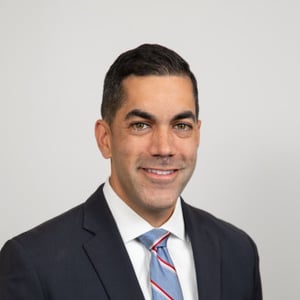
Managing Attorney, Institute for Justice
Arif Panju serves as a managing attorney with the Institute for Justice. He leads IJ’s Texas office and litigates cases involving free speech, property rights, economic liberty, and educational choice.
Arif is co-counsel in the case of Carson v. Makin in the U.S. Supreme Court. Carson is a challenge to Maine’s exclusion of religious educational options from the state’s school choice program.
Arif’s work has resulted in court victories in both federal and state court. He vindicated the free speech rights of tour guides in Billups v. City of Charleston. He secured a victory for economic liberty in Brantley v. Kuntz, freeing hairbraiding schools in Texas from onerous restrictions and paving the way for the abolishment of the state’s braiding license at the Texas Legislature. In Patel v. Texas Department of Licensing and Regulation, Arif helped secure a landmark victory in the Texas Supreme Court, establishing a new test for reviewing the constitutionality of economic regulations.
Arif’s work at IJ has been featured by outlets including The Wall Street Journal, New York Times, Washington Post, The Atlantic, Texas Tribune, and dozens more nationwide. His opinions and views on legal issues have been published in several outlets, including the Dallas Morning News, Austin American-Statesman, and USA Today. Arif sits on the board for the Freedom of Information Foundation of Texas.
Arif graduated law school with honors from Southern Methodist University. During law school he clerked on the United States Senate Committee on the Judiciary. Arif lives in Austin, Texas.
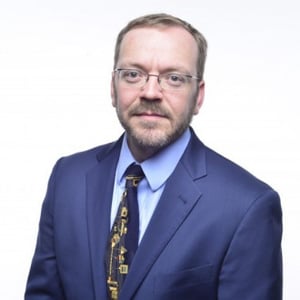
Vice President for Legal Affairs, Goldwater Institute
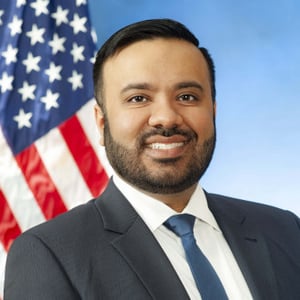
Of Counsel, Gibson, Dunn & Crutcher LLP
Prerak Shah is Of Counsel at Gibson, Dunn & Crutcher LLP. He was most recently the Acting United States Attorney for the Northern District of Texas, leading a team of approximately 120 Assistant U.S. Attorneys handling a wide range of cases, including securities fraud, health care fraud, the False Claims Act, computer crime, national security, tax fraud, money laundering, public corruption, and terrorism. Mr. Shah previously held several leadership positions at the Department of Justice, including Deputy Associate Attorney General in the office overseeing the work of the Antitrust, Civil, Civil Rights, Environment & Natural Resources, and Tax Divisions. Before joining the Justice Department, Mr. Shah served as Chief of Staff to Senator Ted Cruz and as a Chief Counsel on the Senate Judiciary Committee. He graduated from the University of Chicago Law School and clerked for the Honorable Jerry E. Smith of the U.S. Court of Appeals for the Fifth Circuit.
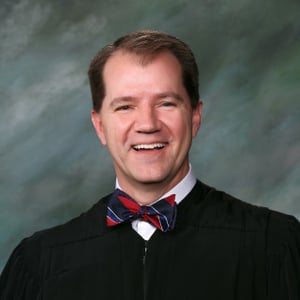
Judge, U.S. Court of Appeals, Fifth Circuit
Don Willett serves on the United States Court of Appeals for the Fifth Circuit.
Before joining the federal bench, Judge Willett served 13 years on the Supreme Court
of Texas. His career spans decades of public service, including roles as legal counsel to
a Texas Attorney General, a Texas Governor, a U.S. Attorney General, and the
President of the United States.
Raised by a heroic widowed mom in a doublewide trailer in a town of 32, Judge
Willett is his family’s first college graduate. He earned a triple-major B.B.A. from Baylor
University—where he serves on the Board of Regents—and three degrees from Duke
University—where he serves on the Board of Visitors: a J.D. with honors, an A.M. in
political science, and an LL.M. in judicial studies. After law school, he clerked on the
Fifth Circuit and practiced at Haynes and Boone before entering public service.
Judge Willett publishes widely in both leading law reviews and national media, including
The Yale Law Journal, The University of Pennsylvania Law Review, and The Wall Street
Journal. The longtime editor-in-chief of Judicature—the Scholarly Journal for Judges, he
holds academic appointments at various law schools and has received more than a
dozen Green Bag honors for “exemplary legal writing.” He was named Distinguished
Jurist of the Year by the Texas Review of Law & Politics, and he is a member of the
American Law Institute and a Life Fellow of the American, Texas, and Austin Bar
Foundations.
A onetime bull rider and professional drummer, Judge Willett was named “Tweeter
Laureate of Texas” in 2015. He is the namesake of Don R. Willett Elementary
School—home of mighty Willett Wranglers—located just a mile from where he grew up.
He and his radiant wife, Tiffany have three children—Jacob, Shane-David, and
Geneviève—plus the family pup, Amicus.
Director of Policy & General Counsel, Texas Conservative Coalition Research Institute
Russell Withers is Director of Policy & General Counsel at the Texas Conservative Coalition Research Institute. He holds an undergraduate degree in Government and English from the University of Texas at Austin and a J.D. from Tulane University School of Law in New Orleans. Russell helped litigate constitutional claims as a clerk at the Institute for Justice, served as a policy consultant for the Greg Abbott campaign for Governor in 2014, and regularly assists members of the Texas Legislature on questions of public policy. He has testified before several committees in the Texas Legislature and authored numerous opinion editorials on Texas politics and public policy. His works have appeared in the Austin American Statesman, the Houston Chronicle, the Texas Tribune’s Trib Talk, and others. He has served as a moderator for panels at TCCRI Policy Summits covering issues such as health care, energy, and economic freedom. Russell is an active member in the Austin Lawyers Chapter of the Federalist Society and has organized events as well as presented and participated in them.

Principal and CEO, Borgelt Law
Roger B. Borgelt is a highly regarded Austin lawyer with 24 years’ experience primarily in the practice of environmental, energy, administrative, utility and professional licensure law. He is listed in Best Lawyers in America® and Texas' Best Lawyers. His firm, Borgelt Law, is listed in Best Law Firms byU.S. News & World Report -- Best Lawyers®. He represents individuals, landowners, suburban areas, businesses, political subdivisions and large institutions before state and federal regulatory agencies, the courts, local governments and the Texas Legislature with consistently favorable and unprecedented results.
Mr. Borgelt is licensed to practice law in Texas and admitted to practice before the U.S. District Court, Western District of Texas. Prior to establishing Borgelt Law in June 2010, he held senior positions in Texas government and excelled as partner at a major regional litigation firm where he led an extensive administrative and regulatory practice focused on environmental, energy, local government, annexation, zoning and permitting, land use and property law matters. He also developed the firm's ethics advising, campaign finance and election law counsel as well as experienced defense of Deceptive Trade Practices Act claims and advising on Texas Public Information Act requests.
His law practice has received high profile media coverage for the past two years through his representation of Homeowners United for Rate Fairness in its appeal of Austin Energy's rate increase to the Texas Public Utility Commission, which resulted in an unprecedented rate discount for his client's suburban customers and cost the City of Austin $1.6 million to defend.
Prior to entering private practice in 2006, he served for seven years in the Office of the Attorney General as Deputy Chief of the Consumer Protection Division and then as an Assistant Attorney General, actively defending consumer interests in the area of deceptive trade, and where he represented major public entities, including Texas A&M University and The UT System, in major gas and electric utilities matters which resulted in significant multi-million dollar savings annually for these institutions and the citizens of Texas. During this period as Assistant Attorney General he appeared frequently before the Texas Public Utility Commission, Railroad Commission and Federal Communications Commission in rulemakings and contested case hearings and appeals, often winning favorable rulings which furthered the Texas public interest and business climate.
He began his law practice as a law clerk at the Railroad Commission in 1989 before becoming a national authority in pesticide law and policy matters as general counsel of a small state environmental agency. During these earliest years of his law practice, he worked extensively with state and federal regulators and legislative and congressional committees examining and resolving complex environmental policy and impacts, including that of NAFTA on states bordering Mexico.
Roger attended UT as a National Merit Scholar. He earned a Bachelor of Arts Degree in Psychology from UT in 1984 before graduating from The University of Texas School of Law in 1988. He is a member of the UT Chancellor's Council, UT Littlefield Society and UT Longhorn Foundation. A lifelong Austinite, he and his wife, Mary Ellen, are active in the Austin community.
State Representative, District 61, Texas House of Representatives
As State Representative for the 61st District, Phil King represents the people of Parker and Wise counties in the Texas Legislature. He has earned a reputation as a principle-driven conservative who consistently provides key leadership in passing some of Texas’ most sweeping public policy legislation.
King currently serves as Chair of the State and Federal Power and Responsibility Committee. He also serves on the Energy Resources Committee, Environmental Regulation Committee and the Select Committee on Federal Environmental Regulation.
King serves on the National Board of Directors for the American Legislative Exchange Council and was the 2015 National Chair. He also Chairs ALEC’s Center for Innovation and Technology. King also serves on the Board of Directors of the Texas Conservative Coalition Research Institute.
As chair of the Regulated Industries Committee for three legislative sessions, he worked to promote competition in the electricity and telecommunications markets. King is a frequent speaker on public policy issues impacting Texas.
King serves as a Colonel in the Texas State Guard, one of three branches of the Military Forces of the State of Texas. The Guard assists and augments the Texas National Guard and Texas civil authorities during state emergencies and in homeland security.
He is a practicing attorney with the firm of Eggleston King, LLP. Representative King and his family are active members of Trinity Bible Church. Phil and his wife Terry are the proud parents of six children, eight granddaughters and four grandsons.
Co-Chairman, The Federalist Society for Law and Public Policy Studies
Leonard is Co-Chairman and former Executive Vice President of the Federalist Society, joining the organization over 25 years ago. Since that time he has been instrumental in helping the organization top 70,000, focusing on the growth of lawyers membership, operations and activities advancing limited, constitutional government. In addition to his work at the Society, Leonard has advised President Trump on judicial selection, assisted with the Gorsuch and Kavanaugh Supreme Court selection and confirmation process, and served as a member of the transition team. He also organized the outside coalition efforts in support of the Roberts and Alito U.S. Supreme Court confirmations. Leonard was appointed by President George W. Bush to three terms to the U.S. Commission on International Religious Freedom as chairman. He was also a U.S. Delegate to the UN Council and UN Commission on Human Rights during the Bush Administration. Leonard was the recipient of the 2009 Bradley Prize, along with the other founders and directors of the Federalist Society, for his work in advancing freedom and the rule of law. He is the coeditor of Presidential Leadership: Rating the Best and the Worst in the White House, as well as the author of opinion editorials in the New York Times,The Wall Street Journal, and Washington Post. Leonard holds degrees from Cornell University and Cornell Law School. He presently resides in Northern Virginia, where he and his wife Sally have raised their seven children.
First Court of Appeals, Texas
Michael Massengale was appointed to the First Court of Appeals by Governor Rick Perry on June 15, 2009. He was elected in 2010 and re-elected to a full term in 2012.
Justice Massengale is board certified in civil appellate law by the Texas Board of Legal Specialization. Before joining the court, he was a partner in the trial department at Baker Botts L.L.P. where he specialized in commercial litigation involving corporate mergers and acquisitions, fraudulent transfers, securities fraud, and antitrust. He has also tried a number of personal injury and property damage lawsuits to jury verdicts.
He graduated with honors from The University of Texas School of Law. He earned the Outstanding Editor Award from the Texas Law Review, having published his student note, served as Book Review Editor, and edited the ninth edition of Texas Rules of Form. After law school, he clerked for Judge Harold R. DeMoss, Jr. of the United States Court of Appeals for the Fifth Circuit. He is a graduate of Dartmouth College and an Eagle Scout.
Among other civic and professional activities, Justice Massengale serves as a commissioner on the Permanent Judicial Commission For Children, Youth & Families where he chairs the Training Committee and oversees the Commission's judicial and attorney training programs. He is an elected member of the American Law Institute. He also curates a blog on the history of the Texas Constitution, atwww.texconst.wordpress.com. His wife, Lindsey, is a board-certified ophthalmologist specializing in diseases of the vitreous and retina.
Andrew P. Morriss is Dean and Anthony G. Buzbee Dean's Endowed Chairholder at Texas A&M School of Law and a member of the Board of Advisors for the Center on Culture and Civil Society at the Independent Institute. He is also a Research Fellow at the Center for Labor and Employment Law at New York University; Senior Fellow at the Property & Environment Research Center; Senior Scholar at the Mercatus Center at George Mason University; and a regular Visiting Professor at Universidad Francisco Marroquín, in Guatemala. Prior to coming to the University of Illinois, he served as Galen J. Roush Professor of Business Law and Regulation at Case Western Reserve University.
He received his A.B. degree from Princeton University, his J.D. and a masters degree in public affairs from the University of Texas at Austin, and his Ph.D. (economics) from the Massachusetts Institute of Technology. After law school he clerked for U.S. District Judge Barefoot Sanders in the Northern District of Texas and worked for two years at Texas Rural Legal Aid in Hereford and Plainview, Texas.
Professor Morriss is the author or coauthor of more than forty book chapters and scholarly articles, and he is the co-editor of Cross-Border Human Resources, Labor and Employment Issues: Proceedings of the New York University 54th Annual Conference on Labor (with Samuel Estreicher); Property Stories (with Gerald Korngold); and The Common Law and the Environment (with Roger Meiners). He is the author of the book, Regulation by Litigation (with Bruce Yandle and Andrew Dorchak), and he also regularly writes for The Freeman: Ideas on Liberty and Books & Culture: A Christian Review.
Professor Morriss was recently named one of the Reporters for the Restatement of Employment Law by the American Law Institute (ALI), Senior Fellow for the Institute for Energy Research, and a Reporter for the Restatement of Employment Law by the American Law Institute.
Council Member, District 6, Austin
Council Member Don Zimmerman is a software engineer who is best known for his efforts to fight various tax proposals. In 2002, Zimmerman was elected president of the Northwest Austin Municipal Utility District (MUD) No. 1, where he waged a legal battle against a practice that he maintained was unlawful—combining City property taxes and (MUD) property taxes. Zimmerman won when a court sided with the MUD, thereby successfully defeating the City and the City’s additional tax. In that process, property taxpayers in that area saved $18 million.
Soon thereafter, Zimmerman founded the Travis County Taxpayers Union Special Political Action Committee to fight various local tax proposals. He was extremely active in defeating the 2012 proposed Housing Bonds with nearly 120,000 voters turning out. On December 16, 2014, Zimmerman was elected to District 6, the single-member District that covers Northwest Austin in the City’s new 10-1 Council structure. He was sworn into office on January 6, 2015. He drew a two-year term in the Council lottery and, therefore, will be up for re-election in November of 2016.
Don Zimmerman, a 5th generation Texan, was born minutes from the Alamo in San Antonio. Zimmerman credits his constant battle for liberty and equity under the law to the men and women who fought and died at the Alamo. Zimmerman graduated from Texas A&M with a B.S. in Mechanical Engineering and went on to receive his M.S. the following year. He has lived in Canyon Creek Subdivision of Northwest Austin since 2000. He is married to Jennifer W. Zimmerman.
United States Senator, Texas
Ted Cruz represents 28 million Texans in the U.S. Senate as a passionate fighter for limited government and economic growth. He has authored 39 legislative measures signed into law. Recent victories include expanding 529 college savings accounts to allow parents to save for K–12 public, private, and religious education, leading the effort to repeal Obamacare’s individual mandate, imposing sanctions on terrorists who use civilians as human shields, designating North Korea as a state sponsor of terrorism, reauthorizing and reforming NASA, ensuring the availability of additional records to help solve civil rights cold cases, supporting thousands of Texas jobs, and leading the fight to confirm principled constitutionalists to our courts.
Senator Cruz is a graduate of Princeton University and Harvard Law School, a former law clerk to Chief Justice William Rehnquist, and former solicitor general of Texas. He has argued nine cases before the Supreme Court. In November of 2018, he was re-elected to the Senate by the people of Texas.
Partner, Jackson Walker
Arthur offers clients a winning combination of trial and appellate experience gained as a federal prosecutor and more than 20 years of experience in handling patent, copyright, trademark, and trade secrets litigation.
While his practice concentrates on intellectual property litigation, Arthur also has significant experience in internal investigations, False Claims Act suits, partnership and breach of fiduciary duty, breach of contract, and employment litigation. Arthur also has represented clients testifying before Congressional committees.
Arthur writes and speaks frequently on topics ranging from the case against Boston bomber Dzhokhar Tsarnaev to patent litigation reform.
Prior to joining Michael Best, Arthur served as an Assistant United States Attorney in the Southern District of New York, where he was the lead prosecutor in criminal trials, including federal intellectual property crimes. He also argued numerous appeals.
Professor of Law, University of Virginia School of Law
Aditya Bamzai is a professor of law at the University of Virginia. He teaches administrative law, civil procedure, computer crime and conflicts of law, and he has written about these and related subjects. He has argued cases relating to the separation of powers and national security in the U.S. Supreme Court, Foreign Intelligence Surveillance Court of Review, D.C. Circuit and other federal courts of appeals. From 2019 to 2021, he served as a Member of the Privacy and Civil Liberties Oversight Board, a federal agency charged with ensuring that the government’s national security efforts are balanced with the need to protect privacy and civil liberties. Before entering the academy, Bamzai was an attorney-adviser in the Office of Legal Counsel of the U.S. Department of Justice, and an appellate attorney in both private practice and for the National Security Division of the Department of Justice. Earlier in his career, he was a law clerk to Justice Antonin Scalia of the Supreme Court of the United States and to Judge Jeffrey Sutton of the Sixth Circuit Court of Appeals.
Professor of Law, Baylor Law School
Professor Ron Beal has developed an expertise in Texas administrative law. He has authored numerous law review articles that have been cited as authoritative by the Texas judiciary, taught training courses for administrative law judges and lectured in advanced courses for practicing lawyers.
"Procedure is the lifeblood of the practicing attorney," he says. "There is no greater error that can be committed by a lawyer than making a procedural error that deprives his/her client of the right to have a decision made on the merits of a claim or defense. At the same time, there is no other area of the law that a student perceives as more boring than studying procedural law. Thus, I am highly motivated to engage students in studying procedure and to demonstrate to them the vital importance of the subject area."
"In addition, administrative law can be properly labeled as a "hybrid system" that borrows principles from the constitutional system and blends them with informal processes of decision-making and policy formation. It is difficult for the average student to view issues with clarity when the answer is not black or white, but is found within the gray area that merges principles from both disciplines. However, if one can discern the consistent themes within this unique area of law, the sun shines through the trees and the student experiences the 'Ah-Ha' phenomenon of understanding. That is my reward and my goal for Baylor Law students."
Professor Beal earned a J.D. from William Mitchell College of Law in 1979 after receiving a B.A. in 1975 from St. Olaf College. After graduation, he was a civil trial lawyer for three years in St. Paul, Minn., at Murnane, Brandt . Professor Beal then earned a LL.M. at Temple University School of Law in Philadelphia, Penn. In 1983, he joined the faculty at Baylor Law School.
In 1991, he was honored by the State Bar of Texas Administrative and Public Law Council for writing the Outstanding Administrative Law Review Article and in 1994, Baylor University conferred upon him the award of Outstanding Research Professor. In 1997, he completed a treatise, Texas Administrative Practice and Procedure, which is considered the "bible" of Texas administrative law. He also has served as Editor-in-Chief of the General Practice Digest of the General Practice, Solo and Small Firm Section of the State Bar of Texas for the last 25 years. He has also been the contributing editor for Texas Administrative Law for 25 years.
Professor Beal is an avid jogger and recently ran in the infamous Bay to Breakers race in San Francisco. He also enjoys reading, PBS Mysteries and Masterpiece Theatre, classical music, art and foreign films and model railroading.
Founding Partner, Cooper & Kirk PLLC
Charles J. Cooper is a founding member and the chairman of Cooper & Kirk, PLLC, “one of the Nation’s leading litigation boutiques” (Above The Law 2017). The National Law Journal recently wrote that Mr. Cooper’s “brilliant legal career has so far spanned five decades and thrust Cooper into the spotlight in some of the most historic moments of the country’s modern history.” He has argued nine cases before the United States Supreme Court and scores of appeals before each of the 13 federal courts of appeals and several state supreme courts. He has been lead trial counsel in numerous complex, weeks-long trials in federal courts throughout the country. Named by the National Law Journal as one of the 10 best litigators in Washington D.C., Mr. Cooper’s work has been reported in numerous press accounts, and he has been called a “powerhouse attorney” (Fortune 2015), “a hard-nosed litigator” (Washington Post 2017), and “one of the country’s most in-demand civil litigators and a Washington legal institution unto himself” (The American Spectator 2014).
After graduating from the University of Alabama School of Law in 1977, where he ranked first in his class and served as Editor-in-Chief of the Alabama Law Review, Mr. Cooper began his career as a law clerk to Judge Paul Roney on the Fifth Circuit Court of Appeals and to Justice William H. Rehnquist in 1978–79. He then practiced law in Atlanta for two years before joining the Civil Rights Division of the U.S. Department of Justice, where he served as the Deputy Assistant Attorney General in charge of, among other things, appellate matters. In 1985 President Reagan appointed him to the position of Assistant Attorney General for the Office of Legal Counsel, which is the office responsible for providing legal opinions and advice to the White House, the Attorney General, and Executive Branch departments and agencies on issues covering the full spectrum of federal constitutional, statutory, and regulatory law.
In 1988 he returned to private practice as a litigation partner in the Washington, D.C. office of McGuireWoods. From 1990 until the founding of Cooper & Kirk in 1996, he was a partner at Shaw Pittman (now Pillsbury Winthrop Shaw Pittman), where he headed the firm’s Constitutional and Government Litigation Group.
Mr. Cooper has represented a wide range of public and private clients in highly complex constitutional, civil rights, antitrust, healthcare, banking, intellectual property, elections, campaign finance, administrative, commercial, and government contract cases. He has led trial teams in cases that have won judgments and settlements valued in the billions of dollars and that have established ground-breaking constitutional precedents.
Much of Mr. Cooper’s practice has involved representing high-profile clients in nationally prominent matters, including: the State of Florida in a First Amendment suit brought by the Disney Company concerning its autonomous regulatory authority over its Disney World property; the Commonwealth of Virginia in a suit seeking to enjoin the removal of noncitizens from its voter rolls; 38 members of the Duke Lacrosse team falsely accused of rape by officials of Duke University and the City of Durham; Harper Lee in a copyright dispute with the heirs of Gregory Peck; high-ranking former government officials such as former Attorneys General John Ashcroft, Jeff Sessions, and William Barr, and Ambassador John Bolton; several Governors and United States Senators; over 100 Members of Congress; and many state, territorial, and local government bodies and officials. He has also represented and advised government officials and public figures in connection with sensitive private issues that needed to be, and were, resolved discreetly without becoming matters of public record.
In 1998 Chief Justice Rehnquist appointed Mr. Cooper to the Standing Committee on Rules of Practice and Procedure of the Judicial Conference of the United States, where he served for three terms. He also served as a Public Member, appointed by President George H.W. Bush, of the National Commission on Judicial Discipline and Removal. He is a member of numerous professional associations, including the American Law Institute (since 1993) and the American Academy of Appellate Lawyers (since 1996). He is also an active member of the Federalist Society and the Republican National Lawyers Association, which in 2010 named him Republican Lawyer of the Year and in 2016 honored him with its Edwin Meese III Award.
Mr. Cooper has published scores of articles and spoken extensively on constitutional and legal policy topics. He has appeared before congressional committees on 26 occasions, testifying as an expert on a wide variety of legal issues, including the Chevron doctrine of judicial deference to administrative agencies, the diversity of citizenship jurisdiction of federal courts, statehood bills for Puerto Rico and the District of Columbia, and the impeachment of President Clinton.
Judge, United States Court of Appeals, Fifth Circuit
Edith Jones graduated from Alamo Heights High School, where she was a National Merit Scholar. In 1971, she received her B.A. in Economics from Cornell University, graduating with honors. In 1974, she was awarded her J.D. at the University of Texas Law School, where she was a law review editor and received the Order of the Coif.
Judge Jones was the first female partner at Andrews, Kurth, Campbell & Jones (now Hunton Andrews Kurth) where she practiced various types of litigation and bankruptcy cases. Judge Jones went on the federal bench on June 1, 1985.
Judge Jones served as a former member of the National Bankruptcy Review Commission, and as a member of the Judicial Conference Commission on Bankruptcy Rules. Judge Jones served on the White House Fellows Commission. Judge Jones served on the board of the Sam Houston Area Council of the Boy Scouts of America. She has been a member of the Garland Walker Inn of Court in Houston for more than 20 years and its President for at least ten years. Judge Jones is also on the Board of the Calvin Coolidge Presidential Foundation.
Founder, Libertas-West Project
Karen Lugo is a constitutional law consultant and national security analyst. She was Director of the Center for Tenth Amendment at Texas Public Policy Foundation from 2013 to 2015. When living in California, she was Co-Director of the Center for Constitutional Jurisprudence Center. From 2005 – 2012, she was a clinical visiting and adjunct professor at Chapman University School of Law where she co-taught the advanced Constitutional Law Clinic. Karen has co-authored and written circuit-level and Supreme Court amicus briefs on such issues as FISA Surveillance, Healthcare Reform, Arizona’s Border Security, Gay Marriage, The Ten Commandments, Eminent Domain, Christian Clubs on University Campuses, and Material Support for Terrorists.
Karen is the founder of the Libertas-West Project, a center for study Islamic integration and radicalization issues. In this capacity, she consulted with the Center for Security Policy to write a book on local over-watch of mosque construction and community engagement called: Mosques in America: A Guide to Accountable Permit Hearings and Continuing Citizen Oversight.
Karen writes and speaks for European and American groups on the importance of basing assimilation efforts on principles of Western exceptionalism. She presented a policy brief to the French Conseil d’Etat analyzing the legal implications of banning the burqa. Ms. Lugo has written one of the most comprehensive overviews of sharia law in American courts, American Family Law and Sharia-Compliant Marriages, for the Federalist Society law journal, Engage. She has written several white papers on the American Law for American Courts legislation and sharia tribunals in America.
Ms. Lugo was an appointee to the California Advisory Committee to the U.S. Commission on Civil Rights. She also taught a Human Rights law course on the contrast between French and English Enlightenment theories in Strasbourg, France.
Until moving from California, Ms. Lugo was a member of the David Horowitz Freedom Center Board of Directors. She was also a regular guest on the Orange County PBS local issues debate program, Inside OC, and she is a contributor to Pajamas Media, National Review Online, City Journal, American Spectator, American Greatness, Townhall.com, American Thinker, Daily Caller, and Family Security Matters. She has been interviewed by dozens of radio hosts and has spoken for civic groups on constitutional and cultural concerns.
Charles I. Francis Professorship in Law, University of Texas at Austin School of Law
Professor Aaron Nielson lectures and writes in the areas of administrative law, civil procedure, and federal courts. Before joining the faculty, he served as Solicitor General of Texas and represented Texas before the U.S. Supreme Court and the Texas Supreme Court, as well as overseeing all appellate litigation for the State. Earlier in his career, he was a professor at Brigham Young University and an appellate and antitrust partner in the Washington, D.C. office of Kirkland & Ellis LLP. He also clerked for Justice Samuel A. Alito, Jr. of the U.S. Supreme Court, Judge Janice Rogers Brown of the U.S. Court of Appeals for the D.C. Circuit, and Judge Jerry E. Smith of the U.S. Court of Appeals for the Fifth Circuit.
As Solicitor General, Professor Nielson successfully defended against a First Amendment challenge Texas’s law requiring online pornographers to institute age verification. In 2020, the U.S. Supreme Court appointed him to defend the constitutionality of a federal agency. He currently serves as a Senior Fellow of the Administrative Conference of the United States after completing a six-year term as an appointed public member and chair of the Conference’s Administration & Management Committee.
Nielson’s research focuses on administrative law, federal litigation, and the separation of powers. He has published (or soon will publish) in the Harvard Law Review, Columbia Law Review, University of Chicago Law Review, University of Pennsylvania Law Review, Duke Law Journal, Georgetown Law Journal, Cornell Law Review, and Northwestern University Law Review, among others. Nielson has been recognized for teaching for teaching and scholarship and in 2021 received the Federalist Society’s Joseph Story Award, which recognizes a young academic for excellence in legal scholarship, a commitment to teaching, and a concern for students, and who has made a significant public impact in a manner that advances the rule of law in a free society. He is also an elected member of the American Law Institute.
Professor Nielson received his J.D. magna cum laude from Harvard Law School and an LL.M from the University of Cambridge, where he focused his studies on the institutions that regulate global competition and commerce. He received his undergraduate degree summa cum laude from the University of Pennsylvania, majoring in economics and political science.
State Attorney General, Texas
Of Counsel, Gibson, Dunn & Crutcher LLP
Prerak Shah is Of Counsel at Gibson, Dunn & Crutcher LLP. He was most recently the Acting United States Attorney for the Northern District of Texas, leading a team of approximately 120 Assistant U.S. Attorneys handling a wide range of cases, including securities fraud, health care fraud, the False Claims Act, computer crime, national security, tax fraud, money laundering, public corruption, and terrorism. Mr. Shah previously held several leadership positions at the Department of Justice, including Deputy Associate Attorney General in the office overseeing the work of the Antitrust, Civil, Civil Rights, Environment & Natural Resources, and Tax Divisions. Before joining the Justice Department, Mr. Shah served as Chief of Staff to Senator Ted Cruz and as a Chief Counsel on the Senate Judiciary Committee. He graduated from the University of Chicago Law School and clerked for the Honorable Jerry E. Smith of the U.S. Court of Appeals for the Fifth Circuit.
Professor Emeritus of Law, Indiana University; Co-Author, The Law of Lawyering
After graduating with honors from Harvard College in 1966, and from Rutgers Law School with highest honors in 1969, W. William Hodes began practice in a small civil rights and personal injury firm in New Orleans, where he had lived as a child. During the next eight years, he worked in Newark, New Jersey, first for the Kenneth Gibson administration, and then as senior staff attorney for the Education Law Center, a public interest law firm funded by the Ford Foundation.
In 1979, Hodes returned to the legal academy, first as a Bigelow Teaching Fellow at the University of Chicago Law School, and then as a Professor of Law at the Indiana University School of Law in Indianapolis. For the next twenty years, Professor Hodes taught in the areas of Civil Procedure, Constitutonal Law, Federal Courts, Administrative Law, and Professional Responsibility. He gained a national reputation as a scholar, consultant, and expert witness in the areas of Legal Ethics and Professional Responsbility, as they were then known.
Beginning in 1985 however, those subjects began to be known as "The Law of Lawyering," after a book of that name was published, co-authored by Professor Hodes and Professor Geoffrey C. Hazard, Jr., who had served as the Reporter to the Kutak Commission that developed the Model Rules of Professional Conduct. The treatise, which is now in its fourth edition and updated twice a year by Hodes and new co-author Peter R. Jarvis of Portland, Oregon, has become a mainstay resource for both the practicing bar and the academic community, and is often cited in court and ethics committee opinions.
While in the academy, Professor Hodes took two unusual sabbatical leaves. In the Spring of 1989, Hodes, who had spent his junior high school years in Beijing and is still fluent in Chinese, was a Visiting Scholar and Lecturer at the China University of Politics and Law, teaching a course in American Civil Procedure and conducting research into Chinese People's Mediation. (The course was suspended in April, when the events leading to the June 4th Tiananmen Massacre began to unfold, and Professor Hodes began to accompany his students on protest marches.)
During the October 1996 Term of the United States Supreme Court, Professor Hodes served as law clerk to Justice Ruth Bader Ginsburg, who had been his Civil Procedure and Conflicts of Law professor some thirty years earlier, during her Rutgers days. According to knowledgeable sources, Hodes was the oldest person to have served as a law clerk since the early 19th Century.
In 1999, W. William Hodes retired from law teaching (at age 56) in order to establish the William Hodes Professional Corporation, which was later renamed The William Hodes Law Firm; he became Professor Emeritus of Law at Indiana University as the new century began. Through this solo practice, Hodes can now devote full time to providing representation, consultation, expert testimony, legal opinions, and other counsel and assistance to lawyers in the areas of The Law of Lawyering, and Constitutional, Appellate, Supreme Court, and other complex litigation.
Oppenheim Professor Emeritus of Antitrust and Trade Regulation Law, George Washington University Law School
Thomas D. Morgan is Oppenheim Professor of Antitrust and Trade Regulation Law Emeritus at George Washington University. He was Dean of the Emory University School of Law and on the faculties of the University of Illinois and Brigham Young University. He is co-author of Problems and Materials on Professional Responsibility (14th Ed. 2022), with Professors Mitt Regan and John Dzienkowski. Professor Morgan served as an Associate Reporter for both the American Law Institute’s Restatement of the Law (Third): The Law Governing Lawyers and the American Bar Association’s Ethics 2000 Commission. He is an Executive Committee member of the Federalist Society’s Professional Responsibility and Legal Education Practice Group and a member of the ABA Business Law Section’s Professional Responsibility committee. His book, “The Vanishing American Lawyer” (2010), was published by Oxford University Press.
Doy & Dee Henley Chair and Distinguished Professor of Jurisprude, Chapman University Dale E. Fowler School of Law
Ronald D. Rotunda was the Doy & Dee Henley Chair and Distinguished Professor of Jurisprudence, at Chapman University, the Dale E. Fowler School of Law. He joined the faculty in 2008. Before that, he was University Professor and Professor of Law at George Mason University School of Law. From 2002 to 2006, he was the George Mason University Foundation Professor of Law. Before that, he was the Albert E. Jenner, Jr. Professor of Law, at the University of Illinois. He was a magna cum laude graduate of both Harvard College and Harvard Law School, where he was a member of Harvard Law Review. He joined the University of Illinois faculty in 1974 after clerking for Judge Walter R. Mansfield of the United States Court of Appeals for the Second Circuit, practicing law in Washington, D.C., and serving as assistant majority counsel for the Senate Watergate Committee. He has co-authored the most widely used course book on legal ethics, Problems and Materials on Professional Responsibility(Foundation Press, 12th ed. 2014) and was the author of a leading course book on constitutional law, Modern Constitutional Law (West Academic Co., 11th ed. 2015)(Abridged & Unabridged editions). He was the coauthor of, Legal Ethics: The Lawyer's Deskbook on Professional Responsibility (ABA- West/Thompson Reuters Publishing, St. Paul, Minnesota, 2016-2017 ed.) (Jointly published by the ABA and West/Thompson Reuters Publishing) (with John Dzienkowski). Rotunda also co-authored (with John Nowak) the six-volume Treatise on Constitutional Law (West/Thompson Reuters Publishing, 5th ed. 2012)(with annual updates), and a one volume Treatise on Constitutional Law (West Academic, 8th ed. 2010). He was also the author of several other books and more than 500 articles in various law reviews, journals, newspapers, and books in this country and abroad. His works have been translated into French, Portuguese German, Romanian, Czech, Russian, Japanese, and Korean. These books and articles have been cited more than 2000 times by law reviews, by state and federal courts at every level, from trial courts to the U.S. Supreme Court, and by foreign courts in Europe, Africa, Asia, and South America. He has been interviewed on radio and television on legal issues, both in this country and abroad. In 1993 he was the Constitutional Law Adviser to the Supreme National Council of Cambodia and assisted that country in writing its first democratic constitution. He has consulted with various new democracies in Eastern Europe and the former Soviet Union, including Moldova, Romania, and Ukraine, on their proposed constitutions and judicial codes. He chaired the subcommittee that drafted the American Bar Association's Model Rules for Lawyer Disciplinary Enforcement; was a member of the Publications Board of the A.B.A. Center for Professional Responsibility from 1994 to 2016; was a member of the A.B.A. Standing Committee on Professional Discipline (1991-1997); and was Liaison to the A.B.A. Standing Committee on Ethics and Professional Responsibility (1994-1997). He was a Fulbright Professor in Venezuela in 1986 and a Fulbright Research Scholar in Italy in 1981. In 1996 he assisted the Czech Republic in drafting the first Rules of Ethics for lawyers in that country. During the Spring, 1999 semester, he was Visiting Professor at the University of Alabama School of Law, holding the John S. Stone Endowed Chair of Law. During the summer and fall of 2000, he was the Visiting Senior Fellow in Constitutional Studies at the Cato Institute, in Washington, DC. In the fall of 2001, he was visiting professor at George Mason University School of Law. During November-December, 2002, he was Visiting Scholar, Katholieke Universiteit Leuven, Faculty of Law, Leuven, Belgium. In May, 2004, and December, 2005, he was visiting lecturer at the Institute of Law and Economics, Institut für Recht und Ökonomik, at the University of Hamburg. From early June 2004 to May 2005, he was the Special Counsel to the Department of Defense. He was on the Panel of Contributing Editors that produced, Black's Law Dictionary (West/Thompson Reuters Publishing, 8th ed. 2004; Thomson-Reuters, 10th ed. 2014). From 2005-2006, he was a member of the Task Force on Judicial Functions of the Commission on Virginia Courts in the 21st Century: To Benefit All, to Exclude None.
In May, 2000, American Law Media, publisher of The American Lawyer, the National Law Journal, and the Legal Times picked Professor Rotunda as one of the ten most influential Illinois Lawyers. Also in 2000, a lengthy study that the University of Chicago Press published, which sought to determine the influence, productivity, and reputations of law professors over the last several decades, listed Professor Rotunda as the 17th highest in the nation. The 2002-2003 New Educational Quality Ranking of U.S. Law Schools (EQR) [the last year for which such records are available] ranks Professor Rotunda as the eleventh most cited of all law faculty in the United States. Seehttp://www.leiterrankings.com/faculty/2002faculty_impact_cites.shtml.
In July, 2007, he was one of the main speakers at the International Judicial Conference hosted by the United States Embassy, the Supreme Court of Latvia, and the Latvian Ministry of Justice. The other main speakers were Justice Samuel Alito, the President of Latvia, the Prime Minister of Latvia, the Chief Justice of Latvia, and the Minister of Justice of Latvia. On February 27, 2008, President George W. Bush nominated Ronald D. Rotunda to become a member of the Privacy and Civil Liberties Oversight Board (PCLOB) for an initial four-year term and sent his nomination to the Senate Committee on Homeland Security and Governmental Affairs for confirmation hearings on the nominees. He was selected the Best Lawyer in Washington, DC, in 2009 in Ethics and Professional Responsibility Law, as published in November 2008 in the Washington Post in association with the Legal Times. When he moved to California, he was also selected as one of the Best Lawyers in Southern California, in 2009, 2010, 2011, 2012, 2013, 2014, 2015, 2016, 2017, also in Ethics and Professional Responsibility Law as published in the Los Angeles Times, U.S. News, and American Law Media. On June 17, 2009, he became a Commissioner of the Fair Political Practices Commission, a state regulatory agency (analogous to the Federal Election Commission) that is California's independent political watchdog. He served until January 31, 2013, when his term expired. In 2012, he became a Distinguished International Research Fellow at the World Engagement Institute, a non-profit, multidisciplinary and academically-based non-governmental organization with the mission to facilitate professional global engagement for international development and poverty reduction http://www.weinstitute.org/fellows.html. In 2012, Chapman University honored him with The Chapman University Excellence In Scholarly/Creative Work Award, 2011-2012. Since 2014, he has been a member of the Editorial Board of, The International Journal of Sustainable Human Security (IJSHS), a peer-reviewed publication of the World Engagement Institute (WEI). Rotunda was a Member of the Editorial Board of ABA's Journal of Legal Education (2014 to 2016).
Judge, U.S. District Court for the Southern District of Texas
Hon. Charles Eskridge, Judge, United States District Court for the Southern District of Texas, Houston Division, was born in Cleveland, Ohio, and arrived in Houston, Texas, at the age of 11 with his parents in 1974.
Judge Eskridge received a B.S. from Trinity University and a J.D. from Pepperdine University School of Law. He served as a law clerk to Chief Judge Charles Clark of the United States Court of Appeals for the Fifth Circuit, as a law clerk to Justice Byron White of the Supreme Court of the United States, and as a special assistant to the Hon. Howard Holtzmann of the Iran/U.S. Claims Tribunal in The Hague.
From 1994 to 2019, Judge Eskridge was in private practice in Houston, Texas, litigating complex commercial disputes. He teaches Origins of the Federal Constitution at the University of Houston Law Center and has served as the Distinguished Visiting Practitioner of Law at the Pepperdine University School of Law.
President Donald J. Trump nominated him to the federal bench on May 3, 2019. Following confirmation by the Senate, Judge Eskridge took his seat on October 22, 2019.
Keynote Address by Senator Ted Cruz
Ted Cruz, Arthur Gollwitzer
Senator Ted Cruz (R-TX) gave the keynote address at our Second Annual Texas Chapters Conference....
Keynote Address by Senator Ted Cruz
Ted Cruz, Arthur Gollwitzer
Senator Ted Cruz (R-TX) gave the keynote address at our Second Annual Texas Chapters Conference....
Justice Scalia and the Evolution of Chevron Deference
Aditya Bamzai, Ron Beal, Charles J. Cooper, Edith H. Jones, Karen J. Lugo, Aaron Nielson, Ken Paxton, Prerak Shah
For over thirty years, the seminal Supreme Court decision in Chevron v. NRDC has provided the principles...
Justice Scalia and the Evolution of Chevron Deference
Aditya Bamzai, Ron Beal, Charles J. Cooper, Edith H. Jones, Karen J. Lugo, Aaron Nielson, Ken Paxton, Prerak Shah
For over thirty years, the seminal Supreme Court decision in Chevron v. NRDC has provided the principles...
Texas and Regulation
Second Annual Texas Chapters Conference
Austin, TXLocal Control or Abdication of Individual Rights?
Second Annual Texas Chapters Conference
Austin, TXKeynote Address by Senator Ted Cruz
Second Annual Texas Chapters Conference
Austin, TXJustice Scalia and the Evolution of Chevron Deference
Second Annual Texas Chapters Conference
Austin, TXEthics CLE Teleforum -- 2016: Recent Developments Impacting the Ethical Practice of Law
Professional Responsibility & Legal Education Practice Group Teleforum
TeleforumMagna Carta and The Path Forward to the Rule of Law
Dallas, Texas