
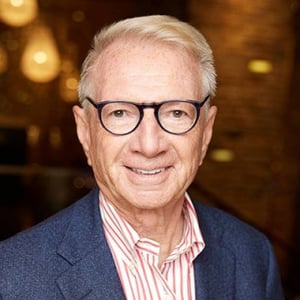
Senior Labor and Employment Counsel, CHRO Association
Roger King is a highly regarded labor relations attorney, whose career spans more than 40 years. Roger recently retired as a partner with Jones Day law firm. He now serves as Senior Labor and Employment counsel for the Association.
Roger specializes in labor and employment, healthcare, collective bargaining, contract administration and representation campaigns. Roger represented the winning side as co-counsel in the landmark U.S. Supreme Court case known as Noel Canning, which successfully challenged President Obama’s authority to make recess appointments to the National Labor Relations Board.
After graduating from Cornell University Law School, he was a Captain and Legal Services Officer in the United States Air Force, on the Staff of United States Senator Robert Taft, Jr. and, subsequently, was appointed as Professional Staff Counsel to the United States Senate Labor Committee.
Roger has testified before both the U.S. Senate and House Labor Committees, is a fellow of the College of Labor and Employment Lawyers, and serves on the Advocacy Committee of the American Society for Healthcare Human Resources Association (ASHHRA) and on the Executive Committee of the Ohio State Bar Association Labor and Employment Law Section Council.
He is a nationally recognized author/speaker on employment matters and has represented employers regarding labor and employment issues both before administrative agencies and in federal and state courts. He has represented the U.S. Chamber of Commerce, the Society for Human Resource Management (SHRM), the HR Policy Association (HRPA), the National Manufactures Association (NAM), the American Hospital Association (AHA), and the Coalition for a Democratic Workplace (CDW) in federal courts regarding numerous labor law issues.
Other clients Roger has represented include the Cleveland Clinic Foundation, Catholic Health Partners, MedStar Health, HCA, Texas Health Resources, Unity Point Health, UHS, Trinity Health, National Beef, General Cable, Orlando Health, ProMedica, Premier Health, Cedars-Sinai, Yale New Haven Health System, McLaren Health Care Corporation, Ohio, California and American Hospital Associations, Bon Secoure Health System, Kaleida Health, Sisters of Levenworth Health System, Lakeland Regional Medical Center, Clarion Clinic, Fisher-Titus Medical Center, Saint Joseph Health System, Benefis Healthcare, Community Health Systems, American Water Works, Macy’s Inc., Verizon and General Motors.

Tammy McCutchen is a leading authority on federal and state wage-hour laws and prevailing wage laws. She counsels businesses on wage-hour compliance, including conducting internal audits on independent contractor status, overtime exemptions, and other pay practices. She also represents employers during investigations by the U.S. Department of Labor and serves as an expert witness in wage-hour class actions. She was a founding officer of ComplianceHR, a law and technology company, where she created AI-based applications to evaluate independent contractor and overtime exempt status.
Ms. McCutchen served as Administrator of the U.S. Department of Labor’s Wage and Hour Division, appointed by President Bush and confirmed by the Senate in 2001. She was the primary architect of the 2004 revisions to the overtime exemption regulations, the first major changes to the regulations in 55 years.
Before joining DOL, she was senior counsel for the Hershey Company in Hershey, Pennsylvania.
Ms. McCutchen has been a volunteer leader of the Federalist Society since 1989. She served in leadership roles for the Northwestern Student Chapter and Chicago Lawyers Chapter. She currently serves in leadership for the Labor & Employment Practice Group, the Regulatory Transparency Project, and the Knoxville, TN Lawyers Chapter. She served on the Editorial Advisory Board of Law360, the Labor Committee of the U.S. Chamber of Commerce, the Small Business Legal Advisory Board of the National Federation of Independent Business, and a Policy Fellow at the ACU Foundation.
Ms. McCutchen is a graduate of Western Illinois University and Northwestern University School of Law. She clerked for the Hon. Daniel Manion on the U.S. Court of Appeals for the Seventh Circuit.
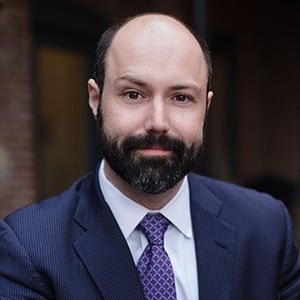
Senior Counsel, Compass Legal Group
Andrew Kloster is Senior Counsel at the nonprofit Compass Legal Group. He is a long-time fixture of the conservative movement, advising clients on the new right on a wide variety of matters criminal, civil, political / electoral, and administrative. Recently, he served as Chief of Staff to the Wisconsin Office of Special Counsel investigation into election administration. Prior to that, he served in the Trump administration, including concurrently as Associate Director in the White House Office of Presidential Personnel and as Deputy General Counsel (and later, Acting General Counsel) in the United States Office of Personnel Management. He has also served in senior positions in regulatory and legal positions at the United States Department of Transportation and the Environmental Protection Agency, and was appointed by President Trump to serve a three-year term on the Council of the Administrative Conference of the United States. Previously, he worked at the Heritage Foundation, the Scalia Law School, and other movement groups. He is a graduate of the University of Miami and the New York University School of Law, and he served as a law clerk on the United States Court of Appeals for the Seventh Circuit.
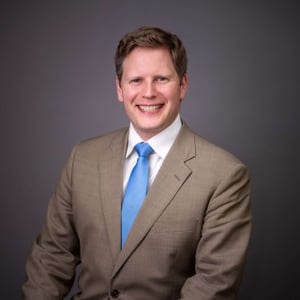
Director, Center for American Freedom, America First Policy Institute
James Sherk was born in Ontario, Canada, and immigrated with his family to Midland, Michigan while in middle school. He serves as AFPI’s Director of the Center for American Freedom. Sherk previously served as Special Assistant to the President for Domestic Policy on the White House Domestic Policy Council under President Donald Trump. James served as the Administration’s top civil service reform and labor policy advisor from 2017 to 2021. At the White House, he was the principal author of and/or policy lead for approximately two dozen executive orders and presidential memoranda. Sherk also served as a member of the President’s Council on Improving Federal Civic Architecture. Prior to his White House service, Sherk was a Research Fellow at the Heritage Foundation, where he was a nationally recognized expert on the civil service and labor policy. Sherk received a Bachelor of Science in Mathematics and Economics from Hillsdale College and an Master of Arts in Economics from the University of Rochester. Sherk and his wife, Jill, live in Northern Virginia with three beloved children who teach their parents to ponder inscrutable questions like “how much drawing can go on the walls before we have to repaint them?”
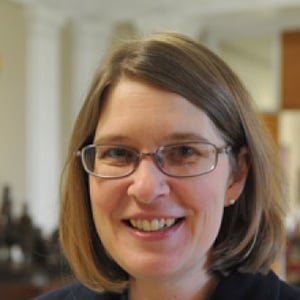
Professor of Law, University of Louisville Brandeis School of Law
Ariana R. Levinson is a nationally acclaimed and internationally recognized labor and employment law scholar and focuses her teaching on practical legal skills. She has often presented her research, including at Berkeley Law School, Fordham Law School, University of Leeds, and Universidad Carlos II de Madrid. Levinson’s work has been published in the Columbia Business Law Review and the Cornell Journal of Law and Public Policy. She has a forthcoming student co-authored article in the Harvard Journal on Legislation and is working on a hornbook on arbitration.
Professor Levinson received a Corey Rosen Research Fellowship from the Rutgers School of Management and Labor Relations for the 2012-13 academic year, and a Michael W. Huber Fellowship for the 2013-14 academic year. In conjunction with the fellowships, she published "Founding Worker Cooperatives: Social Movement Theory and the Law" in the Nevada Law Journal and is working on a research project about the Cincinnati Union Co-op Initiative. Her article "What the Awards Tell Us about Labor Arbitration of Employment Discrimination Claims", published in the University of Michigan Journal of Law Reform was selected by blind review by Vanderbilt Law School faculty for presentation at the Branstetter New Voices in Civil Justice Workshop in May 2012.
In addition to writing about worker ownership and arbitration, Professor Levinson has also written a number of articles about workplace technology and privacy. Her most recent publications on this topic include a book chapter in the Research Handbook on Electronic Commerce Law.
Professor Levinson is the faculty liaison to the Peggy Browning Fund and a co-planner of the Warns-Render Labor and Employment Law Institute, an annual labor and employment law continuing legal education program. She coaches the mock arbitration team and advises the Wagner moot court team. She is a Reviewer for the American Business Law Journal. Professor Levinson is admitted to practice in Indiana and California.
Prior to teaching at Brandeis School of Law, Professor Levinson taught at USC Gould School of Law and at UCLA School of Law. She clerked for the Honorable John G. Davies (United States District Court, Central District of California) and for the Honorable Myra C. Selby (Supreme Court of Indiana) and practiced labor law, including serving as a fellow for the AFL-CIO's Legal Department.
She graduated magna cum laude from the University of Michigan Law School. During law school, she served as a contributing editor on the Michigan Law Review and was awarded the Robert S. Feldman Labor Law Award for the most outstanding work in that field. She also received a 2014-15 faculty favorite award from the University of Louisville Delphi Center for Teaching and Learning.
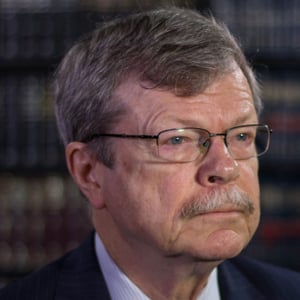
Vice President & Legal Director, National Right To Work Legal Defense Foundation
Raymond J. LaJeunesse, Jr., is Vice President and Legal Director of the National Right to Work Legal Defense Foundation, a non-profit legal aid organization. He was the first Staff Attorney employed by the Foundation and has more than forty-five years of experience helping workers in litigation in federal and state courts and administrative agencies over the abuses of compulsory unionism.
Mr. LaJeunesse has argued four cases in the United States Supreme Court. Those cases include Lehnert v. Ferris Faculty Ass’n, 500 U.S. 507 (1991), which limited the purposes for which compulsory union fees collected from public employees may lawfully be spent; Air Line Pilots Ass’n v. Miller, 523 U.S. 866 (1998), which established that unions cannot compel nonmembers to exhaust union-established remedies before going to court to challenge compulsory union fees; and Marquez v. Screen Actors Guild, 525 U.S. 33 (1998), in which the Court recognized that unions must notify employees that they can satisfy the “membership” requirement of “union shop” agreements by just paying fees for union bargaining activities and need not join and pay full dues to keep their jobs. He also was lead attorney in Hohe v. Casey, 956 F.2d 399 (3d Cir. 1992), in which more than $8.3 million in compulsory agency fees was recovered from the American Federation of State, County and Municipal Employees for a class of 57,000 nonmembers.
Mr. LaJeunesse is the author of several published articles about labor law, has testified before Congressional committees several times, and was an Advisor on the Transition Team for Labor- Related Agencies, Office of the President-Elect, in 1980-81 and a legislative aide to a member of the Virginia state legislature. He is a Vice Chairman of the Federalist Society’s Labor and Employment Law Practice Group and has spoken or debated at the Society’s National Lawyers Convention and at many Lawyers and Student Chapters on such topics as Right to Work laws, compulsory unionism arrangements, the misuse of union dues for politics, union organizing tactics (“card check” vs. secret-ballot elections), and the future of the union movement.
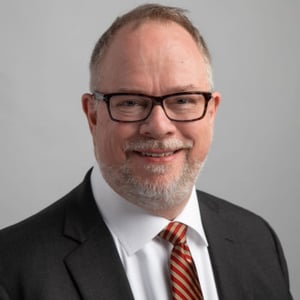
Managing Attorney of the Washington Office, Institute for Justice
William R. Maurer is the Managing Attorney of the Washington state office of the Institute for Justice, which engages in litigation in the areas of economic liberty, private property rights, educational choice, & freedom of speech.
Maurer is an advocate against the criminalization of poverty and the governmental use of the criminal and civil enforcement systems to raise revenue. He was lead counsel in a class action challenging the use of tickets to raise revenue in the city of Pagedale, Missouri. The suit resulted in a federal consent decree that reformed the city’s ticketing and municipal court system. He regularly speaks, teaches, and writes about the abuse of fines and fees in the criminal justice system. He was a participant in summits on taxation by citation put on by the White House and Department of Justice during the Obama Administration. His work on the issue includes serving as an advisory board member of the Fines and Fees Justice Center.
In addition to his work on criminal and civil justice reform, Maurer is a First Amendment litigator. In 2011, he successfully argued before the U.S. Supreme Court that Arizona’s punitive campaign financing regime was unconstitutional. Before the Washington Supreme Court, he successfully argued against efforts to classify radio commentary as a contribution under the state’s campaign finance law.
His cases and advocacy have been covered in the Washington Post, the New York Times, the Economist, the Wall Street Journal, and other major media outlets.
Maurer was named a “Washington Superlawyer” by Washington Law & Politics Magazine for several years. He is a chapter author in numerous legal reference works and has written several articles for law reviews and legal publications across the country.
Prior to joining IJ-WA, Maurer clerked for Washington Supreme Court Justice Richard Sanders and then practiced law at Perkins Coie LLP. Maurer received his law degree in 1994 from the University of Wisconsin – Madison, where he was an editor of the Wisconsin Law Review. He received his BA from Bard College in 1989.

Laurence A. Tisch Professor of Law and Director, Classical Liberal Institute, New York University School of Law; Senior Fellow, The Civitas Institute, University of Texas at Austin
Richard A. Epstein is the inaugural Laurence A. Tisch Professor of Law at NYU School of Law. Prior to his joining the faculty, he was a visiting law professor at NYU from 2007 through 2009. He served as the Peter and Kirstin Bedford Senior Fellow at the Hoover Institution from 2000 to 2024. Since 2024 to the present he is a senior lecturer at the Civitas Institute at the University of Texas—Austin. Epstein is also the James Parker Hall Distinguished Service Professor of Law Emeritus and a senior lecturer at the University of Chicago. His initial law school appointment was at the University of Southern California from 1968 to 1972. Epstein received an LL.D., h.c. from the University of Ghent, 2003. He has been a member of the American Academy of Arts and Sciences since 1985 and was a Senior Fellow of the Center for Clinical Medical Ethics at the University of Chicago Division of Biological Sciences, also from 1983. to 2022 He served as editor of the Journal of Legal Studies from 1981 to 1991, and of the Journal of Law and Economics from 1991-2001. From 2001 to 2010 he was a director of the John M. Olin Program in Law and Economics at the University of Chicago.
His newest book, The Myth of Birthright Citizenship: What the Fourteenth Amendment Really Says was published in 2026 (Encounter Books). Prior to that he has published many books including, The Dubious Morality of the Modern Administrative State (Roman & Littlefield 2020).Earlier he published th Classical Liberal Constitution: The Uncertain Quest for Limited Government (Harvard 2014) iHis previous books include Design for Liberty: Private Property, Public Administration and the Rule of Law (Harvard 2011); The Case Against the Employee Free Choice Act (Hoover 2009); Supreme Neglect: How to Revive the Constitutional Protection of Property Rights (Oxford 2008); Antitrust Decrees in Theory and Practice: Why Less is More (AEI 2007); Overdose: How Excessive Government Regulation Stifles Pharmaceutical Innovation (Yale University Press. 2006); How Progressives Rewrote the Constitution (Cato 2006); Cases and Materials on Torts (Aspen Law & Business; 8th ed. 2004); Skepticism and Freedom: A Modern Case for Classical Liberalism (University of Chicago, 2003); Torts (Aspen Law & Business 1999); Principles for a Free Society: Reconciling Individual Liberty with the Common Good (Perseus Books, 1998): Mortal Peril: Our Inalienable Rights to Health Care (Addison-Wesley, 1997); Simple Rules for a Complex World (Harvard, 1995); Bargaining With the State (Princeton, 1993); Forbidden Grounds: The Case Against Employment Discrimination Laws (Harvard , 1992); Takings: Private Property and the Power of Eminent Domain (Harvard, 1985); and Modern Products Liability Law (Greenwood Press, 1980). He has also edited(with Catherine M. Sharkey) Cases and Materials on the Law of Torts (10th edition 2012).
Professor Epstein has written numerous articles on a wide range of legal and interdisciplinary subjects. He has taught courses in administrative law, antitrust law, civil procedure, communications, constitutional law, contracts, corporations, criminal law, employment discrimination law, environmental law, food and drug law health law and policy, legal history, labor law, property, real estate development and finance, jurisprudence, labor law; land use planning, patents, individual, estate and corporate taxation, Roman Law; torts, and workers' compensation.
Professor Epstein also writes a regular column for Civitas Institute, which also sponsors his podcast, The Libertarian with Charles C.W. Cooke, and Law Talk, with Cooke and John Yoo. He also does a podcast with John Batchelor. And appears regularly on the Freedom File with Judge Andrew Napolitano.
Associate Professor
Prof. DeBoer joined Faulkner Law School in 2011 as an associate professor of law. He has served as a law clerk to the Honorable Brent E. Dickson of the Indiana Supreme Court and the Honorable Theresa L. Springmann of the United States District Court for the Northern District of Indiana. He practiced at Rothgerber Johnson & Lyons LLP (CO) in the health law, labor and employment, litigation, and religious institutions practice groups, and he taught at the law schools at Liberty University (VA) and Valparaiso University (IN). He is admitted to the practice of law in Indiana and Colorado and in various federal district and appellate courts.
Professor DeBoer graduated with a B.A. summa cum laude from Liberty University and with a M.A.R. summa cum laude from Liberty Baptist Theological Seminary. After earning an M.Div. from Southeastern Baptist Theological Seminary (NC), he attended Valparaiso University School of Law where he served as Editor-in-Chief of the Valparaiso University Law Review and graduated with a J.D. magna cum laude. Later he graduated from Indiana University School of Law-Indianapolis with an LL.M. summa cum laude in health law, policy, and bioethics.
Professor DeBoer’s teaching and research interests include administrative law, contracts, criminal law/procedure, employment law, federal courts, health care law, jurisprudence, law and religion, state constitutional law, and torts. He and his wife, Jennifer, have four children.
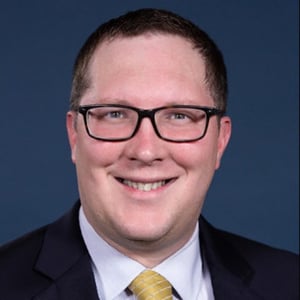
Attorney, Pacific Legal Foundation
Luke A. Wake is an attorney at the Pacific Legal Foundation. Prior to joining PLF, he was a senior staff attorney at the NFIB Small Business Legal Center.
Wake has particular expertise on environmental and land use issues, and has worked on numerous other constitutional issues and matters of importance to small business owners. He is an ardent defender of private property rights, which he believes are essential to the free enterprise system and the foundation of American liberty. As a strong advocate of individual rights and economic liberties, he has built his career defending small business interests.
Wake has focused on a whole host of issues, from employment law matters to regulatory compliance. In addition to serving as a resource for small business owners, Wake is committed to ensuring that the voice of small business is heard in the nation’s courts. As an appellate practitioner, Wake has focused particularly on informing the courts on matters of administrative law and on issues under the Fifth Amendment’s Takings Clause. He is also working to advance small business interests in law review articles, and was recently published in the Berkeley Journal of Law & Ecology. See R.S. Radford & Luke A. Wake, Deciphering and Extrapolating: Searching for Sense in Penn Central, 38 Ecology L.Q. 731, 746-747 (2011).
Before joining the Legal Center’s team, Wake completed a prestigious two-year fellowship as an attorney in the Pacific Legal Foundation’s College of Public Interest Law. Wake is a graduate of Case Western Reserve University School of Law in Cleveland Ohio, and is a member of the California Bar. He completed his undergraduate studies at Elon University in North Carolina in 2006 where he focused on political theory and corporate communications.

Shareholder, Littler Mendelson P.C.
Maury Baskin focuses his Washington, DC-based practice on national labor policy, challenging excessive government regulation on behalf of small and large businesses, while advising employers in compliance issues. He has extensive experience in dealing with labor relations and union pressure tactics, employment discrimination and wage and hour law. He has represented a variety of industry sectors, advising clients involved in construction, government contracting, higher education, telecommunications, hospitality, security, and nonprofits.
Mr. Baskin has served as lead counsel at all levels of the federal and state courts and before the U.S. Supreme Court, and has recently led successful challenges against nationwide federal labor regulations on behalf of multi-industry coalitions, including the 2016 “white collar” overtime rule and the so-called “blacklisting” rule. He has also succeeded in the courts in numerous cases involving the National Labor Relations Board (NLRB) and the Department of Labor (DOL). Mr. Baskin is the Chair of Littler's Construction Industry Group and has long represented the Associated Builders and Contractors (ABC) national trade association and many of its construction industry members. On their behalf, he has been one of the leading advocates against government-mandated project labor agreements, prevailing wage expansion, and union corporate campaigns.
Associate General Counsel, Service Employees International Union
Walter Kamiat is currently Associate General Counsel of the Service Employees International Union (SEIU), a position he has held since 2004. He is SEIU’s principal counsel in the home care area, where the SEIU represents over one half million workers. He also is active in the SEIU’s appellate litigation program, including its amicus practice before the Supreme Court and the federal appellate courts. Mr. Kamiat assisted in preparing DC Circuit and Fourth Circuit amicus briefs defending the NLRB Posting Rule.
In 2008, Mr. Kamiat served on the Obama Administration’s Labor Department Transition Team, performing the agency review of the Pension Benefit Guarantee Commission.
Prior to working at the SEIU, Mr. Kamiat had almost 30 years’ experience in a wide variety of positions involving labor law and labor-relations institutions. These included serving as counsel to the AFL-CIO Investment Program, a multi-billion dollar union-sponsored pension investment program investing in urban housing and economic development projects (1997-2004), as Visiting Professor of Law at Georgetown University Law School, teaching and writing in labor and employment law (1994-1997), as Associate General Counsel of the AFL-CIO (1988-1994), principally focusing on Supreme Court and appellate litigation, and as an associate at Bredhoff & Kaiser in Washington, DC (1986-1988), principally representing union, employees, and labor sponsored benefit funds.
Mr. Kamiat is a graduate of Stanford Law School, where he was President of the Stanford Law Review. He was a law clerk to U.S. Supreme Court Justice Thurgood Marshall (1984-1985) and to DC Circuit Judge J. Skelly Wright (1983-1984).

Executive Vice President, The Federalist Society
Dean Reuter is Executive Vice President at the Federalist Society for Law and Public Policy Studies. He has served in two federal government agency Offices of the Inspector General, as Counsel to the Inspector General and Deputy Inspector General, responsible for policing the use of federal funds granted and contracted through those agencies. As such, he helped conduct and oversee criminal investigations across the country. He is the principal author of the non-fiction book, The Hidden Nazi: The Untold Story of America's Deal with the Devil, and editor of Liberty’s Nemesis: The Unchecked Expansion of the State and Confronting Terror: 9/11 and the Future of American National Security. He was appointed by the President and served as Vice-Chairman of the Board of Directors of the Corporation for National and Community Service, and recently served as an appointee on the U.S. Commission on Presidential Scholars. He is a graduate of Hood College (BA with Honors) and the University of Maryland School of Law.

Stefan Marculewicz is a Shareholder in the Washington, DC office of Littler Mendelson, P.C., and focuses his legal practice on traditional labor law matters, international labor law and standards, and non-traditional worker representation.
Jennifer Thomas is an Associate in the Washington, DC office of Littler Mendelson, P.C. where she concentrates her practice in the areas of labor and employment law.

COVID-19 Labor and Employment Teleforum Series #2
G. Roger King, Tammy Dee McCutchen
Employers are increasingly being faced with difficult issues with respect to COVID-19, including challenging labor...
Statewide vs. Local Right to Work Laws - Podcast
Andrew Kloster, James Sherk, Ariana R. Levinson, Raymond J. LaJeunesse
In 1957, an article in the Stanford Law Review asked the question: can counties and cities pass...
Book Review: Dark Money and Plutocrats United
William R. Maurer
Note from the Editor: This book review takes a critical look at two recent books that...
Friedrichs v. California Teachers Association - Post-Decision SCOTUScast
Richard A. Epstein
On March 29, 2016, the Supreme Court decided Friedrichs v. California Teachers Association. A group...
Supreme Court Splits 4-4 on Major Union Case -- Friedrichs v. California Teachers Association - Podcast
Richard A. Epstein
On Tuesday, March 29, the U.S. Supreme Court announced a 4-4 decision in Friedrichs v....
M&G Polymers USA v. Tackett - Post-Decision SCOTUScast
Michael DeBoer
On January 26, 2015, the Supreme Court issued its decision in M&G Polymers USA, LLC...
Unite Here Local 355 v. Mulhall - Post-Argument SCOTUScast
Luke A. Wake
On November 13, 2013, the Supreme Court heard oral argument in Unite Here Local 355...
Limits of Labor Law: UNITE HERE v. Mulhall - Podcast
Luke A. Wake
May an employer and union enter into an agreement under which the employer exercises its...
NLRB Posting Regulations - Podcast
Maury Baskin, Walter Kamiat, Dean Reuter
On August 30, 2011, with the then-one Republican member dissenting, the National Labor Relations Board...
Labor Organizations by Another Name: The Worker Center Movement and its Evolution into Coverage under the NLRA and LMRDA
Stefan J. Marculewicz, Jennifer Thomas
I. Introduction The labor union, the primary collective advocate for workers’ rights in the United...