

Vice President for Legal Affairs, Goldwater Institute

Executive Director, Salmon P. Chase Center for Civics, Culture, and Society, The Ohio State University
Professor Lee J. Strang serves as the inaugural executive director of the Salmon P. Chase Center for Civics, Culture, and Society at The Ohio State University.
Initiated in 2023 by the state of Ohio, the Chase Center will be an academic home at Ohio State for teaching, research, and programing on the foundations of the American constitutional order and its impact on society. As executive director, Professor Strang is responsible for organizing the center, overseeing the hiring and appointment of the center’s faculty, developing curriculum, and delivering student and academic programming. He also holds a faculty appointment in the Moritz College of Law at Ohio State.
Professor Strang is a nationally recognized legal scholar who has published dozens of articles in leading journals in the fields of constitutional law and interpretation, property law, and religion and the First Amendment. He co-edits the textbook Federal Constitutional Law, and his most recent book, Originalism’s Promise: A Natural Law Account of the American Constitution is the first book-length, natural law justification for originalism. He currently is writing on civic thought and leadership, and he is finalizing a book on the history of American Catholic legal education (with John M. Breen).
Before joining Ohio State, Professor Strang served as the inaugural director of the University of Toledo’s Institute of American Constitutional Thought & Leadership. He joined the Toledo College of Law faculty in 2008, was granted tenure in 2010, and was named John W. Stoepler Professor of Law & Values in 2015. The University of Toledo awarded Professor Strang its Outstanding Faculty Research and Scholarship Award in 2017. Before that, he was a visiting professor at Michigan State University College of Law. A graduate of the University of Iowa, where he was articles editor of the Iowa Law Review and Order of the Coif, Professor Strang holds an LL.M. degree from Harvard Law School.
Professor Strang has been a visiting scholar at the Georgetown Center for the Constitution and a visiting fellow at the James Madison Program at Princeton University. In 2016, he was appointed to the Ohio Advisory Committee of the U.S. Commission on Civil Rights and reappointed as chair in 2023.
Prior to teaching, Professor Strang served as a judicial clerk for Judge Alice M. Batchelder of the U.S. Court of Appeals for the Sixth Circuit. He was also an associate for Jenner & Block LLP in Chicago, where he practiced in general and appellate litigation.
Professor Strang is a frequent presenter at scholarly conferences. He is the president of the Board of Trustees of Northwest Ohio Classical Academy, Ohio’s first classical charter school. He is also a regular participant in debates at law schools across the country, a contributor to the media, and a speaker to political, civic, and religious groups.
Vice President for Legal Affairs, Goldwater Institute
Executive Director, Salmon P. Chase Center for Civics, Culture, and Society, The Ohio State University
Professor Lee J. Strang serves as the inaugural executive director of the Salmon P. Chase Center for Civics, Culture, and Society at The Ohio State University.
Initiated in 2023 by the state of Ohio, the Chase Center will be an academic home at Ohio State for teaching, research, and programing on the foundations of the American constitutional order and its impact on society. As executive director, Professor Strang is responsible for organizing the center, overseeing the hiring and appointment of the center’s faculty, developing curriculum, and delivering student and academic programming. He also holds a faculty appointment in the Moritz College of Law at Ohio State.
Professor Strang is a nationally recognized legal scholar who has published dozens of articles in leading journals in the fields of constitutional law and interpretation, property law, and religion and the First Amendment. He co-edits the textbook Federal Constitutional Law, and his most recent book, Originalism’s Promise: A Natural Law Account of the American Constitution is the first book-length, natural law justification for originalism. He currently is writing on civic thought and leadership, and he is finalizing a book on the history of American Catholic legal education (with John M. Breen).
Before joining Ohio State, Professor Strang served as the inaugural director of the University of Toledo’s Institute of American Constitutional Thought & Leadership. He joined the Toledo College of Law faculty in 2008, was granted tenure in 2010, and was named John W. Stoepler Professor of Law & Values in 2015. The University of Toledo awarded Professor Strang its Outstanding Faculty Research and Scholarship Award in 2017. Before that, he was a visiting professor at Michigan State University College of Law. A graduate of the University of Iowa, where he was articles editor of the Iowa Law Review and Order of the Coif, Professor Strang holds an LL.M. degree from Harvard Law School.
Professor Strang has been a visiting scholar at the Georgetown Center for the Constitution and a visiting fellow at the James Madison Program at Princeton University. In 2016, he was appointed to the Ohio Advisory Committee of the U.S. Commission on Civil Rights and reappointed as chair in 2023.
Prior to teaching, Professor Strang served as a judicial clerk for Judge Alice M. Batchelder of the U.S. Court of Appeals for the Sixth Circuit. He was also an associate for Jenner & Block LLP in Chicago, where he practiced in general and appellate litigation.
Professor Strang is a frequent presenter at scholarly conferences. He is the president of the Board of Trustees of Northwest Ohio Classical Academy, Ohio’s first classical charter school. He is also a regular participant in debates at law schools across the country, a contributor to the media, and a speaker to political, civic, and religious groups.
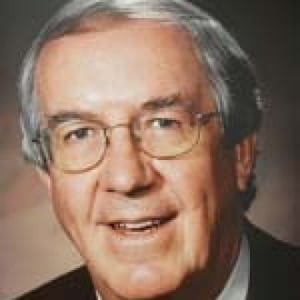
Nicholas Rosenbaum Professor of Law, University of Colorado Law School
Hal Bruff was Dean of the University of Colorado Law School 1996-2003. Professor Bruff, a native of Colorado, received his B.A. in American history and literature from Williams College, where he was elected to Phi Beta Kappa. He received his J.D. magna cum laude from Harvard Law School, and was an editor of the Harvard Law Review. After graduation, he served as a lieutenant in the U.S. Coast Guard Reserve in San Francisco, performing general duties as a legal officer. Hal has served on the law faculties of Arizona State University, the University of Texas (as the John S. Redditt Professor of Law), and the George Washington University Law School (as the Donald Rothschild Research Professor of Law). From 1979 to 1981, he served as senior attorney and advisor for the Office of Legal Counsel in the U.S. Department of Justice. In this position, he advised the DOJ, the White House, and executive agencies on issues of constitutional and administrative law. He also served as consultant to the chairman of the President's Commission on the accident at Three Mile Island. He has testified before Congress on numerous occasions in his areas of expertise. Professor Bruff's research and teaching interests include constitutional and administrative law. He has co-authored a casebook on separation of powers law, and has written two books about separation of powers and numerous law review articles. His recent public service activities include work on the Council of the Administrative Law Section of the American Bar Association and on Colorado's Judicial Advisory Council.

Laurence A. Tisch Professor of Law and Director, Classical Liberal Institute, New York University School of Law; Senior Fellow, The Civitas Institute, University of Texas at Austin
Richard A. Epstein is the inaugural Laurence A. Tisch Professor of Law at NYU School of Law. Prior to his joining the faculty, he was a visiting law professor at NYU from 2007 through 2009. He served as the Peter and Kirstin Bedford Senior Fellow at the Hoover Institution from 2000 to 2024. Since 2024 to the present he is a senior lecturer at the Civitas Institute at the University of Texas—Austin. Epstein is also the James Parker Hall Distinguished Service Professor of Law Emeritus and a senior lecturer at the University of Chicago. His initial law school appointment was at the University of Southern California from 1968 to 1972. Epstein received an LL.D., h.c. from the University of Ghent, 2003. He has been a member of the American Academy of Arts and Sciences since 1985 and was a Senior Fellow of the Center for Clinical Medical Ethics at the University of Chicago Division of Biological Sciences, also from 1983. to 2022 He served as editor of the Journal of Legal Studies from 1981 to 1991, and of the Journal of Law and Economics from 1991-2001. From 2001 to 2010 he was a director of the John M. Olin Program in Law and Economics at the University of Chicago.
His newest book, The Myth of Birthright Citizenship: What the Fourteenth Amendment Really Says was published in 2026 (Encounter Books). Prior to that he has published many books including, The Dubious Morality of the Modern Administrative State (Roman & Littlefield 2020).Earlier he published th Classical Liberal Constitution: The Uncertain Quest for Limited Government (Harvard 2014) iHis previous books include Design for Liberty: Private Property, Public Administration and the Rule of Law (Harvard 2011); The Case Against the Employee Free Choice Act (Hoover 2009); Supreme Neglect: How to Revive the Constitutional Protection of Property Rights (Oxford 2008); Antitrust Decrees in Theory and Practice: Why Less is More (AEI 2007); Overdose: How Excessive Government Regulation Stifles Pharmaceutical Innovation (Yale University Press. 2006); How Progressives Rewrote the Constitution (Cato 2006); Cases and Materials on Torts (Aspen Law & Business; 8th ed. 2004); Skepticism and Freedom: A Modern Case for Classical Liberalism (University of Chicago, 2003); Torts (Aspen Law & Business 1999); Principles for a Free Society: Reconciling Individual Liberty with the Common Good (Perseus Books, 1998): Mortal Peril: Our Inalienable Rights to Health Care (Addison-Wesley, 1997); Simple Rules for a Complex World (Harvard, 1995); Bargaining With the State (Princeton, 1993); Forbidden Grounds: The Case Against Employment Discrimination Laws (Harvard , 1992); Takings: Private Property and the Power of Eminent Domain (Harvard, 1985); and Modern Products Liability Law (Greenwood Press, 1980). He has also edited(with Catherine M. Sharkey) Cases and Materials on the Law of Torts (10th edition 2012).
Professor Epstein has written numerous articles on a wide range of legal and interdisciplinary subjects. He has taught courses in administrative law, antitrust law, civil procedure, communications, constitutional law, contracts, corporations, criminal law, employment discrimination law, environmental law, food and drug law health law and policy, legal history, labor law, property, real estate development and finance, jurisprudence, labor law; land use planning, patents, individual, estate and corporate taxation, Roman Law; torts, and workers' compensation.
Professor Epstein also writes a regular column for Civitas Institute, which also sponsors his podcast, The Libertarian with Charles C.W. Cooke, and Law Talk, with Cooke and John Yoo. He also does a podcast with John Batchelor. And appears regularly on the Freedom File with Judge Andrew Napolitano.
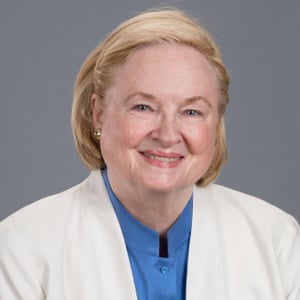
Learned Hand Professor of Law, Emeritus, Harvard Law School
Mary Ann Glendon is the Learned Hand Professor of Law, emerita, at Harvard University, and a former U.S. Ambassador to the Holy See. She writes in the fields of human rights, comparative law, and political theory. Glendon chaired the U.S. State Department Commission on Unalienable Rights (2019-2020) and served as a member of the Commission on International Religious Freedom (2012-2016), and the U.S. President's Council on Bioethics (2001-2004). She received the National Humanities Medal in 2006. In 1991 she was elected to the American Academy of Arts and Sciences. She was President of the Pontifical Academy of Social Sciences from 2003 to 2013, a member of the Board of Supervisors of the Institute of Religious Works (Vatican Bank) from 2013 to 2018, and represented the Holy See at various conferences including the 1995 U.N. Women's conference in Beijing where she headed the Vatican delegation. Glendon has contributed to legal and social thought in several widely translated works, bringing a comparative approach to a variety of subjects. They include The Forum and the Tower (2011), a series of biographical essays exploring the relation between political philosophy and politics-in-action; Traditions in Turmoil (2006), a collection of essays on law, culture and human rights; A World Made New: Eleanor Roosevelt and the Universal Declaration of Human Rights (2001), a history of the framing of the UDHR; A Nation Under Lawyers (1996), a portrait of turbulence in the legal profession, analyzing the implications of changes in legal culture for a democratic polity that entrusts crucial roles to legally trained men and women; Rights Talk (1991), a critique of the impoverishment of political discourse; The Transformation of Family Law (1989), winner of the legal academy’s highest honor, the Order of the Coif Triennial Book Award; Abortion and Divorce in Western Law (1987), winner of the Scribes Book Award for best writing on a legal subject; The New Family and the New Property (1981), and textbooks on comparative legal traditions.
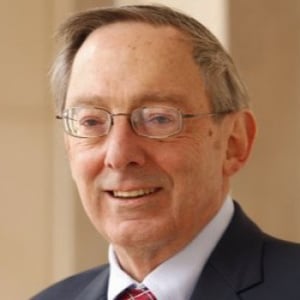
Robert E. Scott Distinguished Professor of Law Emeritus, University of Virginia School of Law; Alice McKean Young Regents Chair in Law Emeritus, University of Texas
Douglas Laycock is perhaps the nation’s leading authority on the law of religious liberty and also on the law of remedies. He has taught and written about these topics for more than four decades at the University of Chicago, the University of Texas, the University of Michigan and the University of Virginia. He retired from teaching at UVA Law School in May 2023.
Laycock has testified frequently before Congress and has argued many cases in the courts, including the U.S. Supreme Court, where he has served as lead counsel in six cases and has also filed influential amicus briefs. He is the author (co-author in the most recent edition) of the leading casebook Modern American Remedies, the award-winning monograph The Death of the Irreparable Injury Rule and many articles in leading law reviews. He co-edited a collection of essays, Same-Sex Marriage and Religious Liberty.
His many writings on religious liberty have been republished in a five-volume collection:
Laycock resigned from the council and as first vice president of the American Law Institute to become co-reporter for the Restatement (Third) of Torts: Remedies. He is a fellow of the American Academy of Arts and Sciences. He earned his B.A. from Michigan State University and his J.D. from the University of Chicago.
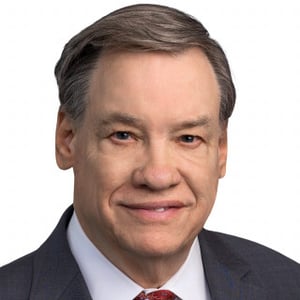
Partner, Baker Botts L.L.P.
Thomas R. Phillips is a partner in the Austin office of Baker Botts L.L.P.,
concentrating in general litigation, including appellate, trial strategy, and alternate
dispute resolution. He was appointed and then elected Chief Justice of the Supreme
Court of Texas in 1988, being one of the first four Republicans (along with Kent Hance,
Eugene Cook, and Bathan Hecht) to win a down-ballot statewide race since
Reconstruction. He was re-elected in 1990, 1996, and 2002 before leaving the Court in
2004.
While in office, Phillips served as president of the Conference of Chief Justices in
1997-98 and as a member of the Federal-State Relations Committee of the
Administrative Conference of the United States and the Institutions of Democracy
Judicial Branch Commission of the Annenberg Public Policy Center. After returning to
private life, he served on the Carter-Baker Commission on Federal Election Reform, the
Texas Historical Commission, the Texas State Historical Society, and the Judicial
Districts Board.
A native of Dallas, Phillips earned a B.A. from Baylor University in 1971 and a
J.D. from Harvard Law School in 1974. He has been awarded honorary doctoral
degrees from St. Edward’s University and Texas Tech University. Prior to becoming
Chief Justice, he practiced law in Houston and served as judge of the 280th District
Court in Harris County. Texas.
He resides with his wife, Dr. Lyn B. Phillips, in a historic home in Bastrop.
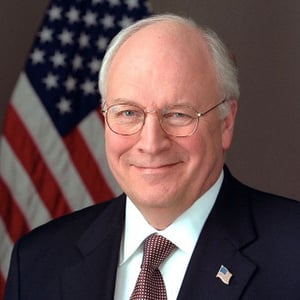
Former Vice President of the United States
Vice President Richard B. Cheney has had a distinguished career as a businessman and public servant, serving four Presidents and as an elected official. Throughout his service, Mr. Cheney served with duty, honor, and unwavering leadership, gaining him the respect of the American people during trying military times.
Mr. Cheney was born in Lincoln, Nebraska, on January 30, 1941 and grew up in Casper, Wyoming. He earned his bachelor's and master's of arts degrees from the University of Wyoming. His career in public service began in 1969 when he joined the Nixon Administration, serving in a number of positions at the Cost of Living Council, at the Office of Economic Opportunity, and within the White House.
When Gerald Ford assumed the Presidency in August 1974, Mr. Cheney served on the transition team and later as Deputy Assistant to the President. In November 1975, he was named Assistant to the President and White House Chief of Staff, a position he held throughout the remainder of the Ford Administration.
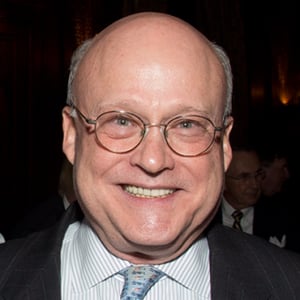
President Emeritus, Intercollegiate Studies Institute
T. Kenneth Cribb Jr. is the former president of the Intercollegiate Studies Institute. Mr. Cribb was Assistant to the President for Domestic Affairs in the Reagan administration, serving as President Reagan’s top adviser on domestic matters. Earlier in the administration he held the position of Counselor to the Attorney General. He also served as Vice Chairman of the Fulbright Foreign Scholarship Board from 1989 to 1992.

Donald Phillip Rothschild Research Professor, George Washington University Law School
Renée Lettow Lerner is Donald Phillip Rothschild Research Professor of Law at George Washington University Law School.
Professor Lerner works in the fields of U.S. and English legal history, civil and criminal procedure, and comparative law. She advises judges, lawyers, and government officials from the United States and countries in Europe, Latin America, and Asia about the differences between adversarial and nonadversarial legal systems.
She writes extensively about the history of American juries. Her work includes not only scholarly articles, but also online publications intended for a broader audience of legal professionals and the public. In many different settings, she has debated the role of juries with other academics and with lawyers. She has a book forthcoming with Oxford University Press in the Very Short Introduction Series entitled “The Jury.” She is also working on a book about the American civil jury, from the colonial period to the present.
She is the author, with John Langbein and Bruce Smith, of the book History of the Common Law: The Development of Anglo-American Legal Institutions (2009).
Her recent writings include a book review of Amalia D. Kessler’s Inventing American Exceptionalism: The Origins of American Adversarial Legal Culture, 1800-1877, 67 J. Legal Ed. 888 (2018); “How the Creation of Appellate Courts in England and the United States Limited Judicial Comment on Evidence to the Jury,” 40 Journal of the Legal Profession 215 (2016); “The Troublesome Inheritance of Americans in Magna Carta and Trial by Jury,” in Magna Carta and its Modern Legacy 77-98 (Robert Hazell and James Melton eds., Cambridge University Press 2015); and “The Failure of Originalism in Preserving Constitutional Rights to Civil Jury Trial,” 22 William & Mary Bill of Rights Journal 811 (2014).
Professor Lerner received an A.B. summa cum laude in history from Princeton University. She was a Rhodes Scholar at Oxford University, where she studied English legal history. At Yale Law School, she was Articles Editor of the Yale Law Journal. She served as a law clerk to Justice Anthony M. Kennedy of the U.S. Supreme Court and to Judge Stephen F. Williams of the U.S. Court of Appeals for the District of Columbia Circuit. From 2003 to 2005, she served as Deputy Assistant Attorney General in the Office of Legal Counsel at the U.S. Department of Justice.
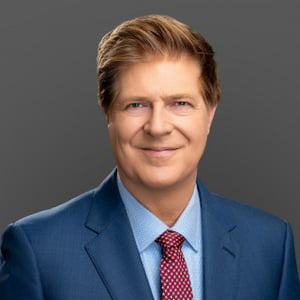
Senior Fellow, Ave Maria School of Law and Host of the Four Boxes Diner Second Amendment Channel
Mark W. Smith is a visiting member of the Senior Common Room, New College, Oxford University and a Visiting Fellow in Pharmaceutical Public Policy and Law in the Department of Pharmacology, Oxford University. Mark is also a Distinguished Scholar and Senior Fellow of Law and Public Policy at the Ave Maria School of Law. He hosts the Four Boxes Diner YouTube Channel (youtube.com/TheFourBoxesDiner), which addresses Second Amendment scholarship, cases, history and related issues, and whose videos have received almost 90 million views. Mark's scholarship has been cited by federal courts and by parties before the United States Supreme Court in Viramontes v. Cook County, New York State Rifle & Pistol Ass’n v. Bruen and in United States v. Rahimi. He is a graduate of the NYU School of Law. Mark is also a New York Times bestselling author who appears frequently in the national media including on the Fox News Channel.
Vice President for Legal Affairs, Goldwater Institute
Executive Director, Salmon P. Chase Center for Civics, Culture, and Society, The Ohio State University
Professor Lee J. Strang serves as the inaugural executive director of the Salmon P. Chase Center for Civics, Culture, and Society at The Ohio State University.
Initiated in 2023 by the state of Ohio, the Chase Center will be an academic home at Ohio State for teaching, research, and programing on the foundations of the American constitutional order and its impact on society. As executive director, Professor Strang is responsible for organizing the center, overseeing the hiring and appointment of the center’s faculty, developing curriculum, and delivering student and academic programming. He also holds a faculty appointment in the Moritz College of Law at Ohio State.
Professor Strang is a nationally recognized legal scholar who has published dozens of articles in leading journals in the fields of constitutional law and interpretation, property law, and religion and the First Amendment. He co-edits the textbook Federal Constitutional Law, and his most recent book, Originalism’s Promise: A Natural Law Account of the American Constitution is the first book-length, natural law justification for originalism. He currently is writing on civic thought and leadership, and he is finalizing a book on the history of American Catholic legal education (with John M. Breen).
Before joining Ohio State, Professor Strang served as the inaugural director of the University of Toledo’s Institute of American Constitutional Thought & Leadership. He joined the Toledo College of Law faculty in 2008, was granted tenure in 2010, and was named John W. Stoepler Professor of Law & Values in 2015. The University of Toledo awarded Professor Strang its Outstanding Faculty Research and Scholarship Award in 2017. Before that, he was a visiting professor at Michigan State University College of Law. A graduate of the University of Iowa, where he was articles editor of the Iowa Law Review and Order of the Coif, Professor Strang holds an LL.M. degree from Harvard Law School.
Professor Strang has been a visiting scholar at the Georgetown Center for the Constitution and a visiting fellow at the James Madison Program at Princeton University. In 2016, he was appointed to the Ohio Advisory Committee of the U.S. Commission on Civil Rights and reappointed as chair in 2023.
Prior to teaching, Professor Strang served as a judicial clerk for Judge Alice M. Batchelder of the U.S. Court of Appeals for the Sixth Circuit. He was also an associate for Jenner & Block LLP in Chicago, where he practiced in general and appellate litigation.
Professor Strang is a frequent presenter at scholarly conferences. He is the president of the Board of Trustees of Northwest Ohio Classical Academy, Ohio’s first classical charter school. He is also a regular participant in debates at law schools across the country, a contributor to the media, and a speaker to political, civic, and religious groups.

Proclaiming Liberty with Tim Sandefur
Timothy Sandefur, Lee J. Strang
As America celebrates the 250th anniversary of the Declaration of Independence, Proclaiming Liberty by Timothy...
Proclaiming Liberty with Tim Sandefur
Timothy Sandefur, Lee J. Strang
As America celebrates the 250th anniversary of the Declaration of Independence, Proclaiming Liberty by Timothy...
Proclaiming Liberty with Tim Sandefur
Panel I: Philosophical Foundations of The Federalist: The Nature of Law and the Nature of Man [Archive Collection]
Harold Bruff, Richard A. Epstein, Mary Ann Glendon, Douglas Laycock, Thomas R. Phillips
On February 28-29, 1992, the Federalist Society held its eleventh annual National Student Symposium at...
Address by Secretary of Defense Richard Cheney [Archive Collection]
Richard B. Cheney, T. Kenneth Cribb
On January 19-20, 1990, The Federalist Society hosted a conference at the Mayflower Hotel in...
Lunch and Keynote Address by Renée Lerner
Renée Lettow Lerner, Mark W. Smith
On January 15, 2019, the Federalist Society's Civil Rights and Criminal Law & Procedure Practice...