
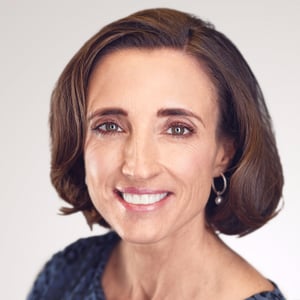
Senior Vice President, Strand Consult
Roslyn Layton, PhD is a leading international expert on technology policy. She is Senior Vice President of Strand Consult, an independent consultancy serving the global mobile telecom industry. She is also a Visiting Researcher at Aalborg University Copenhagen where she earned a doctoral thesis on network neutrality by measuring the outcome of the policy across 53 countries over 5 years. She served on the Presidential Transition Team for the Federal Communications Commission (FCC), and her work was critical to the FCC’s defense for the Restoring Internet Freedom Order. She has testified to the United States Senate and House on multiple topics including spectrum, broadband, mobile mergers, competition, and privacy. She founded the think tank China Tech Threat to study the problems of technology produced by the People’s Republic of China. She serves as the Program Chair for the Telecom Policy Research Conference, the leading interdisciplinary academic gathering. Her recent paper on rural broadband describes the empirical case for policy reform to recover network infrastructure costs from streaming video entertainment providers. She is a Senior Contributor to Forbes.

Professor of Law, Michigan State University (currently serving as FCC General Counsel)
Professor Candeub joined the MSU Law faculty in fall 2004. He is also a Fellow with MSU's Institute of Public Utilities. Prior to joining MSU, he served as an advisor at the Federal Communications Commission (FCC). From 1998 to 2000, Professor Candeub was a litigation associate for the Washington D.C. firm of Jones, Day, Reavis & Pogue and also has served as a corporate associate with Cleary, Gottlieb, Steen & Hamilton, also in Washington, D.C. Immediately following law school, he clerked for Chief Judge J. Clifford Wallace, U.S. Court of Appeals for the Ninth Circuit. While in law school, Professor Candeub was an articles editor for the University of Pennsylvania Law Review.
Professor Candeub's scholarly interests focus on the law and regulation of communications, internet, technology. His numerous law review articles and scholarly papers have placed him at the center of legal and policy controversies, and he often writes for popular outlets such as the Wall Street Journal and US News. Federal courts, including the U.S. Supreme Court, have cited and relied upon his work.
He joined the Trump administration in 2019 as Deputy Assistant Secretary of Commerce for Telecommunications and Information and assumed the role of Acting Assistant Secretary. He later joined the Department of Justice as Deputy Associate Attorney General.
Professor Candeub is a senior fellow at the D.C.-based Center of Renewing America.

Senior Fellow and Academic Director, Penn Carey Law School
Gus Hurwitz is a Senior Fellow and the Academic Director of the Center for Technology, Innovation & Competition and the University of Pennsylvania Carey Law School where he is working to develop academic and scholarly programs at the intersecution of law, technology, and policy.
He is also Director of Law & Economics Programs at the International Center for Law & Economics (ICLE), a think tank based in Portland, Oregon, where he directs its law and economics-focused research program and helps to translate academic research into applied policy issues.
Hurwitz's research focuses on the regulation of technology, including administrative and regulatory law, antitrust law, torts and products liability, and media law - alongside cognate fields. Inrecent years he has worked on an AI standardization initiative with Seoul National University, a UNICEF-organized study of broadband deployment to public schools in Rwanda, and a book on conglomerate and ecosystems theories of antitrust.
He has published over 30 articles and book chapters, two books (one on cybersecurity law & policy, one on media regulation in the digital era) and have two more in process, over 100 shorter writings (op-eds, shorter analyses, blog posts, &c), hosted over 100 podcast episodes, and regularly appear or am quoted in popular media (including the NY Times, Wall Street Journal, Washington Post, and Associated Press). His work has been cited by legislators, federal courts of appeals, and federal regulatory agencies.
He was previously a full professor and founding director of the Governance & Technology Center at the University of Nebraska, prior to which he was the inaugural research fellow at the Center for Technology, Innovation & Competition (CTIC). From 2007 to 2010, he was a trial attorney with the U.S. Department of Justice Antitrust Division in the Telecommunications and Media Enforcement Section.
He also is, or has been, affiliated with the Classical Liberal Institute at New York University School of Law, the National Security Institute at George Mason University, and the American Enterprise Institute (AEI).
Before attending law school, Hurwitz worked at Los Alamos National Lab and interned at the Naval Research Lab. During this time his work was recognized by the Federal Laboratory Consortium, Los Alamos National Lab, IEEE & ACM, Corporation for Education Network Initiatives in California, R&D Magazine, and even the Guinness Book of World Records.
A current list of Hurwitz’s publications is available on his website: GusHurwitz.net.
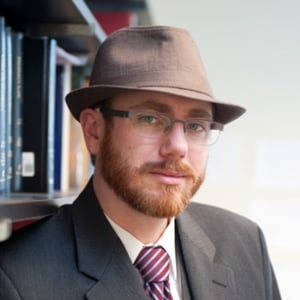
Professor of Law and Associate Dean, Boston College Law School; Nonresident Senior Fellow, American Enterprise Institute, Boston College Law School
Professor Lyons is a Professor and Associate Dean at Boston College Law School. He specializes in telecommunications and tech policy, energy, and administrative law. Before joining the faculty, he practiced at the firm of Munger, Tolles and Olson in Los Angeles. He also clerked for the Judge Cynthia Holcomb Hall of the Ninth Circuit Court of Appeals.
Professor Lyons is also a Nonresident Senior Fellow at the American Enterprise Institute, where he has written over 250 blog posts on tech policy issues, including net neutrality, telecommunications regulation, First Amendment issues with tech regulation, and generative AI.

President and Founder, International Center for Law & Economics
Geoffrey A. Manne is the president and founder of the International Center for Law and Economics (ICLE), a nonprofit, nonpartisan research center based in Portland, Oregon. He is also a distinguished fellow at Northwestern Law School’s Searle Center on Law, Regulation, & Economic Growth. In April 2017 he was appointed by FCC Chairman Ajit Pai to the FCC’s Broadband Deployment Advisory Committee, and he recently served for two years on the FCC’s Consumer Advisory Committee.
Mr. Manne earned his JD and AB degrees from the University of Chicago and is an expert in the economic analysis of law, specializing in competition, telecommunications, consumer protection, intellectual property, and technology policy.
Prior to founding ICLE, Manne was a law professor at Lewis & Clark Law School. From 2006-2009, he took a leave from teaching to develop Microsoft’s law and economics academic outreach program. Manne has also served as a lecturer in law at the University of Chicago Law School and the University of Virginia School of Law. He practiced antitrust law and appellate litigation at Latham & Watkins, clerked for Hon. Morris S. Arnold on the 8th Circuit Court of Appeals, and worked as a research assistant for Judge Richard Posner. He was also once (very briefly) employed by the FTC.
Mr. Manne’s publications have appeared in numerous journals including the Journal of Competition Law and Economics, the Harvard Journal of Law and Technology, the Supreme Court Economic Review, and the Arizona Law Review, among others. With former FTC Commissioner, Joshua Wright, Manne is the editor of a volume from Cambridge University Press entitled, Competition Policy and Intellectual Property Law Under Uncertainty: Regulating Innovation. Manne has also testified on several occasions before Congress and at the FCC and FTC, and he regularly files written comments and amicus briefs on key antitrust, IP, and telecommunications issues. His analysis is frequently published in popular print and broadcasting outlets such as the Wall Street Journal, Wired, Foreign Affairs, NPR, and Bloomberg, among others.
Manne is a member of the American Law and Economics Association, the Canadian Law and Economics Association, and the Society for Institutional & Organizational Economics. He blogs at Truth on the Market (www.truthonthemarket.com) (of which he is also the co-founder), is a contributor at WIRED, and tweets at @geoffmanne. His scholarly publications are available at http://ssrn.com/author=175541.

Class of 1940 Research Professor of Law, Northwestern University School of Law
Jim Speta has been a member of the faculty since 1999. His research interests include telecommunications and Internet policy, antitrust, administrative law, and market organization. He teaches in the Law School and in the Joint Program in Law and Business operated by the Law School and the Kellogg School. A 1991 graduate of the University of Michigan Law School, Speta joined the Northwestern faculty following a one-year visit. He had previously clerked for Judge Harry T. Edwards on the United States Court of Appeals for the D.C. Circuit and practiced appellate, telecommunications, and antitrust law with the Chicago firm of Sidley & Austin.
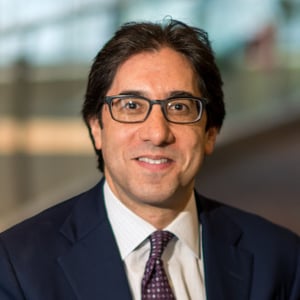
Senior Vice President, Public Policy and Government Affairs, DISH Network
Jeffrey H. Blum is the Senior Vice President of Public Policy and Government Affairs for DISH, overseeing state and federal government affairs in Washington, DC.
Before coming to DISH 2005, Jeff was a partner at Davis Wright Tremaine, where his practice focused on copyright, First Amendment and anti-piracy litigation. At Davis Wright Tremaine, Jeff co-represented a class of songwriters and music publishers in the Grokster P2P file sharing case, which was decided by the United States Supreme Court in favor of Jeff's clients. The Grokster decision established a new basis for secondary copyright liability, called "inducement liability." Jeff was a part-time lecturer at the University of Southern California, Annenberg School of Journalism from 2003-2005, where he taught "Media Law". He currently serves as Chairman of the Satellite Broadcasting and Communications Association (SBCA), and was Co-Chairman of the Broadband Internet Technical Advisory Group (BITAG) from 2013-2015. Jeff also serves on the boards of the Computer & Communications Industry Association (CCIA) and BUILD Metro DC.
Jeff graduated summa cum laude and first in his class at Boston University School of Law, where he was a Note Editor of the Boston University Law Review. He received his undergraduate degree from McGill University, with a B.A. in History and Classics. After law school, he clerked for Chief Judge Joseph Tauro of the U.S. District Court of Massachusetts.
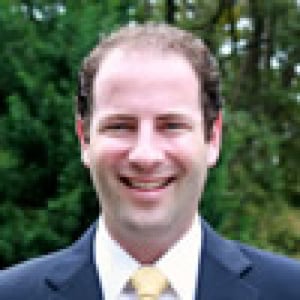
General Counsel and Executive Vice President, Legal and Regulato, National Association of Broadcasters
Rick Kaplan is General Counsel and Executive Vice President, Legal and Regulatory Affairs at the National Association of Broadcasters (NAB).
Prior to joining NAB, Mr. Kaplan served in a number of leadership capacities at the Federal Communications Commission (FCC). During his three-plus years at the FCC, Mr. Kaplan was the Chief of the Wireless Telecommunications Bureau, Chief Counsel to Chairman Julius Genachowski, and Chief of Staff and Media Advisor to Commissioner Mignon Clyburn. As Bureau Chief, Mr. Kaplan helped create and implement policies that maximized the use of underutilized spectrum and promoted meaningful competition in the wireless industry. For example, Mr. Kaplan helped spearhead the agency’s renewed attempt to free up a sizable chunk of spectrum in the 2.3 GHz WCS band, which had laid fallow for well over a decade, and the FCC’s efforts to convert spectrum in the 2 GHz S-Band from mobile satellite to terrestrial broadband use. Mr. Kaplan also played a leading role at the FCC in reviewing nearly every major transaction brought before the agency during Chairman Genachowski’s tenure. These included Comcast/NBCU, AT&T/T-Mobile, AT&T/Qualcomm, DISH/DBSD & TerreStar, and Verizon Wireless/SpectrumCo & Cox.
As Chief Counsel, Mr. Kaplan managed the Commission’s overall policy agenda, and was responsible for policy coordination among each of the Bureaus and Offices. During that time, Mr. Kaplan worked with Congress on the passage of its groundbreaking incentive auction legislation, negotiated a resolution to the nearly decade-old TV white spaces proceeding, brought to decision rules requiring wireless carriers to offer data roaming on commercially reasonable terms, and helped navigate an evolution in the retransmission consent marketplace, ensuring that the government did not unnecessarily interfere with private market negotiations.
Before joining the Commission, Mr. Kaplan practiced appellate litigation and regulatory law at Sidley Austin LLP, and served in the Office of the General Counsel at the U.S. House of Representatives. At the U.S. House, Mr. Kaplan helped orchestrate the Judiciary Committee’s successful and historic litigation in the U.S. District Court for the District of Columbia to obtain documents and testimony from White House officials in the face of claims of executive privilege. Mr. Kaplan began his legal career as a law clerk for Judge Harry T. Edwards of the U.S. Court of Appeals for the D.C. Circuit. Prior to his legal career, Mr. Kaplan founded and operated a sports management and public relations agency that represented and served professional athletes and sports-related organizations. Kaplan earned his Juris Doctor from Columbia Law School, where he served as Editor-in-Chief of the Columbia Law Review, and undergraduate degree from Wesleyan University.
Vice President, Regulatory Affairs, Cox Enterprises
Mr. Barry J. Ohlson serves as Vice President of Regulatory Affairs at Cox Enterprises, Inc. Mr. Ohlson serves as a Partner at Wilkinson Barker Knauer & Quinn. Mr. Ohlson served as Vice President of Policy for Cox Enterprises, Inc. since January 1, 2012. Mr. Ohlson served as the Chief Policy Counsel of Cox Enterprises, Inc. since November 15, 2010 to January 1, 2012. Mr. Ohlson's practice focuses on the wireless, telecommunications, and broadband sectors, with an emphasis on assessing the strategic and regulatory implications of advanced technologies and new telecommunications services. He has nearly 20 years of government, corporate, and legal experience to this role, and he has been intimately involved in the complex regulatory and legal issues that impact businesses and stakeholders. For the majority of his six-year tenure at the Federal Communications Commission, he was Senior Legal Advisor to Commissioner Jonathan S. Adelstein, providing counsel on all administrative and policy matters, particularly those involving spectrum, satellite, technology, public safety and international issues. Mr. Ohlson previously served as Chief of the Policy Division of the FCC's Wireless Telecommunications Bureau, as a Legal Advisor to the Wireless Telecommunications Bureau Chief, and as Acting Chief of the Bureau's Public Safety and Private Wireless Division. Before his government service, Mr. Ohlson was the senior director of federal regulatory affairs at Winstar Communications, and he practiced law at McDermott, Will & Emery and Keller and Heckman in Washington, D.C. He is a member of the Federal Communications Bar Association, and currently serves as a co-chair of the Professional Responsibility Committee. Mr. Ohlson earned a J.D. from the George Washington University Law School and an A.B. degree in international economic relations and mathematics from The College of William & Mary.

Partner, HWG LLP
Patricia Paoletta is a partner with the law firm of HWG LLP, where she specializes in telecommunications, trade and technology policy. Ms. Paoletta provides advice on regulatory, trade and legislative policy to clients before the FCC, Congress and the Administration. Her clients include providers of content, cloud, mobile broadband, VoIP, international telecommunications, small cells, cognitive radio, public safety and homeland security solutions. She serves on Advisory Boards for several entities engaged in information services, communications and technology.
Ms. Paoletta has accrued considerable experience with telecommunications trade and policy in the public sector. From 1990 to 1995, she was senior advisor to the International Bureau Chief and Office Director at the Federal Communications Commission. In the mid 1990s, Ms. Paoletta served as Director of Telecommunications Trade Policy in the Office of the U.S. Trade Representative, Executive Office of the President, where she worked on the WTO Information Technology Agreement (ITA) and the Basic Telecommunications Agreement. After USTR, Ms. Paoletta served as Majority Counsel to the House Energy and Commerce Committee. She then moved to Level 3 Communications, as Vice President, Government Relations.
Ms. Paoletta is on the Steering Committee of the Transatlantic Roundtable on Telecommunications and Information Technology of the European Institute. She is a member of the USTR Alumni Association, Washington International Trade Association, the Federal Communications Bar Association (FCBA), and Women in Technology. Ms. Paoletta has served on the Board of Advisors for the Inter-American Dialogue's Latin America Telecom Advisor, Co-Chairman of the American Bar Association International Communications Committee, and as a member of the U.S. Chamber of Commerce's Technology Policy Committee.
Ms. Paoletta served as a delegate in 2012 to the ITU-R's Study Group 6 Working Party 6A Meeting and in 2009 and 2010 to the ITU-R's Study Group I Working Party IB Meetings; the 2009 meetings of CITEL (the Committee on International Telecommunications at the Organization of American States) PCC-II; the International Telecommunication Union (ITU) World Telecommunications Standards Assembly (2000); the ITU Internet Protocol Telephony Experts Group and the ITU World Telecommunications Policy Forum in 2001; as Chairman of the National Reliability and Interoperability Council (NRIC) Steering Committee (2000-2001); as Board Member for the Voice on the Net Coalition (2001); as Co-Chairman of the FCBA's Annual Seminar Committee (2009-2011); as a member of the FCBA's Ad Hoc Speakers Committee (2006-2007); as Co-Chairman for the FCBA International Practice Committee (2001-2002 and 2005-2006); and as a Co-Chairman of the FCBA Legislative Practice Committee (1999-2000).
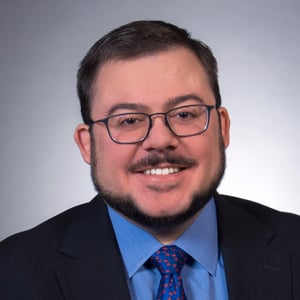
Research Fellow and Regulatory Counsel, Competitive Enterprise Institute
As Research Fellow and Regulatory Counsel, Ryan Radia focuses on adapting law and public policy to the unique challenges of the information age. His research areas at the Competitive Enterprise Institute include intellectual property, information privacy, telecommunications, cybersecurity, competition policy, media regulation, and Internet freedom.
Radia has published articles in major news outlets including The Seattle Times, Forbes, San Jose Mercury News, The Star-Ledger, Ad Age, Investor’s Business Daily, and Ars Technica. He has been quoted in publications including the Los Angeles Times, The New Republic, TIME, Fortune, Chicago Tribune, San Francisco Chronicle, The Boston Globe, POLITICO, The Baltimore Sun, and Bloomberg. He has appeared on dozens of television and radio programs, including “Marketplace” on National Public Radio, “Cavuto” on Fox Business Network, and the “Laura Ingraham Show” on Talk Radio Network.
Radia also blogs on the Technology Liberation Front, a group technology policy blog dedicated to advancing freedom and liberty in the digital age. His commentary has been referenced by blogs including The Atlantic’s Daily Dish, The Washington Post’s Faster Forward, and Techdirt. His research has been cited scholarly journals such as the Brooklyn Law Review, the University of Pennsylvania Journal of Business Law, and the Iowa Law Review Bulletin.
Radia earned his J.D. from The George Washington University Law School, where he served as Senior Articles Editor of the Federal Communications Law Journal. He also holds a B.A. in economics from Northwestern University. Before joining CEI in 2007, he worked in the alternative risk financing sector.
He is admitted to the District of Columbia Bar.

Partner, Wiley Rein, LLP
Megan L. Brown is a partner at Wiley Rein LLP. She has significant litigation, appellate and regulatory experience before state and federal courts and agencies.
Ms. Brown helps businesses respond to federal, state and local regulation and investigations raising administrative law, statutory interpretation, and constitutional issues, including the First Amendment.

Partner, Steptoe & Johnson LLP
Stewart Baker is a partner in the law firm of Steptoe & Johnson in Washington, D.C. From 2005 to 2009, he was the first Assistant Secretary for Policy at the Department of Homeland Security. His law practice covers cybersecurity, data protection, homeland security, and travel and foreign investment regulation; he has been awarded one patent.
Mr. Baker has been General Counsel of the National Security Agency and General Counsel of the commission that investigated WMD intelligence failures prior to the Iraq war. He is the author of Skating on Stilts, a book on terrorism, cybersecurity, and other technology issues; he also hosts the weekly Cyberlaw Podcast.

Senior Policy Counsel and Deputy Director, Project on Freedom, S, the Center for Democracy and Technology
Harley Geiger is Senior Counsel and Deputy Director of the Freedom, Security and Surveillance Project at the Center for Democracy & Technology (CDT). Mr. Geiger works on issues related to civil liberties and government surveillance, computer crime, and cybersecurity.
From 2012-2014, Mr. Geiger served as Senior Legislative Counsel for U.S. Representative Zoe Lofgren of California. There he was the lead staffer for technology and Internet issues, and was instrumental in helping develop Rep. Lofgren’s Internet freedom agenda, including legislation to reform the Foreign Intelligence Surveillance Act, ECPA, the Computer Fraud and Abuse Act, and copyright laws.
From 2008-2012, Mr. Geiger worked at CDT as Staff Attorney and Senior Policy Counsel, focusing on surveillance, consumer privacy, health information technology, and data security. Prior to working at CDT, Mr. Geiger clerked with the Bureau of Consumer Protection at the Federal Trade Commission, where he worked on information security public awareness campaigns. In 2007, Mr. Geiger clerked with the Electronic Privacy Information Center, where he worked on health privacy, telephone network security, employee verification, and human rights issues. In 2006, he clerked with the Minority Leader of the Missouri House of Representatives, where he testified before a Missouri Senate Committee on technology policy.
Mr. Geiger earned a BA in Journalism, MA in Journalism, and JD from the University of Missouri – Columbia. He is CIPP/US certified and Politico named him one of the Emerging Tech Leaders of 2013.
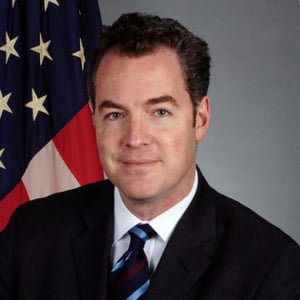
President and Founder, JKC Consulting LLC
John Kneuer is the President and Founder of JKC Consulting LLC. He sits on multiple public and private company boards.
Prior to starting Kneuer LLC, Mr. Kneuer served as the Assistant Secretary of Commerce for Communications and Information. In this capacity Mr. Kneuer was the principal advisor to the President of the United States on telecommunications policy and the Administrator of the National Telecommunications and Information Administration ("NTIA").In addition to representing the Executive Branch in domestic and international telecommunications and information policy activities, NTIA also manages the federal use of spectrum; performs cutting edge telecommunications research and engineering, including resolving technical telecommunications issues for the federal government and private sector; and administers infrastructure and public telecommunications facilities grants.
Prior to his service at NTIA, Mr. Kneuer served as a Senior Associate at the law firm of Piper Rudnick in Washington, D.C., providing regulatory and legislative representation to corporate clients in the telecommunications, defense, and transportation industries. Earlier in his career, Mr. Kneuer served as the Executive Director for Government Relations at the Industrial Telecommunications Association, and prior to that served as an Attorney-Advisor in the Commercial Wireless Division of the Federal Communications Commission's Wireless Bureau. Mr. Kneuer received B.A. and J.D. degrees from the Catholic University of America.

Senior Policy Director, Mobile Future
Rachael Bender is Senior Policy Director for Mobile Future, where she focuses on issues involving wireless technology, broadband, and spectrum. Prior to joining Mobile Future in 2011, Ms. Bender was a law clerk in the Department of Regulatory Affairs at CTIA – The Wireless Association. Ms. Bender graduated from the University of Maryland with a B.A. in Government & Politics, and from the Catholic University of America Columbus School of Law with a J.D. and certificate from the Institute for Communications Law Studies. During law school, she served as president of the Communications Law Student Association and competed in the National Telecommunications Moot Court Competition, for which she also served as Vice Chancellor during her third year. She is a member of the Pennsylvania and New Jersey Bars.

Shareholder, Farney Daniels, PC
Jonathan B. Baker is Professor of Law at American University Washington College of Law, where he teaches courses primarily in the areas of antitrust and economic regulation. He served as the Chief Economist of the Federal Communications Commission from 2009 to 2011, and as the Director of the Bureau of Economics at the Federal Trade Commission from 1995 to 1998. Previously, he worked as a Senior Economist at the President’s Council of Economic Advisers, Special Assistant to the Deputy Assistant Attorney General for Economics in the Antitrust Division of the Department of Justice, an Assistant Professor at Dartmouth's Amos Tuck School of Business Administration, an Attorney Advisor to the Acting Chairman of the Federal Trade Commission, and an antitrust lawyer in private practice. Professor Baker is the co-author of an antitrust casebook, a past Editorial Chair of Antitrust Law Journal, and a past member of the Council of the American Bar Association’s Section of Antitrust Law. He has published widely in the fields of antitrust law and policy and industrial organization economics. In 2004 he received American University’s Faculty Award for Outstanding Scholarship, Research, and Other Professional Accomplishments, and in 1998 he received the Federal Trade Commission’s Award for Distinguished Service. He has a J.D. from Harvard and a Ph.D. in economics from Stanford University.
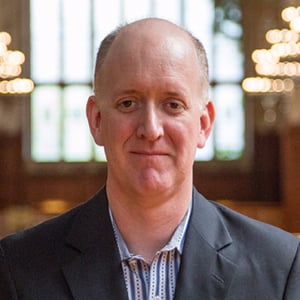
Richard W. Pogue Professor of Law, University of Michigan Law School
Professor Daniel Crane is the Richard W. Pogue Professor of Law. He served as the associate dean for faculty and research from 2013 to 2016. He teaches Contracts, Antitrust, Antitrust and Intellectual Property, and Legislation and Regulation.
Crane previously was a professor of law at Yeshiva University's Benjamin N. Cardozo School of Law and a visiting professor at New York University School of Law and the University of Chicago Law School. In spring 2009, he taught antitrust law on a Fulbright Scholarship at the Universidade Católica Portuguesa in Lisbon.
Crane's work has appeared in the University of Chicago Law Review, the California Law Review, the Michigan Law Review, the Georgetown Law Journal, and the Cornell Law Review, among other journals. He is the author of several books on antitrust law, including Antitrust (Aspen, 2014), The Making of Competition Policy: Legal and Economic Sources (Oxford University Press, 2013), and The Institutional Structure of Antitrust Enforcement (Oxford University Press, 2011).

Chief Judge, United States Court of Appeals, Fifth Circuit
Jennifer Walker Elrod is the Chief Judge of the United States Court of Appeals for the Fifth Circuit. She was nominated to the Fifth Circuit in 2007, and she served as a Circuit Judge on the court until assuming the role of Chief Judge in October 2024. Prior to serving as a Circuit Judge, Chief Judge Elrod was appointed and then twice elected Judge of the 190th District Court of Harris County, Texas, where she spent over five years presiding over more than 200 jury and non-jury trials.
Chief Judge Elrod graduated cum laude from Harvard Law School, where she was an active member of the Harvard Federalist Society, an Ames Moot Court finalist, and a Senior Editor of the Harvard Journal of Law & Public Policy. She clerked for the Honorable Sim Lake in the Southern District of Texas. Before serving as a judge, Chief Judge Elrod worked in private practice, focusing on civil litigation, antitrust, and employment matters.
She has been repeatedly recognized for her work as a jurist, as well as for her pro bono work and contributions to the community. She has been named the 2022 Texas Review of Law & Politics’ Jurist of the Year, the 2018 Harvard Federalist Society’s Alumni of the Year, the 2016–17 Texas Association of Civil Trial and Appellate Specialists’ Appellate Judge of the Year, and the 2008 Mexican-American Bar Association of Texas’s Judge of the Year.
Chief Judge Elrod is actively engaged in the academic and legal communities. Chief Judge Elrod currently serves on the Board of Directors and as the Jurist-in-Residence at the South Texas College of Law, where she teaches civil procedure and First Amendment law. She is also a member of the American Law Institute and of the Board of Advisors for the Harvard Journal of Law & Public Policy, and she is a former member of the Board of Regents of her alma mater, Baylor University, and the Board of Visitors at Brigham Young University Law School. She previously served as the Chair of the Codes of Conduct Committee for the Judicial Conference of the United States. She has also served as the M.D. Anderson Visiting Public Service Professor at the Texas Tech University School of Law and as Jurist-in-Residence at Brigham Young University Law School, and she has taught legal writing at the University of Houston Law Center. She presented the Lewis F. Powell, Jr. Distinguished Lecture at the Washington and Lee University School of Law and is a frequent speaker on the topics of trial and appellate procedure, ethics, employment law, and constitutional law. Chief Judge Elrod also serves on the board of the Garland R. Walker Inn of Court, and co-produces an annual musical CLE, for which her pupilage group has won multiple national awards.
Chief Judge Elrod’s publications include: Trial by Siri: AI Comes to the Courtroom; Don’t Mess with Texas Judges: In Praise of the State Judiciary; For Good: Enriching Your Practice and Your Life Through Pro Bono and Community Service; Is the Jury Still Out?: A Case for the Continued Viability of the American Jury; and W(h)ither the Jury? The Diminishing Role of the Jury Trial in our Legal System.
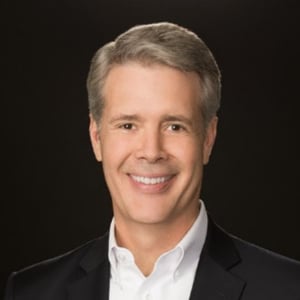
Partner, Cooley
Rob McDowell advises telecommunications, media and technology clients on their most significant regulatory, legal and business matters. As a former commissioner of the Federal Communications Commission (FCC) and a highly regarded industry leader, Rob has been at the forefront of the most complex and groundbreaking issues facing telecommunications.
Mr. McDowell was first appointed to the FCC by President George W. Bush in 2006 and again by President Obama in 2009. He was unanimously confirmed both times by the US Senate. During his tenure, Mr. McDowell led efforts to expand consumer access to spectrum through his work on the two largest wireless auctions in US history at the time, played a key role in the 2009 digital television transition and led efforts to establish the first federal civil rights rule in a generation by creating a ban on racially discriminatory practices in broadcast advertising. He also worked extensively on several large and complex mergers, including Sirius/XM and Comcast/NBC-Universal.
He is an advocate for internet freedom, serving on the US delegation to the 2012 World Conference on International Telecommunications and exposing an international bid to regulate vital aspects of the Internet through multilateral treaty-based organizations. Mr. McDowell authored an op-ed in the Wall Street Journal opposing multilateral internet regulation that led to a resolution passed unanimously in the House and Senate, as well as the ultimate defeat of the international bid at a treaty negation in Dubai later that year.
Prior to the FCC, Mr. McDowell was senior vice president for CompTel, the Competitive Telecommunications Association, where he led advocacy efforts before several government agencies, the White House and Congress.
Mr. McDowell is often called upon for speaking engagements and frequently appears on TV and radio. He has written opinion pieces for many high-profile publications, including the Wall Street Journal and Washington Post.
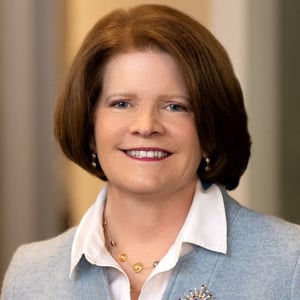
Partner, Antitrust and Competition, Wilson Sonsini Goodrich & Rosati
Maureen Ohlhausen is a partner in the Washington, D.C., office of Wilson Sonsini Goodrich & Rosati, where she advises industry-leading clients on complex antitrust and litigation matters, with a focus on high-profile cases. Sought after for her depth of experience on antitrust and Federal Trade Commission (FTC)-related issues, Maureen is known for her relationships with officials in the U.S. and abroad.
After finishing law school and clerking at the U.S. Court of Appeals for the D.C. Circuit, Maureen joined the FTC in 1997. She held a series of roles at the agency over the next 12 years, rising to the position of Director of the FTC Office of Policy Planning, where she led the agency’s work on e-commerce and headed the FTC’s Internet Access Task Force, which produced an influential report analyzing competition and consumer protection legal issues in the broadband and internet sectors. She then went into private practice at a leading telecommunications law firm, where she headed the FTC practice group.
In 2012, Maureen was confirmed by the Senate as a Commissioner of the FTC and was appointed Acting Chairman in January 2017, a role she held until May 2018. As Acting Chairman, Maureen directed all aspects of the agency’s antitrust work, including merger review, conduct enforcement, and all consumer protection enforcement, with an emphasis on privacy and technology issues. Under her leadership, the FTC won several influential merger challenges in court and reached a number of key digital privacy settlements.
To date, Maureen is the only FTC Commissioner to have received the Robert Pitofsky Lifetime Achievement Award in recognition of her contributions to the FTC.
Following the end of her term at the FTC, and immediately prior to joining Wilson Sonsini, Maureen was chair of the global antitrust and competition practice at Baker Botts, based in that firm’s Washington, D.C., office.
A recognized thought leader, Maureen is a frequent author and speaker, and is often quoted by leading print and broadcast media on antitrust, FTC, and privacy and data security matters. She has published dozens of articles on antitrust, privacy, intellectual property, regulation, FTC litigation, telecommunications, and international law issues in prestigious publications. During her tenure at the FTC and in private practice, she testified more than two dozen times before Congress, including before the Senate Commerce Committee and the House Energy and Commerce Antitrust Sub-Committee. She also testified before the Antitrust Modernization Commission.
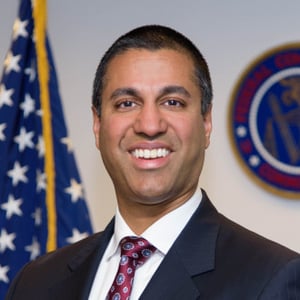
Nonresident Fellow, American Enterprise Institute
Ajit Pai, a former chairman of the Federal Communications Commission (FCC), is a nonresident fellow at the American Enterprise Institute, where he focuses on issues pertaining to technology and innovation, telecommunications regulatory policy, and market-based incentives for investment in broadband deployment. Concurrently, he is a partner at Searchlight Capital Partners, a global investment firm.
Mr. Pai’s distinguished career at the FCC includes two leadership roles following presidential appointments. He was appointed commissioner by President Barack Obama in 2012, designated chairman by President Donald Trump in 2017, and twice confirmed by the US Senate. While at the helm of the FCC, Mr. Pai had a transformative impact on the future of US technology and communications policy, implementing major initiatives to help close the digital divide; advance US leadership in 5G and other wireless technologies; promote innovation; protect consumers, public safety, and national security; and make the agency itself more open, transparent, and data-driven.
Earlier in his career, Mr. Pai served in various public-sector positions in the FCC’s Office of General Counsel, the US Department of Justice, the US Senate Judiciary Committee, and the US District Court for the Eastern District of Louisiana. He also worked as a partner at Jenner & Block and associate general counsel at Verizon Communications.
Mr. Pai graduated with honors from Harvard University, where he received a bachelor’s degree, and from the University of Chicago Law School, where he received a law degree and was an editor on the University of Chicago Law Review.

H.H. Macaulay Endowed Professor of Economics, Clemson College of Business
Thomas Hazlett is the Hugh H. Macaulay Endowed Professor of Economics at Clemson University. He has previously held faculty positions at George Mason University, the University of California, Davis, and the Wharton School, and served as Chief Economist of the Federal Communications Commission. A noted expert in regulatory economics and information markets, his research has appeared in academic forums such as the Journal of Law & Economics, RAND Journal of Economics, the Journal of Financial Economics, the University of Pennsylvania Law Review and the Columbia Law Review. He has also written for such popular periodicals as the Wall Street Journal, The Economist, Slate, the N.Y. Times, N.Y. Daily News, Reuters.com, Business Week, The New Republic and the Financial Times. His most recent book, The Political Spectrum: The Tumultuous Liberation of Wireless Technology, from Herbert Hoover to the Smartphone, (Yale, 2017), was featured as one of the top tech books of the year at CES 2018.
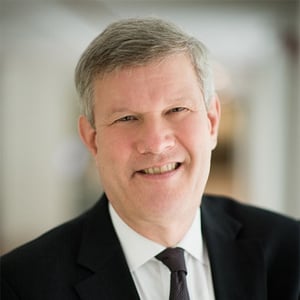
Senior Fellow and Director, Center for the Economics of the Internet, Hudson Institute
Harold Furchtgott-Roth is a senior fellow and director of the Center for the Economics of the Internet at Hudson Institute.
Mr. Furchtgott-Roth founded Furchtgott-Roth Economic Enterprises in 2003. He frequently comments on issues related to the communications sector of the economy. From 2001 to 2003, he was a visiting fellow at the American Enterprise Institute where he published A Tough Act to Follow, chronicling the difficulties implementing the Telecommunications Act of 1996.
From 1997 through 2001, Mr. Furchtgott-Roth served as a commissioner of the Federal Communications Commission. In that capacity, he served on the Joint Board on Universal Service. He is one of the few economists to have served as a federal regulatory commissioner, and the only one to have served on the Federal Communications Commission.
Before his appointment to the FCC, he was chief economist for the House Committee on Commerce and a principal staff member on the Telecommunications Act of 1996. Earlier in his career, he was a senior economist with Economists Incorporated and a research analyst with the Center for Naval Analyses.
Mr. Furchtgott-Roth is a member of the Washington Legal Foundation’s Legal Policy Advisory Board. He is the coauthor of three books: Cable TV: Regulation or Competition, with R.W. Crandall; Economics of A Disaster: The Exxon Valdez Oil Spill, with B.M. Owen et al; and International Trade in Computer Software, with S.E. Siwek.

What is "Zero Rating"?
Roslyn Layton
What are the advantages of offering a sample-size portion of the Internet? Roslyn Layton, Visiting...
Luncheon Debate: RESOLVED: The FCC Does Not Have the Legal Authority to Implement Net Neutrality
Adam Candeub, Justin (Gus) Hurwitz, Daniel Lyons, Geoffrey A. Manne, James A. Speta
The FCC derives its legal authority almost entirely from statutes that predate the Internet--primarily from...
Panel: The Future of Media: Is Government Regulation In Today's Media Landscape "Over-The-Top"?
Jeffrey Blum, Rick Kaplan, Barry Ohlson, Patricia J. Paoletta, Ryan Radia
The Federalist Society's Telecommunications & Electronic Media Practice Group and its George Washington University Law...
T-Mobile v. City of Roswell - Post-Decision SCOTUScast
Megan L. Brown
On January 14, 2015, the Supreme Court issued its decision in T-Mobile South, LLC v....
T-Mobile South, LLC v. City of Roswell - Post-Argument SCOTUScast
Megan L. Brown
On November 10, 2014, the Supreme Court heard oral argument in T-Mobile South, LLC v....
Privacy and National Security: The Merits of the Leahy FISA Reform Bill - Podcast
Stewart A. Baker, Harley Geiger
Following the Snowden leaks, the country is once again re-examining the proper balance between national...
Government Must Take Prompt, Decisive Action as Spectrum Deficit Looms for American Consumers
John Kneuer, Rachael M. Bender
Note from the Editor: This article is a discussion about the allocation of spectrum. As...
Telecommunications: Communications Law Reform
Jonathan D. Baker, Daniel A. Crane, Jennifer Walker Elrod, Robert M. McDowell, Maureen K. Ohlhausen, Ajit V. Pai
The Telecommunications & Electronic Media Practice Group hosted this panel on "Communications Law Reform" on...
Allocating Radio Spectrum for the "Mobile Data Tsunami"
Thomas Hazlett
I. A Mobile Data Tsunami? The mobile sector is said to face a looming spectrum...
Assessing Competition in the Wireless Sector: How DoJ Can Clear Away the Fog from Proposed Mergers
Harold W. Furchtgott-Roth
I. Introduction and Background Over the past twenty years, the American wireless sector has grown...