
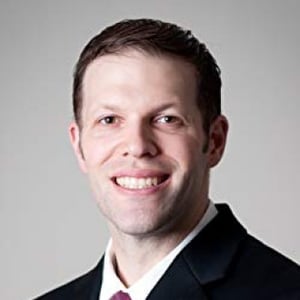
Director of Policy Studies & Senior Fellow, The Free State Foundation
Seth L. Cooper is Director of Policy Studies & Senior Fellow at The Free State Foundation. His work on federal communications and technology policy at the Free State Foundation began in 2009.
With Randolph May, Mr. Cooper is the co-author of Modernizing Copyright Law for the Digital Age: Constitutional Foundations for Reform (2020) and Constitutional Foundations of Intellectual Property: A Natural Rights Perspective (2015), both published by Carolina Academic Press. Along with Mr. May, Mr. Cooper also co-authored A Reader on Net Neutrality and Restoring Internet Freedom (2018) and #CommActUpdate: A Communications Law Fit for the Digital Age (2017), both published by Free State Foundation Press. He previously contributed to two chapters in Communications Law and Policy in the Digital Age (2012), published by Carolina Academic Press. Mr. Cooper's work has also appeared in such publications as CommLaw Conspectus, the San Jose Mercury News, Forbes.com, the Des Moines Register, the Baltimore Sun, the Washington Examiner, and the Washington Times.
Mr. Cooper previously served as Director to the Telecommunications and Information Technology Task Force at the American Legislative Exchange Council (ALEC). Mr. Cooper served as judicial clerk to the Honorable James Johnson at the Washington State Supreme Court. His co-writings about the Washington Supreme Court have appeared in the Gonzaga Law Review and in Federalist Society publications. He has worked in law and policy staff positions at the Washington State Senate and at the Discovery Institute's Center for Science & Culture. Mr. Cooper is a 2009 Lincoln Fellow at the Claremont Institute. He also has worked in private practice in the State of Washington, handling civil legal matters involving personal injuries, small business, contracts, and wills, trusts, and estates.
Mr. Cooper earned his B.A. degree in Political Science from Pacific Lutheran University and received his J.D. from Seattle University School of Law.
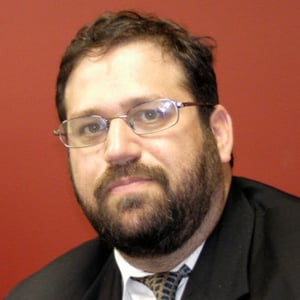
Senior Vice President, Public Knowledge
Harold Feld is the Senior Vice President for Public Knowledge, one of the nation’s premier consumer advocacy organizations working at the intersection of copyright, telecommunications and the Internet. Feld is a highly regarded thought leader in the areas of telecommunications and digital consumer protection, and author of The Case for the Digital Platform Act: Market Structure and Regulation of Digital Platforms. He was previously Senior Vice President at the Media Access Project (MAP), a public interest law firm, where he advanced competition policies in media, telecommunications and technology. Prior to joining MAP, Feld was an associate at Covington & Burling, and clerked for the DC Court of Appeals.
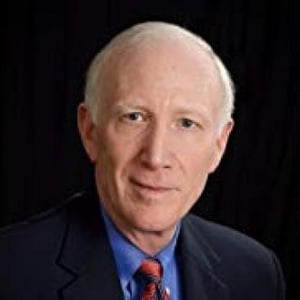
President, The Free State Foundation
Randolph J. May is Founder and President of The Free State Foundation. The Free State Foundation is an independent, non-profit free market-oriented think tank founded in 2006.
From October 1999-May 2006, May was a Senior Fellow and Director of Communications Policy Studies at The Progress & Freedom Foundation, a Washington, DC-based think tank. Prior to joining PFF, he practiced communications, administrative, and regulatory law as a partner at major national law firms. From 1978 to 1981, May served as Assistant General Counsel and Associate General Counsel at the Federal Communication Commission.
May has held numerous leadership positions in bar associations. He is a past Chair of the American Bar Association’s Section of Administrative Law and Regulatory Practice. He is a Fellow of the National Academy of Public Administration. Mr. May also has served as a Public Member of the Administrative Conference of the United States and currently is a Senior Fellow at ACUS.
Mr. May has published more than two hundred articles and essays on communications, administrative and constitutional law topics. He is author of A Call for a Radical New Communications Policy: Proposals for Free Market Reform, and co-author of #CommActUpdate: A Communications Law Fit for the Digital Age and The Constitutional Foundations of Intellectual Property. Mr. May is editor of two books, Communications Law and Policy in the Digital Age: The Next Five Years and New Directions in Communications Policy. In addition, he is the co-editor of two other books, Net Neutrality or Net Neutering: Should Broadband Internet Services Be Regulated? and Communications Deregulation and FCC Reform. In the past, Mr. May has written regular columns on legal and regulatory affairs for Legal Times and the National Law Journal, leading national legal periodicals.
He received his A.B. from Duke University and his J.D. from Duke Law School, where he serves as a member of the Board of Visitors.
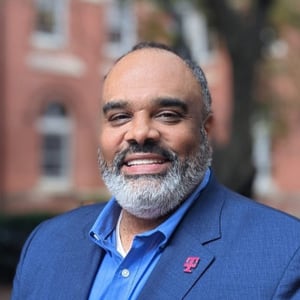
Vice President, Strategic Alliances & External Affairs, T-Mobile
Clint Odom is the vice president for strategic alliances & external affairs at T-Mobile. Previously, Odom led policy and advocacy for the National Urban League while simultaneously serving as executive director of their Washington Bureau. Odom served for a decade in the United States Senate as legislative director for Senator Kamala Harris of California and general counsel to Senator Bill Nelson of Florida.
Odom also served as a senior advisor at the Federal Communications Commission and practiced law at the firm Dow, Lohnes & Albertson (now Cooley LLP). Odom served as a law clerk to the Honorable Henry T. Wingate of the U.S. District Court of the Southern District of Mississippi and is a graduate of Louisiana State University and the University of Pennsylvania Law School.
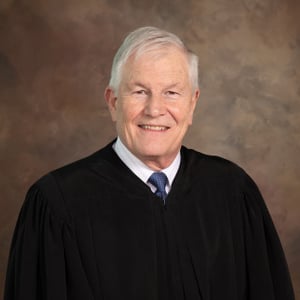
Judge, United States Court of Appeals, Eighth Circuit
Judge William Duane Benton is a federal judge on the United States Court of Appeals for the 8th Circuit. He joined the court in 2004 after being nominated by former President George W. Bush. Prior to his appointment, Judge Benton served as the chief justice of the Missouri Supreme Court. During his service on the court he received his masters of laws from the University of Virginia, completed the senior executives program at Harvard University’s John F Kennedy School of Government, and completed a post-graduate appellate judges course at New York University’s Institute of Judicial Administration.
Prior to serving on the Supreme Court of Missouri, Judge Benton was appointed by then-Governor John Ashcroft as director of the state’s department of revenue. Judge Benton also worked as a judge advocate general for the United States Navy, during which time he received his master’s degree in business administration and accountancy from the University of Memphis.
Judge Benton earned his law degree from Yale Law School and was the managing editor of the Yale Law Journal.
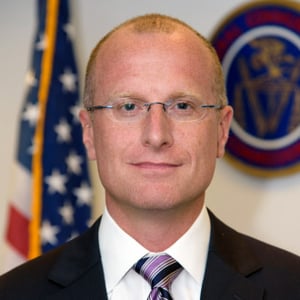
Chairman, Federal Communications Commission
Brendan Carr is the Chairman of the Federal Communications Commission. He previously served as the senior Republican Commissioner and as the FCC’s General Counsel. Nominated by both President Trump and President Biden, Carr has been confirmed unanimously by the Senate three times.
Described by Axios as “the FCC’s 5G crusader,” Carr has led the FCC’s work to modernize its infrastructure rules and accelerate the buildout of high-speed networks. His reforms cut billions of dollars in red tape, enabled the private sector to construct high-speed networks in communities across the country, and extended America’s global leadership in 5G.
Chairman Carr is also focused on expanding America’s skilled workforce—the tower climbers and construction crews needed to build next-gen networks. His jobs initiative promotes community colleges and apprenticeships as a pipeline for good-paying 5G jobs. He is recognizing America’s talented tower crews through a series of “5G Ready” Hard Hat presentations.
Chairman Carr leads a groundbreaking telehealth initiative at the FCC. The Connected Care Pilot Program supports the delivery of high-quality care to low-income Americans and veterans.
Chairman Carr’s time outside of Washington helps inform his approach to the job. He regularly hits the road to hear directly from community members and learn how changes in federal policies could help improve their lives.
Chairman Carr brings nearly 20 years of private and public sector experience in communications and tech policy to his position. Before joining the FCC as a staffer back in 2012, he worked as an attorney at Wiley Rein LLP in the firm’s appellate, litigation, and telecom practices. Previously, Chairman Carr clerked on the U.S. Court of Appeals for the Fourth Circuit for Judge Dennis Shedd. After attending Georgetown University for his undergrad, Chairman Carr earned his J.D. magna cum laude from the Catholic University of America’s Columbus School of Law where he served as an editor of the Catholic University Law Review.
Senior Vice President, Public Knowledge
Harold Feld is the Senior Vice President for Public Knowledge, one of the nation’s premier consumer advocacy organizations working at the intersection of copyright, telecommunications and the Internet. Feld is a highly regarded thought leader in the areas of telecommunications and digital consumer protection, and author of The Case for the Digital Platform Act: Market Structure and Regulation of Digital Platforms. He was previously Senior Vice President at the Media Access Project (MAP), a public interest law firm, where he advanced competition policies in media, telecommunications and technology. Prior to joining MAP, Feld was an associate at Covington & Burling, and clerked for the DC Court of Appeals.
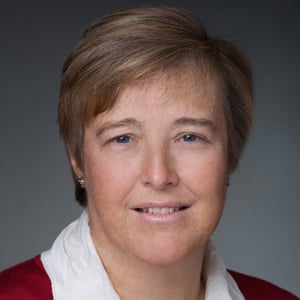
Senior Vice President, Government Affairs, T-Mobile
As Senior Vice President, Government Affairs for T-Mobile, Kathleen O’Brien Ham is the chief public policy advocate for the Un-carrier. Kathleen manages all public policy issues before federal and state governments impacting the company. Her team regularly engages Congress, the FCC, state agencies, and other governmental bodies on a wide range of regulatory and policy issues, including spectrum, consumer, public safety, and competition matters. She has led numerous successful efforts to gain additional radio spectrum for the company, including most recently, the acquisition of 600 MHz frequencies to expand T-Mobile’s coverage and deploy 5G technology. She has also testified before Congress numerous times in support of the company’s public policy positions.
Prior to joining T-Mobile, she worked for fourteen years at the FCC in several top policy positions, including Deputy Chief of the Wireless Telecommunications Bureau. She was the first Chief of the FCC’s Spectrum Auctions Program where she was responsible for the early landmark PCS spectrum auctions. She also served on the FCC’s Spectrum Management Task Force and was involved in the Intergovernmental Advisory Committee that negotiated the reallocation of third generation (3G) wireless spectrum from government to commercial use.
A graduate of Catholic University’s Columbus School of Law, she received her undergraduate degree from the University of Colorado, with a Bachelor of Science in Journalism. For several years, she taught telecommunications as an adjunct professor at Catholic University. She has received numerous industry honors and recognition, most recently being named as one of 50 of the Most Influential Women in Wireless to Watch in 2017 by Global Telecoms Business. The Hill named her as one of the Top Lobbyists in 2016. In 2014 the Competitive Carriers Association celebrated her contributions to the industry with an Outstanding Achievement Award for her work in support of spectrum auction rules that benefit smaller carriers and help promote competition in the wireless ecosystem. And, since 2010 she has been named four times as one of the Most Influential Women in Wireless by FierceWireless.
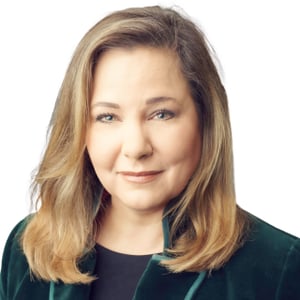
Senior Advisor, Freshfields
Christine is a senior advisor in our antitrust, competition and trade practice with more than 25 years of public and private sector experience at the intersection of law, policy and politics. Based in Washington, DC, she counsels senior executives and boards of directors on how to navigate complex and evolving legal and regulatory regimes to achieve their desired business goals.
Most recently, Christine served as a Commissioner at the Federal Trade Commission (FTC) where she helped shape policies and enforcement actions in the fields of antitrust, consumer privacy and data security and consumer protection. During her tenure, she also testified before the US Congress on several occasions and represented the FTC in bilateral and multilateral discussions abroad.
Before joining the FTC, Christine was a Senior Vice President at Delta Air Lines where she oversaw the carrier’s regulatory and international legal matters. Prior to moving in-house, she was a partner at two international law firms where she worked with clients to achieve regulatory clearance for multi-jurisdictional mergers and to defend businesses in high-stakes investigations.
Her broad sector experience ranges from aircraft and automobiles to veterinary services, video games and virtual reality. She has worked extensively in the highly regulated fields of airlines, healthcare and pharmaceuticals.
After leaving the FTC last year, Christine founded an organization to provide safe housing and comprehensive support services to survivors of human trafficking and sexual exploitation. Freshfields provided pro bono services to the organization including corporate formation. She will continue supporting this organization alongside client practice.
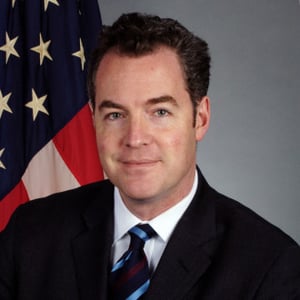
President and Founder, JKC Consulting LLC
John Kneuer is the President and Founder of JKC Consulting LLC. He sits on multiple public and private company boards.
Prior to starting Kneuer LLC, Mr. Kneuer served as the Assistant Secretary of Commerce for Communications and Information. In this capacity Mr. Kneuer was the principal advisor to the President of the United States on telecommunications policy and the Administrator of the National Telecommunications and Information Administration ("NTIA").In addition to representing the Executive Branch in domestic and international telecommunications and information policy activities, NTIA also manages the federal use of spectrum; performs cutting edge telecommunications research and engineering, including resolving technical telecommunications issues for the federal government and private sector; and administers infrastructure and public telecommunications facilities grants.
Prior to his service at NTIA, Mr. Kneuer served as a Senior Associate at the law firm of Piper Rudnick in Washington, D.C., providing regulatory and legislative representation to corporate clients in the telecommunications, defense, and transportation industries. Earlier in his career, Mr. Kneuer served as the Executive Director for Government Relations at the Industrial Telecommunications Association, and prior to that served as an Attorney-Advisor in the Commercial Wireless Division of the Federal Communications Commission's Wireless Bureau. Mr. Kneuer received B.A. and J.D. degrees from the Catholic University of America.

Senior Policy Director, Mobile Future
Rachael Bender is Senior Policy Director for Mobile Future, where she focuses on issues involving wireless technology, broadband, and spectrum. Prior to joining Mobile Future in 2011, Ms. Bender was a law clerk in the Department of Regulatory Affairs at CTIA – The Wireless Association. Ms. Bender graduated from the University of Maryland with a B.A. in Government & Politics, and from the Catholic University of America Columbus School of Law with a J.D. and certificate from the Institute for Communications Law Studies. During law school, she served as president of the Communications Law Student Association and competed in the National Telecommunications Moot Court Competition, for which she also served as Vice Chancellor during her third year. She is a member of the Pennsylvania and New Jersey Bars.
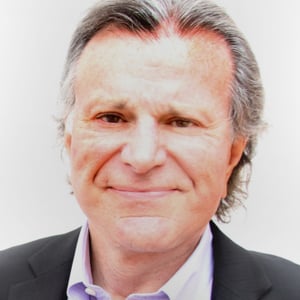
H.H. Macaulay Endowed Professor of Economics, Clemson College of Business
Thomas Hazlett is the Hugh H. Macaulay Endowed Professor of Economics at Clemson University. He has previously held faculty positions at George Mason University, the University of California, Davis, and the Wharton School, and served as Chief Economist of the Federal Communications Commission. A noted expert in regulatory economics and information markets, his research has appeared in academic forums such as the Journal of Law & Economics, RAND Journal of Economics, the Journal of Financial Economics, the University of Pennsylvania Law Review and the Columbia Law Review. He has also written for such popular periodicals as the Wall Street Journal, The Economist, Slate, the N.Y. Times, N.Y. Daily News, Reuters.com, Business Week, The New Republic and the Financial Times. His most recent book, The Political Spectrum: The Tumultuous Liberation of Wireless Technology, from Herbert Hoover to the Smartphone, (Yale, 2017), was featured as one of the top tech books of the year at CES 2018.
Director of Policy Studies & Senior Fellow, The Free State Foundation
Seth L. Cooper is Director of Policy Studies & Senior Fellow at The Free State Foundation. His work on federal communications and technology policy at the Free State Foundation began in 2009.
With Randolph May, Mr. Cooper is the co-author of Modernizing Copyright Law for the Digital Age: Constitutional Foundations for Reform (2020) and Constitutional Foundations of Intellectual Property: A Natural Rights Perspective (2015), both published by Carolina Academic Press. Along with Mr. May, Mr. Cooper also co-authored A Reader on Net Neutrality and Restoring Internet Freedom (2018) and #CommActUpdate: A Communications Law Fit for the Digital Age (2017), both published by Free State Foundation Press. He previously contributed to two chapters in Communications Law and Policy in the Digital Age (2012), published by Carolina Academic Press. Mr. Cooper's work has also appeared in such publications as CommLaw Conspectus, the San Jose Mercury News, Forbes.com, the Des Moines Register, the Baltimore Sun, the Washington Examiner, and the Washington Times.
Mr. Cooper previously served as Director to the Telecommunications and Information Technology Task Force at the American Legislative Exchange Council (ALEC). Mr. Cooper served as judicial clerk to the Honorable James Johnson at the Washington State Supreme Court. His co-writings about the Washington Supreme Court have appeared in the Gonzaga Law Review and in Federalist Society publications. He has worked in law and policy staff positions at the Washington State Senate and at the Discovery Institute's Center for Science & Culture. Mr. Cooper is a 2009 Lincoln Fellow at the Claremont Institute. He also has worked in private practice in the State of Washington, handling civil legal matters involving personal injuries, small business, contracts, and wills, trusts, and estates.
Mr. Cooper earned his B.A. degree in Political Science from Pacific Lutheran University and received his J.D. from Seattle University School of Law.
Senior Vice President, Public Knowledge
Harold Feld is the Senior Vice President for Public Knowledge, one of the nation’s premier consumer advocacy organizations working at the intersection of copyright, telecommunications and the Internet. Feld is a highly regarded thought leader in the areas of telecommunications and digital consumer protection, and author of The Case for the Digital Platform Act: Market Structure and Regulation of Digital Platforms. He was previously Senior Vice President at the Media Access Project (MAP), a public interest law firm, where he advanced competition policies in media, telecommunications and technology. Prior to joining MAP, Feld was an associate at Covington & Burling, and clerked for the DC Court of Appeals.
President, The Free State Foundation
Randolph J. May is Founder and President of The Free State Foundation. The Free State Foundation is an independent, non-profit free market-oriented think tank founded in 2006.
From October 1999-May 2006, May was a Senior Fellow and Director of Communications Policy Studies at The Progress & Freedom Foundation, a Washington, DC-based think tank. Prior to joining PFF, he practiced communications, administrative, and regulatory law as a partner at major national law firms. From 1978 to 1981, May served as Assistant General Counsel and Associate General Counsel at the Federal Communication Commission.
May has held numerous leadership positions in bar associations. He is a past Chair of the American Bar Association’s Section of Administrative Law and Regulatory Practice. He is a Fellow of the National Academy of Public Administration. Mr. May also has served as a Public Member of the Administrative Conference of the United States and currently is a Senior Fellow at ACUS.
Mr. May has published more than two hundred articles and essays on communications, administrative and constitutional law topics. He is author of A Call for a Radical New Communications Policy: Proposals for Free Market Reform, and co-author of #CommActUpdate: A Communications Law Fit for the Digital Age and The Constitutional Foundations of Intellectual Property. Mr. May is editor of two books, Communications Law and Policy in the Digital Age: The Next Five Years and New Directions in Communications Policy. In addition, he is the co-editor of two other books, Net Neutrality or Net Neutering: Should Broadband Internet Services Be Regulated? and Communications Deregulation and FCC Reform. In the past, Mr. May has written regular columns on legal and regulatory affairs for Legal Times and the National Law Journal, leading national legal periodicals.
He received his A.B. from Duke University and his J.D. from Duke Law School, where he serves as a member of the Board of Visitors.
Vice President, Strategic Alliances & External Affairs, T-Mobile
Clint Odom is the vice president for strategic alliances & external affairs at T-Mobile. Previously, Odom led policy and advocacy for the National Urban League while simultaneously serving as executive director of their Washington Bureau. Odom served for a decade in the United States Senate as legislative director for Senator Kamala Harris of California and general counsel to Senator Bill Nelson of Florida.
Odom also served as a senior advisor at the Federal Communications Commission and practiced law at the firm Dow, Lohnes & Albertson (now Cooley LLP). Odom served as a law clerk to the Honorable Henry T. Wingate of the U.S. District Court of the Southern District of Mississippi and is a graduate of Louisiana State University and the University of Pennsylvania Law School.

Topics
Can the FCC Take T-Mobile’s Money and Run?
A fascinating legal debate has the telecom sector in a stir. The topic? What the...
The FCC's Digital Discrimination Rulemaking: Facilitating Equal Access to Broadband Services
Seth L. Cooper, Harold Feld, Randolph May, Clint Odom
The Infrastructure Investment and Jobs Act, signed into law on November 15, 2021, requires the...
The FCC's Digital Discrimination Rulemaking: Facilitating Equal Access to Broadband Services
TeleforumCorporations, Securities & Antitrust and Telecommunications & Electronic Media: Regulating Social Media
Duane Benton, Brendan Carr, Harold Feld, Kathleen Ham, Christine S. Wilson
On November 10, 2020, The Federalist Society's Corporations, Securities & Antitrust and Telecommunications & Electronic...
Topics
Wireless Exceptionalism: Court Concludes T-Mobile/Sprint Merger Will Speed 5G
The New T-Mobile scored a sweeping victory in New York v. Deutsche Telekom AG. A...
Topics
T-Mobile Merger and the 5G Revolution
This week, John Kneuer wrote an interesting piece on the value of the proposed merger...
Topics
Federalism and Broadband: A National Question
As Federalists of good standing, it may seem odd that we would argue against “states...
Topics
Internet Freedom Round Up
On December 14, the Federal Communications Commission (FCC) will vote on the Proposal to Restore Internet...
Government Must Take Prompt, Decisive Action as Spectrum Deficit Looms for American Consumers
John Kneuer, Rachael M. Bender
Note from the Editor: This article is a discussion about the allocation of spectrum. As...
Allocating Radio Spectrum for the "Mobile Data Tsunami"
Thomas Hazlett
I. A Mobile Data Tsunami? The mobile sector is said to face a looming spectrum...