
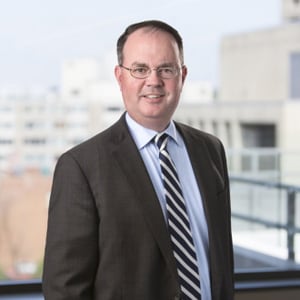
Partner, Steptoe LLP
Shannen W. Coffin is a partner in Steptoe’s Washington office, where co-chairs the firm’s appellate practice and is a member of the regulatory litigation practice group. He frequently represents clients in trial and appellate courts in matters involving constitutional and administrative law challenges to state and federal government regulatory action.
Mr. Coffin previously served as a senior lawyer in the Executive Branch. He was Counsel to Vice President Cheney in the Office of the Vice President of the United States, where, among other things, he served on the White House’s judicial selection committee. Before that, Mr. Coffin served as Deputy Assistant Attorney General in the US Justice Department’s Civil Division, where he was responsible for overseeing and coordinating trial litigation on behalf of the federal government for constitutional challenges to federal statutes, statutory and constitutional challenges to agency programs, and defense of national security and anti-terrorism programs.
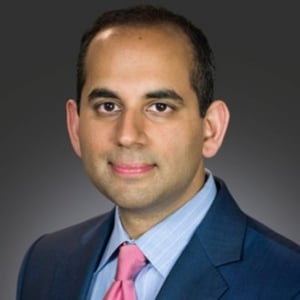
General Counsel, TRM Labs
Sujit Raman joined Sidley Austin after nearly a dozen years as a federal prosecutor, culminating in his service as Associate Deputy Attorney General at the U.S. Department of Justice (DOJ). In that role, he personally advised the Attorney General and Deputy Attorney General in their oversight of the nation’s cyber-related criminal and national security investigations and prosecutions. Sujit also led DOJ’s policy formulation in a number of critical areas, including cybersecurity, cross-border data transfers and protection, 5G/supply chain security, and emerging technologies such as facial recognition, cryptocurrency, and encryption. He brings clients a deep understanding of substantive and procedural issues involved in white collar defense, corporate internal investigations, cyber/data protection, and national security matters.
Sujit was a lead U.S. representative in high-profile international data-sharing negotiations with the United Kingdom, Australia, and the European Union. He also coordinated DOJ’s response to the Schrems II decision of the EU Court of Justice and, from 2018–2020, chaired the Attorney General’s Cyber-Digital Task Force, leading formulation of DOJ’s policy and operational response to transnational cybercrime, nation-state-sponsored malign cyber activity, and online foreign influence operations. Sujit was instrumental in drafting the legislation for the Clarifying Lawful Overseas Use of Data (CLOUD) Act and led the team that worked with industry and Capitol Hill to secure the legislation’s bipartisan passage.
In addition to his extensive experience in cybersecurity, data protection, and national security issues, Sujit served for over eight years as an Assistant United States Attorney in Maryland where he led numerous complex white collar fraud and public corruption investigations, and tried six cases to jury verdict. He also served as the office’s chief of appeals, supervising the appellate work of over 80 federal prosecutors across the spectrum of federal criminal law, arguing 20 cases in the federal court of appeals, and personally litigating matters of first impression in areas as diverse as export control and economic sanctions compliance; the RICO statute; the border search doctrine and the third-party doctrine as they apply to electronic evidence; and other leading issues at the intersection of law, technology, and privacy.
Sujit is a sought-after speaker and thinker on international regulatory and geopolitical issues and has appeared in national media and testified before the U.S. Senate on these topics. His professional achievements and service to the legal community have earned him public recognition, including the “Attorney General’s Award for Distinguished Service” (2018), the National Asian Pacific American Bar Association “Best Lawyers Under 40” Award (2015), the National South Asian Bar Association “Cornerstone Award” (2015), and the U.S. Secret Service “Director’s Award” (2013).
A term member of the Council on Foreign Relations, Sujit is a graduate of Harvard College, Harvard Law School, and the University of Bristol (UK), where he studied as a Marshall Scholar and served as head coach of the women’s varsity rowing program.
Head of Risk, cLabs
Jai Ramaswamy is the Head of Risk, Compliance and Regulatory Policy at cLabs, working on Celo, an open source, distributed ledger protocol designed to support the global development of financial tools to create a more accessible financial system. Before joining cLabs, Jai was the Head of Enterprise Risk Management at Capital One and the Global Head of AML Compliance Risk Management at Bank of America/Merrill Lynch.
Jai served in the United States Department of Justice for over a decade before moving to the private sector, most recently as the Chief of the Asset Forfeiture and Money Laundering Section in the Criminal Division. In that role, he oversaw the criminal enforcement of the Bank Secrecy Act and federal money laundering laws. He also investigated and prosecuted complex white collar crime as the Assistant United States Attorney in the Southern District of New York and pursued cybercriminal syndicates and supported the government's critical infrastructure protection efforts with DOJ's Computer Crime and Intellectual Property Section.
Jai has an undergraduate degree in government and economics from Harvard University, a law degree from the University of Pennsylvania Law School and a doctorate in social and political science from Cambridge University, U.K.
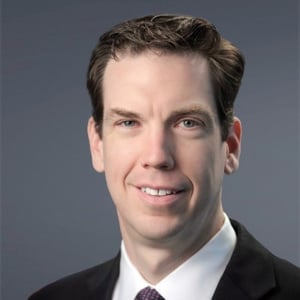
Partner, Fusion Law, PLLC
Paul is the founding partner of Fusion Law, PLLC. He has extensive experience with state, federal, and global regulators building coalitions and implementing policies to promote innovation in financial services. He is responsible for designing and implementing the first state (Arizona) and federal (CFPB) FinTech sandboxes in the United States. He also designed the CFPB no-action letter and trial disclosure policies. He helped found the first global regulatory innovation coalition (Global Financial Innovation Network) and led the founding of the first U.S. regulatory innovation coalition (American Consumer Financial Innovation Network). He served on the Financial Stability Oversight Council subcommittee on digital assets. He also has drafted state-level laws on blockchain and utility tokens.
Paul also has significant enforcement and litigation experience. He led many multi-state consumer protection enforcement matters as Civil Litigation Division Chief at the Arizona Attorney General’s Office.
Prior to his government service, Paul practiced law in the areas of securities litigation and transactional work for approximately six years at two well-known law firms. He also clerked on the U.S. Court of Appeals for the Fourth Circuit.
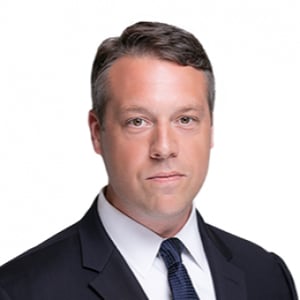
Partner, K&L Gates LLP
David Rybicki is a partner in the Washington, D.C. office of K&L Gates LLP. He is a member of the investigations, enforcement, and white collar practice group.
David recently served in the Criminal Division of the U. S. Department of Justice in Washington, D.C., as Acting Principal Deputy Assistant Attorney General (2017) and Deputy Assistant Attorney General (2017-2020), the second- and third-highest ranking positions in the division. In these roles, David led the investigation, prosecution, and coordination of nationally significant matters and initiatives involving corporate fraud, the Bank Secrecy Act, the Foreign Corrupt Practices Act (FCPA), cybercrime and cryptocurrencies, OFAC sanctions enforcement, transnational organized crime, healthcare fraud, consumer fraud, immigration fraud, civil and criminal RICO, public corruption, human rights, labor racketeering, and gaming law.
Prior to joining the Criminal Division, David served as Counselor to the Attorney General and worked on the Justice Department’s top criminal enforcement initiatives. This work included revision of the Department’s corporate enforcement policies, extension of the FCPA Pilot Program, “Going Dark” and other significant cybersecurity policy matters, Mutual Legal Assistance Treaties, marijuana enforcement and regulatory policy, and creation of the Department's new civil asset forfeiture policies and regulatory guidelines.
In 2018, David was appointed to serve as an ex officio member of the United States Sentencing Commission, where he represented the Justice Department with respect to all aspects of federal sentencing law and policy, including amendments to the Federal Sentencing Guidelines for corporate fraud and other white collar crimes.
The William J. and Dorothy K. O'Neill Chair in Law Emeritus, Notre Dame Law School
Professor G. Robert Blakey, the nation's foremost authority on the Racketeer Influenced and Corrupt Organization Act (RICO), has served on the Notre Dame Law School faculty for more than 30 years. He teaches in the areas of criminal law and procedure, federal criminal law and procedure, terrorism, and jurisprudence. Blakey's extensive legislative drafting experience resulted in the passage of the Crime Control Act of 1973, the Omnibus Crime Control Act of 1970 and the Organized Crime Control Act of 1970, Title IX of which is known as RICO. He has been personally involved in drafting and implementing RICO-type legislation in 22 of the more than 30 states that have enacted racketeering laws. He frequently argues in or consults on cases involving RICO statutes at both the federal and state levels, including several cases before the United States Supreme Court. Blakey has considerable expertise in federal and state wiretapping statutes as well. He helped draft and secure passage of Title III on wiretapping of the federal 1968 Crime Control Act, and has been personally involved in drafting and implementing wiretapping legislation in 39 of the 43 states that have enacted such laws. Blakey has extensively investigated the assassinations of President John F. Kennedy and Dr. Martin Luther King Jr. He served as chief counsel and staff director to the U.S. House Select Committee on Assassinations from 1977 to 1979, and helped to draft the President John F. Kennedy Assassination Records Collection Act of 1992. Blakey gave remarks at the 2012 Law School Hooding/Diploma Commencement Ceremony on May 19, 2012. Blakey received Emeritus status in December 2012.
U.S. Court of Appeals for the D.C. Circuit (ret.) and former U.S. Senator
James L. Buckley was born in New York City in 1923, grew up in rural Connecticut, and received his B.A. degree from Yale. Following service as a naval officer in World War II, he returned to New Haven to secure his law degree. After several years in private practice, he joined a group of small companies engaged in oil exploration abroad. He was elected to the United States Senate in 1970 as the candidate of New York's Conservative Party. He failed of re-election; but he has since served as an under secretary of state in the Reagan administration, as president of Radio Free Europe/Radio Liberty in Munich, Germany, and, most recently, as a judge on the U.S. Court of Appeals for the District of Columbia Circuit. He retired in 2000 and now resides in Bethesda, Maryland.
Founding Partner, diGenova & Toensing LLP
Joseph E. diGenova, founding partner of the Washington, D.C. law firm of diGenova & Toensing, LLP represents individuals, corporations and other entities before the Federal courts, Congress, and U.S. cabinet departments and agencies on criminal, civil, administrative and investigative matters. In December 1992, he was appointed Independent Counsel in the Clinton Passport File Search matter. He was appointed Chairman of the Grievance Committee of the D.C. District Court in 1995 by the judges of that court. In 1997, he was named Special Counsel by the U.S. House of Representatives to probe the International Brotherhood of Teamsters. As a result of that assignment, he was appointed by the U.S. District Court, Southern District of New York, to sit on the Independent Review Board, which oversees the Teamsters pursuant to a 1989 Consent Decree. He is on that Board with former FBI and CIA Director William Webster and former U.S. Attorney General Benjamin Civiletti. In 2007, Mr. diGenova was retained by the New York State Senate to investigate then-Gov. Eliot Spitzer in the Troopergate matter.
His practice emphasizes representation to resolve disputes with various branches of the Federal government through negotiation, litigation, and/or legislation. He does white collar criminal defense work for individuals (such as the former CEO of BCCI) and corporations, conducting internal investigations as well. He represents individuals and organizations in Congressional investigations.
For four years, diGenova was United States Attorney, District of Columbia, which is the largest such office, having more than 400 attorneys. He supervised complex Federal criminal and civil matters including international drug smuggling, public corruption, espionage, insider trading, tax fraud, extradition, fraud, RICO, export control and international terrorism. Many of these prosecutions involved negotiations with foreign governments. He conducted a wide-ranging probe of corruption in the D.C. government, which led to the conviction of two deputy mayors. He led the prosecution of Israeli spy Jonathan Pollard. He was the Principal Assistant U.S. Attorney during the prosecution of attempted Presidential assassin, John W. Hinckley.
DiGenova has extensive experience on Capitol Hill. He was Chief Counsel and Staff Director of the Senate Rules Committee and Counsel to the Senate Judiciary, Governmental Affairs and Select Intelligence Committees. He has conducted confirmation, investigative, legislative and oversight hearings, drafted legislation and testified before both Houses of Congress. He also served as Administrative Assistant and Legislative Director to U.S. Senator Charles Mathias.
Mr. diGenova has published articles on criminal law, terrorism, and Congressional oversight and has spoken on those and other issues to various organizations throughout the United States. As part of his advocacy approach, he has appeared on Court TV, Lehrer News Hour, Meet the Press, Face the Nation, Nightline, 60 Minutes, Crossfire, This Week With David Brinkley, John McLaughlin’s One On One, Today Show, Good Morning America, and other national television programs. He received his undergraduate degree from the University of Cincinnati and his law degree from Georgetown University.

Judge, U.S. Court of Appeals, District of Columbia Circuit
Judge Sentelle was appointed United States Circuit Judge in October 1987, served as Chief Judge from February 11, 2008 until February 11, 2013, and took senior status on February 12, 2013. He is a 1968 graduate of the University of North Carolina Law School. Following law school, he practiced with the firm of Uzzell & DuMont until he became an Assistant U.S. Attorney in Charlotte, N.C. in 1970. From 1974 to 1977, he served as a North Carolina State District Judge but left the bench in 1977 to become a partner with the firm of Tucker, Hicks, Sentelle, Moon & Hodge. In 1985, Judge Sentelle joined the U.S. District Court, Western District of North Carolina, in Asheville, where he served until his appointment to the D.C. Circuit. Judge Sentelle was the Presiding Judge of the Special Division for the Purpose of Appointing Independent Counsels (1992-2006). He also served as the Chair of the U.S. Judicial Conference's Executive Committee (2010-2013). Judge Sentelle served for over 20 years as President of the Edward Bennett Williams Inn of the American Inns of Court.
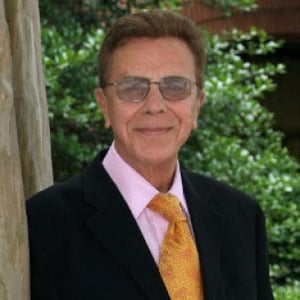
Professor of Law, Emeritus, Marshall-Wythe Law School at the College of William and Mary
William W. Van Alstyne, one of the nation's foremost constitutional law scholars, and William & Mary’s Lee Professor of Law from 2004 to 2012, died on January 29, 2019, in Southern California.
Professor Van Alstyne was appointed Lee Professor of Law at the Marshall-Wythe Law School at the College of William and Mary in 2004. He is a graduate of the University of Southern California (B.A. in philosophy, magna cum laude) and Stanford University Law School (J.D., Articles and Book Review Editor of The Stanford Law Review). Following his admission to the California Bar and brief service as Deputy Attorney General of California, he joined the Civil Rights Division of the U. S. Department of Justice handling voting rights cases in the South. After active duty with the U. S. Air Force, he was appointed to the law faculty of the Ohio State University, advancing to full professor in three years. Appointed to the Duke law faculty shortly thereafter, he was named to the William R. & Thomas S. Perkins Chair of Law in 1974.
Professor Van Alstyne’s professional writings have appeared during four decades in the principal law journals in the United States, with frequent republication in foreign journals. They address virtually every major subject in the field of constitutional law. His work has been cited in a large number of judicial opinions including those of the Supreme Court. The Journal of Legal Studies for January, 2000, named Professor Van Alstyne in the top forty most frequently cited legal scholars in the United States of the preceding half-century.
Professor Van Alstyne has also taught and given professional papers internationally, in Germany, Austria, and Denmark, in Chile, the former Soviet Union, China, Japan, Canada, and Australia. He has been a visiting faculty member on the law faculties of the University of Chicago, Stanford, California (Berkeley and UCLA), Pennsylvania, Michigan, and Illinois, a Fulbright Lecturer in Chile, a Senior Fellow at the Yale Law School, and a faculty fellow at the Hague International Court of Justice. He has appeared as counsel and as amicus curiae in constitutional litigation in the federal courts, including the Supreme Court. He has also appeared in numerous hearings before Senate and House Committees, on legislation affecting the separation of powers, war powers, constitutional amendments, impeachments, legislation affecting civil rights and civil liberties, and nominations to the Supreme Court.
In 1987, Professor Van Alstyne was selected in a poll of federal judges, lawyers, and academics by the New York Law Journal as one of three academics among "the ten most qualified" persons in the country for appointment to the Supreme Court, a distinction repeated in a similar poll by The American Lawyer, in 1991. Past National President of the American Association of University Professors, and former member of the National Board of Directors of the A.C.L.U., he was elected into the American Academy of Arts and Sciences in 1994.
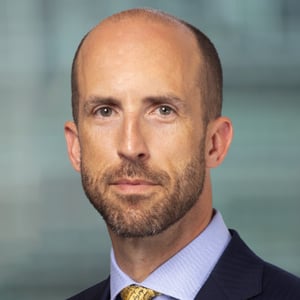
Director of Health Policy Studies, Cato Institute
Michael F. Cannon is the Cato Institute’s director of health policy studies. His scholarship spans public health; regulation of clinicians, medical facilities, pharmaceuticals, and medical devices; employer‐sponsored and other private health insurance; Medicare; Medicaid; CHIP; the Veterans Health Administration; medical malpractice litigation; administrative law; international health systems; political philosophy; and more. Cannon is “an influential health‐care wonk” (Washington Post) and “the most famous libertarian health care scholar” (Washington Examiner). Washingtonian magazine named Cannon one of Washington, DC’s “Most Influential People” in 2021, 2022, and 2023.
Cannon has appeared on ABC, Al Jazeera, BBC, CBS, CNN, CNBC, C‑SPAN, Fox News Channel, NPR, and other broadcast media. His articles have appeared in the Wall Street Journal; the New York Times; USA Today; the Washington Post; the Los Angeles Times; SCOTUSBlog; Forum for Health Economics and Policy; JAMA Internal Medicine; Health Matrix: Journal of Law‐Medicine; Harvard Health Policy Review; the Yale Journal of Health Policy, Law, and Ethics; the Journal of Health Politics, Policy and Law; and Quinnipiac Health Law Journal. His latest book is Recovery: A Guide to Reforming the U.S. Health Sector.
Cannon was previously a domestic policy analyst for the U.S. Senate Republican Policy Committee, where he advised the Senate leadership on health, education, labor, welfare, and the Second Amendment. He is a member of the Board of Advisers of Harvard Health Policy Review and the Federalist Society Regulatory Transparency Project’s FDA & Health Working Group.
Cannon holds an MA in economics and a JM in law and economics from George Mason University and a BA in American government from the University of Virginia.
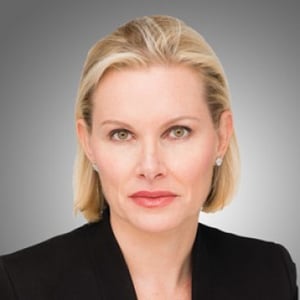
Partner, Goodwin Procter LLP
Delphine O’Rourke is a partner in the Life Sciences group and Healthcare practice at Goodwin Procter LLP. She is trusted counsel to health industry leaders. Ms. O’Rourke counsels health companies, hospitals & healthcare systems, and investors on the regulatory frameworks that drive their business. Clients rely on her deep knowledge of healthcare law and policy as well as her experience as a health care executive and in-house general counsel. She served as Associate General Counsel of Ascension and in her decades plus with Ascension, she served in legal roles of increasing responsibility for the $29 billion health enterprise.
Ms. O’Rourke’s healthcare regulatory practice focuses on:
Ms. O’Rourke is a regular speaker on cutting edge healthcare regulatory developments and contributor to leading legal and industry publications and podcasts including Modern Healthcare, Law360 and the American Health Law Association. She is nationally recognized for her commitment to the advancement of women and inclusionary leadership.
Ms. O’Rourke also maintains an active pro bono practice.
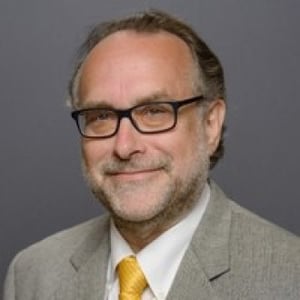
Chair, Missouri Chapter, Physicians for a National Health Program
Dr. Ed Weisbart chairs the Missouri chapter of Physicians for a National Health Program, a 30 year-old non-profit research and education organization of more than 21,000 physicians, medical students, health professionals, and others who support single-payer national health insurance.
He is an assistant professor of clinical medicine at Washington University in St. Louis. He volunteers in a variety of safety net clinics and other non-profits across the St. Louis area, and as a volunteer physician recruiter for free clinics across the nation. He serves as vice president of the Consumers Council of Missouri.
He received his medical degree at the University of Illinois in Chicago in 1979, completed his family medicine residency and a fellowship in family medicine education at Michigan State University in 1982, and practiced family medicine at Rush Medical Center in Chicago for 20 years. He served as chief medical officer of Express Scripts from 2003 to 2010.
Dr. Weisbart has had several articles published in both national medical journals and local media outlets regarding the health care needs of the uninsured.
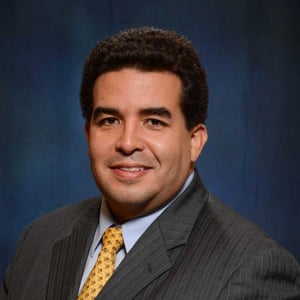
Associate Dean for Graduate Studies and Global Engagement Professor of Law, Florida International University College of Law
Manuel A. Gómez is Associate Dean of International and Graduate Studies and Associate Professor of Law at Florida International University College of Law where he regularly teaches courses on Complex Litigation, International Arbitration, Alternative Dispute Resolution, Law and Society, and Introduction to International and Comparative Law, with emphasis on Latin America. Professor Gómez also has law teaching experience at other US universities such as Stanford and Iowa, and has been at numerous Latin American, European, and Asian universities, either as guest lecturer, speaker or visiting professor. Professor Gómez’s research and academic writing focuses on dispute resolution and governance, legal and institutional reform in Latin America, the globalization of the legal profession, and innovations in legal education. More specifically, professor Gómez studies the use of different dispute resolution mechanisms and fora in an array of contexts, ranging from transnational litigation and international arbitration, to domestic litigation and other non-institutionalized mechanisms. He is also an expert on institutional and legal reform in Latin America, and is also interested in the globalization of lawyers, the role of Judges, and innovations in legal education. Professor Gómez has also served as legal expert in the context of domestic and transnational litigation, and International Arbitration proceedings in the US and Latin America. He is a founding member of the Miami International Arbitration Society (MIAS), member of the Faculty Council of the International Law Section of the Florida Bar, member of the Academic Council at the Institute of Transnational Arbitration (ITA), and member of the Academic Council of the Latin American and Caribbean Center at FIU, among others.
Professor Gómez’s research has earned important awards such as the Law and Society Association’s Dissertation Prize, the Richard S. Goldsmith Award in Dispute Resolution at Stanford University, and the prize awarded by the Venezuelan Studies Section of the Latin American Studies Association (LASA). At FIU, Professor Gómez received the Inaugural Bhagwan Mahavir Junior Faculty Summer Fellowship in 2011, a CIBER Faculty Research Award in 2013, and was recently nominated to FIU President’s Council Worlds Ahead Faculty Award. Professor Gómez has also been appointed as a Research Fellow at the Universidad Metropolitana Law School, Faculty Fellow at FIU CIBER, and a Fellow at Stanford Law School’s Center for the Legal Profession. Leading academic publishers such as Stanford University Press, Cambridge University Press, Routledge, and Hart Publishing, have disseminated Professor Gomez’s work. Professor Gómez’s articles have appeared in leading academic journals such as the Missouri Dispute Resolution Journal, the Stanford Journal of Complex Litigation, the University of Miami Inter-American Law Review, the ILSA Journal of International and Comparative Law, the Georgia Journal of International and Comparative Law, the University of San Francisco Law Review, the FIU Law Review, and the Revista del Instituto Mexicano de Derecho Comparado, among others.
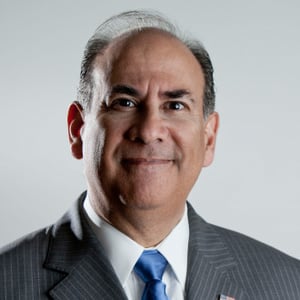
Visiting Fellow, American Enterprise Institute
Ambassador Roger F. Noriega has more than two decades of public policy experience focusing on U.S. interests in the Western Hemisphere. Twice appointed by President George W. Bush (and confirmed by the U.S. Senate) and with 10-year career on Capitol Hill, Ambassador Noriega's breadth of experience and contacts offer strategic vision and practical insight on U.S. foreign policy and aid programs. Noriega is the founder and managing director of VisiónAméricas LLC, which advises U.S. and foreign clients on international business issues, and also is a visiting fellow at the prestigious American Enterprise Institute for Public Policy Research. He serves as Vice Chairman of the Board of Directors of the Congressional Award Foundation and as a member of the advisory boards of the Canadian American Border Trade Partnership and The Americano, an online forum reaching out to Latino voters.
As Assistant Secretary of State for Western Hemisphere Affairs (July 2003 to October 2005), Ambassador Noriega managed a 3,000-person team of professionals in Washington and 50 diplomatic posts to design and implement political and economic strategies in Canada, Latin America, and the Caribbean. He was a leader in an inter-agency team that actively expanded trade and investment opportunities to spur economic growth and to create opportunities for U.S. companies and consumers. He also helped design and execute an annual plan for the effective use of $1.7 billion in U.S. economic assistance in two dozen countries.
As U.S. Ambassador to the Organization of American States (OAS) (August 2001 to July 2003), Noriega coordinated complex and sensitive multilateral diplomacy in a 34-member international organization to bolster OAS efforts to promote trade, fight illicit drugs, and defend democracy.
On Capitol Hill, Noriega counseled powerful Congressional leaders on all aspects of U.S. interests in the Americas, drafted historic legislation, and oversaw U.S. aid programs, the Peace Corps, and international narcotics affairs. From July 1997 to August 2001, he was a member of the Senate Foreign Relations Committee staff of Chairman Jesse A. Helms (R-NC), and from July 1994 to July 1997, he served on the House International Relations Committee staff of Chairman Benjamin A. Gilman (R-NY).
Other experiences include: senior advisor, OAS (July 1993 to July 1994); senior policy advisor, U.S. Mission to the OAS (August 1990 to January 1993); various program management and public affairs positions, U.S. Agency for International Development and U.S. Department of State (November 1986 to July 1990); press secretary and foreign policy advisor, U.S. Representative Robert Whittaker (R-KS) (May 1983 to October 1986); and research assistant, Kansas Secretary of State (December 1981 to April 1983). He has a Bachelor of Arts degree from Washburn University of Topeka, Kansas. Ambassador Noriega has been decorated by Governments of Nicaragua and of Peru and has received numerous awards for public service from organizations committed to the promotion of democracy in the Americas. He serves as Vice Chairman of the Board of Directors of the Congressional Award Foundation and as a member of the advisory boards of the Hispanic Community for Policy, the Canadian American Border Trade Partnership, and the Hispanic American Civics Foundation.
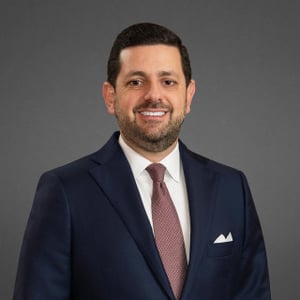
Of Counsel, DLA Piper LLP (US)
Harout J. Samra – a Board Certified Specialist in International Law – focuses his practice on international dispute resolution and arbitration matters, including international civil litigation in US courts.
Harout has represented clients from both the public and private sectors, including foreign governments, public officials and clients from a variety of industries. He has experience in international arbitrations administered under the International Chamber of Commerce (ICC), International Centre for Dispute Resolution (ICDR), United Nations Commission on International Trade Law (UNCITRAL), China International Economic and Trade Arbitration Commission (CIETAC), Bogota Chamber of Commerce, Madrid Court of Arbitration and International Centre for Settlement of Investment Disputes (ICSID) arbitration rules.
Harout currently serves as a member of the Florida Supreme Court Judicial Nominating Commission, by appointment of Governor Ron DeSantis. He previously served, by appointment of Governor Rick Scott, as a member of the Florida Third District Court of Appeal Judicial Nominating Commission, and was elected as Chair of the Commission from 2018-2019.
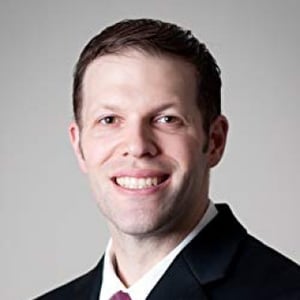
Director of Policy Studies & Senior Fellow, The Free State Foundation
Seth L. Cooper is Director of Policy Studies & Senior Fellow at The Free State Foundation. His work on federal communications and technology policy at the Free State Foundation began in 2009.
With Randolph May, Mr. Cooper is the co-author of Modernizing Copyright Law for the Digital Age: Constitutional Foundations for Reform (2020) and Constitutional Foundations of Intellectual Property: A Natural Rights Perspective (2015), both published by Carolina Academic Press. Along with Mr. May, Mr. Cooper also co-authored A Reader on Net Neutrality and Restoring Internet Freedom (2018) and #CommActUpdate: A Communications Law Fit for the Digital Age (2017), both published by Free State Foundation Press. He previously contributed to two chapters in Communications Law and Policy in the Digital Age (2012), published by Carolina Academic Press. Mr. Cooper's work has also appeared in such publications as CommLaw Conspectus, the San Jose Mercury News, Forbes.com, the Des Moines Register, the Baltimore Sun, the Washington Examiner, and the Washington Times.
Mr. Cooper previously served as Director to the Telecommunications and Information Technology Task Force at the American Legislative Exchange Council (ALEC). Mr. Cooper served as judicial clerk to the Honorable James Johnson at the Washington State Supreme Court. His co-writings about the Washington Supreme Court have appeared in the Gonzaga Law Review and in Federalist Society publications. He has worked in law and policy staff positions at the Washington State Senate and at the Discovery Institute's Center for Science & Culture. Mr. Cooper is a 2009 Lincoln Fellow at the Claremont Institute. He also has worked in private practice in the State of Washington, handling civil legal matters involving personal injuries, small business, contracts, and wills, trusts, and estates.
Mr. Cooper earned his B.A. degree in Political Science from Pacific Lutheran University and received his J.D. from Seattle University School of Law.

President, The Free State Foundation
Randolph J. May is Founder and President of The Free State Foundation. The Free State Foundation is an independent, non-profit free market-oriented think tank founded in 2006.
From October 1999-May 2006, May was a Senior Fellow and Director of Communications Policy Studies at The Progress & Freedom Foundation, a Washington, DC-based think tank. Prior to joining PFF, he practiced communications, administrative, and regulatory law as a partner at major national law firms. From 1978 to 1981, May served as Assistant General Counsel and Associate General Counsel at the Federal Communication Commission.
May has held numerous leadership positions in bar associations. He is a past Chair of the American Bar Association’s Section of Administrative Law and Regulatory Practice. He is a Fellow of the National Academy of Public Administration. Mr. May also has served as a Public Member of the Administrative Conference of the United States and currently is a Senior Fellow at ACUS.
Mr. May has published more than two hundred articles and essays on communications, administrative and constitutional law topics. He is author of A Call for a Radical New Communications Policy: Proposals for Free Market Reform, and co-author of #CommActUpdate: A Communications Law Fit for the Digital Age and The Constitutional Foundations of Intellectual Property. Mr. May is editor of two books, Communications Law and Policy in the Digital Age: The Next Five Years and New Directions in Communications Policy. In addition, he is the co-editor of two other books, Net Neutrality or Net Neutering: Should Broadband Internet Services Be Regulated? and Communications Deregulation and FCC Reform. In the past, Mr. May has written regular columns on legal and regulatory affairs for Legal Times and the National Law Journal, leading national legal periodicals.
He received his A.B. from Duke University and his J.D. from Duke Law School, where he serves as a member of the Board of Visitors.

Professor of Law, Antonin Scalia Law School, George Mason University
Adam Mossoff is Professor of Law at Antonin Scalia Law School, George Mason University. He has published extensively on why patents, copyrights, and other intellectual property rights have been—and should be—legally secured to innovators and creators as property rights. His scholarship has been relied on by the United States Supreme Court, by lower federal courts, and by U.S. federal agencies. He has been invited to testify numerous times before the U.S. Senate and the House of Representatives on intellectual property legislation. His writings on intellectual property policy have also appeared in the Wall Street Journal, New York Times, Forbes, Investors Business Daily, and in other media outlets. His journal articles can be downloaded here.
Professor Mossoff is a longstanding member of the Executive Committee of the Intellectual Property Practice Group of the Federalist Society, on which he served as Chairperson from 2016-2018, and he is Chair of the Intellectual Property Working Group of the Regulatory Transparency Project of the Federalist Society. He is a Senior Fellow and Chair of the Forum for Intellectual Property at the Hudson Institute, a Visiting Intellectual Property Fellow at the Heritage Foundation, and a member of the Board of Directors of the Center for Intellectual Property Understanding. He is a member of the Intellectual Property Rights Policy Committee of ANSI and he has served as Chair and Vice-Chair of the Intellectual Property Committee of the IEEE-USA, on which he remains a member in good standing.
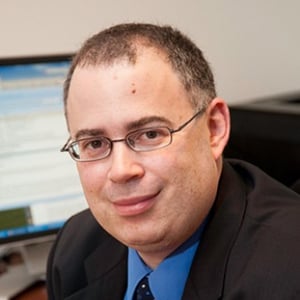
Vice Dean and Professor of Law, Villanova University School of Law
Professor Michael Risch joined the Villanova faculty in 2010 from the West Virginia University College of Law, where he directed the Entrepreneurship, Innovation and Law Program. Prior to joining the West Virginia faculty, he served as an Olin Fellow in Law at Stanford Law School. Professor Risch’s teaching and scholarship focus on intellectual property and internet law, with an emphasis on patents, trade secrets and information access. His articles have been published in the Stanford Law Review and Duke Law Journal, among others; online in the Yale Law Journal Online and PENNumbra; and less formally at the Madisonian, Prawfsblawg, and Patently-O blogs. Two of his articles have been cited by the United States Supreme Court. Professor Risch received his A.B. with honors and distinction in Public Policy and with distinction in Quantitative Economics from Stanford University, and his J.D. with high honors from the University of Chicago Law School. Prior to entering academia, he was a partner at intellectual property boutique Russo & Hale LLP in Palo Alto, California.

Professor Emeritus, Paul M. Hebert Law Center, Louisiana State University
In memoriam
Dr. John Baker is Professor Emeritus of Law, and previously the Dale E. Bennett Professor of Law, at Louisiana State University Law School. He is currently Visiting Professor at Peking University School of Transnational Law (via Zoom) and has been Visiting Professor at The Center for the Constitution, Georgetown Law School (2013-2020). He has also been a Visiting Fellow at Oriel College, the University of Oxford (2012-2014) and taught at Blackfriars Hall, Oxford in 2014. Dr. Baker has also been an adjunct Fellow at the Heritage Foundation (Spring, 2008) and a Distinguished Scholar at the Catholic University of America Law School (2011-12). He has taught at Tulane Law School, George Mason Law School, Pepperdine Law School, New York Law School, Hong Kong University, and the University of Dallas, School of Management and also taught and/or lectured in 17 foreign countries. Notable among his foreign visits are the
following: Visiting Professor at the University of Lyon III (France) (1999-2011); Visiting Professor at the Universidad de los Andes, Chile (2012), as a Fulbright Specialist (2006); and a Fulbright Scholar at various universities in the Philippines. Dr. Baker received his J.D., with honors, from the University of Michigan Law School and his B.A., magna cum laude, from the University of Dallas. He also earned a Ph.D. in Political Thought from the University of London. Baker has taught over a dozen different subjects, mostly courses in public law. His main areas of interest are Constitutional Law (particularly federalism and separation of powers), Criminal Law, Anti-Terrorism Law, International Law, Health Care Law, Mediation, and Comparative Law.
In addition to law review articles and book chapters, Dr. Baker’s academic publications include Hall's Criminal Law: Cases and Materials (with Benson, Force and George; 5th ed. Michie, 1993); An Introduction to the Law of the United States (ed. with Levasseur; University Press of America, 1992). He has also published on Forbes.com, FoxNews.com, in The Washington Times, and a number of times in The Wall Street Journal. He argues in federal court, including two oral arguments in the U.S. Supreme Court. For many years, he co-taught courses for the Federalist Society on separation of powers with the late Supreme Court Justice Antonin Scalia. In September 2016, he co-taught a Supreme Court seminar in China with Justice Samuel Alito. Following law school, he served as a law clerk in federal district court and as an assistant district attorney in New Orleans before joining LSU in 1975. While a professor, he has been as a consultant to USAID, USIA (since rolled into the State Department), the Justice Department, the U.S. Senate Judiciary Subcommittee on Separation of Powers, and the Office of Planning in the White House. He served on an ABA Task Force which issued the report, The Federalization of Crime (1998) and later as a consultant to the “Bi-Partisan Task Force on the Over- federalization of Crime” (2012-2014) created by the U.S. House Judiciary Subcommittee on Crime. Dr. Baker was a co-founder of the first iteration (1995) of Stratfor Inc., a global intelligence agency. He co-authored its first book: The Intelligence Edge (with Friedman, Friedman and Chapman; Crown Books/Random House 1997). In 2022, he began a short, weekly video podcast available on YouTube and Rumble, The Baker Brief.
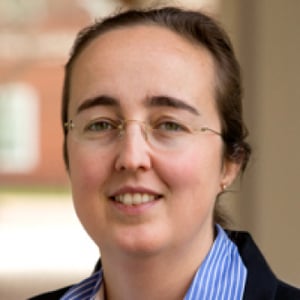
Assistant Professor of Political Science, Old Dominion University
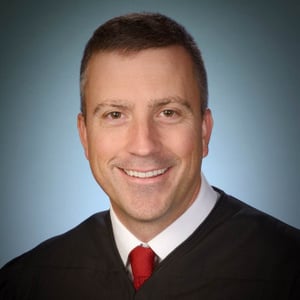
Judge, United States District Court, District of Columbia
Judge Trevor N. McFadden was appointed to the United States District Court for the District of Columbia in 2017. He received his B.A. in 2001 from Wheaton College, IL, magna cum laude. In 2006, he received his J.D. from the University of Virginia School of Law, where he graduated Order of the Coif and was an editor for the Virginia Law Review.
Following graduation from law school, Judge McFadden clerked for Judge Steven Colloton, U.S. Court of Appeals for the Eighth Circuit. He then joined the U.S. Department of Justice, where he served as Counsel to the Deputy Attorney General and as Assistant U.S. Attorney in the District of Columbia. Judge McFadden subsequently became a partner at Baker & McKenzie LLP in Washington, DC, where he focused on white collar investigations. He is also co-author of a treatise, Corporate Settlement Tools: DPAs, NPAs, and Cooperation Agreements.
After four years in private practice, Judge McFadden returned to the U.S. Department of Justice, where he was Deputy Assistant Attorney General and acted as the second-in-command of the Department's Criminal Division. As Deputy Assistant Attorney General, he managed the Division's Fraud and Appellate Sections.
Judge McFadden also has extensive experience in law enforcement. He served as an officer with the Fairfax County, VA, Police Department and as a deputy sheriff in Madison County, VA.
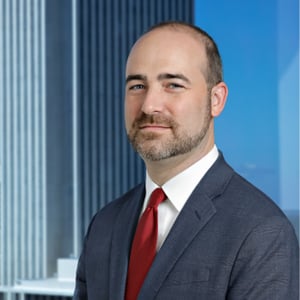
Partner, Shutts & Bowen LLP
Daniel Nordby is a partner in the Tallahassee office of Shutts & Bowen LLP, where he is a member of the Appellate Practice Group. His practice focuses on high-profile, high stakes matters of law and public policy, particularly in the areas of constitutional, appellate and administrative law.
Over the course of his career, Daniel has developed extensive experience in the area of government and administrative law. He is a Past Chair of the Florida Bar’s Administrative Law Section and has served on the Section’s Executive Council for more than a decade. Daniel has represented clients in some of Florida’s largest competitive procurements and has served as counsel of record in a variety of administrative and judicial proceedings involving the application of constitutional and administrative law principles. He has personally presented oral argument on multiple occasions before the Florida Supreme Court, Florida’s First District Court of Appeal, and the Federal Court of Appeals for the Eleventh Circuit on high-profile matters of constitutional law. A representative list of Daniel’s reported opinions in the state and federal courts is available here.
Daniel draws on his prior service in the public sector when representing businesses, individuals and governmental clients on their most challenging legal issues. As General Counsel to then-Governor Rick Scott from 2017-2019, Daniel provided oversight and strategic direction for all major litigation involving Florida’s executive branch agencies and advised Governor Scott on the appointment of more than 100 judges to Florida’s trial and appellate courts. Daniel’s career also includes service as General Counsel to the Florida House of Representatives, General Counsel to Florida’s Secretary of State, Assistant General Counsel to the Florida Department of Education, and Staff Attorney to the Florida Legislature’s Joint Administrative Procedures Committee.
Daniel continues his public service as a gubernatorial appointee to the Florida Supreme Court Judicial Nominating Commission. After serving on the Commission from 2012-2018 as a direct appointee of Governor Scott, Daniel was appointed by Governor DeSantis in July 2019 to a third term. He currently serves as Chair of the Florida Supreme Court Judicial Nominating Commission.
Daniel is also involved with several non-profit and community groups. He is a graduate of Leadership Florida (Connect VI), a member of Florida Blue Key, a member of the American Enterprise Institute’s Leaders Network, and a member of the James Madison Institute’s Inaugural Class of Leaders Fellows. Daniel is on the Steering Committee of the Tallahassee Lawyers Chapter of the Federalist Society for Law and Public Policy Studies and is a Past President of both its Tallahassee Lawyers Chapter and University of Florida Student Chapter. Daniel is an Eagle Scout and attends St. Peter’s Anglican Cathedral in Tallahassee.
Daniel is a “triple-Gator” with three degrees from the University of Florida: a J.D. (with high honors), a B.S. in Microbiology and Cell Science, and a B.A. in Classical Studies. He has been recognized as a Florida Super Lawyers “Rising Star” and has been named to the roster of Florida Legal Elite by Florida Trend magazine in the categories of “Government & Administrative Law,” “Best Government & Non-Profit Attorneys,” and ”Best Up & Coming Attorneys.”

Judge, United States Court of Appeals, Fifth Circuit
Andrew Oldham is a Circuit Judge on the United States Court of Appeals for the Fifth Circuit. Before ascending to the bench, Judge Oldham served as General Counsel to Texas Governor Greg Abbott, where he advised the Governor on a range of issues under federal and state law and managed litigation in which the Governor was an interested party. Before that he served as Deputy Solicitor General for the State of Texas, where he represented Texas in federal courts across the country, including twice before the United States Supreme Court. Before moving to Texas, Judge Oldham was an attorney at Kellogg Hansen Todd Figel & Frederick in Washington, D.C. His practice focused on appellate litigation in federal courts of appeals throughout the country. Before entering private practice, Judge Oldham served as a law clerk to Justice Samuel A. Alito, Jr., at the Supreme Court of the United States and to Judge David B. Sentelle of the U.S. Court of Appeals for the District of Columbia Circuit. He also worked as an attorney-adviser in the Office of Legal Counsel at the U.S. Department of Justice from 2006 to 2008. Judge Oldham earned a B.A. from the University of Virginia with highest honors, a Truman Scholarship for graduate school, an M. Phil., first class (with distinction), from Cambridge University, and a J.D., magna cum laude, from Harvard Law School.
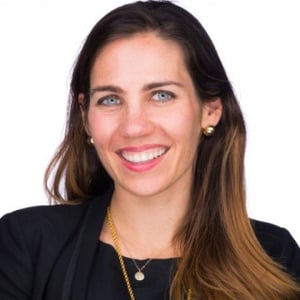
Adjunct Professor of Law, Scalia Law; Google, Corporate Counsel
Kathryn Ciano Mauler currently serves as a Corporate Counsel at Google. Prior to Google, Kathryn was Senior Regulatory Counsel at Uber Technologies, and also spent three years at i360, LLC as General Counsel. Before this, she also worked at a boutique law firm in Washington, D.C. and at the Institute for Justice.
She received her B.A. from the University of Florida. She also received her business degree from the University of Florida - Warrington College of Business, studying at the Ecole supérieure de Commerce de Toulouse in France. Kathryn's J.D. is from the George Mason University School of Law.
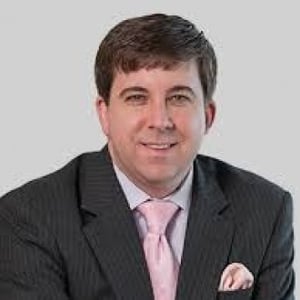
Associate, Fox Rothschild LLP
A licensed U.S. Customs broker and Certified Customs Specialist, Joseph is a logistics and international trade attorney who advises clients on:
He regularly counsels clients on various matters pertaining to Customs and trade, representing both domestic and foreign importers and exporters in multiple aspects of international trade transactions. Joseph works diligently and closely with clients to identify and implement systems aimed at maximizing landed cost savings through duty reduction or deferral, as well as utilization of trade preference programs. Joseph also works alongside clients to assist them through regulatory and C-TPAT program audits; fines, penalties and forfeiture actions; and the filing and perfection of prior disclosures.

Co-Founder and Co-CEO, Institute for Progress
Caleb Watney is the co-founder and co-CEO of the Institute for Progress.
Caleb manages the metascience and immigration policy teams at IFP. His research focuses on policy levers the U.S. could use to rebuild state capacity and increase long-term rates of innovation.
Previously, Caleb worked as the director of innovation policy at the Progressive Policy Insitute, a technology policy fellow at the R Street Institute, and a graduate research fellow at the Mercatus Center. His commentary has been published in The Washington Post, The Atlantic, Politico, Lawfare, and the National Review. He has also been cited in the New York Times, The Economist, Vox, Ars Technica, and the National Journal. He received his master’s in economics from George Mason University and a bachelor of business administration from Sterling College.
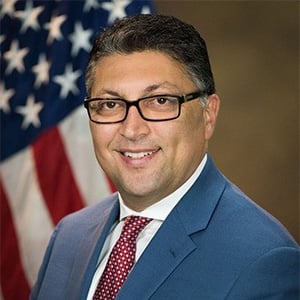
Adjunct Professor of Law, University of Pennsylvania
Makan Delrahim is currently an Adjunct Professor of Law at the University of Pennsylvania.
Previously he served as Assistant Attorney General for the Antitrust Division, Deputy Assistant to the President, and Deputy White House Counsel. Mr. Delrahim’s rich antitrust background covers the full range of industries, issues, and institutions touched upon by the work of the Antitrust Division. He is a former partner in the Los Angeles office of a national law firm. He served in the Antitrust Division from 2003 to 2005 as a Deputy Assistant Attorney General, overseeing the Appellate, Foreign Commerce, and Legal Policy sections. During that time, he played an integral role in building the Antitrust Division’s engagement with its international counterparts and was involved in civil and criminal matters. He has served on the Attorney General’s Task Force on Intellectual Property and as Chairman of the Merger Working Group of the International Competition Network. Mr. Delrahim was also a Commissioner on the Antitrust Modernization Commission from 2004 to 2007. Earlier in his career, Mr. Delrahim served as antitrust counsel, and later as the Staff Director and Chief Counsel of the U.S. Senate Judiciary Committee.
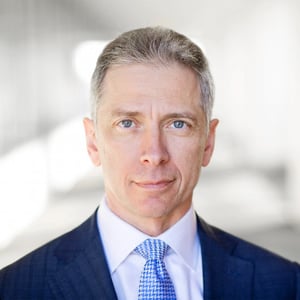
Partner, Sullivan & Cromwell LLP
Andrei Iancu is a partner at Sullivan & Cromwell and one of the leading voices in intellectual property law and innovation policy. He is a former Undersecretary of Commerce for Intellectual Property and Director of the U.S. Patent and Trademark Office (USPTO), a position to which he was confirmed unanimously by the Senate. Andrei has decades of experience representing plaintiffs and defendants in IP matters across the technical and scientific spectra, including medical devices, genetic testing, therapeutics, the Internet, telephony, TV broadcasting, video game systems and computer peripherals. He represents clients in litigation and trials before the district courts, the U.S. International Trade Commission and the USPTO, the Federal Circuit and U.S. Supreme Court, and also counsels clients on obtaining, licensing, enforcing and defending against IP rights globally.
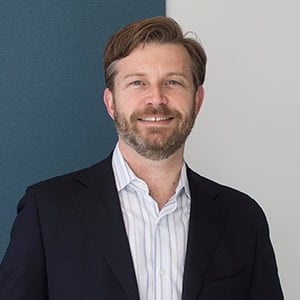
Senior Executive & Director, Center for City Solutions, National League of Cities
Brooks Rainwater is the senior executive and director of the National League of Cities’ (NLC) Center for City Solutions. Rainwater drives the organization’s research agenda, community engagement efforts, and leadership education programming to help city leaders create strong local economies, safe and vibrant neighborhoods, world-class infrastructure, and a sustainable environment.
As an advocate for strong local leadership, Rainwater leads a team of experts across the field of urban policy, and regularly advises cities both in the United States and globally on critical issues faced now and yet to come. He has published a wide variety of reports and articles on innovative solutions that lead to vibrant and successful cities.
Rainwater speaks regularly across the country and overseas on issues facing city leaders. Under his leadership of the Center, it has grown and developed a host of new programs from land use and equitable development to alternative energy and resilience to urban innovation and enhanced city governance strategies.
Rainwater’s research and interests include advancements in technology and city innovation, the sharing economy, and how the rise of state preemption is impacting local authority. His expertise is a draw for media outlets, including the TODAY Show, Wall Street Journal, The Washington Post, CNN, NPR, and the New York Times. Rainwater also frequently contributes to publications such as Fast Company, Forbes, CityLab, Business Insider, TechCrunch, and Fortune.
Prior to joining NLC, Rainwater was Director of Public Policy for the American Institute of Architects (AIA). While there he developed the Local Leaders research series and spearheaded the Cities as a Lab initiative focused on the key role cities play as creative instigators of innovative practices.
Rainwater serves on numerous boards with current and past service to the STAR Communities Board, the American Library Association Public Policy Advisory Council, the International Advisory Board for the City of Rotterdam, and the Arlington County Environment and Energy Conservation Commission.
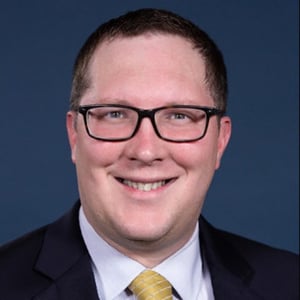
Attorney, Pacific Legal Foundation
Luke A. Wake is an attorney at the Pacific Legal Foundation. Prior to joining PLF, he was a senior staff attorney at the NFIB Small Business Legal Center.
Wake has particular expertise on environmental and land use issues, and has worked on numerous other constitutional issues and matters of importance to small business owners. He is an ardent defender of private property rights, which he believes are essential to the free enterprise system and the foundation of American liberty. As a strong advocate of individual rights and economic liberties, he has built his career defending small business interests.
Wake has focused on a whole host of issues, from employment law matters to regulatory compliance. In addition to serving as a resource for small business owners, Wake is committed to ensuring that the voice of small business is heard in the nation’s courts. As an appellate practitioner, Wake has focused particularly on informing the courts on matters of administrative law and on issues under the Fifth Amendment’s Takings Clause. He is also working to advance small business interests in law review articles, and was recently published in the Berkeley Journal of Law & Ecology. See R.S. Radford & Luke A. Wake, Deciphering and Extrapolating: Searching for Sense in Penn Central, 38 Ecology L.Q. 731, 746-747 (2011).
Before joining the Legal Center’s team, Wake completed a prestigious two-year fellowship as an attorney in the Pacific Legal Foundation’s College of Public Interest Law. Wake is a graduate of Case Western Reserve University School of Law in Cleveland Ohio, and is a member of the California Bar. He completed his undergraduate studies at Elon University in North Carolina in 2006 where he focused on political theory and corporate communications.

Virtual Currencies and the Rule of Law
Shannen W. Coffin, Sujit Raman, Jaikumar Ramaswamy, Paul N. Watkins
During the last weeks of the Trump Administration’s Treasury Department, the Financial Crimes Enforcement Network...
Courthouse Steps Oral Argument Teleforum: Nestlé USA, Inc. v. Doe I
David C. Rybicki
The case of Nestlé USA, Inc. v. Doe I (consolidated with Cargill, Inc. v. Doe I)...
Federalism and the Scope of Federal Criminal Law [Archive Collection]
G. Robert Blakey, James L. Buckley, Joseph E. diGenova, David B. Sentelle, William Van Alstyne
On September 9-10, 1988, The Federalist Society hosted its second annual National Lawyers Convention at...
Deep Dive Episode 133 – Medicare for All? A National Single-Payer v. Private Payer Insurance Debate
Michael F. Cannon, Delphine O'Rourke, Ed Weisbart
On September 22, the Federalist Society's Villanova Student Chapter co-sponsored a debate on Medicare for...
Prosecuting Dictators: The Indictment of Nicolas Maduro
Manuel A. Gomez, Roger F. Noriega, Harout J. Samra
The U.S. Department of Justice recently announced indictments of Venezuelan strongman Nicolas Maduro and several...
Modernizing Copyright Law for the Digital Age
Seth L. Cooper, Randolph May, Adam Mossoff, Michael Risch
In this teleforum, co-authors Randolph May and Seth Cooper will highlight key themes from their...
Session I: Revisiting the Antifederalists
John S. Baker, Michelle Kundmueller, Trevor N. McFadden, Daniel E. Nordby, Andrew Oldham
On January 31-February 1, 2020, The Federalist Society's Florida lawyers chapters hosted their annual Florida...
Executive Agencies' Effects on Innovation and Consumers under President Trump
Kathryn Ciano Mauler, Joseph Rohe, Caleb Watney
On December 4, 2019, the Federalist Society's Triangle Lawyers Chapter, Fox Rothschild LLP, and the...
Division of Authority: DOJ Antitrust; the FTC; the FCC; USPTO
Makan Delrahim, Andrei Iancu
The seventh annual Executive Branch Review Conference took place on May 8, 2019, at the...
Analyzing the Regulatory Thicket
Brooks Rainwater, Luke A. Wake
Regulation is a pervasive and increasingly a contentious issue in 21st Century America. The propriety...