
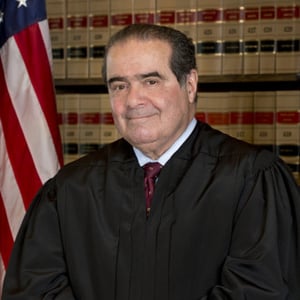
Associate Justice, United States Supreme Court
Antonin Scalia, Associate Justice, was born in Trenton, New Jersey, March 11, 1936. He married Maureen McCarthy and has nine children- Ann Forrest, Eugene, John Francis, Catherine Elisabeth, Mary Clare, Paul David, Matthew, Christopher James, and Margaret Jane. He received his A.B. from Georgetown University and the University of Fribourg, Switzerland, and his LL.B. from Harvard Law School, and was a Sheldon Fellow of Harvard University from 1960-1961. He was in private practice in Cleveland, Ohio from 1961-1967, a Professor of Law at the University of Virginia from 1967-1971, and a Professor of Law at the University of Chicago from 1977-1982, and a Visiting Professor of Law at Georgetown University and Stanford University. He was chairman of the American Bar Association's Section of Administrative Law, 1981-1982, and its Conference of Section Chairmen, 1982-1983. He served the federal government as General Counsel of the Office of Telecommunications Policy from 1971-1972, Chairman of the Administrative Conference of the United States from 1972-1974, and Assistant Attorney General for the Office of Legal Counsel from 1974-1977. He was appointed Judge of the United States Court of Appeals for the District of Columbia Circuit in 1982. President Reagan nominated him as an Associate Justice of the Supreme Court, and he took his seat September 26, 1986.
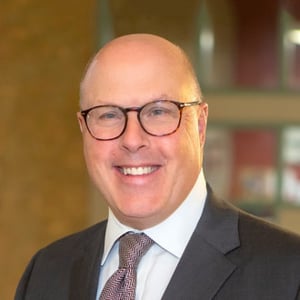
Senior Attorney, Sensient Technologies Corporation
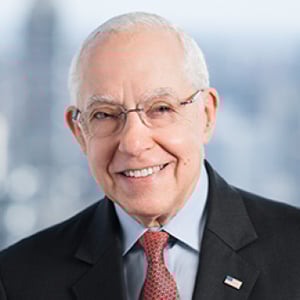
Former United States Attorney General
Michael B. Mukasey is the former Attorney General of the United States, the nation’s chief law enforcement officer. As Attorney General from November 2007 to January 2009, he oversaw the U.S. Department of Justice and advised on critical issues of domestic and international law.
From 1988 to 2006, Judge Mukasey served as a district judge in the United States District Court for the Southern District of New York, becoming Chief Judge in 2000.
From 1972 to 1976, Judge Mukasey served as an Assistant United States Attorney for the Southern District of New York, and as Chief of the Official Corruption Unit from 1975 to 1976. His practice consisted of criminal litigation on behalf of the government, including investigation and prosecution of narcotics, bank robbery, interstate theft, securities fraud, fraud on the government and bribery. From 1976 to 1987 and from 2006 to 2007 he was in private practice.
Judge Mukasey has received numerous honors, including the Federal Bar Council’s Learned Hand Medal for Excellence in Federal Jurisprudence. He served as Chairman of the Committee on Public Access to Information and Proceedings of the New York Bar Association from 1984 to 1987. He served on the Federal Courts Committee of the Association of the Bar of the City of New York from 1979 to 1982 and its Communications Law Committee from 1983 to 1986. Judge Mukasey was also a part-time lecturer at Columbia School of Law from January 1993 to May 2007, teaching trial advocacy.
He received his LL.B. from Yale Law School in 1967 and his B.A. from Columbia College in 1963.
Associate Professor of Law, William and Mary Law School

Associate Professor of Law, Loyola Law School Los Angeles
Levitt is a national expert in constitutional law and the law of democracy, with particular focus on election administration and redistricting. He has published in the Harvard Law Review, the Yale Law and Policy Review, the Georgetown Law Journal, the William & Mary Law Review, and the peer-reviewed Election Law Journal, among others. In the spring of 2013, he served as a visiting faculty member at the Yale Law School.
Levitt has been invited to testify before committees of the U.S. Senate, the U.S. Civil Rights Commission, several state legislative bodies, and both federal and state courts. His research has been cited extensively in the media and the courts, including the U.S. Supreme Court. He also maintains the website All About Redistricting, tracking the process of state and federal redistricting around the country, including litigation.
Levitt has served in various capacities for several presidential campaigns, including as the National Voter Protection Counsel in 2008, helping to run an effort ensuring that tens of millions of citizens could vote and have those votes counted. Before joining the faculty of Loyola Law School, he was counsel at the Brennan Center for Justice at NYU School of Law, for five years. He has also worked as in-house counsel to the country's largest independent voter registration and engagement operation, and at several nonprofit civil rights and civil liberties organizations.
Levitt served as a law clerk to the Honorable Stephen Reinhardt of the U.S. Court of Appeals for the Ninth Circuit. He holds a law degree and a masters degree in public administration from Harvard University, and was an articles editor for the Harvard Law Review. He is admitted to the bar in California, New Jersey, New York, and the District of Columbia, and to the U.S. Courts of Appeal for the Ninth Circuit and Eleventh Circuit, and the U.S. District Courts in the Central District of California and Northern District of Florida.

Senior Fellow and Director of Constitutional Studies, Manhattan Institute
Ilya Shapiro is a senior fellow and director of constitutional studies at the Manhattan Institute and a contributing editor of City Journal. Previously he was executive director and senior lecturer at the Georgetown Center for the Constitution, and before that a vice president of the Cato Institute.
Shapiro is the author of Lawless: The Miseducation of America’s Elites (2025) and Supreme Disorder: Judicial Nominations and the Politics of America’s Highest Court (2020), coauthor of Religious Liberties for Corporations? (2014), and editor of 11 volumes of the Cato Supreme Court Review (2008-18). He has contributed to a variety of academic, popular, and professional publications, including the Wall Street Journal, Harvard Journal of Law & Public Policy, Washington Post, Los Angeles Times, USA Today, National Review, and Newsweek. He also regularly provides commentary for various media outlets, writes the Shapiro’s Gavel newsletter on Substack, and once appeared on the Colbert Report.
Shapiro has testified many times before Congress and state legislatures and has filed more than 500 amicus curiae “friend of the court” briefs in the Supreme Court. He lectures regularly on behalf of the Federalist Society, is a member of the board of fellows of the Jewish Policy Center, was an inaugural Washington Fellow at the National Review Institute, and has been an adjunct law professor at the George Washington University and University of Mississippi. He is also the chairman of the board of advisers of the Mississippi Justice Institute, a barrister in the Edward Coke Appellate Inn of Court, and a former member of the Virginia Advisory Committee to the U.S. Commission on Civil Rights.
Earlier in his career, Shapiro was a special assistant/adviser to the Multi-National Force in Iraq on rule-of-law issues and practiced at Patton Boggs and Cleary Gottlieb. Before entering private practice, he clerked for Judge E. Grady Jolly of the U.S. Court of Appeals for the Fifth Circuit. He holds an AB from Princeton University, an MSc from the London School of Economics, and a JD from the University of Chicago Law School.

Executive Vice President, The Federalist Society
Dean Reuter is Executive Vice President at the Federalist Society for Law and Public Policy Studies. He has served in two federal government agency Offices of the Inspector General, as Counsel to the Inspector General and Deputy Inspector General, responsible for policing the use of federal funds granted and contracted through those agencies. As such, he helped conduct and oversee criminal investigations across the country. He is the principal author of the non-fiction book, The Hidden Nazi: The Untold Story of America's Deal with the Devil, and editor of Liberty’s Nemesis: The Unchecked Expansion of the State and Confronting Terror: 9/11 and the Future of American National Security. He was appointed by the President and served as Vice-Chairman of the Board of Directors of the Corporation for National and Community Service, and recently served as an appointee on the U.S. Commission on Presidential Scholars. He is a graduate of Hood College (BA with Honors) and the University of Maryland School of Law.
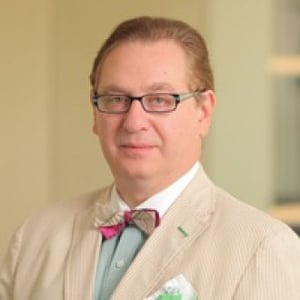
Partner, Baker Hostetler LLP
David Rivkin is a member of the firm's litigation, international and environmental teams and is co-leader of the firm's national appellate practice. He has extensive experience in constitutional, administrative and international law litigation and has been involved in numerous high-profile cases. With his prior experience in the government sector, David draws on a wealth of knowledge when providing compliance advice to companies and handling enforcement proceedings before government agencies on issues arising out of multilateral and unilateral sanctions, the Foreign Corrupt Practices Act (FCPA), anti-boycott issues, bankruptcy and financial fraud matters, and environmental and energy issues.
David has developed and implemented legislative, regulatory and litigation initiatives for two presidential administrations. Over the years, he has published hundreds of articles, op-eds, book reviews and book chapters on a variety of international, legal, constitutional, defense, arms control, foreign policy, environmental and energy issues for various newspapers and magazines, including The Wall Street Journal, The Washington Post, The New York Times, USA Today and The Los Angeles Times, and has been a frequent commentator and guest on TV and radio shows including ABC, CBS, NBC, CNN, Fox News, NPR and PBS.

Senior Policy Analyst, Constitutional Policy, Center for American Progress
Ian Millhiser is the Senior Constitutional Policy Analyst for American Progress, where his work focuses on the Constitution and the judiciary.
Ian previously was a Policy Analyst and Blogger for ThinkProgress, held the open government portfolio for CAP’s Doing What Works project, and was a Legal Research Analyst with ThinkProgress during the nomination and confirmation of Justice Sonia Sotomayor to the United States Supreme Court. He also clerked for Judge Eric L. Clay of the United States Court of Appeals for the Sixth Circuit, and has worked as an attorney with the National Senior Citizens Law Center’s Federal Rights Project, as assistant director for communications with the American Constitution Society, and as a Teach For America corps member in the Mississippi Delta.
He received a B.A. in philosophy from Kenyon College and a J.D., magna cum laude, from Duke University, where he served as senior note editor on the Duke Law Journal and was elected to the Order of the Coif. Ian is a frequent speaker on constitutional topics, and has spoken at numerous law schools including Yale, Michigan, Georgetown, Berkeley, New York University, and Boston College. His writings appeared in a diversity of legal and mainstream publications, including The New York Times, the Los Angeles Times, U.S. News and World Report, The Guardian, AOLNews, The American Prospect, Politico, Huffington Post, Slate, The National Law Journal, The Yale Law & Policy Review, and The Duke Law Journal. He has been a guest on CNN, MSNBC, Al Jazerra, and Fox News, and many radio stations including NPR and the BBC.
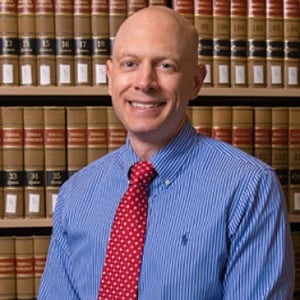
Chancellor Professor, University of Massachusetts Dartmouth School of Law
Peltz-Steele received his law degree from Duke University and a bachelor’s in journalism and Spanish from Washington & Lee University. Peltz-Steele has won awards in teaching, research, and public service. He practiced commercial law in Baltimore and Washington, D.C., and taught law for more than thirteen years before coming to UMass Law in 2011.
Peltz-Steele is author, co-author, or co-editor of qualitative and quantitative research in law and mass communication in journals and books, of treatises in law and development and access to information, and of textbooks in tort law and freedom of information. He is especially active in international media law and policy, having presented papers on five continents and having published in foreign journals and multinational collaborations. His current research focuses on comparative transparency in the context of development and in the private sector. Peltz-Steele serves in various roles in public service organizations, including the legal education committee of the American Bar Association, International Law Section.

Partner, Morrison Foerster, LLP
Deanne E. Maynard, chair of the Appellate and Supreme Court Practice Group, is a partner in the Washington, D.C. office, and a former Assistant to the Solicitor General at the United States Department of Justice.
Ms. Maynard has argued 12 cases before the Supreme Court of the United States, and she has filed over 100 briefs in that Court. Notably, she has worked on some of the most important business cases over the last several Terms. Just last Term, she argued and prevailed in Ransom v. FIA Card Services, a case involving the interpretation of the federal bankruptcy statute. Ms. Maynard also has substantial knowledge and understanding of cutting-edge antitrust and intellectual property issues. Her arguments include the patent case MedImmune, Inc. v. Genentech, Inc. and the antitrust case Pacific Bell Telephone Company v. linkLine Communications, Inc. She was also a principal author of the briefs for the United States in Bell Atlantic Corp. v. Twombly and Quanta Computer, Inc. v. LG Electronics, Inc., and briefs at the certiorari stage in Bilski v. Doll and American Needle, Inc. v. National Football League.
In addition to her substantial Supreme Court experience, Ms. Maynard has argued and briefed significant cases in the federal courts of appeals. Her appellate experience mirrors the wide-ranging litigation breadth of the firm, running the gamut from patent appeals in the Federal Circuit to appeals in the other federal courts of appeals on antitrust, securities law, and other intellectual property issues.
Ms. Maynard served in the Solicitor General’s office from 2004-2009. Before joining the Solicitor General’s office, Ms. Maynard was a partner at Jenner & Block in Washington, D.C. Her practice at Jenner involved a wide variety of complex litigation matters at all levels of the federal judiciary, ranging from a multi-billion dollar government contracts case to media and First Amendment litigation.
After law school, Ms. Maynard clerked twice on the Supreme Court of the United States. During the October 1994 Term, she clerked for Justice Stephen Breyer in his first year on the Court. During the 1993 Term, she clerked for retired Supreme Court Justice Lewis Powell and affiliated with Justice John Paul Stevens. From 1991-1993, Ms. Maynard clerked for Judge Stanley Harris of the U.S. District Court for the District of Columbia.
Ms. Maynard graduated magna cum laude in 1991 from Harvard Law School, where she was an editor of the Harvard Law Review. She earned a B.A., with distinction, in English from the University of Virginia, where she was also Phi Beta Kappa and Omicron Delta Kappa.
Ms. Maynard is the President-elect of the Coke Appellate Inn of Court. She serves as Chair of the Jefferson Trust, an initiative of the University of Virginia Alumni Association.
Ms. Maynard is listed as a Leading Individual in Best Lawyers in America 2011 and 2012, Appellate Law in Chambers USA 2011, and Legal 500 US 2011.

Partner, Morrison Foerster, LLP
Jordan Eth is Co-Chair of the firm's Securities Litigation, Enforcement, and White-Collar Defense Group. He is a nationally recognized litigator, representing public companies and their officers and directors in securities class actions, SEC investigations, derivative suits, mergers and acquisitions litigation, and internal investigations. In 2008, Mr. Eth received a California Lawyer Attorney of the Year Award for co-leading the successful defense of JDS Uniphase Corp. and its former executives in a securities class action jury trial seeking $20 billion in damages.
Mr. Eth has 25 years of experience handling complex and high-stakes litigation. He has represented dozens of companies and individuals in a broad range of industries, including financial services, computer software and hardware, life sciences, and consumer products. Mr. Eth is a Lecturer at Stanford Law School, currently teaching “Modern Securities Fraud Litigation: Public and Private Enforcement.”
Mr. Eth is a frequent speaker across the country on securities litigation topics and actively participates in programs put on by The SEC Institute, the Practising Law Institute, and the Stanford Directors' College. He has also authored many articles on securities litigation. List of Mr. Eth's speaking engagements.
Mr. Eth is recommended by Chambers USA: America’s Leading Lawyers for Business, Legal 500 US, The Best Lawyers in America, Benchmark Litigation and PLC Which Lawyer? In 2010, he was selected by his peers as one of Law 360's 10 Most Admired Securities Attorneys.
He served as a law clerk to the Honorable Chief Judge Robert F. Peckham, United States District Court for the Northern District of California, from August 1985 through August 1986. From 1980 through 1982, Mr. Eth worked as an economist in Washington, D.C., first for the United States Department of Energy and then for the Budget Committee of the United States House of Representatives.
Mr. Eth received his J.D. from Stanford Law School, was elected to the Order of the Coif, and served as Co-President of the Moot Court Board. He received his B.A. in Economics from Swarthmore College, with highest honors and Phi Beta Kappa.

Professor of Law, Antonin Scalia Law School, George Mason University
ILYA SOMIN is Professor of Law at George Mason University and the B. Kenneth Simon Chair in Constitutional Studies at the Cato Institute. His research focuses on constitutional law, property law, democratic theory, federalism, and migration rights. He is the author of Free to Move: Foot Voting, Migration, and Political Freedom (Oxford University Press, revised and expanded edition, 2022), Democracy and Political Ignorance: Why Smaller Government is Smarter (Stanford University Press, revised and expanded second edition, 2016), and The Grasping Hand: Kelo v. City of New London and the Limits of Eminent Domain (University of Chicago Press, 2015, rev. paperback ed., 2016), coauthor of A Conspiracy Against Obamacare: The Volokh Conspiracy and the Health Care Case (Palgrave Macmillan, 2013), and co-editor of Eminent Domain: A Comparative Perspective (Cambridge University Press, 2017). Democracy and Political Ignorance has been translated into Italian and Japanese.
Somin’s work has appeared in numerous scholarly journals, including the Yale Law Journal, Stanford Law Review, Northwestern University Law Review, Georgetown Law Journal, Critical Review, and others. Somin has also published articles in a variety of popular press outlets, including the New York Times, Washington Post, Wall Street Journal, Los Angeles Times, CNN, NBC, The Atlantic, USA Today, Boston Globe, US News and World Report, South China Morning Post, National Law Journal and Reason. He has been quoted or interviewed by the New York Times, Washington Post, Wall Street Journal, Time, Newsweek, The Economist, the Christian Science Monitor, the Financial Times, The Guardian, the Associated Press, CBS, MSNBC, NPR, BBC, Reuters, the Canadian Broadcasting Corporation, the Australian Broadcasting Corporation, Radio Free Europe/Radio Liberty, Al Jazeera, and the Voice of America, among other media.
Somin’s writings have been cited in decisions by the United States Supreme Court, multiple state supreme courts and lower federal courts, and the Supreme Court of Israel. He is co-counsel for the plaintiffs in VOS Selections, Inc. v. Trump, a case challenging the constitutionality of President Trump’s “Liberation Day” tariffs. Somin has testified on the use of drones for targeted killing in the War on Terror before the US Senate Judiciary Subcommittee on the Constitution, Civil Rights, and Human Rights. In 2009, he testified on property rights issues at the United States Senate Judiciary Committee confirmation hearings for Supreme Court Justice Sonia Sotomayor. Somin writes regularly for the popular Volokh Conspiracy law and politics blog, now affiliated with Reason magazine (previously affiliated with the Washington Post from 2014 to 2017). From 2006 to 2013, he served as Co-Editor of the Supreme Court Economic Review, one of the country’s top-rated law and economics journals.
Somin has served as a visiting professor at the University of Pennsylvania Law School. He has also been a visiting professor or scholar at the Georgetown University Law Center, the University of Hamburg, Germany, the University of Torcuato Di Tella in Buenos Aires, Argentina, Uriel Reichman University in Israel, and Zhengzhou University in China. He is a University Affiliate of the Schar School of Policy and Government at George Mason University, and an affiliated faculty member of the George Mason University Institute for Immigration Research. Before joining the faculty at George Mason, Somin was the John M. Olin Fellow in Law at Northwestern University Law School in 2002-2003. In 2001-2002, he clerked for the Hon. Judge Jerry E. Smith of the U.S. Court of Appeals for the Fifth Circuit. Professor Somin earned his B.A., Summa Cum Laude, at Amherst College, M.A. in Political Science from Harvard University, and J.D. from Yale Law School.

Professor of Law, Stanford Law School
Orin S. Kerr is a Professor of Law at Stanford Law School, where he teaches and writes in the areas of criminal procedure and computer crime law. Kerr earned mechanical engineering degrees from Princeton University and Stanford University before graduating with a J.D. from Harvard Law School. He is a former law clerk to Justice Anthony M. Kennedy at the United States Supreme Court and Judge Leonard I. Garth of the U.S. Court of Appeals for the Third Circuit.
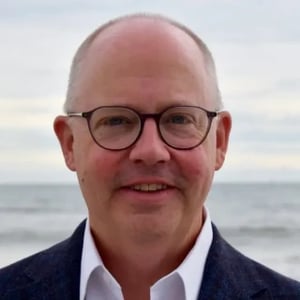
Edward Rood Eminent Scholar Chair, Professor of Law, and Senior Fellow, Hamilton Center for Classical and Civic Education, University of Florida Levin College of Law
Professor Stinneford researches, teaches, and consults about legal ethics, criminal law, criminal procedure, and constitutional law. His work has been cited by the United States Supreme Court, several state supreme courts and federal courts of appeal, and numerous scholars. It has been published in numerous scholarly journals including the Georgetown Law Journal, the Northwestern University Law Review, the Virginia Law Review, the Notre Dame Law Review, and the William & Mary Law Review. The Stanford-Yale Junior faculty forum selected one of his articles as the best paper in the category of Constitutional History, and the AALS Criminal Justice Section named another article as the best paper in its Junior Scholars Paper Competition. In the fall of 2015, he was a Visiting Scholar at the Georgetown Law Center, Center for the Constitution.
John Stinneford was the inaugural Director and serves as a Senior Fellow of the Hamilton Center for Classical and Civic Education at the University of Florida. The Hamilton Center is a new academic unit whose mission is to promote civic education and civic discourse and to foster intellectual diversity. Its core purpose is to help students develop the knowledge, habits of thought, analytical skills, and character to be citizens and leaders in a free society. It will do so through curriculum, public programming, and (in conjunction with the Florida Department of Education) teacher training. Its curriculum will focus primarily on the Western intellectual tradition and the American founding.
Before joining the Florida faculty in 2009, Stinneford clerked for the Hon. James Moran of the United States District Court for the Northern District of Illinois, served as an Assistant United States Attorney, and practiced law with Winston & Strawn in Chicago. Stinneford teaches first-year courses in Criminal Law and Constitutional Law, and upper-level courses in Professional Responsibility, Criminal Procedure, Federal Criminal Law, Law & Literature, and White Collar Crime.
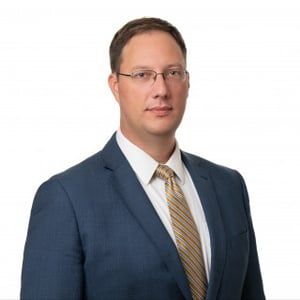
Laurence H. Silberman Chair in Constitutional Governance, American Enterprise Institute; Executive Director, Antonin Scalia Law School’s C. Boyden Gray Center for the Study of the Administrative State
Adam J. White is the Laurence H. Silberman Chair in Constitutional Governance and senior fellow at the American Enterprise Institute, where he focuses on the Supreme Court and the administrative state. He also directs the Antonin Scalia Law School’s C. Boyden Gray Center for the Study of the Administrative State.
He writes on regulation and constitutional government for a variety of publications. He practiced law in Washington, D.C., after clerking for the D.C. Circuit's Judge David Sentelle. He also has been chairman of the ABA's Administrative Law Section.
In 2021, he served on the Presidential Commission on the Supreme Court of the United States, where he criticized “Court packing” and other efforts to restructure the Supreme Court.

Breakfast with U.S. Supreme Court Justice Antonin Scalia
Mineola, New YorkCan Someone Please Turn on the Lights? Bringing Transparency to the Foreign Corrupt Practices Act
James C. Dunlop, Michael B. Mukasey
Note from the Editor: This paper assesses the Department of Justice’s authority under the Foreign...
Sester v. U.S. - Post-Decision SCOTUScast
Allison Orr Larsen
On March 28, 2012, the Supreme Court announced its decision in Sester v. U.S. The question...
Redistricting Litigation Update - Podcast
Justin Levitt, Ilya Shapiro, Dean Reuter
To listen, please right click on the audio file you wish to hear and then...
Fla. v. Dept. of Health and Human Services & Nat'l Fed. of Ind. Business v. Sebelius - Severability - Post-Argument SCOTUScast
David B. Rivkin, Ian Millhiser
On March 28, 2012, the Supreme Court heard oral argument in Fla. v. Dept. of Health...
Federal Aviation Administration v. Cooper - Post-Decision SCOTUScast
Richard J. Peltz-Steele
On March 28, 2012 the Supreme Court announced its decision in Federal Aviation Administration v. Cooper....
Credit Suisse Securities v. Simmonds - Post-Decision SCOTUScast
Deanne Maynard, Jordan Eth
On March 26, 2012, the Supreme Court announced its decision in Credit Suisse Securities v. Simmonds....
U.S. Department of Health and Human Services v. Florida - Individual Mandate - Post-Argument SCOTUScast
Ilya Somin, Orin S. Kerr
On March 26-27, 2012, the Supreme Court heard oral argument in U.S. Department of Health and...
Jackson v. Hobbs and Miller v. Alabama - Post-Argument SCOTUScast
John F. Stinneford
On March 20, 2012 the Supreme Court heard oral argument in Jackson v. Hobbs and Miller v. Alabama....
Astrue v. Capato - Post-Argument SCOTUScast
Adam White
On March 19, 2012 the Supreme Court heard oral argument in Astrue v. Capato. The question...