
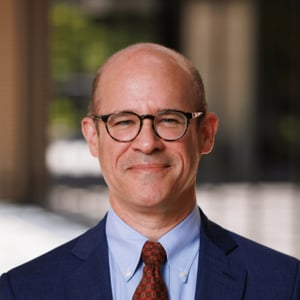
Professor of Law, Stanford Law School
Orin S. Kerr is a Professor of Law at Stanford Law School, where he teaches and writes in the areas of criminal procedure and computer crime law. Kerr earned mechanical engineering degrees from Princeton University and Stanford University before graduating with a J.D. from Harvard Law School. He is a former law clerk to Justice Anthony M. Kennedy at the United States Supreme Court and Judge Leonard I. Garth of the U.S. Court of Appeals for the Third Circuit.
Partner, WilmerHale
Tom Saunders' practice focuses on appellate and government and public policy litigation with a particular emphasis on intellectual property. He has extensive experience representing clients in patent and copyright cases and has built a reputation as a leading advocate in high-stakes litigation before the Federal Circuit and Supreme Court. He returned to the firm in 2008 after completing a clerkship for the Honorable Ruth Bader Ginsburg of the United States Supreme Court.
Mr. Saunders also has significant experience in civil litigation involving the government and quasi-governmental entities. He regularly advises clients on constitutional matters, questions of public policy and strategy, and administrative law.
Partner, Kellogg, Huber, Hansen, Todd, Evans & Figel, P.L.L.C.
Aaron M. Panner specializes in antitrust law, Supreme Court and appellate litigation, and telecommunications regulation. His clients include many of the nation’s leading communications and information services companies, which he has represented at all levels of the federal courts and before the Federal Communications Commission. He has also represented leading companies and individuals in high-stakes litigation at the trial and appellate levels. He has successfully briefed multiple motions to dismiss antitrust claims on the pleadings; he has also successfully represented plaintiffs in defeating motions to dismiss. Since 2010, he has served as amicus counsel for the American Psychiatric Association, participating in a range of Supreme Court and appellate cases involving matters of concern to the psychiatric profession.
Lecturer in Law, University of Chicago Law School
Robert Gasaway is a Lecturer in Law at the University of Chicago Law School. He was formerly a Partner at Kirkland & Ellis LLP in their Washington office. He has represented and advised corporate clients on a wide variety of matters before federal courts, state courts, federal administrative agencies, and federal and state legislative bodies. Mr. Gasaway focuses his practice on appellate litigation, representing clients in the preparation of integrated, multiforum trial and appellate strategies in high-risk sets of related cases.

Frances and George Skestos Professor of Law, University of Michigan Law School
Adam C. Pritchard, the Frances and George Skestos Professor of Law, teaches corporate and securities law. He is the author, with Stephen J. Choi, of Securities Regulation: Cases and Analysis, currently in its fifth edition. His research focuses on securities class actions, Securities and Exchange Commission (SEC) enforcement, and the history of securities law in the U.S. Supreme Court. His articles have appeared in the Journal of Law and Economics, American Law and Economics Review, the Journal of Empirical Legal Studies, the Journal of Finance, the Journal of Law, Economics, and Organizations, and various law reviews. Professor Pritchard holds BA and JD degrees from the University of Virginia, as well as an MPP from the Harris School of Public Policy at the University of Chicago. While at Virginia, he was an Olin Fellow in Law and Economics and served as articles development editor of the Virginia Law Review. After graduation, he clerked for the Hon. J. Harvie Wilkinson III of the U.S. Court of Appeals for the Fourth Circuit and served as a Bristow Fellow in the Office of the Solicitor General at the U.S. Department of Justice. After working in private practice, Professor Pritchard served as senior counsel in the Office of the General Counsel of the SEC, where he wrote appellate briefs and studied the effect of recent reforms in the areas of securities fraud litigation. He received the SEC's Law and Policy Award for his work in United States v. O'Hagan, in which the U.S. Supreme Court upheld the misappropriation theory of insider trading. Professor Pritchard has been a visiting professor at the Northwestern University School of Law, the Georgetown University Law Center, and the University of Iowa School of Law. He also has been a visiting scholar at the SEC and a visiting fellow in capital market studies at the Cato Institute. He was previously a member of the FINRA National Adjudicatory Council and the Nasdaq Listing Qualifications Panel.
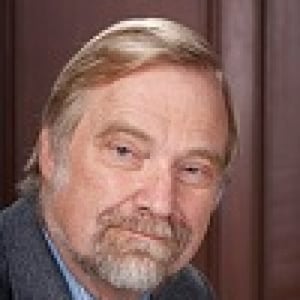
Cecil C. Humphreys Professor of Law, University of Memphis School of Law
Professor William Kratzke is the Cecil C. Humphreys Professor of Law at the University of Memphis Cecil C. Humphreys School of Law. His teaching interests include Torts, Federal Income Taxation, Unfair Competition, and Economic Analysis of Law.
Before joining the Memphis School of Law faculty in 1979, Professor Kratzke was an Assistant Professor of Law at Oklahoma City University from 1977-1979. He also served as a visiting Professor of Law at Santa Clara University from 1986-1987.
Professor Kratzke Co-authored, with Earl W. Kintner, three volumes of a nine volumes treatise entitled Federal Antitrust Law (volume 6, 7, and 8). He has also published law review articles on trademark law, Federal Tort Claims Act, Tennessee administrative law, labor law, products liability law, and Russian law. He is a member of the American Law Institute and was a Fulbright Scholar in the Spring of 1997 and from 2001-2002.
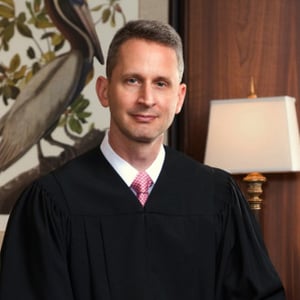
Judge, United States Court of Appeals, Fifth Circuit
Judge Duncan received his B.A. from Louisiana State University in 1994, his J.D. from the Paul M. Hebert Law Center at Louisiana State University in 1997, and his LL.M. from Columbia Law School in 2004.
After graduating from law school, he clerked for Louisiana-based Circuit Judge John Malcolm Duhé Jr. of the United States Court of Appeals for the Fifth Circuit.
From 2008–2012, Duncan served as Appellate Chief for Louisiana's Attorney General's office. From 2012–2014, he served as general counsel of the Becket Fund for Religious Liberty. From 2004-2008, he was an assistant professor of law at the University of Mississippi School of Law.
Before becoming a judge, Duncan practiced at the Washington, D.C. firm of Schaerr Duncan LLP, where he was a founding partner. He was appointed by President Trump to the United States Court of Appeals for the Fifth Circuit on May 1, 2018.
Partner, Kellogg, Huber, Hansen, Todd, Evans & Figel, P.L.L.C.
Aaron M. Panner specializes in antitrust law, Supreme Court and appellate litigation, and telecommunications regulation. His clients include many of the nation’s leading communications and information services companies, which he has represented at all levels of the federal courts and before the Federal Communications Commission. He has also represented leading companies and individuals in high-stakes litigation at the trial and appellate levels. He has successfully briefed multiple motions to dismiss antitrust claims on the pleadings; he has also successfully represented plaintiffs in defeating motions to dismiss. Since 2010, he has served as amicus counsel for the American Psychiatric Association, participating in a range of Supreme Court and appellate cases involving matters of concern to the psychiatric profession.
Partner, WilmerHale
Tom Saunders' practice focuses on appellate and government and public policy litigation with a particular emphasis on intellectual property. He has extensive experience representing clients in patent and copyright cases and has built a reputation as a leading advocate in high-stakes litigation before the Federal Circuit and Supreme Court. He returned to the firm in 2008 after completing a clerkship for the Honorable Ruth Bader Ginsburg of the United States Supreme Court.
Mr. Saunders also has significant experience in civil litigation involving the government and quasi-governmental entities. He regularly advises clients on constitutional matters, questions of public policy and strategy, and administrative law.
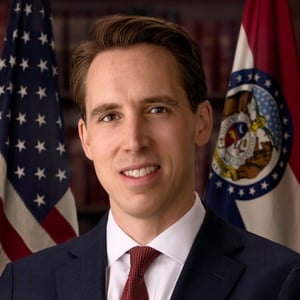
United States Senator, Missouri
U.S. SENATOR JOSH HAWLEY TOOK OFFICE IN JANUARY 2019.
Raised in rural Missouri, U.S. Senator Josh Hawley previously served as Missouri’s Attorney General. There he earned a reputation for taking on the big and the powerful to protect Missouri workers and families. He has battled big government and big business, special interests, organized crime, and anyone who would threaten the well-being of Missourians.
A native of small town Lexington, Missouri in rural Lafayette County, Senator Hawley graduated from Rockhurst High School in Kansas City. After graduating from Stanford University in 2002 and Yale Law School in 2006, he moved back home to mid-Missouri with his wife, Erin, where they started a family. They are the proud parents of two young boys, Elijah and Blaise.
Senator Hawley is recognized as one of the nation’s leading constitutional lawyers. He has litigated at the Supreme Court of the United States, the federal courts of appeals, and in state court, fighting for the people’s liberties. He previously fought Obamacare at the Supreme Court — and won — as one of the lead attorneys in the landmark Hobby Lobby case. He was also a lead attorney in the Hosanna-Tabor case at the Supreme Court, protecting the rights of churches.
As Attorney General, he fought the Washington overreach threatening farms and family businesses, including the Waters of the United States Rule and the Clean Power Plan. Senator Hawley has also taken on big opioid manufacturers, challenging their unethical marketing practices that helped create an epidemic of opioid abuse. He cracked down on human trafficking in Missouri, leading the largest anti-trafficking bust in Missouri history. And he stood up to big tech, launching investigations of the most powerful companies in the world—Google and Facebook—to protect Missourians, their data, and the First Amendment.
The youngest Senator in America, Senator Hawley serves on the Senate Committees on the Judiciary; Armed Services; Homeland Security and Governmental Affairs; Small Business and Entrepreneurship; and the Special Committee on Aging.
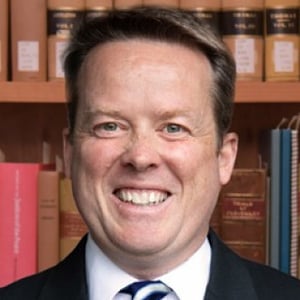
Knights of Columbus Professor of Law and the Catholic Tradition, The Catholic University of America Columbus School of Law
Kevin C. Walsh teaches and writes in the areas of federal jurisdiction, constitutional law, and the U.S. Supreme Court. His scholarship explores the doctrines that define—and delimit—the scope of federal judicial power.
Professor Walsh graduated from Harvard Law School, where he was Articles Chair for Volume 115 of the Harvard Law Review. After graduation, he clerked for Judge Paul V. Niemeyer of the United States Court of Appeals for the Fourth Circuit and Associate Justice Antonin Scalia of the Supreme Court of the United States. He then practiced law at Hunton & Williams LLP and taught as a visiting assistant professor at Villanova University School of Law. Walsh received his A.B. from Dartmouth College, and an M.A. in Theological Studies from the University of Notre Dame. He taught at the University of Richmond School of Law for thirteen years prior to joining The Catholic University of America, where he currently resides.
In early 2011, Professor Walsh filed two amicus curiae briefs addressing jurisdictional issues in the State challenges to the individual mandate in the federal healthcare reform legislation: a brief in Virginia v. Sebelius (United States Court of Appeals for the Fourth Circuit), and a brief in Florida v. HHS (United States Court of Appeals for the Eleventh Circuit).
Lecturer in Law, University of Chicago Law School
Robert Gasaway is a Lecturer in Law at the University of Chicago Law School. He was formerly a Partner at Kirkland & Ellis LLP in their Washington office. He has represented and advised corporate clients on a wide variety of matters before federal courts, state courts, federal administrative agencies, and federal and state legislative bodies. Mr. Gasaway focuses his practice on appellate litigation, representing clients in the preparation of integrated, multiforum trial and appellate strategies in high-risk sets of related cases.

Big Win for Internet Privacy
Orin S. Kerr
Riley v. California Post-Decision Commentary On June 25 the Supreme Court unanimously decided Riley v....
Property Rights in the Supreme Court: Limelight and Nautilus - Podcast
Thomas G. Saunders, Aaron M. Panner
The U.S. Supreme Court recently decided another important pair of property rights cases. Nautilus v....
U.S. Supreme Court Round-Up
Supreme Court Rules on Greenhouse Gases - Podcast
Robert R. Gasaway
On Monday, June 23, 2014, the Supreme Court decided Utility Air Regulatory Group v. Environmental...
Halliburton v. Erica P. John Fund - Post-Decision SCOTUScast
Adam Christopher Pritchard
On June 23, 2014, the Supreme Court issued its opinion in Halliburton Co. v. Erica...
Obamacare, Hobby Lobby and the Liberty of Conscience
Baton Rouge, LouisianaProperty Rights in the Supreme Court: Limelight and Nautilus
TeleforumPOM Wonderful LLC v. The Coca Cola Company - Post-Decision SCOTUScast
William Kratzke
On June 12, 2014, the Supreme Court heard oral argument in POM Wonderful LLC v....
Religious Liberty and the Healthcare Mandate
St. Louis, MissouriSupreme Court Rules on Greenhouse Gases
Teleforum