

Associate Professor, Indiana University Maurer School of Law
Professor Scott joined the Indiana University Maurer School of Law faculty in 2009. He teaches and writes on criminal law and procedure, statutory interpretation, and federal courts. Professor Scott's research examines structural and procedural interactions between the judicial branch and other branches of government, particularly in the criminal context. He has written on efforts to control the composition of the judiciary, including the judicial appointments process, legislative strategies for encouraging judicial retirements, and the semi-retirement program of senior judges. Professor Scott also studies efforts to influence judicial decision making directly by placing constraints on judicial discretion. His current project examines changes in inter-judge sentencing disparity under the United States Sentencing Guidelines, one of Congress's most ambitious efforts to restrict judges in the performance of a historically discretionary function.After graduating from law school, Professor Scott clerked for Judge Michael W. McConnell of the United States Court of Appeals for the Tenth Circuit. He then served as a Bristow Fellow in the Office of the Solicitor General of the United States. Before joining the faculty, he worked for two years as an associate in the Supreme Court and appellate practice at O'Melveny & Myers LLP in Washington, D.C.
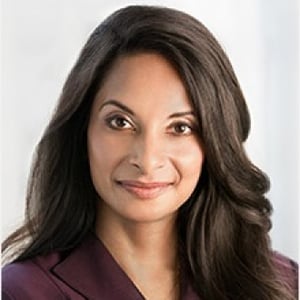
General Counsel, Strive Asset Management
When she was unanimously confirmed by the United States
Senate to serve as United States Attorney for the District of
Minnesota in 2006, Rachel Kunjummen Paulose became
the first Indian American woman in American history to be
nominated by the President and confirmed by the Senate
for any federal appointment.
Under Paulose’s leadership, the U.S. Attorney’s Office for
the District of Minnesota recorded the highest number of prosecutions in its history, reflecting the collaborative hard work of law enforcement partners, attorneys, staff, and civic leaders. Paulose also oversaw landmark prosecutions of white collar
crime (including securities, health care, and public corruption cases), narcotics and firearms trafficking cartels, and civil commitment of sexual predators. Paulose tripled child pornography prosecutions, doubled gun prosecutions, and initiated the
first ever prosecutions of human trafficking and aggravated identity theft. Paulose has first chaired jury and bench trials in federal court, briefed and argued cases before the federal appellate courts, and investigated multinational companies in complex parallel criminal and civil international proceedings.
Among other positions in public service, Paulose served as a law clerk to Eighth Circuit Court of Appeals Judge James B. Loken; Trial Attorney for the Voting Section, Civil Rights Division of the U.S. Department of Justice through the Attorney General’s Honors Program; Assistant U.S. Attorney; Senior Counsel to the Deputy
Attorney General; Special Counsel for Health Care Fraud to the Deputy Attorney General; and Special Assistant to the Attorney General of the United States. Paulose also served as Senior Trial Counsel at the U.S. Securities & Exchange Commission. Paulose previously worked as a partner at DLA Piper LLP, then the
largest law firm in the world, and an associate at Williams & Connolly LLP in Washington, D.C.
Paulose has been active in community leadership by serving as a Director of the Yale Law School Fund, Scholarship Judge for the Harry S. Truman Scholarship Foundation, Eighth Circuit Vice President of the Federal Bar Association, Co-Founder of the Federal Bar Association’s Diversity Committee, Director of the National Asian Pacific American Bar Association, American Bar Association
Standing Committee on Public Education, American Bar Association Standing Committee Member on Silver Gavel Awards, Girls State Governor Advisor (after election as the 1990 Ohio Girls State Governor of the largest such program in the nation), Director of the League of Women Voters, Chair of the Committee regarding
the reappointment of the Federal Public Defender of the District of Minnesota (by appointment of the judges of the U.S. Court of Appeals for the Eighth Circuit),
Director of the YMCA Board, guest columnist for the Asian American Press, and frequent contributing author to the American Bar Association Preview of Supreme
Court Cases.
Paulose is a frequently sought commentator. She has provided legal analysis for the BBC, The Wall Street Journal, The Washington Post, USA Today, MSNBC, The Spectator, LBC, Sky News, FOX MN, ABC MN, CBS MN, NBC MN, MPR, and the St. Paul Pioneer Press, among other media representatives. Her live commentary on the Jacob Wetterling plea deal helped KSTP-TV win an Emmy for the day’s
breaking coverage. She has given the keynote addresses at the North American South Asian Bar Association Annual Convention, the North American South Asian Law Students Association Annual Conference, and the National Asian Pacific American Bar Association Annual Meeting (Minnesota). She also presented at the
Nobel Peace Prize Forum, American Bar Association Annual Convention, International Business Law Institute, Jewish Community Relations Council, Yale Law School, and Harvard Law School, among other institutions.
In February 2015, Paulose was honored as one of the thirty leading Minnesota women history makers by the Chief Judge of the District and the Federal Bar Association in what is now a traveling court exhibit. In April 2016, Paulose’s biography was added to the Smithsonian Institution’s collection and featured in the
Smithsonian’s collection, “Beyond Bollywood: Indian Americans Shape the Nation” to honor the stories of groundbreaking Indian Americans.
Paulose taught criminal law, criminal procedure, investigations, and human exploitation (human trafficking and child pornography) at the University of St. Thomas School of Law. She served as the faculty advisor to the Black Law Students Association (BLSA) and the Federalist Society. She also served as a faculty mentor
to graduates and current students, particularly women and students of color.
Paulose received her J.D. from the Yale Law School, where she was a Coker Fellow, Editor of the Yale Journal of Law and Feminism, and Commencement Standard Bearer. She graduated summa cum laude with a B.A. from the University of Minnesota, which she attended on full merit scholarships and where she was the Commencement Speaker, Chair of the Student Representatives to the Board of
Regents, and Phi Beta Kappa. Paulose is a 1991 Harry S. Truman Scholar.
Assistant Professor of Law, Vanderbilt Law School

Partner, Troutman Pepper Locke LLP
Misha leads Troutman Peppers' national appellate and Supreme Court practice. Most recently, he successfully obtained orders from the Supreme Court blocking an unconstitutional restriction on places of worship, as well as overturning a lower court order that had blocked several state election laws. He has also argued and prevailed before the Supreme Court in Gill v. Whitford, one of the most significant redistricting cases in decades, as well as Murr v. Wisconsin, a high-stakes regulatory taking case.
Before joining Troutman, Misha served as Solicitor General of the State of Wisconsin. Misha previously served as a law clerk for the Honorable Anthony M. Kennedy of the Supreme Court, Janice Rogers Brown of the D.C. Circuit, and Alex Kozinski of the 9th Circuit. He graduated from Georgetown University Law Center, where he was President of the Federalist Society Chapter.
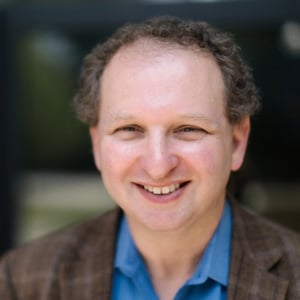
Assistant Professor of Law, Emory University School of Law
Alexander "Sasha" Volokh is an assistant professor of law, joining the Emory Law faculty in Fall 2009.
Professor Volokh earned his B.S. from UCLA and his J.D. and Ph.D. in economics from Harvard University. He clerked for Judge Alex Kozinski of the Ninth Circuit and for Supreme Court Justices Sandra Day O'Connor and Samuel Alito. Before coming to Emory, he was a visiting associate professor at Georgetown University Law Center and a visiting assistant professor at University of Houston Law Center.
His interests include law and economics, administrative law and the regulatory process, environmental law and policy, and legal history. His current research topics include the private management of government services, medieval law, judicial decisionmaking and statutory interpretation.
Partner, The Gardner Law Firm
David F. Barton has extensive experience in environmental, government and government contract, and corporate law. He joined The Gardner Law Firm in 1996 after serving as a United States Air Force JAG officer as well as having six years of private practice with firms in Texas. Mr. Barton counsels clients in environmental matters, government contracts, regulatory compliance, commercial law, and litigation related to those areas. He represents industries, businesses and government units on matters involving water, air, solid and hazardous waste, toxins, wetlands, endangered species, historic preservation, NEPA, Superfund, and federal and state court litigation in those areas. He has taught courses in criminal law, litigation, administration of justice and environmental crimes at several universities throughout the United States, and he has been a guest speaker at environmental law and government contract seminars. Mr. Barton has been licensed to practice in Texas since 1991, and is also licensed in Arkansas. He is admitted to practice before the United States Supreme Court, the United States Court of Federal Claims, the United States Court of Military Appeals, and several United States Circuit Courts of Appeals and United States District Courts. He is a member of the State Bar of Texas (Environmental & Natural Resources Section, among others); College of the State Bar of Texas, the Arkansas Bar Association, the Arkansas Bar Foundation (Fellow), the Association of Trial Lawyers of America, and the San Antonio Bar Association (Environmental Section). He is also an active participant in the San Antonio Manufacturers Association, the Alamo Area Chapter - Air & Waste Management Association, and Citizens Advisory Panel of the San Antonio Water System.
University of Arkansas, J.D., 1975; Central Methodist College; University of Missouri at Columbia, B.A., 1967
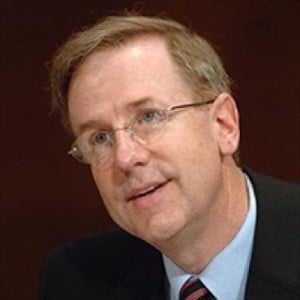
Board Member, Center for Equal Opportunity
Roger Clegg is a Board Member at and former President and General Counsel of the Center for Equal Opportunity. He focuses on legal issues arising from civil rights laws--including the regulatory impact on business and the problems in higher education created by affirmative action. A former Deputy Assistant Attorney General in the Reagan and Bush administrations, Clegg held the second highest positions in both the Civil Rights Division (1987-91) and in the Environment and Natural Resources Division (1991-93). He has held several other positions at the U.S. Justice Department, including Assistant to the Solicitor General (1985-87), Associate Deputy Attorney General (1984-85), and Acting Assistant Attorney General in the Office of Legal Policy (1984). Clegg is a graduate of Yale University Law School (1981).

President, Harned Strategies LLC
Karen Harned is President at Harned Strategies LLC. Previously, she served as Executive Director of the National Federation of Independent Business Small Business Legal Center, a post she held from 2002-2022. Prior to joining the Legal Center, Ms. Harned was an attorney at a Washington, D.C. law firm specializing in food and drug law, where she represented several small and large businesses and their respective trade associations before Congress and federal agencies. She also served as Assistant Press Secretary to U.S. Senator Don Nickles of Oklahoma from August of 1989 to March of 1993. Ms. Harned received her B.A. from the University of Oklahoma in 1989 and her J.D. from The George Washington University National Law Center in 1995. She is admitted to practice in the District of Columbia.
As Executive Director of the NFIB Small Business Legal Center, Ms. Harned commented regularly on small business cases before federal and state courts, as well as the U.S. Supreme Court. She has appeared on Fox News, Fox Business, NBC Nightly News, CNN, CNBC and MSNBC, as well as National Public Radio, CBS Radio, and radio outlets across the country. Her opinion editorials and articles regarding healthcare, lawsuit abuse, regulation, and other issues important to small business have been published in newspapers and other publications nationwide.
Ms. Harned has testified before Congress on the small business impact of regulation and the civil justice system. Additionally, she has conducted numerous webinars and legal compliance seminars for small business owners across the country on issues relating to employment law, including unionization and immigration.
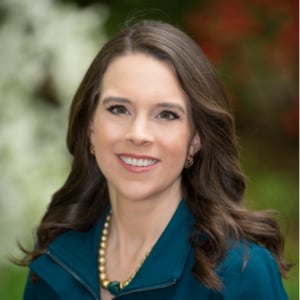
President, JCN
Carrie Campbell Severino is the president of the JCN, and co-author with Mollie Hemingway of the bestselling book Justice on Trial: The Kavanaugh Confirmation and the Future of the Court. As a go-to expert on the confirmation process, Mrs. Severino has been extensively quoted in the media. She regularly appears on television, including FOX, CNN, MSNBC, C-SPAN, and ABC’s This Week.
Severino writes and speaks on a wide range of judicial issues, including the constitutional limits on government, the federal nomination process, and state judicial selection. She has testified before Congress on constitutional questions and briefed Senators on judicial nominations, and regularly files briefs in high-profile Supreme Court cases. She was a law clerk to Supreme Court Justice Clarence Thomas and to Judge David B. Sentelle of the U.S. Court of Appeals for the D.C. Circuit, and is a graduate of Harvard Law School (J.D.), Duke University (B.A., Biology), and Michigan State University (M.A., Linguistics).
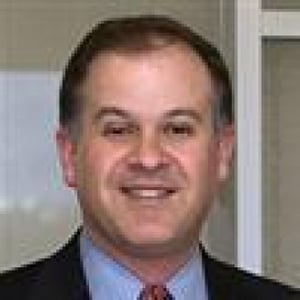
Shareholder, Farney Daniels, PC
Jonathan B. Baker is Professor of Law at American University Washington College of Law, where he teaches courses primarily in the areas of antitrust and economic regulation. He served as the Chief Economist of the Federal Communications Commission from 2009 to 2011, and as the Director of the Bureau of Economics at the Federal Trade Commission from 1995 to 1998. Previously, he worked as a Senior Economist at the President’s Council of Economic Advisers, Special Assistant to the Deputy Assistant Attorney General for Economics in the Antitrust Division of the Department of Justice, an Assistant Professor at Dartmouth's Amos Tuck School of Business Administration, an Attorney Advisor to the Acting Chairman of the Federal Trade Commission, and an antitrust lawyer in private practice. Professor Baker is the co-author of an antitrust casebook, a past Editorial Chair of Antitrust Law Journal, and a past member of the Council of the American Bar Association’s Section of Antitrust Law. He has published widely in the fields of antitrust law and policy and industrial organization economics. In 2004 he received American University’s Faculty Award for Outstanding Scholarship, Research, and Other Professional Accomplishments, and in 1998 he received the Federal Trade Commission’s Award for Distinguished Service. He has a J.D. from Harvard and a Ph.D. in economics from Stanford University.

Professor of Law, South Texas College of Law Houston
Josh Blackman is a national thought leader on constitutional law and the United States Supreme Court. Josh’s work was quoted during two presidential impeachment trials. He has testified before Congress and advises federal and state lawmakers. Josh regularly appears on TV, including NBC, CBS, ABC, Fox, and the BBC. Josh is also a frequent guest on NPR and other syndicated radio programs. He has published commentaries in the New York Times, Wall Street Journal, Washington Post, and leading national publications.
Since 2012, Josh has served as a professor at the South Texas College of Law Houston. He holds the Centennial Chair of Constitutional Law. Josh is an Adjunct Fellow at the Manhattan Institute. Josh has written more than seven dozen law review articles that have been cited more than a thousand times. Josh was selected as the Jurist of the Year by the Texas Journal of Law & Public Policy, received the inaugural Meese III Originalism Award, and was awarded the Inaugural Joseph Story Award. Josh was selected by Forbes Magazine for the “30 Under 30” in Law and Policy. Josh is the President of the Harlan Institute, and founded FantasySCOTUS, the Internet’s Premier Supreme Court Fantasy League. He blogs at the Volokh Conspiracyand posts@JoshMBlackman.
Assistant Professor of Law, Vanderbilt Law School
Partner, Troutman Pepper Locke LLP
Misha leads Troutman Peppers' national appellate and Supreme Court practice. Most recently, he successfully obtained orders from the Supreme Court blocking an unconstitutional restriction on places of worship, as well as overturning a lower court order that had blocked several state election laws. He has also argued and prevailed before the Supreme Court in Gill v. Whitford, one of the most significant redistricting cases in decades, as well as Murr v. Wisconsin, a high-stakes regulatory taking case.
Before joining Troutman, Misha served as Solicitor General of the State of Wisconsin. Misha previously served as a law clerk for the Honorable Anthony M. Kennedy of the Supreme Court, Janice Rogers Brown of the D.C. Circuit, and Alex Kozinski of the 9th Circuit. He graduated from Georgetown University Law Center, where he was President of the Federalist Society Chapter.

Heien v. North Carolina - Post-Argument SCOTUScast
Ryan Scott
On October 6, 2014, the Supreme Court heard oral argument in Heien v. North Carolina. The...
Employee Security Screening: The Supreme Court to Decide Who Pays
TeleforumU.S. Supreme Court Preview
Virginia Beach, VirginiaExecutive Authority and the 2014 Senate Election
Raleigh, North CarolinaWarger v. Shauers - Post-Argument SCOTUScast
Rachel K. Paulose
On October 8, 2014, the Supreme Court heard oral arguments in Warger v. Shauers. The question...
ISIS, Immigration, and Obamacare: The Constitutionality of President Obama's Actions
Philadelphia,, PennsylvaniaRegulating the Regulators: North Carolina Board of Dental Examiners v. Federal Trade Commission - Podcast
Rebecca Haw Allensworth, Misha Tseytlin
The North Carolina State Board of Dental Examiners is the state agency responsible for regulating...
North Carolina State Board of Dental Examiners v. Federal Trade Commission - Post-Argument SCOTUScast
Alexander Volokh
On October 14, 2014, the Supreme Court heard oral argument in North Carolina Board of...
Regulating the Regulators: North Carolina Board of Dental Examiners v. Federal Trade Commission
TeleforumChallenging Racial Preferences in Government Contracts - Podcast
David F. Barton, Roger B. Clegg
While the Supreme Court in City of Richmond v. J.A. Croson Co. (1989) and Adarand...