
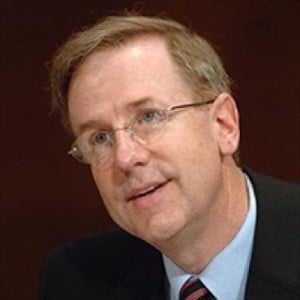
Board Member, Center for Equal Opportunity
Roger Clegg is a Board Member at and former President and General Counsel of the Center for Equal Opportunity. He focuses on legal issues arising from civil rights laws--including the regulatory impact on business and the problems in higher education created by affirmative action. A former Deputy Assistant Attorney General in the Reagan and Bush administrations, Clegg held the second highest positions in both the Civil Rights Division (1987-91) and in the Environment and Natural Resources Division (1991-93). He has held several other positions at the U.S. Justice Department, including Assistant to the Solicitor General (1985-87), Associate Deputy Attorney General (1984-85), and Acting Assistant Attorney General in the Office of Legal Policy (1984). Clegg is a graduate of Yale University Law School (1981).
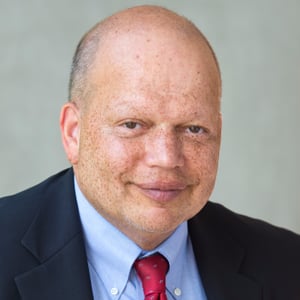
Julius L. Chambers Distinguished Professor of Law and Director of the Center for Civil Rights, University of North Carolina School of Law
Theodore M. Shaw is the Julius L. Chambers Distinguished Professor of Law and Director of the Center for Civil Rights at the University of North Carolina School of Law at Chapel Hill. Professor Shaw teaches Civil Procedure and Advanced Constitutional Law/Fourteenth Amendment. Before joining the faculty of UNC Law School, from 2008-2014 Professor Shaw taught at Columbia University Law School, where he was Professor of Professional Practice. During that time he was also “Of Counsel” to the law firm of Norton Rose Fulbright (formerly Fulbright & Jaworski, LLP). His practice involved civil litigation and representation of institutional clients on matters concerning diversity and civil rights.
Professor Shaw was the fifth Director-Counsel and President of the NAACP Legal Defense and Educational Fund, Inc., for which he worked in various capacities over the span of twenty-six years. He has litigated education, employment, voting rights, housing, police misconduct, capital punishment and other civil rights cases in trial and appellate courts, and in the United States Supreme Court.From 1982 until 1987, he litigated education, housing, and capital punishment cases and directed LDF's education litigation docket. In 1987, under the direction of LDF's third Director-Counsel, Julius Chambers, Mr. Shaw relocated to Los Angeles to establish LDF's Western Regional Office. In 1990, Mr. Shaw left LDF to join the faculty of the University of Michigan Law School, where he taught Constitutional Law, Civil Procedure and Civil Rights. While at Michigan, he played a key role in initiating a review of the law school's admissions practices and policies, and served on the faculty committee that promulgated the admissions program that was upheld by the U.S. Supreme Court in 2003 in Grutter v. Bollinger.
In 1993, Mr. Shaw returned to LDF as Associate Director-Counsel, and in 2004, he became LDF's fifth Director-Counsel. Mr. Shaw's legal career began as a Trial Attorney in the Honors Program of the United States Department of Justice, Civil Rights Division in Washington, D.C., where he worked from 1979 until 1982.
Mr. Shaw has testified on numerous occasions before Congress and before state and local legislatures. His human rights work has taken him to Africa, Asia, Europe, and South America. In addition to teaching at Columbia and at Michigan Law School, Professor Shaw held the 1997-1998 Haywood Burns Chair at CUNY School of Law at Queens College and the 2003 Phyllis Beck Chair at Temple Law School. He was a visiting scholar at the Constitution Center in Philadelphia in 2008-2009. He is a member of the faculty of the Practicing Law Institute (PLI).
Mr. Shaw served on the Obama Transition Team after the 2008 presidential election, as team leader for the Civil Rights Division of the Justice Department.
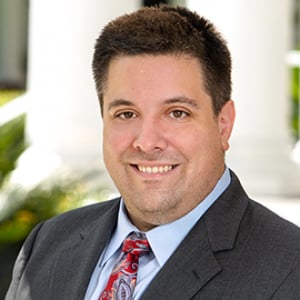
Sheila M. McDevitt Professor of Law and Faculty Director of the Election Law Center, Florida State University College of Law
Professor Morley joined FSU Law in 2018, and teaches and writes in the areas of election law, constitutional law, remedies, and the federal courts. He is best known for his work on election emergencies and post-election litigation, nationwide and other defendant-oriented injunctions, the jurisdiction of the federal courts and their equitable powers more generally. He has testified before congressional committees, made presentations to election officials for the U.S. Election Assistance Commission and participated in bipartisan blue-ribbon groups to develop election reforms. The governor of Florida also appointed Professor Morley to the Criminal Punishment Code Task Force, to propose potential revisions to the legislature.
The U.S. Supreme Court has cited several of his articles, and he was counsel of record for the successful Petitioner in a landmark campaign finance case. Professor Morley has appeared on C-SPAN, Court TV, Fox News and numerous local news programs, and has been quoted in the Washington Post, Los Angeles Times, Roll Call, Politico, U.S. News and World Report, and a wide range of other national publications. His work has been published in many of the nation’s top law reviews, including the Georgetown Law Journal, Northwestern University Law Review, Boston University Law Review and Emory Law Journal.
Before joining FSU Law, Professor Morley was a Climenko Fellow and Lecturer in Law at Harvard Law School. Prior to his experience in academia, he served in government as special assistant to the General Counsel of the Army at the Pentagon, as well as a law clerk for Judge Gerald B. Tjoflat of the U.S. Court of Appeals for the Eleventh Circuit. During his tenure with the Army General Counsel’s office, he was awarded the Meritorious Civilian Service Award and the Army Staff Lapel Pin. He also worked as an associate at Williams & Connolly LLP and the Supreme Court & Appellate group of Winston & Strawn, LLP, both in Washington, D.C.
Professor Morley earned his J.D. from Yale Law School in 2003, where he was a senior editor on the Yale Law Journal; served on the moot court board; and received the Thurman Arnold Prize for Best Oralist in the Morris Tyler Moot Court of Appeals.
Associate, Arent Fox LLP
Christopher Bowen is an attorney with a Arent Fox LLP where he focuses on government contractor litigation and counseling, including bid protests, contract claims, audits, individual and company debarments and suspensions, security clearances, NISPOM compliance during mergers and acquisitions, and False Claims Act lawsuits. Prior to joining the law firm, Mr. Bowen was an attorney with the United States Department of Justice, where he handled government contract litigation, as well as Fifth Amendment Takings Clause and smuggling claims. He has argued before the United States Court of Appeal for the Federal Circuit, the United States Court of Federal Claims, and the United States District Court for the Eastern District of Virginia. He has filed briefs with the United States Court of Appeals for the Fifth Circuit, the United States District Courts for the District of Colorado and the Northern District of California, and the United States Court of International Trade. Mr. Bowen attended Dartmouth College and the George Washington University Law School, and clerked for the Honorable Diane S. Sykes on the United States Court of Appeals for the Seventh Circuit.
Super Lawyers has recognized Christopher Bowen as a “Rising Star” for both 2014 and 2015.
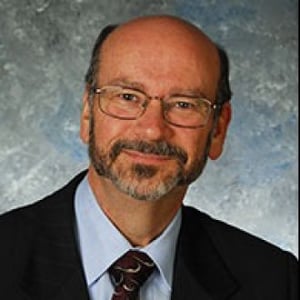
Clinical Professor of Law, Dale E. Fowler School of Law, Chapman University
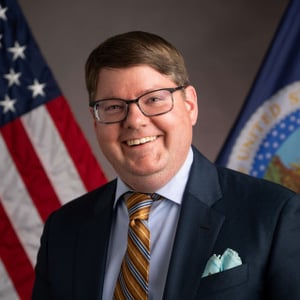
Deputy Secretary of Agriculture, U.S. Department of Agriculture
Judge Stephen Alexander Vaden was appointed as the Deputy Secretary of the U.S. Department of Agriculture on July 7, 2025. Alongside Secretary Brooke L. Rollins, Deputy Secretary Vaden leads the Department’s operations and implements policies that support America’s food and farm systems. A native of Union City, Tennessee, Deputy Secretary Vaden brings expertise in agricultural policy, law, and rural development. Previously, he served as a judge on the U.S. Court of International Trade and as General Counsel of USDA. Throughout Deputy Secretary Vaden’s time as General Counsel, he led successful Supreme Court litigation, advanced regulatory reform, and supported the implementation of the 2018 Farm Bill. He is a graduate of Yale Law School and Vanderbilt University. A public servant with strong agricultural roots, Deputy Secretary Vaden is committed to revitalizing rural America and ensuring an abundant, affordable, and safe U.S. food supply.

Affirmative Action Again: Fisher v. University of Texas - Podcast
Roger B. Clegg, Theodore M. Shaw
On December 9, the Supreme Court heard oral argument in Abigail Fisher v. University of...
Topics
SCOTUS Orders and Opinions: 12/14/2015
(1) Direct TV v. Imburgia: By a vote of 6-3, the judgment of the California...
Shapiro v. McManus - Post-Decision SCOTUScast
Michael T. Morley
On December 8, 2015, the Supreme Court decided Shapiro v. McManus. In this case several Maryland...
Topics
What's the Deal with Cuozzo v. Lee?
Currently pending on the docket of the United States Supreme Court is the case of...
Topics
On Heightening the Contradictions of Grutter v. Bollinger: Thoughts on the Fisher v. UT Oral Argument
Yesterday, Justice Scalia's controversial question about mismatch theory at the Fisher v. UT oral argument...
Topics
How Far will Justice Kennedy Go?
Ilya Shapiro of the Cato Institute writes: Coming out of oral argument in Fisher v....
Kellogg Brown & Root—What Happens to a Case Deferred?
Christopher Andrew Bowen
This article details the Fourth Circuit’s and the Supreme Court’s recent decisions in United States...
California’s SCA 5 and Racial Preferences in Education
Anthony (Tom) Caso
Note from the Editor: This article is about racial preferences in education, specifically in the...
Packing Districts?: Harris v. Arizona Independent Redistricting Commission
TeleforumPerez v. Mortgage Bankers Association: Portending a Return to Judicial Engagement
Stephen Alexander Vaden
In a Term full of blockbuster cases considering the fate of Obamacare and establishing gay...