
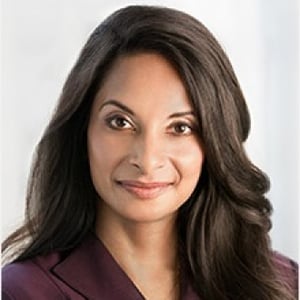
General Counsel, Strive Asset Management
When she was unanimously confirmed by the United States
Senate to serve as United States Attorney for the District of
Minnesota in 2006, Rachel Kunjummen Paulose became
the first Indian American woman in American history to be
nominated by the President and confirmed by the Senate
for any federal appointment.
Under Paulose’s leadership, the U.S. Attorney’s Office for
the District of Minnesota recorded the highest number of prosecutions in its history, reflecting the collaborative hard work of law enforcement partners, attorneys, staff, and civic leaders. Paulose also oversaw landmark prosecutions of white collar
crime (including securities, health care, and public corruption cases), narcotics and firearms trafficking cartels, and civil commitment of sexual predators. Paulose tripled child pornography prosecutions, doubled gun prosecutions, and initiated the
first ever prosecutions of human trafficking and aggravated identity theft. Paulose has first chaired jury and bench trials in federal court, briefed and argued cases before the federal appellate courts, and investigated multinational companies in complex parallel criminal and civil international proceedings.
Among other positions in public service, Paulose served as a law clerk to Eighth Circuit Court of Appeals Judge James B. Loken; Trial Attorney for the Voting Section, Civil Rights Division of the U.S. Department of Justice through the Attorney General’s Honors Program; Assistant U.S. Attorney; Senior Counsel to the Deputy
Attorney General; Special Counsel for Health Care Fraud to the Deputy Attorney General; and Special Assistant to the Attorney General of the United States. Paulose also served as Senior Trial Counsel at the U.S. Securities & Exchange Commission. Paulose previously worked as a partner at DLA Piper LLP, then the
largest law firm in the world, and an associate at Williams & Connolly LLP in Washington, D.C.
Paulose has been active in community leadership by serving as a Director of the Yale Law School Fund, Scholarship Judge for the Harry S. Truman Scholarship Foundation, Eighth Circuit Vice President of the Federal Bar Association, Co-Founder of the Federal Bar Association’s Diversity Committee, Director of the National Asian Pacific American Bar Association, American Bar Association
Standing Committee on Public Education, American Bar Association Standing Committee Member on Silver Gavel Awards, Girls State Governor Advisor (after election as the 1990 Ohio Girls State Governor of the largest such program in the nation), Director of the League of Women Voters, Chair of the Committee regarding
the reappointment of the Federal Public Defender of the District of Minnesota (by appointment of the judges of the U.S. Court of Appeals for the Eighth Circuit),
Director of the YMCA Board, guest columnist for the Asian American Press, and frequent contributing author to the American Bar Association Preview of Supreme
Court Cases.
Paulose is a frequently sought commentator. She has provided legal analysis for the BBC, The Wall Street Journal, The Washington Post, USA Today, MSNBC, The Spectator, LBC, Sky News, FOX MN, ABC MN, CBS MN, NBC MN, MPR, and the St. Paul Pioneer Press, among other media representatives. Her live commentary on the Jacob Wetterling plea deal helped KSTP-TV win an Emmy for the day’s
breaking coverage. She has given the keynote addresses at the North American South Asian Bar Association Annual Convention, the North American South Asian Law Students Association Annual Conference, and the National Asian Pacific American Bar Association Annual Meeting (Minnesota). She also presented at the
Nobel Peace Prize Forum, American Bar Association Annual Convention, International Business Law Institute, Jewish Community Relations Council, Yale Law School, and Harvard Law School, among other institutions.
In February 2015, Paulose was honored as one of the thirty leading Minnesota women history makers by the Chief Judge of the District and the Federal Bar Association in what is now a traveling court exhibit. In April 2016, Paulose’s biography was added to the Smithsonian Institution’s collection and featured in the
Smithsonian’s collection, “Beyond Bollywood: Indian Americans Shape the Nation” to honor the stories of groundbreaking Indian Americans.
Paulose taught criminal law, criminal procedure, investigations, and human exploitation (human trafficking and child pornography) at the University of St. Thomas School of Law. She served as the faculty advisor to the Black Law Students Association (BLSA) and the Federalist Society. She also served as a faculty mentor
to graduates and current students, particularly women and students of color.
Paulose received her J.D. from the Yale Law School, where she was a Coker Fellow, Editor of the Yale Journal of Law and Feminism, and Commencement Standard Bearer. She graduated summa cum laude with a B.A. from the University of Minnesota, which she attended on full merit scholarships and where she was the Commencement Speaker, Chair of the Student Representatives to the Board of
Regents, and Phi Beta Kappa. Paulose is a 1991 Harry S. Truman Scholar.
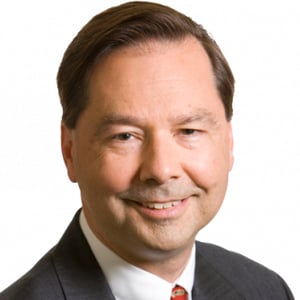
Senior Legal Fellow, Edwin Meese III Institute for the Rule of Law, Advancing American Freedom
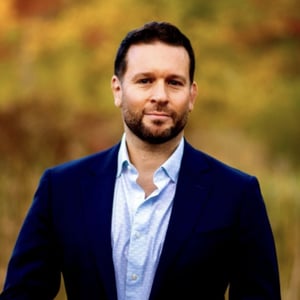
Professor of Law and Public Policy, Pepperdine University Caruso School of Law
Greg McNeal is an award winning entrepreneur, professor, and investor. He co-founded AirMap, a multinational aerospace and defense company honored as one of the “World’s Most Innovative Companies” by Fast Company and ranked as an Inc.com 25 Most Disruptive Company. The company also received a Los Angeles Business Journal Innovation Award, and a Consumer Electronics Show “Innovation Award.” The company was acquired in 2021.
He invests in and advises companies and entrepreneurs in SAAS, Defense, AI, and entertainment. The companies he founded or serves on the corporate board of have raised over $100 million in funding with his direct participation in the process. Those investors include Microsoft, Flexport, Sony, Qualcomm, Rakuten, Baidu, Airbus, and top global financial services and venture capital funds including Greycroft, Social Capital, General Catalyst, Lux Capital, Bullpen Capital, Bay Bridge Ventures, Teamworthy Ventures, Operate Studio, TenOneTen, Temasek, Macquarie Group, Graph Ventures and many others. The companies he advises have raised substantially more funding, in part due to his advice and mentorship.
He is a tenured Professor of Law and Public Policy at Pepperdine University and a faculty member with the Palmer Center for Entrepreneurship and the Law and teaches courses in technology, public policy, internet, and privacy law.
As a public policy and legal expert, Greg has worked with the White House, the Department of Defense, the State Department, and independent regulatory agencies on matters related to technology, law and policy. He has on multiple occasions testified before Congress and state legislatures about entrepreneurship and emerging technology and has aided state legislators, cities, municipalities, and executive branch officials in drafting legislation and ordinances related to technological advances and has been appointed by Cabinet officials to serve on Federal Rulemaking Committees.
He is a frequent keynote speaker at industry events and academic conferences related to technology, law, and public policy. He advises venture capital firms and other investors, start-ups, law enforcement, consulting firms, and Fortune 500 companies about the legal and regulatory issues associated with emerging technologies.
He regularly appears on television and radio to discuss technology and business, wrote a column on business and technology for Forbes and has authored Op-Eds for the New York Times, the Washington Post, and The Washington Times, among others. In his early career he worked on national security, international criminal law and counterterrorism matters and served as an Army officer.
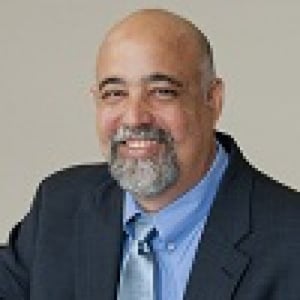
Judge, United States District Court for the Eastern District of North Carolina
A native of Kingston, Jamaica, Myers was a Chancellors Scholar at the UNC School of Law, where he graduated with high honors in 1998. Upon graduation from law school, he clerked in Washington, D.C., for the Hon. David Sentelle on the United States Court of Appeals for the D.C. Circuit, and then entered private practice as a litigator for O'Melveny & Myers, LLP, in Los Angeles California. After two years with the White Collar Criminal Law and Environmental and regulatory Compliance Practice Group, he left private practice in January 2002 to become an Assistant United States Attorney in the Central District of California. In September, 2002, he transferred to the Eastern District of North Carolina in Raleigh, where he prosecuted white collar and violent crimes, and headed the district's Violent Crimes Task Force for Wilmington and New Hanover and Pender Counties.
Myers joined the UNC Law School faculty in July 2004, where he taught Criminal Law, Criminal Procedure, Ethics, and a seminar on White Collar Crime. He was confirmed to the United States District Court for the Eastern District of North Carolina in 2019.
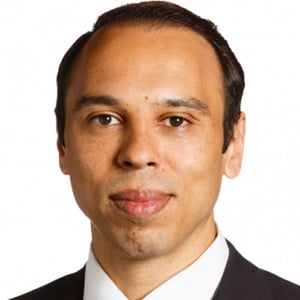
Vice President of Domestic and Economic Policy, The Heritage Foundation
Roger Severino is Vice President of Economic and Domestic Policy, and the Joseph C. and Elizabeth A. Anderlik Fellow at The Heritage Foundation.
Severino is a national authority on civil rights, conscience and religious freedom, the administrative state, and information privacy, particularly as applied to health care law and policy. Find his tweets at @RogerSeverino_.
Severino spearheaded the HHS Accountability Project while a Senior Fellow at EPPC from 2021 to 2023. Previously, Severino was Director of HHS’ Office for Civil Rights, where he led a team of over 250 staff enforcing our nation’s civil rights, conscience and religious freedom, and health information privacy laws. He served from 2017 to 2021 and was the longest-serving OCR director of the past three decades.
Prior to joining HHS, Severino served for two years as Director of the DeVos Center for Religion and Civil Society at Heritage, advocating for life, family, and religious-freedom policies. Before that, he was a trial attorney for seven years at the U.S. Department of Justice’s Civil Rights Division where he enforced the Fair Housing Act and the Civil Rights Act of 1964. Severino started his legal career at the Becket Fund for Religious Liberty, where he was Legal Counsel and Chief Operations Officer and defended the rights of people of all faiths under federal and international law.
Severino has been profiled in The New York Times, The Atlantic, The Wall Street Journal, and The Hill and has appeared on Fox News, CNN, MSNBC, NPR, and PBS, among others. In 2020, The New York Times dubbed him and his wife Carrie, “a conservative power couple” to be reckoned with.
Severino holds a JD from Harvard Law School, a master’s degree in public policy, with highest distinction, from Carnegie Mellon University, and a bachelor’s degree in business from the University of Southern California. He was appointed by President Trump to the Administrative Conference of the United States and is a member of the District of Columbia and the Commonwealth of Virginia bars.
As OCR director, Severino founded the federal government’s first division dedicated exclusively to conscience and religious freedom compliance and enforcement. He enforced the Weldon Amendment for the first time against a state (California) after it coerced families and religious organizations into paying for abortion insurance coverage, leading to a $200 million federal funding disallowance. He also enforced laws protecting pro-life pregnancy resource centers from discrimination by states hostile to their message and enforced laws prohibiting forced participation in abortions by medical professionals.
With respect to civil rights, Severino protected older persons and people with disabilities from being denied life-saving care due to discriminatory “quality of life” judgments, especially during the COVID-19 pandemic. He also achieved a landmark sexual harassment resolution with Michigan State University in the wake of the Larry Nassar sexual assault scandal and protected the rights of non-English speakers to have equal access to health and human services.
In the area of health privacy, he secured the largest HIPAA monetary settlement in history and achieved the largest number of enforcement resolutions both in a single year and across four years. He also facilitated the transformational use of Skype, Zoom, and Facetime for delivery of telehealth during the COVID-19 pandemic and beyond.
His regulatory reform activities resulted in a comprehensive conscience protection regulation and proposed a life-affirming disability rights regulation. He achieved regulatory savings of $3.6 billion in health care industry costs over five years and identified and proposed an additional $3.2 billion in cost savings from the repeal of ineffective and unnecessary regulatory burdens.
Severino is a Spanish speaker who teaches salsa and west coast swing in his spare time.
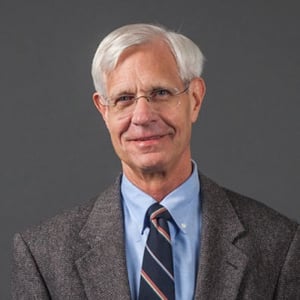
Distinguished University Professor, Antonin Scalia Law School, George Mason University
University Professor Nelson Lund is the author of Rousseau’s Rejuvenation of Political Philosophy: A New Introduction. He has also written widely in the field of constitutional law, including articles on constitutional interpretation, federalism, separation of powers, the Second Amendment, the Commerce Clause, the Speech or Debate Clause, the Equal Protection Clause, and the Uniformity Clause. In addition, he has published articles in the fields of employment discrimination and civil rights, the legal regulation of medical ethics, and the application of economic analysis to legal institutions and legal ethics.
Professor Lund graduated from St. John's College in Annapolis, Maryland, after which he received an MA in philosophy from the Catholic University of America and a PhD in political science from Harvard University. He left the faculty of the University of Chicago to attend its law school, where he served as executive editor of the University of Chicago Law Review and chapter chairman of the Federalist Society for Law and Public Policy Studies. After law school, he held positions at the United States Department of Justice in the Office of the Solicitor General and the Office of Legal Counsel. He also served as a law clerk to the Honorable Patrick E. Higginbotham of the United States Court of Appeals for the Fifth Circuit and to the Honorable Sandra Day O'Connor of the United States Supreme Court. Following his clerkship with Justice O'Connor, Professor Lund served in the White House as associate counsel to the president from 1989 to 1992.
Since joining the faculty at George Mason University's Antonin Scalia Law School, Professor Lund has taught Constitutional Law, Legislation, Federal Election Law, Employment Discrimination, State and Local Government, and seminars on the Second Amendment and on a variety of topics in Jurisprudence.
Senior Legal Fellow, Edwin Meese III Institute for the Rule of Law, Advancing American Freedom

Senior Vice President for Legal Studies, Cato Institute
Clark Neily is senior vice president for legal studies at the Cato Institute. His areas of interest include constitutional law, overcriminalization, civil forfeiture, police accountability, and gun rights. Neily is the author of Terms of Engagement: How Our Courts Should Enforce the Constitution’s Promise of Limited Government. His writing has appeared in the Wall Street Journal, Forbes, and National Review Online, as well as various law reviews, including the Harvard Journal of Law and Public Policy, George Mason Law Review, Georgetown Journal of Law and Public Policy, NYU Journal of Law and Liberty, and Texas Review of Law and Politics. Neily is a frequent guest speaker and lecturer for the Federalist Society, Institute for Humane Studies, and American Constitution Society.
Before joining Cato in 2017, Neily was a senior attorney and constitutional litigator at the Institute for Justice and director of the Institute’s Center for Judicial Engagement. He is also an adjunct professor at the University of Texas School of Law, where he teaches constitutional litigation and public-interest law.
Neily served as co-counsel in District of Columbia v. Heller, the historic case in which the Supreme Court held for the first time that the Second Amendment protects an individual right to own a gun for self-defense.
Neily began his legal career as a law clerk to Judge Royce Lamberth on the U.S. District Court for the District of Columbia. After that he spent four years in the trial department of the Dallas-based firm Thompson & Knight. Neily received his undergraduate and law degrees from the University of Texas, where he was Chief Articles Editor of the Texas Law Review.

McDonnell v. US: Corruption or Federal Overreach?
Rachel K. Paulose
Partner at DLA Piper LLP and Former U.S. Attorney Rachel Paulose discusses the appeal of Governor...
Packing Districts?: Supreme Court Decides Harris v. Arizona Independent Redistricting Commission - Podcast
Hans A. Von Spakovsky
On April 20, the United States Supreme Court issued a unanimous opinion in Harris v....
Drones & Property Rights
Gregory S. McNeal
Gregory S. McNeal, Associate Professor of Law and Public Policy at Pepperdine School of Law,...
Ed Whelan on the Scalia Vacancy
Florham Park, New JerseyPacking Districts?: Supreme Court Decides Harris v. Arizona Independent Redistricting Commission
TeleforumWelch v. United States - Post-Decision SCOTUScast
Richard E. Myers
On April 18, 2016, the Supreme Court decided Welch v. United States. Gregory Welch pleaded...
What to Look for in a Supreme Court Nominee
PHILADELPHIA, PennsylvaniaUnited States Army Corps of Engineers v. Hawkes Co., Inc. - Post-Argument SCOTUScast
On March 30, 2016, the Supreme Court heard oral argument in United States Army Corps...
Zubik v. Burwell - Post-Argument SCOTUScast
Roger Severino
On March 23, 2016, the Supreme Court heard oral argument in Zubik v. Burwell, the...
Caetano v. Massachusetts - Post-Decision SCOTUScast
Nelson Lund
On March 21, 2016, the Supreme Court decided Caetano v. Massachusetts without oral argument. Jamie Caetano...