
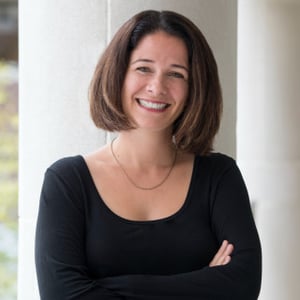
Anne Shea Ransdell and William Garland "Buck" Ransdell, Jr. Distinguished Professor of Law, University of North Carolina School of Law
Carissa Byrne Hessick joined the Carolina Law faculty in 2016. She serves as the Anne Shea Ransdell and William Garland “Buck” Ransdell, Jr. Distinguished Professor of Law and as the director of the Prosecutors and Politics Project. Her teaching and research interests include criminal law, the structure of the criminal justice system, criminal sentencing, and child pornography crimes. Hessick is the author of multiple law review articles, essays, and op eds on plea bargaining, the powers and selection of prosecutors, Sixth Amendment sentencing rights, and criminal statutes. Her work has appeared in the California Law Review, the Cornell Law Review, the L.A. Times, the UCLA Law Review, and the Virginia Law Review, among others. She founded the Prosecutors and Politics Project in 2018. And she currently serves as the Reporter for the ABA Criminal Justice Section’s Sentencing Standards Task Force.
Hessick attended Yale Law School, where she was an editor of the Yale Law Journal and winner of the Potter Stewart Prize for the Morris Tyler Moot Court of Appeals. After graduating from law school, she clerked for Judge Barbara S. Jones on the Southern District of New York and for Judge A. Raymond Randolph on the D.C. Circuit. She also worked as a litigation associate at Wachtell, Lipton, Rosen & Katz in New York City. Before joining the faculty at Carolina Law, Hessick taught on the faculties at Arizona State University’s Sandra Day O’Connor College of Law and the University of Utah’s S.J. Quinney College of Law. She also spent two years as a Climenko Fellow at Harvard Law School.
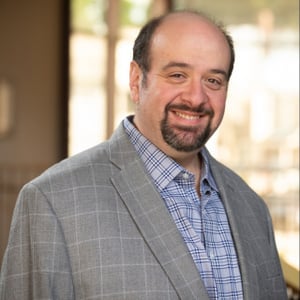
Associate Professor, UNH Franklin Pierce School of Law
Zvi S. Rosen is an Associate Professor at UNH Franklin Pierce School of Law and the Faculty Director of the Franklin Pierce Society for Intellectual Property. He has served as a Assistant Professor at the Southern Illinois University School of Law, as a Visiting Assistant Professor at the Maurice A. Deane School of Law at Hofstra University, and as a Visiting Scholar and Professorial Lecturer in Law at George Washington University School of Law.
In 2015-2016, he was the Abraham L. Kaminstein Scholar in Residence at the U.S. Copyright Office. Mr. Rosen received his J.D. from Northwestern University School of Law in 2005 and LLM in Intellectual Property in 2006 from the George Washington University Law School. He has practiced at Fried, Frank, Harris, Shriver & Jacobson LLP as well as smaller firms and his own practice, and clerked for the Hon. Thomas B. Bennett of the U.S. Bankruptcy Court for the Northern District of Alabama. He has written extensively on the development of modern copyright and trademark law, as well as on bankruptcy law.
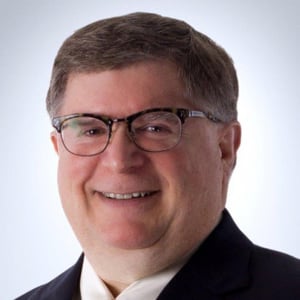
Shareholder, Rogers Joseph O’Donnell
Brian D. Miller is a shareholder in the Washington, D.C. office, of Rogers Joseph O’Donnell, where he represents clients in False Claims Act investigations and other investigations, audits, and reviews. He also serves as a corporate monitor for defense and other federal contractors in criminal and other matters. With over 27 years of experience as a federal prosecutor, Senate-confirmed inspector general, and civil litigator, Mr. Miller’s experience is unique. For example, he has represented a federal magistrate judge and the Attorney General in civil litigation. He has also personally issued grand jury subpoenas, signed inspector general subpoenas, and received testimony from civil investigative demands—something very few, if any, other attorneys have done. For nearly the last decade, Mr. Miller served as the Inspector General for the U.S. General Services Administration where he led over 300 auditors, special agents, attorneys, and support staff in conducting nationwide government audits and high profile investigations. As Inspector General, Mr. Miller is well known for his report on the excesses at a GSA conference in Las Vegas. Mr. Miller frequently testified before Congress regarding his investigations and audits. Earlier in Mr. Miller’s career, he held several high level positions within the U.S. Department of Justice, including senior counsel to the deputy attorney general and special counsel on healthcare fraud. He served as an Assistant United States Attorney for over a decade, where he prosecuted terrorists, fraudsters, and drug kingpins.
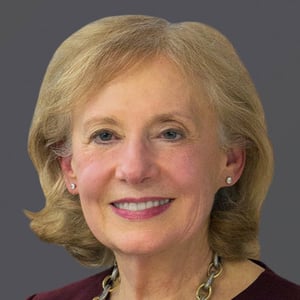
Partner, Mayer Brown LLP
Marcia Madsen was Chair of the Government Contracts practice and co-chair of the National Security Practice at Mayer Brown. She represented contractors in regulatory, policy, transactional, litigation, and investigative matters involving virtually every federal agency. Her clients included defense contractors, information technology and systems integrators, telecommunications companies, engineering firms, insurers, and manufacturing companies. Ms. Madsen's practice included defense of False Claims Act matters, internal investigations, audits, bid protests, claims and disputes before administrative forums and in the federal courts. She was a former Chair of the American Bar Association Section of Public Contract Law and currently co-chairs the Section’s Procurement Fraud Committee. She also is a member of the Federalist Society Administrative Law and Regulation Executive Committee. In addition, Marcia was a member of the Court of Federal Claims Advisory Council - Emeritus, and a recipient of the Court's Golden Eagle award. She was a Past President of the Board of Contract Appeals Bar Association. She was appointed by the Executive Office of the President to chair the Section 1423 Panel which recommended revision of the acquisition laws. She spoke and wrote frequently on government contracts and litigation topics.
Georgetown University Law Center, LL.M., 1980
American University - Washington College of Law, J.D., 1976
University of Utah, B.A., 1972
Attorney
Maya M. Noronha is a civil rights attorney.
As special counsel for external affairs at First Liberty Institute, Maya worked for the largest legal organization in the United States dedicated exclusively to defending religious liberty for all Americans.
Previously, Maya worked at the U.S. Department of Health and Human Services, as acting chief of staff of the Administration for Children and Families; principal advisor to the Commissioner of the Administration on Children, Youth, and Families; and senior advisor to the Director of the Office for Civil Rights and regulatory reform officer. She provided advice on federal civil rights laws that prohibit discrimination on the basis of conscience, religion, race, color, national origin, limited English proficiency, sex, disability, age, and health information in both health care and human services.
In the area of election law, Maya has advised officials elected to or candidates for President, U.S. Senate, U.S. House of Representatives, Governor, state legislature, city council, and magisterial district judge. She practiced law at Baker Hostetler LLP, where she was on the Political Law and Federal Advocacy Teams, advising clients on voting rights, redistricting, election integrity, campaign finance, financial reporting, ethics compliance, as well as conducting trial and appellate litigation. She also has delivered legislative testimony, planned continuing legal education conferences on election law, and published about voting rights and election administration.
In addition to addressing the Federalist Society, she has delivered remarks to the White House Initiative on Asian American Pacific Islanders, United States Senate, Women in Government Relations, Georgetown University, George Mason University School of Law, the Columbus School of Law at the Catholic University of America, and Arizona State University Cronkite School of Journalism.
Maya is in Phi Beta Kappa, a member of the Alpha Sigma Nu Jesuit Honor Society, and a John Carroll Scholar. Forbes Magazine recognized Maya as one of its 30 under 30 in Law and Public Policy.
She serves concurrently on the Federalist Society’s Free Speech & Election Law Executive Committee and the American Bar Association’s Standing Committee on Election Law.
Education
· J.D., Georgetown University Law Center, 2011
· A.B., Georgetown University, 2005

Former President & CEO, The Federalist Society for Law and Public Policy Studies
Eugene B. Meyer, former President and CEO of the Federalist Society, has served as Executive Director, CEO, and/or President of the organization for more than 40 years. He is responsible for shepherding the organization from a small group of law students to a community of 90,000 lawyers, law students, academics, judges, and others interested in the rule of law. The Society now includes a Student Chapter at nearly every ABA-accredited law school in the country and Lawyers Chapters in 220 major cities across the nation. Gene earned his B.A. in history at Yale in 1975 and his M.A. in political science from the London School of Economics in 1976. Gene currently serves on the boards of the U.S. Chess Center, the Holman Foundation, the Sarah Scaife Foundation, and the advisory board of the Adam Smith Society. He holds the title of International Chess Master.
Partner, Mayer Brown LLP
Marcia Madsen was Chair of the Government Contracts practice and co-chair of the National Security Practice at Mayer Brown. She represented contractors in regulatory, policy, transactional, litigation, and investigative matters involving virtually every federal agency. Her clients included defense contractors, information technology and systems integrators, telecommunications companies, engineering firms, insurers, and manufacturing companies. Ms. Madsen's practice included defense of False Claims Act matters, internal investigations, audits, bid protests, claims and disputes before administrative forums and in the federal courts. She was a former Chair of the American Bar Association Section of Public Contract Law and currently co-chairs the Section’s Procurement Fraud Committee. She also is a member of the Federalist Society Administrative Law and Regulation Executive Committee. In addition, Marcia was a member of the Court of Federal Claims Advisory Council - Emeritus, and a recipient of the Court's Golden Eagle award. She was a Past President of the Board of Contract Appeals Bar Association. She was appointed by the Executive Office of the President to chair the Section 1423 Panel which recommended revision of the acquisition laws. She spoke and wrote frequently on government contracts and litigation topics.
Georgetown University Law Center, LL.M., 1980
American University - Washington College of Law, J.D., 1976
University of Utah, B.A., 1972
Shareholder, Rogers Joseph O’Donnell
Brian D. Miller is a shareholder in the Washington, D.C. office, of Rogers Joseph O’Donnell, where he represents clients in False Claims Act investigations and other investigations, audits, and reviews. He also serves as a corporate monitor for defense and other federal contractors in criminal and other matters. With over 27 years of experience as a federal prosecutor, Senate-confirmed inspector general, and civil litigator, Mr. Miller’s experience is unique. For example, he has represented a federal magistrate judge and the Attorney General in civil litigation. He has also personally issued grand jury subpoenas, signed inspector general subpoenas, and received testimony from civil investigative demands—something very few, if any, other attorneys have done. For nearly the last decade, Mr. Miller served as the Inspector General for the U.S. General Services Administration where he led over 300 auditors, special agents, attorneys, and support staff in conducting nationwide government audits and high profile investigations. As Inspector General, Mr. Miller is well known for his report on the excesses at a GSA conference in Las Vegas. Mr. Miller frequently testified before Congress regarding his investigations and audits. Earlier in Mr. Miller’s career, he held several high level positions within the U.S. Department of Justice, including senior counsel to the deputy attorney general and special counsel on healthcare fraud. He served as an Assistant United States Attorney for over a decade, where he prosecuted terrorists, fraudsters, and drug kingpins.

Nelson v. Colorado - Post-Decision SCOTUScast
On April 19, 2017, the Supreme Court decided Nelson v. Colorado, along with Madden v....
When do we acknowledge that they're adults?
It’s not a new observation that in their constant drive to force other people to...
Restoring Internet Freedom
You’ve probably noticed – or likely soon will – that the latest phase of the...
Beckles v. United States - Post-Decision SCOTUScast
Carissa Byrne Hessick
On March 6, 2017, the Supreme Court decided Beckles v. United States. Travis Beckles, who...
Star Athletica, LLC v. Varsity Brands, Inc. - Post-Decision SCOTUScast
Zvi Rosen
On March 22, 2017, the Supreme Court decided Star Athletica, LLC v. Varsity Brands, Inc....
The False Claims Act – Enforcement of the Regulatory State: Time for A Change? - Podcast
Brian Miller, Marcia G. Madsen
Since the Supreme Court’s June 2016 decision in Universal Health Services, Inc., v. United States...
The False Claims Act – Enforcement of the Regulatory State: Time for A Change?
TeleforumTopics
The Rule of Lenity: A five-minute guide to navigating the intersection of administrative and criminal law
It is not often that you think of the terms “criminal defense” and “Chevron deference”...
New Applications of Section 2 of the Voting Rights Act to Vote Denial Cases
Maya Noronha
Note from the Editor: This article discusses recent federal appellate court decisions with respect to...
Annual Report 2016
Eugene B. Meyer
The Federalist Society enjoyed great success in 2016. This past year has seen the expansion...