
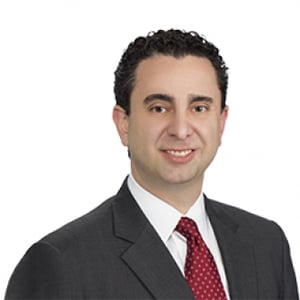
Edward F. Berbarie represents and advises clients in a wide range of employment and traditional labor related matters. Mr. Berbarie is board certified in labor and employment law by the Texas Board of Legal Specialization, and he has significant experience in representing and advising clients in complex commercial disputes.
Mr. Berbarie is one of the firm’s subject matter resources in the field of employment arbitration agreements and a core member of Littler’s Alternative Dispute Resolution Practice Group. A large part of his practice is devoted to drafting and enforcing arbitration agreements and arbitrating labor and employment matters. He has argued arbitration enforcement issues in state and federal courts across the country, including appellate and state supreme courts. He was counsel for petitioner in a case involving arbitration enforcement issues that was successful before the U. S. Supreme Court. He frequently writes and speaks on arbitration topics, including the latest developments in arbitration law.
Mr. Berbarie has defended clients in all types of cases from single-plaintiff matters to class action and collective actions. Additionally, he has successfully defended management numerous times against grievances and unfair labor practice charges.
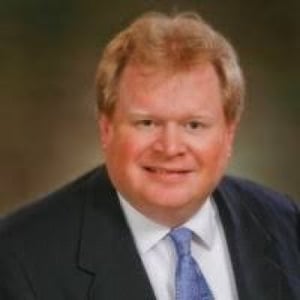
Principal Attorney, Woodring Law Firm
Mr. Daniel Woodring has lived in Florida for almost 30 years, but was born in Philadelphia, Pennsylvania. In Florida, he has lived and worked in Pensacola, Clearwater, Jacksonville, Gainesville and Tallahassee. His wife Jean, who is also an attorney, was born in Miami, and grew up in Ft. Myers. They have a son and a daughter.
Mr. Woodring is recognized as a Florida Super Lawyer, an honor given to fewer than 5% of Florida Attorneys, and holds an Avvo “Superb” rating. Mr. Woodring also has an AV Preeminent® Peer Reviewrating. AV®, AV Preeminent® are registered certification marks of Reed Elsevier Properties Inc., used in accordance with the Martindale-Hubbell certification procedures, standards and policies, and the ratings are explained at www.martindale.com/ratings.
Mr. Woodring is a member of the Florida and Georgia Bars, and is admitted to practice before the Florida Federal Southern, Middle and Northern District Courts, the Eleventh Circuit Court of Appeals and the U.S. Supreme Court. He has worked at the trial level on cases in many of Florida’s 20 judicial circuits, in addition to cases in state administrative tribunals. He has argued cases at the Florida Supreme Court and Florida District Courts of Appeal, and has briefed cases at the U.S. Supreme Court.
He graduated from the University of Florida, College of Law with a Juris Doctorate, Cum Laude, and received his B.A. degree from Clearwater Christian College, Summa Cum Laude.
After law school, Mr. Woodring was in private practice doing general civil and appellate work. He then left for a two year appellate clerkship at the First District Court of Appeal. During his time at the court, he worked on cases including, but not limited to: criminal; family law; administrative law; workers’ compensation; business and civil law; constitutional law.
Mr. Woodring next worked as a counsel in the Executive Office of the Governor, Office of the General Counsel. During his time in Governor Bush’s Legal Office he had diverse responsibilities, including oversight and strategic litigation management of significant legal matters at numerous Governor’s agencies, including the Department of Education, Department of Management Services, Department of Business and Professional Regulation, Department of Health, Agency for Health Care Administration, Department of Children and Families, Department of Community Affairs, Department of Elder affairs, Agency for Workforce Innovation, Department of Transportation, and the Department of State.
He was also legally responsible for topics as disparate as emergency operations; advising the Governor on the selection of judges; implementation of civil service reform; reform of workers’ compensation; budget and appropriation matters; Indian gaming law; and legally advising the Florida Cabinet sitting in its many capacities, such as the Florida Land and Water Adjudicatory Commission.
Mr. Daniel Woodring was then offered the opportunity to be General Counsel for the Florida Department of Education, which encompassed Pre-K though 12th grade, community colleges(now State colleges) and the Florida University System. He was also the first General Counsel for the Florida Board of Governors, when that Board was constitutionally created to manage the State University System.
During almost five years at the Department of Education, Mr. Woodring advised and litigated on matters including, but not limited to: constitutional challenges to Florida’s education programs, including Opportunity Scholarships and the charter school approval and appeal process; doing away with race as a preference in university admissions and state contracting; teacher and professional discipline cases; union, labor and employment matters; state procurement and bid protest proceedings; administrative rule challenges and rule making proceedings; IDEA and Section 504 proceedings; public records, government in the sunshine and ethical matters; contract negotiations and disputes.
Since 2007, Mr. Woodring has been back in private practice as the principal of the Woodring Law Firm, located in Tallahassee, Florida, but with a statewide practice, including Pensacola, Jacksonville, Gainesville, Tampa Bay, Orlando, West Palm Beach, Ft. Myers, Ft. Lauderdale, and Miami. He concentrates his practice on appeals; constitutional cases in both state and federal court; education law matters, including charter school represention; Business litigation; and state administrative matters, including state procurement, regulation and licensing, rule challenges and proposed rule making, although he also handles cases in many other areas.
Please look at the individual practice areas on the left menu for more information.
Mr. Woodring is a member of the Appellate, Administrative, and Governmental Lawyer sections of the Florida Bar and served as Chair of the Education Law Committee of the Florida Bar.
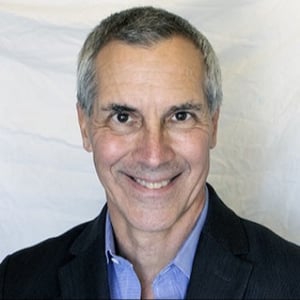
Assistant Professor of Law, University of Akron School of Law
Professor Horvath joined the Akron faculty as an assistant professor of law in 2020. His scholarly interest focus on the ways in which constitutional, statutory, and regulatory inputs intersect with the health care enterprise to determine the access to and quality of U.S. medical care. His teaching includes Torts and various topics in Health Care law. Prior to joining the Akron faculty, Professor Horvath was a post-doctoral Fellow in Public Law at the University of California, Berkeley, School of Law. He also clerked for Judge John T. Noonan, Jr. on the Ninth Circuit Court of Appeals. Professor Horvath earned his J.D. at Berkeley Law, where he served as Editor-in-Chief of the California Law Review. He earned his M.D. at Temple University Medical School.
Professor Horvath's scholarship has explored gaps in the regulation of drug-device combination products through FDA approval and tort law, statutory and regulatory determinants of FDA-approved high-risk medical device failures, and ways in which drug labeling might be improved. His work has been published in Washington Law Review, BYU Law Review, California Law Review, Albany Law Review, Cincinnati Law Review, and the Annals of Health Law and Life Sciences.
Prior to his legal career, Professor Horvath was a cardiologist who specialized in the treatment of heart rhythm disorders. He authored or co-authored over twenty article that were published in the Journal of the American College of Cardiology, Circulation, Archives of Internal Medicine, and other medical journals.
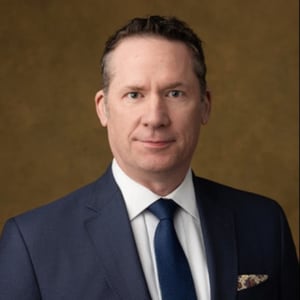
Senior Attorney, Pacific Legal Foundation
Oliver Dunford joined the Pacific Legal Foundation in March 2017. He litigates across the country to defend and advance individual liberty and the rule of law. Oliver’s cases involve the separation of powers, economic liberty, property rights, and the First Amendment.
Oliver remains inspired by the Classical Liberal ideals upon which our Founders declared independence and secured the blessings of liberty. The Constitution’s promises, however, are not self-executing. As James Madison explained, “In framing a government which is to be administered by men over men, the great difficulty lies in this: you must first enable the government to control the governed; and in the next place oblige it to control itself.” Oliver feels lucky that his work helps oblige the government to control itself—to the end that all individuals may pursue their rights of life, liberty, and the pursuit of happiness.
Before joining PLF, Oliver clerked at the Ohio Supreme Court and the Ohio Court of Appeals, and spent more than a decade in private practice working on complex commercial litigation. Originally from Cleveland, Oliver is a graduate of the University of Dayton and Cleveland-Marshall College of Law, where he was a managing editor for the Cleveland State Law Review. Oliver is admitted to the state bars of Florida, California, and Ohio, as well as several federal courts including the United States Supreme Court.
Oliver spends all of his free time following the Cleveland Indians.
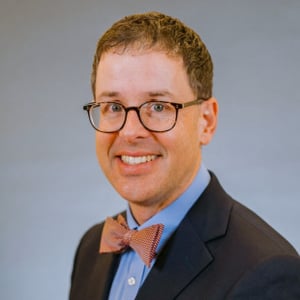
Senior Counsel and VP, Appellate Advocacy, Alliance Defending Freedom
John Bursch is senior counsel and vice president of appellate advocacy with Alliance Defending Freedom. Bursch has argued 12 U.S. Supreme Court cases and more than 30 state supreme court cases since 2011, and a recent study concluded that among all frequent Supreme Court advocates who did not work for the federal government, he had the 3rd highest success rate for persuading justices to adopt his legal position.
Bursch served as solicitor general for the state of Michigan from 2011-2013. He has argued multiple Michigan Supreme Court cases in eight of the last ten terms and has successfully litigated hundreds of matters nationwide, including six with at least $1 billion at stake. As part of his private firm, Bursch Law PLLC, he has represented Fortune 500 companies, foreign and domestic governments, top public officials, and industry associations in high-profile cases, primarily on appeal. He was inducted into the American Academy of Appellate Lawyers and serves as a member of the American Law Institute. His work has resulted in repeated listings in Michigan Super Lawyers and Best Lawyers.
Before entering private practice, Bursch served as a law clerk to the Honorable James B. Loken on the U.S. Court of Appeals for the 8th Circuit. He received his J.D. magna cum laude in 1997 from the University of Minnesota Law School, where he served as Chief Note & Comment Editor for the Minnesota Law Review. Prior to that, he attended Western Michigan University, where he received degrees in mathematics and music performance summa cum laude.
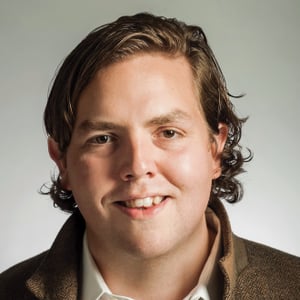
Harry Kalven, Jr. Professor of Law & Faculty Director, Constitutional Law Institute, University of Chicago Law School
William Baude is a Professor of Law and the Faculty Director of the Constitutional Law Institute at the University of Chicago Law School, where he teaches federal courts, constitutional law, and conflict of laws. His current research interests include different aspects of the Fourteenth Amendment (particularly both Section One and Section Three) and the nature of judicial discretion.
Among his other activities Baude is: the co-editor of two textbooks, The Constitution of the United States and Hart & Wechsler's Federal Courts in the Federal System; an Affiliated Scholar at the Center for the Study of Constitutional Originalism; a founding member of the Academic Freedom Alliance; a member of the American Law Institute; an occasional blogger at The Volokh Conspiracy; and a podcaster on Divided Argument. He also recently served on the Presidential Commission on the Supreme Court of the United States.
Professor Baude received his BS in Mathematics from the University of Chicago and his JD from Yale Law School. He then clerked for then-Judge Michael McConnell on the United States Court of Appeals, and Chief Justice John Roberts on the United States Supreme Court. Before joining the Chicago faculty, he was a fellow at the Stanford Constitutional Law Center, and a lawyer in Washington, DC.

Topics
High Stakes in "Waters of the United States" Rulemaking
The Clean Water Act (“CWA”) gives the Environmental Protection Agency (“EPA”) and the U.S. Army...
Courthouse Steps: National Labor Relations Board v. Murphy Oil USA, Inc.
Edward F. Berbarie
Employers across the country are anxiously awaiting a ruling from the United States Supreme Court...
Qualified Immunity
Criminal Law & Procedure Practice Group Teleforum
TeleforumU.S Supreme Court Preview: 2017 Panel
Denver, ColoradoEndrew F. v. Douglas County School District - Post-Decision SCOTUScast
Daniel Woodring
On March 22, 2017, the Supreme Court decided Endrew F. v. Douglas County School District,...
Moore v. Texas - Post-Decision SCOTUScast
Joanmarie Davoli
On March 28, 2017, the Supreme Court decided Moore v. Texas, a habeas corpus dispute...
Coventry Health Care of Missouri, Inc., v. Nevils - Post-Decision SCOTUScast
George Horvath
On April 18, 2017, the Supreme Court decided Coventry Health Care of Missouri, Inc., v....
Burgess v. FDIC, the Appointments Clause, and the Separation of Powers
Oliver Dunford
Last week, the Fifth Circuit became the third circuit court to consider whether administrative law...
Bormuth v. County of Jackson
John J. Bursch
If you’re looking for evidence that Establishment Clause jurisprudence is a mess, look no further...
Topics
The SCOTUS Tax Case to Watch: Marinello v. United States
The National Law Journal recently called Marinello v. United States one of eight “major SCOTUS...