
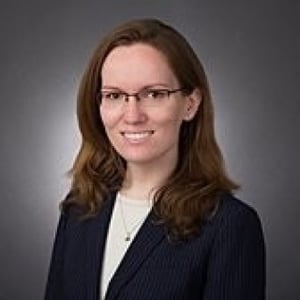
Deputy Assistant Attorney General, U.S. Department of Justice
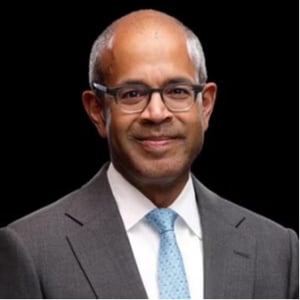
Partner, Davis Polk & Wardwell LLP
Kannon is the head of our Supreme Court & Appellate practice. He has argued 39 cases before the U.S. Supreme Court and has argued more than 150 appeals in courts across the country, including every federal court of appeals and numerous state courts.
Kannon is ranked as a “Star Individual” in appellate law by Chambers USA, where a client notes, “It’s hard to think of enough superlatives to describe his talent, his judgment, his ability, his experience – he is as good as it gets.” Legal 500 U.S. recognizes Kannon in its Hall of Fame for appellate work. A client shares, “His work is the best in the business, and he is a wonderful human being in addition to being a world-class appellate litigator.”
In 2024 and 2022, Kannon was a finalist for the American Lawyer’s “Litigator of the Year” award. He was named “Appellate Litigator of the Year” by Benchmark Litigation in 2021 and was a 2026 finalist for that recognition.
Before entering private practice, Kannon served as an Assistant to the Solicitor General at the U.S. Department of Justice.
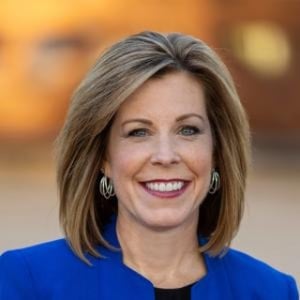
CEO, President, and General Counsel, Alliance Defending Freedom
As the CEO, president, and general counsel of Alliance Defending Freedom, Kristen Waggoner leads the faith-based organization in advancing every person’s God-given right to live and speak the truth in the U.S. and around the world. She oversees more than 450 ADF team members in 10 global offices.
Since 2011, ADF has won 15 cases at the U.S. Supreme Court, three of which were argued by Waggoner: Masterpiece Cakeshop v. Colorado Civil Rights Commission, Uzuebgunam v. Presczewski, and 303 Creative v. Elenis. ADF also has a strong record of international success at the European Court of Human Rights, United Nations, and other leading courts and tribunals and has secured the release of more than 1,000 imprisoned Christians.
After clerking with Washington Supreme Court Justice Richard B. Sanders, Waggoner practiced law for over 16 years at a Seattle firm before joining ADF in 2013. She is Peer Review Rated AV® Preeminent™ in Martindale-Hubbell. Waggoner is a sought-after public speaker who often appears in national and international media outlets.
Partner, Davis Polk & Wardwell LLP
Kannon is the head of our Supreme Court & Appellate practice. He has argued 39 cases before the U.S. Supreme Court and has argued more than 150 appeals in courts across the country, including every federal court of appeals and numerous state courts.
Kannon is ranked as a “Star Individual” in appellate law by Chambers USA, where a client notes, “It’s hard to think of enough superlatives to describe his talent, his judgment, his ability, his experience – he is as good as it gets.” Legal 500 U.S. recognizes Kannon in its Hall of Fame for appellate work. A client shares, “His work is the best in the business, and he is a wonderful human being in addition to being a world-class appellate litigator.”
In 2024 and 2022, Kannon was a finalist for the American Lawyer’s “Litigator of the Year” award. He was named “Appellate Litigator of the Year” by Benchmark Litigation in 2021 and was a 2026 finalist for that recognition.
Before entering private practice, Kannon served as an Assistant to the Solicitor General at the U.S. Department of Justice.
CEO, President, and General Counsel, Alliance Defending Freedom
As the CEO, president, and general counsel of Alliance Defending Freedom, Kristen Waggoner leads the faith-based organization in advancing every person’s God-given right to live and speak the truth in the U.S. and around the world. She oversees more than 450 ADF team members in 10 global offices.
Since 2011, ADF has won 15 cases at the U.S. Supreme Court, three of which were argued by Waggoner: Masterpiece Cakeshop v. Colorado Civil Rights Commission, Uzuebgunam v. Presczewski, and 303 Creative v. Elenis. ADF also has a strong record of international success at the European Court of Human Rights, United Nations, and other leading courts and tribunals and has secured the release of more than 1,000 imprisoned Christians.
After clerking with Washington Supreme Court Justice Richard B. Sanders, Waggoner practiced law for over 16 years at a Seattle firm before joining ADF in 2013. She is Peer Review Rated AV® Preeminent™ in Martindale-Hubbell. Waggoner is a sought-after public speaker who often appears in national and international media outlets.
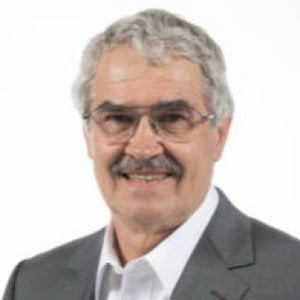
R. B. Price and Isabelle Wade & Paul C. Lyda Professor Emeritus of Law, University of Missouri School of Law
Carl H. Esbeck is R.B. Price Professor and Isabelle Wade & Paul C. Lyda Professor of Law emeritus at the University of Missouri. After attending Cornell University School of Law where he served as an editor on the Cornell Law Review, he held a judicial clerkship with the Honorable Howard C. Bratton, chief judge of the U.S. District Court in New Mexico.
Professor Esbeck publishes widely in the area of religious liberty and church-state relations. He is recognized as the progenitor of "Charitable Choice," an integral part of the 1996 Federal Welfare Reform Act, later made a part of the faith-based initiative and equal-treatment regulations under presidents George W. Bush and Barack Obama. In addition, he has taken the lead in recognizing that the modern Supreme Court has applied the Establishment Clause not as a personal right, but as a structural limit on the government's authority in disputes involving church governance. While on leave from 1999 to 2002, Professor Esbeck directed the Center for Law & Religious Freedom (CLRF) and later served as Senior Counsel to the Deputy Attorney General at the U.S. Department of Justice. While directing the CLRF, Professor Esbeck was a central part of the congressional advocacy behind the Religious Land Use and Institutionalized Persons Act of 2000 (RLUIPA). While at the Department of Justice one of his duties was to direct a task force to remove barriers to the equal-treatment of faith-based organizations applying for social service grants. He is the author of Disestablishment and Religious Dissent: Church-State Relations in the New American States, 1776 - 1833 (U. of MO Press, 2019).
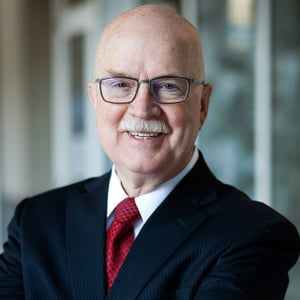
Partner, First & Fourteenth PLLC
For over 35 years, Martin Nussbaum has advised and advocated for dioceses, churches, denominations, religious hospitals, schools, monasteries, Chabad houses, ashrams, and other ministries. He is a nationally recognized expert on religious institution law and religious freedom. His advocacy and advice has been welcomed by religious leaders across the country.
Over his career, Martin has earned a national reputation for his expertise on the First Amendment and various other religious freedom protections. He employs strategic litigation that seeks to protect those rights. He has advocated for religious institutions in cases before the U.S. Supreme Court and in state and federal courts across the country. He also advocates for religious institutions before legislatures and in administrative proceedings, and serves as outside general counsel to numerous national and regional ministries.
Martin has served as a trial, appellate, and amicus counsel in landmark First Amendment and Religious Freedom Restoration Act cases in the U.S. Supreme Court and in state and federal courts.
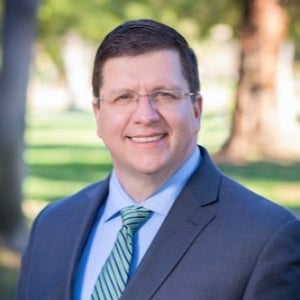
Vice President and Senior Counsel, The Becket Fund for Religious Liberty
Eric Rassbach is Vice President and Senior Counsel at the Becket Fund for Religious Liberty, where he has served since 2003. He has briefed over 90 cases at the United States Supreme Court and has led or been a part of Becket litigation teams in each of Becket’s pathbreaking victories there, including Hosanna-Tabor, Hobby Lobby, Holt v. Hobbs, Zubik v. Burwell, Agudath Israel of America v. Cuomo, and Fulton v. Philadelphia. In 2020, Eric argued Our Lady of Guadalupe School v. Morrissey-Berru to the Supreme Court, garnering a 7-2 win for his Catholic school clients. Eric has also briefed and argued cases in federal appeals courts and state supreme courts across the nation. Eric has also represented clients in appeals to the European Court of Human Rights in Strasbourg, France and in the highest courts of several other countries.
Eric believes passionately in the right of all people to the full measure of religious liberty and has represented members of almost every religious group present in the United States, including Buddhists, Christians, Hindus, Jains, Jews, Muslims, Native Americans, Santeros, and Sikhs, as well as many governmental entities targeted for accommodating religion.
Eric frequently comments on church-state issues in the media, including the New York Times, the Washington Post, the Wall Street Journal, and other major press outlets. He has published legal scholarship in the Harvard Law Review Forum, the Tennessee Law Review, the Illinois Law Review, the Cato Supreme Court Review, and other legal journals, and often speaks to law school audiences.
Before joining Becket, Eric worked at Baker Botts LLP in Houston, where he worked in international project finance. He also served as a law clerk to United States District Court Judge Lee Rosenthal in Houston, Texas.
Eric graduated from Haverford College with a degree in Comparative Literature, is a member of Fitzwilliam College, University of Cambridge, and is a graduate of Harvard Law School. Eric was a 2012-2013 Wasserstein Public Interest Fellow at Harvard Law School. He is Visiting Professor and Executive Director of The Hugh and Hazel Darling Foundation Religious Liberty Clinic at Pepperdine University Caruso School of Law in Malibu, where he leads students in litigating cases in American courts. He is also an Associated Scholar with the Centre for Religious Freedom at Jagiellonian University in Kraków, Poland. Eric is admitted in Texas, DC, California, and Ireland.
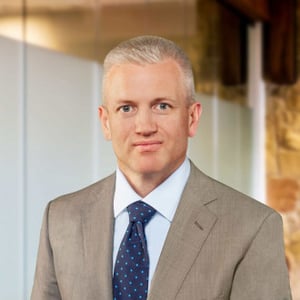
Executive General Counsel, First Liberty Institute
Hiram Sasser is Executive General Counsel for First Liberty Institute, where he oversees First Liberty’s litigation and media efforts. Sasser’s practice focuses on First Amendment and other constitutional and civil rights issues relating to religious liberty. Sasser served as co-counsel in seven victories before the United States Supreme Court, including Groff v. DeJoy (landmark case overturning the “de minimis cost” test for Title VII in place almost 50 years), Kennedy v. Bremerton (landmark case overturning 50 years of Establishment Clause precedent), Carson v. Makin (overturning 40 years of Maine’s discrimination against parents choosing faith-based schools), American Legion v. American Humanist Association (landmark case ending Establishment Clause attacks on veterans’ memorials with religious imagery), Klein v. Oregon Bureau of Labor and Industries (granted, vacated, and remanded (twice) in religious wedding service case), and Sause v. Bauer (summary reversal revoking qualified immunity for police who ordered a citizen not to pray in her own home).
In addition to his legal duties, Sasser develops, coordinates, and implements successful media strategies on behalf of his clients. This includes numerous appearances on ABC, NBC, CBS, Fox News, CNN, and the BBC as well as being heard on various radio stations throughout the United States, Asia, Africa, and Europe.
In 2016, Sasser took a leave of absence to serve a temporary assignment as the Chief of Staff for the Attorney General of Texas. He currently serves as an Adjunct Professor of Law at both The University of Texas at Austin School of Law (teaching Religious Liberty) and Oklahoma City University School of Law (teaching Civil Rights Procedure).
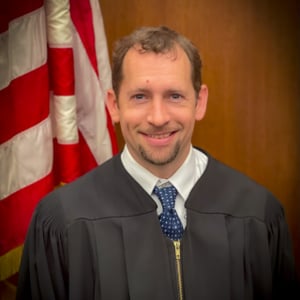
District Judge, United States District Court for the Northern District of Texas
Judge Brantley Starr was appointed to United States District Court for the Northern District of Texas in August 2019. Before his appointment, Judge Starr was the Deputy First Assistant Attorney General of Texas. Prior to that appointment, he served as Deputy Attorney General for Legal Counsel. From 2011 to 2015, Judge Starr served as career staff attorney to Texas Supreme Court Justice Eva Guzman. From 2008 to 2011, he practiced at King & Spalding, LLP. He served in the Office of the Solicitor General from 2006 to 2008. Prior to that, Judge Starr clerked for then-Justice Don Willett on the Texas Supreme Court after serving at the Office of the Attorney General. Judge Starr received his law degree from the University of Texas School of Law and his bachelor of arts degree from Abilene Christian University in 2001. Judge Starr has taught the Origins of the Constitution Class at the University of Texas law, Texas A&M law, and SMU law.
R. B. Price and Isabelle Wade & Paul C. Lyda Professor Emeritus of Law, University of Missouri School of Law
Carl H. Esbeck is R.B. Price Professor and Isabelle Wade & Paul C. Lyda Professor of Law emeritus at the University of Missouri. After attending Cornell University School of Law where he served as an editor on the Cornell Law Review, he held a judicial clerkship with the Honorable Howard C. Bratton, chief judge of the U.S. District Court in New Mexico.
Professor Esbeck publishes widely in the area of religious liberty and church-state relations. He is recognized as the progenitor of "Charitable Choice," an integral part of the 1996 Federal Welfare Reform Act, later made a part of the faith-based initiative and equal-treatment regulations under presidents George W. Bush and Barack Obama. In addition, he has taken the lead in recognizing that the modern Supreme Court has applied the Establishment Clause not as a personal right, but as a structural limit on the government's authority in disputes involving church governance. While on leave from 1999 to 2002, Professor Esbeck directed the Center for Law & Religious Freedom (CLRF) and later served as Senior Counsel to the Deputy Attorney General at the U.S. Department of Justice. While directing the CLRF, Professor Esbeck was a central part of the congressional advocacy behind the Religious Land Use and Institutionalized Persons Act of 2000 (RLUIPA). While at the Department of Justice one of his duties was to direct a task force to remove barriers to the equal-treatment of faith-based organizations applying for social service grants. He is the author of Disestablishment and Religious Dissent: Church-State Relations in the New American States, 1776 - 1833 (U. of MO Press, 2019).
Partner, First & Fourteenth PLLC
For over 35 years, Martin Nussbaum has advised and advocated for dioceses, churches, denominations, religious hospitals, schools, monasteries, Chabad houses, ashrams, and other ministries. He is a nationally recognized expert on religious institution law and religious freedom. His advocacy and advice has been welcomed by religious leaders across the country.
Over his career, Martin has earned a national reputation for his expertise on the First Amendment and various other religious freedom protections. He employs strategic litigation that seeks to protect those rights. He has advocated for religious institutions in cases before the U.S. Supreme Court and in state and federal courts across the country. He also advocates for religious institutions before legislatures and in administrative proceedings, and serves as outside general counsel to numerous national and regional ministries.
Martin has served as a trial, appellate, and amicus counsel in landmark First Amendment and Religious Freedom Restoration Act cases in the U.S. Supreme Court and in state and federal courts.
Vice President and Senior Counsel, The Becket Fund for Religious Liberty
Eric Rassbach is Vice President and Senior Counsel at the Becket Fund for Religious Liberty, where he has served since 2003. He has briefed over 90 cases at the United States Supreme Court and has led or been a part of Becket litigation teams in each of Becket’s pathbreaking victories there, including Hosanna-Tabor, Hobby Lobby, Holt v. Hobbs, Zubik v. Burwell, Agudath Israel of America v. Cuomo, and Fulton v. Philadelphia. In 2020, Eric argued Our Lady of Guadalupe School v. Morrissey-Berru to the Supreme Court, garnering a 7-2 win for his Catholic school clients. Eric has also briefed and argued cases in federal appeals courts and state supreme courts across the nation. Eric has also represented clients in appeals to the European Court of Human Rights in Strasbourg, France and in the highest courts of several other countries.
Eric believes passionately in the right of all people to the full measure of religious liberty and has represented members of almost every religious group present in the United States, including Buddhists, Christians, Hindus, Jains, Jews, Muslims, Native Americans, Santeros, and Sikhs, as well as many governmental entities targeted for accommodating religion.
Eric frequently comments on church-state issues in the media, including the New York Times, the Washington Post, the Wall Street Journal, and other major press outlets. He has published legal scholarship in the Harvard Law Review Forum, the Tennessee Law Review, the Illinois Law Review, the Cato Supreme Court Review, and other legal journals, and often speaks to law school audiences.
Before joining Becket, Eric worked at Baker Botts LLP in Houston, where he worked in international project finance. He also served as a law clerk to United States District Court Judge Lee Rosenthal in Houston, Texas.
Eric graduated from Haverford College with a degree in Comparative Literature, is a member of Fitzwilliam College, University of Cambridge, and is a graduate of Harvard Law School. Eric was a 2012-2013 Wasserstein Public Interest Fellow at Harvard Law School. He is Visiting Professor and Executive Director of The Hugh and Hazel Darling Foundation Religious Liberty Clinic at Pepperdine University Caruso School of Law in Malibu, where he leads students in litigating cases in American courts. He is also an Associated Scholar with the Centre for Religious Freedom at Jagiellonian University in Kraków, Poland. Eric is admitted in Texas, DC, California, and Ireland.
Executive General Counsel, First Liberty Institute
Hiram Sasser is Executive General Counsel for First Liberty Institute, where he oversees First Liberty’s litigation and media efforts. Sasser’s practice focuses on First Amendment and other constitutional and civil rights issues relating to religious liberty. Sasser served as co-counsel in seven victories before the United States Supreme Court, including Groff v. DeJoy (landmark case overturning the “de minimis cost” test for Title VII in place almost 50 years), Kennedy v. Bremerton (landmark case overturning 50 years of Establishment Clause precedent), Carson v. Makin (overturning 40 years of Maine’s discrimination against parents choosing faith-based schools), American Legion v. American Humanist Association (landmark case ending Establishment Clause attacks on veterans’ memorials with religious imagery), Klein v. Oregon Bureau of Labor and Industries (granted, vacated, and remanded (twice) in religious wedding service case), and Sause v. Bauer (summary reversal revoking qualified immunity for police who ordered a citizen not to pray in her own home).
In addition to his legal duties, Sasser develops, coordinates, and implements successful media strategies on behalf of his clients. This includes numerous appearances on ABC, NBC, CBS, Fox News, CNN, and the BBC as well as being heard on various radio stations throughout the United States, Asia, Africa, and Europe.
In 2016, Sasser took a leave of absence to serve a temporary assignment as the Chief of Staff for the Attorney General of Texas. He currently serves as an Adjunct Professor of Law at both The University of Texas at Austin School of Law (teaching Religious Liberty) and Oklahoma City University School of Law (teaching Civil Rights Procedure).
District Judge, United States District Court for the Northern District of Texas
Judge Brantley Starr was appointed to United States District Court for the Northern District of Texas in August 2019. Before his appointment, Judge Starr was the Deputy First Assistant Attorney General of Texas. Prior to that appointment, he served as Deputy Attorney General for Legal Counsel. From 2011 to 2015, Judge Starr served as career staff attorney to Texas Supreme Court Justice Eva Guzman. From 2008 to 2011, he practiced at King & Spalding, LLP. He served in the Office of the Solicitor General from 2006 to 2008. Prior to that, Judge Starr clerked for then-Justice Don Willett on the Texas Supreme Court after serving at the Office of the Attorney General. Judge Starr received his law degree from the University of Texas School of Law and his bachelor of arts degree from Abilene Christian University in 2001. Judge Starr has taught the Origins of the Constitution Class at the University of Texas law, Texas A&M law, and SMU law.
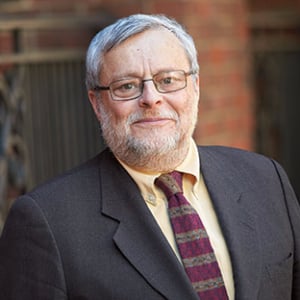
Dwight D. Opperman Professor of Law; Director, Center for Labor, New York University School of Law
Samuel Estreicher is a nationally preeminent scholar in US and international-comparative labor and employment law and arbitration law. He has authored more than a dozen books, including Beyond Elite Law: Access to Civil Justice in America (with Joy Radice, Cambridge Univ. 2016); leading casebooks on legislation and regulatory state, labor law and employment discrimination and employment law; and published more than 200 articles in professional and academic journals. He served as Chief Reporter for the American Law Institute’s Restatement of Employment Law (2015). After clerking for Judge Harold Leventhal of the US Court of Appeals for the DC Circuit, practicing in a labor law firm, and clerking for Justice Lewis F. Powell Jr. of the US Supreme Court, Prof. Estreicher joined the NYU School of Law faculty in 1978. In addition to serving as counsel to major law firms, he is the former secretary of the Labor and Employment Law Section of the American Bar Association, a former chair of the Committee on Labor and Employment Law of the Association of the Bar of the City of New York.15). He maintains an active appellate and ADR practice. The Labor and Employment Research Association awarded him its 2010 Susan C. Eaton Award for Outstanding Scholar-Practitioner. In recent years, Estreicher also has published work in public international law and authored several briefs in the Supreme Court and US courts of appeals on employment and US foreign relations law issues. Prof. Estreicher received his BA from Columbia College, his MS in industrial relations from Cornell University, and his JD from Columbia Law School, where he was editor-in-chief of the Columbia Law Review. He is a member of the College of Labor and Employment Lawyers and was appointed in 2016 by the UN Secretary General as a member of the UN’s Internal Justice Commission.
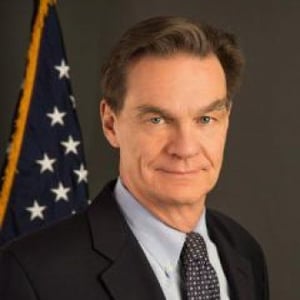
Of Counsel, Bredhoff & Kaiser PLLC
Richard F. Griffin, Jr. is Of Counsel at the Washington, DC law firm of Bredhoff & Kaiser, and has practiced labor law for more than 36 years. Prior to joining the firm, from November 4, 2013 through October 31, 2017, Mr. Griffin was the General Counsel of the National Labor Relations Board (NLRB), nominated by President Obama and confirmed by the U.S. Senate. Before becoming NLRB General Counsel, from January 2012 through August 2013, Mr. Griffin was a NLRB Board Member, recess appointed to that position by President Obama. From 1983 through his appointment as a Board Member, Mr. Griffin worked in the legal department of the International Union of Operating Engineers (IUOE); from September 1994 until January 2012, he was the IUOE’s General Counsel. While IUOE General Counsel, Mr. Griffin was on the AFL-CIO Lawyers Advisory Panel and was a member of the Board of Directors of the AFL-CIO Lawyers Coordinating Committee. From 1981 to 1983, Mr. Griffin served as staff counsel to two NLRB Board Members.
“For exemplary public service and leadership on behalf of America’s workers” Mr. Griffin was named to the National Employment Law Project’s 2016 Honor Roll. He is a Fellow of the College of Labor and Employment Lawyers and of the American Bar Foundation. He graduated from Yale College (BA 1977) and Northeastern University Law School (JD 1981).
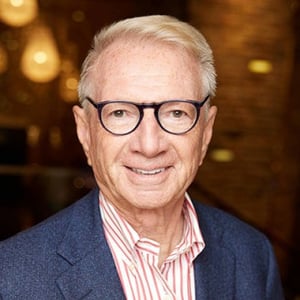
Senior Labor and Employment Counsel, CHRO Association
Roger King is a highly regarded labor relations attorney, whose career spans more than 40 years. Roger recently retired as a partner with Jones Day law firm. He now serves as Senior Labor and Employment counsel for the Association.
Roger specializes in labor and employment, healthcare, collective bargaining, contract administration and representation campaigns. Roger represented the winning side as co-counsel in the landmark U.S. Supreme Court case known as Noel Canning, which successfully challenged President Obama’s authority to make recess appointments to the National Labor Relations Board.
After graduating from Cornell University Law School, he was a Captain and Legal Services Officer in the United States Air Force, on the Staff of United States Senator Robert Taft, Jr. and, subsequently, was appointed as Professional Staff Counsel to the United States Senate Labor Committee.
Roger has testified before both the U.S. Senate and House Labor Committees, is a fellow of the College of Labor and Employment Lawyers, and serves on the Advocacy Committee of the American Society for Healthcare Human Resources Association (ASHHRA) and on the Executive Committee of the Ohio State Bar Association Labor and Employment Law Section Council.
He is a nationally recognized author/speaker on employment matters and has represented employers regarding labor and employment issues both before administrative agencies and in federal and state courts. He has represented the U.S. Chamber of Commerce, the Society for Human Resource Management (SHRM), the HR Policy Association (HRPA), the National Manufactures Association (NAM), the American Hospital Association (AHA), and the Coalition for a Democratic Workplace (CDW) in federal courts regarding numerous labor law issues.
Other clients Roger has represented include the Cleveland Clinic Foundation, Catholic Health Partners, MedStar Health, HCA, Texas Health Resources, Unity Point Health, UHS, Trinity Health, National Beef, General Cable, Orlando Health, ProMedica, Premier Health, Cedars-Sinai, Yale New Haven Health System, McLaren Health Care Corporation, Ohio, California and American Hospital Associations, Bon Secoure Health System, Kaleida Health, Sisters of Levenworth Health System, Lakeland Regional Medical Center, Clarion Clinic, Fisher-Titus Medical Center, Saint Joseph Health System, Benefis Healthcare, Community Health Systems, American Water Works, Macy’s Inc., Verizon and General Motors.
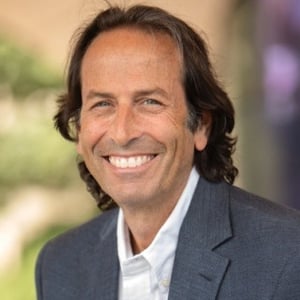
Professor of Law, Cornell University School of Hotel Administration
David Sherwyn is the John and Melissa Ceriale Professor of Hospitality Human Resources and a professor of law at Cornell Peter and Stephanie Nolan School of Hotel Administration. He is also the academic director of the Cornell Center for Innovative Hospitality Labor and Employment Relations and a research fellow at the Center for Labor and Employment Law at New York University's School of Law. In addition, Sherwyn is of counsel to the law firm of Stokes & Wagner. Prior to joining the Nolan School, Sherwyn practiced management-side labor and employment law for six years.
Sherwyn has published articles in the Arizona State Law Review, Berkeley Journal of Labor and Employment Law, the Cornell Hospitality Quarterly, Fordham Law Review, University of California Hastings Law Journal, Indiana Law Journal, Northwestern Law Review, Stanford Law Review, and the University of Pennsylvania Labor and Employment Law Journal. His research interests include arbitration of discrimination lawsuits and union-management relations.
Sherwyn teaches Business and Hospitality Law, a required class with more than 200 students. In addition, he teaches Employment Discrimination Law and Union Management Relations and Labor Relations in the Hospitality Industry. Since joining the faculty in 1997, Sherwyn has won 20 teaching awards. In 2014, he was recognized with a Stephen H. Weiss Presidential Fellowship, the most prestigious teaching award at Cornell University.
In 2002, Sherwyn conceived of, organized, and hosted the Center for Hospitality Research's (CHR) first Hospitality Industry Roundtable. Since that time, he has hosted more than 20 roundtables. Because of the success of the now-annual Labor and Employment Law Roundtable, the CHR hosts roundtables in each of the disciplines that are represented in the school. From 2006-2009, Sherwyn was the director of the CHR. In that time the center grew from 13 to 34 partners and began sponsoring the Annual HR in Hospitality Conference.
Staff Attorney, National Right To Work Legal Defense Foundation
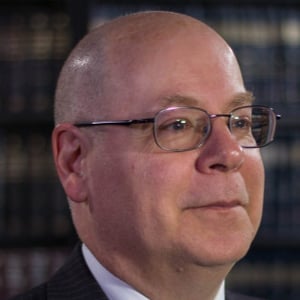
Glenn Taubman is a Staff Attorney for the National Right to Work Legal Defense and Education Foundation (1982 to the present). He was a Law Clerk for Senior Circuit Judge Warren L. Jones, U.S. Court of Appeals for the Fifth and Eleventh Circuits, Jacksonville, Florida, from 1981-82, and a Staff Attorney for the U.S. District Court, Middle District of Florida, Jacksonville, Florida, from 1980-81. His Bar Admissions include: Georgia, 1980; New York, 1981; U.S. Supreme Court, 1983; District of Columbia, 1985. He regularly appears before the National Labor Relations Board and various federal courts, representing individual employees only.
He is the author of "'Neutrality Agreements' and the Destruction of Employees' Section 7 Rights" (2005) and co-author of "Union Discipline and Employee Rights," a monograph published by the National Right to Work Foundation.
A partial listing of his reported cases includes: Lucas v. NLRB, 333 F.3d 927 (9th Cir. 2003);Penrod v. NLRB, 203 F.3d 41 (D.C. Cir. 2000);Production Workers v. NLRB, 161 F.3d 1047 (7th Cir. 1998);Food & Commercial Workers Local 951 v. Mulder, 31 F.3d 365 (6th Cir. 1994);NLRB v. Office Employees Local 2, 902 F.2d 1164 (4th Cir. 1990);Tierney v. City of Toledo, 917 F.2d 927 (6th Cir. 1990);Lowary v. Lexington Local Board of Education, 902 F.2d 422 (6th Cir. 1990);Lowary v. Lexington Local Board of Education, 854 F.2d 131 (6th Cir. 1988);Tierney v. City of Toledo, 824 F.2d 1497 (6th Cir. 1987);Masiello v. US Airways, Inc., 113 F. Supp. 2d 870 (W.D.N.C. 2000);Jordan v. City of Bucyrus, 739 F. Supp. 1124 (1990),further proceedings, 754 F. Supp. 554 (N.D. Ohio 1991);Dana Corp., 341 N.L.R.B. No. 150, 2004 WL 1329345 (June 7, 2004);California Saw & Knife Works, 320 N.L.R.B. 224 (1995),enforced, 133 F.3d 1012 (7th Cir. 1998).
Dwight D. Opperman Professor of Law; Director, Center for Labor, New York University School of Law
Samuel Estreicher is a nationally preeminent scholar in US and international-comparative labor and employment law and arbitration law. He has authored more than a dozen books, including Beyond Elite Law: Access to Civil Justice in America (with Joy Radice, Cambridge Univ. 2016); leading casebooks on legislation and regulatory state, labor law and employment discrimination and employment law; and published more than 200 articles in professional and academic journals. He served as Chief Reporter for the American Law Institute’s Restatement of Employment Law (2015). After clerking for Judge Harold Leventhal of the US Court of Appeals for the DC Circuit, practicing in a labor law firm, and clerking for Justice Lewis F. Powell Jr. of the US Supreme Court, Prof. Estreicher joined the NYU School of Law faculty in 1978. In addition to serving as counsel to major law firms, he is the former secretary of the Labor and Employment Law Section of the American Bar Association, a former chair of the Committee on Labor and Employment Law of the Association of the Bar of the City of New York.15). He maintains an active appellate and ADR practice. The Labor and Employment Research Association awarded him its 2010 Susan C. Eaton Award for Outstanding Scholar-Practitioner. In recent years, Estreicher also has published work in public international law and authored several briefs in the Supreme Court and US courts of appeals on employment and US foreign relations law issues. Prof. Estreicher received his BA from Columbia College, his MS in industrial relations from Cornell University, and his JD from Columbia Law School, where he was editor-in-chief of the Columbia Law Review. He is a member of the College of Labor and Employment Lawyers and was appointed in 2016 by the UN Secretary General as a member of the UN’s Internal Justice Commission.
Of Counsel, Bredhoff & Kaiser PLLC
Richard F. Griffin, Jr. is Of Counsel at the Washington, DC law firm of Bredhoff & Kaiser, and has practiced labor law for more than 36 years. Prior to joining the firm, from November 4, 2013 through October 31, 2017, Mr. Griffin was the General Counsel of the National Labor Relations Board (NLRB), nominated by President Obama and confirmed by the U.S. Senate. Before becoming NLRB General Counsel, from January 2012 through August 2013, Mr. Griffin was a NLRB Board Member, recess appointed to that position by President Obama. From 1983 through his appointment as a Board Member, Mr. Griffin worked in the legal department of the International Union of Operating Engineers (IUOE); from September 1994 until January 2012, he was the IUOE’s General Counsel. While IUOE General Counsel, Mr. Griffin was on the AFL-CIO Lawyers Advisory Panel and was a member of the Board of Directors of the AFL-CIO Lawyers Coordinating Committee. From 1981 to 1983, Mr. Griffin served as staff counsel to two NLRB Board Members.
“For exemplary public service and leadership on behalf of America’s workers” Mr. Griffin was named to the National Employment Law Project’s 2016 Honor Roll. He is a Fellow of the College of Labor and Employment Lawyers and of the American Bar Foundation. He graduated from Yale College (BA 1977) and Northeastern University Law School (JD 1981).
Senior Labor and Employment Counsel, CHRO Association
Roger King is a highly regarded labor relations attorney, whose career spans more than 40 years. Roger recently retired as a partner with Jones Day law firm. He now serves as Senior Labor and Employment counsel for the Association.
Roger specializes in labor and employment, healthcare, collective bargaining, contract administration and representation campaigns. Roger represented the winning side as co-counsel in the landmark U.S. Supreme Court case known as Noel Canning, which successfully challenged President Obama’s authority to make recess appointments to the National Labor Relations Board.
After graduating from Cornell University Law School, he was a Captain and Legal Services Officer in the United States Air Force, on the Staff of United States Senator Robert Taft, Jr. and, subsequently, was appointed as Professional Staff Counsel to the United States Senate Labor Committee.
Roger has testified before both the U.S. Senate and House Labor Committees, is a fellow of the College of Labor and Employment Lawyers, and serves on the Advocacy Committee of the American Society for Healthcare Human Resources Association (ASHHRA) and on the Executive Committee of the Ohio State Bar Association Labor and Employment Law Section Council.
He is a nationally recognized author/speaker on employment matters and has represented employers regarding labor and employment issues both before administrative agencies and in federal and state courts. He has represented the U.S. Chamber of Commerce, the Society for Human Resource Management (SHRM), the HR Policy Association (HRPA), the National Manufactures Association (NAM), the American Hospital Association (AHA), and the Coalition for a Democratic Workplace (CDW) in federal courts regarding numerous labor law issues.
Other clients Roger has represented include the Cleveland Clinic Foundation, Catholic Health Partners, MedStar Health, HCA, Texas Health Resources, Unity Point Health, UHS, Trinity Health, National Beef, General Cable, Orlando Health, ProMedica, Premier Health, Cedars-Sinai, Yale New Haven Health System, McLaren Health Care Corporation, Ohio, California and American Hospital Associations, Bon Secoure Health System, Kaleida Health, Sisters of Levenworth Health System, Lakeland Regional Medical Center, Clarion Clinic, Fisher-Titus Medical Center, Saint Joseph Health System, Benefis Healthcare, Community Health Systems, American Water Works, Macy’s Inc., Verizon and General Motors.
Professor of Law, Cornell University School of Hotel Administration
David Sherwyn is the John and Melissa Ceriale Professor of Hospitality Human Resources and a professor of law at Cornell Peter and Stephanie Nolan School of Hotel Administration. He is also the academic director of the Cornell Center for Innovative Hospitality Labor and Employment Relations and a research fellow at the Center for Labor and Employment Law at New York University's School of Law. In addition, Sherwyn is of counsel to the law firm of Stokes & Wagner. Prior to joining the Nolan School, Sherwyn practiced management-side labor and employment law for six years.
Sherwyn has published articles in the Arizona State Law Review, Berkeley Journal of Labor and Employment Law, the Cornell Hospitality Quarterly, Fordham Law Review, University of California Hastings Law Journal, Indiana Law Journal, Northwestern Law Review, Stanford Law Review, and the University of Pennsylvania Labor and Employment Law Journal. His research interests include arbitration of discrimination lawsuits and union-management relations.
Sherwyn teaches Business and Hospitality Law, a required class with more than 200 students. In addition, he teaches Employment Discrimination Law and Union Management Relations and Labor Relations in the Hospitality Industry. Since joining the faculty in 1997, Sherwyn has won 20 teaching awards. In 2014, he was recognized with a Stephen H. Weiss Presidential Fellowship, the most prestigious teaching award at Cornell University.
In 2002, Sherwyn conceived of, organized, and hosted the Center for Hospitality Research's (CHR) first Hospitality Industry Roundtable. Since that time, he has hosted more than 20 roundtables. Because of the success of the now-annual Labor and Employment Law Roundtable, the CHR hosts roundtables in each of the disciplines that are represented in the school. From 2006-2009, Sherwyn was the director of the CHR. In that time the center grew from 13 to 34 partners and began sponsoring the Annual HR in Hospitality Conference.
Staff Attorney, National Right To Work Legal Defense Foundation
Glenn Taubman is a Staff Attorney for the National Right to Work Legal Defense and Education Foundation (1982 to the present). He was a Law Clerk for Senior Circuit Judge Warren L. Jones, U.S. Court of Appeals for the Fifth and Eleventh Circuits, Jacksonville, Florida, from 1981-82, and a Staff Attorney for the U.S. District Court, Middle District of Florida, Jacksonville, Florida, from 1980-81. His Bar Admissions include: Georgia, 1980; New York, 1981; U.S. Supreme Court, 1983; District of Columbia, 1985. He regularly appears before the National Labor Relations Board and various federal courts, representing individual employees only.
He is the author of "'Neutrality Agreements' and the Destruction of Employees' Section 7 Rights" (2005) and co-author of "Union Discipline and Employee Rights," a monograph published by the National Right to Work Foundation.
A partial listing of his reported cases includes: Lucas v. NLRB, 333 F.3d 927 (9th Cir. 2003);Penrod v. NLRB, 203 F.3d 41 (D.C. Cir. 2000);Production Workers v. NLRB, 161 F.3d 1047 (7th Cir. 1998);Food & Commercial Workers Local 951 v. Mulder, 31 F.3d 365 (6th Cir. 1994);NLRB v. Office Employees Local 2, 902 F.2d 1164 (4th Cir. 1990);Tierney v. City of Toledo, 917 F.2d 927 (6th Cir. 1990);Lowary v. Lexington Local Board of Education, 902 F.2d 422 (6th Cir. 1990);Lowary v. Lexington Local Board of Education, 854 F.2d 131 (6th Cir. 1988);Tierney v. City of Toledo, 824 F.2d 1497 (6th Cir. 1987);Masiello v. US Airways, Inc., 113 F. Supp. 2d 870 (W.D.N.C. 2000);Jordan v. City of Bucyrus, 739 F. Supp. 1124 (1990),further proceedings, 754 F. Supp. 554 (N.D. Ohio 1991);Dana Corp., 341 N.L.R.B. No. 150, 2004 WL 1329345 (June 7, 2004);California Saw & Knife Works, 320 N.L.R.B. 224 (1995),enforced, 133 F.3d 1012 (7th Cir. 1998).

2024-2025 SCOTUS Roundup - Tyler
Tyler Lawyers Chapter
Tyler, TX2025 Annual Supreme Court Round Up
Kannon K. Shanmugam, Kristen K. Waggoner
On Thursday, July 24, the Washington, D.C. Lawyers Chapter will gather for the annual Supreme...
2025 Annual Supreme Court Round Up
Washington, DCU.S. Supreme Court Roundup - Austin 2025
Austin Lawyers Chapter
Austin, TXTopics
Medina v. Planned Parenthood South Atlantic: Benefits are not Rights
Does an individual Medicaid beneficiary have a legal right, enforceable in civil litigation against the...
Current Issues in Church Autonomy Doctrine: Categorical Immunity, Collateral Order Doctrine, and Neutral Principles of Law
Carl H. Esbeck, L. Martin Nussbaum, Eric Rassbach, Hiram Sasser, Brantley Starr
The United States Supreme Court first acknowledged what would become the church autonomy doctrine, also...
Current Issues in Church Autonomy Doctrine: Categorical Immunity, Collateral Order Doctrine, and Neutral Principles of Law
Carl H. Esbeck, L. Martin Nussbaum, Eric Rassbach, Hiram Sasser, Brantley Starr
The United States Supreme Court first acknowledged what would become the church autonomy doctrine, also...
Supreme Court Round Up - Triangle
Triangle Lawyers Chapter
Raleigh, NCShould a Labor Court Replace the Adjudication Function of the NLRB?
Samuel Estreicher, Richard F. Griffin, G. Roger King, David Sherwyn, Glenn Taubman
The National Labor Relations Board (NLRB) has come under increasing criticism, with some accusing it...
Should a Labor Court Replace the Adjudication Function of the NLRB?
Samuel Estreicher, Richard F. Griffin, G. Roger King, David Sherwyn, Glenn Taubman
The National Labor Relations Board (NLRB) has come under increasing criticism, with some accusing it...