
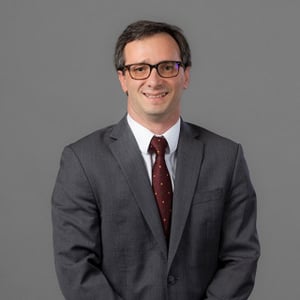
Assistant Professor of Law, George Mason University, Antonin Scalia Law School
Robert Leider is an Assistant Professor of Law at Antonin Scalia Law School, George Mason University. His scholarly interests are in criminal law, criminal procedure, and constitutional law, especially concerning questions about the use of force and the rule of law. He has written on the law of self-defense, the constitutional allocation of military power, and gun control. Among other places, he has published in the Florida Law Review (forthcoming), the Indiana Law Journal, and the Wall Street Journal.
Before joining Antonin Scalia Law School, Professor Leider was at Arnold & Porter in Washington, DC. He was previously with Mayer Brown LLP and was an Olin-Searle-Smith Fellow at the University of Pennsylvania Law School. He has clerked for Judge Diane S. Sykes, of the U.S. Court of Appeals for the Seventh Circuit, and Justice Clarence Thomas. Professor Leider earned a BA, summa cum laude, from The George Washington University, a JD from Yale Law School, and a PhD in Philosophy (dissertation defended with distinction) from Georgetown University. While at Yale, he served as an articles editor for the Yale Law Journal.
Professor Leider teaches criminal law and torts.
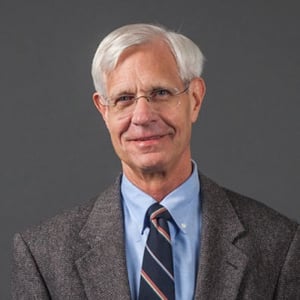
Distinguished University Professor, Antonin Scalia Law School, George Mason University
University Professor Nelson Lund is the author of Rousseau’s Rejuvenation of Political Philosophy: A New Introduction. He has also written widely in the field of constitutional law, including articles on constitutional interpretation, federalism, separation of powers, the Second Amendment, the Commerce Clause, the Speech or Debate Clause, the Equal Protection Clause, and the Uniformity Clause. In addition, he has published articles in the fields of employment discrimination and civil rights, the legal regulation of medical ethics, and the application of economic analysis to legal institutions and legal ethics.
Professor Lund graduated from St. John's College in Annapolis, Maryland, after which he received an MA in philosophy from the Catholic University of America and a PhD in political science from Harvard University. He left the faculty of the University of Chicago to attend its law school, where he served as executive editor of the University of Chicago Law Review and chapter chairman of the Federalist Society for Law and Public Policy Studies. After law school, he held positions at the United States Department of Justice in the Office of the Solicitor General and the Office of Legal Counsel. He also served as a law clerk to the Honorable Patrick E. Higginbotham of the United States Court of Appeals for the Fifth Circuit and to the Honorable Sandra Day O'Connor of the United States Supreme Court. Following his clerkship with Justice O'Connor, Professor Lund served in the White House as associate counsel to the president from 1989 to 1992.
Since joining the faculty at George Mason University's Antonin Scalia Law School, Professor Lund has taught Constitutional Law, Legislation, Federal Election Law, Employment Discrimination, State and Local Government, and seminars on the Second Amendment and on a variety of topics in Jurisprudence.
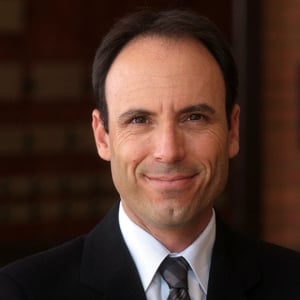
Professor of Law, UCLA School of Law
Assistant Professor of Law, George Mason University, Antonin Scalia Law School
Robert Leider is an Assistant Professor of Law at Antonin Scalia Law School, George Mason University. His scholarly interests are in criminal law, criminal procedure, and constitutional law, especially concerning questions about the use of force and the rule of law. He has written on the law of self-defense, the constitutional allocation of military power, and gun control. Among other places, he has published in the Florida Law Review (forthcoming), the Indiana Law Journal, and the Wall Street Journal.
Before joining Antonin Scalia Law School, Professor Leider was at Arnold & Porter in Washington, DC. He was previously with Mayer Brown LLP and was an Olin-Searle-Smith Fellow at the University of Pennsylvania Law School. He has clerked for Judge Diane S. Sykes, of the U.S. Court of Appeals for the Seventh Circuit, and Justice Clarence Thomas. Professor Leider earned a BA, summa cum laude, from The George Washington University, a JD from Yale Law School, and a PhD in Philosophy (dissertation defended with distinction) from Georgetown University. While at Yale, he served as an articles editor for the Yale Law Journal.
Professor Leider teaches criminal law and torts.
Distinguished University Professor, Antonin Scalia Law School, George Mason University
University Professor Nelson Lund is the author of Rousseau’s Rejuvenation of Political Philosophy: A New Introduction. He has also written widely in the field of constitutional law, including articles on constitutional interpretation, federalism, separation of powers, the Second Amendment, the Commerce Clause, the Speech or Debate Clause, the Equal Protection Clause, and the Uniformity Clause. In addition, he has published articles in the fields of employment discrimination and civil rights, the legal regulation of medical ethics, and the application of economic analysis to legal institutions and legal ethics.
Professor Lund graduated from St. John's College in Annapolis, Maryland, after which he received an MA in philosophy from the Catholic University of America and a PhD in political science from Harvard University. He left the faculty of the University of Chicago to attend its law school, where he served as executive editor of the University of Chicago Law Review and chapter chairman of the Federalist Society for Law and Public Policy Studies. After law school, he held positions at the United States Department of Justice in the Office of the Solicitor General and the Office of Legal Counsel. He also served as a law clerk to the Honorable Patrick E. Higginbotham of the United States Court of Appeals for the Fifth Circuit and to the Honorable Sandra Day O'Connor of the United States Supreme Court. Following his clerkship with Justice O'Connor, Professor Lund served in the White House as associate counsel to the president from 1989 to 1992.
Since joining the faculty at George Mason University's Antonin Scalia Law School, Professor Lund has taught Constitutional Law, Legislation, Federal Election Law, Employment Discrimination, State and Local Government, and seminars on the Second Amendment and on a variety of topics in Jurisprudence.
Professor of Law, UCLA School of Law

Judge, United States Court of Appeals, Third Circuit
Judge Hardiman was appointed to the United States Court of Appeals for the Third Circuit on January 9, 2007 and was confirmed by the Senate (95-0) on March 15, 2007. Prior to becoming an appellate judge, Judge Hardiman served as a trial judge on the United States District Court for the Western District of Pennsylvania as of November 1, 2003. In 2008, Chief Justice John Roberts appointed Judge Hardiman to the Information Technology Committee of the Judicial Conference of the United States. Judge Hardiman was appointed Chairman of the IT Committee in 2013 and served in that capacity until September 2021. In 2021 he was appointed by the Director of the Administrative Office of the United States Courts to serve as Chair of the Judiciary IT Security Task Force, which completed its work in fall 2023. Chief Justice Roberts appointed Judge Hardiman to the Board of the Federal Judicial Center to serve from March 2020 until March 2024. As part of his work with the Center, Judge Hardiman now serves as Editor in Chief for the Manual for Complex Civil Litigation, Fifth.
Before entering judicial service, Judge Hardiman handled a wide variety of litigation matters in state and federal trial and appellate courts as a partner at Reed Smith LLP (1999-2003), a partner at Titus & McConomy LLP (1996-1999), and as an associate with its predecessor firm, Cindrich & Titus (1992-1996). Judge Hardiman began his legal career as an associate in the Washington, D.C. office of Skadden, Arps, Slate, Meagher & Flom (1990-1992).
A 1987 honors graduate of the University of Notre Dame, Judge Hardiman received his law degree in 1990 from the Georgetown University Law Center, where he served as a Notes and Comments Editor on the Georgetown Law Journal. In 2012, Judge Hardiman was elected as a member of the American Law Institute and was elected to its Council in 2019 and its Executive Committee in 2025. Judge Hardiman regularly teaches a seminar on Advanced Constitutional Law at Duquesne University School of Law and a one-week course entitled “Constitutional Law: the First and Second Amendments” at Georgetown University Law Center.
A native of Waltham, Massachusetts, Judge Hardiman has chambers in Pittsburgh, Pennsylvania. He and his wife Lori married in 1992 and have three children.
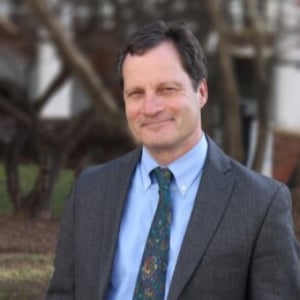
Vice President, Legal & Chief Counsel, Legal, Brady
Jonathan E. Lowy is the Vice President, Legal and Chief Counsel at Brady. Since 1997 Jon has argued in courts across the country to reduce gun violence, providing pro bono legal representation to victims of gun violence in lawsuits to reform dangerous gun industry practices, and assisting governments and public officials in defense of reasonable gun laws. Jon has litigated in over 40 states, successfully arguing several precedent-setting cases in appellate and trial courts establishing gun industry liability and Second Amendment law, obtaining several multi-million dollar settlements, and reforming gun industry practices. Jon has been named one of the 500 Leading Lawyers in America by Lawdragon magazine for the past 10 years, and has published numerous articles on gun litigation and policy including, The Right Not To Be Shot: Public Safety, Private Guns, and the Constellation of Constitutional Liberties in the Georgetown Journal of Law and Policy. He graduated from Harvard College and the University of Virginia School of Law.
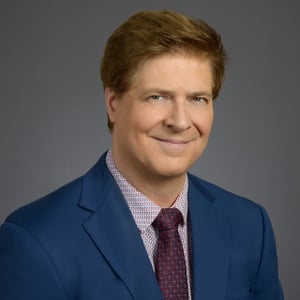
Senior Fellow, Ave Maria School of Law and Host of the Four Boxes Diner Second Amendment Channel
Mark W. Smith is Visiting Fellow in Pharmaceutical Public Policy and Law in the Department of Pharmacology at the University of Oxford; Presidential Scholar and a Senior Fellow in Law and Public Policy at The King’s College; and Distinguished Scholar and Senior Fellow of Law and Public Policy at the Ave Maria School of Law.
He is a constitutional attorney and Host of the Four Boxes Diner YouTube channel—which provides scholarly and historical analyses of the Second Amendment. Mark is also a New York Times bestselling author.
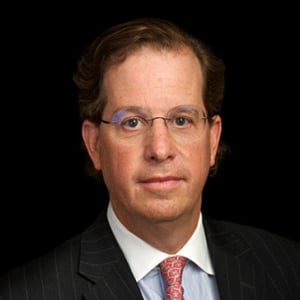
Managing Partner, Cooper & Kirk PLLC
David Thompson is the Managing Partner of Cooper & Kirk and joined the firm at its founding. Mr. Thompson has extensive trial and appellate experience in a wide range of matters and has secured victories worth billions of dollars. He has successfully challenged numerous laws on Second Amendment grounds. He has also litigated cases in over 30 federal district courts, argued in each of the 13 federal circuit courts of appeal, and argued before the U.S. Supreme Court, as well as many state courts. Mr. Thompson was awarded an A.B. degree, magna cum laude, from Harvard University in 1991, where he was elected to Phi Beta Kappa. In 1994, Mr. Thompson received a J.D. degree, cum laude, from Harvard Law School.
Judge, United States Court of Appeals, Third Circuit
Judge Hardiman was appointed to the United States Court of Appeals for the Third Circuit on January 9, 2007 and was confirmed by the Senate (95-0) on March 15, 2007. Prior to becoming an appellate judge, Judge Hardiman served as a trial judge on the United States District Court for the Western District of Pennsylvania as of November 1, 2003. In 2008, Chief Justice John Roberts appointed Judge Hardiman to the Information Technology Committee of the Judicial Conference of the United States. Judge Hardiman was appointed Chairman of the IT Committee in 2013 and served in that capacity until September 2021. In 2021 he was appointed by the Director of the Administrative Office of the United States Courts to serve as Chair of the Judiciary IT Security Task Force, which completed its work in fall 2023. Chief Justice Roberts appointed Judge Hardiman to the Board of the Federal Judicial Center to serve from March 2020 until March 2024. As part of his work with the Center, Judge Hardiman now serves as Editor in Chief for the Manual for Complex Civil Litigation, Fifth.
Before entering judicial service, Judge Hardiman handled a wide variety of litigation matters in state and federal trial and appellate courts as a partner at Reed Smith LLP (1999-2003), a partner at Titus & McConomy LLP (1996-1999), and as an associate with its predecessor firm, Cindrich & Titus (1992-1996). Judge Hardiman began his legal career as an associate in the Washington, D.C. office of Skadden, Arps, Slate, Meagher & Flom (1990-1992).
A 1987 honors graduate of the University of Notre Dame, Judge Hardiman received his law degree in 1990 from the Georgetown University Law Center, where he served as a Notes and Comments Editor on the Georgetown Law Journal. In 2012, Judge Hardiman was elected as a member of the American Law Institute and was elected to its Council in 2019 and its Executive Committee in 2025. Judge Hardiman regularly teaches a seminar on Advanced Constitutional Law at Duquesne University School of Law and a one-week course entitled “Constitutional Law: the First and Second Amendments” at Georgetown University Law Center.
A native of Waltham, Massachusetts, Judge Hardiman has chambers in Pittsburgh, Pennsylvania. He and his wife Lori married in 1992 and have three children.
Vice President, Legal & Chief Counsel, Legal, Brady
Jonathan E. Lowy is the Vice President, Legal and Chief Counsel at Brady. Since 1997 Jon has argued in courts across the country to reduce gun violence, providing pro bono legal representation to victims of gun violence in lawsuits to reform dangerous gun industry practices, and assisting governments and public officials in defense of reasonable gun laws. Jon has litigated in over 40 states, successfully arguing several precedent-setting cases in appellate and trial courts establishing gun industry liability and Second Amendment law, obtaining several multi-million dollar settlements, and reforming gun industry practices. Jon has been named one of the 500 Leading Lawyers in America by Lawdragon magazine for the past 10 years, and has published numerous articles on gun litigation and policy including, The Right Not To Be Shot: Public Safety, Private Guns, and the Constellation of Constitutional Liberties in the Georgetown Journal of Law and Policy. He graduated from Harvard College and the University of Virginia School of Law.
Senior Fellow, Ave Maria School of Law and Host of the Four Boxes Diner Second Amendment Channel
Mark W. Smith is Visiting Fellow in Pharmaceutical Public Policy and Law in the Department of Pharmacology at the University of Oxford; Presidential Scholar and a Senior Fellow in Law and Public Policy at The King’s College; and Distinguished Scholar and Senior Fellow of Law and Public Policy at the Ave Maria School of Law.
He is a constitutional attorney and Host of the Four Boxes Diner YouTube channel—which provides scholarly and historical analyses of the Second Amendment. Mark is also a New York Times bestselling author.
Managing Partner, Cooper & Kirk PLLC
David Thompson is the Managing Partner of Cooper & Kirk and joined the firm at its founding. Mr. Thompson has extensive trial and appellate experience in a wide range of matters and has secured victories worth billions of dollars. He has successfully challenged numerous laws on Second Amendment grounds. He has also litigated cases in over 30 federal district courts, argued in each of the 13 federal circuit courts of appeal, and argued before the U.S. Supreme Court, as well as many state courts. Mr. Thompson was awarded an A.B. degree, magna cum laude, from Harvard University in 1991, where he was elected to Phi Beta Kappa. In 1994, Mr. Thompson received a J.D. degree, cum laude, from Harvard Law School.
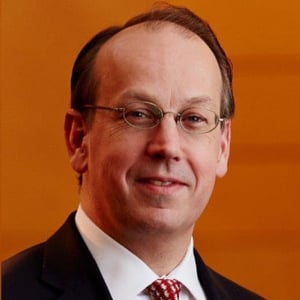
Partner, Clement & Murphy, PLLC
Paul served as the 43rd Solicitor General of the United States from June 2005 until June 2008. Before his confirmation as Solicitor General, he served as Acting Solicitor General for nearly a year and as Principal Deputy Solicitor General for over three years.
Paul has argued over 100 cases before the United States Supreme Court, including McConnell v. FEC, Tennessee v. Lane, United States v. Booker, MGM v. Grokster, Hobby Lobby v. Burwell, Epic Systems Corp. v. Lewis, Rucho v. Common Cause, Facebook v. Duguid, and TransUnion v. Ramirez. Paul has argued more Supreme Court cases since 2000 than any lawyer in or out of government. He has also argued many important cases in the lower courts, including Walker v. Cheney, United States v. Moussaoui and NFL v. Brady.
Paul’s practice focuses on appellate matters, constitutional litigation and strategic counseling. He represents a broad array of clients in the Supreme Court and in federal and state appellate courts. Last year, for example, he successfully argued Supreme Court cases involving significant issues of energy regulation, statutory interpretation, state sovereign immunity and Article III standing, and successfully argued a trademark appeal in the Fourth Circuit, and a constitutional appeal before the en banc Eleventh Circuit.
Paul focuses on high-stakes appeals. In recent years, he successfully defended a $1.2 billion jury verdict for clients in a Tenth Circuit case, while securing the reversal of an over $2 billion jury verdict for another client in the Seventh Circuit and the approval of a nearly $1 billion dollar class action settlement in the Third Circuit. He has initiated major administrative law challenges and constitutional litigation against the federal government, such as the successful challenge to the HHS drug-pricing rule and threatened challenges that led to the withdrawal of the Treasury Department’s proposed cryptocurrency regulations. He also counsels clients on a variety of strategic legal questions, whether arising from pending legislation, government inquiries or ongoing litigation.
Paul has undertaken substantial pro bono engagements in the Supreme Court, such as twice successfully representing the defendant in Bond v. United States and successfully representing the Omaha Tribe in Nebraska v. Parker, the guardian ad litem in Adoptive Couple v. Baby Girl, the defendant in Sekhar v. United States, a high school football coach in Kennedy v. Bremerton, and the Little Sisters of the Poor. Paul’s pro bono representation also precipitated the federal government’s confession of error in United States v. Rojas.
Following law school, Paul clerked for Judge Laurence H. Silberman of the U.S. Court of Appeals for the D.C. Circuit and for Associate Justice Antonin Scalia of the U.S. Supreme Court. After his clerkships, he went on to serve as Chief Counsel of the U.S. Senate Subcommittee on the Constitution, Federalism and Property Rights.
Paul is a Distinguished Lecturer in Law at the Georgetown University Law Center, where he has taught in various capacities since 1998. He also serves as a Senior Fellow of the Law Center’s Supreme Court Institute. He is the Justice Joseph Story Distinguished Practitioner in Residence at the Gray Center at Scalia Law School.
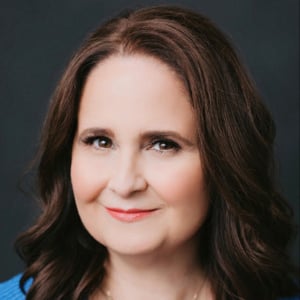
Chief Judge, United States Court of Appeals, Fifth Circuit
Jennifer Walker Elrod is the Chief Judge of the United States Court of Appeals for the Fifth Circuit. She was nominated to the Fifth Circuit in 2007, and she served as a Circuit Judge on the court until assuming the role of Chief Judge in October 2024. Prior to serving as a Circuit Judge, Chief Judge Elrod was appointed and then twice elected Judge of the 190th District Court of Harris County, Texas, where she spent over five years presiding over more than 200 jury and non-jury trials.
Chief Judge Elrod graduated cum laude from Harvard Law School, where she was an active member of the Harvard Federalist Society, an Ames Moot Court finalist, and a Senior Editor of the Harvard Journal of Law & Public Policy. She clerked for the Honorable Sim Lake in the Southern District of Texas. Before serving as a judge, Chief Judge Elrod worked in private practice, focusing on civil litigation, antitrust, and employment matters.
She has been repeatedly recognized for her work as a jurist, as well as for her pro bono work and contributions to the community. She has been named the 2022 Texas Review of Law & Politics’ Jurist of the Year, the 2018 Harvard Federalist Society’s Alumni of the Year, the 2016–17 Texas Association of Civil Trial and Appellate Specialists’ Appellate Judge of the Year, and the 2008 Mexican-American Bar Association of Texas’s Judge of the Year.
Chief Judge Elrod is actively engaged in the academic and legal communities. Chief Judge Elrod currently serves on the Board of Directors and as the Jurist-in-Residence at the South Texas College of Law, where she teaches civil procedure and First Amendment law. She is also a member of the American Law Institute and of the Board of Advisors for the Harvard Journal of Law & Public Policy, and she is a former member of the Board of Regents of her alma mater, Baylor University, and the Board of Visitors at Brigham Young University Law School. She previously served as the Chair of the Codes of Conduct Committee for the Judicial Conference of the United States. She has also served as the M.D. Anderson Visiting Public Service Professor at the Texas Tech University School of Law and as Jurist-in-Residence at Brigham Young University Law School, and she has taught legal writing at the University of Houston Law Center. She presented the Lewis F. Powell, Jr. Distinguished Lecture at the Washington and Lee University School of Law and is a frequent speaker on the topics of trial and appellate procedure, ethics, employment law, and constitutional law. Chief Judge Elrod also serves on the board of the Garland R. Walker Inn of Court, and co-produces an annual musical CLE, for which her pupilage group has won multiple national awards.
Chief Judge Elrod’s publications include: Trial by Siri: AI Comes to the Courtroom; Don’t Mess with Texas Judges: In Praise of the State Judiciary; For Good: Enriching Your Practice and Your Life Through Pro Bono and Community Service; Is the Jury Still Out?: A Case for the Continued Viability of the American Jury; and W(h)ither the Jury? The Diminishing Role of the Jury Trial in our Legal System.
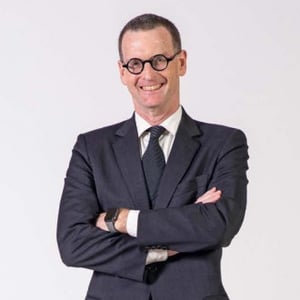
William T. Comfort, III Professor of Law, New York University School of Law
Roderick Hills teaches and writes in public law areas, including constitutional law, local government law, land-use regulation, administrative law, and statutory interpretation. His focus in each area is on the rules and policies governing division of powers between central and subcentral governments. He holds bachelor’s and law degrees from Yale University. Following law school, he served as a law clerk for Judge Patrick Higginbotham of the US Court of Appeals for the Fifth Circuit and practiced law in Colorado. Hills previously taught at the University of Michigan Law School from 1994 to 2006. He is a member of the state bar of New York and the U.S. Supreme Court.
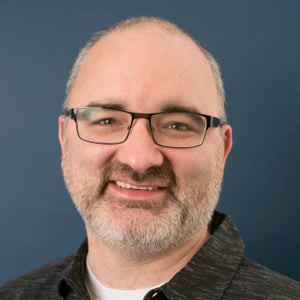
Director of Equality and Opportunity Litigation, Pacific Legal Foundation
Joshua directs the litigation for PLF’s Equality and Opportunity Program, where he fights to dismantle unconstitutional barriers to opportunity, freeing individuals to rise based on their choices, character, and ability.
Joshua joined PLF as an attorney in 2007. His litigation practice has covered all PLF subject areas with a particular focus on equality and opportunity. Joshua argued PLF’s 13th case before the United States Supreme Court, Cedar Point Nursery v. Hassid, where the court ruled that a California regulation that allowed union organizers onto private property violated the Fifth Amendment’s Takings Clause. Other litigation highlights of his include ending a decades-long racial quota in Hartford, Connecticut, lifting a ban on boys’ dancing in Minnesota, and vindicating an entrepreneur’s right to start a moving business in Kentucky.
Joshua’s writings have been published by the USA Today, Wall Street Journal, and Washington Post. And his research has been published in journals such as Texas Review of Law & Politics, Alabama Civil Rights & Civil Liberties Law Review, Journal of Civil Rights & Economic Development, and Northern Illinois University Law Review. He has appeared on national television and radio, including PBS Newshour, NPR’s All things Considered, Stossel, and Univision.
Joshua earned his BA with distinction from the University of Wisconsin-Madison with a triple major in political science, international relations, and German. He earned his JD cum laude from Michigan State College of Law where he was on the law review and trial practice institute. Joshua lives in Sacramento, California with his wife and three children. He loves playing chess and rooting for Wisconsin sports teams.
Joshua is a member of the bar only in the state of California.
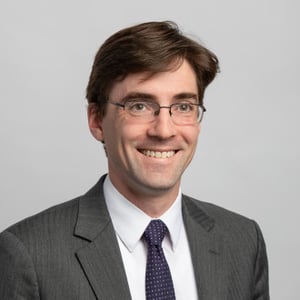
Deputy Litigation Director, Institute for Justice
Robert McNamara serves as Deputy Litigation Director with the Institute for Justice. He joined the Institute in August 2006 and litigates cutting-edge constitutional cases protecting free speech, property rights, economic liberty and other individual liberties in both federal and state courts.
Robert’s work has resulted in court victories for property owners fighting eminent domain abuse, tour guides fighting unconstitutional restrictions on their speech, taxi drivers seeking the right to own their own business, and many others. Robert also litigates in defense of innovation and entrepreneurship in medical care and was co-counsel in Flynn v. Holder, IJ’s landmark challenge to the federal prohibition on compensating bone marrow donors.
Robert’s writing has been published by outlets including The New York Times, The Wall Street Journal, The Washington Post and dozens more nationwide. His opinions and views on legal issues have been featured in radio and television programs ranging from National Public Radio’s All Things Considered to Fox News Channel’s Hannity & Colmes.
Robert is a graduate of Boston University and the New York University School of Law, where he was a founding member and eventual editor-in-chief of the NYU Journal of Law & Liberty. He currently lives in Virginia with his wife and children.
Robert McNamara is a member of the Virginia bar.
Partner, Clement & Murphy, PLLC
Paul served as the 43rd Solicitor General of the United States from June 2005 until June 2008. Before his confirmation as Solicitor General, he served as Acting Solicitor General for nearly a year and as Principal Deputy Solicitor General for over three years.
Paul has argued over 100 cases before the United States Supreme Court, including McConnell v. FEC, Tennessee v. Lane, United States v. Booker, MGM v. Grokster, Hobby Lobby v. Burwell, Epic Systems Corp. v. Lewis, Rucho v. Common Cause, Facebook v. Duguid, and TransUnion v. Ramirez. Paul has argued more Supreme Court cases since 2000 than any lawyer in or out of government. He has also argued many important cases in the lower courts, including Walker v. Cheney, United States v. Moussaoui and NFL v. Brady.
Paul’s practice focuses on appellate matters, constitutional litigation and strategic counseling. He represents a broad array of clients in the Supreme Court and in federal and state appellate courts. Last year, for example, he successfully argued Supreme Court cases involving significant issues of energy regulation, statutory interpretation, state sovereign immunity and Article III standing, and successfully argued a trademark appeal in the Fourth Circuit, and a constitutional appeal before the en banc Eleventh Circuit.
Paul focuses on high-stakes appeals. In recent years, he successfully defended a $1.2 billion jury verdict for clients in a Tenth Circuit case, while securing the reversal of an over $2 billion jury verdict for another client in the Seventh Circuit and the approval of a nearly $1 billion dollar class action settlement in the Third Circuit. He has initiated major administrative law challenges and constitutional litigation against the federal government, such as the successful challenge to the HHS drug-pricing rule and threatened challenges that led to the withdrawal of the Treasury Department’s proposed cryptocurrency regulations. He also counsels clients on a variety of strategic legal questions, whether arising from pending legislation, government inquiries or ongoing litigation.
Paul has undertaken substantial pro bono engagements in the Supreme Court, such as twice successfully representing the defendant in Bond v. United States and successfully representing the Omaha Tribe in Nebraska v. Parker, the guardian ad litem in Adoptive Couple v. Baby Girl, the defendant in Sekhar v. United States, a high school football coach in Kennedy v. Bremerton, and the Little Sisters of the Poor. Paul’s pro bono representation also precipitated the federal government’s confession of error in United States v. Rojas.
Following law school, Paul clerked for Judge Laurence H. Silberman of the U.S. Court of Appeals for the D.C. Circuit and for Associate Justice Antonin Scalia of the U.S. Supreme Court. After his clerkships, he went on to serve as Chief Counsel of the U.S. Senate Subcommittee on the Constitution, Federalism and Property Rights.
Paul is a Distinguished Lecturer in Law at the Georgetown University Law Center, where he has taught in various capacities since 1998. He also serves as a Senior Fellow of the Law Center’s Supreme Court Institute. He is the Justice Joseph Story Distinguished Practitioner in Residence at the Gray Center at Scalia Law School.
Chief Judge, United States Court of Appeals, Fifth Circuit
Jennifer Walker Elrod is the Chief Judge of the United States Court of Appeals for the Fifth Circuit. She was nominated to the Fifth Circuit in 2007, and she served as a Circuit Judge on the court until assuming the role of Chief Judge in October 2024. Prior to serving as a Circuit Judge, Chief Judge Elrod was appointed and then twice elected Judge of the 190th District Court of Harris County, Texas, where she spent over five years presiding over more than 200 jury and non-jury trials.
Chief Judge Elrod graduated cum laude from Harvard Law School, where she was an active member of the Harvard Federalist Society, an Ames Moot Court finalist, and a Senior Editor of the Harvard Journal of Law & Public Policy. She clerked for the Honorable Sim Lake in the Southern District of Texas. Before serving as a judge, Chief Judge Elrod worked in private practice, focusing on civil litigation, antitrust, and employment matters.
She has been repeatedly recognized for her work as a jurist, as well as for her pro bono work and contributions to the community. She has been named the 2022 Texas Review of Law & Politics’ Jurist of the Year, the 2018 Harvard Federalist Society’s Alumni of the Year, the 2016–17 Texas Association of Civil Trial and Appellate Specialists’ Appellate Judge of the Year, and the 2008 Mexican-American Bar Association of Texas’s Judge of the Year.
Chief Judge Elrod is actively engaged in the academic and legal communities. Chief Judge Elrod currently serves on the Board of Directors and as the Jurist-in-Residence at the South Texas College of Law, where she teaches civil procedure and First Amendment law. She is also a member of the American Law Institute and of the Board of Advisors for the Harvard Journal of Law & Public Policy, and she is a former member of the Board of Regents of her alma mater, Baylor University, and the Board of Visitors at Brigham Young University Law School. She previously served as the Chair of the Codes of Conduct Committee for the Judicial Conference of the United States. She has also served as the M.D. Anderson Visiting Public Service Professor at the Texas Tech University School of Law and as Jurist-in-Residence at Brigham Young University Law School, and she has taught legal writing at the University of Houston Law Center. She presented the Lewis F. Powell, Jr. Distinguished Lecture at the Washington and Lee University School of Law and is a frequent speaker on the topics of trial and appellate procedure, ethics, employment law, and constitutional law. Chief Judge Elrod also serves on the board of the Garland R. Walker Inn of Court, and co-produces an annual musical CLE, for which her pupilage group has won multiple national awards.
Chief Judge Elrod’s publications include: Trial by Siri: AI Comes to the Courtroom; Don’t Mess with Texas Judges: In Praise of the State Judiciary; For Good: Enriching Your Practice and Your Life Through Pro Bono and Community Service; Is the Jury Still Out?: A Case for the Continued Viability of the American Jury; and W(h)ither the Jury? The Diminishing Role of the Jury Trial in our Legal System.
William T. Comfort, III Professor of Law, New York University School of Law
Roderick Hills teaches and writes in public law areas, including constitutional law, local government law, land-use regulation, administrative law, and statutory interpretation. His focus in each area is on the rules and policies governing division of powers between central and subcentral governments. He holds bachelor’s and law degrees from Yale University. Following law school, he served as a law clerk for Judge Patrick Higginbotham of the US Court of Appeals for the Fifth Circuit and practiced law in Colorado. Hills previously taught at the University of Michigan Law School from 1994 to 2006. He is a member of the state bar of New York and the U.S. Supreme Court.
Deputy Litigation Director, Institute for Justice
Robert McNamara serves as Deputy Litigation Director with the Institute for Justice. He joined the Institute in August 2006 and litigates cutting-edge constitutional cases protecting free speech, property rights, economic liberty and other individual liberties in both federal and state courts.
Robert’s work has resulted in court victories for property owners fighting eminent domain abuse, tour guides fighting unconstitutional restrictions on their speech, taxi drivers seeking the right to own their own business, and many others. Robert also litigates in defense of innovation and entrepreneurship in medical care and was co-counsel in Flynn v. Holder, IJ’s landmark challenge to the federal prohibition on compensating bone marrow donors.
Robert’s writing has been published by outlets including The New York Times, The Wall Street Journal, The Washington Post and dozens more nationwide. His opinions and views on legal issues have been featured in radio and television programs ranging from National Public Radio’s All Things Considered to Fox News Channel’s Hannity & Colmes.
Robert is a graduate of Boston University and the New York University School of Law, where he was a founding member and eventual editor-in-chief of the NYU Journal of Law & Liberty. He currently lives in Virginia with his wife and children.
Robert McNamara is a member of the Virginia bar.
Director of Equality and Opportunity Litigation, Pacific Legal Foundation
Joshua directs the litigation for PLF’s Equality and Opportunity Program, where he fights to dismantle unconstitutional barriers to opportunity, freeing individuals to rise based on their choices, character, and ability.
Joshua joined PLF as an attorney in 2007. His litigation practice has covered all PLF subject areas with a particular focus on equality and opportunity. Joshua argued PLF’s 13th case before the United States Supreme Court, Cedar Point Nursery v. Hassid, where the court ruled that a California regulation that allowed union organizers onto private property violated the Fifth Amendment’s Takings Clause. Other litigation highlights of his include ending a decades-long racial quota in Hartford, Connecticut, lifting a ban on boys’ dancing in Minnesota, and vindicating an entrepreneur’s right to start a moving business in Kentucky.
Joshua’s writings have been published by the USA Today, Wall Street Journal, and Washington Post. And his research has been published in journals such as Texas Review of Law & Politics, Alabama Civil Rights & Civil Liberties Law Review, Journal of Civil Rights & Economic Development, and Northern Illinois University Law Review. He has appeared on national television and radio, including PBS Newshour, NPR’s All things Considered, Stossel, and Univision.
Joshua earned his BA with distinction from the University of Wisconsin-Madison with a triple major in political science, international relations, and German. He earned his JD cum laude from Michigan State College of Law where he was on the law review and trial practice institute. Joshua lives in Sacramento, California with his wife and three children. He loves playing chess and rooting for Wisconsin sports teams.
Joshua is a member of the bar only in the state of California.
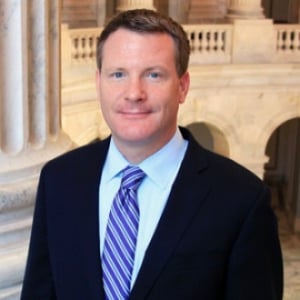
Founder, Article III Project
Mike Davis, the former Chief Counsel for Nominations to Senate Judiciary Chairman Chuck Grassley, is the founder and president of the Article III Project (A3P). A3P defends constitutionalist judges and the rule of law. Davis also leads the Internet Accountability Project (IAP), an advocacy organization fighting to rein in Big Tech, along with the Unsilenced Majority, an organization dedicated to opposing Cancel Culture and fighting back against the woke mob and their enablers.
As Chief Counsel for Nominations, Davis advised Chairman Grassley and other senators on the confirmation of federal judges and senior Executive Branch appointees, serving as staff lead for 30 hearings and 41 markup meetings. He oversaw the floor votes for 278 nominees, including the confirmations of Justice Brett Kavanaugh and the record number of circuit judges confirmed during President Trump’s first two years in office.
Davis has served in all three branches of the federal government, including for President George W. Bush, the Justice Department, House Speaker Newt Gingrich, and current Supreme Court Justice Neil Gorsuch. Davis also led the outside support team for Justice Gorsuch’s successful confirmation to the Supreme Court.
Before returning to public service in 2017, Davis spent nearly ten years as a civil litigator in Denver, working at one of the largest law firms in the world and one of the top-ranked law firms in Colorado before running his own law practice for more than five years.
Davis is from Des Moines, Iowa. He received his Bachelor of Arts in 2000 and Juris Doctor in 2004, both from the University of Iowa. In 2017, Davis received Iowa Law’s “Emerging Leader Award.” Davis also serves on the University of Iowa Political Science Advisory Board.
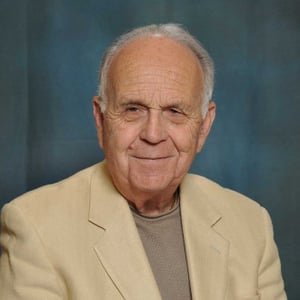
Presidential Scholar in Residence, New College of Florida
Professor Fish comes to the College of Law from Chicago, where he most recently served as Dean of the College of Liberal Arts and Sciences at the University of Illinois at Chicago. He holds a B.A. from the University of Pennsylvania (1959) and an M.A. and Ph.D. from Yale University (1960; 1962). He has previously taught at the University of California at Berkeley (1962-74); Johns Hopkins University (1974-85), where he was the Kenan Professor of English and Humanities; and Duke University, where he was Arts and Sciences Professor of English and Professor of Law (1986-1998). From 1993 through 1998 he served as Executive Director of Duke University Press. Dr. Fish served as a Distinguished Visiting Professor at The John Marshall Law School from 2000 through 2002.
In addition to being one of the country’s leading public intellectuals, Professor Fish is an extraordinarily prolific author whose works include over 200 scholarly publications and books. While his research covers a variety of fields, Professor Fish has written for many of the country’s leading law journals. including Stanford Law Review, Duke Law Journal, Yale Law Journal, University of Chicago Law Review, Columbia Law Review, and Texas Law Review. His exemplary work also includes the following books: John Skelton’s Poetry (1965); Surprised by Sin: The Reader in Paradise Lost (1967) and a Thirtieth Anniversary Edition (1997); Self-Consuming Artifacts: The Experience of Seventeenth-Century Literature (1972); The Living Temple: George Herbert and Catechizing (1978); Is there a Text in This Class? Interpretive Communities and the Sources of Authority (1980); Doing What Comes Naturally: Change, Rhetoric, and the Practice of Theory in Literary and Legal Studies (1989); There’s No Such Thing as Free Speech, and It’s a Good Thing, Too (1994); Professional Correctness: Literary Studies and Political Change (1995); The Trouble with Principle (1999); and How Milton Works (2001). The Stanley Fish Reader, edited by H. Aram Veeser, was published in 1999. He has also had five books written about his books.
Currently, Professor Fish is working on several publications, including There is No Textualist Position, San Diego Law Review (Spring 2005), Intentional Neglect, New York Times (July 2005), and Academic Cross Dressing: How Intelligent Design Gets Its Arguments from the Left, Harper’s Magazine. Professor Fish will teach a Law & Religion seminar Spring 2006.
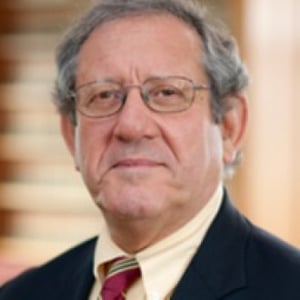
Professor of Law, Brooklyn Law School
Joel Gora has been a professor at Brooklyn Law School since 1978, teaching constitutional law, civil procedure and a number of other related courses. He also served as Associate Dean for Academic Affairs from 1993-1997 and again from 2002 through 2006. He is the author of a number of books and articles dealing with First Amendment and other constitutional law issues. He is also an expert on campaign finance law matters, working in the field as both an advocate and an academic. Prior to joining the Brooklyn Law School faculty, Professor Gora was a law clerk at the United States Court of Appeals for the Second Circuit for two years after he graduated from law school, and then a full-time lawyer with the American Civil Liberties Union for almost ten years. During his ACLU career, he worked on dozens of United States Supreme Court cases, including many landmark rulings. Chief among them was the case of Buckley v. Valeo, the Court’s historic 1976 decision on the relationship between campaign finance restrictions and First Amendment rights. He has worked, on behalf of the ACLU, on almost every one of the important campaign finance cases to come before the Court. He also served for more than 25 years on the board of directors of the New York Civil Liberties Union, and as one of its general counsel. He has served as well on a number of policy committees of the New York City Bar, and was also a member of the board of the Federal Bar Council. Professor Gora received his B.A. from Pomona College and LL.B. from Columbia Law School.
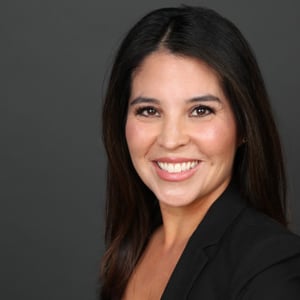
President, Defending Education
Nicole Neily is the president and founder of Defending Education, a national membership organization that gives parents, students, and others the resources and support they need to advocate for their children’s education. She is also the executive director of PDE Action, a 501(c)4 advocacy organization.
Defending Education champions equal protection and combats race and sex-based discrimination in both the court of law and the court of public opinion, and has successfully sued school districts and the US Department of Education in federal court; facilitated tens of thousands of comments submitted to the Federal Register; filed dozens of federal OCR and EEOC complaints, as well as over two thousand public records requests since its launch in 2021. The organization regularly releases deep-dive education investigations, recently covering political spending by teachers’ unions, biased accreditation agencies, and ethnic studies curriculum in both K-12 and universities.
Prior to launching Defending Education, Nicole created Speech First, a campus free speech organization that sued 6 public universities under her leadership; she has also worked as president of the Franklin Center for Government & Public Integrity; as executive director and senior fellow at the Independent Women’s Forum; and at the Cato Institute. She is the mother of two school-aged children and serves on the board of a public university.

Judge, United States Court of Appeals, Eighth Circuit
David Stras became a judge on the United States Court of Appeals for the Eighth Circuit on January 31, 2018. Before serving on the Eighth Circuit, Judge Stras was an Associate Justice of the Minnesota Supreme Court, a position he occupied from July 1, 2010 until his appointment to the Eighth Circuit.
Prior to becoming a judge, Stras was a member of the faculty of the University of Minnesota Law School from 2004 through 2010. He taught and wrote in the areas of federal courts and jurisdiction, constitutional law, criminal law, and law and politics.
Judge Stras received his Bachelor of Arts degree, with highest distinction, in 1995 and his Master of Business Administration in 1999, both from the University of Kansas. He also received his law degree from the University of Kansas School of Law in 1999, where he served as Editor-in-Chief of the Criminal Procedure Edition of the Kansas Law Review.
Following law school, Stras clerked for The Honorable Melvin Brunetti of the United States Court of Appeals for the Ninth Circuit and then for The Honorable J. Michael Luttig of the United States Court of Appeals for the Fourth Circuit.
From 2001 to 2002, he practiced white-collar criminal and appellate litigation with the Washington, D.C., office of Sidley Austin Brown & Wood. Following his year in practice, he clerked for The Honorable Clarence Thomas of the Supreme Court of the United States.
Founder, Article III Project
Mike Davis, the former Chief Counsel for Nominations to Senate Judiciary Chairman Chuck Grassley, is the founder and president of the Article III Project (A3P). A3P defends constitutionalist judges and the rule of law. Davis also leads the Internet Accountability Project (IAP), an advocacy organization fighting to rein in Big Tech, along with the Unsilenced Majority, an organization dedicated to opposing Cancel Culture and fighting back against the woke mob and their enablers.
As Chief Counsel for Nominations, Davis advised Chairman Grassley and other senators on the confirmation of federal judges and senior Executive Branch appointees, serving as staff lead for 30 hearings and 41 markup meetings. He oversaw the floor votes for 278 nominees, including the confirmations of Justice Brett Kavanaugh and the record number of circuit judges confirmed during President Trump’s first two years in office.
Davis has served in all three branches of the federal government, including for President George W. Bush, the Justice Department, House Speaker Newt Gingrich, and current Supreme Court Justice Neil Gorsuch. Davis also led the outside support team for Justice Gorsuch’s successful confirmation to the Supreme Court.
Before returning to public service in 2017, Davis spent nearly ten years as a civil litigator in Denver, working at one of the largest law firms in the world and one of the top-ranked law firms in Colorado before running his own law practice for more than five years.
Davis is from Des Moines, Iowa. He received his Bachelor of Arts in 2000 and Juris Doctor in 2004, both from the University of Iowa. In 2017, Davis received Iowa Law’s “Emerging Leader Award.” Davis also serves on the University of Iowa Political Science Advisory Board.
Presidential Scholar in Residence, New College of Florida
Professor Fish comes to the College of Law from Chicago, where he most recently served as Dean of the College of Liberal Arts and Sciences at the University of Illinois at Chicago. He holds a B.A. from the University of Pennsylvania (1959) and an M.A. and Ph.D. from Yale University (1960; 1962). He has previously taught at the University of California at Berkeley (1962-74); Johns Hopkins University (1974-85), where he was the Kenan Professor of English and Humanities; and Duke University, where he was Arts and Sciences Professor of English and Professor of Law (1986-1998). From 1993 through 1998 he served as Executive Director of Duke University Press. Dr. Fish served as a Distinguished Visiting Professor at The John Marshall Law School from 2000 through 2002.
In addition to being one of the country’s leading public intellectuals, Professor Fish is an extraordinarily prolific author whose works include over 200 scholarly publications and books. While his research covers a variety of fields, Professor Fish has written for many of the country’s leading law journals. including Stanford Law Review, Duke Law Journal, Yale Law Journal, University of Chicago Law Review, Columbia Law Review, and Texas Law Review. His exemplary work also includes the following books: John Skelton’s Poetry (1965); Surprised by Sin: The Reader in Paradise Lost (1967) and a Thirtieth Anniversary Edition (1997); Self-Consuming Artifacts: The Experience of Seventeenth-Century Literature (1972); The Living Temple: George Herbert and Catechizing (1978); Is there a Text in This Class? Interpretive Communities and the Sources of Authority (1980); Doing What Comes Naturally: Change, Rhetoric, and the Practice of Theory in Literary and Legal Studies (1989); There’s No Such Thing as Free Speech, and It’s a Good Thing, Too (1994); Professional Correctness: Literary Studies and Political Change (1995); The Trouble with Principle (1999); and How Milton Works (2001). The Stanley Fish Reader, edited by H. Aram Veeser, was published in 1999. He has also had five books written about his books.
Currently, Professor Fish is working on several publications, including There is No Textualist Position, San Diego Law Review (Spring 2005), Intentional Neglect, New York Times (July 2005), and Academic Cross Dressing: How Intelligent Design Gets Its Arguments from the Left, Harper’s Magazine. Professor Fish will teach a Law & Religion seminar Spring 2006.
Professor of Law, Brooklyn Law School
Joel Gora has been a professor at Brooklyn Law School since 1978, teaching constitutional law, civil procedure and a number of other related courses. He also served as Associate Dean for Academic Affairs from 1993-1997 and again from 2002 through 2006. He is the author of a number of books and articles dealing with First Amendment and other constitutional law issues. He is also an expert on campaign finance law matters, working in the field as both an advocate and an academic. Prior to joining the Brooklyn Law School faculty, Professor Gora was a law clerk at the United States Court of Appeals for the Second Circuit for two years after he graduated from law school, and then a full-time lawyer with the American Civil Liberties Union for almost ten years. During his ACLU career, he worked on dozens of United States Supreme Court cases, including many landmark rulings. Chief among them was the case of Buckley v. Valeo, the Court’s historic 1976 decision on the relationship between campaign finance restrictions and First Amendment rights. He has worked, on behalf of the ACLU, on almost every one of the important campaign finance cases to come before the Court. He also served for more than 25 years on the board of directors of the New York Civil Liberties Union, and as one of its general counsel. He has served as well on a number of policy committees of the New York City Bar, and was also a member of the board of the Federal Bar Council. Professor Gora received his B.A. from Pomona College and LL.B. from Columbia Law School.
President, Defending Education
Nicole Neily is the president and founder of Defending Education, a national membership organization that gives parents, students, and others the resources and support they need to advocate for their children’s education. She is also the executive director of PDE Action, a 501(c)4 advocacy organization.
Defending Education champions equal protection and combats race and sex-based discrimination in both the court of law and the court of public opinion, and has successfully sued school districts and the US Department of Education in federal court; facilitated tens of thousands of comments submitted to the Federal Register; filed dozens of federal OCR and EEOC complaints, as well as over two thousand public records requests since its launch in 2021. The organization regularly releases deep-dive education investigations, recently covering political spending by teachers’ unions, biased accreditation agencies, and ethnic studies curriculum in both K-12 and universities.
Prior to launching Defending Education, Nicole created Speech First, a campus free speech organization that sued 6 public universities under her leadership; she has also worked as president of the Franklin Center for Government & Public Integrity; as executive director and senior fellow at the Independent Women’s Forum; and at the Cato Institute. She is the mother of two school-aged children and serves on the board of a public university.
Judge, United States Court of Appeals, Eighth Circuit
David Stras became a judge on the United States Court of Appeals for the Eighth Circuit on January 31, 2018. Before serving on the Eighth Circuit, Judge Stras was an Associate Justice of the Minnesota Supreme Court, a position he occupied from July 1, 2010 until his appointment to the Eighth Circuit.
Prior to becoming a judge, Stras was a member of the faculty of the University of Minnesota Law School from 2004 through 2010. He taught and wrote in the areas of federal courts and jurisdiction, constitutional law, criminal law, and law and politics.
Judge Stras received his Bachelor of Arts degree, with highest distinction, in 1995 and his Master of Business Administration in 1999, both from the University of Kansas. He also received his law degree from the University of Kansas School of Law in 1999, where he served as Editor-in-Chief of the Criminal Procedure Edition of the Kansas Law Review.
Following law school, Stras clerked for The Honorable Melvin Brunetti of the United States Court of Appeals for the Ninth Circuit and then for The Honorable J. Michael Luttig of the United States Court of Appeals for the Fourth Circuit.
From 2001 to 2002, he practiced white-collar criminal and appellate litigation with the Washington, D.C., office of Sidley Austin Brown & Wood. Following his year in practice, he clerked for The Honorable Clarence Thomas of the Supreme Court of the United States.
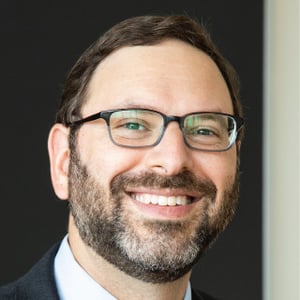
Antonin Scalia Professor of Law, Harvard Law School
Stephen E. Sachs is the Antonin Scalia Professor of Law at Harvard Law School, where he teaches civil procedure, conflict of laws, and seminars on constitutional law. His research focuses on the law and theory of constitutional interpretation, the jurisdiction of state and federal courts, the history of procedure and private law, and the role of the general common law in the U.S. legal system.
Sachs has authored numerous articles, essays, and book chapters. He is an elected member of the American Law Institute, an adviser to the ALI’s project on the Restatement of the Law (Third), Conflict of Laws, a former member of the Judicial Conference’s Advisory Committee on Appellate Rules, and a founding member of the Academic Freedom Alliance.
In 2020, Sachs received the Federalist Society’s Joseph Story Award, which recognizes a young academic who has demonstrated excellence in legal scholarship, a commitment to teaching, a concern for students, and who has made a significant public impact in a manner that advances the rule of law in a free society.
Sachs previously taught at Duke University School of Law and as a visiting professor at the University of Chicago Law School. Before entering academia, he practiced in the Washington, D.C., litigation group of Mayer Brown LLP, and he clerked for Chief Justice John G. Roberts Jr. as well as for Judge Stephen F. Williams of the U.S. Court of Appeals for the D.C. Circuit.
Sachs received his J.D. from Yale Law School, where he was executive editor of the Yale Law Journal and served both as executive editor and articles editor of the Yale Law & Policy Review. A Rhodes Scholar, he graduated from Oxford University with a first-class BA (Hons) degree in philosophy, politics, and economics. He received his A.B. degree summa cum laude in history from Harvard University, earning the Sophia Freund Prize.
Sachs is a licensed attorney in Massachusetts and the District of Columbia, and he is authorized to practice before the D.C. Circuit, the Second Circuit, the Seventh Circuit, and the Supreme Court of the United States.
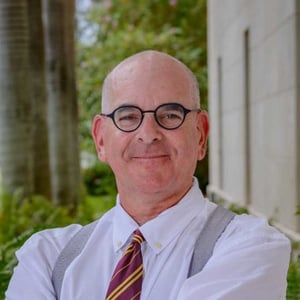
Professor of Law, Florida International University College of Law
Howard M. Wasserman joined the College of Law in 2003. He graduated magna cum laude from the Northwestern University School of Law, where he was an associate articles editor of the Law Review and was named to the Order of the Coif. Following law school, he clerked for Chief Judge James T. Giles of the United States District Court for the Eastern District of Pennsylvania and Judge Jane R. Roth of the United States Court of Appeals for the Third Circuit. He also has been a visiting professor at Saint Louis University School of Law and Florida State University College of Law. Professor Wasserman teaches civil procedure, evidence, federal courts, civil rights, and First Amendment; his scholarship focuses on the freedom of speech and on the role of procedure and jurisdiction in public-law and civil-rights litigation. He blogs at PrawfsBlawg and at Sports-Law Blog and is the Section Editor for the Courts Law Section of JOTWELL. Professor Wasserman is a loyal Chicago Cubs fan.
Assistant Professor of Law, George Mason University, Antonin Scalia Law School
Robert Leider is an Assistant Professor of Law at Antonin Scalia Law School, George Mason University. His scholarly interests are in criminal law, criminal procedure, and constitutional law, especially concerning questions about the use of force and the rule of law. He has written on the law of self-defense, the constitutional allocation of military power, and gun control. Among other places, he has published in the Florida Law Review (forthcoming), the Indiana Law Journal, and the Wall Street Journal.
Before joining Antonin Scalia Law School, Professor Leider was at Arnold & Porter in Washington, DC. He was previously with Mayer Brown LLP and was an Olin-Searle-Smith Fellow at the University of Pennsylvania Law School. He has clerked for Judge Diane S. Sykes, of the U.S. Court of Appeals for the Seventh Circuit, and Justice Clarence Thomas. Professor Leider earned a BA, summa cum laude, from The George Washington University, a JD from Yale Law School, and a PhD in Philosophy (dissertation defended with distinction) from Georgetown University. While at Yale, he served as an articles editor for the Yale Law Journal.
Professor Leider teaches criminal law and torts.
Distinguished University Professor, Antonin Scalia Law School, George Mason University
University Professor Nelson Lund is the author of Rousseau’s Rejuvenation of Political Philosophy: A New Introduction. He has also written widely in the field of constitutional law, including articles on constitutional interpretation, federalism, separation of powers, the Second Amendment, the Commerce Clause, the Speech or Debate Clause, the Equal Protection Clause, and the Uniformity Clause. In addition, he has published articles in the fields of employment discrimination and civil rights, the legal regulation of medical ethics, and the application of economic analysis to legal institutions and legal ethics.
Professor Lund graduated from St. John's College in Annapolis, Maryland, after which he received an MA in philosophy from the Catholic University of America and a PhD in political science from Harvard University. He left the faculty of the University of Chicago to attend its law school, where he served as executive editor of the University of Chicago Law Review and chapter chairman of the Federalist Society for Law and Public Policy Studies. After law school, he held positions at the United States Department of Justice in the Office of the Solicitor General and the Office of Legal Counsel. He also served as a law clerk to the Honorable Patrick E. Higginbotham of the United States Court of Appeals for the Fifth Circuit and to the Honorable Sandra Day O'Connor of the United States Supreme Court. Following his clerkship with Justice O'Connor, Professor Lund served in the White House as associate counsel to the president from 1989 to 1992.
Since joining the faculty at George Mason University's Antonin Scalia Law School, Professor Lund has taught Constitutional Law, Legislation, Federal Election Law, Employment Discrimination, State and Local Government, and seminars on the Second Amendment and on a variety of topics in Jurisprudence.
Professor of Law, UCLA School of Law

Courthouse Steps Oral Argument: New York State Rifle and Pistol Association v. Bruen
Robert Leider, Nelson Lund, Adam Winkler
In District of Columbia v. Heller (2008) and McDonald v. City of Chicago (2010), the Supreme Court decided for...
Courthouse Steps Oral Argument: New York State Rifle and Pistol Association v. Bruen
Robert Leider, Nelson Lund, Adam Winkler
In District of Columbia v. Heller (2008) and McDonald v. City of Chicago (2010), the Supreme Court decided for...
Courthouse Steps Decision Webinar: Whole Woman's Health v. Jackson
A Federalist Society Webinar
TeleforumCourthouse Steps Oral Argument: New York State Rifle and Pistol Association v. Bruen
Will the Supreme Court Recognize a Right to Bear Arms in Public?
TeleforumSecond Amendment: Next Steps in the Unfolding Litigation Battle
Thomas M. Hardiman, Jonathan Lowy, Mark W. Smith, David H. Thompson
The 2021 National Lawyers Convention took place November 11-13, 2021 at the Mayflower Hotel in...
Second Amendment: Next Steps in the Unfolding Litigation Battle
Thomas M. Hardiman, Jonathan Lowy, Mark W. Smith, David H. Thompson
The 2021 National Lawyers Convention took place November 11-13, 2021 at the Mayflower Hotel in...
Private Power and Eminent Domain
Paul D. Clement, Jennifer Walker Elrod, Roderick M. Hills, Joshua Paul Thompson, Robert J. McNamara
The 2021 National Lawyers Convention took place November 11-13, 2021 at the Mayflower Hotel in...
Private Power and Eminent Domain
Paul D. Clement, Jennifer Walker Elrod, Roderick M. Hills, Robert J. McNamara, Joshua Paul Thompson
The 2021 National Lawyers Convention took place November 11-13, 2021 at the Mayflower Hotel in...
Is Anyone Still Committed to Free Speech?
Mike Davis, Stanley Fish, Joel M. Gora, Nicole Neily, David R. Stras
The 2021 National Lawyers Convention took place November 11-13, 2021 at the Mayflower Hotel in...
Is Anyone Still Committed to Free Speech?
Mike Davis, Stanley Fish, Joel M. Gora, Nicole Neily, David R. Stras
The 2021 National Lawyers Convention took place November 11-13, 2021 at the Mayflower Hotel in...