
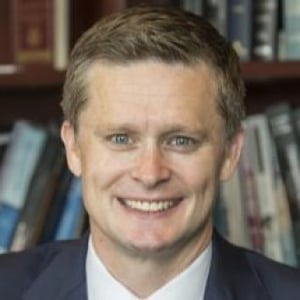
Donald M. Ephraim Professor of Law and Economics, University of Chicago Law School
Tony Casey is an expert on business law, finance, and corporate bankruptcy. His research—which has been published in the Yale Law Journal, the Columbia Law Review, the Supreme Court Review, and the University of Chicago Law Review—examines the intersection of finance and law. He has also written about the role of intellectual property law in the organization and financing of creative projects and about how technological innovation is changing the foundations of our legal system more generally.
Before entering academics, Professor Casey was a partner at Kirkland and Ellis, LLP. Before joining Kirkland & Ellis, he was an associate at Wachtell, Lipton, Rosen & Katz. His legal practice focused on corporate bankruptcy, merger litigation, white-collar investigations, securities litigation, and complex class actions. Casey also served as a law clerk for Chief Judge Joel M. Flaum of the United States Court of Appeals for the Seventh Circuit.
Professor Casey received his JD with High Honors in 2002 from the University of Chicago Law School. He received the John M. Olin Prize for the outstanding student of law and economics.
Professor Casey teaches courses and seminars in corporate governance, business law, bankruptcy and reorganization, finance, litigation strategy, civil procedure, and law and technology.
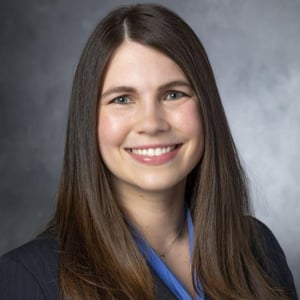
Associate Professor of Law, Emory University School of Law
Lindsey Simon is an associate professor at the Emory University School of Law.
Her research focuses on the bankruptcy system, drawing concepts from bankruptcy structure and procedure to address broader institutional design challenges. Simon’s articles have been published in the Administrative Law Review, the Cardozo Law Review, the Indiana Law Journal and the North Carolina Law Review. Simon’s most recent scholarship addresses the intersection between mass torts and bankruptcy, including an article on non-debtor relief in Chapter 11 forthcoming in the Yale Law Journal. She has assisted academics, judges, members of Congress and many other stakeholders on the subject of mass tort bankruptcies, and her commentary in connection with the Purdue Pharma, Boy Scouts of America and USA Gymnastics bankruptcies has appeared in various media outlets, including The Wall Street Journal, The New York Times, Forbes, The Economist, NPR and Reuters.
Before joining the Emory Law faculty in 2023, Professor Simon served as the Robert Cotten Alston Associate Chair in Corporate Law at the University of Georgia School of Law. Prior to becoming a professor, Simon was an associate at Kilpatrick Townsend & Stockton, where her practice involved a mix of commercial litigation and corporate restructuring matters. She represented corporations, committees and individuals in state and federal litigation, both in and out of the bankruptcy context. Simon also practiced at a litigation boutique in Chicago, Illinois, and served as a judicial clerk for Judge Beverly B. Martin on the U.S. Court of Appeals for the Eleventh Circuit. Additionally, she taught as an adjunct professor at the Georgia State University College of Law.
Simon earned her law degree magna cum laude from the Northwestern University Pritzker School of Law and obtained her Bachelor of Music magna cum laude and her Master of Education from Vanderbilt University.
She is an active member of the American Bankruptcy Institute, where she serves as a member of the ABI Diversity Working Group. She previously served as vice chair and community service co-chair for the Georgia Network of the International Women's Insolvency & Restructuring Confederation and as vice president of the board of directors of the Georgia Latino Law Foundation.
Donald M. Ephraim Professor of Law and Economics, University of Chicago Law School
Tony Casey is an expert on business law, finance, and corporate bankruptcy. His research—which has been published in the Yale Law Journal, the Columbia Law Review, the Supreme Court Review, and the University of Chicago Law Review—examines the intersection of finance and law. He has also written about the role of intellectual property law in the organization and financing of creative projects and about how technological innovation is changing the foundations of our legal system more generally.
Before entering academics, Professor Casey was a partner at Kirkland and Ellis, LLP. Before joining Kirkland & Ellis, he was an associate at Wachtell, Lipton, Rosen & Katz. His legal practice focused on corporate bankruptcy, merger litigation, white-collar investigations, securities litigation, and complex class actions. Casey also served as a law clerk for Chief Judge Joel M. Flaum of the United States Court of Appeals for the Seventh Circuit.
Professor Casey received his JD with High Honors in 2002 from the University of Chicago Law School. He received the John M. Olin Prize for the outstanding student of law and economics.
Professor Casey teaches courses and seminars in corporate governance, business law, bankruptcy and reorganization, finance, litigation strategy, civil procedure, and law and technology.
Associate Professor of Law, Emory University School of Law
Lindsey Simon is an associate professor at the Emory University School of Law.
Her research focuses on the bankruptcy system, drawing concepts from bankruptcy structure and procedure to address broader institutional design challenges. Simon’s articles have been published in the Administrative Law Review, the Cardozo Law Review, the Indiana Law Journal and the North Carolina Law Review. Simon’s most recent scholarship addresses the intersection between mass torts and bankruptcy, including an article on non-debtor relief in Chapter 11 forthcoming in the Yale Law Journal. She has assisted academics, judges, members of Congress and many other stakeholders on the subject of mass tort bankruptcies, and her commentary in connection with the Purdue Pharma, Boy Scouts of America and USA Gymnastics bankruptcies has appeared in various media outlets, including The Wall Street Journal, The New York Times, Forbes, The Economist, NPR and Reuters.
Before joining the Emory Law faculty in 2023, Professor Simon served as the Robert Cotten Alston Associate Chair in Corporate Law at the University of Georgia School of Law. Prior to becoming a professor, Simon was an associate at Kilpatrick Townsend & Stockton, where her practice involved a mix of commercial litigation and corporate restructuring matters. She represented corporations, committees and individuals in state and federal litigation, both in and out of the bankruptcy context. Simon also practiced at a litigation boutique in Chicago, Illinois, and served as a judicial clerk for Judge Beverly B. Martin on the U.S. Court of Appeals for the Eleventh Circuit. Additionally, she taught as an adjunct professor at the Georgia State University College of Law.
Simon earned her law degree magna cum laude from the Northwestern University Pritzker School of Law and obtained her Bachelor of Music magna cum laude and her Master of Education from Vanderbilt University.
She is an active member of the American Bankruptcy Institute, where she serves as a member of the ABI Diversity Working Group. She previously served as vice chair and community service co-chair for the Georgia Network of the International Women's Insolvency & Restructuring Confederation and as vice president of the board of directors of the Georgia Latino Law Foundation.
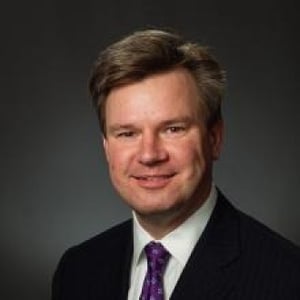
Senior Counsel & Director of the Center for Religious Schools, Alliance Defending Freedom
Gregory S. Baylor serves as senior counsel with Alliance Defending Freedom, where he is the director of the Center for Religious Schools and senior counsel with the Center for Public Policy.
Since joining ADF in 2009, Baylor has focused on defending and advancing the religious freedom of faith-based educational institutions through advice, education, legislative and public advocacy, and representation in disputes. He has testified about religious liberty issues three times before congressional committees and numerous times before state legislative committees.
Greg serves on the board of directors of the International Alliance for Christian Education, the board of directors of the Association for Biblical Higher Education, the board of directors of the Association for Christian Schools International, the board of advisors of the Museum of the Bible, and advisory board of the Center for Academic Faithfulness and Flourishing.
Greg earned his Juris Doctor in 1990 from Duke University School of Law, where he graduated Order of the Coif, with high honors, and served on the editorial board of the Duke Law Journal. He received his bachelor’s degree in Honors English in 1987 from Dartmouth College. Following graduation from law school, he served as law clerk to the Hon. Jerry E. Smith on the U.S. Court of Appeals for the Fifth Circuit. He practiced labor and employment law at two large international law firms for three years before joining the staff of Christian Legal Society’s Center for Law and Religious Freedom, where he served for 15 years prior to joining ADF. He lives in Northern Virginia with his wife (a medical doctor) and two daughters.
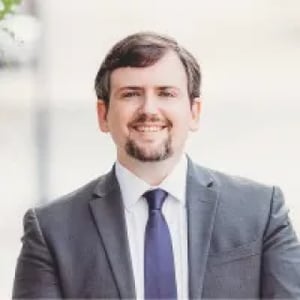
President, Alabama Center for Law and Liberty
Matthew Clark graduated from the Liberty University School of Law in 2012 in the top 10% of his class, and he had served on both the law review editorial board and moot court board. From 2013-2016, Clark worked on the Alabama Supreme Court, beginning as a law clerk but being promoted to a staff attorney after one year. From 2016 until 2021, Clark worked at the Foundation for Moral Law in Montgomery, practicing constitutional law and focusing on religious liberty, the right to life, and promoting a strict interpretation of the United States Constitution according to the intent of its framers.
After joining ACLL in March of 2021, Clark sued the Biden administration over its OSHA vaccine mandate, took it all the way to the United States Supreme Court, and won. Clark also successfully got UAB Health to rescind its vaccine mandate for its employees, guaranteeing that their jobs would be safe so that they could continue to provide much-needed medical services to those in need. Clark also successfully led a campaign of multiple legal and public policy organizations to pressure the Montgomery City Council to vote down an LGBT ordinance that would punish Christians with religious objections to endorsing, encouraging, or enabling conduct that they find sinful. Through his amicus advocacy, Clark has also asked the United States Supreme Court to overrule Roe v. Wade, protect the right of citizens to carry firearms for self-defense outside their homes, recognize the right of government employees to pray in public, and return Congress’s commerce power to the very limited role that the Framers intended for it to have.
Clark is admitted to the state bars of Alabama and Virginia. He is also admitted to the bars of the United States Supreme Court, the United States Courts of Appeals for the Second, Third, Sixth, Eleventh, and D.C. Circuits, and the United States District Courts for the Northern, Middle, and Southern Districts of Alabama. He is also a member of the Federalist Society’s Religious Liberty Executive Committee and an officer in his local Federalist Society Chapter. In 2021 and 2022, he was also a member of Alabama Secretary of State John Merrill’s Voter Fraud Task Force. He also occasionally lectures at Faulkner University on constitutional law.
Clark is married to his wife Laura, who is also an attorney, has an LLM in Alternative Dispute Resolution from the Thomas Goode Jones School of Law, and volunteers her time to assist ACLL. They have one child and are members of Vaughn Park Church in Montgomery.
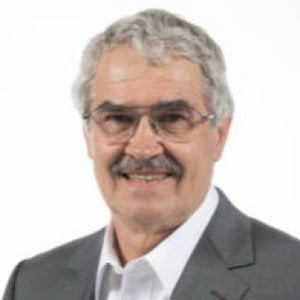
R. B. Price and Isabelle Wade & Paul C. Lyda Professor Emeritus of Law, University of Missouri School of Law
Carl H. Esbeck is R.B. Price Professor and Isabelle Wade & Paul C. Lyda Professor of Law emeritus at the University of Missouri. After attending Cornell University School of Law where he served as an editor on the Cornell Law Review, he held a judicial clerkship with the Honorable Howard C. Bratton, chief judge of the U.S. District Court in New Mexico.
Professor Esbeck publishes widely in the area of religious liberty and church-state relations. He is recognized as the progenitor of "Charitable Choice," an integral part of the 1996 Federal Welfare Reform Act, later made a part of the faith-based initiative and equal-treatment regulations under presidents George W. Bush and Barack Obama. In addition, he has taken the lead in recognizing that the modern Supreme Court has applied the Establishment Clause not as a personal right, but as a structural limit on the government's authority in disputes involving church governance. While on leave from 1999 to 2002, Professor Esbeck directed the Center for Law & Religious Freedom (CLRF) and later served as Senior Counsel to the Deputy Attorney General at the U.S. Department of Justice. While directing the CLRF, Professor Esbeck was a central part of the congressional advocacy behind the Religious Land Use and Institutionalized Persons Act of 2000 (RLUIPA). While at the Department of Justice one of his duties was to direct a task force to remove barriers to the equal-treatment of faith-based organizations applying for social service grants. He is the author of Disestablishment and Religious Dissent: Church-State Relations in the New American States, 1776 - 1833 (U. of MO Press, 2019).
Senior Counsel & Director of the Center for Religious Schools, Alliance Defending Freedom
Gregory S. Baylor serves as senior counsel with Alliance Defending Freedom, where he is the director of the Center for Religious Schools and senior counsel with the Center for Public Policy.
Since joining ADF in 2009, Baylor has focused on defending and advancing the religious freedom of faith-based educational institutions through advice, education, legislative and public advocacy, and representation in disputes. He has testified about religious liberty issues three times before congressional committees and numerous times before state legislative committees.
Greg serves on the board of directors of the International Alliance for Christian Education, the board of directors of the Association for Biblical Higher Education, the board of directors of the Association for Christian Schools International, the board of advisors of the Museum of the Bible, and advisory board of the Center for Academic Faithfulness and Flourishing.
Greg earned his Juris Doctor in 1990 from Duke University School of Law, where he graduated Order of the Coif, with high honors, and served on the editorial board of the Duke Law Journal. He received his bachelor’s degree in Honors English in 1987 from Dartmouth College. Following graduation from law school, he served as law clerk to the Hon. Jerry E. Smith on the U.S. Court of Appeals for the Fifth Circuit. He practiced labor and employment law at two large international law firms for three years before joining the staff of Christian Legal Society’s Center for Law and Religious Freedom, where he served for 15 years prior to joining ADF. He lives in Northern Virginia with his wife (a medical doctor) and two daughters.
President, Alabama Center for Law and Liberty
Matthew Clark graduated from the Liberty University School of Law in 2012 in the top 10% of his class, and he had served on both the law review editorial board and moot court board. From 2013-2016, Clark worked on the Alabama Supreme Court, beginning as a law clerk but being promoted to a staff attorney after one year. From 2016 until 2021, Clark worked at the Foundation for Moral Law in Montgomery, practicing constitutional law and focusing on religious liberty, the right to life, and promoting a strict interpretation of the United States Constitution according to the intent of its framers.
After joining ACLL in March of 2021, Clark sued the Biden administration over its OSHA vaccine mandate, took it all the way to the United States Supreme Court, and won. Clark also successfully got UAB Health to rescind its vaccine mandate for its employees, guaranteeing that their jobs would be safe so that they could continue to provide much-needed medical services to those in need. Clark also successfully led a campaign of multiple legal and public policy organizations to pressure the Montgomery City Council to vote down an LGBT ordinance that would punish Christians with religious objections to endorsing, encouraging, or enabling conduct that they find sinful. Through his amicus advocacy, Clark has also asked the United States Supreme Court to overrule Roe v. Wade, protect the right of citizens to carry firearms for self-defense outside their homes, recognize the right of government employees to pray in public, and return Congress’s commerce power to the very limited role that the Framers intended for it to have.
Clark is admitted to the state bars of Alabama and Virginia. He is also admitted to the bars of the United States Supreme Court, the United States Courts of Appeals for the Second, Third, Sixth, Eleventh, and D.C. Circuits, and the United States District Courts for the Northern, Middle, and Southern Districts of Alabama. He is also a member of the Federalist Society’s Religious Liberty Executive Committee and an officer in his local Federalist Society Chapter. In 2021 and 2022, he was also a member of Alabama Secretary of State John Merrill’s Voter Fraud Task Force. He also occasionally lectures at Faulkner University on constitutional law.
Clark is married to his wife Laura, who is also an attorney, has an LLM in Alternative Dispute Resolution from the Thomas Goode Jones School of Law, and volunteers her time to assist ACLL. They have one child and are members of Vaughn Park Church in Montgomery.
R. B. Price and Isabelle Wade & Paul C. Lyda Professor Emeritus of Law, University of Missouri School of Law
Carl H. Esbeck is R.B. Price Professor and Isabelle Wade & Paul C. Lyda Professor of Law emeritus at the University of Missouri. After attending Cornell University School of Law where he served as an editor on the Cornell Law Review, he held a judicial clerkship with the Honorable Howard C. Bratton, chief judge of the U.S. District Court in New Mexico.
Professor Esbeck publishes widely in the area of religious liberty and church-state relations. He is recognized as the progenitor of "Charitable Choice," an integral part of the 1996 Federal Welfare Reform Act, later made a part of the faith-based initiative and equal-treatment regulations under presidents George W. Bush and Barack Obama. In addition, he has taken the lead in recognizing that the modern Supreme Court has applied the Establishment Clause not as a personal right, but as a structural limit on the government's authority in disputes involving church governance. While on leave from 1999 to 2002, Professor Esbeck directed the Center for Law & Religious Freedom (CLRF) and later served as Senior Counsel to the Deputy Attorney General at the U.S. Department of Justice. While directing the CLRF, Professor Esbeck was a central part of the congressional advocacy behind the Religious Land Use and Institutionalized Persons Act of 2000 (RLUIPA). While at the Department of Justice one of his duties was to direct a task force to remove barriers to the equal-treatment of faith-based organizations applying for social service grants. He is the author of Disestablishment and Religious Dissent: Church-State Relations in the New American States, 1776 - 1833 (U. of MO Press, 2019).
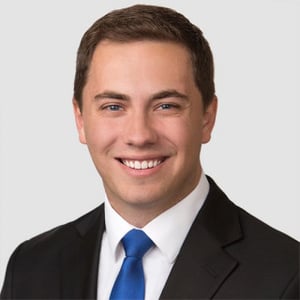
Associate, Holtzman Vogel Baran Torchinsky & Josefiak PLLC
Ken Daines is an associate at Holtzman Vogel Baran Torchinsky & Josefiak PLLC. His practice focuses on trial and appellate litigation in federal and state courts, including matters presenting constitutional law, redistricting, and election-related issues.
Before joining the firm, Ken clerked for Judge Ryan D. Nelson on the U.S. Court of Appeals for the Ninth Circuit and Judge Dee V. Benson on the U.S. District Court for the District of Utah. He also practiced election law and government ethics at a large law firm in Washington, D.C.
Ken earned his J.D. from Stanford Law School and a B.A. in International Relations and Chinese, magna cum laude, from Brigham Young University. While in law school, he worked as a student attorney for the Religious Liberty Clinic and served as Executive Vice-President for the Stanford Law chapter of the Federalist Society. Ken is a member of the District of Columbia and Maryland Bars, the J. Reuben Clark Law Society, and the Federalist Society.
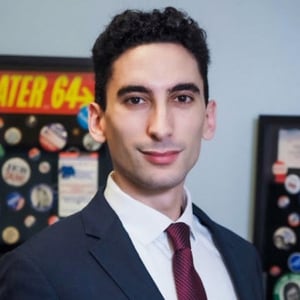
Andrew Pardue is an associate at Holtzman Vogel Baran Torchinsky Josefiak PLLC specializing in election and campaign finance law.
Prior to joining the firm, Andrew served as a law clerk for the D.C. Criminal Code Reform Commission and the Office of the Virginia Attorney General’s Civil Litigation Division, Consumer Protection Section. He also interned in the chambers of Magistrate Judge Lawrence Leonard of the United States District Court for the Eastern District of Virginia.
Andrew graduated from Harvard University with a B.A. in Government and a secondary concentration in Economics. He earned his J.D. from William & Mary Law School. While in law school, he served as Senior Notes Editor on the William & Mary Law Review and authored a published student note on congressional investigations of the executive branch. He also served as a graduate research fellow with the Center for the Study of Law and Markets. Andrew is a member of the Virginia Bar, the Federalist Society, and the Republican National Lawyers Association.
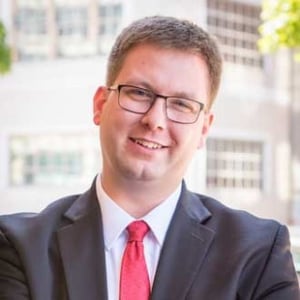
Senior Associate, Holtzman Vogel Josefiak Torchinsky PLLC
Drew Watkins is a senior associate with Holtzman Vogel Josefiak Torchinsky PLLC, providing counsel in the areas of campaign finance and election law, lobbying and ethics compliance, and tax-exempt organizations.
Prior to joining the firm, Drew served as a law clerk to the Honorable Joseph R. Goeke, Senior Judge of the United States Tax Court in Washington, D.C., and worked in the Office of General Counsel for the Governor of Kentucky, Matthew G. Bevin. While in law school, Drew served as a law clerk for the Kentucky Executive Branch Ethics Commission and interned for Senate Majority Leader Mitch McConnell in his office in Washington, D.C.
Drew graduated from the University of Louisville with a B.S. in Justice Administration. He earned his Juris Doctor, magna cum laude, from the University of Kentucky College of Law and was a member of the Order of the Coif. During law school, he served as a senior staff editor on the Kentucky Law Journal and authored a published student note on the Justice Against Sponsors of Terrorism Act. He is a member of the Kentucky, D.C. and Virginia bars and the Federalist Society.
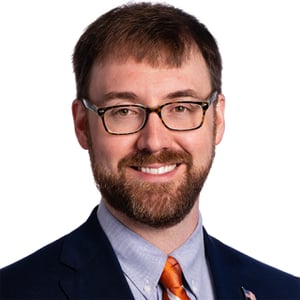
Senior Legal Fellow, Courts and the Constitution, Legal Policy Center, The Heritage Foundation
Zack is a Senior Legal Fellow of Courts and the Constitution at The Heritage Foundation.
He previously served for several years as an Assistant United States Attorney in the Northern District of Florida. Prior to that, he spent two years as an associate in the Washington, D.C. office of Cleary Gottlieb Steen & Hamilton, which he joined after clerking for the Hon. Emmett R. Cox on the United States Court of Appeals for the Eleventh Circuit.
Smith received his undergraduate, master’s, and law degrees from the University of Florida. During law school, Smith served as the Editor in Chief of the Florida Law Review and served on the executive boards of several student organizations, including the UF Chapter of the Federalist Society.
Donald M. Ephraim Professor of Law and Economics, University of Chicago Law School
Tony Casey is an expert on business law, finance, and corporate bankruptcy. His research—which has been published in the Yale Law Journal, the Columbia Law Review, the Supreme Court Review, and the University of Chicago Law Review—examines the intersection of finance and law. He has also written about the role of intellectual property law in the organization and financing of creative projects and about how technological innovation is changing the foundations of our legal system more generally.
Before entering academics, Professor Casey was a partner at Kirkland and Ellis, LLP. Before joining Kirkland & Ellis, he was an associate at Wachtell, Lipton, Rosen & Katz. His legal practice focused on corporate bankruptcy, merger litigation, white-collar investigations, securities litigation, and complex class actions. Casey also served as a law clerk for Chief Judge Joel M. Flaum of the United States Court of Appeals for the Seventh Circuit.
Professor Casey received his JD with High Honors in 2002 from the University of Chicago Law School. He received the John M. Olin Prize for the outstanding student of law and economics.
Professor Casey teaches courses and seminars in corporate governance, business law, bankruptcy and reorganization, finance, litigation strategy, civil procedure, and law and technology.
Associate Professor of Law, Emory University School of Law
Lindsey Simon is an associate professor at the Emory University School of Law.
Her research focuses on the bankruptcy system, drawing concepts from bankruptcy structure and procedure to address broader institutional design challenges. Simon’s articles have been published in the Administrative Law Review, the Cardozo Law Review, the Indiana Law Journal and the North Carolina Law Review. Simon’s most recent scholarship addresses the intersection between mass torts and bankruptcy, including an article on non-debtor relief in Chapter 11 forthcoming in the Yale Law Journal. She has assisted academics, judges, members of Congress and many other stakeholders on the subject of mass tort bankruptcies, and her commentary in connection with the Purdue Pharma, Boy Scouts of America and USA Gymnastics bankruptcies has appeared in various media outlets, including The Wall Street Journal, The New York Times, Forbes, The Economist, NPR and Reuters.
Before joining the Emory Law faculty in 2023, Professor Simon served as the Robert Cotten Alston Associate Chair in Corporate Law at the University of Georgia School of Law. Prior to becoming a professor, Simon was an associate at Kilpatrick Townsend & Stockton, where her practice involved a mix of commercial litigation and corporate restructuring matters. She represented corporations, committees and individuals in state and federal litigation, both in and out of the bankruptcy context. Simon also practiced at a litigation boutique in Chicago, Illinois, and served as a judicial clerk for Judge Beverly B. Martin on the U.S. Court of Appeals for the Eleventh Circuit. Additionally, she taught as an adjunct professor at the Georgia State University College of Law.
Simon earned her law degree magna cum laude from the Northwestern University Pritzker School of Law and obtained her Bachelor of Music magna cum laude and her Master of Education from Vanderbilt University.
She is an active member of the American Bankruptcy Institute, where she serves as a member of the ABI Diversity Working Group. She previously served as vice chair and community service co-chair for the Georgia Network of the International Women's Insolvency & Restructuring Confederation and as vice president of the board of directors of the Georgia Latino Law Foundation.
Senior Counsel & Director of the Center for Religious Schools, Alliance Defending Freedom
Gregory S. Baylor serves as senior counsel with Alliance Defending Freedom, where he is the director of the Center for Religious Schools and senior counsel with the Center for Public Policy.
Since joining ADF in 2009, Baylor has focused on defending and advancing the religious freedom of faith-based educational institutions through advice, education, legislative and public advocacy, and representation in disputes. He has testified about religious liberty issues three times before congressional committees and numerous times before state legislative committees.
Greg serves on the board of directors of the International Alliance for Christian Education, the board of directors of the Association for Biblical Higher Education, the board of directors of the Association for Christian Schools International, the board of advisors of the Museum of the Bible, and advisory board of the Center for Academic Faithfulness and Flourishing.
Greg earned his Juris Doctor in 1990 from Duke University School of Law, where he graduated Order of the Coif, with high honors, and served on the editorial board of the Duke Law Journal. He received his bachelor’s degree in Honors English in 1987 from Dartmouth College. Following graduation from law school, he served as law clerk to the Hon. Jerry E. Smith on the U.S. Court of Appeals for the Fifth Circuit. He practiced labor and employment law at two large international law firms for three years before joining the staff of Christian Legal Society’s Center for Law and Religious Freedom, where he served for 15 years prior to joining ADF. He lives in Northern Virginia with his wife (a medical doctor) and two daughters.
President, Alabama Center for Law and Liberty
Matthew Clark graduated from the Liberty University School of Law in 2012 in the top 10% of his class, and he had served on both the law review editorial board and moot court board. From 2013-2016, Clark worked on the Alabama Supreme Court, beginning as a law clerk but being promoted to a staff attorney after one year. From 2016 until 2021, Clark worked at the Foundation for Moral Law in Montgomery, practicing constitutional law and focusing on religious liberty, the right to life, and promoting a strict interpretation of the United States Constitution according to the intent of its framers.
After joining ACLL in March of 2021, Clark sued the Biden administration over its OSHA vaccine mandate, took it all the way to the United States Supreme Court, and won. Clark also successfully got UAB Health to rescind its vaccine mandate for its employees, guaranteeing that their jobs would be safe so that they could continue to provide much-needed medical services to those in need. Clark also successfully led a campaign of multiple legal and public policy organizations to pressure the Montgomery City Council to vote down an LGBT ordinance that would punish Christians with religious objections to endorsing, encouraging, or enabling conduct that they find sinful. Through his amicus advocacy, Clark has also asked the United States Supreme Court to overrule Roe v. Wade, protect the right of citizens to carry firearms for self-defense outside their homes, recognize the right of government employees to pray in public, and return Congress’s commerce power to the very limited role that the Framers intended for it to have.
Clark is admitted to the state bars of Alabama and Virginia. He is also admitted to the bars of the United States Supreme Court, the United States Courts of Appeals for the Second, Third, Sixth, Eleventh, and D.C. Circuits, and the United States District Courts for the Northern, Middle, and Southern Districts of Alabama. He is also a member of the Federalist Society’s Religious Liberty Executive Committee and an officer in his local Federalist Society Chapter. In 2021 and 2022, he was also a member of Alabama Secretary of State John Merrill’s Voter Fraud Task Force. He also occasionally lectures at Faulkner University on constitutional law.
Clark is married to his wife Laura, who is also an attorney, has an LLM in Alternative Dispute Resolution from the Thomas Goode Jones School of Law, and volunteers her time to assist ACLL. They have one child and are members of Vaughn Park Church in Montgomery.
R. B. Price and Isabelle Wade & Paul C. Lyda Professor Emeritus of Law, University of Missouri School of Law
Carl H. Esbeck is R.B. Price Professor and Isabelle Wade & Paul C. Lyda Professor of Law emeritus at the University of Missouri. After attending Cornell University School of Law where he served as an editor on the Cornell Law Review, he held a judicial clerkship with the Honorable Howard C. Bratton, chief judge of the U.S. District Court in New Mexico.
Professor Esbeck publishes widely in the area of religious liberty and church-state relations. He is recognized as the progenitor of "Charitable Choice," an integral part of the 1996 Federal Welfare Reform Act, later made a part of the faith-based initiative and equal-treatment regulations under presidents George W. Bush and Barack Obama. In addition, he has taken the lead in recognizing that the modern Supreme Court has applied the Establishment Clause not as a personal right, but as a structural limit on the government's authority in disputes involving church governance. While on leave from 1999 to 2002, Professor Esbeck directed the Center for Law & Religious Freedom (CLRF) and later served as Senior Counsel to the Deputy Attorney General at the U.S. Department of Justice. While directing the CLRF, Professor Esbeck was a central part of the congressional advocacy behind the Religious Land Use and Institutionalized Persons Act of 2000 (RLUIPA). While at the Department of Justice one of his duties was to direct a task force to remove barriers to the equal-treatment of faith-based organizations applying for social service grants. He is the author of Disestablishment and Religious Dissent: Church-State Relations in the New American States, 1776 - 1833 (U. of MO Press, 2019).

Chapter 11 Bankruptcy & Mass Torts: A Review of the Third Circuit’s LTL Opinion
Anthony J. Casey, Lindsey Simon
In 2021, LTL Management LLC (LTL), a newly created and separate subsidiary of Johnson &...
Chapter 11 Bankruptcy & Mass Torts: A Review of the Third Circuit’s LTL Opinion
Anthony J. Casey, Lindsey Simon
In 2021, LTL Management LLC (LTL), a newly created and separate subsidiary of Johnson &...
Chapter 11 Bankruptcy & Mass Torts: A Review of the Third Circuit’s LTL Opinion
TeleforumThe Respect for Marriage Act & Religious Liberty: At Odds or Unaffected?
Gregory Baylor, Matt Clark, Carl H. Esbeck
In December 2022, Congress passed and President Biden signed the Respect for Marriage Act (RFMA)....
The Respect for Marriage Act & Religious Liberty: At Odds or Unaffected?
Gregory Baylor, Matt Clark, Carl H. Esbeck
In December 2022, Congress passed and President Biden signed the Respect for Marriage Act (RFMA)....
The Respect for Marriage Act & Religious Liberty: At Odds or Unaffected?
TeleforumNorth Carolina Supreme Court Invalidates Redistricting Map and Voter ID Law Enacted By Legislature
Ken Daines, Andrew Pardue, Andrew Watkins
State courts often play an important role in reviewing and interpreting state laws that govern...
Topics
Banning TikTok Outright Would Be Constitutional
The information war is upon us and we only have one real threat: China. China...
Topics
Civil Justice Update Highlights Key Changes in 2022, Outlook for 2023
The Federalist Society has released its annual Civil Justice Update. The paper is a must-read...
Ohio Supreme Court Holds That the Courts, Not State Agencies, “Say What the Law Is.”
Zack Smith
In a recent opinion by Justice Patrick DeWine, the Ohio Supreme Court unanimously reaffirmed that...