

Partner, Lewis Brisbois
Sarah E. Lang is a partner in the New York office of Lewis Brisbois and a member of the Appellate Practice. Ms. Lang has represented clients at all levels of state and federal courts, including the New York State Appellate Division, the Second Circuit Court of Appeals, and the U.S. Supreme Court. The primary focus of her practice is drafting and arguing substantive motions and appeals before the federal courts and New York’s trial and appellate courts in substantive areas including general liability, New York Labor Law, medical malpractice, premises liability, and rideshare and transportation matters, among others. She also has extensive experience representing clients, including religious institutions, in matters arising under Title VII, the First Amendment, RLUIPA, New York’s City and State Human Rights Laws, New York’s Religious Corporations Law, and New York’s Real Property Tax Law. This includes federal jury trial experience and providing preventive advice and counseling. Prior to joining the firm, Ms. Lang clerked on the United States Court of Appeals for the Eighth Circuit, as well as the United States District Court for the Eastern District of North Carolina. She also previously served as an Attorney Advisor for the United States Department of Education.

Professor of Law, South Texas College of Law Houston
Josh Blackman is a national thought leader on constitutional law and the United States Supreme Court. Josh’s work was quoted during two presidential impeachment trials. He has testified before Congress and advises federal and state lawmakers. Josh regularly appears on TV, including NBC, CBS, ABC, Fox, and the BBC. Josh is also a frequent guest on NPR and other syndicated radio programs. He has published commentaries in the New York Times, Wall Street Journal, Washington Post, and leading national publications.
Since 2012, Josh has served as a professor at the South Texas College of Law Houston. He holds the Centennial Chair of Constitutional Law. Josh is an Adjunct Fellow at the Manhattan Institute. Josh has written more than seven dozen law review articles that have been cited more than a thousand times. Josh was selected as the Jurist of the Year by the Texas Journal of Law & Public Policy, received the inaugural Meese III Originalism Award, and was awarded the Inaugural Joseph Story Award. Josh was selected by Forbes Magazine for the “30 Under 30” in Law and Policy. Josh is the President of the Harlan Institute, and founded FantasySCOTUS, the Internet’s Premier Supreme Court Fantasy League. He blogs at the Volokh Conspiracyand posts@JoshMBlackman.
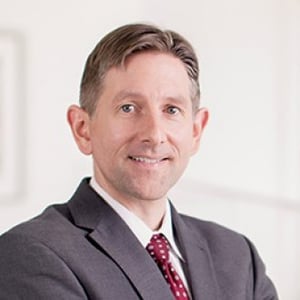
Partner, O'Melveny & Myers LLP
Gregory Jacob is a partner in O’Melveny’s Washington, D.C. office. Greg Jacob represents financial services companies including banks, investment managers, health care payors, and insurers, as well as other employers, in class action and other litigation concerning ERISA and other labor and employment matters. A former Solicitor of Labor, Greg has extensive knowledge on a wide variety of labor and employment issues including ERISA, FLSA, OFCCP, and whistleblower law. He regularly litigates in federal courts throughout the country, defends clients against Department of Labor investigations, and provides counseling to plans and plan sponsors.
Prior to rejoining O’Melveny in 2021, Greg served as Counsel to Vice President Pence and Deputy Assistant to the President. He directly advised the Vice President on all legal issues relating to the Office of the Vice President, and advised the White House Coronavirus Task Force concerning the Defense Production Act and other legal issues related to bolstering the domestic supply chain.
Professor of Law, South Texas College of Law Houston
Josh Blackman is a national thought leader on constitutional law and the United States Supreme Court. Josh’s work was quoted during two presidential impeachment trials. He has testified before Congress and advises federal and state lawmakers. Josh regularly appears on TV, including NBC, CBS, ABC, Fox, and the BBC. Josh is also a frequent guest on NPR and other syndicated radio programs. He has published commentaries in the New York Times, Wall Street Journal, Washington Post, and leading national publications.
Since 2012, Josh has served as a professor at the South Texas College of Law Houston. He holds the Centennial Chair of Constitutional Law. Josh is an Adjunct Fellow at the Manhattan Institute. Josh has written more than seven dozen law review articles that have been cited more than a thousand times. Josh was selected as the Jurist of the Year by the Texas Journal of Law & Public Policy, received the inaugural Meese III Originalism Award, and was awarded the Inaugural Joseph Story Award. Josh was selected by Forbes Magazine for the “30 Under 30” in Law and Policy. Josh is the President of the Harlan Institute, and founded FantasySCOTUS, the Internet’s Premier Supreme Court Fantasy League. He blogs at the Volokh Conspiracyand posts@JoshMBlackman.
Partner, O'Melveny & Myers LLP
Gregory Jacob is a partner in O’Melveny’s Washington, D.C. office. Greg Jacob represents financial services companies including banks, investment managers, health care payors, and insurers, as well as other employers, in class action and other litigation concerning ERISA and other labor and employment matters. A former Solicitor of Labor, Greg has extensive knowledge on a wide variety of labor and employment issues including ERISA, FLSA, OFCCP, and whistleblower law. He regularly litigates in federal courts throughout the country, defends clients against Department of Labor investigations, and provides counseling to plans and plan sponsors.
Prior to rejoining O’Melveny in 2021, Greg served as Counsel to Vice President Pence and Deputy Assistant to the President. He directly advised the Vice President on all legal issues relating to the Office of the Vice President, and advised the White House Coronavirus Task Force concerning the Defense Production Act and other legal issues related to bolstering the domestic supply chain.

Amicus Attorney, The Foundation for Individual Rights and Expression
Abby joined FIRE after her tenure at the Becket Fund for Religious Liberty, where she litigated First Amendment student group cases from coast to coast. She also worked at a trial litigation boutique in southern California. Abby has filed briefs on the First Amendment in state and federal court at the trial and appellate court levels, including before the U.S. Supreme Court.
Abby received her B.S. in economics and her B.A. in Chinese language and literature from the University of Pittsburgh, where she graduated summa cum laude. During college, she also spent a year at Tsinghua University as a Boren Fellow. She later received her J.D. from the University of Chicago Law School, where she won the 2018 Hinton Moot Court Competition. After law school, Abby clerked for the Honorable Michael B. Brennan on the Seventh Circuit Court of Appeals in Milwaukee, Wisconsin. She is admitted to practice in New York and California, as well as several federal appellate courts and the U.S. Supreme Court.
Abby lives outside Dallas, Texas, with her husband and family. They enjoy reading together, volunteering with their local church, and continuing to fix their leaky pool.
Professor of Law, South Texas College of Law Houston
Josh Blackman is a national thought leader on constitutional law and the United States Supreme Court. Josh’s work was quoted during two presidential impeachment trials. He has testified before Congress and advises federal and state lawmakers. Josh regularly appears on TV, including NBC, CBS, ABC, Fox, and the BBC. Josh is also a frequent guest on NPR and other syndicated radio programs. He has published commentaries in the New York Times, Wall Street Journal, Washington Post, and leading national publications.
Since 2012, Josh has served as a professor at the South Texas College of Law Houston. He holds the Centennial Chair of Constitutional Law. Josh is an Adjunct Fellow at the Manhattan Institute. Josh has written more than seven dozen law review articles that have been cited more than a thousand times. Josh was selected as the Jurist of the Year by the Texas Journal of Law & Public Policy, received the inaugural Meese III Originalism Award, and was awarded the Inaugural Joseph Story Award. Josh was selected by Forbes Magazine for the “30 Under 30” in Law and Policy. Josh is the President of the Harlan Institute, and founded FantasySCOTUS, the Internet’s Premier Supreme Court Fantasy League. He blogs at the Volokh Conspiracyand posts@JoshMBlackman.
Partner, O'Melveny & Myers LLP
Gregory Jacob is a partner in O’Melveny’s Washington, D.C. office. Greg Jacob represents financial services companies including banks, investment managers, health care payors, and insurers, as well as other employers, in class action and other litigation concerning ERISA and other labor and employment matters. A former Solicitor of Labor, Greg has extensive knowledge on a wide variety of labor and employment issues including ERISA, FLSA, OFCCP, and whistleblower law. He regularly litigates in federal courts throughout the country, defends clients against Department of Labor investigations, and provides counseling to plans and plan sponsors.
Prior to rejoining O’Melveny in 2021, Greg served as Counsel to Vice President Pence and Deputy Assistant to the President. He directly advised the Vice President on all legal issues relating to the Office of the Vice President, and advised the White House Coronavirus Task Force concerning the Defense Production Act and other legal issues related to bolstering the domestic supply chain.
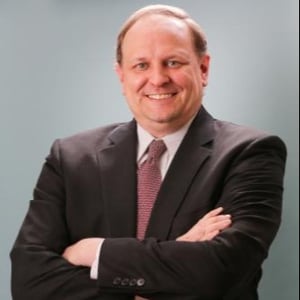
Director, Center for Legal Policy, Manhattan Institute for Policy Research
James R. Copland is a senior fellow at the Manhattan Institute and director of Legal Policy. In those roles, he develops and communicates novel, sound ideas on how to improve America’s civil- and criminal-justice systems. His forthcoming book, The Unelected: How an Unaccountable Elite is Governing America (Encounter Books) will be released on September 8, 2020. He has testified before Congress as well as state and municipal legislatures; and has authored many policy briefs, book chapters, articles and opinion pieces in a variety of publications, including the Harvard Business Law Review and Yale Journal on Regulation, the Wall Street Journal, National Law Journal, and USA Today. Copland speaks regularly on civil- and criminal-justice issues; has made hundreds of media appearances in such outlets as PBS, Fox News, MSNBC, CNBC, Fox Business, Bloomberg, C-Span, and NPR; and is frequently cited in news articles in the New York Times, Washington Post, The Economist, and Forbes. In 2011 and 2012, he was named to the National Association of Corporate Directors “Directorship 100” list, which designates the individuals most influential over U.S. corporate governance.
Prior to joining MI, Copland was a management consultant with McKinsey and Company in New York. Earlier, he was a law clerk for Ralph K. Winter on the U.S. Court of Appeals for the Second Circuit. Copland has been a director of two privately held manufacturing companies since 1997 and has served on many public and nonprofit boards. He holds a J.D. and an M.B.A. from Yale, where he was an Olin Fellow in Law and Economics; an M.Sc. in the politics of the world economy from the London School of Economics; and a B.A. in economics from the University of North Carolina at Chapel Hill, where he was a Morehead Scholar.
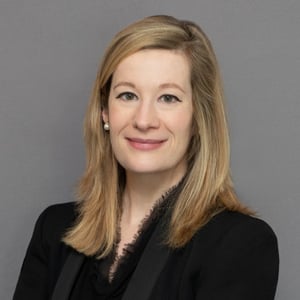
Partner, Williams & Connolly
Sarah Harris is a partner in Williams & Connolly’s Supreme Court and Appellate practice, where she represents clients in high-stakes appeals in the U.S. Supreme Court and federal and state appellate courts across the country. She has argued five cases before the U.S. Supreme Court, and she has presented many arguments in federal courts of appeals and state appellate courts. Her cases have run the gamut of substantive areas, including constitutional law—especially First Amendment and separation-of-powers issues—as well as administrative law, arbitration, class actions, antitrust, False Claims Act litigation, commercial litigation, and federal civil procedure.
Sarah is widely recognized for her appellate advocacy. Chambers USA has recognized her as “Up and Coming” in Appellate Law. She has been named to Bloomberg Law’s 40 Under 40 list of top lawyers nationwide and to Benchmark Litigation’s “40 & Under Hot List,” as well as a an appellate “Rising Star” by The National Law Journal and Law360, a “Next Generation Lawyer” by The Legal 500, and as one of Bloomberg Law’s “Five Fresh Faces to Know in Appellate.”
Sarah clerked for Justice Clarence Thomas on the Supreme Court of the United States, Judge Laurence Silberman on the United States Court of Appeals for the D.C. Circuit, and Judge Sandra Lynch on the United States Court of Appeals for the First Circuit. Before joining Williams & Connolly, she served as a Deputy Assistant Attorney General in the Department of Justice’s Office of Legal Counsel.
Sarah received her undergraduate degree summa cum laude from Princeton University, and her J.D. magna cum laude from Harvard Law School. She also holds a Ph.D. and M. Phil. from the University of Cambridge.
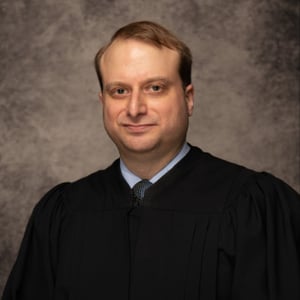
Judge, United States Court of Appeals, Second Circuit
Judge Menashi was appointed to the U.S. Court of Appeals for the Second Circuit on November 14, 2019. Previously, he served as special assistant and associate counsel to the President in the White House and as acting general counsel at the U.S. Department of Education. He was assistant professor of law at Scalia Law School, George Mason University, where he taught administrative law and civil procedure, and a research fellow at New York University School of Law and Georgetown University Law Center. He was also a partner at Kirkland & Ellis LLP in New York, where he practiced appellate and commercial litigation, and served as a law clerk to Justice Samuel Alito on the Supreme Court of the United States and to Judge Douglas Ginsburg on the U.S. Court of Appeals for the District of Columbia Circuit. He graduated from Stanford Law School, where he was elected to Order of the Coif and served as senior articles editor of the Stanford Law Review, and from Dartmouth College, where he was elected to Phi Beta Kappa.

Senior Fellow and Director of Constitutional Studies, Manhattan Institute
Ilya Shapiro is a senior fellow and director of constitutional studies at the Manhattan Institute and a contributing editor of City Journal. Previously he was executive director and senior lecturer at the Georgetown Center for the Constitution, and before that a vice president of the Cato Institute.
Shapiro is the author of Lawless: The Miseducation of America’s Elites (2025) and Supreme Disorder: Judicial Nominations and the Politics of America’s Highest Court (2020), coauthor of Religious Liberties for Corporations? (2014), and editor of 11 volumes of the Cato Supreme Court Review (2008-18). He has contributed to a variety of academic, popular, and professional publications, including the Wall Street Journal, Harvard Journal of Law & Public Policy, Washington Post, Los Angeles Times, USA Today, National Review, and Newsweek. He also regularly provides commentary for various media outlets, writes the Shapiro’s Gavel newsletter on Substack, and once appeared on the Colbert Report.
Shapiro has testified many times before Congress and state legislatures and has filed more than 500 amicus curiae “friend of the court” briefs in the Supreme Court. He lectures regularly on behalf of the Federalist Society, is a member of the board of fellows of the Jewish Policy Center, was an inaugural Washington Fellow at the National Review Institute, and has been an adjunct law professor at the George Washington University and University of Mississippi. He is also the chairman of the board of advisers of the Mississippi Justice Institute, a barrister in the Edward Coke Appellate Inn of Court, and a former member of the Virginia Advisory Committee to the U.S. Commission on Civil Rights.
Earlier in his career, Shapiro was a special assistant/adviser to the Multi-National Force in Iraq on rule-of-law issues and practiced at Patton Boggs and Cleary Gottlieb. Before entering private practice, he clerked for Judge E. Grady Jolly of the U.S. Court of Appeals for the Fifth Circuit. He holds an AB from Princeton University, an MSc from the London School of Economics, and a JD from the University of Chicago Law School.
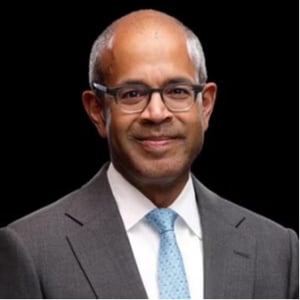
Partner, Davis Polk & Wardwell LLP
Kannon is the head of our Supreme Court & Appellate practice. He has argued 39 cases before the U.S. Supreme Court and has argued more than 150 appeals in courts across the country, including every federal court of appeals and numerous state courts.
Kannon is ranked as a “Star Individual” in appellate law by Chambers USA, where a client notes, “It’s hard to think of enough superlatives to describe his talent, his judgment, his ability, his experience – he is as good as it gets.” Legal 500 U.S. recognizes Kannon in its Hall of Fame for appellate work. A client shares, “His work is the best in the business, and he is a wonderful human being in addition to being a world-class appellate litigator.”
In 2024 and 2022, Kannon was a finalist for the American Lawyer’s “Litigator of the Year” award. He was named “Appellate Litigator of the Year” by Benchmark Litigation in 2021 and was a 2026 finalist for that recognition.
Before entering private practice, Kannon served as an Assistant to the Solicitor General at the U.S. Department of Justice.
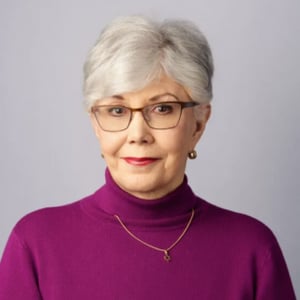
Chairman, Center for Equal Opportunity
Linda Chavez is Chairman of the Center for Equal Opportunity. She has published opinions and columns in newspapers across the country and appears regularly on cable news. Chavez is the author of the three books: Out of the Barrio: Toward a New Politics of Hispanic Assimilation, An Unlikely Conservative: The Transformation of an Ex-Liberal, and Betrayal: How Union Bosses Shake Down Their Members and Corrupt American Politics. She has been honored by the Library of Congress as a "Living Legend" and as nominee for Secretary of Labor by President George W. Bush.
Chavez has held many appointed positions and has served on numerous corporate and nonprofit boards. Among her appointed positions has been Chairman, National Commission on Migrant Education (1988-1992); White House Director of Public Liaison (1985); Staff Director of the U.S. Commission on Civil Rights (1983-1985); and member of the Administrative Conference of the United States (1984-1986). Chavez was also the Republican nominee for U.S. Senator from Maryland in 1986 and was elected by the United Nations' Human Rights Commission to serve a four-year term as U.S. Expert to the U.N. Sub-commission on the Prevention of Discrimination and Protection of Minorities.
Chavez earned her BA from the University of Colorado.
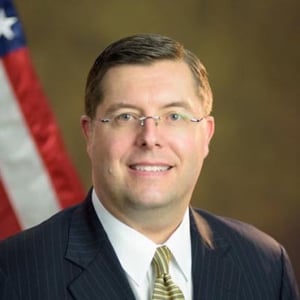
Chief Deputy Attorney General
Ryan Newman is currently Chief Deputy Attorney General for Florida Office of the Attorney General.
During the first Trump Administration, he served as Counselor to the United States Attorney General for national security and international affairs, Deputy General Counsel (Legal Counsel) for the Department of Defense, and Acting Assistant Attorney General for the Office of Legal Policy at the Department of Justice. Prior to serving in the Executive Branch, Ryan was Chief Counsel to United States Senator Ted Cruz during the 114th Congress.
Ryan served as a law clerk to the Honorable Samuel A. Alito, Jr. on the United States Supreme Court, the Honorable Richard J. Leon on the United States District Court for the District of Columbia, and the Honorable J.L. Edmondson on the United States Court of Appeals for the Eleventh Circuit.
Prior to law school, Ryan was an armor officer in the United States Army assigned to the 1st Squadron, 10th U.S. Cavalry Regiment (Buffalo Soldiers). He deployed to Iraq in 2003 for Operation Iraqi Freedom.
Ryan graduated from the United States Military Academy at West Point in 1998. He earned his law degree with high honors from The University of Texas School of Law in 2007.
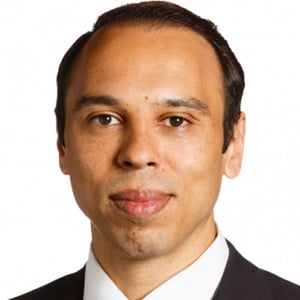
Vice President of Domestic and Economic Policy, The Heritage Foundation
Roger Severino is Vice President of Economic and Domestic Policy, and the Joseph C. and Elizabeth A. Anderlik Fellow at The Heritage Foundation.
Severino is a national authority on civil rights, conscience and religious freedom, the administrative state, and information privacy, particularly as applied to health care law and policy. Find his tweets at @RogerSeverino_.
Severino spearheaded the HHS Accountability Project while a Senior Fellow at EPPC from 2021 to 2023. Previously, Severino was Director of HHS’ Office for Civil Rights, where he led a team of over 250 staff enforcing our nation’s civil rights, conscience and religious freedom, and health information privacy laws. He served from 2017 to 2021 and was the longest-serving OCR director of the past three decades.
Prior to joining HHS, Severino served for two years as Director of the DeVos Center for Religion and Civil Society at Heritage, advocating for life, family, and religious-freedom policies. Before that, he was a trial attorney for seven years at the U.S. Department of Justice’s Civil Rights Division where he enforced the Fair Housing Act and the Civil Rights Act of 1964. Severino started his legal career at the Becket Fund for Religious Liberty, where he was Legal Counsel and Chief Operations Officer and defended the rights of people of all faiths under federal and international law.
Severino has been profiled in The New York Times, The Atlantic, The Wall Street Journal, and The Hill and has appeared on Fox News, CNN, MSNBC, NPR, and PBS, among others. In 2020, The New York Times dubbed him and his wife Carrie, “a conservative power couple” to be reckoned with.
Severino holds a JD from Harvard Law School, a master’s degree in public policy, with highest distinction, from Carnegie Mellon University, and a bachelor’s degree in business from the University of Southern California. He was appointed by President Trump to the Administrative Conference of the United States and is a member of the District of Columbia and the Commonwealth of Virginia bars.
As OCR director, Severino founded the federal government’s first division dedicated exclusively to conscience and religious freedom compliance and enforcement. He enforced the Weldon Amendment for the first time against a state (California) after it coerced families and religious organizations into paying for abortion insurance coverage, leading to a $200 million federal funding disallowance. He also enforced laws protecting pro-life pregnancy resource centers from discrimination by states hostile to their message and enforced laws prohibiting forced participation in abortions by medical professionals.
With respect to civil rights, Severino protected older persons and people with disabilities from being denied life-saving care due to discriminatory “quality of life” judgments, especially during the COVID-19 pandemic. He also achieved a landmark sexual harassment resolution with Michigan State University in the wake of the Larry Nassar sexual assault scandal and protected the rights of non-English speakers to have equal access to health and human services.
In the area of health privacy, he secured the largest HIPAA monetary settlement in history and achieved the largest number of enforcement resolutions both in a single year and across four years. He also facilitated the transformational use of Skype, Zoom, and Facetime for delivery of telehealth during the COVID-19 pandemic and beyond.
His regulatory reform activities resulted in a comprehensive conscience protection regulation and proposed a life-affirming disability rights regulation. He achieved regulatory savings of $3.6 billion in health care industry costs over five years and identified and proposed an additional $3.2 billion in cost savings from the repeal of ineffective and unnecessary regulatory burdens.
Severino is a Spanish speaker who teaches salsa and west coast swing in his spare time.
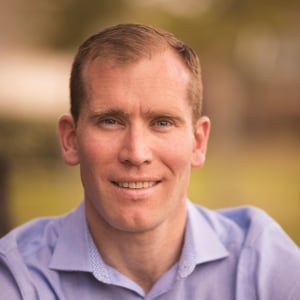
Research Director, Civitas Institute
Michael Toth is the research director at the Civitas Institute, where he focuses on the legal and policy developments reshaping global markets, from energy to emerging technology. His work has appeared in The Wall Street Journal, Washington Post, and Bloomberg, among other major outlets. A graduate of Stanford and the University of Virginia, his analysis is informed by his firsthand experience as general counsel to several early-stage companies, where he navigated the complex regulatory environments at the core of today’s policy debates.
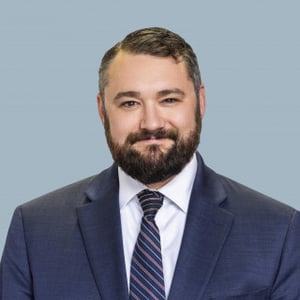
Partner, Ashbrook Byrne Kresge Flowers LLC
Ben Flowers, a partner at Ashbrook Byrne Kresge Flowers LLC, is an accomplished litigator with experience briefing, arguing, and winning high-stakes cases in courts throughout the country.
Before joining the law firm, Ben served as Ohio's 10th Solicitor General. In that role he regularly represented the State of Ohio before the Supreme Court of the United States, the United States Court of Appeals for the Sixth Circuit, and the Supreme Court of Ohio. Most prominently, in National Federation of Independent Business v. Department of Labor, Ben led a multi-state challenge to OSHA's vaccine mandate, ultimately prevailing before the Supreme Court.
Ben is a graduate of The Ohio State University and the University of Chicago Law School. Following law school, Ben clerked for Judge Sandra Ikuta of the U.S. Court of Appeals for the Ninth Circuit and for Justice Antonin Scalia of the Supreme Court of this United States. Ben lives in Upper Arlington, Ohio with his wife Denise and their three very active children.
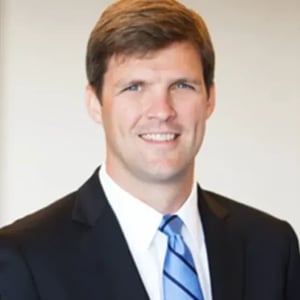
Judge, United States District Court for the Western District of Kentucky
Prior to joining the bench, Judge Beaton was a Partner at Squire Patton Boggs LLP, where he co-chaired the firm’s Appellate & Supreme Court practice group. Judge Beaton’s represented clients engaged in complex commercial litigation in Federal and State courts, and before administrative agencies. Judge Beaton also served as an adjunct professor at the University of Louisville Brandeis School of Law, where he taught constitutional interpretation. Before joining Squire Patton Boggs, Judge Beaton practiced in the Washington, D.C. office of Sidley Austin, LLP, and also served as a legal fellow with the International Justice Mission in Kampala, Uganda. Upon graduation from law school, Judge Beaton served as a law clerk to Justice Ruth Bader Ginsburg of the United States Supreme Court, and to Judge A. Raymond Randolph of the United States Court of Appeals for the D.C. Circuit. Judge Beaton earned his B.A., summa cum laude, from Centre College, and his J.D. from Columbia Law School, where he served as an Articles Editor on the Columbia Law Review.
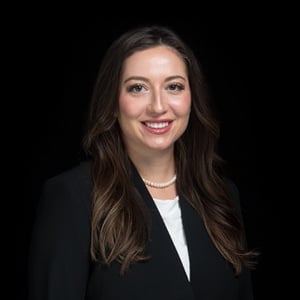
Associate Attorney, Cooper & Kirk PLLC
Athie Livas rejoined Cooper & Kirk in 2022. Prior to joining the firm, Ms. Livas clerked for Justice Brett M. Kavanaugh on the United States Supreme Court. Ms. Livas also previously clerked for Judge Amul R. Thapar on the United States Court of Appeals for the Sixth Circuit and Judge Dabney L. Friedrich on the United States District Court for the District of Columbia.
Ms. Livas graduated from Yale Law School, where she served as President of the Yale Federalist Society, co-President of the Barristers’ Union trial competition, Student Director of the Supreme Court Litigation Clinic, and Editor on the Yale Law Journal. Ms. Livas is admitted to the bar of the Commonwealth of Kentucky.

Groff v. DeJoy: The Death of the “De Minimis” Test Breathes Life Back into Religious Accommodation
Sarah E. Lang
In a unanimous decision last June, the Supreme Court in Groff v. DeJoy heightened the...
2023 Ron Rotunda Memorial Webinar: The State of the Legal Profession
Josh Blackman, Gregory Frederick Jacob
The 2023 Ron Rotunda Memorial Webinar featured a conversation with Gregory Jacob and Prof. Josh Blackman...
2023 Ron Rotunda Memorial Webinar: The State of the Legal Profession
Josh Blackman, Gregory Frederick Jacob
The 2023 Ron Rotunda Memorial Webinar featured a conversation with Gregory Jacob and Prof. Josh Blackman...
2023 Ron Rotunda Memorial Webinar: The State of the Legal Profession
In Conversation with Greg Jacob
TeleforumSupreme Court Preview (2023-2024)
New York City Lawyers Chapter, New York City Young Lawyers Chapter, and the Manhattan Institute
New York City, NYU.S. Supreme Court Roundup and Preview
Indianapolis Lawyers Chapter
Indianapolis, INPanel 3: DEI for Business in the Wake of Students for Fair Admissions, Inc. v. University of North Carolina and Students for Fair Admissions, Inc. v. President & Fellows of Harvard University
Fernandina Beach, FLU.S. Supreme Court Preview with Solicitor General Benjamin Flowers
Columbus Lawyers Chapter
Columbus, OHIowa Supreme Court Leaves in Place Injunction of Fetal Heartbeat Law, New One Passed Weeks Later
Abigail Smith
In Planned Parenthood of the Heartland, Inc. v. Reynolds (Planned Parenthood IV), the Supreme Court...
Supreme Court Roundup
Northern Kentucky Lawyers Chapter
Newport, KY