
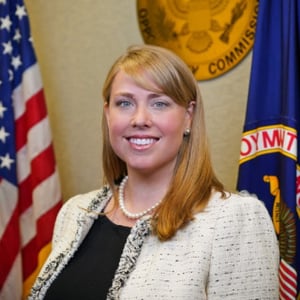
Chair, United States Equal Employment Opportunity Commission
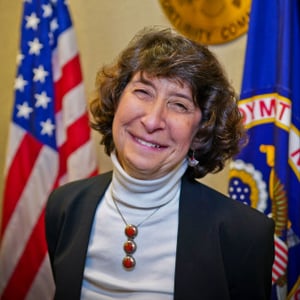
Vice Chair, Equal Employment Opportunity Commission
Jocelyn Samuels joined the U.S. Equal Employment Opportunity Commission (EEOC) as a Commissioner on October 14, 2020, and on July 14, 2021, was confirmed for a second term ending in 2026. Immediately prior to joining the Commission, she served as the Executive Director and Roberta A. Conroy Scholar of Law at the Williams Institute, focusing on legal strategies to attain equality for sexual and gender minorities. During the Obama administration, she served as the Director of the Office for Civil Rights at the U.S. Department of Health & Human Services and as the Acting Assistant Attorney General for Civil Rights at the U.S. Department of Justice. In these capacities, she supervised enforcement of civil rights laws through litigation, rulemaking and policy development, and public education and was an architect of numerous government policies applying federal law to remedy discrimination based on sexual orientation and gender identity. She previously served as a Vice President of the National Women’s Law Center, Labor Counsel to Senator Edward M. Kennedy, and a senior attorney at the EEOC in the Office of Legal Counsel. She received a J.D. from Columbia Law School and a B.A. from Middlebury College.
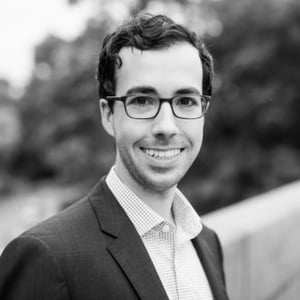
Senior Counsel, Becket Fund for Religious Liberty
Nick Reaves joined Becket in 2018. His practice centers on First Amendment appellate litigation. Nick has played a leading role in multiple religious freedom cases at the U.S. Supreme Court and has argued in federal appellate and trial courts across the country. He has represented individuals and organizations of many faith traditions—including Sikhs, Jews, Muslims, Hindus, Buddhists, and Christians—in their pursuit of the fundamental right to freely practice their religion.
In 2022, Nick was appointed as a Visiting Clinical Lecturer in Law at Yale Law School, where he co-directs Yale Law School’s Free Exercise Clinic. His scholarly work has been published in the Yale Law Journal Forum, the Harvard Journal of Law & Public Policy Per Curiam, the Virginia Journal of Social Policy & the Law, and the Notre Dame Law Review Reflection, among other leading legal journals. His writing has also been cited by the U.S. Supreme Court.
Recognized as a sought-after voice on religious freedom, Nick has spoken at institutions such as the University of Notre Dame, the University of Virginia, and Princeton Theological Seminary. He has also provided expert testimony before both the U.S. Commission on Civil Rights and the Equal Employment Opportunity Commission.
Before joining Becket, Nick practiced trial and appellate litigation as an associate at Jones Day and clerked for Chief Judge D. Brooks Smith on the U.S. Court of Appeals for the Third Circuit.
Nick earned his J.D. from the University of Virginia School of Law, where he served on the Managing Board of the Virginia Law Review and was elected to the Order of the Coif. He also graduated magna cum laude from the University of Notre Dame as a member of the Glynn Family Honors Program.
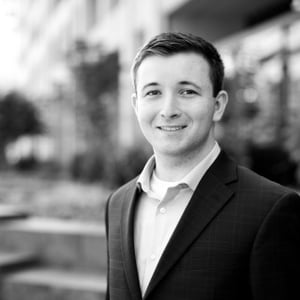
Paralegal, Becket
Matthew is a paralegal at the Becket Fund for Religious Liberty, where he's worked since 2022. He supports the attorney team with editing, legal research, and administrative duties.
Before Becket, Matthew’s legal experience included internships with the Federalist Society and the Champaign County Public Defender’s Office.
Matthew graduated from the University of Illinois Urbana-Champaign magna cum laude with a bachelor’s degree in Political Science with minors in Legal Studies and Philosophy. His senior honors thesis empirically evaluated the effects of state legislation on religious liberty litigation.
Outside of work, Matthew has continued studying philosophy, law, and policy. He is currently a Richard John Neuhaus Fellow with the Public Interest Fellowship. Previously, he participated in the Hertog Foundation’s The Supreme Court & American Politics cohort as a Fellow.
In his free time, Matthew enjoys volunteering at his parish, trips to the Library of Congress manuscript room, café hopping with a book in hand around the DMV, and training for the Chicago Marathon.
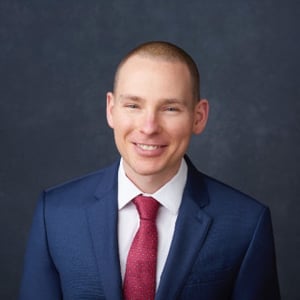
Shareholder & Co-Chair of the Workplace Policy Institute, Littler Mendelson P.C.
Alexander T. MacDonald advises employers on all aspects of the employment and labor landscape, focusing on emerging legislation and regulation. He has extensive experience advising businesses on worker classification, arbitration, the administrative and regulatory process, and the future of work. He frequently writes, publishes, and speaks on these subjects. His work has been cited by scholars and appellate courts. He is a recognized voice for the management perspective.
Alexander is a co-chair of the Workplace Policy Institute (WPI) team. With WPI, he advises employers on legislative, administrative, and regulatory developments at the state and federal level. He advocates for employers in the regulatory and administrative process. He also helps employers protect their businesses by understanding and anticipating cutting-edge legal developments.
Alexander also has extensive experience in traditional labor law. He represents management in all aspects of labor-management relations, including unfair labor practice charges, grievance arbitrations, representation elections, contract negotiations, and related litigation, including litigation in the U.S. courts of appeals.
Before joining Littler, Alexander served as the director, future of work, for a major technology company. He also worked in a national labor and employment law firm and a major public-sector general counsel’s office. He was a law clerk to the senior judges in the District of Columbia Court of Appeals.
He is also a veteran of the U.S. Air Force. He served in Operations Enduring Freedom and Iraqi Freedom. In law school, he graduated first in his class
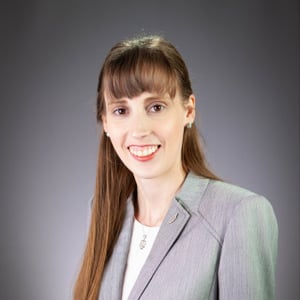
Legal Counsel, Alliance Defending Freedom
Julia Payne serves as legal counsel for Alliance Defending Freedom’s Center for Life. In this role, she defends the sanctity of life by litigating both beginning and end of life issues.
Before joining ADF, Payne worked at the Office of the Indiana Attorney General as a deputy attorney general for five years. While at the AG’s office, she managed all of Indiana’s pro-life litigation and also worked on cases concerning immigration, religious liberty, federalism, the Commerce Clause, criminal procedure, federal habeas corpus procedures, civil asset forfeiture, local and special laws, and the common law powers of the attorney general. She has argued cases before the U.S. Court of Appeals for the 7th Circuit, the Southern District of Indiana, and Indiana state courts.
Payne graduated cum laude from Indiana University Maurer School of Law in 2017, where she served as an editor on the Indiana Law Journal and won best brief in the Sherman Minton Moot Court Competition. During law school, Payne interned as a clerk for Indiana Solicitor General Tom Fisher and as a Blackstone Fellow with ADF’s Center for Academic Freedom in Atlanta. She also served as president of the Christian Legal Society and as an officer for the Advocates for Life and the Federalist Society.
Before law school, Payne graduated summa cum laude from Western Kentucky University with a B.A. in History and a B.A. in Spanish. As an undergraduate, Payne studied abroad in both Spain and China. On campus, she served on the Student Government Association Judicial Council, led the music ministry for the Catholic Campus Center, and was an active member of Omega Phi Alpha Service Sorority. Payne was also a founding member of the Hilltoppers for Life, which helped spur her interest in First Amendment and pro-life issues. Payne is a member of the bars of the Indiana Supreme Court, the Northern and Southern Districts of Indiana, and the Seventh Circuit.
Chair, United States Equal Employment Opportunity Commission
Vice Chair, Equal Employment Opportunity Commission
Jocelyn Samuels joined the U.S. Equal Employment Opportunity Commission (EEOC) as a Commissioner on October 14, 2020, and on July 14, 2021, was confirmed for a second term ending in 2026. Immediately prior to joining the Commission, she served as the Executive Director and Roberta A. Conroy Scholar of Law at the Williams Institute, focusing on legal strategies to attain equality for sexual and gender minorities. During the Obama administration, she served as the Director of the Office for Civil Rights at the U.S. Department of Health & Human Services and as the Acting Assistant Attorney General for Civil Rights at the U.S. Department of Justice. In these capacities, she supervised enforcement of civil rights laws through litigation, rulemaking and policy development, and public education and was an architect of numerous government policies applying federal law to remedy discrimination based on sexual orientation and gender identity. She previously served as a Vice President of the National Women’s Law Center, Labor Counsel to Senator Edward M. Kennedy, and a senior attorney at the EEOC in the Office of Legal Counsel. She received a J.D. from Columbia Law School and a B.A. from Middlebury College.
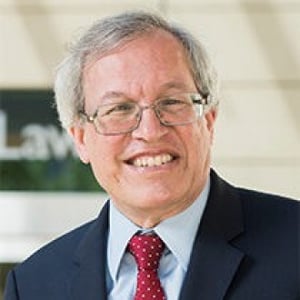
Dean and Jesse H. Choper Distinguished Professor of Law, UC Berkeley School of Law
Erwin Chemerinsky became the 13th Dean of Berkeley Law on July 1, 2017, when he joined the faculty as the Jesse H. Choper Distinguished Professor of Law.
Prior to assuming this position, from 2008-2017, he was the founding Dean and Distinguished Professor of Law, and Raymond Pryke Professor of First Amendment Law, at University of California, Irvine School of Law, with a joint appointment in Political Science. Before that he was the Alston and Bird Professor of Law and Political Science at Duke University from 2004-2008, and from 1983-2004 was a professor at the University of Southern California Law School, including as the Sydney M. Irmas Professor of Public Interest Law, Legal Ethics, and Political Science. He also has taught at DePaul College of Law and UCLA Law School.
He is the author of eleven books, including leading casebooks and treatises about constitutional law, criminal procedure, and federal jurisdiction. His most recent books are, We the People: A Progressive Reading of the Constitution for the Twenty-First Century (Picador Macmillan) published in November 2018, and two books published by Yale University Press in 2017, Closing the Courthouse Doors: How Your Constitutional Rights Became Unenforceable and Free Speech on Campus (with Howard Gillman).
He also is the author of more than 200 law review articles. He writes a regular column for the Sacramento Bee, monthly columns for the ABA Journal and the Daily Journal, and frequent op-eds in newspapers across the country. He frequently argues appellate cases, including in the United States Supreme Court.
In 2016, he was named a fellow of the American Academy of Arts and Sciences. In 2017, National Jurist magazine again named Dean Chemerinsky as the most influential person in legal education in the United States.

Emanuel S. Heller Professor of Law, University of California at Berkeley; Senior Research Fellow, School of Civic Leadership, Civitas Institute, University of Texas at Austin; Nonresident Senior Fellow, American Enterprise Institute
John Yoo is the Emanuel Heller Professor of Law. He is also Distinguished Visiting Scholar, School of Civic Leadership and Senior Research Fellow, Civitas Institute, at the University of Texas at Austin. He is also a Nonresident Senior Fellow at the American Enterprise Institute.
His most recent book, The Politically Incorrect Guide to the Supreme Court, co-authored with Robert Delahunty, was published in 2023. Professor Yoo’s other books include Defender-in-Chief: Trump’s Fight for Presidential Power; Striking Power: How Cyber, Robots, and Space Weapons Change the Rules for War, Point of Attack: Preventive War, International Law, and Global Welfare, and Crisis and Command: A History of Executive Power from George Washington to George Bush.
Professor Yoo has published more than 100 articles in academic journals on subjects including national security, constitutional law, international law, and the Supreme Court. He also regularly contributes to the editorial pages of the Wall Street Journal, New York Times, Washington Post, Los Angeles Times, and National Review, among others.
Professor Yoo has served in all three branches of government. He was an official in the U.S. Department of Justice, where he worked on national security and terrorism issues after the 9/11 attacks. He served as general counsel of the U.S. Senate Judiciary Committee. He has been a law clerk for Supreme Court Justice Clarence Thomas and federal appeals Judge Laurence Silberman. He has been a visiting professor at Seoul National University in South Korea, the Interdisciplinary Center in Israel, Keio University in Japan, Trento University in Italy, the University of Chicago, and the Free University of Amsterdam.
Professor Yoo supervises the Public Law and Policy Program and the California Constitution Center. He also serves on the boards of the Pacific Legal Foundation, the Federalist Society’s Separation of Powers and Federalism Division, the Universidad Cientifica del Sur Law School, and the Asia-Pacific Law Institute at Seoul National University. He is a winner of the Federalist Society’s Paul Bator award and been the Edwin Meese III Originalism Lecturer at the Heritage Foundation.
Professor Yoo graduated from Yale Law School and summa cum laude from Harvard College.
The University of Louisville School of Law
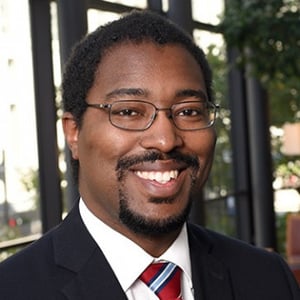
Partner, Taft Stettinius & Hollister LLP
Philip litigates complex matters in state and federal courts. He has briefed appeals in multiple U.S. Courts of Appeals, including the Sixth, Seventh, and Ninth Circuits, as well as state appellate courts in Ohio, Kentucky, and Georgia. Philip has also represented amici at both the cert petition and merits stages in the U.S. Supreme Court.
Prior to joining Taft, Philip served as a law clerk for Judge Raymond M. Kethledge of the U.S. Court of Appeals for the Sixth Circuit, Judge Amul R. Thapar of the U.S. District Court for the Eastern District of Kentucky, and Judge Lavenski R. Smith of the U.S. Court of Appeals for the Eighth Circuit.
Philip serves on the board of directors for the Cincinnati and Northern Kentucky lawyers chapters of the Federalist Society. He was a 2018 James Wilson Fellow with the James Wilson Institute, a 2013 John Marshall Fellow with the Claremont Institute Center for Constitutional Jurisprudence, and a 2011 Blackstone Fellow with the Alliance Defending Freedom.
Philip received his undergraduate degree, with Highest Honors, from Ouachita Baptist University. He received his J.D. from the University of Virginia School of Law, where he served as the submissions review editor for the Journal of Law and Politics.
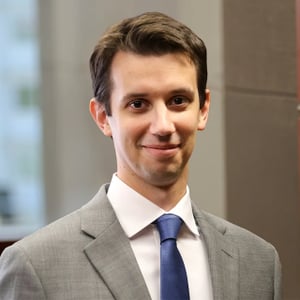
Partner, Jones Day
Stephen Petrany focuses on appellate litigation and critical motions practice. He briefs and argues cases before the U.S. Supreme Court, federal and state appellate courts, trial courts, and regulatory agencies.
Prior to rejoining Jones Day in 2026, Stephen served as the Solicitor General of Georgia, where he led the State's appellate and multistate litigation. In that role he briefed and argued multiple cases in the U.S. Supreme Court, dozens of cases in federal and state courts of appeal, and critical issues in trial courts. Some of the matters he oversaw include challenges to the U.S. president's asserted power over federal contractors and employees, defending against novel Title IX and employment discrimination claims, voter redistricting and elections challenges, campaign finance disclosure violations, and numerous challenges to EPA regulation.
Stephen's pro bono practice includes winning a D.C. Superior Court case to obtain a birth certificate for a minor after the city denied her application, as well as arguing numerous pro bono appeals in federal appellate courts. Stephen also has represented clients in matters involving immigration, asylum, religious liberty, and prisoner petitions.
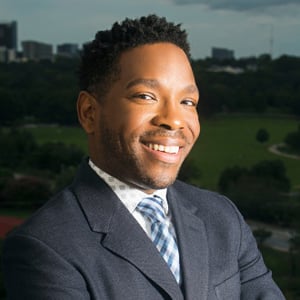
Professor of Law, Stanford University
Fred Smith Jr., JD ’07, is a Professor of Law at Stanford Law School and a leading scholar of the federal courts. His work on abstention, governmental immunities, and the allocation of power between state and federal courts has shaped contemporary debates over federal jurisdiction. This work has recovered histories that field had forgotten, and centered people the field’s doctrines had rendered invisible. He co-authors Federal Courts in Context (with Erwin Chemerinsky, Seth Davis, and Norman Spaulding) and Constitutional Torts, now in its sixth edition (with Sheldon Nahmod, Tom Eaton, Noah Smith-Drelich, and Michael Wells). He is also an important voice in the growing field of posthumous legal interests, where he created the first law school course of its kind.
His scholarship has appeared in the Harvard Law Review, Yale Law Journal, Stanford Law Review, Columbia Law Review, California Law Review, Michigan Law Review, New York University Law Review, and University of Chicago Law Review, among others. He lectures on these subjects across the United States and internationally, including in Istanbul, Shanghai, and Warsaw, and is regularly consulted as an expert by major media outlets, including CNN, CBS News, MSNBC, NPR, Time, The New York Times, and The Washington Post.
Smith clerked for Judge Myron Thompson (M.D. Ala.), Judge Barrington D. Parker Jr. (2d Cir.), and Justice Sonia Sotomayor (U.S. Supreme Court). He has held faculty positions at Berkeley Law and Emory Law and has been a visiting professor at the University of Chicago, Columbia, and Yale. At Emory, he was named Outstanding Professor of the Year in 2019, 2022, and 2023.
Smith serves as Board Chair of Lambda Legal, the nation’s oldest and largest legal organization dedicated to the civil rights of LGBTQ people. He also serves as an Associate Reporter for the American Law Institute’s Restatement of Constitutional Torts.

DEIA Initiatives in the Workplace Post-SFFA
Andrea R. Lucas, Jocelyn Samuels, Kate Comerford Todd
In June, the Supreme Court held that consideration of applicants’ race in admissions decisions of...
DEIA Initiatives in the Workplace Post-SFFA
Washington, D.C., DCOriginalism in the Supreme Court
Fordham Student Chapter
New York, NYReligious Liberty Pragmatism
Nick Reaves, Matthew Krauter
A review of Thomas C. Berg, Religious Liberty in a Polarized Age (Eerdmans 2023) In...
Supreme Court Roundup
California-Berkeley Student Chapter
Berkeley, CASupreme Court Roundup
Louisville Student Chapter
Louisville, KYThe Labor Law Enigma: Article III, Judicial Power, and the National Labor Relations Board
Alexander T. MacDonald
Axon Enterprises v. FTC[1] wasn’t supposed to be about labor law. In fact, it wasn’t...
Topics
Lawsuits Challenge Law Firm Diversity Programs as Racially Discriminatory
Edward Blum, who spearheaded litigation against racial preferences in college admissions, is now targeting law...
Indiana Supreme Court Upholds Law Banning Most Abortions, Establishes Right To Life-Saving Abortion
Julia Payne Koon
After the U.S. Supreme Court’s landmark decision in Dobbs v. Jackson Women’s Health Organization,[1] Indiana...
U.S. Supreme Court 2023-24 Term Preview
Atlanta Lawyers Chapter
Atlanta, GA