
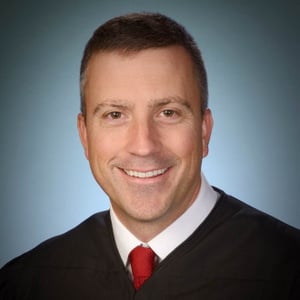
Judge, United States District Court, District of Columbia
Judge Trevor N. McFadden was appointed to the United States District Court for the District of Columbia in 2017. He received his B.A. in 2001 from Wheaton College, IL, magna cum laude. In 2006, he received his J.D. from the University of Virginia School of Law, where he graduated Order of the Coif and was an editor for the Virginia Law Review.
Following graduation from law school, Judge McFadden clerked for Judge Steven Colloton, U.S. Court of Appeals for the Eighth Circuit. He then joined the U.S. Department of Justice, where he served as Counsel to the Deputy Attorney General and as Assistant U.S. Attorney in the District of Columbia. Judge McFadden subsequently became a partner at Baker & McKenzie LLP in Washington, DC, where he focused on white collar investigations. He is also co-author of a treatise, Corporate Settlement Tools: DPAs, NPAs, and Cooperation Agreements.
After four years in private practice, Judge McFadden returned to the U.S. Department of Justice, where he was Deputy Assistant Attorney General and acted as the second-in-command of the Department's Criminal Division. As Deputy Assistant Attorney General, he managed the Division's Fraud and Appellate Sections.
Judge McFadden also has extensive experience in law enforcement. He served as an officer with the Fairfax County, VA, Police Department and as a deputy sheriff in Madison County, VA.

Professor of Law, University of Baltimore Law School
Kimberly Wehle (formerly Kimberly N. Brown) joined the law school after several years of teaching as an Associate Professor at the University of Oklahoma College of Law and a Visiting Professor at the George Washington University Law School. She teaches and writes in the areas of administrative law, federal courts and civil procedure. She is particularly interested in separation of powers questions, as well as in the constitutional implications of structural and technological innovations in modern government.
Wehle is the author of three books that explain complex constitutional concepts for lay audiences. She is a contributor for BBC World News and BBC World News America on PBS, and an opinion contributor to The Atlantic, Politico, The Bulwark and The Hill. She was an on-air legal analyst and commentator for CBS News. In addition, she appears regularly as a guest legal analyst on constitutional topics such as separation of powers and impeachment with outlets including CNN, MSNBC, NPR’s Morning Edition, PBS NewsHour and Fox News. Her articles have also appeared in The Baltimore Sun, The Los Angeles Times, and NBC News Think. She is regularly interviewed and cited by prominent print journalists on a range of newsworthy legal issues.
She hosts a show on Instagram called #SimplePolitics with Kim Wehle at @kimwehle. She also tweets @kimwehle. She is the 2020 recipient of the prestigious University of Maryland System Board of Regents Faculty Award for excellence in scholarship.
Wehle's scholarship addresses the constitutional relationship of independent agencies and private contractors to the enumerated branches of government. Her articles have appeared in the Notre Dame Law Review, the Indiana Law Journal and the North Carolina Law Review, among others, and her work is cited in a leading federal courts casebook.
Wehle was an editor of the Michigan Law Review and clerked for the Hon. Charles R. Richey of the United States District Court for the District of Columbia. She went on to practice, first at the Federal Trade Commission and subsequently as an Associate Independent Counsel in the Office of Independent Counsel Kenneth W. Starr, and as an Assistant U.S. Attorney in the Civil Division of the Office of the United States Attorney in Washington, D.C.
She has practiced before the United States Supreme Court and argued several cases in the United States Court of Appeals for the D.C. Circuit.
Wehle is also an advisor to the nonpartisan nonprofit, Protect Democracy.
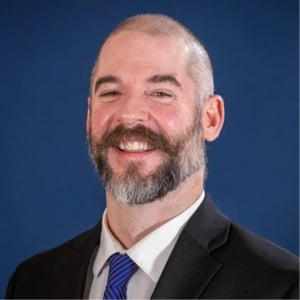
Deputy Director, Regulatory Studies Center, George Washington University
Will Yeatman is deputy director of the GW Regulatory Studies Center. A lawyer, he has spent almost two decades working on federal regulatory policy, with an emphasis on administrative law.
Yeatman has testified many times before Congress and state legislatures, and his scholarly work has appeared in such academic journals as Georgetown Law Journal, Administrative Law Review, and the (forthcoming) Catholic University Law Review. His popular writing has appeared in The Wall Street Journal, Foreign Policy, and Bloomberg.
Yeatman came to the RSC from the Pacific Legal Foundation. Previously, he had been at the Cato Institute’s Center for Constitutional Studies and the Competitive Enterprise Institute. From 2004 to 2006, he served as a Peace Corps volunteer in the Kyrgyz Republic.
Yeatman holds a BA in environmental sciences from the University of Virginia, an MA in international studies from the Denver University Graduate School of International Studies, and a JD from the Georgetown University Law Center. He is a member of the Washington, DC Bar.
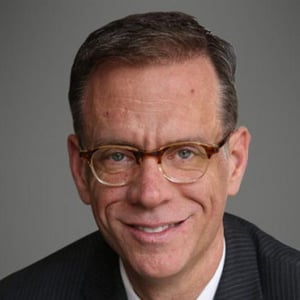
Judge William Hawley Atwell Chair of Constitutional Law, SMU Dedman School of Law
Professor Carpenter is the Judge William Hawley Atwell Chair of Constitutional Law. He previously served as the Charles J. and Inez Wright Murray Distinguished Visiting Professor of Law at SMU, teaching Constitutional Law I as well as LGBT Rights and the Law. This fall he will teach Constitutional Law II.
Prior to joining SMU, Professor Carpenter taught for 16 years at the University of Minnesota, where he served as a Distinguished University Teaching Professor and the Earl R. Larson Professor of Civil Rights and Civil Liberties Law. He won multiple teaching awards. He is also an editor of Constitutional Commentary.
The Texas native received his B.A. degree in history, magna cum laude, from Yale College and received his J.D., with honors, from the University of Chicago Law School, where he was editor-in-chief of the University of Chicago Law Review. After serving as a law clerk for Fifth Circuit Judge Edith Jones, he practiced at the firms Vinson & Elkins LLP in Houston, and at Howard, Rice, Nemerovski, Canady, Falk & Rabkin, P.C. in San Francisco.
As the author of numerous articles and an award-winning book —FLAGRANT CONDUCT: THE STORY OF LAWRENCE V. TEXAS (W.W. Norton & Co., 2012), about the landmark U.S. Supreme Court case that invalidated America's sodomy laws — he is often asked by the media to comment on constitutional law, the First Amendment, and LGBT Rights and the Law. Since 2005, he has been an active blogger on the popular legal blog, The Volokh Conspiracy, which is hosted by the Washington Post.
Frederick A. Whitney Professor of Contract Law and Director, Center for Law and Religion, St. John's University School of Law
Professor Movsesian is the Frederick A. Whitney Professor of Contract Law and the Director of the Center for Law and Religion. He writes in law and religion, contracts and international and comparative law; his articles have appeared in the Harvard, North Carolina, and Washington & Lee Law Reviews, the Oxford Journal of Law and Religion, the American Journal of International Law, the Harvard International Law Journal, the Virginia Journal of International Law, and many others. He has been a visiting professor at Notre Dame and Cardozo Law Schools and has delivered papers at numerous workshops in the United States and Europe. He teaches offerings in contracts, comparative law and law and religion.
Professor Movsesian graduated summa cum laude from Harvard College and magna cum laude from Harvard Law School. In law school, he was an editor of the Harvard Law Review and a recipient of the Sears Prize, awarded to the two highest-ranking students in the second-year class. He clerked for Justice David H. Souter of the Supreme Court of the United States and served as an attorney-advisor in the Office of Legal Counsel at the United States Department of Justice. Before starting at St. John's, he was the Max Schmertz Distinguished Professor of Law at Hofstra.
Professor Movsesian blogs regularly at the Law and Religion Forum.
Associate Professor of Legal Studies & Business Ethics, University of Pennsylvania The Wharton School
Litigation Fellow, Institute for Justice
Distinguished Research Professor, Center for Citizenship and Constitutional Government, University of Notre Dame
Donald L. Drakeman is Distinguished Research Professor in the Center for Citizenship and Constitutional Government at the University of Notre Dame, and a Fellow of the Centre for Health Leadership and Enterprise at the University of Cambridge. His writings have been cited by the Supreme Courts of the United States and the Philippines. He has published seven books, including The Hollow Core of Constitutional Theory (Cambridge University Press, 2021), Why We Need the Humanities (Palgrave, 2016), and Church, State, and Original Intent (Cambridge University Press, 2010). He received an A.B. magna cum laude from Dartmouth College; a J.D. from Columbia Law School, where he was a Harlan Fiske Stone Scholar; and a Ph.D. from Princeton University. He is a Fellow of the Royal Historical Society, and he was the founding chair of the Advisory Council for the James Madison Program on American Ideals and Institutions at Princeton University.
Appellate Unit Supervisor, Pima County Public Defender
David Euchner is the appellate unit supervisor and resource counsel of the Pima County Public Defender’s Office, professor of practice in criminal law and criminal procedure at the University of Arizona, and the co-author of the Arizona Criminal Practice Manual published by Thomson Reuters.
Dave currently and has previously served on several committees of the State Bar of Arizona and the Arizona Supreme Court tasked with rewriting court rules and jury instructions. In 2014 he was the president of Arizona Attorneys for Criminal Justice, the state affiliate of the National Association of Criminal Defense Lawyers, and he has served as chair or co-chair of AACJ’s amicus and rules committee since 2011. Dave has acted as counsel, for a party or for an amicus, in cases resulting in more than 100 published opinions, and he has participated in more than 80 oral arguments, evenly divided between the Arizona Supreme Court and Arizona Court of Appeals. He received the Outstanding Performance Award from the Arizona Public Defender Association in 2016, the Vanguard Leadership Award (now named the Larry Hammond Leadership Award) from AACJ in 2017, and the Jack Williams Appellate Achievement Award from AACJ in 2021.
Dave and his wife met in the Rutgers University Marching Band, where Dave earned his BA and JD degrees, and their three teenage sons all competed in high school marching band.

Legal Fellow, Edwin Meese III Center for Legal and Judicial Studies, The Heritage Foundation
Jack Fitzhenry is a Legal Fellow in the Edwin Meese III Center for Legal and Judicial Studies.
He previously served as a law clerk for the Hon. Madeline H. Haikala on the United States District Court for the Northern District of Alabama and for the Hon. Patrick E. Higginbotham on the United States Court of Appeals for the Fifth Circuit. Between clerkships, he litigated a variety of commercial disputes as an associate with Quinn Emanuel Urquhart & Sullivan LLP.
Fitzhenry received his law degree from the University of Michigan Law School and his bachelor’s degree in English Literature from Williams College.
Professor of History, Georgia Southern University
Johnathan O'Neill is Professor of History at Georgia Southern University. Professor O’Neill is the author of Originalism in American Law and Politics: A Constitutional History (2005) and Conservative Thought and American Constitutionalism Since the New Deal (2023).
Judge William Hawley Atwell Chair of Constitutional Law, SMU Dedman School of Law
Professor Carpenter is the Judge William Hawley Atwell Chair of Constitutional Law. He previously served as the Charles J. and Inez Wright Murray Distinguished Visiting Professor of Law at SMU, teaching Constitutional Law I as well as LGBT Rights and the Law. This fall he will teach Constitutional Law II.
Prior to joining SMU, Professor Carpenter taught for 16 years at the University of Minnesota, where he served as a Distinguished University Teaching Professor and the Earl R. Larson Professor of Civil Rights and Civil Liberties Law. He won multiple teaching awards. He is also an editor of Constitutional Commentary.
The Texas native received his B.A. degree in history, magna cum laude, from Yale College and received his J.D., with honors, from the University of Chicago Law School, where he was editor-in-chief of the University of Chicago Law Review. After serving as a law clerk for Fifth Circuit Judge Edith Jones, he practiced at the firms Vinson & Elkins LLP in Houston, and at Howard, Rice, Nemerovski, Canady, Falk & Rabkin, P.C. in San Francisco.
As the author of numerous articles and an award-winning book —FLAGRANT CONDUCT: THE STORY OF LAWRENCE V. TEXAS (W.W. Norton & Co., 2012), about the landmark U.S. Supreme Court case that invalidated America's sodomy laws — he is often asked by the media to comment on constitutional law, the First Amendment, and LGBT Rights and the Law. Since 2005, he has been an active blogger on the popular legal blog, The Volokh Conspiracy, which is hosted by the Washington Post.
Frederick A. Whitney Professor of Contract Law and Director, Center for Law and Religion, St. John's University School of Law
Professor Movsesian is the Frederick A. Whitney Professor of Contract Law and the Director of the Center for Law and Religion. He writes in law and religion, contracts and international and comparative law; his articles have appeared in the Harvard, North Carolina, and Washington & Lee Law Reviews, the Oxford Journal of Law and Religion, the American Journal of International Law, the Harvard International Law Journal, the Virginia Journal of International Law, and many others. He has been a visiting professor at Notre Dame and Cardozo Law Schools and has delivered papers at numerous workshops in the United States and Europe. He teaches offerings in contracts, comparative law and law and religion.
Professor Movsesian graduated summa cum laude from Harvard College and magna cum laude from Harvard Law School. In law school, he was an editor of the Harvard Law Review and a recipient of the Sears Prize, awarded to the two highest-ranking students in the second-year class. He clerked for Justice David H. Souter of the Supreme Court of the United States and served as an attorney-advisor in the Office of Legal Counsel at the United States Department of Justice. Before starting at St. John's, he was the Max Schmertz Distinguished Professor of Law at Hofstra.
Professor Movsesian blogs regularly at the Law and Religion Forum.
Associate Professor of Legal Studies & Business Ethics, University of Pennsylvania The Wharton School

Topics
Does Modern Labor Law Violate the Fifth Amendment?
In December, the U.S. Department of labor closed the public-comment period for new regulations under...
Congress and the Future of Agency Authority: A Discussion of Three Major Administrative Law Cases and Their Implications for Congress
Trevor N. McFadden, Kimberly Wehle, Will Yeatman
The Federalist Society's Capitol Hill Chapter and the Regulatory Transparency Project invite you to join...
Luncheon Discussion: Free Speech vs. Non-Discrimination: A Discussion on 303 Creative
Dale A. Carpenter, Mark Movsesian, Amy Sepinwall
303 Creative v. Elenis, which the U.S. Supreme Court decided last term, is the most...
Luncheon Discussion: Free Speech vs. Non-Discrimination: A Discussion on 303 Creative
Washington, DCGeorgia Supreme Court Rejects Sex Offender Registration Challenge, Re-Affirms Originalism Commitment
Nicholas DeBenedetto
In May, the Supreme Court of Georgia unanimously rejected a facial and as-applied challenge to...
Establishing an Agreement to Disagree About Church and State
Donald L. Drakeman
A review of Nathan Chapman & Michael McConnell, Agreeing to Disagree: How the Establishment Clause...
Victim Rights in Arizona's Constitution Clash With Sixth Amendment at Arizona Supreme Court
David Euchner
In 1990, Arizona was the first state in the nation to adopt a Victim’s Bill...
Georgia Supreme Court Carves Its Own Path on Due Process to Strike Down Occupational Licensing Law
Jack Fitzhenry
A unanimous Georgia Supreme Court held in Raffensperger v. Jackson that an occupational licensing law...
A Deeper Originalism: From Court-Centered Jurisprudence to Constitutional Self-Government
Johnathan O'Neill
Originalism has substantially reoriented constitutional discourse since it first reemerged in response to the Warren...
Topics
2023 National Lawyers Convention: Insurrection & the 14th Amendment
Editor's Note: On December 19th, 2023 the Colorado Supreme Court ruled that Former President Donald...