
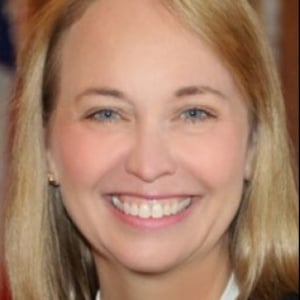
Justice, Texas Supreme Court
Jane Bland has served in the state judiciary for 28 years and on the Supreme Court of Texas since 2019. Before her service on the Court, she served 15 years as a justice on the First Court of Appeals and 6 years as a state district judge.
Justice Bland is the Court’s liaison to the Court’s Rules Advisory Committee. She chairs the Judicial Commission on Mental Health. She is also the Court’s liaison to the Texas Board of Legal Specialization and the Texas Supreme Court Historical Society. She is a member of the American Law Institute. She serves on the Advisory Committee for the Federal Civil Rules for the Judicial Conference of the United States.
Throughout her career, Justice Bland has been recognized for her work to improve our state’s judiciary. In 2010, Chief Justice John Roberts presented her with the William H. Rehnquist Award, given to a state court judge who exemplifies the highest level of judicial excellence, integrity, fairness, and professional ethics. The Texas Association of Civil Trial and Appellate Specialists has recognized her as the judge of the year four times. She has received several President’s Awards for her work with the Houston Bar Association and the Houston Young Lawyers Association. Justice Bland is board-certified in civil appellate law and civil trial law.
She earned her undergraduate and law degrees from the University of Texas at Austin. Following law school, Justice Bland clerked for the Honorable Thomas Gibbs Gee on the United States Court of Appeals for the Fifth Circuit. She began her practice at Baker Botts LLP. Before her appointment to the Court, she was a partner at Vinson & Elkins LLP in Houston.
Justice Bland has chaired the board of Houston Volunteer Lawyers and the Oversight Committee for the Texas Pattern Jury Charges. She served on the Court’s Commission to Expand Civil Legal Services and the Board of Legal Specialization’s Civil Appellate Law Advisory Commission. She is a trustee of the UT Law School Foundation.
Justice Bland was re-elected to the bench in 2024 to a term that expires December 31, 2030. She and her husband, Doug, have two grown children.
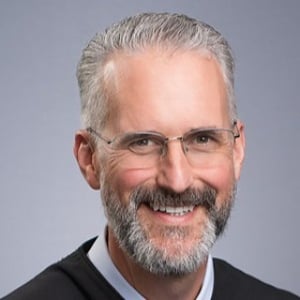
Justice, Supreme Court of Texas
Justice Kyle D. Hawkins was appointed to the Supreme Court of Texas by Governor Greg Abbott in October 2025.
Justice Hawkins previously served in the U.S. Department of Justice as Counselor to the Solicitor General, where he represented the United States before the U.S. Supreme Court. Previously, he served as the Texas Solicitor General, the state’s chief appellate advocate charged with representing the state, its agencies, and its officers in state and federal appellate courts. Earlier in his career, he served as a law clerk for U.S. Supreme Court Justice Samuel A. Alito, Jr., and for Judge Edith H. Jones of the U.S. Court of Appeals for the Fifth Circuit. As an appellate practitioner, Justice Hawkins argued five cases in the U.S. Supreme Court, nine in the Texas Supreme Court, and dozens more in other federal and state appellate courts.
In addition to his government service, Justice Hawkins served as a partner in the Dallas and Houston offices of Gibson, Dunn & Crutcher LLP, and he chaired the Texas appellate practice of Lehotsky Keller Cohn LLP, a national litigation boutique. Justice Hawkins has served as an Adjunct Professor of Law at the University of Texas School of Law.
Justice Hawkins lives in Austin, Texas, with his wife and four children.
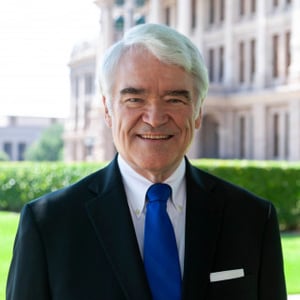
Chief Justice, Texas Supreme Court
Nathan L. Hecht is the 27th Chief Justice of the Supreme Court of Texas. He has been elected to the Court six times, first in 1988 as a Justice, and most recently in 2014 as Chief Justice. He is the longest-serving Member of the Court in Texas history and the senior Texas appellate judge in active service. Throughout his service on the Court, Chief Justice Hecht has overseen revisions to the rules of administration, practice, and procedure in Texas courts, and was appointed by the Chief Justice of the United States to the federal Advisory Committee on Civil Rules. Chief Justice Hecht is also active in the Court's efforts to assure that Texans living below the poverty level, as well as others with limited means, have access to basic civil legal services.
Chief Justice Hecht was appointed to the district court in 1981 and was elected to the court of appeals in 1986. Before taking the bench, he was a partner in the Locke firm in Dallas. Chief Justice Hecht holds a B.A. degree with honors in philosophy from Yale University, and a J.D. degree cum laude from the SMU School of Law, where he was a Hatton W. Sumners Scholar. He clerked for Judge Roger Robb on the U.S. Court of Appeals for the District of Columbia Circuit and was a Lieutenant in the U.S. Navy Reserve Judge Advocate General Corps.
Chief Justice Hecht is First Vice President of the national Conference of Chief Justices. He is a Life Member of the American Law Institute and a member of Council. He is also a member of the Texas Philosophical Society.
His current term ends December 31, 2020.
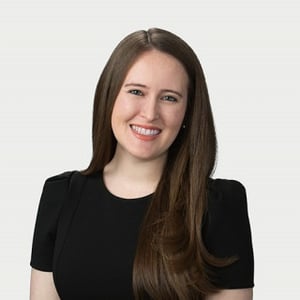
Associate, Gibson, Dunn & Crutcher LLP
Elizabeth A. Kiernan is a senior associate in the Appellate and Constitutional Law Practice Group at Gibson, Dunn & Crutcher, representing clients in their most consequential, high-stakes, and time-sensitive matters. Elizabeth specializes in appellate advocacy and sophisticated briefing. She has successfully argued before the Fifth Circuit and Texas Supreme Court and has supported arguments in various courts, including the U.S. Supreme Court and courts across the country.
Elizabeth’s most significant victories include obtaining and preserving at the Texas Supreme Court writs of mandamus directing dismissal of billions of dollars in personal injury and property damage claims across a 200-case, 20,000-plaintiff MDL; securing a landmark U.S. Supreme Court victory allowing an insurer responsible for millions of dollars in bankruptcy claims to be heard on objections to its insureds’ plan of reorganization; and persuading a unanimous Fifth Circuit panel to uphold dismissal of over $12 million in contractual and tort claims.
Chambers and Partners recently named Elizabeth an “Associate to Watch” for Litigation: Appellate (Texas), and she has been recognized as an Appellate “Rising Star” by Thomson Reuters’s Texas Super Lawyers magazine.
Prior to joining Gibson Dunn, Elizabeth earned her B.A. summa cum laude from the University of Alabama and her J.D. with Honors from the University of Chicago Law School. She served as a law clerk to the Honorable Jerry E. Smith of the U.S. Court of Appeals for the Fifth Circuit and the Honorable William H. Pryor Jr. of the U.S. Court of Appeals for the Eleventh Circuit. She also served as Special Counsel to U.S. Senator Josh Hawley for the confirmation of Justice Amy Coney Barrett.
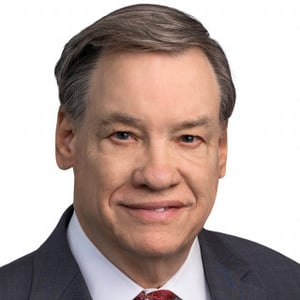
Partner, Baker Botts L.L.P.
Thomas R. Phillips is a partner in the Austin office of Baker Botts L.L.P.,
concentrating in general litigation, including appellate, trial strategy, and alternate
dispute resolution. He was appointed and then elected Chief Justice of the Supreme
Court of Texas in 1988, being one of the first four Republicans (along with Kent Hance,
Eugene Cook, and Bathan Hecht) to win a down-ballot statewide race since
Reconstruction. He was re-elected in 1990, 1996, and 2002 before leaving the Court in
2004.
While in office, Phillips served as president of the Conference of Chief Justices in
1997-98 and as a member of the Federal-State Relations Committee of the
Administrative Conference of the United States and the Institutions of Democracy
Judicial Branch Commission of the Annenberg Public Policy Center. After returning to
private life, he served on the Carter-Baker Commission on Federal Election Reform, the
Texas Historical Commission, the Texas State Historical Society, and the Judicial
Districts Board.
A native of Dallas, Phillips earned a B.A. from Baylor University in 1971 and a
J.D. from Harvard Law School in 1974. He has been awarded honorary doctoral
degrees from St. Edward’s University and Texas Tech University. Prior to becoming
Chief Justice, he practiced law in Houston and served as judge of the 280th District
Court in Harris County. Texas.
He resides with his wife, Dr. Lyn B. Phillips, in a historic home in Bastrop.
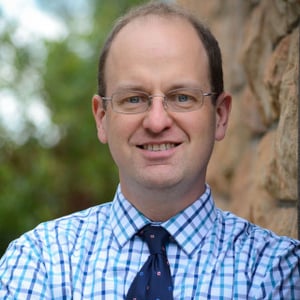
Professor of Law, University of Wyoming College of Law
George Mocsary is an expert in corporate and small-business law, and the law of firearms.
Currently, he is Professor of Law, Founder & Director of Firearms Research Center, and Director of the Business Planning Practicum and at the University of Wyoming College of Law.
Professor Mocsary teaches and writes about Agency & Partnership, Contracts, Corporations, Securities Regulation, the Second Amendment, and Firearms Law, including the intersection of Firearms Law and private law. He is a co-author of Firearms Law and the Second Amendment: Regulation, Rights, and Policy (3rd ed. 2021), the first casebook on this topic.
Prior to his appointment at Wyoming, he served as an Associate Professor of Law at the Southern Illinois University School of Law and spent two years as a Visiting Assistant Professor at the University of Connecticut School of Law. He practiced corporate and bankruptcy law at Cravath, Swaine and Moore in New York, and clerked for the Honorable Harris L. Hartz of the U.S. Court of Appeals for the Tenth Circuit.
Professor Mocsary holds a J.D. from Fordham Law School and an M.B.A. from the University of Rochester Simon School of Business. At Fordham, he graduated first in his class, and served as Notes and Articles Editor of the Fordham Law Review. He has published in the George Washington Law Review, George Mason Law Review, Fordham Law Review, Duke Law Journal Online, and other journals. His work has been cited by the Supreme Court of the United States, several U.S. Courts of Appeals, the Supreme Court of Illinois, the Delaware Court of Chancery, and other courts.
Justice, Supreme Court of Texas
Justice Kyle D. Hawkins was appointed to the Supreme Court of Texas by Governor Greg Abbott in October 2025.
Justice Hawkins previously served in the U.S. Department of Justice as Counselor to the Solicitor General, where he represented the United States before the U.S. Supreme Court. Previously, he served as the Texas Solicitor General, the state’s chief appellate advocate charged with representing the state, its agencies, and its officers in state and federal appellate courts. Earlier in his career, he served as a law clerk for U.S. Supreme Court Justice Samuel A. Alito, Jr., and for Judge Edith H. Jones of the U.S. Court of Appeals for the Fifth Circuit. As an appellate practitioner, Justice Hawkins argued five cases in the U.S. Supreme Court, nine in the Texas Supreme Court, and dozens more in other federal and state appellate courts.
In addition to his government service, Justice Hawkins served as a partner in the Dallas and Houston offices of Gibson, Dunn & Crutcher LLP, and he chaired the Texas appellate practice of Lehotsky Keller Cohn LLP, a national litigation boutique. Justice Hawkins has served as an Adjunct Professor of Law at the University of Texas School of Law.
Justice Hawkins lives in Austin, Texas, with his wife and four children.
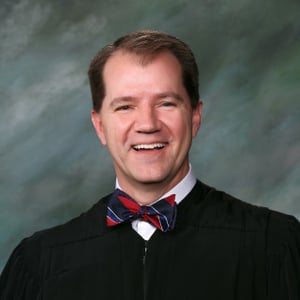
Judge, U.S. Court of Appeals, Fifth Circuit
Don Willett serves on the United States Court of Appeals for the Fifth Circuit. Before joining the federal bench, he served 13 years on the Supreme Court of Texas. His career spans decades of public service, including roles as legal counsel to a Texas Attorney General, a Texas Governor, a U.S. Attorney General, and the President of the United States. Raised by a heroic, widowed mom in a town of 32 people, Judge Willett is his family’s first college graduate. He earned a triple-major B.B.A. from Baylor University (where he serves on the Board of Regents) and three degrees from Duke University (where he served on the Board of Visitors): a J.D. with honors, an M.A. in political science, and an LL.M. in judicial studies. After law school, he clerked on the Fifth Circuit and practiced at Haynes and Boone before entering public service. Judge Willett writes and speaks widely on law, judging, and civic life. He serves on the Advisory Board of the School of Civic Leadership at the University of Texas at Austin, was the longtime editor-in-chief of Judicature: The Scholarly Journal for Judges, teaches at various law schools, and publishes in leading law journals and the popular press. He has received more than a dozen Green Bag honors for “exemplary legal writing,” was named Distinguished Jurist of the Year by the Texas Review of Law & Politics and is a member of the American Law Institute and a Life Fellow of the American, Texas, and Austin Bar Foundations. A former rodeo bull rider and professional drummer, Judge Willett was named “Tweeter Laureate of Texas” in 2015. He is the namesake of Don R. Willett Elementary School—home of mighty Willett Wranglers—located barely a mile from where the Willett family doublewide once stood. He and his radiant wife, Tiffany have three children—Jacob, Shane-David, and Geneviève—plus the family pup, Amicus.
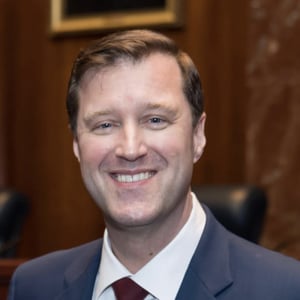
Justice, Texas Supreme Court
Evan Young is a Justice of the Supreme Court of Texas. Governor Greg Abbott, who appointed Young to fill an unexpired term, swore him into office on November 10, 2021. Justice Young was elected to a full term in November 2022.
Young graduated summa cum laude from Duke University in 1999, where he was inducted into Phi Beta Kappa. He was a British Marshall Scholar at Oxford University, where he completed his studies in 2001 and earned a First Class Honours degree in Modern History, focusing on British constitutional history. He earned his law degree from Yale Law School in 2004.
Young then worked as a lawyer in the judicial and executive branches of the federal government. He first served as a law clerk to Judge J. Harvie Wilkinson III of the U.S. Court of Appeals for the Fourth Circuit, and then to Justice Antonin Scalia at the U.S. Supreme Court. In 2006, after his clerkship with Justice Scalia ended, Justice Young became Counsel to the Attorney General at the U.S. Department of Justice, serving in the Office of the Attorney General under Attorneys General Alberto R. Gonzales and Michael B. Mukasey. While on the Attorney General’s staff, he accepted a detail to the U.S. Embassy in Baghdad, Iraq, where he was the Deputy Rule of Law Coordinator. In that position he worked to assist the Iraqi government in its efforts to strengthen its legal regime, including, for example, its courts and prison system.
Young returned to Texas and joined the Austin office of Baker Botts L.L.P. in 2009. His practice focused on trial and appellate litigation. He argued cases before both the Supreme Court of the United States and the Supreme Court of Texas, as well as many federal and state appellate courts. He represented clients across the country before every level of the state and federal judiciary.
Before joining the Texas Supreme Court, Young was appointed in 2017 by Governor Abbott and confirmed by the Texas Senate to serve as a member of the Texas Judicial Council, which is the policy-making body for the Texas Judiciary. In 2015, the Texas Supreme Court appointed him to the Supreme Court Advisory Committee, which assists the Court in drafting the rules that govern litigation in Texas courts. He served on both until his elevation to the bench.
Justice Young is an elected member of the American Law Institute and a member of the Texas Philosophical Society. He has been an adjunct law professor for many years at the University of Texas School of Law, where he has frequently taught the Federal Courts and Religious Liberty courses. He also has been an adjunct professor at the University of Mississippi School of Law, where he has taught multiple courses involving U.S. Supreme Court history. He served as Chair of the State Bar of Texas Business Law Section, Chair of the National Center for Missing and Exploited Children's Texas Regional Office, and Trustee of the Texas Supreme Court Historical Society.
Justice Young and his wife, Tobi, live in Austin with their daughter.
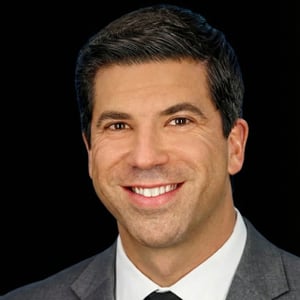
Judge, United States District Court, Southern District of Florida
On April 4, 2019, Judge Altman was confirmed to a seat on the U.S. District Court for the Southern District of Florida. At 36, he became the youngest federal district court judge in the country—and the youngest federal judge ever appointed in the Southern District of Florida.
Judge Altman received a BA from Columbia University, where he played quarterback on the football team and pitched for the baseball team—earning All-Ivy honors. Judge Altman received his JD from the Yale Law School, where he was projects editor of the Yale Law Journal. After law school, the Judge clerked on the 11th Circuit Court of Appeals for the Honorable Stanley Marcus.
Judge Altman then became a federal prosecutor at the U.S. Attorney’s Office in Miami, where he twice received the Director of the Executive Office of U.S. Attorneys’ Award for Superior Performance by a federal prosecutor. In 2013, Judge Altman was named “Federal Prosecutor of the Year” by the Miami-Dade Chiefs of Police and the Law Enforcement Officers’ Charitable Foundation.
In 2014, Judge Altman became a partner at the Miami law firm of Podhurst Orseck, where he represented the victims of airplane crashes and bank fraud conspiracies.
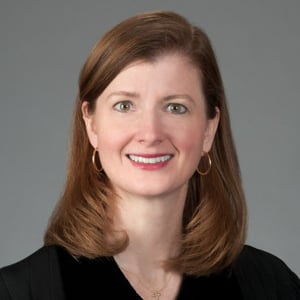
Judge, United States Court of Appeals, Eleventh Circuit
On March 20, 2018, Judge Elizabeth L. Branch (Lisa) was sworn in as a United States Circuit Judge for the Eleventh Circuit.
Judge Branch attended and graduated from Davidson College in North Carolina (B.A., cum laude, 1990), and Emory University School of Law (J.D., with distinction, 1994).
After graduating from law school, Judge Branch served as a federal law clerk to The Honorable J. Owen Forrester of the U.S. District Court for the Northern District of Georgia from 1994 to 1996. Following her clerkship, Judge Branch joined the litigation department of Smith, Gambrell & Russell, LLP in Atlanta as an associate and then a partner.
From 2004 to 2008, Judge Branch was a senior official in the Administration of President George W. Bush in Washington, D.C. She served first as the Associate General Counsel for Rules and Legislation at the U.S. Department of Homeland Security and then as the Counselor to the Administrator of the Office of Information and Regulatory Affairs at the U. S. Office of Management and Budget.
She returned to Smith Gambrell in 2008 as a litigation partner. Judge Branch then was appointed to the Court of Appeals of Georgia by Governor Nathan Deal, taking office on September 4, 2012, where she served until March 19, 2018.
Judge Branch is a member of the Board of Advisors of the Atlanta Lawyers Chapter for the Federalist Society for Law and Public Policy Studies.
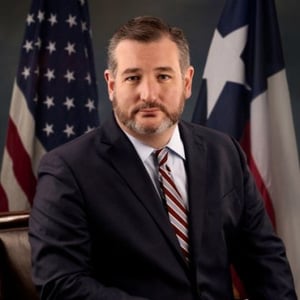
United States Senator, Texas
Ted Cruz represents 28 million Texans in the U.S. Senate as a passionate fighter for limited government and economic growth. He has authored 39 legislative measures signed into law. Recent victories include expanding 529 college savings accounts to allow parents to save for K–12 public, private, and religious education, leading the effort to repeal Obamacare’s individual mandate, imposing sanctions on terrorists who use civilians as human shields, designating North Korea as a state sponsor of terrorism, reauthorizing and reforming NASA, ensuring the availability of additional records to help solve civil rights cold cases, supporting thousands of Texas jobs, and leading the fight to confirm principled constitutionalists to our courts.
Senator Cruz is a graduate of Princeton University and Harvard Law School, a former law clerk to Chief Justice William Rehnquist, and former solicitor general of Texas. He has argued nine cases before the Supreme Court. In November of 2018, he was re-elected to the Senate by the people of Texas.
Judge, United States Court of Appeals, Eighth Circuit
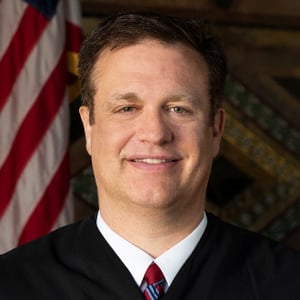
Judge, United States Court of Appeals, Ninth Circuit
Judge Nelson was confirmed to the Ninth Circuit in October 2018, as the youngest Circuit Judge to serve from Idaho and he has chambers in his hometown of Idaho Falls. Prior to his confirmation, Judge Nelson served for nine years as General Counsel of Idaho Falls-based Melaleuca, Inc., a consumer goods company. He previously worked in Washington, DC, where he served in all three branches of the federal government, including as Special Counsel for Supreme Court nominations to the Ranking Member of the Senate Judiciary Committee; Deputy General Counsel to the White House Office of Management and Budget; Deputy Assistant Attorney General in the Environment and Natural Resources Division of the United States Department of Justice; and a law clerk to Judge Henderson of the United States Court of Appeals for the D.C. Circuit. He has argued in most of the federal courts of appeals and worked on dozens of Supreme Court briefs. He started in the Washington, DC office of Sidley Austin as an appellate lawyer, after clerking for Judges Mosk and Brower of the Iran-U.S. Claims Tribunal at The Hague, and for now-Judge Tom Griffith, then-Senate Legal Counsel, during the impeachment trial of President Clinton. Judge Nelson earned his B.A. from Brigham Young University and his J.D., with honors, from BYU Law School. Judge Nelson has been a member of the Federalist Society since 1998.
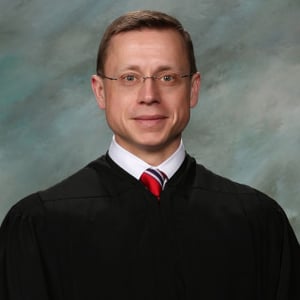
Judge, United States Court of Appeals, Fifth Circuit
Andrew Oldham is a Circuit Judge on the United States Court of Appeals for the Fifth Circuit. Before ascending to the bench, Judge Oldham served as General Counsel to Texas Governor Greg Abbott, where he advised the Governor on a range of issues under federal and state law and managed litigation in which the Governor was an interested party. Before that he served as Deputy Solicitor General for the State of Texas, where he represented Texas in federal courts across the country, including twice before the United States Supreme Court. Before moving to Texas, Judge Oldham was an attorney at Kellogg Hansen Todd Figel & Frederick in Washington, D.C. His practice focused on appellate litigation in federal courts of appeals throughout the country. Before entering private practice, Judge Oldham served as a law clerk to Justice Samuel A. Alito, Jr., at the Supreme Court of the United States and to Judge David B. Sentelle of the U.S. Court of Appeals for the District of Columbia Circuit. He also worked as an attorney-adviser in the Office of Legal Counsel at the U.S. Department of Justice from 2006 to 2008. Judge Oldham earned a B.A. from the University of Virginia with highest honors, a Truman Scholarship for graduate school, an M. Phil., first class (with distinction), from Cambridge University, and a J.D., magna cum laude, from Harvard Law School.
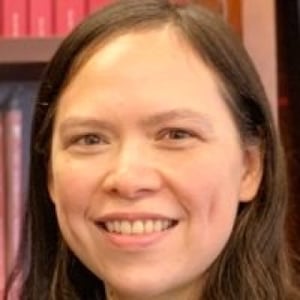
United States District Judge, Northern District of Illinois
Prior to being appointed judge, Hon. Martha Pacold served as Deputy General Counsel of the U.S. Department of the Treasury. Before that, Ms. Pacold was an associate and then a partner in the Chicago office of Bartlit Beck Herman Palenchar & Scott, LLP. She also was a Lecturer in Law at the University of Chicago Law School. Earlier in her career, Judge Pacold served as a Special Assistant U.S. Attorney for the Eastern District of Virginia and as Counsel to the Attorney General at the U.S. Department of Justice. Judge Pacold served as a law clerk to Justice Clarence Thomas of the Supreme Court of the United States, to Judge Jay S. Bybee of the U.S. Court of Appeals for the Ninth Circuit, and to Judge A. Raymond Randolph of the U.S. Court of Appeals for the District of Columbia Circuit. Judge Pacold earned her B.A., with highest distinction, from Indiana University, where she was inducted into Phi Beta Kappa, and her J.D., with honors, from the University of Chicago Law School, where she was inducted into the Order of the Coif and served as Editor-in-Chief of the University of Chicago Law Review.
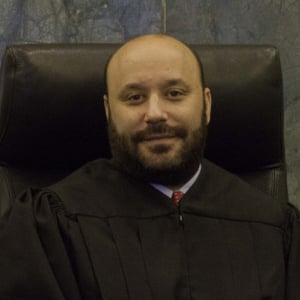
Judge, United States District Court, Eastern District of Arkansas
Lee Philip Rudofsky is a judge on the United States District Court for the Eastern District of Arkansas. Prior to his 2019 appointment by President Trump, Judge Rudofsky served as the Solicitor General of Arkansas, an Assistant General Counsel at Walmart, a Senior Litigation Associate at Kirkland & Ellis, and counsel to several Republican political campaigns. Today, in addition to his judicial service, Judge Rudofsky teaches law school classes on founding-era constitutional history and, separately, speaks to students across the country about the October 7th Massacre and the subsequent Israeli response. In 2024, Judge Rudofsky helped establish an annual judicial education mission to Israel that offers American judges the opportunity to learn first-hand about the Israeli legal system, Israeli society, and legal issues related to the Israel-Hamas war.

Judge, United States Court of Appeals, Eighth Circuit
David Stras became a judge on the United States Court of Appeals for the Eighth Circuit on January 31, 2018. Before serving on the Eighth Circuit, Judge Stras was an Associate Justice of the Minnesota Supreme Court, a position he occupied from July 1, 2010 until his appointment to the Eighth Circuit.
Prior to becoming a judge, Stras was a member of the faculty of the University of Minnesota Law School from 2004 through 2010. He taught and wrote in the areas of federal courts and jurisdiction, constitutional law, criminal law, and law and politics.
Judge Stras received his Bachelor of Arts degree, with highest distinction, in 1995 and his Master of Business Administration in 1999, both from the University of Kansas. He also received his law degree from the University of Kansas School of Law in 1999, where he served as Editor-in-Chief of the Criminal Procedure Edition of the Kansas Law Review.
Following law school, Stras clerked for The Honorable Melvin Brunetti of the United States Court of Appeals for the Ninth Circuit and then for The Honorable J. Michael Luttig of the United States Court of Appeals for the Fourth Circuit.
From 2001 to 2002, he practiced white-collar criminal and appellate litigation with the Washington, D.C., office of Sidley Austin Brown & Wood. Following his year in practice, he clerked for The Honorable Clarence Thomas of the Supreme Court of the United States.
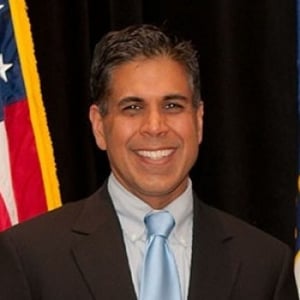
Judge, United States Court of Appeals, Sixth Circuit
Amul R. Thapar serves as a judge on the United States Court of Appeals for the Sixth Circuit. His judicial career began in 2007 when President George W. Bush nominated him to serve on the Eastern District of Kentucky, making him the first South Asian Article III judge in American history. In 2017, he became President Donald J. Trump’s first appellate court nominee.
Before joining the bench, Judge Thapar served as the United States Attorney for the Eastern District of Kentucky. While United States Attorney, Judge Thapar worked on the Attorney General’s Advisory Committee (“AGAC”) and chaired the AGAC’s Controlled Substances and Asset Forfeiture subcommittee. He also served on the Terrorism and National Security subcommittee, the Violent Crime subcommittee, and the Child Exploitation working group.
Judge Thapar has worked in private practice, at Williams & Connolly in Washington, D.C., and Squire, Sanders & Dempsey in Cincinnati, Ohio. He also served as an Assistant United States Attorney in both the Southern District of Ohio and the District of Columbia.
Judge Thapar received his undergraduate degree from Boston College and his law degree from the University of California, Berkeley. After graduating, Judge Thapar worked as a law clerk to the Honorable S. Arthur Spiegel of the United States District Court for the Southern District of Ohio, and the Honorable Nathaniel R. Jones of the United States Court of Appeals for the Sixth Circuit.
Judge Thapar has also published in the Yale Law Journal, Michigan Law Review, and Catholic University Law Review. He teaches courses on originalism, the Federalists and Anti-Federalists, and legal writing at Notre Dame Law School, the University of Virginia School of Law, and Vanderbilt Law School.
Justice, Texas Supreme Court
Evan Young is a Justice of the Supreme Court of Texas. Governor Greg Abbott, who appointed Young to fill an unexpired term, swore him into office on November 10, 2021. Justice Young was elected to a full term in November 2022.
Young graduated summa cum laude from Duke University in 1999, where he was inducted into Phi Beta Kappa. He was a British Marshall Scholar at Oxford University, where he completed his studies in 2001 and earned a First Class Honours degree in Modern History, focusing on British constitutional history. He earned his law degree from Yale Law School in 2004.
Young then worked as a lawyer in the judicial and executive branches of the federal government. He first served as a law clerk to Judge J. Harvie Wilkinson III of the U.S. Court of Appeals for the Fourth Circuit, and then to Justice Antonin Scalia at the U.S. Supreme Court. In 2006, after his clerkship with Justice Scalia ended, Justice Young became Counsel to the Attorney General at the U.S. Department of Justice, serving in the Office of the Attorney General under Attorneys General Alberto R. Gonzales and Michael B. Mukasey. While on the Attorney General’s staff, he accepted a detail to the U.S. Embassy in Baghdad, Iraq, where he was the Deputy Rule of Law Coordinator. In that position he worked to assist the Iraqi government in its efforts to strengthen its legal regime, including, for example, its courts and prison system.
Young returned to Texas and joined the Austin office of Baker Botts L.L.P. in 2009. His practice focused on trial and appellate litigation. He argued cases before both the Supreme Court of the United States and the Supreme Court of Texas, as well as many federal and state appellate courts. He represented clients across the country before every level of the state and federal judiciary.
Before joining the Texas Supreme Court, Young was appointed in 2017 by Governor Abbott and confirmed by the Texas Senate to serve as a member of the Texas Judicial Council, which is the policy-making body for the Texas Judiciary. In 2015, the Texas Supreme Court appointed him to the Supreme Court Advisory Committee, which assists the Court in drafting the rules that govern litigation in Texas courts. He served on both until his elevation to the bench.
Justice Young is an elected member of the American Law Institute and a member of the Texas Philosophical Society. He has been an adjunct law professor for many years at the University of Texas School of Law, where he has frequently taught the Federal Courts and Religious Liberty courses. He also has been an adjunct professor at the University of Mississippi School of Law, where he has taught multiple courses involving U.S. Supreme Court history. He served as Chair of the State Bar of Texas Business Law Section, Chair of the National Center for Missing and Exploited Children's Texas Regional Office, and Trustee of the Texas Supreme Court Historical Society.
Justice Young and his wife, Tobi, live in Austin with their daughter.
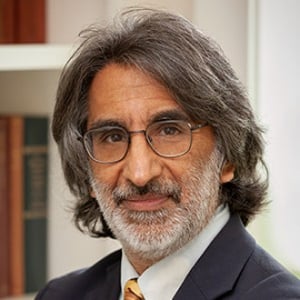
Sterling Professor of Law, Yale Law School
Akhil Reed Amar is Sterling Professor of Law and Political Science at Yale University, where he teaches constitutional law in both Yale College and Yale Law School. After graduating from Yale College, summa cum laude, in 1980 and from Yale Law School in 1984, and clerking for Judge (later Justice) Stephen Breyer, Amar joined the Yale faculty in 1985 at the age of 26. He is Yale’s only living professor to have won the University’s unofficial triple crown — the Sterling Chair for scholarship, the DeVane Medal for teaching, and the Lamar Award for alumni service.
Amar’s work has won awards from both the American Bar Association and the Federalist Society, and he has been cited by Supreme Court justices across the spectrum in more than 50 cases — tops among scholars under age 70. According to both Fred Shapiro’s landmark 2021 study of lifetime scholarly citations and Heinonline’s most recent tabulation of lifetime law-review citations, Amar is America’s second most-cited legal scholar still under age 70. He is a member of the American Academy of Arts and Sciences and has written widely for popular publications, including The New York Times, The Washington Post, The Wall Street Journal, Time, and The Atlantic. He was an informal consultant to the popular TV show The West Wing and his scholarship has been showcased on many broadcasts, including The Colbert Report, Morning Joe, AC360, Velshi, Fox News @ Night with Shannon Bream, Fareed Zakaria GPS, Erin Burnett Outfront, and Constitution USA with Peter Sagal.
He is the author of more than a hundred law review articles and several books, including The Bill of Rights (1998 — winner of the Yale University Press Governors’ Award), America’s Constitution (2005 — winner of the ABA’s Silver Gavel Award), America’s Unwritten Constitution (2012 — named one of the year’s 100 best nonfiction books by The Washington Post), and The Constitution Today (2016 — named one of the year’s top ten nonfiction books by Time magazine). The first volume of his ambitious trilogy on American constitutional history from the Founding to the present, The Words That Made Us: America’s Constitutional Conversation, 1760-1840, came out in May 2021. The second volume, Born Equal: Remaking America’s Constitution, 1840-1920, will be published in September 2025 and is already available for pre-order. All together, his nonfiction books have won two starred reviews from Publishers Weekly and three starred reviews from Kirkus—tops, it is believed, among legal scholars under age 70. Together with Vikram David Amar (YLS ’88), he has a bi-weekly column on the Supreme Court on the distinguished website SCOTUSblog. Along with Andy Lipka, he co-hosts a popular and free weekly podcast, Amarica’s Constitution, whose listeners are eligible for CLE credit in most American jurisdictions. A wide assortment of his articles and op-eds and video links to many of his public lectures and free online courses may be found at akhilamar.com.
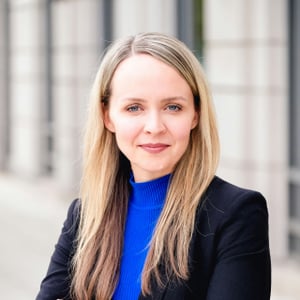
Professor of Law and Faculty Director for the Georgetown Center for the Constitution, Georgetown University Law Center
Stephanie Barclay is a Professor of Law at Georgetown Law School, and the Faculty Director of the Georgetown Center for the Constitution. Her research focuses on the role our different democratic institutions play in protecting minority rights, particularly at the intersection of free speech and religious exercise. Barclay‘s work is published or is forthcoming in leading journals such as the Harvard Law Review, the Chicago Law Review, the University of Pennsylvania Law Review, and the Yale Law Journal Forum. One of her articles was also selected for the 2020 Stanford/Harvard/Yale Junior Faculty Forum. Her work has been featured in many media outlets, including The New York Times, The Wall Street Journal, The Washington Post, USA Today, Bloomberg BNA, The Hill, and Law 360. And her work has also been cited by the U.S. Supreme Court.
Prior to joining Georgetown, Barclay was twice voted Professor of the Year. Barclay has also litigated constitutional cases at both the trial and appellate level, including before the U.S. Supreme Court. Barclay served as a law clerk to Judge N. Randy Smith on the U.S. Court of Appeals for the Ninth Circuit, and to Justice Neil M. Gorsuch of the U.S. Supreme Court.
Barclay is a Faculty Affiliate at the Constitutional Law Center at Stanford Law School; and she is a Nootbaar Fellow at the Nootbaar Institute on Law, Religion, and Ethics at Pepperdine University. She currently serves as the Chair for the AALS Law and Religion Section and as a Member of the Executive Committee for the AALS Constitutional Law Section. She graduated summa cum laude from BYU Law School, where she was elected to the Order of the Coif. She is completing a Ph.D. in Law at Oxford University as a Clarendon Scholar and a Tang Scholar.
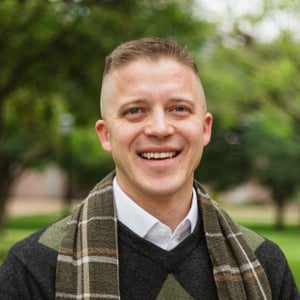
Deputy General Counsel, Office of Texas Governor Greg Abbott
Trevor serves as General Counsel to Governor Greg Abbott. In that role he provides strategic counseling to the State’s Chief Executive Officer on a range of issues under both state and federal law, including litigation involving the Governor.
Before returning to Texas, Trevor worked in private practice in the Washington, D.C. area. At Clement & Murphy, he focused on complex litigation in federal and state courts—from deposing key witnesses before trial to briefing legal issues on appeal—in disputes that presented constitutional law, regulatory, products liability, and contracts issues.
Trevor has also spent years in government service. He previously served as an Assistant Attorney General for the State of Texas, where he represented clients before every level of the United States and Texas judiciaries in a range of areas spanning election law, state sovereign immunity, federal preemption, criminal procedure, and the Establishment Clause. And he has clerked for federal judges on the Fifth Circuit, the Sixth Circuit, and the Supreme Court of the United States.
For several years, Trevor taught as an adjunct professor a 2-credit course on the writ of habeas corpus, with course material covering the Suspension Clause, wartime detention, immigration, and post-conviction review.
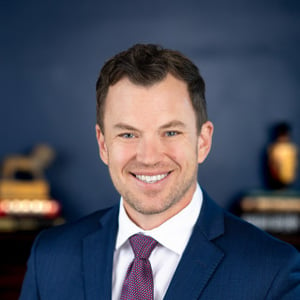
President and Co-Founder, America First Legal Foundation
Gene Hamilton is the President of America First Legal, which he co-founded, and where he was previously the Executive Director, Executive Vice President, and General Counsel. He most recently served as Deputy White House Counsel to President Donald Trump. Earlier in his career, Gene served as Counselor to Attorney General at the U.S. Department of Justice and as Senior Counselor to the Secretary of Homeland Security. He also served as General Counsel on the Senate Judiciary Committee and held several roles at the Department of Homeland Security, including with U.S. Immigration Enforcement, U.S. Customs and Border Protection and the Office of the General Counsel. He holds a B.A. from the University of Georgia and a J.D. from Washington and Lee University School of Law.
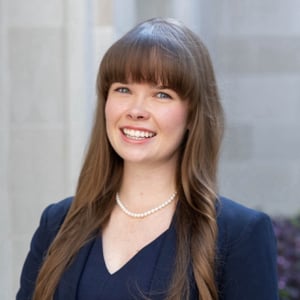
Editor in Chief, Texas Review of Law & Politics, The University of Texas School of Law
Jordan Lamb is a third-year law student at the University of Texas School of Law and the Editor in Chief of the Texas Review of Law & Politics. She previously served as President of the Texas Law Federalist Society.
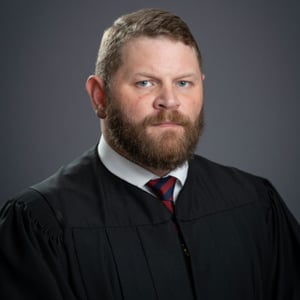
Justice, Texas Supreme Court
James P. Sullivan was appointed to the Texas Supreme Court by Governor Greg Abbott on January 7, 2025, after serving as his General Counsel. He is the proud husband of Alithea and father of Conan. Growing up in Austin, Judge Sully was an extra in the movie "Dazed & Confused." He was a highly unrecruited walk-on at Rice University, until an injury turned him into a debater. Once in law school, he met his wife, Alithea, on the Harvard Law Review. After graduating, he clerked on the D.C. Circuit for Judge Thomas B. Griffith. He also worked under then-Attorney General Abbott in the Office of the Solicitor General, in addition to stints as an adjunct professor at George Mason University and an appellate litigator in private practice.
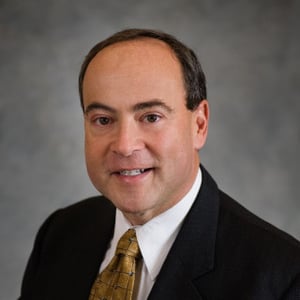
Justice, Supreme Court of Arizona
Clint Bolick was appointed by Governor Doug Ducey in January 2016 to serve on the Arizona Supreme Court and was retained by the voters in 2018 and 2024.
Prior to joining the Court, Justice Bolick litigated constitutional cases in state and federal courts from coast to coast, including the U.S. Supreme Court. Among other positions, he served as Vice President for Litigation at the Goldwater Institute and as Co-founder and Vice President for Litigation at the Institute for Justice. He has litigated in support of school choice, freedom of enterprise, private property rights, freedom of speech, and federalism, and against racial classifications and government subsidies.
Justice Bolick received his Juris Doctor degree from the University of California at Davis, where he has been recognized as a distinguished alumnus, and his Bachelor of Arts degree magna cum laude from Drew University. He serves as a research fellow with the Hoover Institution. Among other honors, he was named one of the 90 Greatest DC Lawyers in the Last 30 Years by Legal Times in 2008, received a Bradley Prize in 2006, and was recognized as one of the nation’s three lawyers of the year by American Lawyer in 2002 for his successful defense of school vouchers in Zelman v. Simmons-Harris.
Justice Bolick is a prolific author of a dozen books and hundreds of articles. Among his most recent books are Unshackled: Freeing America’s K-12 Education System: Immigration Wars: Forging an American Solution, co-authored with former Florida Governor Jeb Bush; and David’s Hammer: The Case for an Activist Judiciary. Bolick serves as an adjunct professor of constitutional law at Arizona State University’s Sandra Day O’Connor School of Law and has served as a lecturer at Harvard University’s John F. Kennedy School of Government.
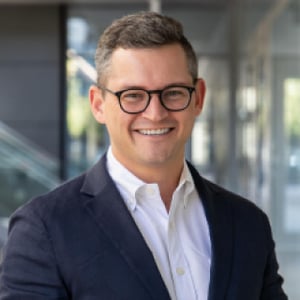
Associate Professor of Law, Sandra Day O'Connor College of Law, Arizona State University
Jonathan Green is an Associate Professor of Law at Arizona State University teaching Civil Procedure and Statutory Interpretation. His scholarship focuses on the history of political and legal thought. He is especially interested in the history of constitutionalism, theories of interpretation, and the concept of judicial power. His research has been published in the Arizona State Law Journal, the Journal of the History of Ideas, Modern Intellectual History, and the Historical Journal.
Prior to joining the ASU faculty in 2024, Professor Green was a Harry A. Bigelow Fellow at the University of Chicago. He previously clerked for Judge Neomi Rao of the U.S. Court of Appeals for the District of Columbia Circuit, and worked as a litigation associate at DLA Piper in Philadelphia.
Professor Green holds a J.D. from Yale Law School, where he was an editor of the Yale Law Journal. He received his PhD from the University of Cambridge, where he was a joint recipient of Prince Consort & Thirwall Prize, awarded annually for the best dissertation in the Cambridge History Faculty. He also received his MPhil from Cambridge, and earned his B.A., summa cum laude, from Northwestern University.
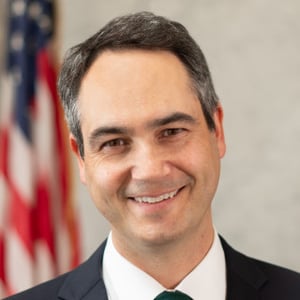
Judge, United States Court of Appeals for the Ninth Circuit
Anthony Johnstone serves as a judge on the United States Court of Appeals for the Ninth Circuit. Judge Johnstone previously served as the Helen and David Mason Professor of Law and an affiliated Professor of Public Administration at the University of Montana, Alexander Blewett III School of Law in Missoula since 2011. As a professor he taught federal and state constitutional law and legislation, as well as a federal judicial clinic. Johnstone also has served as trial and appellate counsel in federal and state courts, including the Ninth Circuit and the Supreme Court of the United States, most recently with Johnstone PLLC. He served the Montana Department of Justice as state solicitor from 2008 to 2011 and assistant attorney general from 2004 to 2008. Johnstone entered practice as an associate at Cravath, Swaine & Moore in New York from 2000 to 2003. Born to Montanans in Minneapolis, Minnesota, Johnstone received his Bachelor of Arts from Yale University in 1995 and his Juris Doctor, with honors, from the University of Chicago Law School in 1999. Following law school, he clerked for Ninth Circuit Judge Sidney R. Thomas in Billings, Montana from 1999 to 2000.
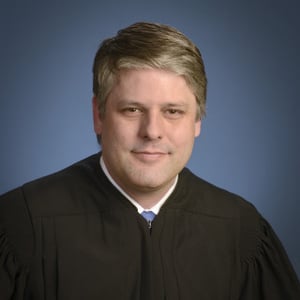
Judge, U.S. Court of Appeals, District of Columbia Circuit
Judge Walker was appointed to the United States Court of Appeals in September 2020. A graduate of Duke University and Harvard Law School, he clerked for then-Judge Brett Kavanaugh and Justice Anthony Kennedy. In 2019, he was appointed to the U.S. District Court for the Western District of Kentucky. Prior to that, he practiced at Gibson Dunn & Crutcher (D.C.) and Dinsmore & Shohl (Louisville). He has taught law in several states and foreign countries.
Justice, Texas Supreme Court
Evan Young is a Justice of the Supreme Court of Texas. Governor Greg Abbott, who appointed Young to fill an unexpired term, swore him into office on November 10, 2021. Justice Young was elected to a full term in November 2022.
Young graduated summa cum laude from Duke University in 1999, where he was inducted into Phi Beta Kappa. He was a British Marshall Scholar at Oxford University, where he completed his studies in 2001 and earned a First Class Honours degree in Modern History, focusing on British constitutional history. He earned his law degree from Yale Law School in 2004.
Young then worked as a lawyer in the judicial and executive branches of the federal government. He first served as a law clerk to Judge J. Harvie Wilkinson III of the U.S. Court of Appeals for the Fourth Circuit, and then to Justice Antonin Scalia at the U.S. Supreme Court. In 2006, after his clerkship with Justice Scalia ended, Justice Young became Counsel to the Attorney General at the U.S. Department of Justice, serving in the Office of the Attorney General under Attorneys General Alberto R. Gonzales and Michael B. Mukasey. While on the Attorney General’s staff, he accepted a detail to the U.S. Embassy in Baghdad, Iraq, where he was the Deputy Rule of Law Coordinator. In that position he worked to assist the Iraqi government in its efforts to strengthen its legal regime, including, for example, its courts and prison system.
Young returned to Texas and joined the Austin office of Baker Botts L.L.P. in 2009. His practice focused on trial and appellate litigation. He argued cases before both the Supreme Court of the United States and the Supreme Court of Texas, as well as many federal and state appellate courts. He represented clients across the country before every level of the state and federal judiciary.
Before joining the Texas Supreme Court, Young was appointed in 2017 by Governor Abbott and confirmed by the Texas Senate to serve as a member of the Texas Judicial Council, which is the policy-making body for the Texas Judiciary. In 2015, the Texas Supreme Court appointed him to the Supreme Court Advisory Committee, which assists the Court in drafting the rules that govern litigation in Texas courts. He served on both until his elevation to the bench.
Justice Young is an elected member of the American Law Institute and a member of the Texas Philosophical Society. He has been an adjunct law professor for many years at the University of Texas School of Law, where he has frequently taught the Federal Courts and Religious Liberty courses. He also has been an adjunct professor at the University of Mississippi School of Law, where he has taught multiple courses involving U.S. Supreme Court history. He served as Chair of the State Bar of Texas Business Law Section, Chair of the National Center for Missing and Exploited Children's Texas Regional Office, and Trustee of the Texas Supreme Court Historical Society.
Justice Young and his wife, Tobi, live in Austin with their daughter.
Sterling Professor of Law, Yale Law School
Akhil Reed Amar is Sterling Professor of Law and Political Science at Yale University, where he teaches constitutional law in both Yale College and Yale Law School. After graduating from Yale College, summa cum laude, in 1980 and from Yale Law School in 1984, and clerking for Judge (later Justice) Stephen Breyer, Amar joined the Yale faculty in 1985 at the age of 26. He is Yale’s only living professor to have won the University’s unofficial triple crown — the Sterling Chair for scholarship, the DeVane Medal for teaching, and the Lamar Award for alumni service.
Amar’s work has won awards from both the American Bar Association and the Federalist Society, and he has been cited by Supreme Court justices across the spectrum in more than 50 cases — tops among scholars under age 70. According to both Fred Shapiro’s landmark 2021 study of lifetime scholarly citations and Heinonline’s most recent tabulation of lifetime law-review citations, Amar is America’s second most-cited legal scholar still under age 70. He is a member of the American Academy of Arts and Sciences and has written widely for popular publications, including The New York Times, The Washington Post, The Wall Street Journal, Time, and The Atlantic. He was an informal consultant to the popular TV show The West Wing and his scholarship has been showcased on many broadcasts, including The Colbert Report, Morning Joe, AC360, Velshi, Fox News @ Night with Shannon Bream, Fareed Zakaria GPS, Erin Burnett Outfront, and Constitution USA with Peter Sagal.
He is the author of more than a hundred law review articles and several books, including The Bill of Rights (1998 — winner of the Yale University Press Governors’ Award), America’s Constitution (2005 — winner of the ABA’s Silver Gavel Award), America’s Unwritten Constitution (2012 — named one of the year’s 100 best nonfiction books by The Washington Post), and The Constitution Today (2016 — named one of the year’s top ten nonfiction books by Time magazine). The first volume of his ambitious trilogy on American constitutional history from the Founding to the present, The Words That Made Us: America’s Constitutional Conversation, 1760-1840, came out in May 2021. The second volume, Born Equal: Remaking America’s Constitution, 1840-1920, will be published in September 2025 and is already available for pre-order. All together, his nonfiction books have won two starred reviews from Publishers Weekly and three starred reviews from Kirkus—tops, it is believed, among legal scholars under age 70. Together with Vikram David Amar (YLS ’88), he has a bi-weekly column on the Supreme Court on the distinguished website SCOTUSblog. Along with Andy Lipka, he co-hosts a popular and free weekly podcast, Amarica’s Constitution, whose listeners are eligible for CLE credit in most American jurisdictions. A wide assortment of his articles and op-eds and video links to many of his public lectures and free online courses may be found at akhilamar.com.
Professor of Law and Faculty Director for the Georgetown Center for the Constitution, Georgetown University Law Center
Stephanie Barclay is a Professor of Law at Georgetown Law School, and the Faculty Director of the Georgetown Center for the Constitution. Her research focuses on the role our different democratic institutions play in protecting minority rights, particularly at the intersection of free speech and religious exercise. Barclay‘s work is published or is forthcoming in leading journals such as the Harvard Law Review, the Chicago Law Review, the University of Pennsylvania Law Review, and the Yale Law Journal Forum. One of her articles was also selected for the 2020 Stanford/Harvard/Yale Junior Faculty Forum. Her work has been featured in many media outlets, including The New York Times, The Wall Street Journal, The Washington Post, USA Today, Bloomberg BNA, The Hill, and Law 360. And her work has also been cited by the U.S. Supreme Court.
Prior to joining Georgetown, Barclay was twice voted Professor of the Year. Barclay has also litigated constitutional cases at both the trial and appellate level, including before the U.S. Supreme Court. Barclay served as a law clerk to Judge N. Randy Smith on the U.S. Court of Appeals for the Ninth Circuit, and to Justice Neil M. Gorsuch of the U.S. Supreme Court.
Barclay is a Faculty Affiliate at the Constitutional Law Center at Stanford Law School; and she is a Nootbaar Fellow at the Nootbaar Institute on Law, Religion, and Ethics at Pepperdine University. She currently serves as the Chair for the AALS Law and Religion Section and as a Member of the Executive Committee for the AALS Constitutional Law Section. She graduated summa cum laude from BYU Law School, where she was elected to the Order of the Coif. She is completing a Ph.D. in Law at Oxford University as a Clarendon Scholar and a Tang Scholar.
Deputy General Counsel, Office of Texas Governor Greg Abbott
Trevor serves as General Counsel to Governor Greg Abbott. In that role he provides strategic counseling to the State’s Chief Executive Officer on a range of issues under both state and federal law, including litigation involving the Governor.
Before returning to Texas, Trevor worked in private practice in the Washington, D.C. area. At Clement & Murphy, he focused on complex litigation in federal and state courts—from deposing key witnesses before trial to briefing legal issues on appeal—in disputes that presented constitutional law, regulatory, products liability, and contracts issues.
Trevor has also spent years in government service. He previously served as an Assistant Attorney General for the State of Texas, where he represented clients before every level of the United States and Texas judiciaries in a range of areas spanning election law, state sovereign immunity, federal preemption, criminal procedure, and the Establishment Clause. And he has clerked for federal judges on the Fifth Circuit, the Sixth Circuit, and the Supreme Court of the United States.
For several years, Trevor taught as an adjunct professor a 2-credit course on the writ of habeas corpus, with course material covering the Suspension Clause, wartime detention, immigration, and post-conviction review.
President and Co-Founder, America First Legal Foundation
Gene Hamilton is the President of America First Legal, which he co-founded, and where he was previously the Executive Director, Executive Vice President, and General Counsel. He most recently served as Deputy White House Counsel to President Donald Trump. Earlier in his career, Gene served as Counselor to Attorney General at the U.S. Department of Justice and as Senior Counselor to the Secretary of Homeland Security. He also served as General Counsel on the Senate Judiciary Committee and held several roles at the Department of Homeland Security, including with U.S. Immigration Enforcement, U.S. Customs and Border Protection and the Office of the General Counsel. He holds a B.A. from the University of Georgia and a J.D. from Washington and Lee University School of Law.
Editor in Chief, Texas Review of Law & Politics, The University of Texas School of Law
Jordan Lamb is a third-year law student at the University of Texas School of Law and the Editor in Chief of the Texas Review of Law & Politics. She previously served as President of the Texas Law Federalist Society.
Justice, Texas Supreme Court
James P. Sullivan was appointed to the Texas Supreme Court by Governor Greg Abbott on January 7, 2025, after serving as his General Counsel. He is the proud husband of Alithea and father of Conan. Growing up in Austin, Judge Sully was an extra in the movie "Dazed & Confused." He was a highly unrecruited walk-on at Rice University, until an injury turned him into a debater. Once in law school, he met his wife, Alithea, on the Harvard Law Review. After graduating, he clerked on the D.C. Circuit for Judge Thomas B. Griffith. He also worked under then-Attorney General Abbott in the Office of the Solicitor General, in addition to stints as an adjunct professor at George Mason University and an appellate litigator in private practice.
Sterling Professor of Law, Yale Law School
Akhil Reed Amar is Sterling Professor of Law and Political Science at Yale University, where he teaches constitutional law in both Yale College and Yale Law School. After graduating from Yale College, summa cum laude, in 1980 and from Yale Law School in 1984, and clerking for Judge (later Justice) Stephen Breyer, Amar joined the Yale faculty in 1985 at the age of 26. He is Yale’s only living professor to have won the University’s unofficial triple crown — the Sterling Chair for scholarship, the DeVane Medal for teaching, and the Lamar Award for alumni service.
Amar’s work has won awards from both the American Bar Association and the Federalist Society, and he has been cited by Supreme Court justices across the spectrum in more than 50 cases — tops among scholars under age 70. According to both Fred Shapiro’s landmark 2021 study of lifetime scholarly citations and Heinonline’s most recent tabulation of lifetime law-review citations, Amar is America’s second most-cited legal scholar still under age 70. He is a member of the American Academy of Arts and Sciences and has written widely for popular publications, including The New York Times, The Washington Post, The Wall Street Journal, Time, and The Atlantic. He was an informal consultant to the popular TV show The West Wing and his scholarship has been showcased on many broadcasts, including The Colbert Report, Morning Joe, AC360, Velshi, Fox News @ Night with Shannon Bream, Fareed Zakaria GPS, Erin Burnett Outfront, and Constitution USA with Peter Sagal.
He is the author of more than a hundred law review articles and several books, including The Bill of Rights (1998 — winner of the Yale University Press Governors’ Award), America’s Constitution (2005 — winner of the ABA’s Silver Gavel Award), America’s Unwritten Constitution (2012 — named one of the year’s 100 best nonfiction books by The Washington Post), and The Constitution Today (2016 — named one of the year’s top ten nonfiction books by Time magazine). The first volume of his ambitious trilogy on American constitutional history from the Founding to the present, The Words That Made Us: America’s Constitutional Conversation, 1760-1840, came out in May 2021. The second volume, Born Equal: Remaking America’s Constitution, 1840-1920, will be published in September 2025 and is already available for pre-order. All together, his nonfiction books have won two starred reviews from Publishers Weekly and three starred reviews from Kirkus—tops, it is believed, among legal scholars under age 70. Together with Vikram David Amar (YLS ’88), he has a bi-weekly column on the Supreme Court on the distinguished website SCOTUSblog. Along with Andy Lipka, he co-hosts a popular and free weekly podcast, Amarica’s Constitution, whose listeners are eligible for CLE credit in most American jurisdictions. A wide assortment of his articles and op-eds and video links to many of his public lectures and free online courses may be found at akhilamar.com.
Professor of Law and Faculty Director for the Georgetown Center for the Constitution, Georgetown University Law Center
Stephanie Barclay is a Professor of Law at Georgetown Law School, and the Faculty Director of the Georgetown Center for the Constitution. Her research focuses on the role our different democratic institutions play in protecting minority rights, particularly at the intersection of free speech and religious exercise. Barclay‘s work is published or is forthcoming in leading journals such as the Harvard Law Review, the Chicago Law Review, the University of Pennsylvania Law Review, and the Yale Law Journal Forum. One of her articles was also selected for the 2020 Stanford/Harvard/Yale Junior Faculty Forum. Her work has been featured in many media outlets, including The New York Times, The Wall Street Journal, The Washington Post, USA Today, Bloomberg BNA, The Hill, and Law 360. And her work has also been cited by the U.S. Supreme Court.
Prior to joining Georgetown, Barclay was twice voted Professor of the Year. Barclay has also litigated constitutional cases at both the trial and appellate level, including before the U.S. Supreme Court. Barclay served as a law clerk to Judge N. Randy Smith on the U.S. Court of Appeals for the Ninth Circuit, and to Justice Neil M. Gorsuch of the U.S. Supreme Court.
Barclay is a Faculty Affiliate at the Constitutional Law Center at Stanford Law School; and she is a Nootbaar Fellow at the Nootbaar Institute on Law, Religion, and Ethics at Pepperdine University. She currently serves as the Chair for the AALS Law and Religion Section and as a Member of the Executive Committee for the AALS Constitutional Law Section. She graduated summa cum laude from BYU Law School, where she was elected to the Order of the Coif. She is completing a Ph.D. in Law at Oxford University as a Clarendon Scholar and a Tang Scholar.
Deputy General Counsel, Office of Texas Governor Greg Abbott
Trevor serves as General Counsel to Governor Greg Abbott. In that role he provides strategic counseling to the State’s Chief Executive Officer on a range of issues under both state and federal law, including litigation involving the Governor.
Before returning to Texas, Trevor worked in private practice in the Washington, D.C. area. At Clement & Murphy, he focused on complex litigation in federal and state courts—from deposing key witnesses before trial to briefing legal issues on appeal—in disputes that presented constitutional law, regulatory, products liability, and contracts issues.
Trevor has also spent years in government service. He previously served as an Assistant Attorney General for the State of Texas, where he represented clients before every level of the United States and Texas judiciaries in a range of areas spanning election law, state sovereign immunity, federal preemption, criminal procedure, and the Establishment Clause. And he has clerked for federal judges on the Fifth Circuit, the Sixth Circuit, and the Supreme Court of the United States.
For several years, Trevor taught as an adjunct professor a 2-credit course on the writ of habeas corpus, with course material covering the Suspension Clause, wartime detention, immigration, and post-conviction review.
President and Co-Founder, America First Legal Foundation
Gene Hamilton is the President of America First Legal, which he co-founded, and where he was previously the Executive Director, Executive Vice President, and General Counsel. He most recently served as Deputy White House Counsel to President Donald Trump. Earlier in his career, Gene served as Counselor to Attorney General at the U.S. Department of Justice and as Senior Counselor to the Secretary of Homeland Security. He also served as General Counsel on the Senate Judiciary Committee and held several roles at the Department of Homeland Security, including with U.S. Immigration Enforcement, U.S. Customs and Border Protection and the Office of the General Counsel. He holds a B.A. from the University of Georgia and a J.D. from Washington and Lee University School of Law.
Editor in Chief, Texas Review of Law & Politics, The University of Texas School of Law
Jordan Lamb is a third-year law student at the University of Texas School of Law and the Editor in Chief of the Texas Review of Law & Politics. She previously served as President of the Texas Law Federalist Society.
Justice, Texas Supreme Court
James P. Sullivan was appointed to the Texas Supreme Court by Governor Greg Abbott on January 7, 2025, after serving as his General Counsel. He is the proud husband of Alithea and father of Conan. Growing up in Austin, Judge Sully was an extra in the movie "Dazed & Confused." He was a highly unrecruited walk-on at Rice University, until an injury turned him into a debater. Once in law school, he met his wife, Alithea, on the Harvard Law Review. After graduating, he clerked on the D.C. Circuit for Judge Thomas B. Griffith. He also worked under then-Attorney General Abbott in the Office of the Solicitor General, in addition to stints as an adjunct professor at George Mason University and an appellate litigator in private practice.
Judge, United States District Court, Southern District of Florida
On April 4, 2019, Judge Altman was confirmed to a seat on the U.S. District Court for the Southern District of Florida. At 36, he became the youngest federal district court judge in the country—and the youngest federal judge ever appointed in the Southern District of Florida.
Judge Altman received a BA from Columbia University, where he played quarterback on the football team and pitched for the baseball team—earning All-Ivy honors. Judge Altman received his JD from the Yale Law School, where he was projects editor of the Yale Law Journal. After law school, the Judge clerked on the 11th Circuit Court of Appeals for the Honorable Stanley Marcus.
Judge Altman then became a federal prosecutor at the U.S. Attorney’s Office in Miami, where he twice received the Director of the Executive Office of U.S. Attorneys’ Award for Superior Performance by a federal prosecutor. In 2013, Judge Altman was named “Federal Prosecutor of the Year” by the Miami-Dade Chiefs of Police and the Law Enforcement Officers’ Charitable Foundation.
In 2014, Judge Altman became a partner at the Miami law firm of Podhurst Orseck, where he represented the victims of airplane crashes and bank fraud conspiracies.
Judge, United States Court of Appeals, Eleventh Circuit
On March 20, 2018, Judge Elizabeth L. Branch (Lisa) was sworn in as a United States Circuit Judge for the Eleventh Circuit.
Judge Branch attended and graduated from Davidson College in North Carolina (B.A., cum laude, 1990), and Emory University School of Law (J.D., with distinction, 1994).
After graduating from law school, Judge Branch served as a federal law clerk to The Honorable J. Owen Forrester of the U.S. District Court for the Northern District of Georgia from 1994 to 1996. Following her clerkship, Judge Branch joined the litigation department of Smith, Gambrell & Russell, LLP in Atlanta as an associate and then a partner.
From 2004 to 2008, Judge Branch was a senior official in the Administration of President George W. Bush in Washington, D.C. She served first as the Associate General Counsel for Rules and Legislation at the U.S. Department of Homeland Security and then as the Counselor to the Administrator of the Office of Information and Regulatory Affairs at the U. S. Office of Management and Budget.
She returned to Smith Gambrell in 2008 as a litigation partner. Judge Branch then was appointed to the Court of Appeals of Georgia by Governor Nathan Deal, taking office on September 4, 2012, where she served until March 19, 2018.
Judge Branch is a member of the Board of Advisors of the Atlanta Lawyers Chapter for the Federalist Society for Law and Public Policy Studies.
United States Senator, Texas
Ted Cruz represents 28 million Texans in the U.S. Senate as a passionate fighter for limited government and economic growth. He has authored 39 legislative measures signed into law. Recent victories include expanding 529 college savings accounts to allow parents to save for K–12 public, private, and religious education, leading the effort to repeal Obamacare’s individual mandate, imposing sanctions on terrorists who use civilians as human shields, designating North Korea as a state sponsor of terrorism, reauthorizing and reforming NASA, ensuring the availability of additional records to help solve civil rights cold cases, supporting thousands of Texas jobs, and leading the fight to confirm principled constitutionalists to our courts.
Senator Cruz is a graduate of Princeton University and Harvard Law School, a former law clerk to Chief Justice William Rehnquist, and former solicitor general of Texas. He has argued nine cases before the Supreme Court. In November of 2018, he was re-elected to the Senate by the people of Texas.
Judge, United States Court of Appeals, Eighth Circuit
Judge, United States Court of Appeals, Ninth Circuit
Judge Nelson was confirmed to the Ninth Circuit in October 2018, as the youngest Circuit Judge to serve from Idaho and he has chambers in his hometown of Idaho Falls. Prior to his confirmation, Judge Nelson served for nine years as General Counsel of Idaho Falls-based Melaleuca, Inc., a consumer goods company. He previously worked in Washington, DC, where he served in all three branches of the federal government, including as Special Counsel for Supreme Court nominations to the Ranking Member of the Senate Judiciary Committee; Deputy General Counsel to the White House Office of Management and Budget; Deputy Assistant Attorney General in the Environment and Natural Resources Division of the United States Department of Justice; and a law clerk to Judge Henderson of the United States Court of Appeals for the D.C. Circuit. He has argued in most of the federal courts of appeals and worked on dozens of Supreme Court briefs. He started in the Washington, DC office of Sidley Austin as an appellate lawyer, after clerking for Judges Mosk and Brower of the Iran-U.S. Claims Tribunal at The Hague, and for now-Judge Tom Griffith, then-Senate Legal Counsel, during the impeachment trial of President Clinton. Judge Nelson earned his B.A. from Brigham Young University and his J.D., with honors, from BYU Law School. Judge Nelson has been a member of the Federalist Society since 1998.
Judge, United States Court of Appeals, Fifth Circuit
Andrew Oldham is a Circuit Judge on the United States Court of Appeals for the Fifth Circuit. Before ascending to the bench, Judge Oldham served as General Counsel to Texas Governor Greg Abbott, where he advised the Governor on a range of issues under federal and state law and managed litigation in which the Governor was an interested party. Before that he served as Deputy Solicitor General for the State of Texas, where he represented Texas in federal courts across the country, including twice before the United States Supreme Court. Before moving to Texas, Judge Oldham was an attorney at Kellogg Hansen Todd Figel & Frederick in Washington, D.C. His practice focused on appellate litigation in federal courts of appeals throughout the country. Before entering private practice, Judge Oldham served as a law clerk to Justice Samuel A. Alito, Jr., at the Supreme Court of the United States and to Judge David B. Sentelle of the U.S. Court of Appeals for the District of Columbia Circuit. He also worked as an attorney-adviser in the Office of Legal Counsel at the U.S. Department of Justice from 2006 to 2008. Judge Oldham earned a B.A. from the University of Virginia with highest honors, a Truman Scholarship for graduate school, an M. Phil., first class (with distinction), from Cambridge University, and a J.D., magna cum laude, from Harvard Law School.
United States District Judge, Northern District of Illinois
Prior to being appointed judge, Hon. Martha Pacold served as Deputy General Counsel of the U.S. Department of the Treasury. Before that, Ms. Pacold was an associate and then a partner in the Chicago office of Bartlit Beck Herman Palenchar & Scott, LLP. She also was a Lecturer in Law at the University of Chicago Law School. Earlier in her career, Judge Pacold served as a Special Assistant U.S. Attorney for the Eastern District of Virginia and as Counsel to the Attorney General at the U.S. Department of Justice. Judge Pacold served as a law clerk to Justice Clarence Thomas of the Supreme Court of the United States, to Judge Jay S. Bybee of the U.S. Court of Appeals for the Ninth Circuit, and to Judge A. Raymond Randolph of the U.S. Court of Appeals for the District of Columbia Circuit. Judge Pacold earned her B.A., with highest distinction, from Indiana University, where she was inducted into Phi Beta Kappa, and her J.D., with honors, from the University of Chicago Law School, where she was inducted into the Order of the Coif and served as Editor-in-Chief of the University of Chicago Law Review.
Judge, United States District Court, Eastern District of Arkansas
Lee Philip Rudofsky is a judge on the United States District Court for the Eastern District of Arkansas. Prior to his 2019 appointment by President Trump, Judge Rudofsky served as the Solicitor General of Arkansas, an Assistant General Counsel at Walmart, a Senior Litigation Associate at Kirkland & Ellis, and counsel to several Republican political campaigns. Today, in addition to his judicial service, Judge Rudofsky teaches law school classes on founding-era constitutional history and, separately, speaks to students across the country about the October 7th Massacre and the subsequent Israeli response. In 2024, Judge Rudofsky helped establish an annual judicial education mission to Israel that offers American judges the opportunity to learn first-hand about the Israeli legal system, Israeli society, and legal issues related to the Israel-Hamas war.
Judge, United States Court of Appeals, Eighth Circuit
David Stras became a judge on the United States Court of Appeals for the Eighth Circuit on January 31, 2018. Before serving on the Eighth Circuit, Judge Stras was an Associate Justice of the Minnesota Supreme Court, a position he occupied from July 1, 2010 until his appointment to the Eighth Circuit.
Prior to becoming a judge, Stras was a member of the faculty of the University of Minnesota Law School from 2004 through 2010. He taught and wrote in the areas of federal courts and jurisdiction, constitutional law, criminal law, and law and politics.
Judge Stras received his Bachelor of Arts degree, with highest distinction, in 1995 and his Master of Business Administration in 1999, both from the University of Kansas. He also received his law degree from the University of Kansas School of Law in 1999, where he served as Editor-in-Chief of the Criminal Procedure Edition of the Kansas Law Review.
Following law school, Stras clerked for The Honorable Melvin Brunetti of the United States Court of Appeals for the Ninth Circuit and then for The Honorable J. Michael Luttig of the United States Court of Appeals for the Fourth Circuit.
From 2001 to 2002, he practiced white-collar criminal and appellate litigation with the Washington, D.C., office of Sidley Austin Brown & Wood. Following his year in practice, he clerked for The Honorable Clarence Thomas of the Supreme Court of the United States.
Judge, United States Court of Appeals, Sixth Circuit
Amul R. Thapar serves as a judge on the United States Court of Appeals for the Sixth Circuit. His judicial career began in 2007 when President George W. Bush nominated him to serve on the Eastern District of Kentucky, making him the first South Asian Article III judge in American history. In 2017, he became President Donald J. Trump’s first appellate court nominee.
Before joining the bench, Judge Thapar served as the United States Attorney for the Eastern District of Kentucky. While United States Attorney, Judge Thapar worked on the Attorney General’s Advisory Committee (“AGAC”) and chaired the AGAC’s Controlled Substances and Asset Forfeiture subcommittee. He also served on the Terrorism and National Security subcommittee, the Violent Crime subcommittee, and the Child Exploitation working group.
Judge Thapar has worked in private practice, at Williams & Connolly in Washington, D.C., and Squire, Sanders & Dempsey in Cincinnati, Ohio. He also served as an Assistant United States Attorney in both the Southern District of Ohio and the District of Columbia.
Judge Thapar received his undergraduate degree from Boston College and his law degree from the University of California, Berkeley. After graduating, Judge Thapar worked as a law clerk to the Honorable S. Arthur Spiegel of the United States District Court for the Southern District of Ohio, and the Honorable Nathaniel R. Jones of the United States Court of Appeals for the Sixth Circuit.
Judge Thapar has also published in the Yale Law Journal, Michigan Law Review, and Catholic University Law Review. He teaches courses on originalism, the Federalists and Anti-Federalists, and legal writing at Notre Dame Law School, the University of Virginia School of Law, and Vanderbilt Law School.
Justice, Texas Supreme Court
Evan Young is a Justice of the Supreme Court of Texas. Governor Greg Abbott, who appointed Young to fill an unexpired term, swore him into office on November 10, 2021. Justice Young was elected to a full term in November 2022.
Young graduated summa cum laude from Duke University in 1999, where he was inducted into Phi Beta Kappa. He was a British Marshall Scholar at Oxford University, where he completed his studies in 2001 and earned a First Class Honours degree in Modern History, focusing on British constitutional history. He earned his law degree from Yale Law School in 2004.
Young then worked as a lawyer in the judicial and executive branches of the federal government. He first served as a law clerk to Judge J. Harvie Wilkinson III of the U.S. Court of Appeals for the Fourth Circuit, and then to Justice Antonin Scalia at the U.S. Supreme Court. In 2006, after his clerkship with Justice Scalia ended, Justice Young became Counsel to the Attorney General at the U.S. Department of Justice, serving in the Office of the Attorney General under Attorneys General Alberto R. Gonzales and Michael B. Mukasey. While on the Attorney General’s staff, he accepted a detail to the U.S. Embassy in Baghdad, Iraq, where he was the Deputy Rule of Law Coordinator. In that position he worked to assist the Iraqi government in its efforts to strengthen its legal regime, including, for example, its courts and prison system.
Young returned to Texas and joined the Austin office of Baker Botts L.L.P. in 2009. His practice focused on trial and appellate litigation. He argued cases before both the Supreme Court of the United States and the Supreme Court of Texas, as well as many federal and state appellate courts. He represented clients across the country before every level of the state and federal judiciary.
Before joining the Texas Supreme Court, Young was appointed in 2017 by Governor Abbott and confirmed by the Texas Senate to serve as a member of the Texas Judicial Council, which is the policy-making body for the Texas Judiciary. In 2015, the Texas Supreme Court appointed him to the Supreme Court Advisory Committee, which assists the Court in drafting the rules that govern litigation in Texas courts. He served on both until his elevation to the bench.
Justice Young is an elected member of the American Law Institute and a member of the Texas Philosophical Society. He has been an adjunct law professor for many years at the University of Texas School of Law, where he has frequently taught the Federal Courts and Religious Liberty courses. He also has been an adjunct professor at the University of Mississippi School of Law, where he has taught multiple courses involving U.S. Supreme Court history. He served as Chair of the State Bar of Texas Business Law Section, Chair of the National Center for Missing and Exploited Children's Texas Regional Office, and Trustee of the Texas Supreme Court Historical Society.
Justice Young and his wife, Tobi, live in Austin with their daughter.

Luncheon and Panel II: 150 Years Later: The Texas Supreme Court at a Milestone
Arlington, TXThe Second Amendment and the Supreme Court
Houston Lawyer Chapter
Houston, TXPanel II: Federalism and Subsidiarity: Decentralizing Decisions and Balancing Power from Nation to Neighborhood
Clint Bolick, Jonathan Green, Anthony Johnstone, Justin Reed Walker, Evan A. Young
Featuring: Hon. Clint Bolick, Justice, Arizona Supreme Court Hon. Anthony Johnstone, United States Court of Appeals...
A Court in Transition: A Conversation with Justice Kyle Hawkins
Dallas Lawyer Chapter
Dallas, TXShowcase Panel 2: Immigration and Originalism
Akhil Reed Amar, Stephanie Barclay, Trevor W. Ezell, Gene P. Hamilton, Jordan J. Lamb, James P. Sullivan
CLE credit for this event is available at On-Demand CLE. What do the tools of originalism...
Showcase Panel 2: Immigration and Originalism
Akhil Reed Amar, Stephanie Barclay, Trevor W. Ezell, Gene P. Hamilton, Jordan J. Lamb, James P. Sullivan
CLE credit for this event is available at On-Demand CLE. What do the tools of originalism...
An Evening with Fifth Circuit Court of Appeals Judge Don Willett and Texas Supreme Court Justice Evan Young
San Antonio Lawyer Chapter and the San Antonio Bar Association
San Antonio, TXHon. Robert H. Bork Memorial Roundtable: "A Person Without Prejudice Against Any Group"— The American Tradition of Religious Respect
Roy Kalman Altman, Lisa Branch, Ted Cruz, Ray Gruender, Ryan D. Nelson, Andrew Oldham, Martha M. Pacold, Lee Rudofsky, David R. Stras, Amul R. Thapar, Evan A. Young
CLE credit for this event is available at On-Demand CLE. In 1987, Howard G. Crane —...
Hon. Robert H. Bork Memorial Roundtable: "A Person Without Prejudice Against Any Group"— The American Tradition of Religious Respect
2025 National Lawyers Convention
Washington, DCShowcase Panel 2: Immigration and Originalism
2025 National Lawyers Convention
Washington, DC