

Vice President, Edwin Meese III Institute for the Rule of Law, Advancing American Freedom
John G. Malcolm oversees Advancing American Freedom’s work to increase understanding of the Constitution and the rule of law as Vice President of the organization’s Edwin Meese III Institute for the Rule of Law. Malcolm brings to the challenge a wealth of legal expertise and experience in both the public and private sectors.
Prior to joining Advancing American Freedom in 2025, Malcolm was the Vice President of the Institute for Constitutional Government and the Director of the Meese Center for Legal and Judicial Studies at the Heritage Foundation. Prior to joining Heritage in 2012, Malcolm was general counsel at the U.S. Commission on International Religious Freedom, as well as a distinguished practitioner in residence at Pepperdine Law School. From 2004 to 2009, Malcolm was executive vice president and director of worldwide anti-piracy operations for the Motion Picture Association.
Malcolm served as a deputy assistant attorney general in the Department of Justice’s Criminal Division from 2001 to 2004, where he oversaw sections on computer crime and intellectual property, domestic security, child exploitation and obscenity, and special investigations. Immediately prior to that, he was a founding partner in the Atlanta law firm of Malcolm & Schroeder, LLP.
From 1990 to 1997, Malcolm was an assistant U.S. attorney in Atlanta, assigned to the fraud and public corruption section, and also an associate independent counsel, investigating fraud and abuse in the Department of Housing and Urban Development. He was honored with the Director’s Award for Superior Performance for his work in connection with the successful prosecution of Walter Leroy Moody Jr., who assassinated an 11th Circuit judge and the head of the Savannah chapter of the NAACP.
A graduate of Harvard Law School and Columbia College, Malcolm began his career as a law clerk to a federal district court judge and a federal appellate court judge, and as an associate at the Atlanta-based law firm of Sutherland, Asbill & Brennan (new Eversheds Sutherland).
Malcolm, who resides in Washington, D.C., serves on the Board of Trustees of the Washington National Opera and is a Senate-confirmed member of the Board of Directors of the Legal Services Corporation, the largest funder of civil legal aid in the United States.
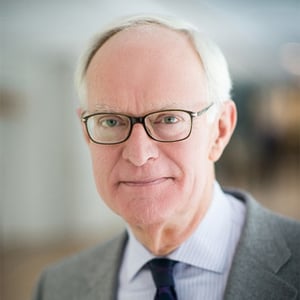
Distinguished Fellow, Hudson Institute
Christopher DeMuth is a distinguished fellow at Hudson Institute. He was president of the American Enterprise Institute for Public Policy Research (AEI) from 1986 to 2008 and was the D.C. Searle Senior Fellow at AEI from 2008 to 2011.
Mr. DeMuth was raised in Kenilworth, Illinois, and attended the Lawrenceville School (1964), Harvard College (A.B. 1968), and the University of Chicago Law School (J.D. 1973). He served as staff assistant to President Richard M. Nixon from 1969 to 1970, working first for Daniel P. Moynihan (then assistant to the President for Urban Affairs) on urban policy matters and then as chairman of the White House Task Force on Environmental Policy. Following law school, he practiced regulatory, antitrust, and general corporate law with Sidley & Austin in Chicago (1973-1976) and was associate general counsel of the Consolidated Rail Corporation (Conrail) in Philadelphia (1976-1977).
From 1977 to 1981, Mr. DeMuth was lecturer in public policy at the Kennedy School of Government at Harvard University, and director of the Harvard Faculty Project on Regulation. There he taught courses on law, economics, and regulatory policy and conducted and sponsored research on health, safety, environmental, and economic regulation.
Returning to Washington in 1981, Mr. DeMuth served as administrator for information and regulatory affairs in the U.S. Office of Management and Budget, and as executive director of the Presidential Task Force on Regulatory Relief during President Ronald Reagan’s first term of office. From 1984 to 1986, he was managing director of Lexecon Inc., a law-and-economics consulting firm; in 1986, he was also publisher and editor-in-chief of Regulation magazine. He was elected president of the American Enterprise Institute in December 1986.
Many of Mr. DeMuth’s articles, lectures, and occasional talks are posted on his website (https://www.ccdemuth.com).
Senior Fellow, Governance Studies, The Brookings Institution
William A. Galston holds the Ezra K. Zilkha Chair in the Brookings Institution’s Governance Studies Program, where he serves as a senior fellow. A former policy advisor to President Clinton and presidential candidates, Galston is an expert on domestic policy, political campaigns, and elections. His current research focuses on designing a new social contract and the implications of political polarization.
He is also College Park Professor at the University of Maryland. Prior to January 2006, he was Saul Stern Professor and Acting Dean at the School of Public Policy, University of Maryland, director of the Institute for Philosophy and Public Policy, founding director of the Center for Information and Research on Civic Learning and Engagement (CIRCLE), and executive director of the National Commission on Civic Renewal, co-chaired by William Bennett and Sam Nunn. A participant in six presidential campaigns, he served from 1993 to 1995 as Deputy Assistant to President Clinton for Domestic Policy. From 1969 to 1970 Galston served as a member of the United States Marine Corps and was honorably discharged.
Galston is the author of eight books and more than 100 articles in the fields of political theory, public policy, and American politics. His most recent books are Liberal Pluralism (Cambridge, 2002), The Practice of Liberal Pluralism (Cambridge, 2004), and Public Matters (Rowman & Littlefield, 2005). A winner of the American Political Science Association’s Hubert H. Humphrey Award, he was elected a Fellow of the American Academy of Arts and Sciences in 2004.
Galston has appeared on all the principal television networks and is a frequent commentator on NPR. He writes a weekly column for the Wall Street Journal.

James Madison Distinguished Professor of Law and Class of 1941 Research Professor of Law, University of Virginia School of Law
Professor John C. Harrison is the James Madison Distinguished Professor of Law and Class of 1941 Research Professor of Law at the University of Virginia School of Law. He joined the faculty at University of Virginia in 1993 as an associate professor of law after a distinguished career with the U.S. Department of Justice. His teaching subjects include constitutional history, federal courts, remedies, corporations, civil procedure, legislation and property. In 2008 he was on leave from the Law School to serve as counselor on international law in the Office of the Legal Adviser at the U.S. Department of State.
A 1977 graduate of the University of Virginia, Harrison earned his law degree in 1980 at Yale, where he served as editor of the Yale Law Journal and editor and articles editor of the Yale Studies in World Public Order. He was an associate at Patton Boggs & Blow in Washington, D.C., and clerked for Judge Robert Bork on the U.S. Court of Appeals for the District of Columbia Circuit. He worked with the Department of Justice from 1983-93, serving in numerous capacities, including deputy assistant attorney general in the Office of Legal Counsel (1990-93).

John S. Battle Professor of Law, University of Virginia School of Law
Julia D. Mahoney teaches courses in property, government finance, constitutional law and nonprofit organizations. A graduate of Yale Law School, she joined the University of Virginia faculty as an associate professor in 1999 and is now John S. Battle Professor of Law. She has also taught at the University of Southern California Law School and the University of Chicago Law School, and before entering the legal academy, practiced law at the New York firm Wachtell, Lipton, Rosen & Katz. Her scholarly articles include works on land preservation, eminent domain, health care reform and property rights in human biological materials.
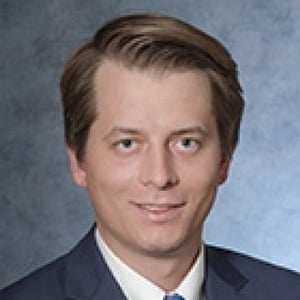
Deputy Attorney General, Virginia Attorney General’s Office

Carmack Waterhouse Professor of Law and Economics, Georgetown University Law Center
David A. Super’s research focuses on Administrative Law, Constitutional Law, Legislation (including the federal budget), Local Government Law, and Public Welfare Law. He teaches these subjects as well as Civil Procedure, Contracts, Evidence, Property, and Torts. In addition to Georgetown, he has also taught law at Columbia, Harvard, Howard, Maryland, Penn, Washington & Lee, and Yale. Prior to entering the legal academy, he served for several years as the general counsel for the Center on Budget and Policy Priorities and worked for the National Health Law Program and Community Legal Services in Philadelphia. He also was a recipient of the Frank F. Flegal Excellence in Teaching Award in 2018.

Distinguished Fellow, Energy Policy Research Foundation
Diana Furchtgott-Roth, an Oxford-educated economist, is an Adjunct Professor at George Washington University and a Distinguished Fellow at the Energy Policy Research Foundation. She writes and comments regularly on energy, trade law, tariff authority, and regulatory policy, including recent work on Section 301 and executive trade power. From 2022 until February 2026, Diana headed the Center for Energy, Climate, and Environment at The Heritage Foundation. In President Trump's first term, she was Deputy Assistant Secretary for Research and Technology at the U.S. Department of Transportation and Acting Assistant Secretary for Economic Policy at the U.S. Department of Treasury. She served in the White House under Presidents Reagan, George H.W. Bush, and George W. Bush, including as Chief of Staff of the President's Council of Economic Advisers and Chief Economist of the U.S. Department of Labor, and has testified before Congress on economic and regulatory policy. Diana is the author or coauthor of six books, including Regulating to Disaster, and hundreds of articles in The Wall Street Journal, The Washington Post, The New York Times, National Review, Forbes, the UK’s Daily Telegraph and the New York Post.

Plenary Session 1: Executive Power in Action– A View of Presidential Priorities from Trump 45 & 47
Featuring: Hon. Jonathan Berry, Solicitor, U.S. Department of Labor Hon. David Fotouhi, Deputy Administrator, U.S....
Welcome & Opening Remarks
Featuring: Hon. Stanley E. Woodward Jr., Associate Attorney General, U.S. Department of Justice
Topics
Inside the Oral Argument of Trump v. CASA: Will the Court Rein in Universal Injunctions?
On May 15, 2025, the U.S. Supreme Court heard oral arguments in Trump v. CASA, Inc.,...
Topics
Religious Liberty Update on Congressional and Executive Branch Actions
Congress On May 19, 2022, Rep. Debbie Lesko (R-AZ) introduced the Women’s Bill of Rights....
The Problem with the Proliferation of Collateral Consequences
John G. Malcolm
Note from the Editor: This article discusses collateral consequences of criminal convictions and argues that...
Panel III: The Safety Net and Poverty
Christopher C. DeMuth, William A. Galston, John C. Harrison, Julia D. Mahoney, Thomas Sanford, David A. Super
Most agree that society should take care of its neediest members. The question is how...
Topics
Everyone Gets Taken In By The Poverty Scam
At the Manhattan Contrarian blog, one of my favorite themes is the government's "poverty" scam—that is,...
Should the Minimum Wage Be Raised? - Short Video
Diana Furchtgott-Roth
Ms. Diana Furchtgott-Roth, Senior Fellow, Manhattan Institute for Policy Research, former chief economist, U.S. Department...