

Partner, Earth & Water Law
Susan Bodine is a partner at Earth & Water Law.
Susan Bodine is a former Assistant Administrator for EPA’s Office of Enforcement and Compliance Assurance (OECA). Prior to this position, Susan served as Chief Counsel for the Senate Committee on Environment and Public Works and previously worked for the House Committee on Transportation and Infrastructure.
This is Susan’s second position at EPA, having served as Assistant Administrator for the Office of Solid Waste and Emergency Response (now the Office of Land and Emergency Management) from 2006 to 2009.
Susan has also practiced environmental law at Covington and Burling LLP and at Barnes and Thornburg LLP.
Susan is a graduate of Princeton University and the University of Pennsylvania School of Law.
President, Environmental Law Institute
In September 2015, Scott Fulton was selected as ELI’s fifth President. Previously, Mr. Fulton was a Principal at the environmental law firm Beveridge & Diamond, P.C., and served as General Counsel of the U.S. Environmental Protection Agency (EPA) and in a number of other high-ranking government leadership positions.
Scott has a steadfast commitment to ensuring that ELI’s core functions as a convener, educator, publisher of legal scholarship and policy dialogue, and research engine remain a sound foundation on which to build for the future. He also is focused on making sure that ELI is adapting and modernizing in alignment with a rapidly changing world. Under his leadership, ELI has:
Mr. Fulton’s Past Record of Service
In addition to his role as EPA’s General Counsel, Mr. Fulton served in a number of other key leadership roles in both Republican and Democratic Administrations, including as Acting EPA Deputy Administrator, head of EPA’s Office of International Affairs, Judge on the Environmental Appeals Board, and head of the Agency’s enforcement program. He also served as Assistant Chief of the Environmental Enforcement Section of the U.S. Department of Justice (DOJ) Environment and Natural Resources Division. An international expert on environmental governance and rule of law, he serves as a member of the United Nations Advisory Council on Environmental Justice and teaches International Environmental Governance as an adjunct professor at George Washington School of Law. He received the two highest awards given by the U.S. government for outstanding leadership—the Presidential Meritorious Executive Service Award, and the Presidential Distinguished Executive Service Award—and has been inducted into the American College of Environmental Lawyers.
Highlights of Mr. Fulton’s EPA career include:

Managing Co-Founder, Water Finance Exchange
Hank has served in many areas of environmental business and policy. His career in the environmental policy world has included leadership positions at the U.S. Environmental Protection Agency as COO (Deputy Administrator) from 1989-1993. During his time with the EPA he oversaw the development of innovative air and water programs to prevent pollution, including the development of the Energy Star program and implementation of market based trading programs under the 1990 Clean Air Act amendments. He has also served at the U.S. Department of Justice as Assistant Attorney General in charge of the Environment and Natural Resources Division from 1983-87.
In business and investing, Hank has served as Senior Vice President in charge of acquisitions and other divisions of Safety-Kleen, a billion-dollar environmental service company. He has also served as Managing Partner of SAIL Capital Partners and Vice President of William D. Ruckelshaus Associates, which co-managed the successful Environmental Venture Fund. As Co-Founder of Capital E, LLC, a strategic consultancy, he advised Fortune 100 and early stage ventures on sustainable growth strategies. He also previously served as CEO of the Global Environment & Technology Foundation (GETF).
Hank has held numerous Board seats over the years. These positions include serving as Managing Director of the US Water Partnership, Chairman of the Board of WaterHealth International, Co-Founder of the American Council on Renewable Energy and Member of the Board of the Global Water Challenge. He served as Commissioner of the National Commission on Energy Policy, has advised several Cabinet Secretaries and serves on the Advisory Board to the National Renewable Energy Lab and the Pacific Northwest National Lab. In 1991 the EPA awarded him with the Total Quality Leadership Award and in 2009 he received the national Richard Mellon Award for Environmental Stewardship. Hank holds a Bachelors degree with High Honors from Princeton University (Woodrow Wilson School) and a J.D. from the University of Virginia.

Justice William J. Brennan, Jr., Professor of Law, Georgetown University Law Center
Lisa Heinzerling is the Justice William J. Brennan, Jr. Professor of Law at Georgetown University. Her primary specialties are administrative law and environmental law. She is the author of several books, including Priceless: On Knowing the Price of Everything and the Value of Nothing, a critique of the use of cost-benefit analysis in environmental policy. Professor Heinzerling has received the Georgetown University President's Award for Distinguished Scholar-Teachers, the faculty teaching award at Georgetown Law, and several awards related to her scholarship and advocacy in environmental law. She was the lead author of the winning briefs in Massachusetts v. EPA, in which the Supreme Court held that the Clean Air Act gives EPA the authority to regulate greenhouse gases. From January 2009 to July 2009, Heinzerling served as Senior Climate Policy Counsel to the Administrator of the Environmental Protection Agency and then, from July 2009 to December 2010, she served as Associate Administrator of EPA’s Office of Policy. She was a law clerk to Judge Richard A. Posner of the U.S. Court of Appeals for the Seventh Circuit and Justice William J. Brennan, Jr. of the U.S. Supreme Court.
Judge, United States Court of Appeals, Ninth Circuit
Lawrence VanDyke serves as a circuit judge on the U.S. Court of Appeals for the Ninth Circuit. Prior to that appointment in January 2020, he served as a Deputy Assistant Attorney General in the Environment and Natural Resources Division of the United States Department of Justice. Before that, he served consecutively as the Solicitor General of two western states – Nevada and Montana. At the beginning of his legal career, he worked as an attorney in the Appellate and Constitutional Issues practice group at Gibson Dunn & Crutcher, LLP.
Judge VanDyke received his law degree magna cum laude from Harvard Law School, where he was an editor on the Harvard Law Review. He has engineering and theology undergraduate degrees and a masters degree in engineering management. He served as a law clerk to the Honorable Janice Rogers Brown of the United States Court of Appeals for the District of Columbia Circuit. Judge VanDyke and his wife Cheryl live in Reno, Nevada, and they have three children.

Vice President of Law & Policy, Property and Environment Research Center
Jonathan Wood is vice president of law and policy at the Property and Environment Research Center (PERC). An attorney, Jonathan has litigated environmental and property-rights cases in the Supreme Court of the United States, federal and state appellate courts, and trial courts across the country. His writing has appeared in the Wall Street Journal, Washington Post, National Review, Reason, and other outlets. And his research has been published in journals such as Environmental Law Reporter, Yale Journal on Regulation Notice & Comment, Pace Environmental Law Review, and California Western Law Review.
Prior to coming to PERC, Jonathan was a senior attorney at Pacific Legal Foundation, where he litigated cases concerning the Endangered Species Act, Clean Water Act, and other federal environmental laws. He was co-counsel for forest landowners in Weyerhaeuser Co. v. U.S. Fish and Wildlife Service, in which the Supreme Court ruled unanimously that private land could not be arbitrarily regulated as critical habitat under the ESA. He also led a successful effort to reform regulation of threatened species to better align the incentives of private landowners with the interests of rare species.
Jonathan has testified before several congressional committees on wildlife conservation and endangered species topics. He has also appeared on national television and radio, including NPR’s All Things Considered, C-Span’s Washington Journal, Stossel, Fox News, and Hill.TV.
Jonathan has a law degree from the New York University School of Law, a masters degree in economic policy from the London School of Economics, and a bachelor’s degree in economics from the University of Texas. He is on the executive committee for the Federalist Society’s Environmental Law and Property Rights Practice Group and a steering committee member for the Environmental Law Institute’s Emerging Leaders Initiative.

Professor of Law, University of Minnesota Law School
Professor James W. Coleman is a scholar of energy law. He specializes in North American energy infrastructure, transport, and trade. He is also a nonresident senior fellow at the American Enterprise Institute focused on energy policy.
Professor Coleman has testified before Congress on steps to speed up energy infrastructure permits. He also worked with a team of experts as part of Alberta's Royalty Review to revise the Canadian province's management of its vast oil and gas resources.
Before joining Minnesota, Professor Coleman taught at Southern Methodist University's Dedman School of Law, the University of Calgary’s law and business schools, and Harvard Law School. Earlier, he practiced environmental and appellate law at Sidley Austin in Washington, D.C., and clerked for the Honorable Steven M. Colloton of the U.S. Court of Appeals for the Eighth Circuit.
Professor Coleman received two degrees from Harvard University—a J.D. (cum laude) and B.A. in biology (magna cum laude with highest honors in the field). As a result of his undergraduate thesis on butterfly genetics, which required fieldwork in Central Asia, a species of lycaenid butterfly was named after him—Agrodiaetus ripartii colemani.
Director, Climate & Clean Air Program, Natural Resources Defense Council
David Doniger has been at the forefront of the battle against air pollution and global climate change since he joined NRDC in 1978. He helped formulate the Montreal Protocol, an international agreement designed to stop the depletion of the earth's ozone layer, as well as several essential amendments to the Clean Air Act. In 1993, he left NRDC to serve on the White House Council on Environmental Quality, followed by key posts at the U.S. Environmental Protection Agency. He rejoined NRDC in 2001 and has since been working to defend the Clean Air Act from assaults in Congress. He is based in Washington, D.C.

Director, GW Regulatory Studies Center & Distinguished Professor of Practice, Trachtenberg School of Public Policy & Public Administration, The George Washington University
Susan Dudley is the Founder and Director of the George Washington University Regulatory Studies Center, established in 2009 to raise awareness of regulations’ effects and improve regulatory policy through research, education, and outreach. She is also a distinguished professor of practice in the Trachtenberg School of Public Policy and Public Administration. She is past-president of the Society for Benefit Cost Analysis, a senior fellow of the Administrative Conference of the United States, and on the Regulatory Transparency Project Regulatory Practice Working Group. Her book, Regulation: A Primer, with Jerry Brito, is available on Amazon.com.
From April 2007 through January 2009, Professor Dudley served as the Presidentially-appointed Administrator of the Office of Information and Regulatory Affairs in the U.S. Office of Management and Budget and was responsible for the review of draft executive branch regulations under Executive Order 12866, the collection of federal-government-wide information under the Paperwork Reduction Act, the development and implementation of government-wide policies in the areas of information policy, privacy, and statistical policy, and international regulatory cooperation efforts.
Prior to OIRA, she directed the Regulatory Studies Program at the Mercatus Center at George Mason University, and taught courses on regulation at the George Mason University School of Law. Earlier in her career, Professor Dudley served as an economist at OIRA, as well as the Environmental Protection Agency and the Commodity Futures Trading Commission. She was also a consultant to government and private clients at Economists Incorporated. She holds a Master of Science degree from the Sloan School of Management at MIT and a Bachelor of Science degree (summa cum laude) in Resource Economics from the University of Massachusetts, Amherst.

Vice President of Policy and Advocacy, Citizens For Responsible Energy Solutions
Charles Hernick is the Vice President of Policy and Advocacy at Citizens for Responsible Energy Solutions (CRES) in Washington DC. Charles leads CRES Forum’s policy work and executes strategies to advance clean energy solutions and innovative approaches to reducing carbon emissions.
Charles is an energy expert who understands emerging clean technologies, market barriers, and policies and regulations. For over a decade he has worked at the crossroads of economic development, energy, and natural resource management across the U.S. and on the ground in over a dozen countries in Africa, Latin America, and the Caribbean. Before joining CRES, he advised executive-level decision-makers at the U.S. Environmental Protection Agency and U.S. Agency for International Development on energy and environmental issues, and identified project-level opportunities for clean energy expansion.
He is also a climate change expert who has integrated climate change considerations into U.S. government programs and policies and has authored climate mitigation and adaptation best practice guidelines for over a dozen development sectors.
Charles was the Republican candidate for U.S. House of Representatives in Virginia’s 8th Congressional District in the November 2016 election. He routinely advises candidates seeking public office on energy and economic growth.
He is a frequent guest on radio shows and webcasts, in university classrooms, and at international workshops to discuss clean energy and associated economic, national security, and environmental issues. He conducts interviews in English or Spanish.
Charles as an M.A. in International Relations and Environmental Policy from Boston University and a B.S. in Ecology, Evolution, and Behavior from the University of Minnesota.
Vice President, Networks, The Federalist Society for Law and Public Policy Studies
Nathan Kaczmarek is Vice President for Networks at the Federalist Society. He began his legal career in Detroit representing nationwide clients in all phases of healthcare litigation and complex medical malpractice claims. He has since served as a Senior Legal and Policy Advisor in the U.S. House of Representatives and as Counsel for the Subcommittee on Regulatory Affairs and Federal Management in the U.S. Senate. Prior to overseeing the Networks, he was Director of the Practice Groups, the Regulatory Transparency Project, and the Article I Initiative for the Federalist Society.
Nathan holds degrees from Hillsdale College and Thomas M. Cooley Law School. He is a Liaison Representative for The Administrative Conference of the United States. He also serves as Vice President of the Associates of St. John Bosco, a Virginia based non-profit dedicated to Catholic high school and college students.
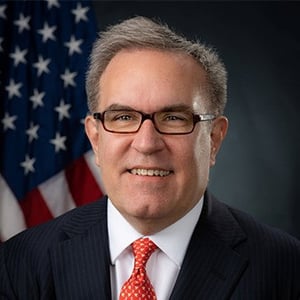
Holland & Hart, Partner
On February 28, 2019, the U.S. Senate confirmed Andrew Wheeler as the fifteenth Administrator of the Environmental Protection Agency. President Donald J. Trump had announced his appointment as the Acting EPA Administrator on July 5, 2018. Mr. Wheeler had previously been confirmed by the U.S. Senate as the EPA Deputy Administrator on April 12, 2018.
Mr. Wheeler has dedicated his career to advancing sound environmental policies. He began his career during the George H. W. Bush Administration as a Special Assistant in EPA’s Pollution Prevention and Toxics office.
He was a Principal and the team leader of the Energy and Environment Practice Group at FaegreBD Consulting, as well as Counsel at Faegre Baker Daniels law firm, where he practiced since 2009. He also served as the Co-chair of the Energy and Natural Resources Industry team across the entire firm.
Prior to his work with the firm, Mr. Wheeler served for six years as the Majority Staff Director and Chief Counsel, as well as the Minority Staff Director, of the Senate Committee on Environment and Public Works. Before his time at the full Senate EPW Committee, Mr. Wheeler served in a similar capacity for six years for the Subcommittee on Clean Air, Climate Change, Wetlands and Nuclear Safety.
Mr. Wheeler is the past Chairman of the National Energy Resource Organization (NERO) and a Stennis Fellow. Mr. Wheeler is also an Eagle Scout.
Mr. Wheeler is from Fairfield, Ohio. He completed his law degree at Washington University in St. Louis, his MBA at George Mason University, and his undergraduate work at Case Western Reserve University in English and Biology.
Professor of Law, University of Minnesota Law School
Professor James W. Coleman is a scholar of energy law. He specializes in North American energy infrastructure, transport, and trade. He is also a nonresident senior fellow at the American Enterprise Institute focused on energy policy.
Professor Coleman has testified before Congress on steps to speed up energy infrastructure permits. He also worked with a team of experts as part of Alberta's Royalty Review to revise the Canadian province's management of its vast oil and gas resources.
Before joining Minnesota, Professor Coleman taught at Southern Methodist University's Dedman School of Law, the University of Calgary’s law and business schools, and Harvard Law School. Earlier, he practiced environmental and appellate law at Sidley Austin in Washington, D.C., and clerked for the Honorable Steven M. Colloton of the U.S. Court of Appeals for the Eighth Circuit.
Professor Coleman received two degrees from Harvard University—a J.D. (cum laude) and B.A. in biology (magna cum laude with highest honors in the field). As a result of his undergraduate thesis on butterfly genetics, which required fieldwork in Central Asia, a species of lycaenid butterfly was named after him—Agrodiaetus ripartii colemani.
Director, Climate & Clean Air Program, Natural Resources Defense Council
David Doniger has been at the forefront of the battle against air pollution and global climate change since he joined NRDC in 1978. He helped formulate the Montreal Protocol, an international agreement designed to stop the depletion of the earth's ozone layer, as well as several essential amendments to the Clean Air Act. In 1993, he left NRDC to serve on the White House Council on Environmental Quality, followed by key posts at the U.S. Environmental Protection Agency. He rejoined NRDC in 2001 and has since been working to defend the Clean Air Act from assaults in Congress. He is based in Washington, D.C.
Vice President of Policy and Advocacy, Citizens For Responsible Energy Solutions
Charles Hernick is the Vice President of Policy and Advocacy at Citizens for Responsible Energy Solutions (CRES) in Washington DC. Charles leads CRES Forum’s policy work and executes strategies to advance clean energy solutions and innovative approaches to reducing carbon emissions.
Charles is an energy expert who understands emerging clean technologies, market barriers, and policies and regulations. For over a decade he has worked at the crossroads of economic development, energy, and natural resource management across the U.S. and on the ground in over a dozen countries in Africa, Latin America, and the Caribbean. Before joining CRES, he advised executive-level decision-makers at the U.S. Environmental Protection Agency and U.S. Agency for International Development on energy and environmental issues, and identified project-level opportunities for clean energy expansion.
He is also a climate change expert who has integrated climate change considerations into U.S. government programs and policies and has authored climate mitigation and adaptation best practice guidelines for over a dozen development sectors.
Charles was the Republican candidate for U.S. House of Representatives in Virginia’s 8th Congressional District in the November 2016 election. He routinely advises candidates seeking public office on energy and economic growth.
He is a frequent guest on radio shows and webcasts, in university classrooms, and at international workshops to discuss clean energy and associated economic, national security, and environmental issues. He conducts interviews in English or Spanish.
Charles as an M.A. in International Relations and Environmental Policy from Boston University and a B.S. in Ecology, Evolution, and Behavior from the University of Minnesota.
Holland & Hart, Partner
On February 28, 2019, the U.S. Senate confirmed Andrew Wheeler as the fifteenth Administrator of the Environmental Protection Agency. President Donald J. Trump had announced his appointment as the Acting EPA Administrator on July 5, 2018. Mr. Wheeler had previously been confirmed by the U.S. Senate as the EPA Deputy Administrator on April 12, 2018.
Mr. Wheeler has dedicated his career to advancing sound environmental policies. He began his career during the George H. W. Bush Administration as a Special Assistant in EPA’s Pollution Prevention and Toxics office.
He was a Principal and the team leader of the Energy and Environment Practice Group at FaegreBD Consulting, as well as Counsel at Faegre Baker Daniels law firm, where he practiced since 2009. He also served as the Co-chair of the Energy and Natural Resources Industry team across the entire firm.
Prior to his work with the firm, Mr. Wheeler served for six years as the Majority Staff Director and Chief Counsel, as well as the Minority Staff Director, of the Senate Committee on Environment and Public Works. Before his time at the full Senate EPW Committee, Mr. Wheeler served in a similar capacity for six years for the Subcommittee on Clean Air, Climate Change, Wetlands and Nuclear Safety.
Mr. Wheeler is the past Chairman of the National Energy Resource Organization (NERO) and a Stennis Fellow. Mr. Wheeler is also an Eagle Scout.
Mr. Wheeler is from Fairfield, Ohio. He completed his law degree at Washington University in St. Louis, his MBA at George Mason University, and his undergraduate work at Case Western Reserve University in English and Biology.
Director, GW Regulatory Studies Center & Distinguished Professor of Practice, Trachtenberg School of Public Policy & Public Administration, The George Washington University
Susan Dudley is the Founder and Director of the George Washington University Regulatory Studies Center, established in 2009 to raise awareness of regulations’ effects and improve regulatory policy through research, education, and outreach. She is also a distinguished professor of practice in the Trachtenberg School of Public Policy and Public Administration. She is past-president of the Society for Benefit Cost Analysis, a senior fellow of the Administrative Conference of the United States, and on the Regulatory Transparency Project Regulatory Practice Working Group. Her book, Regulation: A Primer, with Jerry Brito, is available on Amazon.com.
From April 2007 through January 2009, Professor Dudley served as the Presidentially-appointed Administrator of the Office of Information and Regulatory Affairs in the U.S. Office of Management and Budget and was responsible for the review of draft executive branch regulations under Executive Order 12866, the collection of federal-government-wide information under the Paperwork Reduction Act, the development and implementation of government-wide policies in the areas of information policy, privacy, and statistical policy, and international regulatory cooperation efforts.
Prior to OIRA, she directed the Regulatory Studies Program at the Mercatus Center at George Mason University, and taught courses on regulation at the George Mason University School of Law. Earlier in her career, Professor Dudley served as an economist at OIRA, as well as the Environmental Protection Agency and the Commodity Futures Trading Commission. She was also a consultant to government and private clients at Economists Incorporated. She holds a Master of Science degree from the Sloan School of Management at MIT and a Bachelor of Science degree (summa cum laude) in Resource Economics from the University of Massachusetts, Amherst.
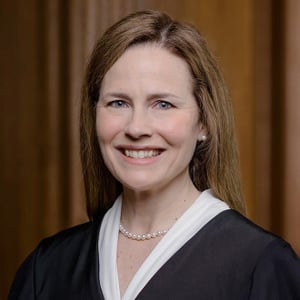
Associate Justice, United States Supreme Court
The Honorable Amy Coney Barrett is an Associate Justice of the Supreme Court of the United States. She was nominated by President Donald Trump and was confirmed on October 27, 2020. She is the fifth woman to serve on the Court.
Justice Barrett earned her J.D., summa cum laude, from Notre Dame, where she was a Kiley Fellow, earned the Hoynes Prize, the Law School’s highest honor, and served as executive editor of the Notre Dame Law Review. She clerked for Judge Laurence H. Silberman of the U.S. Court of Appeals for the D.C. Circuit and for Associate Justice Antonin Scalia of the U.S. Supreme Court. As an associate at Miller, Cassidy, Larroca & Lewin in Washington, D.C., she litigated constitutional, criminal, and commercial cases in both trial and appellate courts.
In 2002, Justice Barrett joined the faculty of Notre Dame Law School. She continued to teach following her appointment to the U.S. Court of Appeals for the Seventh Circuit in November 2017. Justice Barrett also served by appointment of the Chief Justice on the Advisory Committee for the Federal Rules of Appellate Procedure from 2010 to 2016.
Justice Barrett has published widely in the areas of federal courts, constitutional law, and statutory interpretation. Her scholarship in these fields has been published in leading journals, including the Columbia, Virginia, and Texas Law Reviews.
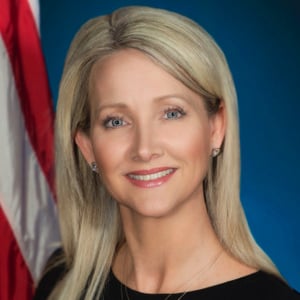
United States District Judge, Middle District of Florida
Judge Berger was raised in Jacksonville, Florida. She received her undergraduate degree from The Florida State University in 1990 and her law degree from The Florida State University College of Law in 1992, where she was a member of Law Review. Judge Berger served as an Assistant State Attorney in the Seventh Judicial Circuit from 1993 – 2000. In January 2001, Judge Berger left the State Attorney’s Office to serve as an Assistant General Counsel to Governor Jeb Bush. Judge Berger served in Governor Bush’s administration from January 2001 until May 2005, when she was appointed by the governor to serve as a Circuit Judge in the Seventh Judicial Circuit. During her service on the circuit court, Judge Berger presided over the civil and probate divisions (2005-2006) and adult felony division (2006-2012) in St. Augustine. She was also the presiding judge of the St. Johns County Adult Drug Court Program (2005-2012).
Judge Berger is currently a member of the St. Johns County Bar Association, the Orange County Bar Association, The Florida Supreme Court Committee on Civil Jury Instructions, the Florida Bar Criminal Procedure Rules Committee, the Florida Bar Appellate Practice Section’s Executive Council, the Dunn Blount Inn of Court, and the Federalist Society. She has prior service on the Florida Bar’s Judicial Administration and Evaluation Committee (2008 – 2013), the Judicial Administration Selection and Tenure Committee (2001-2004), the Florida Supreme Court Subcommittee on Postconviction Relief (2010-2011), the Statewide Diversity Team (2009-2012), and has been a member of both the National Association of Drug Court Professionals and the Florida Association of Drug Court Professionals.
Judge Berger has lectured on a wide range of topics including practicing with professionalism, judicial diversity, the judicial appointment process, effective oral arguments, fundamentals of extradition, capital cases, gender bias in the media, drug court, and drug and alcohol prevention.
Active in her community, Judge Berger served as a member of the St. Johns County Consortium on Substance Abuse as well as the St. Johns County Public Safety Committee. She is a member of the St. Augustine Rotary Club (Paul Harris Fellow) and is a steering committee member of The Marketplace Christian Professional Resources. She volunteers in the schools, has served as a reading mentor, and participates in the PACT Prevention Coalition’s Safe Prom Event. Judge Berger is also an active member of Trinity Episcopal Parish.
Judge Berger and her husband, Larry, live in St. Augustine with their two children.

Judge, The 15th Judicial Circuit of Florida
The Honorable Paige Gillman is a Palm Beach County Court Judge appointed by now Senator Rick Scott in 2018. She currently presides in and is the Administrative Judge for the County Civil Division. Additionally, she serves as the Administrative Judge for the Civil Traffic Division of the Circuit. In June of 2020, Governor Ron Desantis appointed Judge Gillman to the Palm Beach Circuit Court. She will transition to the Circuit bench in January 2021.
Judge Gillman received both her undergraduate and Juris Doctor degrees from the University of Florida. Prior to taking the bench, Judge Gillman served as an Assistant State Attorney in the 19th Judicial Circuit, as a complex commercial and intellectual property litigator with Mracheck Law and finally as Staff Counsel for Allstate, Esurance and Encompass handling a broad range of auto and property matters.
Judge Gillman currently serves on the Florida Bar Small Claims Rules Committee and the Florida Supreme Court Civil Jury Instruction Committee.
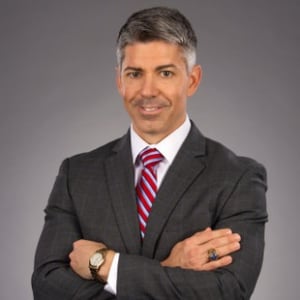
General Counsel & Wealth Advisor, Ullmann Wealth Partners
Patrick Kilbane is the General Counsel and a Wealth Advisor for Ullmann Wealth Partners headquartered in Jacksonville Beach, FL. Ullmann Wealth Partners is an independent wealth management firm that manages half a billion dollars of client assets in custody at Fidelity. Before joining Ullmann Wealth Partners, Pat was a Shareholder at Gray Robinson, P.A. where he had a thriving specialty litigation practice. Pat was recognized multiple times by Florida Trend and Super Lawyers Magazine for his skills and professionalism.
Pat serves the Northeast Florida Region in several roles. He’s received five gubernatorial appointments to the Judicial Nominating Commission for Florida’s Fourth Judicial Circuit and the Jacksonville Aviation Authority Board of Directors. His fellow board members elected him Chairman of both boards. Further, Pat is the President of the Jacksonville Lawyers Chapter of the Federalist Society. In 2014-2015, Pat was elected President of the Young Lawyers Section of the Jacksonville Bar Association.
In 2005, Pat received his Juris Doctor degree from the University of Notre Dame. He received his Bachelor of Business Administration degree, summa cum laude, from Adrian College, where he earned the full-ride, merit-based Dawson Scholarship and was named the Outstanding Graduate by faculty vote for the Class of 2002.
Vice President of Law & Policy, Property and Environment Research Center
Jonathan Wood is vice president of law and policy at the Property and Environment Research Center (PERC). An attorney, Jonathan has litigated environmental and property-rights cases in the Supreme Court of the United States, federal and state appellate courts, and trial courts across the country. His writing has appeared in the Wall Street Journal, Washington Post, National Review, Reason, and other outlets. And his research has been published in journals such as Environmental Law Reporter, Yale Journal on Regulation Notice & Comment, Pace Environmental Law Review, and California Western Law Review.
Prior to coming to PERC, Jonathan was a senior attorney at Pacific Legal Foundation, where he litigated cases concerning the Endangered Species Act, Clean Water Act, and other federal environmental laws. He was co-counsel for forest landowners in Weyerhaeuser Co. v. U.S. Fish and Wildlife Service, in which the Supreme Court ruled unanimously that private land could not be arbitrarily regulated as critical habitat under the ESA. He also led a successful effort to reform regulation of threatened species to better align the incentives of private landowners with the interests of rare species.
Jonathan has testified before several congressional committees on wildlife conservation and endangered species topics. He has also appeared on national television and radio, including NPR’s All Things Considered, C-Span’s Washington Journal, Stossel, Fox News, and Hill.TV.
Jonathan has a law degree from the New York University School of Law, a masters degree in economic policy from the London School of Economics, and a bachelor’s degree in economics from the University of Texas. He is on the executive committee for the Federalist Society’s Environmental Law and Property Rights Practice Group and a steering committee member for the Environmental Law Institute’s Emerging Leaders Initiative.
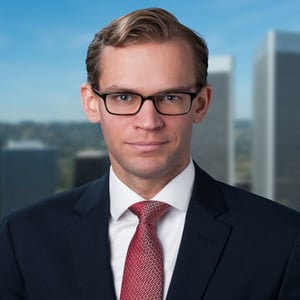
Internet Policy Counsel and Director of Appellate Litigation, TechFreedom
Corbin Barthold is TechFreedom's Internet Policy Counsel and Director of Appellate Litigation.
Corbin clerked for the Hon. Steven D. Merryday (M.D. Fla.) and the Hon. Robert H. Cleland (E.D. Mich.). After his clerkships, he became an associate, and later a partner, in the Los Angeles office of Browne George Ross LLP, where he engaged in high-stakes complex litigation. He then served as Senior Litigation Counsel at Washington Legal Foundation, a D.C. public-interest firm, where his practice focused on appeals involving administrative law, the separation of powers, antitrust, and tech policy.
Corbin received his J.D. from the University of California, Berkeley, School of Law. He also holds a B.A., magna cum laude and Phi Beta Kappa, from the University of California, San Diego, and an Msc., with distinction, from the London School of Economics.
Vice President of Law & Policy, Property and Environment Research Center
Jonathan Wood is vice president of law and policy at the Property and Environment Research Center (PERC). An attorney, Jonathan has litigated environmental and property-rights cases in the Supreme Court of the United States, federal and state appellate courts, and trial courts across the country. His writing has appeared in the Wall Street Journal, Washington Post, National Review, Reason, and other outlets. And his research has been published in journals such as Environmental Law Reporter, Yale Journal on Regulation Notice & Comment, Pace Environmental Law Review, and California Western Law Review.
Prior to coming to PERC, Jonathan was a senior attorney at Pacific Legal Foundation, where he litigated cases concerning the Endangered Species Act, Clean Water Act, and other federal environmental laws. He was co-counsel for forest landowners in Weyerhaeuser Co. v. U.S. Fish and Wildlife Service, in which the Supreme Court ruled unanimously that private land could not be arbitrarily regulated as critical habitat under the ESA. He also led a successful effort to reform regulation of threatened species to better align the incentives of private landowners with the interests of rare species.
Jonathan has testified before several congressional committees on wildlife conservation and endangered species topics. He has also appeared on national television and radio, including NPR’s All Things Considered, C-Span’s Washington Journal, Stossel, Fox News, and Hill.TV.
Jonathan has a law degree from the New York University School of Law, a masters degree in economic policy from the London School of Economics, and a bachelor’s degree in economics from the University of Texas. He is on the executive committee for the Federalist Society’s Environmental Law and Property Rights Practice Group and a steering committee member for the Environmental Law Institute’s Emerging Leaders Initiative.

Environmental Law & Property Rights: EPA Turns 50: A Debate on Environmental Progress and Regulatory Overreach
2020 National Lawyers Convention
2020 National Lawyers Convention
EPA Turns 50: A Debate on Environmental Progress and Regulatory Overreach
It Can Be Done Live: The Future of Our Earth
James W. Coleman, David D. Doniger, Susan E. Dudley, Charles Hernick, Nathan Kaczmarek, Andrew Wheeler
The creators of the award-winning documentary, They Say It Can't Be Done, in partnership with the...
Deep Dive Episode 138 – It Can Be Done Live: The Future of Our Earth
James W. Coleman, David D. Doniger, Charles Hernick, Andrew Wheeler, Susan E. Dudley
The creators of the award-winning documentary, They Say It Can’t Be Done, in partnership with...
We’re All Textualists Now? Implementing a Sound Interpretive Approach on the Trial Court and Beyond
Amy Coney Barrett, Wendy Berger, Paige Kilbane, Patrick J. Kilbane
The Federalist Society's Jacksonville Lawyers Chapter held a virtual panel on August 12, 2020 to...
Courthouse Steps Decision: Atlantic Richfield Co. v. Christian
Jonathan Wood
On April 20, 2020, the Supreme Court, by a vote of 7-2, held that owners...
Atlantic Richfield Co. v. Christian - Post-Decision SCOTUScast
Jonathan Wood
On April 20, 2020, the Supreme Court, by a vote of 7-2, held that owners...
Courthouse Steps Decision: Atlantic Richfield Co. v. Christian
TeleforumTopics
Atlantic Richfield Co. v. Christian: Major Superfund Case Generates More Questions Than Answers
Disclaimer: The author filed an amicus brief on behalf of Pacific Legal Foundation and the...
Atlantic Richfield Co. v. Christian - Post-Argument SCOTUScast
Corbin K. Barthold, Jonathan Wood
In Atlantic Richfield Co. v. Christian, the Supreme Court will determine whether the Comprehensive Environmental...