
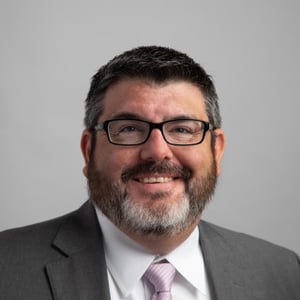
Senior Attorney, Institute for Justice
Paul Avelar is the Managing Attorney of the Institute for Justice Arizona Office. He joined the Institute in March 2010 and litigates free speech, property rights, economic liberty, school choice and other constitutional cases in federal and state courts.
As the head of IJ’s national Braiding Freedom Initiative, Paul represents natural hair braiders across the country to protect their right to earn an honest living. The Initiative uses lawsuits, activism and research to remove laws that require potential braiders to undergo hundreds of costly training hours just to braid hair. Since IJ launched the Braiding Freedom Initiative in 2014, 12 additional states have freed braiders from unnecessary licensing burdens. Paul drafted the model Natural Hair Braiding Protection Act, which has been adopted in Arkansas, Indiana, Iowa, Kentucky, Nebraska, New Hampshire, Texas and South Dakota. He is currently representing braiders in Missouri, where state laws infringe upon their right to earn an honest living.
In his free speech work, Paul has challenged numerous laws that trample First Amendment rights. In Arizona Freedom Club PAC v. Bennett, he represented candidates and independent groups in a successful U.S. Supreme Court challenge to the “matching funds” provision of Arizona’s publicly financed elections system. He represented grassroots groups and individuals in Arizona, Mississippi and Washington, where state laws burdened their political speech by requiring them to register with the government, to navigate complex regulations and to face fines and possible criminal penalties merely because they talked about political issues. In Washington, Paul protected a lawyer’s right to defend, pro-bono, the First Amendment rights of political speakers. Through litigation and legislation, Paul leads the fight against abusive civil forfeiture laws in Arizona and elsewhere.
Paul also co-authored the most comprehensive published study of economic liberty protections in the Arizona Constitution. The Chief Justice of the Arizona Supreme Court appointed Paul to the Task Force on the Review of the Role and Governance Structure of the State Bar of Arizona, where he dissented from the majority report and called on leaders to substantially reform the Bar and state regulation of the practice of law. He often speaks at law schools across the country about constitutional issues and his work at IJ.
Prior to joining IJ-AZ, Paul worked as an attorney in Philadelphia. He clerked for Judge Roger Miner on the 2nd U.S. Circuit Court of Appeals, Justice Andrew Hurwitz on the Arizona Supreme Court, and Judge Daniel Barker on the Arizona Court of Appeals.
Paul graduated manga cum laude from the Arizona State University College of Law in 2004 and was elected to the Order of the Coif. He received his undergraduate degree from Princeton University in 2000.

Anne Fleming Research Professor and Professor of Law, Georgetown University Law Center; Faculty Director, Georgetown Center for the Constitution
Stephanie Barclay is a Professor of Law at Georgetown Law School, and the Faculty Director of the Georgetown Center for the Constitution. Her research focuses on the role our different democratic institutions play in protecting minority rights, particularly at the intersection of free speech and religious exercise. Barclay‘s work is published or is forthcoming in leading journals such as the Harvard Law Review, the Chicago Law Review, the University of Pennsylvania Law Review, and the Yale Law Journal Forum. One of her articles was also selected for the 2020 Stanford/Harvard/Yale Junior Faculty Forum. Her work has been featured in many media outlets, including The New York Times, The Wall Street Journal, The Washington Post, USA Today, Bloomberg BNA, The Hill, and Law 360. And her work has also been cited by the U.S. Supreme Court.
Prior to joining Georgetown, Barclay was twice voted Professor of the Year. Barclay has also litigated constitutional cases at both the trial and appellate level, including before the U.S. Supreme Court. Barclay served as a law clerk to Judge N. Randy Smith on the U.S. Court of Appeals for the Ninth Circuit, and to Justice Neil M. Gorsuch of the U.S. Supreme Court.
Barclay is a Faculty Affiliate at the Constitutional Law Center at Stanford Law School; and she is a Nootbaar Fellow at the Nootbaar Institute on Law, Religion, and Ethics at Pepperdine University. She currently serves as the Chair for the AALS Law and Religion Section and as a Member of the Executive Committee for the AALS Constitutional Law Section. She graduated summa cum laude from BYU Law School, where she was elected to the Order of the Coif. She is completing a Ph.D. in Law at Oxford University as a Clarendon Scholar and a Tang Scholar.

Vice President for Legal Strategy, Stand Together
Casey Mattox is Vice President for Legal Strategy at Stand Together and Senior Advisor at
Americans for Prosperity. In these roles he advocates for and creates strategies and
partnerships to ensure a constitutionally limited government that protects the civil liberties of all
Americans. Prior to joining Stand Together and AFP Casey’s legal career focused on defending
the First Amendment rights of students, faculty, healthcare workers and religious organizations.
Casey has a J.D. from Boston College School of Law and an undergraduate degree from the
University of Virginia. You can find him on Twitter at @CaseyMattox_ and on LinkedIn at
@Casey-Mattox-ST.
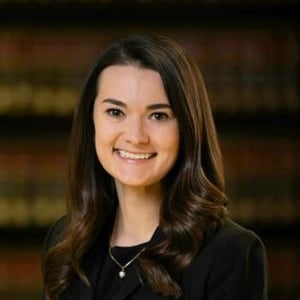
Managing Attorney, Lindsay and Matt Moroun Religious Liberty Clinic and Term Teaching Professor of Law, University of Notre Dame Law School
Meredith Holland Kessler is the Managing Attorney for the Lindsay and Matt Moroun Religious Liberty Clinic, where she trains, educates, and mentors students in the legal profession as they work to promote the fundamental human right to religious freedom. She represents clients in a variety of legal matters, with a strong focus on the Clinic's litigation efforts, and oversees the Clinic's operations.
Prior to joining Notre Dame Law School in 2022, Kessler practiced law in Washington, D.C. as an Issues & Appeals associate at Jones Day. She also served as a law clerk to Judge Diarmuid F. O’Scannlain on the U.S. Court of Appeals for the Ninth Circuit and to Judge Richard J. Leon on the U.S. District Court for the District of Columbia.
Kessler earned her Bachelor of Arts degree in Economics and Theology from the University of Notre Dame. She graduated summa cum laude from Notre Dame Law School, where she served as the Federal Courts and Submissions Editor of the Notre Dame Law Review.
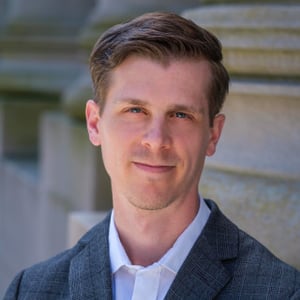
Assistant Clinical Professor of Law & Director, Religious Freedom Clinic, Harvard Law School
Josh is the Director of Harvard Law School’s Religious Freedom Clinic, a pro bono program that gives students a hands-on, supervised experience representing a diverse group of clients in First Amendment and religious freedom cases.
Before entering clinical teaching, Josh clerked for the Honorable Cormac J. Carney of the U.S. District Court for the Central District of California and the Honorable Jay S. Bybee of the U.S. Court of Appeals for the Ninth Circuit. In addition to serving as a staff attorney in the clinic’s inaugural semester in 2020, he was previously a trial litigator at Munger, Tolles & Olson and an appellate litigator at Horvitz & Levy, where he specialized in representing individual and organizational clients in both commercial and civil rights cases, with particular expertise in First Amendment and religious freedom issues.
While in private practice, Josh received a Daily Journal 2022 California Lawyer Attorneys of the Year (CLAY) award, was twice named a “One to Watch” in appellate law by Best Lawyers, and argued in numerous appellate courts and courts of last resort, including twice before the California Supreme Court. His amicus brief for Jewish schools in a case before the U.S. Supreme Court was quoted by Justice Kavanaugh at oral argument.
Josh earned his B.A., magna cum laude, from Brigham Young University and graduated first in his class from UCLA School of Law.
Anne Fleming Research Professor and Professor of Law, Georgetown University Law Center; Faculty Director, Georgetown Center for the Constitution
Stephanie Barclay is a Professor of Law at Georgetown Law School, and the Faculty Director of the Georgetown Center for the Constitution. Her research focuses on the role our different democratic institutions play in protecting minority rights, particularly at the intersection of free speech and religious exercise. Barclay‘s work is published or is forthcoming in leading journals such as the Harvard Law Review, the Chicago Law Review, the University of Pennsylvania Law Review, and the Yale Law Journal Forum. One of her articles was also selected for the 2020 Stanford/Harvard/Yale Junior Faculty Forum. Her work has been featured in many media outlets, including The New York Times, The Wall Street Journal, The Washington Post, USA Today, Bloomberg BNA, The Hill, and Law 360. And her work has also been cited by the U.S. Supreme Court.
Prior to joining Georgetown, Barclay was twice voted Professor of the Year. Barclay has also litigated constitutional cases at both the trial and appellate level, including before the U.S. Supreme Court. Barclay served as a law clerk to Judge N. Randy Smith on the U.S. Court of Appeals for the Ninth Circuit, and to Justice Neil M. Gorsuch of the U.S. Supreme Court.
Barclay is a Faculty Affiliate at the Constitutional Law Center at Stanford Law School; and she is a Nootbaar Fellow at the Nootbaar Institute on Law, Religion, and Ethics at Pepperdine University. She currently serves as the Chair for the AALS Law and Religion Section and as a Member of the Executive Committee for the AALS Constitutional Law Section. She graduated summa cum laude from BYU Law School, where she was elected to the Order of the Coif. She is completing a Ph.D. in Law at Oxford University as a Clarendon Scholar and a Tang Scholar.
Vice President for Legal Strategy, Stand Together
Casey Mattox is Vice President for Legal Strategy at Stand Together and Senior Advisor at
Americans for Prosperity. In these roles he advocates for and creates strategies and
partnerships to ensure a constitutionally limited government that protects the civil liberties of all
Americans. Prior to joining Stand Together and AFP Casey’s legal career focused on defending
the First Amendment rights of students, faculty, healthcare workers and religious organizations.
Casey has a J.D. from Boston College School of Law and an undergraduate degree from the
University of Virginia. You can find him on Twitter at @CaseyMattox_ and on LinkedIn at
@Casey-Mattox-ST.
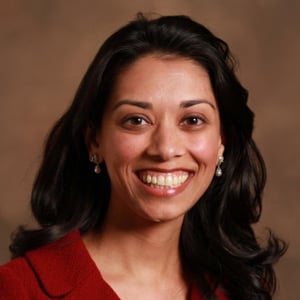
General Counsel, Center for Individual Rights
Darpana Sheth joined CIR as General Counsel in May 2025. She is a nationally recognized constitutional litigator with over two decades of experience serving in in leadership roles at other nonprofit organizations.
Before joining CIR, Darpana served for four years as Vice President of Litigation for the Foundation for Individual Rights and Expression. Prior to that, Darpana was a Senior Attorney with the Institute for Justice, where she also served as Director of the Institute’s National Initiative to End Forfeiture Abuse.
Before finding her calling as a public-interest attorney, Darpana served as an Assistant Attorney General for the State of New York and worked in private practice as a litigation associate at the Manhattan law firm of Chadbourne & Parke, LLP. She also served as law clerk to the Honorable Jerome A. Holmes of the U.S. Court of Appeals for the Tenth Circuit.
A native of Philadelphia, Darpana graduated from the University of Pennsylvania with a Bachelor of Arts in Political Science and History. She earned her law degree from Georgetown University Law Center.

President, Becket Fund for Religious Liberty; Professor of Law and Co-Director of the Center for Religious Liberty, Catholic University; Visiting Professor, Harvard Law School
Mark joined the Becket team in 2011 and splits his time as Associate Professor at The Catholic University of America, Columbus School of Law, and as Visiting Professor at Harvard Law School. Mark teaches constitutional law, religious liberty, torts, and evidence. He has been voted Teacher of the Year three years in a row by the Law School’s Student Bar Association.
Mark has broad experience litigating First Amendment religious exercise and free speech cases. He has represented the winning parties in a variety of Supreme Court First Amendment cases including Hobby Lobby, Little Sisters, Wheaton College, and Holt. In January 2014, Mark argued before the Supreme Court in McCullen v. Coakley, a First Amendment challenge to a Massachusetts speech restriction outside of abortion clinics. The Justices ruled in favor of his clients 9-0. Mark also led a successful eight-year litigation battle against Governor Blagojevich’s effort to force religious pharmacists to distribute the morning-after and week-after pills.
Mark’s academic writing focuses on the First and Fourteenth Amendments, and has appeared in a variety of prestigious journals, including the Harvard Law Review.
Mark is a widely sought after speaker on constitutional issues, particularly concerning abortion and the First Amendment. Professor Rienzi has been invited to discuss these issues at Harvard Law School, Columbia University Law School, Georgetown University Law Center, Boston College Law School, Notre Dame Law School, the National Press Club, and the Capitol. He has been quoted on constitutional law issues on NPR, in the Washington Times, The New York Daily News, and the Chicago Sun-Times. Mark has also been featured on the Kelly File, Fox News Sunday, Your World with Neil Cavuto, Geraldo at Large, CNN Tonight, CNN Live, Andrea Mitchell Reports, and Wall Street Journal Live.
Prior to joining Becket, Mark served as counsel for the litigation department and the intellectual property litigation practice group of WilmerHale LLP. His practice focused on complex civil and appellate litigation with a particular emphasis on intellectual property and First Amendment issues. Prior to joining WilmerHale, he served as law clerk to the Hon. Stephen F. Williams, senior circuit judge for the U.S. Court of Appeals for the D.C. Circuit. Prior to that, Mark was an editor of the Harvard Law Review, and earned his J.D. from Harvard Law School and B.A. from Princeton University, both with honors.

Director of the Program in Human Rights, Catholic University of America
William L. Saunders is Chair Emeritus of the Religious Liberties Practice Group of the Federalist Society. He is also a religious liberty and human rights scholar as well as director of the Center for Human rights at The Catholic University of America. He is Law Fellow with the Institute for Human Ecology, Professor and Director of the Program in Human Rights in the School of Arts & Sciences and Co-director of the Center for Religious Liberty at the Columbus School of Law. Before joining The Catholic University of America, Mr. Saunders served as Senior Vice President and Senior Counsel with Americans United for Life for ten years. From 1999 to 2009, he was Senior Fellow in Bioethics and Human Rights Counsel at the Family Research Council.
Mr. Saunders attended the University of North Carolina at Chapel Hill on a Morehead scholarship. He obtained his degree in law from the Harvard Law School.
Mr. Saunders was featured in Harvard’s first Guide to Conservative Public Interest Law in 2003 and again in the 2008 edition. He served on Harvard’s Advisory Committee for its 2008 celebration of public interest law. A member of the Supreme Court bar, he has authored numerous legal briefs in state, federal, foreign, and international courts.
Mr. Saunders’ book, Unborn Human Life and Fundamental Rights: Leading Constitutional Cases Under Scrutiny, was published in 2019. His articles and book chapters have been published by the university presses of Harvard, Villanova, Brigham Young, Fordham, Georgetown, Houston, Scranton, and the Catholic University of America, as well as by the Intercollegiate Studies Institute, Freedom House, Greenhaven Press, Rowan & Littlefield, Praeger, St. Augustine’s, and Intervarsity press. He has given lectures and participated in debates at many colleges, universities, and law schools, including Princeton, Harvard, Georgetown, and Notre Dame. He delivered the annual J. Michael Miller Lecture at the University of St. Thomas (on international law) in February 2007, the annual R. Wayne Kraft Memorial Lecture (on bioethics) at DeSales University in February 2004 and the annual James Moore Lecture (on human rights violations in Sudan) at Millikin University in 1999. He has also lectured, and/or has been published, in many foreign countries, including Italy, Germany, Poland, Austria, Spain, Greece, Slovakia, Mexico, Qatar, Malaysia, Romania, the Philippines, Hong Kong, and the United Kingdom.
In addition to speaking and writing frequently on bioethics topics, Mr. Saunders has submitted testimony to the President’s Council on Bioethics, as well as to UNESCO’s Committee on Bioethics, and has briefed Congressional staff and state legislatures. He is a regular columnist for the National Catholic Bioethics Quarterly.
Mr. Saunders has appeared often in the media, including BBC World News, CNN, Fox News, Vatican Radio, and National Public Radio. His articles on issues have appeared in a variety of journals, such as First Things, Human Events, Human Life Review, The Legal Times, Communio, The Family in America: A Journal of Public Policy, Ethics & Medics, and Touchstone.
Mr. Saunders served on the official United States delegation to the UN Special Session on Children in 2001/02. In 2011, he was a speaker at an official briefing at the UN, addressing the topic, why euthanasia is not a human right.
In 2004, he served on the NGO Working Committee in connection with the Doha Intergovernmental Conference for the Family.
Mr. Saunders is Senior Fellow with the Religious Freedom Institute, and Affiliated Scholar with the Pellegrino Center for Clinical Ethics at the Georgetown University School of Medicine. He is President of the Fellowship of Catholic Scholars and a member of the boards of the International Association of Catholic Bioethicists, the International Right to Life Federation, the Institute on Religion and Democracy, and the Society of Catholic Social Scientists.
In 1999, Mr. Saunders founded Sudan Relief and Rescue, Inc., to aid the persecuted church in Sudan. He has worked for and written on behalf of the persecuted church for many years.
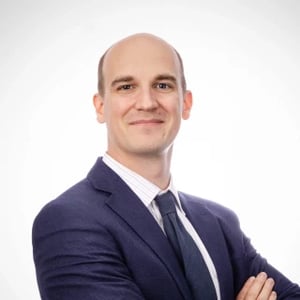
Managing Partner, Boyden Gray PLLC
Michael Buschbacher is the managing partner of Boyden Gray PLLC. He represents public and private companies, trade associations, non-profits, and individuals in high-stakes litigation and administrative proceedings, with a particular focus on environmental and energy matters.
In addition to trial-level work, Mr. Buschbacher maintains an active appellate practice, both as merits counsel and as counsel for amici curiae. He has written amicus briefs quoted by the Seventh and Ninth Circuits. And his Supreme Court advocacy has been cited by The New Yorker, The New York Times, and E&E News. Mr. Buschbacher’s commentary on legal issues has been published in The Wall Street Journal, Newsweek, and The American Conservative.
Before joining the firm, Mr. Buschbacher served at the U.S. Department of Justice as counsel to the Assistant Attorney General for the Environment and Natural Resources Division. There, he advised senior Department leadership, served as the lead attorney on several lawsuits, and helped draft policy memoranda for the Department on the proper scope and procedure for environmental enforcement. Prior to serving in the government, Mr. Buschbacher was an associate in the D.C. office of Sidley Austin.
Mr. Buschbacher is a former clerk to Judge Alice M. Batchelder of the U.S. Court of Appeals for the Sixth Circuit and to Magistrate Judge Paul R. Cherry of the U.S. District Court for the Northern District of Indiana.
Mr. Buschbacher holds a B.A. in Music and Germanic Studies from Indiana University and a J.D., magna cum laude, from Notre Dame Law School.
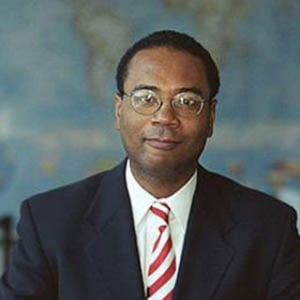
Chairman, Project 21 National Advisory Board, National Center for Public Policy Research
Horace Cooper is a senior fellow with the National Center for Public Policy Research, chairman of the Project 21 National Advisory Board and a legal commentator.
Horace averages over 400 talk radio appearances per year representing the National Center and Project 21, in addition to regular television appearances and interviews by the print media.
Horace taught constitutional law at George Mason University in Virginia and was a senior counsel to U.S. House Majority Leader Dick Armey.
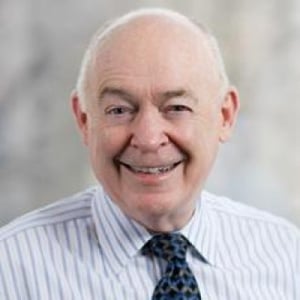
Principal, Beveridge & Diamond, PC
John offers clients the benefit of decades of experience as a top environmental lawyer, a leader of major bar and environmental organizations, and a distinguished military career.
John provides strategic counsel on high-stakes environmental and natural resources litigation, civil and criminal enforcement, and compliance. Working with clients makes the practice of law worthy and valuable to him as they advance strategic needs while protecting human health and the environment.
For more than two decades, John served as a senior leader on environment and natural resource matters at the United States Department of Justice (DOJ), where he supervised some of the department’s most significant litigation, including the Exxon Valdez oil spill, Love Canal, and Bunker Hill litigation. As the Senate-confirmed, Assistant Attorney General, ENRD, John worked on the most high-profile environment cases, and personally negotiated the multi-billion dollar resolutions of the Deepwater Horizon oil spill and the Volkswagen emissions scandal. These cases required a great deal of coordination, expert assistance, and sophisticated management of numerous players to reach successful outcomes. This experience has given John insight into the workings of large corporations, as well as into the challenges that major companies face in lawsuits.
As the former President of the Environmental Law Institute, the former Chair of the American Bar Association (ABA) Section on Environment, Energy, and Natural Resources, and the immediate past President of the American College of Environmental Lawyers, John has led each of the premier environmental organizations in the United States. In addition, he was the first government attorney to be elected and serve as the President of the District of Columbia Bar, now the largest bar in the nation.
Professional Background
John’s leadership is a defining characteristic of his long and distinguished legal career. Before joining the DOJ, John was the Chief Legislative Counsel of the U.S. Army. After graduating from the United States Military Academy at West Point, John served in Airborne, Ranger, and Special Forces units in Germany and Vietnam. His subsequent military assignments include as a criminal prosecutor in Germany and civil trial lawyer in the Pentagon; Chief of Litigation Branch, Europe; General Counsel, Defense Nuclear Agency; Staff Judge Advocate in Germany; and Director of Administrative and Civil Law, Judge Advocate General’s School, Charlottesville, Virginia. His military education includes being a Fellow, Army War College, and the Command and General Staff College. He is a graduate of the University of Santa Clara Law school (summa cum laude) and the University of Virginia (MA with honors).
John’s awards for government and military service include the President Rank Award from three different Presidents, the Bronze Star, Legion of Merit, Defense Meritorious Service Medal, Air Medal with Oak Leaf Clusters, and the Vietnamese Cross of Gallantry with Silver Star.
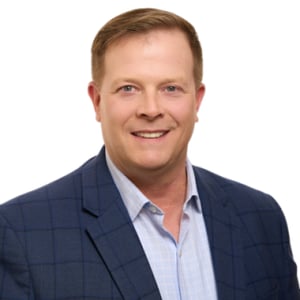
Partner, Secil Law
John Irving brings nearly three decades of experience in white collar criminal defense, government investigations, and high-stakes congressional and corporate inquiries. A former federal prosecutor and trusted advisor within the U.S. Department of Justice and the Environmental Protection Agency, John is known for his calm under pressure, strategic clarity, and unwavering discretion.
His clients have included Members of Congress, senior executives, political appointees, and corporate entities navigating complex criminal, civil, and regulatory matters—including matters that have dominated national headlines. John’s practice today is defined by sophisticated representation in sensitive investigations, classified matters, and strategic crisis response—often involving multiple enforcement authorities.
John served for over a decade in the U.S. Department of Justice, including as an Assistant U.S. Attorney in Washington, D.C., where he prosecuted a wide range of criminal cases and appeared regularly in court. He later served as Counsel to two Deputy Attorneys General and as Counsel to the Assistant Attorney General of DOJ’s Environment and Natural Resources Division, advising on departmental policy and enforcement matters at the highest levels.
Prior to his tenure at DOJ, John served as Investigative Counsel to the (then-named) U.S. House Committee on Government Reform & Oversight and as an Associate Independent Counsel in the investigation of former HUD Secretary Henry Cisneros.
Before joining SECIL Law, John was a Partner at E&W Law, a boutique firm focused on environmental and white-collar litigation, and previously spent over a decade at Holland & Knight LLP in Washington, D.C. There, he was a key member of the firm’s White-Collar Defense, Investigations & Compliance team.
His private practice experience includes:
John’s clients appreciate his deep fluency in government processes, his strategic precision in high-pressure moments, and his ability to quietly resolve matters that others cannot.
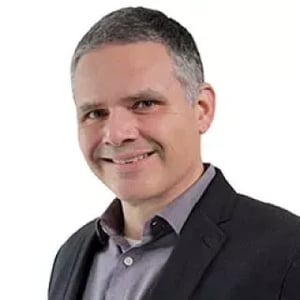
Senior Vice President, Environmental Health, Natural Resources Defense Counsel
As the chief visionary and strategist for NRDC’s advocacy to protect human health, Matthew Tejada oversees NRDC's clean air, water, toxics, and adaptation programs. He is also responsible for leading, scaling, and operationalizing the teams, structures, partnerships, and policy initiatives needed to tackle major health threats facing communities.
Prior to joining NRDC, Tejada served most recently as the deputy assistant administrator for environmental justice within the U.S. Environmental Protection Agency's (EPA) Office for Environmental Justice and External Civil Rights. In his 10 years with the EPA, Tejada led all aspects of environmental justice work throughout the agency and in coordination with other federal agencies, including the development of an array of grants and technical assistance vehicles, and the creation and deployment of a nationally consistent screening and mapping tool that highlights environmental justice issues across the United States. His work also direct community engagement, outreach and communication, and management of the National Environmental Justice Advisory Council.
Previously, Tejada was the executive director of Air Alliance Houston, an environmental justice organization that works to reduce the public health impacts from air pollution. His background also includes working as a public advocate with the Texas Public Interest Research Group—where he managed several advocacy programs focused on consumer, health and environmental issues, including federal ozone NAAQS review and urban transit planning—and as a teacher of English as a foreign language in the U.S. Peace Corps.
Tejada earned his bachelor’s degree in English from the University of Texas, Austin, and also holds a master’s degree in Russian and East European studies, as well as a PhD in modern history from St. Antony’s College, University of Oxford. He is based in the Washington, D.C., office.
General Counsel, Center for Individual Rights
Darpana Sheth joined CIR as General Counsel in May 2025. She is a nationally recognized constitutional litigator with over two decades of experience serving in in leadership roles at other nonprofit organizations.
Before joining CIR, Darpana served for four years as Vice President of Litigation for the Foundation for Individual Rights and Expression. Prior to that, Darpana was a Senior Attorney with the Institute for Justice, where she also served as Director of the Institute’s National Initiative to End Forfeiture Abuse.
Before finding her calling as a public-interest attorney, Darpana served as an Assistant Attorney General for the State of New York and worked in private practice as a litigation associate at the Manhattan law firm of Chadbourne & Parke, LLP. She also served as law clerk to the Honorable Jerome A. Holmes of the U.S. Court of Appeals for the Tenth Circuit.
A native of Philadelphia, Darpana graduated from the University of Pennsylvania with a Bachelor of Arts in Political Science and History. She earned her law degree from Georgetown University Law Center.
Judicial Law Clerk, 31st Circuit Court of Virginia
Peter is a legal professional, receiving his J.D. in 2024 from the Antonin Scalia Law School at George Mason University. He has experience in both the public and private sectors, having worked as a crime analyst for Memphis Police Department, and a geographic information systems analyst for Geomni, a private aerial imaging firm. He also has experience in historical and geopolitical research and analysis, including a peer-reviewed essay on U.S.-Pakistani relations during the Soviet-Afghan War, published in BYU's journal for undergraduate historical research. He is an American patriot and wants to use his analytical skill to serve his nation and community.
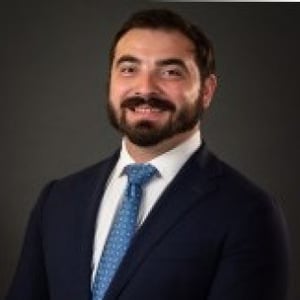
Honor Law Graduate Attorney, U.S. Nuclear Regulatory Commission
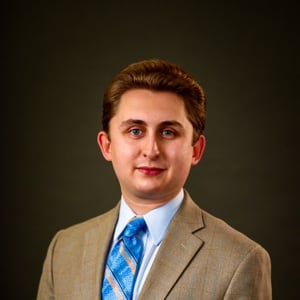
Judicial Law Clerk, U.S. District Court for the Eastern District of Texas
Leo O'Malley graduated, with honors, from the University of Notre Dame School of Law, where he served as a Showcase Team Oralist on the Moot Court Board and the Director of the 2022-23 Religious Freedom Tournament. He recently completed a clerkship with Justice Janine Kern of the South Dakota Supreme Court and is currently clerking on the United States District Court for the Eastern District of Texas. He will go on to clerk for the United States Court of Appeals for the Third Circuit during the 2027-28 term.
A National Merit Scholarship Recipient, Leo previously graduated summa cum laude from Wheaton College, IL in 2020, with a BS in Applied Mathematics and a BM in Organ Performance. While in high school, Leo performed on classical violin at a competitive level, being recognized at numerous local and national music competitions and participating in the Chicago Youth Symphony Orchestras and the Midwest Young Artists Conservatory. In his free time, Leo enjoys reading fantasy novels and experiencing historical architecture. His passion lies in finding innovative and pragmatic solutions to the political, economic, and societal issues facing America in the 21st Century.
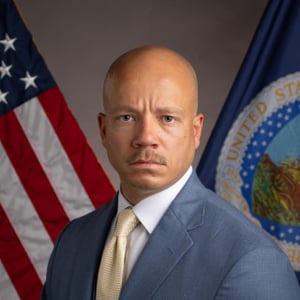
Assistant Secretary for Civil Rights, U.S. Department of Agriculture
Devon Westhill is the Assistant Secretary for Civil Rights at the U.S. Department of Agriculture. The U.S. Senate confirmed President Donald Trump’s nomination of Westhill on October 7, 2025.
Westhill returns to the USDA where he previously headed the civil rights office as Deputy Assistant Secretary in President Trump’s first term. His previous government appointments also include service at the U.S. Department of Labor, liaison to the Administrative Conference of the U.S., and liaison to the White House Initiative on Historically Black Colleges and Universities. Prior to returning to government service, Westhill was President and General Counsel of a nonprofit civil rights organization.
Westhill has testified on civil rights matters before Congress, federal agencies, and as an expert witness in federal court. He has spoken hundreds of times at college campuses, conferences, and on radio and TV programs, and he is frequently quoted in print publications, and his writing has appeared in numerous national outlets. A U.S. Navy veteran, Westhill earned his BA from the University of North Carolina at Chapel Hill and his JD from the University of Florida.

Partner, Schaerr | Jaffe LLP
Erik Jaffe has been involved in appeals on a broad range of legal issues, including First Amendment challenges to campaign finance reform, Commerce Clause challenges to Health Care Reform and other federal legislation, Equal Protection Clause challenges to affirmative action in education, First Amendment challenges to school vouchers, Fifth Amendment challenges to takings of property, Second Amendment challenges to restrictions on gun ownership, and a wide variety of cases involving patents, copyrights, ERISA, securities fraud, federal preemption, environmental regulation, and other state and federal constitutional and statutory matters. He has represented businesses and non-profit groups, Judges, Senators, former government officials, Nobel Prize winners, and a broad cross-section of private individuals. Mr. Jaffe has been involved in over 120 Supreme Court matters, including filing over 30 cert. petitions, representing half-a-dozen parties on the merits, and filing over 70 amicus briefs at both the cert. and merits stages.
A 1990 graduate of the Columbia University School of Law, Mr. Jaffe was a law clerk to Judge Douglas H. Ginsburg of the United States Court of Appeals for the District of Columbia Circuit from 1990 to 1991. Following that clerkship he spent five years in litigation practice with the Washington, D.C. law firm of Williams & Connolly. In the summer of 1996 he left Williams & Connolly to clerk for Supreme Court Justice Clarence Thomas. At the end of that clerkship he started his own practice, and he was a sole practitioner from 1997 to 2018. He joined the firm of Schaerr | Jaffe LLP in 2018.
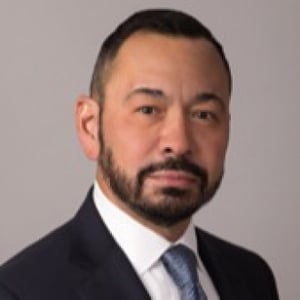
Partner, Gibson Dunn & Crutcher LLP
Miguel A. Estrada is a partner in the Washington, D.C. office of Gibson, Dunn & Crutcher.
Mr. Estrada has represented clients before federal and state courts throughout the country in a broad range of matters. He has argued 24 cases before the United States Supreme Court, and briefed many others. He has also argued dozens of appeals in the lower federal courts.
Best Lawyers® recognized Mr. Estrada as a 2020 Lawyer of the Year in Intellectual Property Litigation and as a Lawyer of the Year in Appellate Practice. He has been recognized by Benchmark Litigation as a 2020 U.S. Appellate Litigation “Star”. In 2014, The American Lawyer named Mr. Estrada a “Litigator of the Year,” praising his “brains and tenacity” and noting he is the lawyer to call for “a tough, potentially unwinnable case.” From 2014-2021, Chambers & Partners has named him as one of a handful of attorneys that it ranked in the top tier among the nation’s leading appellate lawyers. Chambers & Partners noted that “clients are impressed by his intellect and ability, with one saying, ‘His papers are just blindingly clear in what they say and devastating in how they marshal the arguments.’” The Atlantic described his oral argument in a 2014 high-profile separation-of-powers case as “one of the most dazzling arguments the marble chamber has heard in many years.”
Mr. Estrada was selected by his peers for inclusion in the 2020 edition of The Best Lawyers in America® in the area of Appellate Law, in addition to previous recognition by the publication in the specialties of Bet-the-Company Litigation, Commercial Litigation and Criminal Defense: White Collar, Intellectual Property Litigation, and Regulatory Enforcement Litigation in the areas of SEC, Telecom, and Energy. In 2017, he was elected as a member of the American Law Institute. In 2021, Mr. Estrada was named among the Lawdragon 500 Leading Lawyers in America. In 2004, Legal Times named him one of the top 12 appellate litigators in the D.C. area, noting that “people who follow appellate practice in Washington have known for several years that Estrada . . . is one of the best around.” Also in 2004, Washingtonian Magazine named him one of the top constitutional law lawyers “who could become one of the legends of the Supreme Court bar.”
Mr. Estrada joined Gibson Dunn in 1997, after serving for five years as Assistant to the Solicitor General of the United States. He previously served as Assistant U.S. Attorney and Deputy Chief of the Appellate Section, U.S. Attorney’s Office, Southern District of New York. In those capacities, Mr. Estrada represented the government in numerous jury trials and in many appeals before the U.S. Court of Appeals for the Second Circuit. Before joining the U.S. Attorney’s Office, Mr. Estrada practiced corporate law in New York with Wachtell, Lipton, Rosen & Katz.
Mr. Estrada is a Trustee of the Supreme Court Historical Society. He was formerly a member of the Board of Visitors of Harvard Law School.
Mr. Estrada served as a law clerk to the Honorable Anthony M. Kennedy in the U.S. Supreme Court from 1988 to 1989 and to the Honorable Amalya L. Kearse in the U.S. Court of Appeals for the Second Circuit from 1986 to 1987. He received a J.D. degree magna cum laude in 1986 from Harvard Law School, where he was editor of the Harvard Law Review. Mr. Estrada graduated with an A.B. degree magna cum laude and Phi Beta Kappa in 1983 from Columbia College, New York. He is fluent in Spanish and proficient in French.
Representative Supreme Court matters include:
In 2011, the Supreme Court appointed Mr. Estrada to brief and argue two criminal cases –Dorsey v. United States and Hill v. United States – in which the Solicitor General declined to defend the judgments of the court of appeals. Mr. Estrada was appointed to argue the position that the Solicitor General had declined to defend.
Mr. Estrada was also part of the team that successfully presented then Governor Bush’s position to the Supreme Court in Bush v. Gore (2000). Other cases that Mr. Estrada handled in the Supreme Court include Granholm v. Heald (2005) (dormant Commerce Clause and Twenty-First Amendment), Vermont Agency of Natural Resources v. United States ex rel. Stevens (2000) (False Claims Act, Article III standing and Eleventh Amendment immunity), Old Chief v. United States (1997) (rules of evidence), United States v. Mezzanatto (1995) (evidence and plea bargaining), United States v. Robertson (1995) (constitutional limits on Congress’s Commerce Clause powers), Citizens Bank of Maryland v. Strumpf (1995) (bankruptcy law), and NOW, Inc. v. Scheidler (1994) (RICO).
Recent Court of Appeals matters include:
In addition, Mr. Estrada is lead appellate counsel to Vivendi S.A. in two securities-fraud appeals from jury verdicts that are currently pending in the Second Circuit, and to the National Association of Broadcasters in a challenge to certain procedures promulgated by the FCC in connection with the upcoming Spectrum Auction. Mr. Estrada also recently presented argument before the D.C. Circuit on behalf of the tobacco industry in a first amendment challenge to certain compelled disclosures that were imposed as part of the government’s long-running civil RICO case against the industry.
Other matters:
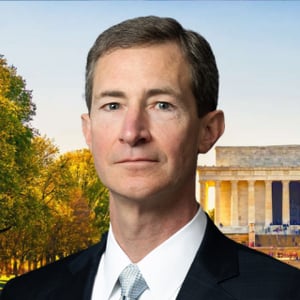
Partner, Torridon Law, PLLC
Pat Philbin brings to Torridon thirty years’ of experience in Washington, including in senior roles in the federal government. His work has involved a broad range of matters from litigating disputes for Fortune 100 companies, to responding to congressional investigations, to crisis management on legal issues making front page news. In addition to handling critical litigation matters, Pat draws on his extensive experience both in and out of government to counsel clients confronted with complex legal issues presenting multi-dimensional challenges.

Thomas M. Siebel Senior Fellow, The Hoover Institution, Stanford University; Gary T. Schwartz Distinguished Professor of Law Emeritus, UCLA School of Law
Eugene Volokh is the Thomas M. Siebel Senior Fellow at the Hoover Institution (Stanford), as well as the Gary T. Schwartz Distinguished Professor of Law Emeritus and Distinguished Research Professor at UCLA School of Law. He recently retired from teaching at UCLA, after 30 years there, and is now focusing on research.
Volokh is the author of the textbooks The First Amendment and Related Statutes (8th ed. 2023), and Academic Legal Writing (5th ed. 2016), as well as over 100 academic law journal articles, mostly on First Amendment law. He is a member of The American Law Institute; the editor-in-chief of the Journal of Free Speech Law; and the creator and coauthor of The Volokh Conspiracy, a leading legal blog founded in 2002 (hosted at the Washington Post from 2014 to 2017 and now at Reason Magazine).

Courthouse Steps Decision: Chiles v. Salazar
Paul Avelar, Stephanie Barclay, Casey Mattox
Chiles v. Salazar addressed whether a Colorado law prohibiting “conversion therapy” violates the First...
Courthouse Steps Oral Argument: Landor v. Louisiana Department of Corrections and Public Safety
Meredith Holland Kessler, Joshua C. McDaniel
Damon Landor, a state prisoner and practicing Rastafarian, refused to cut his hair as an...
Courthouse Steps Oral Argument: Chiles v. Salazar
Stephanie Barclay, Casey Mattox
In Chiles v. Salazar, the Court will consider the question of whether a Colorado law...
Courthouse Steps Decision: Free Speech Coalition, Inc. v. Paxton
Darpana Sheth Nunziata
Free Speech Coalition, Inc. v. Paxton concerned Texas Law H.B. 1181, and what precedent should...
A Significant Year for Religious Liberty?
Mark L. Rienzi, William L. Saunders
For the first time in years, the U.S. Supreme Court is addressing questions of religious...
Environmental Justice - Dead or Just Napping?
Michael Buschbacher, Horace Cooper, John C. Cruden, John Irving, Matthew Tejada
Environmental Justice - an effort to affirmatively address disproportionate pollution and environmental burdens borne by...
TikTok, Inc. v. Garland - Post-Decision SCOTUScast
Darpana Sheth Nunziata
On January 17, 2025, the U.S. Supreme Court issued their 9-0 opinion in TikTok, Inc. v. Garland....
New Voices in Civil Rights: How Universities are Responding to SFFA
Peter Abernathy, Samuel Gellen, Leo O'Malley, Anthony Pericolo, Devon Westhill
Institutions of higher education released demographic data for their first classes admitted after the Supreme...
Courthouse Steps Oral Argument: Free Speech Coalition, Inc. v. Paxton
Erik S. Jaffe
Free Speech Coalition, Inc. v. Paxton concerns Texas Law H.B. 1181, and what precedent should...
16th Annual Rosenkranz Debate & Luncheon
Miguel A. Estrada, Patrick F. Philbin, Eugene Volokh
RESOLVED: That Congress Can Ban TikTok Featuring: Mr. Miguel Estrada, Partner, Gibson Dunn & Crutcher...