
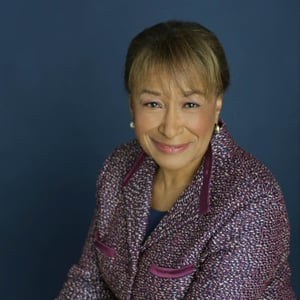
Judge, United States Court of Appeals, District of Columbia Circuit (ret.)
The Honorable Janice Rogers Brown was confirmed to the United States Court of Appeals for the District of Columbia Circuit on June 8, 2005. She retired from the court in 2017. From 1996 to 2005, she was an associate justice of the California Supreme Court. Prior to this, she served as associate justice of the Third District Court of Appeals in Sacramento and as legal affairs secretary to California Governor Pete Wilson. Earlier in her career, she served as Deputy Secretary and General Counsel for California’s Business, Transportation and Housing Agency after having worked in the criminal appellate and civil trial divisions of the California Attorney General’s Office. She currently chairs the Advisory Board of the New Civil Liberties Alliance, and serves on the Board of the Coolidge Foundation and the Association of College Trustees and Alumni. She is the Darling Foundation Jurist-in-Residence and visiting professor of Law at the University of California Boalt School of Law. Brown has been honored with the Jurisprudence Award of Claremont Institute’s Center for Constitutional Jurisprudence, the Baroness Thatcher Award of the Pacific Research Institute, the Edwin Meese III, Originalism and Religious Liberty Award from the Alliance Defending Freedom, the James Wilson Institute Leadership and the Law Award, and the 2019 Bradley Award. She earned her law degree from the University of California – Los Angeles School of Law, and a Master of Laws in judicial process from the University of Virginia School of Law.
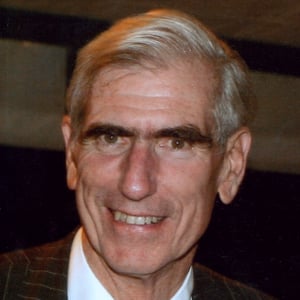
Founding Partner, Boyden Gray & Associates
Ambassador C. Boyden Gray is the founding partner of Boyden Gray & Associates, a law and strategy firm in Washington, D.C., focused on constitutional and regulatory issues.
Mr. Gray worked in the White House for twelve years, first as counsel to the Vice President during the Reagan administration and then as White House Counsel to President George H.W. Bush. In the Reagan administration, he was Counsel to the Presidential Task Force on Regulatory Relief, for which he wrote the original Executive Order 12291 requiring cost-benefit analysis and White House review of regulations (later renumbered as current EO 12866). In the George H.W. Bush Administration, Mr. Gray was in charge of judicial selection and was also instrumental in the enactment of the Clean Air Act Amendments of 1990, the Energy Policy Act of 1992, and a cap-and-trade system for acid rain emissions. In 1993, he received the Presidential Citizens Medal. Under President George W. Bush, Mr. Gray was U.S. Ambassador to the European Union and U.S. Special Envoy to Europe for Eurasian Energy.
Mr. Gray practiced law for 25 years at the law firm of Wilmer, Cutler & Pickering and was chairman of the Administrative Law and Regulatory Practice Section of the American Bar Association from 2000 to 2002. Early in his career, Mr. Gray helped to develop the Business Roundtable and served as its first counsel. He is an adjunct professor at Antonin Scalia Law School and a former adjunct professor at NYU Law School (teaching energy and environmental law). Mr. Gray is on the Board of Directors of the Atlantic Council, the Federalist Society, Reason Foundation, and the Trust for the National Mall.
Mr. Gray earned his A.B. magna cum laude from Harvard, where he was an editor of the Crimson, and his J.D. with high honors from the University of North Carolina at Chapel Hill, where he was editor-in-chief of the Law Review. Mr. Gray served in the United States Marine Corps, and after law school, he clerked for Earl Warren, Chief Justice of the United States Supreme Court.
Chairman and Chief Executive Officer, C.V. Starr & Co., Inc.
Distinguished Fellow, National Center for Policy Analysis
Chief Executive Officer, Foliofn
Judge, United States Court of Appeals, District of Columbia Circuit (ret.)
The Honorable Janice Rogers Brown was confirmed to the United States Court of Appeals for the District of Columbia Circuit on June 8, 2005. She retired from the court in 2017. From 1996 to 2005, she was an associate justice of the California Supreme Court. Prior to this, she served as associate justice of the Third District Court of Appeals in Sacramento and as legal affairs secretary to California Governor Pete Wilson. Earlier in her career, she served as Deputy Secretary and General Counsel for California’s Business, Transportation and Housing Agency after having worked in the criminal appellate and civil trial divisions of the California Attorney General’s Office. She currently chairs the Advisory Board of the New Civil Liberties Alliance, and serves on the Board of the Coolidge Foundation and the Association of College Trustees and Alumni. She is the Darling Foundation Jurist-in-Residence and visiting professor of Law at the University of California Boalt School of Law. Brown has been honored with the Jurisprudence Award of Claremont Institute’s Center for Constitutional Jurisprudence, the Baroness Thatcher Award of the Pacific Research Institute, the Edwin Meese III, Originalism and Religious Liberty Award from the Alliance Defending Freedom, the James Wilson Institute Leadership and the Law Award, and the 2019 Bradley Award. She earned her law degree from the University of California – Los Angeles School of Law, and a Master of Laws in judicial process from the University of Virginia School of Law.
Founding Partner, Boyden Gray & Associates
Ambassador C. Boyden Gray is the founding partner of Boyden Gray & Associates, a law and strategy firm in Washington, D.C., focused on constitutional and regulatory issues.
Mr. Gray worked in the White House for twelve years, first as counsel to the Vice President during the Reagan administration and then as White House Counsel to President George H.W. Bush. In the Reagan administration, he was Counsel to the Presidential Task Force on Regulatory Relief, for which he wrote the original Executive Order 12291 requiring cost-benefit analysis and White House review of regulations (later renumbered as current EO 12866). In the George H.W. Bush Administration, Mr. Gray was in charge of judicial selection and was also instrumental in the enactment of the Clean Air Act Amendments of 1990, the Energy Policy Act of 1992, and a cap-and-trade system for acid rain emissions. In 1993, he received the Presidential Citizens Medal. Under President George W. Bush, Mr. Gray was U.S. Ambassador to the European Union and U.S. Special Envoy to Europe for Eurasian Energy.
Mr. Gray practiced law for 25 years at the law firm of Wilmer, Cutler & Pickering and was chairman of the Administrative Law and Regulatory Practice Section of the American Bar Association from 2000 to 2002. Early in his career, Mr. Gray helped to develop the Business Roundtable and served as its first counsel. He is an adjunct professor at Antonin Scalia Law School and a former adjunct professor at NYU Law School (teaching energy and environmental law). Mr. Gray is on the Board of Directors of the Atlantic Council, the Federalist Society, Reason Foundation, and the Trust for the National Mall.
Mr. Gray earned his A.B. magna cum laude from Harvard, where he was an editor of the Crimson, and his J.D. with high honors from the University of North Carolina at Chapel Hill, where he was editor-in-chief of the Law Review. Mr. Gray served in the United States Marine Corps, and after law school, he clerked for Earl Warren, Chief Justice of the United States Supreme Court.
Chairman and Chief Executive Officer, C.V. Starr & Co., Inc.
Distinguished Fellow, National Center for Policy Analysis
Chief Executive Officer, Foliofn
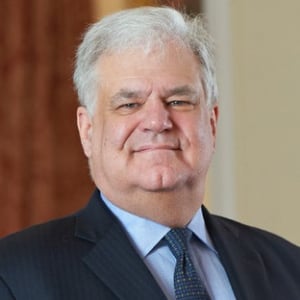
Stuyvesant P. Comfort Professor of Law; Director, Center for Financial Institutions; and Co-Director, Center for Civil Justice, New York University School of Law
Geoffrey Miller is an author or editor of a dozen books and more than 200 articles in the fields of financial institutions, contract law, corporate and securities law, constitutional law, civil procedure, legal history, jurisprudence, and ancient law. He has taught a wide range of subjects including law and economics, corporations, compliance and risk management, property, regulation of financial institutions, land development, securities law, the legal profession, and legal theory. Miller received his BA magna cum laude from Princeton in 1973 and his JD from Columbia in 1978, where he was a Stone Scholar and editor-in-chief of the Columbia Law Review. He clerked for Judge Carl McGowan of the US Court of Appeals for the District of Columbia Circuit and Justice Byron White of the US Supreme Court. After two years as an attorney adviser at the Office of Legal Counsel of the US Department of Justice and one year with a Washington, DC, law firm, he joined the faculty of the University of Chicago Law School in 1983 and NYU School of Law in 1995.
Miller has been a visiting professor or visiting scholar at Columbia University, Harvard University, University of Minnesota, University of Basel (Switzerland), University of Genoa (Italy), Collegio Carlo Alberto (Italy), Study Center Gerzensee (Switzerland), Vanderbilt University, University of St. Gallen (Switzerland), University of Frankfurt (Germany), University of Sydney (Australia), University of Auckland (New Zealand), and the Bank of Japan. Miller is a founder of the Society for Empirical Legal Studies, a scholarly organization devoted to promoting statistical and other empirical techniques in the study of legal institutions. He is founder and director of NYU School of Law’s Center for Financial Institutions, co-director of the Center for Civil Justice, co-founder of and Senior Academic Fellow at NYU's Program on Corporate Compliance and Enforcement, co-convener of the Global Economic Policy Forum, a member of the board of directors of State Farm Bank, and a fellow in the American Academy of Arts and Sciences.
Chief Executive Officer and Managing Director, Kalorama Partners LLC and Kalorama Legal Services PLLC
Harvey L. Pitt is the Founder, Chief Executive Officer and a Managing Director of the global business consulting firm, Kalorama Partners, LLC, and its law firm affiliate, Kalorama Legal Services, PLLC. Prior to founding the Kalorama firms in 2003, Mr. Pitt served as the twenty-sixth Chairman of the U. S. Securities and Exchange Commission. In that role, from 2001 until 2003, Mr. Pitt was responsible, among other things, for overseeing the SEC’s response to the market disruptions resulting from the terrorist attacks of 9/11, for creating the SEC’s “real time enforcement” program, and for leading the Commission’s unanimous adoption of dozens of rules in response to the corporate and accounting crises generated by the excesses of the 1990s.
For nearly a quarter of a century before becoming SEC Chairman, Mr. Pitt was a senior corporate partner of Fried, Frank LLP, an international law firm, and served as Co-Chair of the firm (1998-2001). He was a founding Trustee and first President of the SEC Historical Society. Former Chairman Pitt appears regularly as a commenter on major televised news programs, and is a frequent speaker on a wide variety of issues, including economics, regulation of capital and financial markets, corporate governance, business ethics, accounting, and legislative matters. Mr. Pitt has served as an Adjunct Faculty Member at the George Washington University Law School (Market Regulation, 1974-82), Georgetown University Law Center (Fraud and Fiduciary Duties, 1975-84), the University of Pennsylvania School of Law (Fraud and Fiduciary Duties, and Takeover Law, 1983-84) and The Yale Law School (Corporate Governance, 2007).
Former Chairman Pitt served previously on the Staff of the SEC (1968-78), including three years as Commission General Counsel (1975-78). Former Chairman Pitt received a J.D. degree from St. John’s University School of Law (1968), and his B.A. degree from the City University of New York (Brooklyn College) (1965). He was awarded an honorary LL.D. degree by St. John’s University (2002), and received the Brooklyn College President’s Medal of Distinction (2003). He co-authored a three volume comprehensive treatise on financial services regulation, entitled The Law of Financial Services (Aspen Law & Publishing, 1988), and has published numerous scholarly articles and monographs on a wide variety of economic, regulatory and legal subjects.
Mr. Pitt is currently a Director and Audit Committee member of Premier Alliance Group, Inc., a public professional services company focused on business, energy and technology advisory and consulting services. He is also a Director as well as the Chairman of the Audit and Compensation Committees of GWU Medical Faculty Associates, Inc., an IRC §501(c)(3) notfor-profit corporation that provides comprehensive medical care to residents of the greater Washington, D.C. metropolitan area. He also serves on the Board of Directors and Audit Committee of the offshore funds of Paulson & Co., and its affiliates. In addition to his fiduciary board positions, Mr. Pitt is a member of the Global Advisory Forum of CQS, a global multi strategy asset management firm, and a member of the Regulatory and Compliance Advisory Council of Millennium Management LLC. Mr. Pitt is also a member of the Advisory Council of the Public Company Accounting Oversight Board, a not-for-profit corporation created by the Sarbanes-Oxley Act, to oversee and regulate the audits of public companies and securities industry brokers and dealers. Mr. Pitt also serves as a Senior Advisor to Teneo Holdings LLC, a global consulting firm that offers a wide variety of strategic planning services to public and private companies, as well as local governments. Former Chairman Pitt previously served as a member of the National Cathedral School Board of Trustees (2006-09), where he was, variously, Board Vice-Chair, Co-Chair of the Board’s Governance Committee and Chair of the Audit and Compensation Committees.r. Pitt also previously served as a Director of Approva Corporation (2004-07), a closelyheld company that provided compliance software for major public companies, and was a member of Approva’s Audit and Strategic Planning Committees. In 2011, Mr. Pitt was inducted into the National Association of Corporate Directors-Directorship 100 Hall of Fame, which acknowledges corporate governance professionals for their lifetime accomplishments and their positive influence on corporate governance. In 2011, Mr. Pitt received the William O. Douglas Award, conferred annually by the Association of Securities and Exchange Commission Alumni, Inc. on an SEC alumnus who has contributed to the development of the federal securities laws or served the financial and SEC community with distinction.
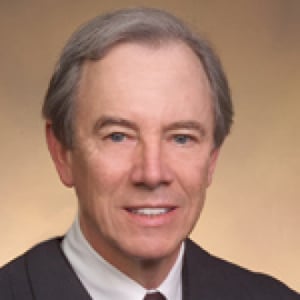
Judge, United States Court of Appeals, D.C. Circuit
Judge Randolph was confirmed by the Senate and appointed to the United States Court of Appeals for the District of Columbia Circuit by President George H. W. Bush in July 1990.
Judge Randolph received his B.S. degree in 1966 from Drexel University, majoring in economics and basic engineering. At Drexel, he was president of the debate society, vice president of the Student Senate, and a member of the varsity wrestling squad. In 1969, he received his J.D. from the University of Pennsylvania, summa cum laude. Judge Randolph ranked first in his law school class all three years and was managing editor of the Law Review.
After graduation, Judge Randolph served as a law clerk to Judge Henry J. Friendly of the United States Court of Appeals for the Second Circuit in New York.
Admitted to the California Bar in 1970 (and to the District of Columbia bar in 1973), Judge Randolph worked as Assistant to the Solicitor General, U.S. Department of Justice, in Washington, D.C., 1970-1973.
After two years in private practice, Judge Randolph was named Deputy Solicitor General of the United States, a position he held from 1975-1977.
In 1979, Judge Randolph was appointed Special Counsel to the Committee on Standards of Official Conduct (the Ethics Committee) of the United States House of Representatives, remaining in this position until 1980.
In the 1980s, Judge Randolph held a number of positions while in private practice, including Special Assistant Attorney General for the states of New Mexico (1985 90), Utah (1986-1990) and Montana (1983-1990). He also served as a Member of the Advisory Panel of the Federal Courts Study Committee.
From 1971-1990, Judge Randolph argued 23 times in the United States Supreme Court, winning 20 of his cases.
As an Adjunct Professor of Law at Georgetown University Law Center from 1974-1978 he taught courses in civil procedure and injunctions. In 1992 he taught a course in constitutional law. He is a Distinguished Adjunct Professor of Law at George Mason School of Law and for the past ten years has been teaching First Amendment law. He also serves on the Judicial Advisory Board of the George Mason University Law and Economics Center.
From 1993 through 1995 Judge Randolph was a member of the Committee on Codes of Conduct of the Judicial Conference of the United States, and from 1995 to 1998 served as the Committee's chairman. He also served as the judicial liaison to the American Bar Association’s Administrative Law Section.
Judge Randolph is a member of the Board of Visitors at Drexel University Law School and was named to the “Drexel One Hundred” as a leading alumnus. In 2002 he was presented the James Wilson Award by the University of Pennsylvania Law School. In November 2005 he delivered the Fifth Annual Barbara K. Olson Memorial Lecture at the Annual Lawyers Convention of the Federalist Society. He has published numerous articles, the most recent of which is in the June 2006 issue of the Harvard Journal of Law and Public Policy.
Judge Randolph is married to the Honorable Eileen J. O’Connor, formerly Assistant Attorney General, Tax Division, U.S. Department of Justice. His son John Trevor Randolph is an investment banker in New York. His daughter Cynthia Lee Randolph is an artist living in San Francisco.
Chief Executive Officer, Foliofn
Stuyvesant P. Comfort Professor of Law; Director, Center for Financial Institutions; and Co-Director, Center for Civil Justice, New York University School of Law
Geoffrey Miller is an author or editor of a dozen books and more than 200 articles in the fields of financial institutions, contract law, corporate and securities law, constitutional law, civil procedure, legal history, jurisprudence, and ancient law. He has taught a wide range of subjects including law and economics, corporations, compliance and risk management, property, regulation of financial institutions, land development, securities law, the legal profession, and legal theory. Miller received his BA magna cum laude from Princeton in 1973 and his JD from Columbia in 1978, where he was a Stone Scholar and editor-in-chief of the Columbia Law Review. He clerked for Judge Carl McGowan of the US Court of Appeals for the District of Columbia Circuit and Justice Byron White of the US Supreme Court. After two years as an attorney adviser at the Office of Legal Counsel of the US Department of Justice and one year with a Washington, DC, law firm, he joined the faculty of the University of Chicago Law School in 1983 and NYU School of Law in 1995.
Miller has been a visiting professor or visiting scholar at Columbia University, Harvard University, University of Minnesota, University of Basel (Switzerland), University of Genoa (Italy), Collegio Carlo Alberto (Italy), Study Center Gerzensee (Switzerland), Vanderbilt University, University of St. Gallen (Switzerland), University of Frankfurt (Germany), University of Sydney (Australia), University of Auckland (New Zealand), and the Bank of Japan. Miller is a founder of the Society for Empirical Legal Studies, a scholarly organization devoted to promoting statistical and other empirical techniques in the study of legal institutions. He is founder and director of NYU School of Law’s Center for Financial Institutions, co-director of the Center for Civil Justice, co-founder of and Senior Academic Fellow at NYU's Program on Corporate Compliance and Enforcement, co-convener of the Global Economic Policy Forum, a member of the board of directors of State Farm Bank, and a fellow in the American Academy of Arts and Sciences.
Chief Executive Officer and Managing Director, Kalorama Partners LLC and Kalorama Legal Services PLLC
Harvey L. Pitt is the Founder, Chief Executive Officer and a Managing Director of the global business consulting firm, Kalorama Partners, LLC, and its law firm affiliate, Kalorama Legal Services, PLLC. Prior to founding the Kalorama firms in 2003, Mr. Pitt served as the twenty-sixth Chairman of the U. S. Securities and Exchange Commission. In that role, from 2001 until 2003, Mr. Pitt was responsible, among other things, for overseeing the SEC’s response to the market disruptions resulting from the terrorist attacks of 9/11, for creating the SEC’s “real time enforcement” program, and for leading the Commission’s unanimous adoption of dozens of rules in response to the corporate and accounting crises generated by the excesses of the 1990s.
For nearly a quarter of a century before becoming SEC Chairman, Mr. Pitt was a senior corporate partner of Fried, Frank LLP, an international law firm, and served as Co-Chair of the firm (1998-2001). He was a founding Trustee and first President of the SEC Historical Society. Former Chairman Pitt appears regularly as a commenter on major televised news programs, and is a frequent speaker on a wide variety of issues, including economics, regulation of capital and financial markets, corporate governance, business ethics, accounting, and legislative matters. Mr. Pitt has served as an Adjunct Faculty Member at the George Washington University Law School (Market Regulation, 1974-82), Georgetown University Law Center (Fraud and Fiduciary Duties, 1975-84), the University of Pennsylvania School of Law (Fraud and Fiduciary Duties, and Takeover Law, 1983-84) and The Yale Law School (Corporate Governance, 2007).
Former Chairman Pitt served previously on the Staff of the SEC (1968-78), including three years as Commission General Counsel (1975-78). Former Chairman Pitt received a J.D. degree from St. John’s University School of Law (1968), and his B.A. degree from the City University of New York (Brooklyn College) (1965). He was awarded an honorary LL.D. degree by St. John’s University (2002), and received the Brooklyn College President’s Medal of Distinction (2003). He co-authored a three volume comprehensive treatise on financial services regulation, entitled The Law of Financial Services (Aspen Law & Publishing, 1988), and has published numerous scholarly articles and monographs on a wide variety of economic, regulatory and legal subjects.
Mr. Pitt is currently a Director and Audit Committee member of Premier Alliance Group, Inc., a public professional services company focused on business, energy and technology advisory and consulting services. He is also a Director as well as the Chairman of the Audit and Compensation Committees of GWU Medical Faculty Associates, Inc., an IRC §501(c)(3) notfor-profit corporation that provides comprehensive medical care to residents of the greater Washington, D.C. metropolitan area. He also serves on the Board of Directors and Audit Committee of the offshore funds of Paulson & Co., and its affiliates. In addition to his fiduciary board positions, Mr. Pitt is a member of the Global Advisory Forum of CQS, a global multi strategy asset management firm, and a member of the Regulatory and Compliance Advisory Council of Millennium Management LLC. Mr. Pitt is also a member of the Advisory Council of the Public Company Accounting Oversight Board, a not-for-profit corporation created by the Sarbanes-Oxley Act, to oversee and regulate the audits of public companies and securities industry brokers and dealers. Mr. Pitt also serves as a Senior Advisor to Teneo Holdings LLC, a global consulting firm that offers a wide variety of strategic planning services to public and private companies, as well as local governments. Former Chairman Pitt previously served as a member of the National Cathedral School Board of Trustees (2006-09), where he was, variously, Board Vice-Chair, Co-Chair of the Board’s Governance Committee and Chair of the Audit and Compensation Committees.r. Pitt also previously served as a Director of Approva Corporation (2004-07), a closelyheld company that provided compliance software for major public companies, and was a member of Approva’s Audit and Strategic Planning Committees. In 2011, Mr. Pitt was inducted into the National Association of Corporate Directors-Directorship 100 Hall of Fame, which acknowledges corporate governance professionals for their lifetime accomplishments and their positive influence on corporate governance. In 2011, Mr. Pitt received the William O. Douglas Award, conferred annually by the Association of Securities and Exchange Commission Alumni, Inc. on an SEC alumnus who has contributed to the development of the federal securities laws or served the financial and SEC community with distinction.
Judge, United States Court of Appeals, D.C. Circuit
Judge Randolph was confirmed by the Senate and appointed to the United States Court of Appeals for the District of Columbia Circuit by President George H. W. Bush in July 1990.
Judge Randolph received his B.S. degree in 1966 from Drexel University, majoring in economics and basic engineering. At Drexel, he was president of the debate society, vice president of the Student Senate, and a member of the varsity wrestling squad. In 1969, he received his J.D. from the University of Pennsylvania, summa cum laude. Judge Randolph ranked first in his law school class all three years and was managing editor of the Law Review.
After graduation, Judge Randolph served as a law clerk to Judge Henry J. Friendly of the United States Court of Appeals for the Second Circuit in New York.
Admitted to the California Bar in 1970 (and to the District of Columbia bar in 1973), Judge Randolph worked as Assistant to the Solicitor General, U.S. Department of Justice, in Washington, D.C., 1970-1973.
After two years in private practice, Judge Randolph was named Deputy Solicitor General of the United States, a position he held from 1975-1977.
In 1979, Judge Randolph was appointed Special Counsel to the Committee on Standards of Official Conduct (the Ethics Committee) of the United States House of Representatives, remaining in this position until 1980.
In the 1980s, Judge Randolph held a number of positions while in private practice, including Special Assistant Attorney General for the states of New Mexico (1985 90), Utah (1986-1990) and Montana (1983-1990). He also served as a Member of the Advisory Panel of the Federal Courts Study Committee.
From 1971-1990, Judge Randolph argued 23 times in the United States Supreme Court, winning 20 of his cases.
As an Adjunct Professor of Law at Georgetown University Law Center from 1974-1978 he taught courses in civil procedure and injunctions. In 1992 he taught a course in constitutional law. He is a Distinguished Adjunct Professor of Law at George Mason School of Law and for the past ten years has been teaching First Amendment law. He also serves on the Judicial Advisory Board of the George Mason University Law and Economics Center.
From 1993 through 1995 Judge Randolph was a member of the Committee on Codes of Conduct of the Judicial Conference of the United States, and from 1995 to 1998 served as the Committee's chairman. He also served as the judicial liaison to the American Bar Association’s Administrative Law Section.
Judge Randolph is a member of the Board of Visitors at Drexel University Law School and was named to the “Drexel One Hundred” as a leading alumnus. In 2002 he was presented the James Wilson Award by the University of Pennsylvania Law School. In November 2005 he delivered the Fifth Annual Barbara K. Olson Memorial Lecture at the Annual Lawyers Convention of the Federalist Society. He has published numerous articles, the most recent of which is in the June 2006 issue of the Harvard Journal of Law and Public Policy.
Judge Randolph is married to the Honorable Eileen J. O’Connor, formerly Assistant Attorney General, Tax Division, U.S. Department of Justice. His son John Trevor Randolph is an investment banker in New York. His daughter Cynthia Lee Randolph is an artist living in San Francisco.
Chief Executive Officer, Foliofn
Stuyvesant P. Comfort Professor of Law; Director, Center for Financial Institutions; and Co-Director, Center for Civil Justice, New York University School of Law
Geoffrey Miller is an author or editor of a dozen books and more than 200 articles in the fields of financial institutions, contract law, corporate and securities law, constitutional law, civil procedure, legal history, jurisprudence, and ancient law. He has taught a wide range of subjects including law and economics, corporations, compliance and risk management, property, regulation of financial institutions, land development, securities law, the legal profession, and legal theory. Miller received his BA magna cum laude from Princeton in 1973 and his JD from Columbia in 1978, where he was a Stone Scholar and editor-in-chief of the Columbia Law Review. He clerked for Judge Carl McGowan of the US Court of Appeals for the District of Columbia Circuit and Justice Byron White of the US Supreme Court. After two years as an attorney adviser at the Office of Legal Counsel of the US Department of Justice and one year with a Washington, DC, law firm, he joined the faculty of the University of Chicago Law School in 1983 and NYU School of Law in 1995.
Miller has been a visiting professor or visiting scholar at Columbia University, Harvard University, University of Minnesota, University of Basel (Switzerland), University of Genoa (Italy), Collegio Carlo Alberto (Italy), Study Center Gerzensee (Switzerland), Vanderbilt University, University of St. Gallen (Switzerland), University of Frankfurt (Germany), University of Sydney (Australia), University of Auckland (New Zealand), and the Bank of Japan. Miller is a founder of the Society for Empirical Legal Studies, a scholarly organization devoted to promoting statistical and other empirical techniques in the study of legal institutions. He is founder and director of NYU School of Law’s Center for Financial Institutions, co-director of the Center for Civil Justice, co-founder of and Senior Academic Fellow at NYU's Program on Corporate Compliance and Enforcement, co-convener of the Global Economic Policy Forum, a member of the board of directors of State Farm Bank, and a fellow in the American Academy of Arts and Sciences.
Chief Executive Officer and Managing Director, Kalorama Partners LLC and Kalorama Legal Services PLLC
Harvey L. Pitt is the Founder, Chief Executive Officer and a Managing Director of the global business consulting firm, Kalorama Partners, LLC, and its law firm affiliate, Kalorama Legal Services, PLLC. Prior to founding the Kalorama firms in 2003, Mr. Pitt served as the twenty-sixth Chairman of the U. S. Securities and Exchange Commission. In that role, from 2001 until 2003, Mr. Pitt was responsible, among other things, for overseeing the SEC’s response to the market disruptions resulting from the terrorist attacks of 9/11, for creating the SEC’s “real time enforcement” program, and for leading the Commission’s unanimous adoption of dozens of rules in response to the corporate and accounting crises generated by the excesses of the 1990s.
For nearly a quarter of a century before becoming SEC Chairman, Mr. Pitt was a senior corporate partner of Fried, Frank LLP, an international law firm, and served as Co-Chair of the firm (1998-2001). He was a founding Trustee and first President of the SEC Historical Society. Former Chairman Pitt appears regularly as a commenter on major televised news programs, and is a frequent speaker on a wide variety of issues, including economics, regulation of capital and financial markets, corporate governance, business ethics, accounting, and legislative matters. Mr. Pitt has served as an Adjunct Faculty Member at the George Washington University Law School (Market Regulation, 1974-82), Georgetown University Law Center (Fraud and Fiduciary Duties, 1975-84), the University of Pennsylvania School of Law (Fraud and Fiduciary Duties, and Takeover Law, 1983-84) and The Yale Law School (Corporate Governance, 2007).
Former Chairman Pitt served previously on the Staff of the SEC (1968-78), including three years as Commission General Counsel (1975-78). Former Chairman Pitt received a J.D. degree from St. John’s University School of Law (1968), and his B.A. degree from the City University of New York (Brooklyn College) (1965). He was awarded an honorary LL.D. degree by St. John’s University (2002), and received the Brooklyn College President’s Medal of Distinction (2003). He co-authored a three volume comprehensive treatise on financial services regulation, entitled The Law of Financial Services (Aspen Law & Publishing, 1988), and has published numerous scholarly articles and monographs on a wide variety of economic, regulatory and legal subjects.
Mr. Pitt is currently a Director and Audit Committee member of Premier Alliance Group, Inc., a public professional services company focused on business, energy and technology advisory and consulting services. He is also a Director as well as the Chairman of the Audit and Compensation Committees of GWU Medical Faculty Associates, Inc., an IRC §501(c)(3) notfor-profit corporation that provides comprehensive medical care to residents of the greater Washington, D.C. metropolitan area. He also serves on the Board of Directors and Audit Committee of the offshore funds of Paulson & Co., and its affiliates. In addition to his fiduciary board positions, Mr. Pitt is a member of the Global Advisory Forum of CQS, a global multi strategy asset management firm, and a member of the Regulatory and Compliance Advisory Council of Millennium Management LLC. Mr. Pitt is also a member of the Advisory Council of the Public Company Accounting Oversight Board, a not-for-profit corporation created by the Sarbanes-Oxley Act, to oversee and regulate the audits of public companies and securities industry brokers and dealers. Mr. Pitt also serves as a Senior Advisor to Teneo Holdings LLC, a global consulting firm that offers a wide variety of strategic planning services to public and private companies, as well as local governments. Former Chairman Pitt previously served as a member of the National Cathedral School Board of Trustees (2006-09), where he was, variously, Board Vice-Chair, Co-Chair of the Board’s Governance Committee and Chair of the Audit and Compensation Committees.r. Pitt also previously served as a Director of Approva Corporation (2004-07), a closelyheld company that provided compliance software for major public companies, and was a member of Approva’s Audit and Strategic Planning Committees. In 2011, Mr. Pitt was inducted into the National Association of Corporate Directors-Directorship 100 Hall of Fame, which acknowledges corporate governance professionals for their lifetime accomplishments and their positive influence on corporate governance. In 2011, Mr. Pitt received the William O. Douglas Award, conferred annually by the Association of Securities and Exchange Commission Alumni, Inc. on an SEC alumnus who has contributed to the development of the federal securities laws or served the financial and SEC community with distinction.
Judge, United States Court of Appeals, D.C. Circuit
Judge Randolph was confirmed by the Senate and appointed to the United States Court of Appeals for the District of Columbia Circuit by President George H. W. Bush in July 1990.
Judge Randolph received his B.S. degree in 1966 from Drexel University, majoring in economics and basic engineering. At Drexel, he was president of the debate society, vice president of the Student Senate, and a member of the varsity wrestling squad. In 1969, he received his J.D. from the University of Pennsylvania, summa cum laude. Judge Randolph ranked first in his law school class all three years and was managing editor of the Law Review.
After graduation, Judge Randolph served as a law clerk to Judge Henry J. Friendly of the United States Court of Appeals for the Second Circuit in New York.
Admitted to the California Bar in 1970 (and to the District of Columbia bar in 1973), Judge Randolph worked as Assistant to the Solicitor General, U.S. Department of Justice, in Washington, D.C., 1970-1973.
After two years in private practice, Judge Randolph was named Deputy Solicitor General of the United States, a position he held from 1975-1977.
In 1979, Judge Randolph was appointed Special Counsel to the Committee on Standards of Official Conduct (the Ethics Committee) of the United States House of Representatives, remaining in this position until 1980.
In the 1980s, Judge Randolph held a number of positions while in private practice, including Special Assistant Attorney General for the states of New Mexico (1985 90), Utah (1986-1990) and Montana (1983-1990). He also served as a Member of the Advisory Panel of the Federal Courts Study Committee.
From 1971-1990, Judge Randolph argued 23 times in the United States Supreme Court, winning 20 of his cases.
As an Adjunct Professor of Law at Georgetown University Law Center from 1974-1978 he taught courses in civil procedure and injunctions. In 1992 he taught a course in constitutional law. He is a Distinguished Adjunct Professor of Law at George Mason School of Law and for the past ten years has been teaching First Amendment law. He also serves on the Judicial Advisory Board of the George Mason University Law and Economics Center.
From 1993 through 1995 Judge Randolph was a member of the Committee on Codes of Conduct of the Judicial Conference of the United States, and from 1995 to 1998 served as the Committee's chairman. He also served as the judicial liaison to the American Bar Association’s Administrative Law Section.
Judge Randolph is a member of the Board of Visitors at Drexel University Law School and was named to the “Drexel One Hundred” as a leading alumnus. In 2002 he was presented the James Wilson Award by the University of Pennsylvania Law School. In November 2005 he delivered the Fifth Annual Barbara K. Olson Memorial Lecture at the Annual Lawyers Convention of the Federalist Society. He has published numerous articles, the most recent of which is in the June 2006 issue of the Harvard Journal of Law and Public Policy.
Judge Randolph is married to the Honorable Eileen J. O’Connor, formerly Assistant Attorney General, Tax Division, U.S. Department of Justice. His son John Trevor Randolph is an investment banker in New York. His daughter Cynthia Lee Randolph is an artist living in San Francisco.
Judge, United States Court of Appeals, District of Columbia Circuit (ret.)
The Honorable Janice Rogers Brown was confirmed to the United States Court of Appeals for the District of Columbia Circuit on June 8, 2005. She retired from the court in 2017. From 1996 to 2005, she was an associate justice of the California Supreme Court. Prior to this, she served as associate justice of the Third District Court of Appeals in Sacramento and as legal affairs secretary to California Governor Pete Wilson. Earlier in her career, she served as Deputy Secretary and General Counsel for California’s Business, Transportation and Housing Agency after having worked in the criminal appellate and civil trial divisions of the California Attorney General’s Office. She currently chairs the Advisory Board of the New Civil Liberties Alliance, and serves on the Board of the Coolidge Foundation and the Association of College Trustees and Alumni. She is the Darling Foundation Jurist-in-Residence and visiting professor of Law at the University of California Boalt School of Law. Brown has been honored with the Jurisprudence Award of Claremont Institute’s Center for Constitutional Jurisprudence, the Baroness Thatcher Award of the Pacific Research Institute, the Edwin Meese III, Originalism and Religious Liberty Award from the Alliance Defending Freedom, the James Wilson Institute Leadership and the Law Award, and the 2019 Bradley Award. She earned her law degree from the University of California – Los Angeles School of Law, and a Master of Laws in judicial process from the University of Virginia School of Law.
Founding Partner, Boyden Gray & Associates
Ambassador C. Boyden Gray is the founding partner of Boyden Gray & Associates, a law and strategy firm in Washington, D.C., focused on constitutional and regulatory issues.
Mr. Gray worked in the White House for twelve years, first as counsel to the Vice President during the Reagan administration and then as White House Counsel to President George H.W. Bush. In the Reagan administration, he was Counsel to the Presidential Task Force on Regulatory Relief, for which he wrote the original Executive Order 12291 requiring cost-benefit analysis and White House review of regulations (later renumbered as current EO 12866). In the George H.W. Bush Administration, Mr. Gray was in charge of judicial selection and was also instrumental in the enactment of the Clean Air Act Amendments of 1990, the Energy Policy Act of 1992, and a cap-and-trade system for acid rain emissions. In 1993, he received the Presidential Citizens Medal. Under President George W. Bush, Mr. Gray was U.S. Ambassador to the European Union and U.S. Special Envoy to Europe for Eurasian Energy.
Mr. Gray practiced law for 25 years at the law firm of Wilmer, Cutler & Pickering and was chairman of the Administrative Law and Regulatory Practice Section of the American Bar Association from 2000 to 2002. Early in his career, Mr. Gray helped to develop the Business Roundtable and served as its first counsel. He is an adjunct professor at Antonin Scalia Law School and a former adjunct professor at NYU Law School (teaching energy and environmental law). Mr. Gray is on the Board of Directors of the Atlantic Council, the Federalist Society, Reason Foundation, and the Trust for the National Mall.
Mr. Gray earned his A.B. magna cum laude from Harvard, where he was an editor of the Crimson, and his J.D. with high honors from the University of North Carolina at Chapel Hill, where he was editor-in-chief of the Law Review. Mr. Gray served in the United States Marine Corps, and after law school, he clerked for Earl Warren, Chief Justice of the United States Supreme Court.
Chairman and Chief Executive Officer, C.V. Starr & Co., Inc.
Distinguished Fellow, National Center for Policy Analysis

Showcase Panel II: Bailouts and the Government as Insurer of Last Resort
Janice Rogers Brown, C. Boyden Gray, Maurice R. Greenberg, Robert D. McTeer, Steven M.H Wallman
What is the best way to handle economic failure at a large scale? Taxing, regulation,...
Showcase Panel II: Bailouts and the Government as Insurer of Last Resort
Janice Rogers Brown, C. Boyden Gray, Maurice R. Greenberg, Robert D. McTeer, Steven M.H Wallman
What is the best way to handle economic failure at a large scale? Taxing, regulation,...
Showcase Panel IV: Control of the Bureaucracy
Geoffrey P. Miller, Harvey L. Pitt, A. Raymond Randolph, Steven M.H Wallman
One problem cited in the financial crisis was the failure of regulatory agencies to do...
Showcase Panel IV: Control of the Bureaucracy
Geoffrey P. Miller, Harvey L. Pitt, A. Raymond Randolph, Steven M.H Wallman
One problem cited in the financial crisis was the failure of regulatory agencies to do...
Showcase Panel IV: Control of the Bureaucracy
2009 National Lawyers Convention
Washington, DCShowcase Panel II: Bailouts and the Government as Insurer of Last Resort
2009 National Lawyers Convention
Washington, DCSEC To Revisit Social Activism and Shareholder Proposal Rule
Joseph P. Galda
The SEC has once again been put at the center stage of a long-standing dispute...