
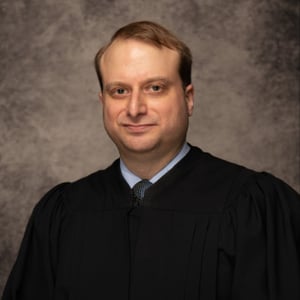
Judge, United States Court of Appeals, Second Circuit
Judge Menashi was appointed to the U.S. Court of Appeals for the Second Circuit on November 14, 2019. Previously, he served as special assistant and associate counsel to the President in the White House and as acting general counsel at the U.S. Department of Education. He was assistant professor of law at Scalia Law School, George Mason University, where he taught administrative law and civil procedure, and a research fellow at New York University School of Law and Georgetown University Law Center. He was also a partner at Kirkland & Ellis LLP in New York, where he practiced appellate and commercial litigation, and served as a law clerk to Justice Samuel Alito on the Supreme Court of the United States and to Judge Douglas Ginsburg on the U.S. Court of Appeals for the District of Columbia Circuit. He graduated from Stanford Law School, where he was elected to Order of the Coif and served as senior articles editor of the Stanford Law Review, and from Dartmouth College, where he was elected to Phi Beta Kappa.
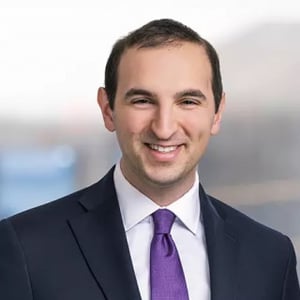
Associate, Covington & Burling LLP
Eli Nachmany is an associate at Covington & Burling LLP in the Washington, DC, office. He clerked for Judge Steven J. Menashi of the U.S. Court of Appeals for the Second Circuit. Eli graduated magna cum laude from Harvard Law School, where he was Editor-in-Chief of the Harvard Journal of Law & Public Policy. Prior to law school, Eli served as the speechwriter to the U.S. Secretary of the Interior and as a domestic policy aide in the White House Office of American Innovation. He graduated summa cum laude from New York University with a B.S. in Sports Management. Eli’s scholarship on administrative law and executive power has appeared in the BYU Law Review, George Mason Law Review, Wake Forest Law Review, and Yale Law Journal Forum.
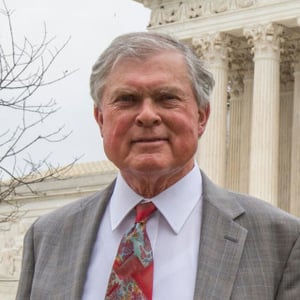
Senior Fellow, Independent Institute
Dr. Stephen P. Halbrook is a Senior Fellow at the Independent Institute. He has taught legal and political philosophy at George Mason University, Howard University, and Tuskegee Institute, and he received his J.D. from the Georgetown University Law Center and Ph.D. in social philosophy from Florida State University.
The winner of three cases before the U.S. Supreme Court (Printz v. United States, United States v. Thompson/Center Arms Company, and Castillo v. United States), he has testified before the Subcommittee on the Constitution of the Senate Judiciary Committee, Senate Subcommittee on the Constitution, Subcommittee on Crime of the House Judiciary Committee, Senate Governmental Affairs Committee, and House Committee on the District of Columbia.
A contributor to numerous scholarly volumes, he is the author of the books, Gun Control in Nazi-Occupied France: Tyranny and Resistance; Gun Control in the Third Reich: Disarming the Jews and “Enemies of the State”; The Founders’ Second Amendment: Origins of the Right to Bear Arms; That Every Man Be Armed: Evolution of a Constitutional Right; A Right to Bear Arms; Firearms Law Deskbook: Federal and State Criminal Practice; Securing Civil Rights: Freedmen, the Fourteenth Amendment, and the Right to Bear Arms; State and Federal Bills of Rights and Constitutional Guarantees; and Target Switzerland: Swiss Armed Neutrality in World War II. Dr. Halbrook’s scholarly articles have appeared in such journals as the Arizona Journal of International and Comparative Law, Drug Law Report, George Mason University Law Review, Journal of Air Law and Commerce, Journal of Law and Policy, Law & Contemporary Problems, National Law Journal, Northern Kentucky Law Review, St. John’s Journal of Legal Commentary; Seton Hall Constitutional Law Journal, Tennessee Law Review, University of Dayton Law Review, Valparaiso University Law Review, Vermont Law Review, and William & Mary Bill of Rights Journal.
Dr. Halbrook's popular articles have appeared in such publications as the Wall Street Journal, Newsday, San Francisco Chronicle, National Review, Investor’s Business Daily, Kansas City Star, Washington Examiner, Shreveport Times, Sacramento Bee, Providence Journal, Tampa Tribune, Pittsburgh Tribune-Review, History News Network, San Antonio Express-News, The Daily Caller, Detroit News, Honolulu Star Advertiser, Birmingham News, Environmental Forum, USA Today, and Washington Times. He has also appeared on numerous national TV/radio programs on CNN, Fox News Channel, Fox Business Network, Court TV, NewsMax TV, CBN, Voice of America, and C-SPAN.
Judge, United States Court of Appeals, Second Circuit
Judge Menashi was appointed to the U.S. Court of Appeals for the Second Circuit on November 14, 2019. Previously, he served as special assistant and associate counsel to the President in the White House and as acting general counsel at the U.S. Department of Education. He was assistant professor of law at Scalia Law School, George Mason University, where he taught administrative law and civil procedure, and a research fellow at New York University School of Law and Georgetown University Law Center. He was also a partner at Kirkland & Ellis LLP in New York, where he practiced appellate and commercial litigation, and served as a law clerk to Justice Samuel Alito on the Supreme Court of the United States and to Judge Douglas Ginsburg on the U.S. Court of Appeals for the District of Columbia Circuit. He graduated from Stanford Law School, where he was elected to Order of the Coif and served as senior articles editor of the Stanford Law Review, and from Dartmouth College, where he was elected to Phi Beta Kappa.
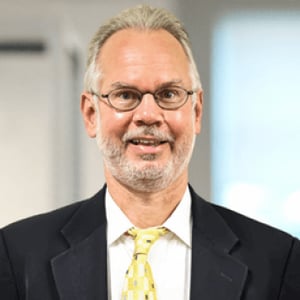
Associate Professor, Charleston School of Law
Bill Merkel joined the Charleston School of Law faculty in 2012. Merkel graduated from Johns Hopkins University with a B.A. in history in 1988 and proceeded to work as a cook in Baltimore and then as an analyst with the Department of Transportation in Washington, D.C. before returning to graduate studies in history and law.
He completed his J.D. at Columbia Law School in 1996 and then worked in appellate litigation with Wiley, Rein & Fielding in Washington, D.C. from 1997-1998. Merkel is the author, with the late Richard Uviller, of The Militia and the Right to Arms, Or, How the Second Amendment Fell Silent (Duke University Press, 2002). He taught American history at Oxford University from 2001-2003 and Comparative Introduction to American Law to foreign trained LL.M. students at Columbia Law School from 2003-2005. From 2005-2011, Merkel was an Associate Professor of Law at Washburn Law School in Topeka, Kansas, where he was named Professor of the Year by the graduating class in 2008. At Washburn, Merkel taught Constitutional Law I & II, Comparative Constitutional Law, Public International Law, and International Criminal Law and the Law of War. He received a doctorate in history from Oxford University in 2007.
Merkel has held visiting positions at the University of North Dakota School of Law in 2009 and at the University of South Carolina School of Law in 2011-12. In 2013 and 2014, Merkel taught The United States and the International Court of Justice in the Hague, Netherlands as part of the Charleston School of Law’s summer school consortium program administered by Stetson University School of Law. At the Charleston School of Law, Merkel continues to teach courses in Constitutional Law, International Law, Comparative Law, and Legal History. Merkel’s article “Jefferson’s Failed Anti-Slavery Proviso of 1784 and the Nascence of Free Soil Constitutionalism” was selected as the best submission in constitutional history by the Stanford/Yale Junior Faculty Forum in 2006. Merkel is in the process of revising his Oxford doctoral thesis “Race, Liberty, and Law: Thomas Jefferson and Slavery, 1770-1800” for publication as a book to be titled Ambiguous Beginnings: Thomas Jefferson, Slavery, and the Foundations of American Constitutionalism. Merkel has published numerous articles in journals including the Chicago-Kent Law Review, Connecticut Law Review, Lewis and Clark Law Review, Santa Clara Law Review, Seton Hall Law Review, Rutgers Law Review, and Law and History Review. His scholarship on the Second Amendment has been cited by many authors and jurists, including Justice Breyer in a dissenting opinion in McDonald v. City of Chicago. In 2013, following the successful defense of his dissertation “The Second Amendment and the Constitutional Right to Self-Defense,” Merkel was awarded a J.S.D. degree by Columbia University.
Merkel is a member of the District of Columbia, New York, and United States Supreme Court Bars.
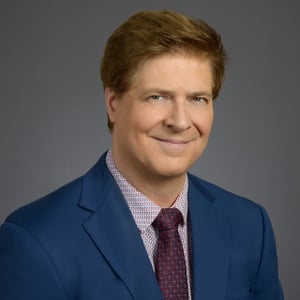
Senior Fellow, Ave Maria School of Law and Host of the Four Boxes Diner Second Amendment Channel
Mark W. Smith is Visiting Fellow in Pharmaceutical Public Policy and Law in the Department of Pharmacology at the University of Oxford; Presidential Scholar and a Senior Fellow in Law and Public Policy at The King’s College; and Distinguished Scholar and Senior Fellow of Law and Public Policy at the Ave Maria School of Law.
He is a constitutional attorney and Host of the Four Boxes Diner YouTube channel—which provides scholarly and historical analyses of the Second Amendment. Mark is also a New York Times bestselling author.
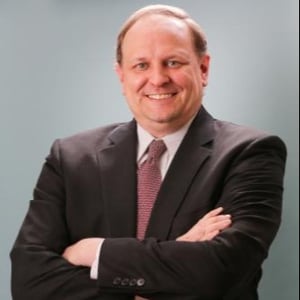
Director, Center for Legal Policy, Manhattan Institute for Policy Research
James R. Copland is a senior fellow at the Manhattan Institute and director of Legal Policy. In those roles, he develops and communicates novel, sound ideas on how to improve America’s civil- and criminal-justice systems. His forthcoming book, The Unelected: How an Unaccountable Elite is Governing America (Encounter Books) will be released on September 8, 2020. He has testified before Congress as well as state and municipal legislatures; and has authored many policy briefs, book chapters, articles and opinion pieces in a variety of publications, including the Harvard Business Law Review and Yale Journal on Regulation, the Wall Street Journal, National Law Journal, and USA Today. Copland speaks regularly on civil- and criminal-justice issues; has made hundreds of media appearances in such outlets as PBS, Fox News, MSNBC, CNBC, Fox Business, Bloomberg, C-Span, and NPR; and is frequently cited in news articles in the New York Times, Washington Post, The Economist, and Forbes. In 2011 and 2012, he was named to the National Association of Corporate Directors “Directorship 100” list, which designates the individuals most influential over U.S. corporate governance.
Prior to joining MI, Copland was a management consultant with McKinsey and Company in New York. Earlier, he was a law clerk for Ralph K. Winter on the U.S. Court of Appeals for the Second Circuit. Copland has been a director of two privately held manufacturing companies since 1997 and has served on many public and nonprofit boards. He holds a J.D. and an M.B.A. from Yale, where he was an Olin Fellow in Law and Economics; an M.Sc. in the politics of the world economy from the London School of Economics; and a B.A. in economics from the University of North Carolina at Chapel Hill, where he was a Morehead Scholar.
Judge, United States Court of Appeals, Second Circuit
Judge Menashi was appointed to the U.S. Court of Appeals for the Second Circuit on November 14, 2019. Previously, he served as special assistant and associate counsel to the President in the White House and as acting general counsel at the U.S. Department of Education. He was assistant professor of law at Scalia Law School, George Mason University, where he taught administrative law and civil procedure, and a research fellow at New York University School of Law and Georgetown University Law Center. He was also a partner at Kirkland & Ellis LLP in New York, where he practiced appellate and commercial litigation, and served as a law clerk to Justice Samuel Alito on the Supreme Court of the United States and to Judge Douglas Ginsburg on the U.S. Court of Appeals for the District of Columbia Circuit. He graduated from Stanford Law School, where he was elected to Order of the Coif and served as senior articles editor of the Stanford Law Review, and from Dartmouth College, where he was elected to Phi Beta Kappa.
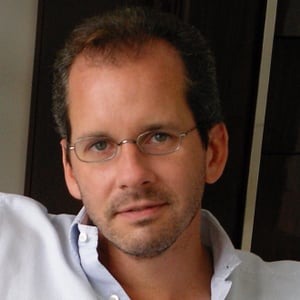
Professor of Law, Georgetown University Law Center
Nicholas Quinn Rosenkranz teaches constitutional law and federal jurisdiction, and he writes articles for the Harvard Law Review and the Stanford Law Review.
He is currently developing a new theory of constitutional interpretation and judicial review. The first installment, entitledThe Subjects of the Constitution, was published in the Stanford Law Review in May of 2010, and it is among the most downloaded articles about constitutional interpretation, judicial review, and/or federal courts in the history of SSRN. The second installment, The Objects of the Constitution, was published in May of 2011, also in the Stanford Law Review. And the comprehensive version is forthcoming as a book by Oxford University Press.
Rosenkranz has served and advised the federal government in a variety of capacities. He clerked for Judge Frank H. Easterbrook on the U.S. Court of Appeals for the Seventh Circuit (1999-2000) and for Justice Anthony M. Kennedy at the U.S. Supreme Court (October Term 2001). He served as an Attorney-Advisor at the Office of Legal Counsel in the U.S. Department of Justice (November 2002 - July 2004). He often testifies before Congress as a constitutional expert—most recently before the House Financial Services Oversight Subcommittee, regarding the Obama Administration's use of bank settlement agreements to circumvent the Appropriations Clause. He has also filed briefs and presented oral argument before the U.S. Supreme Court. His most recent Supreme Court brief, in Los Angeles v. Patel, was cited by Justice Alito in dissent.
Rosenkranz is a member of the New York Bar and the U.S. Supreme Court Bar. He is a Senior Fellow at the Cato Institute. He serves on the Board of Directors of the Foundation for Individual Rights in Education (FIRE). He is a founding member of Heterodox Academy and a member of its Executive Committee. He also serves on the Board of Directors of the Federalist Society and as the faculty advisor to the Georgetown chapter.

Senior Fellow and Director of Constitutional Studies, Manhattan Institute
Ilya Shapiro is a senior fellow and director of constitutional studies at the Manhattan Institute and a contributing editor of City Journal. Previously he was executive director and senior lecturer at the Georgetown Center for the Constitution, and before that a vice president of the Cato Institute.
Shapiro is the author of Lawless: The Miseducation of America’s Elites (2025) and Supreme Disorder: Judicial Nominations and the Politics of America’s Highest Court (2020), coauthor of Religious Liberties for Corporations? (2014), and editor of 11 volumes of the Cato Supreme Court Review (2008-18). He has contributed to a variety of academic, popular, and professional publications, including the Wall Street Journal, Harvard Journal of Law & Public Policy, Washington Post, Los Angeles Times, USA Today, National Review, and Newsweek. He also regularly provides commentary for various media outlets, writes the Shapiro’s Gavel newsletter on Substack, and once appeared on the Colbert Report.
Shapiro has testified many times before Congress and state legislatures and has filed more than 500 amicus curiae “friend of the court” briefs in the Supreme Court. He lectures regularly on behalf of the Federalist Society, is a member of the board of fellows of the Jewish Policy Center, was an inaugural Washington Fellow at the National Review Institute, and has been an adjunct law professor at the George Washington University and University of Mississippi. He is also the chairman of the board of advisers of the Mississippi Justice Institute, a barrister in the Edward Coke Appellate Inn of Court, and a former member of the Virginia Advisory Committee to the U.S. Commission on Civil Rights.
Earlier in his career, Shapiro was a special assistant/adviser to the Multi-National Force in Iraq on rule-of-law issues and practiced at Patton Boggs and Cleary Gottlieb. Before entering private practice, he clerked for Judge E. Grady Jolly of the U.S. Court of Appeals for the Fifth Circuit. He holds an AB from Princeton University, an MSc from the London School of Economics, and a JD from the University of Chicago Law School.
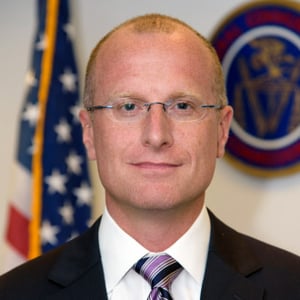
Chairman, Federal Communications Commission
Brendan Carr is the Chairman of the Federal Communications Commission. He previously served as the senior Republican Commissioner and as the FCC’s General Counsel. Nominated by both President Trump and President Biden, Carr has been confirmed unanimously by the Senate three times.
Described by Axios as “the FCC’s 5G crusader,” Carr has led the FCC’s work to modernize its infrastructure rules and accelerate the buildout of high-speed networks. His reforms cut billions of dollars in red tape, enabled the private sector to construct high-speed networks in communities across the country, and extended America’s global leadership in 5G.
Chairman Carr is also focused on expanding America’s skilled workforce—the tower climbers and construction crews needed to build next-gen networks. His jobs initiative promotes community colleges and apprenticeships as a pipeline for good-paying 5G jobs. He is recognizing America’s talented tower crews through a series of “5G Ready” Hard Hat presentations.
Chairman Carr leads a groundbreaking telehealth initiative at the FCC. The Connected Care Pilot Program supports the delivery of high-quality care to low-income Americans and veterans.
Chairman Carr’s time outside of Washington helps inform his approach to the job. He regularly hits the road to hear directly from community members and learn how changes in federal policies could help improve their lives.
Chairman Carr brings nearly 20 years of private and public sector experience in communications and tech policy to his position. Before joining the FCC as a staffer back in 2012, he worked as an attorney at Wiley Rein LLP in the firm’s appellate, litigation, and telecom practices. Previously, Chairman Carr clerked on the U.S. Court of Appeals for the Fourth Circuit for Judge Dennis Shedd. After attending Georgetown University for his undergrad, Chairman Carr earned his J.D. magna cum laude from the Catholic University of America’s Columbus School of Law where he served as an editor of the Catholic University Law Review.
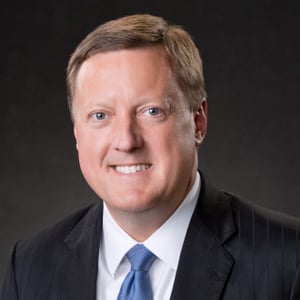
Senator and Chairman, Indiana Senate Utilities Committee, Indiana State Senate
An 8th generation Hoosier, Eric grew up on a grain and livestock farm, where he learned the value of hard work and experienced the risk and rewards of the commodity markets.
He earned a Bachelor’s Degree from Georgetown University and worked on President Ronald Reagan’s re-election campaign in the Office of Political Affairs at the Reagan-Bush ’84 Committee.
While earning his Juris Doctorate at the Indiana University School of Law, he clerked at the Bloomington law firm of McDonald, Barrett & Dakich.
He has been engaged in the private practice of law with offices in Bloomington since 1989 and Bedford since 2003. He is a member of the Monroe and Lawrence County Bar Associations, the Indiana State Bar Association, the Million Dollar Advocates Forum, the Multi-Million Dollar Advocates Forum, and founded and served as the first President of the Indiana Creditors Bar Association.
In 2002, he was elected to the Indiana House of Representatives, where he served until being elected to the Indiana State Senate in 2016. His legislative service has been recognized by, among others, the Indiana Judges Association (Champion of Justice Award), the Indiana Trial Lawyers Association (Legislator of the Year 2008 and 2015), the Indiana Pro Bono Commission (Randall T. Shepard Award), Kentucky Governor Ernie Fletcher (Kentucky Colonel), and Indiana Governor Mike Pence (Sagamore of the Wabash).
He currently serves as Chairman of the Senate Utilities Committee, Ranking Member of the Senate Judiciary and Commerce & Technology Committees, and as a member of the Senate Corrections & Criminal Law, Elections, and Family & Children Committees.
A nationally-recognized leader in energy policy, he serves as co-chairman of the Energy Supply Task Force of the National Conference of State Legislatures, as a member of the Executive Committee of the National Council on Electricity Policy, and holds a graduate certificate in Energy Policy Planning from the University of Idaho. He also serves as a member of the Federal Communication Commission Consumer Advisory Committee. He focuses on energy, telecommunications, and water policy interactions in Indiana and nationally.
He has served as a member of the Indiana Commission on Courts (2007—2011), the Indiana Probate Code Study Commission (2005—2007, 2013—2014, 2019—present), the Indiana Military Base Planning Council (2005—2019), the Board of Trustees of the Indiana Criminal Justice Institute (2006—2011), and the Indiana Public Defender Commission (2017—present). He represents Indiana as a Commissioner on The National Conference of Commissioners on Uniform State Laws (2018—present). As a member of the Indiana Supreme Court's Commercial Courts Committee (2019—present), he provides guidance to Indiana's Commercial Courts. He was appointed by the Indiana Supreme Court to serve on its Innovation Initiative (2019—present) to advise the Supreme Court on opportunities to increase efficiency and accessibility through innovative technology and case management, analysis of court reform, and development and testing of pilot programs related to court reform.
Eric frequently serves as a faculty member teaching continuing legal education courses, including for the Indiana State Bar Association and the Indiana Continuing Legal Education Forum. He enjoys teaching lawyers about new developments in the law and sharing his insights into the legislative process.
He is a registered civil mediator, having earned a civil mediation certificate from the Indiana University McKinney School of Law, studying under ADR expert John Krauss. Eric enjoys using the combination of his mediation skills and litigation experience to help parties settle cases and resolve disputes.
Eric is frequently appointed by judges to serve as a court-appointed fiduciary with responsibilities such as a trustee, federal multidistrict litigation plaintiffs’ steering committee member, special administrator, and personal representative.
A licensed Indiana title insurance producer, he founded Indiana Title Insurance Company in 2015 and serves as its President. His business experience also includes real estate, as President of White River Properties, Inc.; agriculture, as a partner in Koch Farms; and healthcare, as a former board member and Chairman of the Board of Dunn Memorial Hospital and St. Vincent Dunn Hospital.
He is a member of the Boards of Directors of Mid-Southern Savings Bank, FSB and its holding company Mid-Southern Bancorp, Inc. (NASDAQ: MSVB).
His leadership in the non-profit sector has included service as a member of the Board of Governors of the Society of Indiana Pioneers, as a member of the Executive Board of the Hoosier Trails Council of the Boy Scouts of America, as a member of the Mitchell Urban Enterprise Association Board, and as a member of the Georgetown University Alumni Admissions Committee.
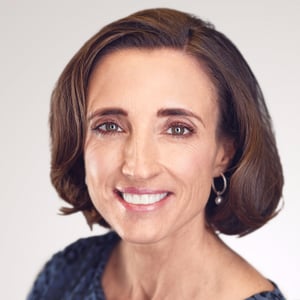
Senior Vice President, Strand Consult
Roslyn Layton, PhD is a leading international expert on technology policy. She is Senior Vice President of Strand Consult, an independent consultancy serving the global mobile telecom industry. She is also a Visiting Researcher at Aalborg University Copenhagen where she earned a doctoral thesis on network neutrality by measuring the outcome of the policy across 53 countries over 5 years. She served on the Presidential Transition Team for the Federal Communications Commission (FCC), and her work was critical to the FCC’s defense for the Restoring Internet Freedom Order. She has testified to the United States Senate and House on multiple topics including spectrum, broadband, mobile mergers, competition, and privacy. She founded the think tank China Tech Threat to study the problems of technology produced by the People’s Republic of China. She serves as the Program Chair for the Telecom Policy Research Conference, the leading interdisciplinary academic gathering. Her recent paper on rural broadband describes the empirical case for policy reform to recover network infrastructure costs from streaming video entertainment providers. She is a Senior Contributor to Forbes.
Judge, United States Court of Appeals, Second Circuit
Judge Menashi was appointed to the U.S. Court of Appeals for the Second Circuit on November 14, 2019. Previously, he served as special assistant and associate counsel to the President in the White House and as acting general counsel at the U.S. Department of Education. He was assistant professor of law at Scalia Law School, George Mason University, where he taught administrative law and civil procedure, and a research fellow at New York University School of Law and Georgetown University Law Center. He was also a partner at Kirkland & Ellis LLP in New York, where he practiced appellate and commercial litigation, and served as a law clerk to Justice Samuel Alito on the Supreme Court of the United States and to Judge Douglas Ginsburg on the U.S. Court of Appeals for the District of Columbia Circuit. He graduated from Stanford Law School, where he was elected to Order of the Coif and served as senior articles editor of the Stanford Law Review, and from Dartmouth College, where he was elected to Phi Beta Kappa.
Senior Fellow, Independent Institute
Dr. Stephen P. Halbrook is a Senior Fellow at the Independent Institute. He has taught legal and political philosophy at George Mason University, Howard University, and Tuskegee Institute, and he received his J.D. from the Georgetown University Law Center and Ph.D. in social philosophy from Florida State University.
The winner of three cases before the U.S. Supreme Court (Printz v. United States, United States v. Thompson/Center Arms Company, and Castillo v. United States), he has testified before the Subcommittee on the Constitution of the Senate Judiciary Committee, Senate Subcommittee on the Constitution, Subcommittee on Crime of the House Judiciary Committee, Senate Governmental Affairs Committee, and House Committee on the District of Columbia.
A contributor to numerous scholarly volumes, he is the author of the books, Gun Control in Nazi-Occupied France: Tyranny and Resistance; Gun Control in the Third Reich: Disarming the Jews and “Enemies of the State”; The Founders’ Second Amendment: Origins of the Right to Bear Arms; That Every Man Be Armed: Evolution of a Constitutional Right; A Right to Bear Arms; Firearms Law Deskbook: Federal and State Criminal Practice; Securing Civil Rights: Freedmen, the Fourteenth Amendment, and the Right to Bear Arms; State and Federal Bills of Rights and Constitutional Guarantees; and Target Switzerland: Swiss Armed Neutrality in World War II. Dr. Halbrook’s scholarly articles have appeared in such journals as the Arizona Journal of International and Comparative Law, Drug Law Report, George Mason University Law Review, Journal of Air Law and Commerce, Journal of Law and Policy, Law & Contemporary Problems, National Law Journal, Northern Kentucky Law Review, St. John’s Journal of Legal Commentary; Seton Hall Constitutional Law Journal, Tennessee Law Review, University of Dayton Law Review, Valparaiso University Law Review, Vermont Law Review, and William & Mary Bill of Rights Journal.
Dr. Halbrook's popular articles have appeared in such publications as the Wall Street Journal, Newsday, San Francisco Chronicle, National Review, Investor’s Business Daily, Kansas City Star, Washington Examiner, Shreveport Times, Sacramento Bee, Providence Journal, Tampa Tribune, Pittsburgh Tribune-Review, History News Network, San Antonio Express-News, The Daily Caller, Detroit News, Honolulu Star Advertiser, Birmingham News, Environmental Forum, USA Today, and Washington Times. He has also appeared on numerous national TV/radio programs on CNN, Fox News Channel, Fox Business Network, Court TV, NewsMax TV, CBN, Voice of America, and C-SPAN.
Judge, United States Court of Appeals, Second Circuit
Judge Menashi was appointed to the U.S. Court of Appeals for the Second Circuit on November 14, 2019. Previously, he served as special assistant and associate counsel to the President in the White House and as acting general counsel at the U.S. Department of Education. He was assistant professor of law at Scalia Law School, George Mason University, where he taught administrative law and civil procedure, and a research fellow at New York University School of Law and Georgetown University Law Center. He was also a partner at Kirkland & Ellis LLP in New York, where he practiced appellate and commercial litigation, and served as a law clerk to Justice Samuel Alito on the Supreme Court of the United States and to Judge Douglas Ginsburg on the U.S. Court of Appeals for the District of Columbia Circuit. He graduated from Stanford Law School, where he was elected to Order of the Coif and served as senior articles editor of the Stanford Law Review, and from Dartmouth College, where he was elected to Phi Beta Kappa.
Senior Fellow, Ave Maria School of Law and Host of the Four Boxes Diner Second Amendment Channel
Mark W. Smith is Visiting Fellow in Pharmaceutical Public Policy and Law in the Department of Pharmacology at the University of Oxford; Presidential Scholar and a Senior Fellow in Law and Public Policy at The King’s College; and Distinguished Scholar and Senior Fellow of Law and Public Policy at the Ave Maria School of Law.
He is a constitutional attorney and Host of the Four Boxes Diner YouTube channel—which provides scholarly and historical analyses of the Second Amendment. Mark is also a New York Times bestselling author.
Associate Professor, Charleston School of Law
Bill Merkel joined the Charleston School of Law faculty in 2012. Merkel graduated from Johns Hopkins University with a B.A. in history in 1988 and proceeded to work as a cook in Baltimore and then as an analyst with the Department of Transportation in Washington, D.C. before returning to graduate studies in history and law.
He completed his J.D. at Columbia Law School in 1996 and then worked in appellate litigation with Wiley, Rein & Fielding in Washington, D.C. from 1997-1998. Merkel is the author, with the late Richard Uviller, of The Militia and the Right to Arms, Or, How the Second Amendment Fell Silent (Duke University Press, 2002). He taught American history at Oxford University from 2001-2003 and Comparative Introduction to American Law to foreign trained LL.M. students at Columbia Law School from 2003-2005. From 2005-2011, Merkel was an Associate Professor of Law at Washburn Law School in Topeka, Kansas, where he was named Professor of the Year by the graduating class in 2008. At Washburn, Merkel taught Constitutional Law I & II, Comparative Constitutional Law, Public International Law, and International Criminal Law and the Law of War. He received a doctorate in history from Oxford University in 2007.
Merkel has held visiting positions at the University of North Dakota School of Law in 2009 and at the University of South Carolina School of Law in 2011-12. In 2013 and 2014, Merkel taught The United States and the International Court of Justice in the Hague, Netherlands as part of the Charleston School of Law’s summer school consortium program administered by Stetson University School of Law. At the Charleston School of Law, Merkel continues to teach courses in Constitutional Law, International Law, Comparative Law, and Legal History. Merkel’s article “Jefferson’s Failed Anti-Slavery Proviso of 1784 and the Nascence of Free Soil Constitutionalism” was selected as the best submission in constitutional history by the Stanford/Yale Junior Faculty Forum in 2006. Merkel is in the process of revising his Oxford doctoral thesis “Race, Liberty, and Law: Thomas Jefferson and Slavery, 1770-1800” for publication as a book to be titled Ambiguous Beginnings: Thomas Jefferson, Slavery, and the Foundations of American Constitutionalism. Merkel has published numerous articles in journals including the Chicago-Kent Law Review, Connecticut Law Review, Lewis and Clark Law Review, Santa Clara Law Review, Seton Hall Law Review, Rutgers Law Review, and Law and History Review. His scholarship on the Second Amendment has been cited by many authors and jurists, including Justice Breyer in a dissenting opinion in McDonald v. City of Chicago. In 2013, following the successful defense of his dissertation “The Second Amendment and the Constitutional Right to Self-Defense,” Merkel was awarded a J.S.D. degree by Columbia University.
Merkel is a member of the District of Columbia, New York, and United States Supreme Court Bars.
Senior Fellow, Independent Institute
Dr. Stephen P. Halbrook is a Senior Fellow at the Independent Institute. He has taught legal and political philosophy at George Mason University, Howard University, and Tuskegee Institute, and he received his J.D. from the Georgetown University Law Center and Ph.D. in social philosophy from Florida State University.
The winner of three cases before the U.S. Supreme Court (Printz v. United States, United States v. Thompson/Center Arms Company, and Castillo v. United States), he has testified before the Subcommittee on the Constitution of the Senate Judiciary Committee, Senate Subcommittee on the Constitution, Subcommittee on Crime of the House Judiciary Committee, Senate Governmental Affairs Committee, and House Committee on the District of Columbia.
A contributor to numerous scholarly volumes, he is the author of the books, Gun Control in Nazi-Occupied France: Tyranny and Resistance; Gun Control in the Third Reich: Disarming the Jews and “Enemies of the State”; The Founders’ Second Amendment: Origins of the Right to Bear Arms; That Every Man Be Armed: Evolution of a Constitutional Right; A Right to Bear Arms; Firearms Law Deskbook: Federal and State Criminal Practice; Securing Civil Rights: Freedmen, the Fourteenth Amendment, and the Right to Bear Arms; State and Federal Bills of Rights and Constitutional Guarantees; and Target Switzerland: Swiss Armed Neutrality in World War II. Dr. Halbrook’s scholarly articles have appeared in such journals as the Arizona Journal of International and Comparative Law, Drug Law Report, George Mason University Law Review, Journal of Air Law and Commerce, Journal of Law and Policy, Law & Contemporary Problems, National Law Journal, Northern Kentucky Law Review, St. John’s Journal of Legal Commentary; Seton Hall Constitutional Law Journal, Tennessee Law Review, University of Dayton Law Review, Valparaiso University Law Review, Vermont Law Review, and William & Mary Bill of Rights Journal.
Dr. Halbrook's popular articles have appeared in such publications as the Wall Street Journal, Newsday, San Francisco Chronicle, National Review, Investor’s Business Daily, Kansas City Star, Washington Examiner, Shreveport Times, Sacramento Bee, Providence Journal, Tampa Tribune, Pittsburgh Tribune-Review, History News Network, San Antonio Express-News, The Daily Caller, Detroit News, Honolulu Star Advertiser, Birmingham News, Environmental Forum, USA Today, and Washington Times. He has also appeared on numerous national TV/radio programs on CNN, Fox News Channel, Fox Business Network, Court TV, NewsMax TV, CBN, Voice of America, and C-SPAN.
Judge, United States Court of Appeals, Second Circuit
Judge Menashi was appointed to the U.S. Court of Appeals for the Second Circuit on November 14, 2019. Previously, he served as special assistant and associate counsel to the President in the White House and as acting general counsel at the U.S. Department of Education. He was assistant professor of law at Scalia Law School, George Mason University, where he taught administrative law and civil procedure, and a research fellow at New York University School of Law and Georgetown University Law Center. He was also a partner at Kirkland & Ellis LLP in New York, where he practiced appellate and commercial litigation, and served as a law clerk to Justice Samuel Alito on the Supreme Court of the United States and to Judge Douglas Ginsburg on the U.S. Court of Appeals for the District of Columbia Circuit. He graduated from Stanford Law School, where he was elected to Order of the Coif and served as senior articles editor of the Stanford Law Review, and from Dartmouth College, where he was elected to Phi Beta Kappa.
Associate Professor, Charleston School of Law
Bill Merkel joined the Charleston School of Law faculty in 2012. Merkel graduated from Johns Hopkins University with a B.A. in history in 1988 and proceeded to work as a cook in Baltimore and then as an analyst with the Department of Transportation in Washington, D.C. before returning to graduate studies in history and law.
He completed his J.D. at Columbia Law School in 1996 and then worked in appellate litigation with Wiley, Rein & Fielding in Washington, D.C. from 1997-1998. Merkel is the author, with the late Richard Uviller, of The Militia and the Right to Arms, Or, How the Second Amendment Fell Silent (Duke University Press, 2002). He taught American history at Oxford University from 2001-2003 and Comparative Introduction to American Law to foreign trained LL.M. students at Columbia Law School from 2003-2005. From 2005-2011, Merkel was an Associate Professor of Law at Washburn Law School in Topeka, Kansas, where he was named Professor of the Year by the graduating class in 2008. At Washburn, Merkel taught Constitutional Law I & II, Comparative Constitutional Law, Public International Law, and International Criminal Law and the Law of War. He received a doctorate in history from Oxford University in 2007.
Merkel has held visiting positions at the University of North Dakota School of Law in 2009 and at the University of South Carolina School of Law in 2011-12. In 2013 and 2014, Merkel taught The United States and the International Court of Justice in the Hague, Netherlands as part of the Charleston School of Law’s summer school consortium program administered by Stetson University School of Law. At the Charleston School of Law, Merkel continues to teach courses in Constitutional Law, International Law, Comparative Law, and Legal History. Merkel’s article “Jefferson’s Failed Anti-Slavery Proviso of 1784 and the Nascence of Free Soil Constitutionalism” was selected as the best submission in constitutional history by the Stanford/Yale Junior Faculty Forum in 2006. Merkel is in the process of revising his Oxford doctoral thesis “Race, Liberty, and Law: Thomas Jefferson and Slavery, 1770-1800” for publication as a book to be titled Ambiguous Beginnings: Thomas Jefferson, Slavery, and the Foundations of American Constitutionalism. Merkel has published numerous articles in journals including the Chicago-Kent Law Review, Connecticut Law Review, Lewis and Clark Law Review, Santa Clara Law Review, Seton Hall Law Review, Rutgers Law Review, and Law and History Review. His scholarship on the Second Amendment has been cited by many authors and jurists, including Justice Breyer in a dissenting opinion in McDonald v. City of Chicago. In 2013, following the successful defense of his dissertation “The Second Amendment and the Constitutional Right to Self-Defense,” Merkel was awarded a J.S.D. degree by Columbia University.
Merkel is a member of the District of Columbia, New York, and United States Supreme Court Bars.
Senior Fellow, Ave Maria School of Law and Host of the Four Boxes Diner Second Amendment Channel
Mark W. Smith is Visiting Fellow in Pharmaceutical Public Policy and Law in the Department of Pharmacology at the University of Oxford; Presidential Scholar and a Senior Fellow in Law and Public Policy at The King’s College; and Distinguished Scholar and Senior Fellow of Law and Public Policy at the Ave Maria School of Law.
He is a constitutional attorney and Host of the Four Boxes Diner YouTube channel—which provides scholarly and historical analyses of the Second Amendment. Mark is also a New York Times bestselling author.
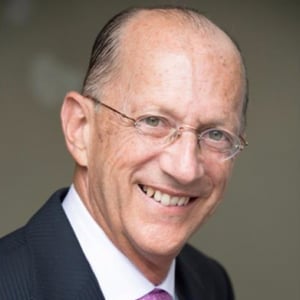
President, Cass & Associates, PC
Ronald A. Cass is Dean Emeritus of Boston University School of Law (where he was Dean from 1990-2004), President of Cass & Associates, PC, former Vice-Chairman and Commissioner of the U.S. International Trade Commission, former faculty member at Boston University School of Law and the University of Virginia Law School, and Distinguished Senior Fellow at the C. Boyden Gray Center for the Study of the Administrative State. Dean Cass also sits as an arbitrator for commercial, international, and intellectual property rights disputes, and is a former United States member of the Panel of Conciliators of the International Centre for Settlement of Investment Disputes. He is a member of the Council of the Administrative Conference of the United States and has received seven presidential appointments, spanning Presidents Ronald Reagan to Donald J. Trump.
As a law professor, lecturer, and scholar, Dean Cass has been teaching and writing about a wide array of legal issues on topics such as administrative law and regulation, antitrust, constitutional law, communications, intellectual property, international trade, separation of powers, and legal process. He has published more than 160 scholarly books, chapters, articles, and papers, including a leading casebook on administrative law. Dean Cass has taught judges as well as students in schools of law, economics, business, and public policy and has held academic appointments in the United States, Europe, and Latin America.
In addition to his academic work, Dean Cass has participated in numerous important legal cases as an amicus, consultant, or expert, and has advised businesses, law firms, investment funds, and government agencies on a range of trade, antitrust, intellectual property, and regulatory issues. He has a broad range of affiliations with professional groups, and has received numerous honors, fellowships and awards.
Dean Cass is a graduate of the University of Virginia and the University of Chicago Law School.
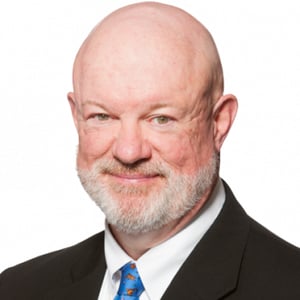
Senior Legal Fellow, the Meese Institute for the Rule of Law, Advancing American Freedom
Paul J. Larkin is a Senior Legal Fellow in the Meese Institute for the Rule of Law at Advancing American Freedom. Paul has held various positions in the federal and state governments throughout his career, such as being an attorney in the Organized Crime and Racketeering Section of the Criminal Division at the U.S. Department of Justice, an Assistant to the Solicitor General in the Office of the Solicitor General at the U.S. Department of Justice, Special Agent-in-Charge and Acting Director of the Criminal Investigation Division at the Environmental Protection Agency, and a member of the Parole Abolition and Sentencing Reform Commission and of the Juvenile Justice Reform Commission in the Office of Virginia Governor George Allen.
He has also worked at Verizon Communications and two law firms in Washington, D.C. His current research is principally in the fields of drug policy, criminal justice policy, and administrative law and policy. He has published numerous articles in law and public policy journals, both in print and online.
Chairman, Federal Communications Commission
Brendan Carr is the Chairman of the Federal Communications Commission. He previously served as the senior Republican Commissioner and as the FCC’s General Counsel. Nominated by both President Trump and President Biden, Carr has been confirmed unanimously by the Senate three times.
Described by Axios as “the FCC’s 5G crusader,” Carr has led the FCC’s work to modernize its infrastructure rules and accelerate the buildout of high-speed networks. His reforms cut billions of dollars in red tape, enabled the private sector to construct high-speed networks in communities across the country, and extended America’s global leadership in 5G.
Chairman Carr is also focused on expanding America’s skilled workforce—the tower climbers and construction crews needed to build next-gen networks. His jobs initiative promotes community colleges and apprenticeships as a pipeline for good-paying 5G jobs. He is recognizing America’s talented tower crews through a series of “5G Ready” Hard Hat presentations.
Chairman Carr leads a groundbreaking telehealth initiative at the FCC. The Connected Care Pilot Program supports the delivery of high-quality care to low-income Americans and veterans.
Chairman Carr’s time outside of Washington helps inform his approach to the job. He regularly hits the road to hear directly from community members and learn how changes in federal policies could help improve their lives.
Chairman Carr brings nearly 20 years of private and public sector experience in communications and tech policy to his position. Before joining the FCC as a staffer back in 2012, he worked as an attorney at Wiley Rein LLP in the firm’s appellate, litigation, and telecom practices. Previously, Chairman Carr clerked on the U.S. Court of Appeals for the Fourth Circuit for Judge Dennis Shedd. After attending Georgetown University for his undergrad, Chairman Carr earned his J.D. magna cum laude from the Catholic University of America’s Columbus School of Law where he served as an editor of the Catholic University Law Review.
Senator and Chairman, Indiana Senate Utilities Committee, Indiana State Senate
An 8th generation Hoosier, Eric grew up on a grain and livestock farm, where he learned the value of hard work and experienced the risk and rewards of the commodity markets.
He earned a Bachelor’s Degree from Georgetown University and worked on President Ronald Reagan’s re-election campaign in the Office of Political Affairs at the Reagan-Bush ’84 Committee.
While earning his Juris Doctorate at the Indiana University School of Law, he clerked at the Bloomington law firm of McDonald, Barrett & Dakich.
He has been engaged in the private practice of law with offices in Bloomington since 1989 and Bedford since 2003. He is a member of the Monroe and Lawrence County Bar Associations, the Indiana State Bar Association, the Million Dollar Advocates Forum, the Multi-Million Dollar Advocates Forum, and founded and served as the first President of the Indiana Creditors Bar Association.
In 2002, he was elected to the Indiana House of Representatives, where he served until being elected to the Indiana State Senate in 2016. His legislative service has been recognized by, among others, the Indiana Judges Association (Champion of Justice Award), the Indiana Trial Lawyers Association (Legislator of the Year 2008 and 2015), the Indiana Pro Bono Commission (Randall T. Shepard Award), Kentucky Governor Ernie Fletcher (Kentucky Colonel), and Indiana Governor Mike Pence (Sagamore of the Wabash).
He currently serves as Chairman of the Senate Utilities Committee, Ranking Member of the Senate Judiciary and Commerce & Technology Committees, and as a member of the Senate Corrections & Criminal Law, Elections, and Family & Children Committees.
A nationally-recognized leader in energy policy, he serves as co-chairman of the Energy Supply Task Force of the National Conference of State Legislatures, as a member of the Executive Committee of the National Council on Electricity Policy, and holds a graduate certificate in Energy Policy Planning from the University of Idaho. He also serves as a member of the Federal Communication Commission Consumer Advisory Committee. He focuses on energy, telecommunications, and water policy interactions in Indiana and nationally.
He has served as a member of the Indiana Commission on Courts (2007—2011), the Indiana Probate Code Study Commission (2005—2007, 2013—2014, 2019—present), the Indiana Military Base Planning Council (2005—2019), the Board of Trustees of the Indiana Criminal Justice Institute (2006—2011), and the Indiana Public Defender Commission (2017—present). He represents Indiana as a Commissioner on The National Conference of Commissioners on Uniform State Laws (2018—present). As a member of the Indiana Supreme Court's Commercial Courts Committee (2019—present), he provides guidance to Indiana's Commercial Courts. He was appointed by the Indiana Supreme Court to serve on its Innovation Initiative (2019—present) to advise the Supreme Court on opportunities to increase efficiency and accessibility through innovative technology and case management, analysis of court reform, and development and testing of pilot programs related to court reform.
Eric frequently serves as a faculty member teaching continuing legal education courses, including for the Indiana State Bar Association and the Indiana Continuing Legal Education Forum. He enjoys teaching lawyers about new developments in the law and sharing his insights into the legislative process.
He is a registered civil mediator, having earned a civil mediation certificate from the Indiana University McKinney School of Law, studying under ADR expert John Krauss. Eric enjoys using the combination of his mediation skills and litigation experience to help parties settle cases and resolve disputes.
Eric is frequently appointed by judges to serve as a court-appointed fiduciary with responsibilities such as a trustee, federal multidistrict litigation plaintiffs’ steering committee member, special administrator, and personal representative.
A licensed Indiana title insurance producer, he founded Indiana Title Insurance Company in 2015 and serves as its President. His business experience also includes real estate, as President of White River Properties, Inc.; agriculture, as a partner in Koch Farms; and healthcare, as a former board member and Chairman of the Board of Dunn Memorial Hospital and St. Vincent Dunn Hospital.
He is a member of the Boards of Directors of Mid-Southern Savings Bank, FSB and its holding company Mid-Southern Bancorp, Inc. (NASDAQ: MSVB).
His leadership in the non-profit sector has included service as a member of the Board of Governors of the Society of Indiana Pioneers, as a member of the Executive Board of the Hoosier Trails Council of the Boy Scouts of America, as a member of the Mitchell Urban Enterprise Association Board, and as a member of the Georgetown University Alumni Admissions Committee.
Senior Vice President, Strand Consult
Roslyn Layton, PhD is a leading international expert on technology policy. She is Senior Vice President of Strand Consult, an independent consultancy serving the global mobile telecom industry. She is also a Visiting Researcher at Aalborg University Copenhagen where she earned a doctoral thesis on network neutrality by measuring the outcome of the policy across 53 countries over 5 years. She served on the Presidential Transition Team for the Federal Communications Commission (FCC), and her work was critical to the FCC’s defense for the Restoring Internet Freedom Order. She has testified to the United States Senate and House on multiple topics including spectrum, broadband, mobile mergers, competition, and privacy. She founded the think tank China Tech Threat to study the problems of technology produced by the People’s Republic of China. She serves as the Program Chair for the Telecom Policy Research Conference, the leading interdisciplinary academic gathering. Her recent paper on rural broadband describes the empirical case for policy reform to recover network infrastructure costs from streaming video entertainment providers. She is a Senior Contributor to Forbes.
Judge, United States Court of Appeals, Second Circuit
Judge Menashi was appointed to the U.S. Court of Appeals for the Second Circuit on November 14, 2019. Previously, he served as special assistant and associate counsel to the President in the White House and as acting general counsel at the U.S. Department of Education. He was assistant professor of law at Scalia Law School, George Mason University, where he taught administrative law and civil procedure, and a research fellow at New York University School of Law and Georgetown University Law Center. He was also a partner at Kirkland & Ellis LLP in New York, where he practiced appellate and commercial litigation, and served as a law clerk to Justice Samuel Alito on the Supreme Court of the United States and to Judge Douglas Ginsburg on the U.S. Court of Appeals for the District of Columbia Circuit. He graduated from Stanford Law School, where he was elected to Order of the Coif and served as senior articles editor of the Stanford Law Review, and from Dartmouth College, where he was elected to Phi Beta Kappa.
Chairman, Federal Communications Commission
Brendan Carr is the Chairman of the Federal Communications Commission. He previously served as the senior Republican Commissioner and as the FCC’s General Counsel. Nominated by both President Trump and President Biden, Carr has been confirmed unanimously by the Senate three times.
Described by Axios as “the FCC’s 5G crusader,” Carr has led the FCC’s work to modernize its infrastructure rules and accelerate the buildout of high-speed networks. His reforms cut billions of dollars in red tape, enabled the private sector to construct high-speed networks in communities across the country, and extended America’s global leadership in 5G.
Chairman Carr is also focused on expanding America’s skilled workforce—the tower climbers and construction crews needed to build next-gen networks. His jobs initiative promotes community colleges and apprenticeships as a pipeline for good-paying 5G jobs. He is recognizing America’s talented tower crews through a series of “5G Ready” Hard Hat presentations.
Chairman Carr leads a groundbreaking telehealth initiative at the FCC. The Connected Care Pilot Program supports the delivery of high-quality care to low-income Americans and veterans.
Chairman Carr’s time outside of Washington helps inform his approach to the job. He regularly hits the road to hear directly from community members and learn how changes in federal policies could help improve their lives.
Chairman Carr brings nearly 20 years of private and public sector experience in communications and tech policy to his position. Before joining the FCC as a staffer back in 2012, he worked as an attorney at Wiley Rein LLP in the firm’s appellate, litigation, and telecom practices. Previously, Chairman Carr clerked on the U.S. Court of Appeals for the Fourth Circuit for Judge Dennis Shedd. After attending Georgetown University for his undergrad, Chairman Carr earned his J.D. magna cum laude from the Catholic University of America’s Columbus School of Law where he served as an editor of the Catholic University Law Review.
Senator and Chairman, Indiana Senate Utilities Committee, Indiana State Senate
An 8th generation Hoosier, Eric grew up on a grain and livestock farm, where he learned the value of hard work and experienced the risk and rewards of the commodity markets.
He earned a Bachelor’s Degree from Georgetown University and worked on President Ronald Reagan’s re-election campaign in the Office of Political Affairs at the Reagan-Bush ’84 Committee.
While earning his Juris Doctorate at the Indiana University School of Law, he clerked at the Bloomington law firm of McDonald, Barrett & Dakich.
He has been engaged in the private practice of law with offices in Bloomington since 1989 and Bedford since 2003. He is a member of the Monroe and Lawrence County Bar Associations, the Indiana State Bar Association, the Million Dollar Advocates Forum, the Multi-Million Dollar Advocates Forum, and founded and served as the first President of the Indiana Creditors Bar Association.
In 2002, he was elected to the Indiana House of Representatives, where he served until being elected to the Indiana State Senate in 2016. His legislative service has been recognized by, among others, the Indiana Judges Association (Champion of Justice Award), the Indiana Trial Lawyers Association (Legislator of the Year 2008 and 2015), the Indiana Pro Bono Commission (Randall T. Shepard Award), Kentucky Governor Ernie Fletcher (Kentucky Colonel), and Indiana Governor Mike Pence (Sagamore of the Wabash).
He currently serves as Chairman of the Senate Utilities Committee, Ranking Member of the Senate Judiciary and Commerce & Technology Committees, and as a member of the Senate Corrections & Criminal Law, Elections, and Family & Children Committees.
A nationally-recognized leader in energy policy, he serves as co-chairman of the Energy Supply Task Force of the National Conference of State Legislatures, as a member of the Executive Committee of the National Council on Electricity Policy, and holds a graduate certificate in Energy Policy Planning from the University of Idaho. He also serves as a member of the Federal Communication Commission Consumer Advisory Committee. He focuses on energy, telecommunications, and water policy interactions in Indiana and nationally.
He has served as a member of the Indiana Commission on Courts (2007—2011), the Indiana Probate Code Study Commission (2005—2007, 2013—2014, 2019—present), the Indiana Military Base Planning Council (2005—2019), the Board of Trustees of the Indiana Criminal Justice Institute (2006—2011), and the Indiana Public Defender Commission (2017—present). He represents Indiana as a Commissioner on The National Conference of Commissioners on Uniform State Laws (2018—present). As a member of the Indiana Supreme Court's Commercial Courts Committee (2019—present), he provides guidance to Indiana's Commercial Courts. He was appointed by the Indiana Supreme Court to serve on its Innovation Initiative (2019—present) to advise the Supreme Court on opportunities to increase efficiency and accessibility through innovative technology and case management, analysis of court reform, and development and testing of pilot programs related to court reform.
Eric frequently serves as a faculty member teaching continuing legal education courses, including for the Indiana State Bar Association and the Indiana Continuing Legal Education Forum. He enjoys teaching lawyers about new developments in the law and sharing his insights into the legislative process.
He is a registered civil mediator, having earned a civil mediation certificate from the Indiana University McKinney School of Law, studying under ADR expert John Krauss. Eric enjoys using the combination of his mediation skills and litigation experience to help parties settle cases and resolve disputes.
Eric is frequently appointed by judges to serve as a court-appointed fiduciary with responsibilities such as a trustee, federal multidistrict litigation plaintiffs’ steering committee member, special administrator, and personal representative.
A licensed Indiana title insurance producer, he founded Indiana Title Insurance Company in 2015 and serves as its President. His business experience also includes real estate, as President of White River Properties, Inc.; agriculture, as a partner in Koch Farms; and healthcare, as a former board member and Chairman of the Board of Dunn Memorial Hospital and St. Vincent Dunn Hospital.
He is a member of the Boards of Directors of Mid-Southern Savings Bank, FSB and its holding company Mid-Southern Bancorp, Inc. (NASDAQ: MSVB).
His leadership in the non-profit sector has included service as a member of the Board of Governors of the Society of Indiana Pioneers, as a member of the Executive Board of the Hoosier Trails Council of the Boy Scouts of America, as a member of the Mitchell Urban Enterprise Association Board, and as a member of the Georgetown University Alumni Admissions Committee.
Senior Vice President, Strand Consult
Roslyn Layton, PhD is a leading international expert on technology policy. She is Senior Vice President of Strand Consult, an independent consultancy serving the global mobile telecom industry. She is also a Visiting Researcher at Aalborg University Copenhagen where she earned a doctoral thesis on network neutrality by measuring the outcome of the policy across 53 countries over 5 years. She served on the Presidential Transition Team for the Federal Communications Commission (FCC), and her work was critical to the FCC’s defense for the Restoring Internet Freedom Order. She has testified to the United States Senate and House on multiple topics including spectrum, broadband, mobile mergers, competition, and privacy. She founded the think tank China Tech Threat to study the problems of technology produced by the People’s Republic of China. She serves as the Program Chair for the Telecom Policy Research Conference, the leading interdisciplinary academic gathering. Her recent paper on rural broadband describes the empirical case for policy reform to recover network infrastructure costs from streaming video entertainment providers. She is a Senior Contributor to Forbes.
Judge, United States Court of Appeals, Second Circuit
Judge Menashi was appointed to the U.S. Court of Appeals for the Second Circuit on November 14, 2019. Previously, he served as special assistant and associate counsel to the President in the White House and as acting general counsel at the U.S. Department of Education. He was assistant professor of law at Scalia Law School, George Mason University, where he taught administrative law and civil procedure, and a research fellow at New York University School of Law and Georgetown University Law Center. He was also a partner at Kirkland & Ellis LLP in New York, where he practiced appellate and commercial litigation, and served as a law clerk to Justice Samuel Alito on the Supreme Court of the United States and to Judge Douglas Ginsburg on the U.S. Court of Appeals for the District of Columbia Circuit. He graduated from Stanford Law School, where he was elected to Order of the Coif and served as senior articles editor of the Stanford Law Review, and from Dartmouth College, where he was elected to Phi Beta Kappa.

A Conversation with Judge Steven Menashi
Harvard Student Chapter
Cambridge, MASpecial Session II: Second Amendment: Aftermath of Bruen; What's Next at the State Level?
Stephen P. Halbrook, Steven J. Menashi, Mark W. Smith, William G. Merkel
In June 2022, the Supreme Court decided the much-anticipated case, New York State Rifle and...
Special Session II: Second Amendment: Aftermath of Bruen; What's Next at the State Level?
Stephen P. Halbrook, Steven J. Menashi, William G. Merkel, Mark W. Smith
In June 2022, the Supreme Court decided the much-anticipated case, New York State Rifle and...
Special Session II: Second Amendment: Aftermath of Bruen; What's Next at the State Level?
National Lawyers Convention 2022
Washington, DCChevron—Complicated, Start to Finish
Ronald A. Cass
A Review of Thomas W. Merrill, The Chevron Doctrine: Its Rise and Fall, and the...
Supreme Court Preview (2022-2023)
New York City Lawyers Chapter, New York City Young Lawyers Chapter, Manhattan Institute
Revitalizing the Nondelegation Doctrine
Paul James Larkin
A Review of The Administrative State Before the Supreme Court: Perspectives on the Nondelegation Doctrine (Peter...
Federalism and Broadband Spending: Finding the Right Approach
Brendan Carr, Eric Allan Koch, Roslyn Layton, Steven J. Menashi
The 2021 National Lawyers Convention took place November 11-13, 2021 at the Mayflower Hotel in...
Federalism and Broadband Spending: Finding the Right Approach
Brendan Carr, Eric Allan Koch, Roslyn Layton, Steven J. Menashi
The 2021 National Lawyers Convention took place November 11-13, 2021 at the Mayflower Hotel in...
Federalism and Broadband Spending: Finding the Right Approach
2021 National Lawyers Convention
Washington, DC