
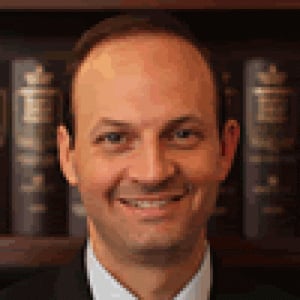
Attorney General, South Carolina
Alan Wilson was elected South Carolina’s Fifty-First Attorney General on November 2, 2010, and took office on January 12, 2011, becoming the nation’s youngest Attorney General.
This marks his third stint in the office. Previously, he served as a prosecution division intern under Charlie Condon and as an Assistant Attorney General under Henry McMaster.
As South Carolina’s Attorney General, Wilson is the state’s chief prosecutor, chief securities officer, and the state’s chief legal counsel. The office is comprised of more than two hundred employees and nearly seventy-five attorneys who manage nearly 8,000 active case files.
Wilson has focused on keeping our families safe and defending the Constitution.
He has assembled an unprecedented coalition consisting of the Attorney General’s office, the State Law Enforcement Division, every sheriff, the Police Chief’s Association, and all 16 solicitors. Together, they are actively advancing legislative priorities to ensure South Carolina is the safest place to live, work, and raise a family.
As Attorney General, Wilson has defended the Constitution and the laws of this state even if it means challenging the federal government. He has protected South Carolina’s right-to-work; helped lead the 26-state challenge to the federal health care mandate; and successfully safeguarded South Carolina’s voter identification and immigration laws in court.
Today, he is actively engaged in state and federal litigation to provide safe harbor to South Carolina’s ports, shield the state’s energy interests at Yucca Mountain, as well as a constitutional challenge of Dodd-Frank.
Prior to his election, Wilson served as an Assistant Solicitor and as an Assistant Attorney General before entering private practice with the Columbia firm of Willoughby & Hoefer, P.A. He began his legal career working for the late Judge Marc H. Westbrook.
Growing up, public service was paramount in the Wilson house. Alan and his three brothers have all achieved the rank of Eagle Scout. All four presently serve our nation in uniform.
Wilson joined the National Guard immediately after graduating from college. He was called to serve in Iraq where he led troops through enemy fire and earned the Combat Action Badge. Today, he continues his military service by providing legal support for soldiers and assisting in the prosecution of military crimes as a Lt. Colonel in the Judge Advocate General Corps.
He is a graduate of Francis Marion University and the University of South Carolina School of Law. Wilson and his wife, Jennifer, have two young children, Michael and Anna Grace.
Attorney General, South Carolina
Alan Wilson was elected South Carolina’s Fifty-First Attorney General on November 2, 2010, and took office on January 12, 2011, becoming the nation’s youngest Attorney General.
This marks his third stint in the office. Previously, he served as a prosecution division intern under Charlie Condon and as an Assistant Attorney General under Henry McMaster.
As South Carolina’s Attorney General, Wilson is the state’s chief prosecutor, chief securities officer, and the state’s chief legal counsel. The office is comprised of more than two hundred employees and nearly seventy-five attorneys who manage nearly 8,000 active case files.
Wilson has focused on keeping our families safe and defending the Constitution.
He has assembled an unprecedented coalition consisting of the Attorney General’s office, the State Law Enforcement Division, every sheriff, the Police Chief’s Association, and all 16 solicitors. Together, they are actively advancing legislative priorities to ensure South Carolina is the safest place to live, work, and raise a family.
As Attorney General, Wilson has defended the Constitution and the laws of this state even if it means challenging the federal government. He has protected South Carolina’s right-to-work; helped lead the 26-state challenge to the federal health care mandate; and successfully safeguarded South Carolina’s voter identification and immigration laws in court.
Today, he is actively engaged in state and federal litigation to provide safe harbor to South Carolina’s ports, shield the state’s energy interests at Yucca Mountain, as well as a constitutional challenge of Dodd-Frank.
Prior to his election, Wilson served as an Assistant Solicitor and as an Assistant Attorney General before entering private practice with the Columbia firm of Willoughby & Hoefer, P.A. He began his legal career working for the late Judge Marc H. Westbrook.
Growing up, public service was paramount in the Wilson house. Alan and his three brothers have all achieved the rank of Eagle Scout. All four presently serve our nation in uniform.
Wilson joined the National Guard immediately after graduating from college. He was called to serve in Iraq where he led troops through enemy fire and earned the Combat Action Badge. Today, he continues his military service by providing legal support for soldiers and assisting in the prosecution of military crimes as a Lt. Colonel in the Judge Advocate General Corps.
He is a graduate of Francis Marion University and the University of South Carolina School of Law. Wilson and his wife, Jennifer, have two young children, Michael and Anna Grace.
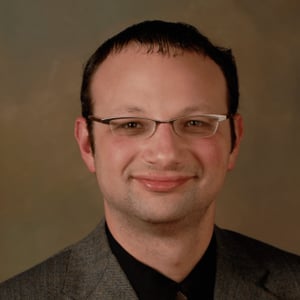
Chief Policy Counsel, Council on Criminal Justice and Senior Advisor, Right on Crime
Marc A. Levin is the Chief Policy Counsel for the Council on Criminal Justice (counciloncj.org) and Senior Advisor for Right on Crime.
An attorney and accomplished author on legal and public policy issues, Marc began the Foundation’s criminal justice program in 2005. This work contributed to nationally praised policy changes that have been followed by dramatic declines in crime and incarceration in Texas. Building on this success, in 2010, Levin developed the concept for the Right on Crime initiative, a TPPF project in partnership with Prison Fellowship and the American Conservative Union Foundation. Right on Crime has become the national clearinghouse for conservative criminal justice reforms and has contributed to the adoption of policies in dozens of states that fight crime, support victims, and protect taxpayers.
In 2014, Levin was named one of the “Politico 50” in the magazine’s annual “list of thinkers, doers, and dreamers who really matter in this age of gridlock and dysfunction.”
Marc has testified on criminal justice policy on four occasions before Congress and has testified before legislatures in states including Texas, Nevada, Kansas, Wisconsin, and California. He also has met personally with leaders such as U.S. Presidents, Speakers of the House, and the Justice Commtitee of the United Kingdom Parliament to share his ideas on criminal justice reform. In 2007, he was honored in a resolution unanimously passed by the Texas House of Representatives that stated, “Mr. Levin’s intellect is unparalleled and his research is impeccable.”
Since 2005, Marc has published dozens of policy papers on topics such as sentencing, probation, parole, reentry, and overcriminalization which are available on the TPPF website. Levin’s articles on law and public policy have been featured in publications such as the Wall Street Journal, USA Today, Texas Review of Law & Politics, National Law Journal, New York Daily News, Jerusalem Post, Toronto Star, Atlanta Journal-Constitution, Philadelphia Inquirer, San Francisco Chronicle, Washington Times, Los Angeles Daily Journal, Charlotte Observer, Dallas Morning News, Houston Chronicle, Austin American-Statesman, San Antonio Express-News and Reason Magazine.
In 1999, Marc graduated with honors from the University of Texas with a B.A. in Plan II Honors and Government. In 2002, Marc received his J.D. with honors from the University of Texas School of Law. Marc was a Charles G. Koch Summer Fellow in 1996. He served as a law clerk to Judge Will Garwood on the U.S. Court of Appeals for the Fifth Circuit and Staff Attorney at the Texas Supreme Court.
Director, Center for Criminal Justice Reform, The American Conservative Union Foundation
Pat Nolan is serving as the inaugural director of The American Conservative Union's Center for Criminal Justice Reform. Mr. Nolan has been a leading voice on criminal justice reform, highlighting the skyrocketing costs of prison, fiscal responsibility in the criminal justice system and reforms for non-violent offenders. He served 15 years as a member of the California Assembly, four of them as Assembly Republican Leader. He was named Legislator of the Year by the American Legislative Exchange Council (ALEC) and received the “Victims Advocate Award” from Parents of Murdered Children. Mr. Nolan served as a member of the National Prison Rape Elimination Commission, was a member of the Commission on Safety and Abuse in America’s Prisons. He worked alongside Chuck Colson for fifteen years as President of Justice Fellowship, helping draft and pass such important reforms as the Prison Rape Elimination Act, the Second Chance Act, and the Fair Sentencing Act.

Adjunct Professor, Belmont Abbey College
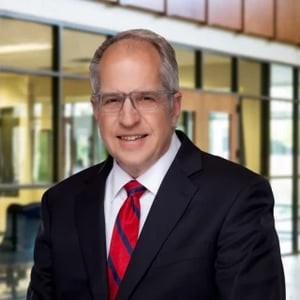
Senior Counsel, First Liberty Institute
Jordan Lorence is Senior Counsel in FLI’s Washington, D.C. office, where he represents First Liberty in strategic efforts promoting religious liberty, and works on important First Amendment projects and litigation, including those at the U.S. Supreme Court.
Lorence has a long career of litigating religious liberty cases since 1984. He has worked for many public interest law firms, including Alliance Defending Freedom, Home School Legal Defense Association, the North Star Legal Center and Concerned Women for America.
He has worked on important religious liberty cases. Lorence worked on school choice cases at the Supreme Court, such as Witters v. Washington Department of Services for the Blind (1986), and Trinity Lutheran (2016), which laid the foundation for First Liberty’s crucial win in Carson v. Makin (2022), requiring Maine to include religious schools in its school choice program.
Lorence argued before the U.S. Supreme Court in Regents of the University of Wisconsin v. Southworth (2000). He represented prolife Christian law students from the University of Wisconsin Law School who objected to the University’s requirement that they pay a mandatory student fee that funded the advocacy of student pro-abortion groups. Other Supreme Court cases Lorence has worked on include NIFLA v. Becerra (2018), protecting prolife pregnancy centers from a California statute requiring them to post signs explaining how pregnant women could obtain state-funded abortions; Masterpiece Cakeshop (2017), involving a Christian cake artist sued by the State of Colorado for declining to design a case celebrating the wedding of a same-sex couple and other cases such as Christian Legal Society v. Martinez (2012), Rosenberger v. University of Virginia (1995), Hurley v. GLIB (1995) and Lamb’s Chapel v. Center Moriches Center Moriches School District (1993).
Churches and other religious groups in New York City obtained the right to rent vacant public schools on weekends to conduct worship services after Lorence’s tenacious 20 years of litigation in Bronx Household of Faith. Lorence won protection for churches facing eviction from discriminatory zoning ordinances in Minnesota in Cornerstone Bible Church v. City of Hastings, Minnesota (1991). He also argued at the New Mexico Supreme Court one of the first cases in the nation defending a Christian wedding photographer charged by the State of New Mexico with discrimination for declining to create photos celebrating the commitment ceremony of a lesbian couple in Elane Photography v. Willock (2013).
Lorence defended home schooling families from intrusive school officials during his time working at Home School Legal Defense Association (HSLDA) in the 1980s and 1990s. HSLDA also tasked Lorence with establishing a sister organization in Canada to protect home schooling families there. He traveled extensively in Canada from British Columbia to Prince Edward Island speaking to families how they could protect their right to home school under relevant Canadian law.
Lorence earned his undergraduate degree in journalism from Stanford University and his law degree from the University of Minnesota, his home state. Lorence was born and raised in Minnesota, where he worked one summer building Mighty Dump trucks at Tonka Toys in Mound, Minnesota. For two years immediately after he graduated from law school, Lorence served as the head administrator for a Minnesota Senate committee.
He speaks extensively on First Amendment and other legal issues. Lorence has spoken at least 75 law schools and many legal conferences. Prominent publications such as the Wall Street Journal, the Washington Post and others have printed his opinion pieces on key legal issues involving religious liberty and freedom of speech. He has appeared on such media outlets as Fox News, CNN, National Public Radio, NBC’s Today Show, BBC radio and many others.
Lorence and his wife Marilyn have been married 40 years. They live in the Washington, D.C. area where they raised their seven children.

Executive Director, Ohio Dental Association
David J. Owsiany is the executive director of the Ohio Dental Association and a past president of the Columbus Lawyers Chapter of the Federalist Society.
He has served as CEO of a statewide health care association, president of the Buckeye Institute, chief of policy for the Ohio Department of Insurance, judicial law clerk for the Illinois Appellate Court, and staffer on the United State Senate Judiciary Committee.
Mr. Owsiany has written dozens of articles on legal and public policy issues for various publications, including the University of Toledo Law Review, the Federalist Society's State Court Docket Watch, Columbus Dispatch, Cincinnati Enquirer, Crain’s Cleveland Business, and Akron Beacon Journal.
Owsiany received his J.D. from Washington University School of Law in St. Louis and B.A. from the University of Michigan in Ann Arbor.
Assistant Professor of Law, Emory University School of Law
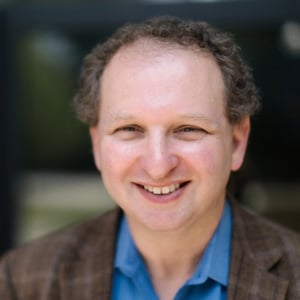
Alexander "Sasha" Volokh is an assistant professor of law, joining the Emory Law faculty in Fall 2009.
Professor Volokh earned his B.S. from UCLA and his J.D. and Ph.D. in economics from Harvard University. He clerked for Judge Alex Kozinski of the Ninth Circuit and for Supreme Court Justices Sandra Day O'Connor and Samuel Alito. Before coming to Emory, he was a visiting associate professor at Georgetown University Law Center and a visiting assistant professor at University of Houston Law Center.
His interests include law and economics, administrative law and the regulatory process, environmental law and policy, and legal history. His current research topics include the private management of government services, medieval law, judicial decisionmaking and statutory interpretation.
Chief Policy Counsel, Council on Criminal Justice and Senior Advisor, Right on Crime
Marc A. Levin is the Chief Policy Counsel for the Council on Criminal Justice (counciloncj.org) and Senior Advisor for Right on Crime.
An attorney and accomplished author on legal and public policy issues, Marc began the Foundation’s criminal justice program in 2005. This work contributed to nationally praised policy changes that have been followed by dramatic declines in crime and incarceration in Texas. Building on this success, in 2010, Levin developed the concept for the Right on Crime initiative, a TPPF project in partnership with Prison Fellowship and the American Conservative Union Foundation. Right on Crime has become the national clearinghouse for conservative criminal justice reforms and has contributed to the adoption of policies in dozens of states that fight crime, support victims, and protect taxpayers.
In 2014, Levin was named one of the “Politico 50” in the magazine’s annual “list of thinkers, doers, and dreamers who really matter in this age of gridlock and dysfunction.”
Marc has testified on criminal justice policy on four occasions before Congress and has testified before legislatures in states including Texas, Nevada, Kansas, Wisconsin, and California. He also has met personally with leaders such as U.S. Presidents, Speakers of the House, and the Justice Commtitee of the United Kingdom Parliament to share his ideas on criminal justice reform. In 2007, he was honored in a resolution unanimously passed by the Texas House of Representatives that stated, “Mr. Levin’s intellect is unparalleled and his research is impeccable.”
Since 2005, Marc has published dozens of policy papers on topics such as sentencing, probation, parole, reentry, and overcriminalization which are available on the TPPF website. Levin’s articles on law and public policy have been featured in publications such as the Wall Street Journal, USA Today, Texas Review of Law & Politics, National Law Journal, New York Daily News, Jerusalem Post, Toronto Star, Atlanta Journal-Constitution, Philadelphia Inquirer, San Francisco Chronicle, Washington Times, Los Angeles Daily Journal, Charlotte Observer, Dallas Morning News, Houston Chronicle, Austin American-Statesman, San Antonio Express-News and Reason Magazine.
In 1999, Marc graduated with honors from the University of Texas with a B.A. in Plan II Honors and Government. In 2002, Marc received his J.D. with honors from the University of Texas School of Law. Marc was a Charles G. Koch Summer Fellow in 1996. He served as a law clerk to Judge Will Garwood on the U.S. Court of Appeals for the Fifth Circuit and Staff Attorney at the Texas Supreme Court.
Director, Center for Criminal Justice Reform, The American Conservative Union Foundation
Pat Nolan is serving as the inaugural director of The American Conservative Union's Center for Criminal Justice Reform. Mr. Nolan has been a leading voice on criminal justice reform, highlighting the skyrocketing costs of prison, fiscal responsibility in the criminal justice system and reforms for non-violent offenders. He served 15 years as a member of the California Assembly, four of them as Assembly Republican Leader. He was named Legislator of the Year by the American Legislative Exchange Council (ALEC) and received the “Victims Advocate Award” from Parents of Murdered Children. Mr. Nolan served as a member of the National Prison Rape Elimination Commission, was a member of the Commission on Safety and Abuse in America’s Prisons. He worked alongside Chuck Colson for fifteen years as President of Justice Fellowship, helping draft and pass such important reforms as the Prison Rape Elimination Act, the Second Chance Act, and the Fair Sentencing Act.
Senior Executive Counsel, NFIB Small Business Legal Center
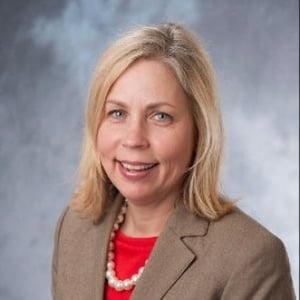
Elizabeth Milito serves as Senior Executive Counsel with the National Federation of Independent Business, a position she has held since March 2004. Ms. Milito came to NFIB from the U.S. Department of Veteran's Affairs where she defended the agency in employment and labor lawsuits and was responsible for training and counseling managers on fair employment and HR practices. She has an extensive background in tort, medical malpractice and employment law.
Prior to serving as an attorney at the Department of Veteran's Affairs, Ms. Milito worked as a trial attorney at Nationwide Insurance Company. At Nationwide, she completed over 100 trials to verdict. Ms. Milito was the editor of notes and comments for the Maryland Law Review at the University of Maryland School of Law where she earned her Juris Doctor degree in May of 1996. Following her education, she served as a clerk to the Honorable Alan M. Wilner on the Maryland Court of Appeals, the state's highest court.
Ms. Milito is responsible for managing litigation and amicus work for NFIB. She has testified before Congress, federal agencies, and state legislatures on the small business impact of labor and employment issues. She also comments and writes regularly on small business cases before federal and state courts. Ms. Milito frequently counsels businesses facing employment discrimination charges, wage and hour claims, wrongful termination lawsuits, and in most other areas of human resources law. She also provides and develops on-line and on-site training on a variety of employment law matters and is a frequent media spokesperson on employment and labor matters.
Clinical Professor of Law, Dale E. Fowler School of Law, Chapman University
Partner, Kirkland & Ellis LLP
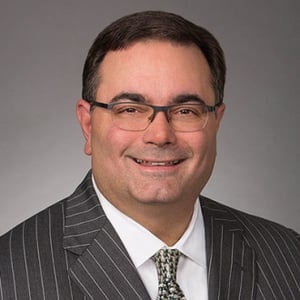
H. Christopher Bartolomucci is a partner in the Washington, D.C., office of Kirkland & Ellis LLP. Chris’ practice focuses on appellate litigation, products liability litigation, and litigation in the higher education space. He presented oral argument in the U.S. Supreme Court in South Carolina v. North Carolina, 558 U.S. 256 (2010) and prevailed in the case. He served as lead trial counsel and presented the closing oral argument before a three-judge federal court in a high profile preclearance action under Section 5 of the Voting Rights Act. See South Carolina v. United States, 898 F. Supp. 2d 30 (D.D.C. 2012). In 2007, as a short-listed candidate for nomination to the U.S. Court of Appeals for the Fourth Circuit, the Virginia State Bar gave Chris its highest rating of “Highly Qualified.”
Chris’ government service includes experience in every branch of the federal government. He served in the White House as associate counsel to President George W. Bush. He also served in the Solicitor General’s Office, as associate special counsel to the U.S. Senate Whitewater Committee, and as counsel to the D.C. Inspector General. He clerked for Judge William L. Garwood of the U.S. Court of Appeals for the Fifth Circuit in Austin, Texas.

A Conversation with the Attorney General
North Carolina Board of Dental Examiners v. Federal Trade Commission
David J. Owsiany, Alexander Volokh
Note from the Editor: The Federalist Society is pleased to present two different perspectives on the North...
Federalism and State Sovereignty
Columbia, South CarolinaGetting it Right on Crime - Podcast
Marc Levin, Pat Nolan
Until recently prisons have been the sacred cows in state budgets. They are the second...
Getting it Right on Crime
TeleforumGambling The World: Why We Always Make the Wrong Decision on Our Biggest Environmental Threats
Asserting Influence and Power in the 21st Century: The NLRB Focuses on Assisting Non-Union Employees
Elizabeth Milito
Note from the Editor: This article is a discussion about the National Labor Relations Board’s relationship...
A Discussion on Religious Liberties
Columbia, South CarolinaPart II: Can States Require Proof of Citizenship for Voter Registration?: Arizona v. Inter Tribal Council of Arizona
Anthony (Tom) Caso
Note from the Editor: This article discusses the Arizona v. Inter Tribal Council of Arizona...
Can the South Carolina Legislature Pass a Law to “Nullify” Obamacare?
H. Christopher Bartolomucci
Can a State enact a law that purports to “nullify” a controversial federal statute that...