

Partner, Steptoe & Johnson LLP
Stewart Baker is a partner in the law firm of Steptoe & Johnson in Washington, D.C. From 2005 to 2009, he was the first Assistant Secretary for Policy at the Department of Homeland Security. His law practice covers cybersecurity, data protection, homeland security, and travel and foreign investment regulation; he has been awarded one patent.
Mr. Baker has been General Counsel of the National Security Agency and General Counsel of the commission that investigated WMD intelligence failures prior to the Iraq war. He is the author of Skating on Stilts, a book on terrorism, cybersecurity, and other technology issues; he also hosts the weekly Cyberlaw Podcast.
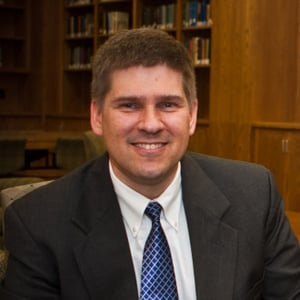
Associate Professor of Law, Brigham Young University J. Reuben Clark Law School
Eric Talbot Jensen teaches and writes in the areas of Public International Law, Criminal Law, The Law of Armed Conflict, International Criminal Law, and National Security Law. His recent scholarship has appeared in the Texas, Temple, Houston, and Israel Law Reviews, as well as the Stanford Law and Policy Review, Virginia Journal of International Law, Vanderbilt Journal of Transnational Law, and Stanford Journal of International Law. Professor Jensen is a co-author on an Oxford University text analyzing application of the laws of war to the war on terror and is also co-authoring a law school casebook on the Law of Armed Conflict for Aspen Publishing.
Prior to joining the BYU law faculty in 2011, Professor Jensen spent 2 years teaching at Fordham Law School in New York City and 20 years in the United States Army as both a Cavalry Officer and as a Judge Advocate. During his time as a Judge Advocate, Professor Jensen served in various positions including as the Chief of the Army’s International Law Branch; Deputy Legal Advisor for Task Force Baghdad; Professor of International and Operational Law at The Judge Advocate General’s Legal Center and School; legal advisor to the US contingent of UN Forces deployed to Skopje, Macedonia as part of UNPREDEP; and legal advisor in Bosnia in support of Operation Joint Endeavor/Guard.

Director of the Institute for Law, Science and Global Security a, Georgetown University
Professor Catherine Lotrionte is the Director of the Institute for Law, Science and Global Security and Visiting Assistant Professor of Government and Foreign Service at Georgetown University. Professor Lotrionte teaches courses on national security law, U.S. intelligence law, and international law. In addition to teaching, Professor Lotrionte coordinates research projects and events for the Institute for Law, Science and Global Security at Georgetown. She is the Institute Liaison for the Program on Nonproliferation Policy and Law, funded by the Defense Threat Reduction Agency, in cooperation with the Monterey Institute for International Studies’ James Martin Center for Nonproliferation Studies. Professor Lotrionte is also the Director of the CyberProject. Professor Lotrionte and the Institute focus on the role of international and domestic law in recent and upcoming developments in cyber technology and cyber threats.
In 2002 she was appointed by General Brent Scowcroft to be Counsel to the President's Foreign Intelligence Advisory Board at the White House, a position she held until 2006. In 2002 she served as a legal counsel for the Joint Inquiry Committee of the Senate Select Committee on Intelligence. Prior to that, Professor Lotrionte was Assistant General Counsel with the Office of General Counsel at the Central Intelligence Agency, where she provided legal advice relating to information warfare, foreign intelligence and counterintelligence activities, and international terrorism. Before working in the Office of General Counsel at the Central Intelligence Agency, Professor Lotrionte served in the U.S. Department of Justice.
Professor Lotrionte earned her Ph.D. from Georgetown University and her J.D. from New York University and is the author of numerous publications, including a forthcoming book concerning U.S. national security law in the post-Cold War era. She is a frequent speaker at cyber conferences held by academic, military, government, and media organizations. She is a Life Member of the Council on Foreign Relations.

Professor Emeritus of Law, Antonin Scalia Law School, George Mason University
Jeremy A. Rabkin is a Professor Emeritus of Law at the Antonin Scalia Law School, George Mason University. Before joining the faculty in June 2007, he was for over two decades a professor in the Department of Government at Cornell University. Professor Rabkin serves on the board of directors of the Center for Individual Rights, a public interest law firm based in Washington, D.C. Previously he was a board member of the U.S. Institute of Peace and the board of academic advisors of the American Enterprise Institute.
Professor Rabkin’s books include Law Without Nations? (Princeton University Press, 2005). He authored “If You Need a Friend, Don’t Call a Cosmopolitan,” a chapter in Varieties of Sovereignty and Citizenship (Sigal R. Ben-Porath & Rogers M. Smith eds., University of Pennsylvania Press, 2012). His articles have appeared in major law reviews and political science journals and his journalistic contributions in a range of magazines and newspapers, including the Washington Post and the Wall Street Journal.

Emanuel S. Heller Professor of Law, University of California at Berkeley; Senior Research Fellow, School of Civic Leadership, Civitas Institute, University of Texas at Austin; Nonresident Senior Fellow, American Enterprise Institute
John Yoo is the Emanuel Heller Professor of Law. He is also Distinguished Visiting Scholar, School of Civic Leadership and Senior Research Fellow, Civitas Institute, at the University of Texas at Austin. He is also a Nonresident Senior Fellow at the American Enterprise Institute.
His most recent book, The Politically Incorrect Guide to the Supreme Court, co-authored with Robert Delahunty, was published in 2023. Professor Yoo’s other books include Defender-in-Chief: Trump’s Fight for Presidential Power; Striking Power: How Cyber, Robots, and Space Weapons Change the Rules for War, Point of Attack: Preventive War, International Law, and Global Welfare, and Crisis and Command: A History of Executive Power from George Washington to George Bush.
Professor Yoo has published more than 100 articles in academic journals on subjects including national security, constitutional law, international law, and the Supreme Court. He also regularly contributes to the editorial pages of the Wall Street Journal, New York Times, Washington Post, Los Angeles Times, and National Review, among others.
Professor Yoo has served in all three branches of government. He was an official in the U.S. Department of Justice, where he worked on national security and terrorism issues after the 9/11 attacks. He served as general counsel of the U.S. Senate Judiciary Committee. He has been a law clerk for Supreme Court Justice Clarence Thomas and federal appeals Judge Laurence Silberman. He has been a visiting professor at Seoul National University in South Korea, the Interdisciplinary Center in Israel, Keio University in Japan, Trento University in Italy, the University of Chicago, and the Free University of Amsterdam.
Professor Yoo supervises the Public Law and Policy Program and the California Constitution Center. He also serves on the boards of the Pacific Legal Foundation, the Federalist Society’s Separation of Powers and Federalism Division, the Universidad Cientifica del Sur Law School, and the Asia-Pacific Law Institute at Seoul National University. He is a winner of the Federalist Society’s Paul Bator award and been the Edwin Meese III Originalism Lecturer at the Heritage Foundation.
Professor Yoo graduated from Yale Law School and summa cum laude from Harvard College.
President and CEO, Consumer Electronics Association
Gary Shapiro is president and CEO of the Consumer Electronics Association (CEA)®, the U.S. trade association representing more than 2,000 consumer electronics companies, and author of the New York Times best-selling books Ninja Innovation: The Ten Killer Strategies of the World’s Most Successful Businesses and The Comeback: How Innovation Will Restore the American Dream. His views are his own. Connect with him on Twitter: @GaryShapiro.

Panel II: Are We @Cyberwar, and If So, How Should We Fight It?
2015 National Security Symposium
Washington, DCLook to Ninja Innovators, Not Government, to Change the World
Gary Shapiro
During a typical week, I split my time between Washington, where I work, and Detroit,...
Recent Developments
On October 12, 2001, U.S. District Judge Orinda D. Evans refused to extend class-action status...
WIPO Treaties to Raise International Copyright Norms, Provoke Legislative Debate in the United States
Jeffrey P. Cunard, Bruce P. Keller, Albert L. Wells
The three-week World Intellectual Property Organization ("WIPO") diplomatic conference in Geneva ("WIPO Conference"), which concluded...